Mid Size Passenger Jets
Certified in August 2026, the smallest MAX flies farther than any of its stretched siblings.
Updated: by Tim de Vries
The latest aviation news and stories sent to your inbox.
The Boeing 737 MAX 7 is the smallest and longest-range member of the 737 MAX family, built to replace the 737-700 on shorter and thinner narrow-body routes. It seats 138 to 153 passengers in two classes and up to 172 in a single-class layout, and it can fly up to 3,800 nautical miles. The FAA certified the type on August 3, 2026 after nearly a decade of review, with Southwest Airlines as the launch customer.
Live Fleet Activity (B37M)
Fetching live data…


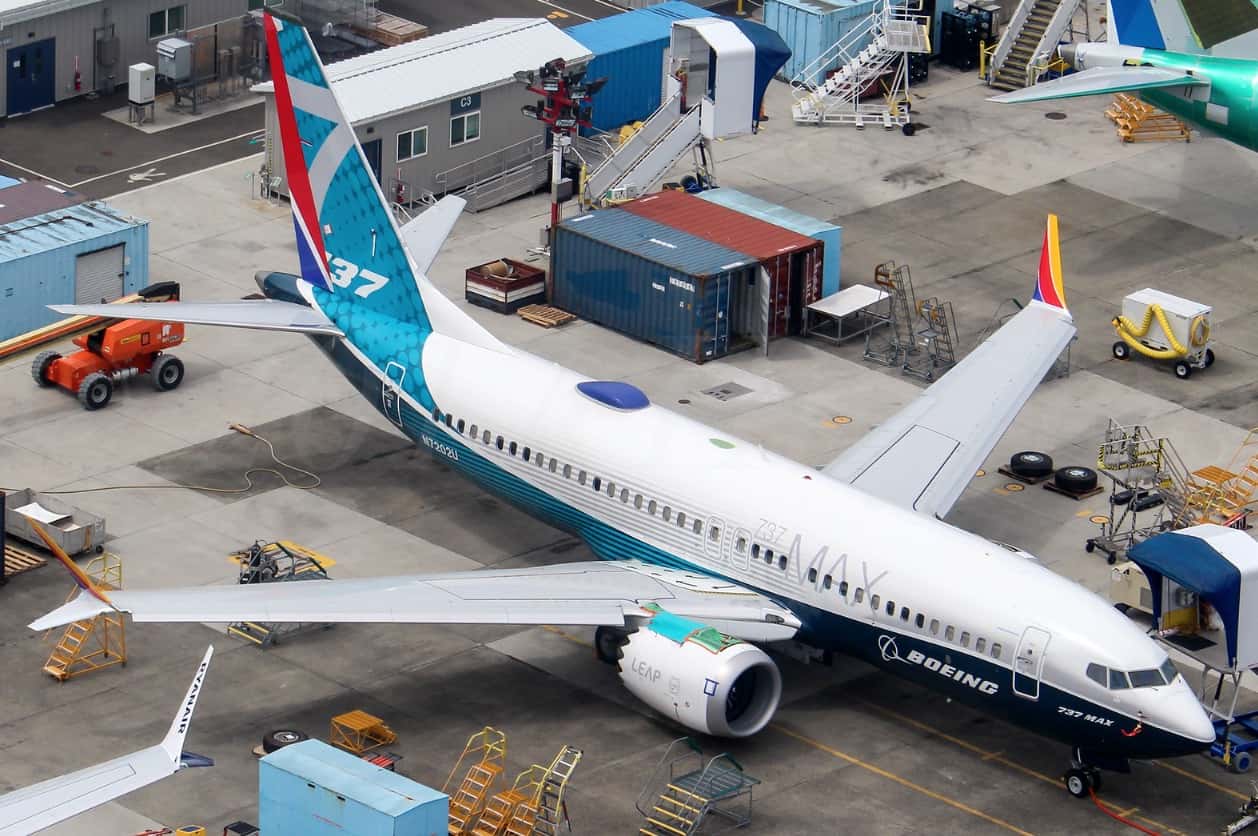
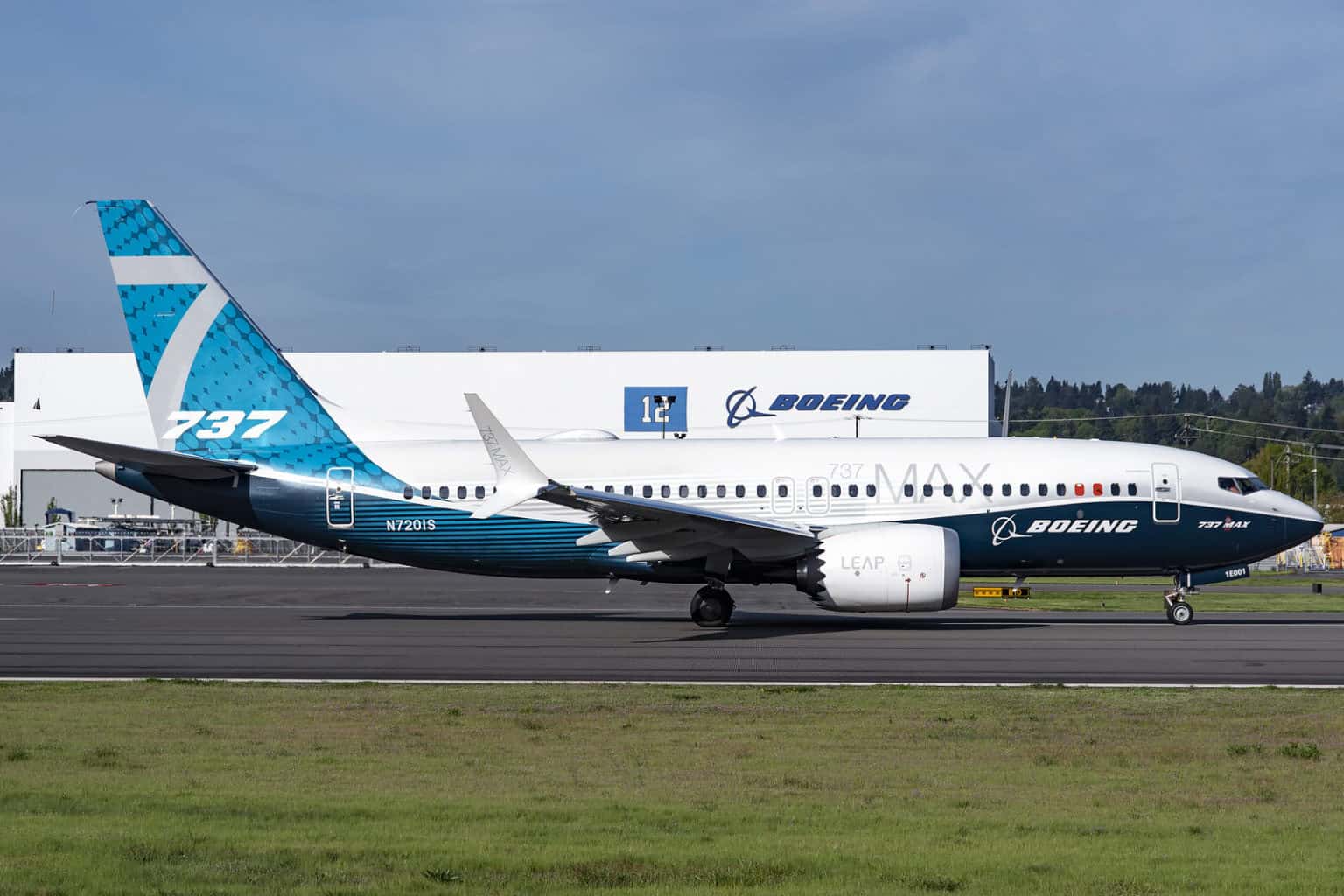

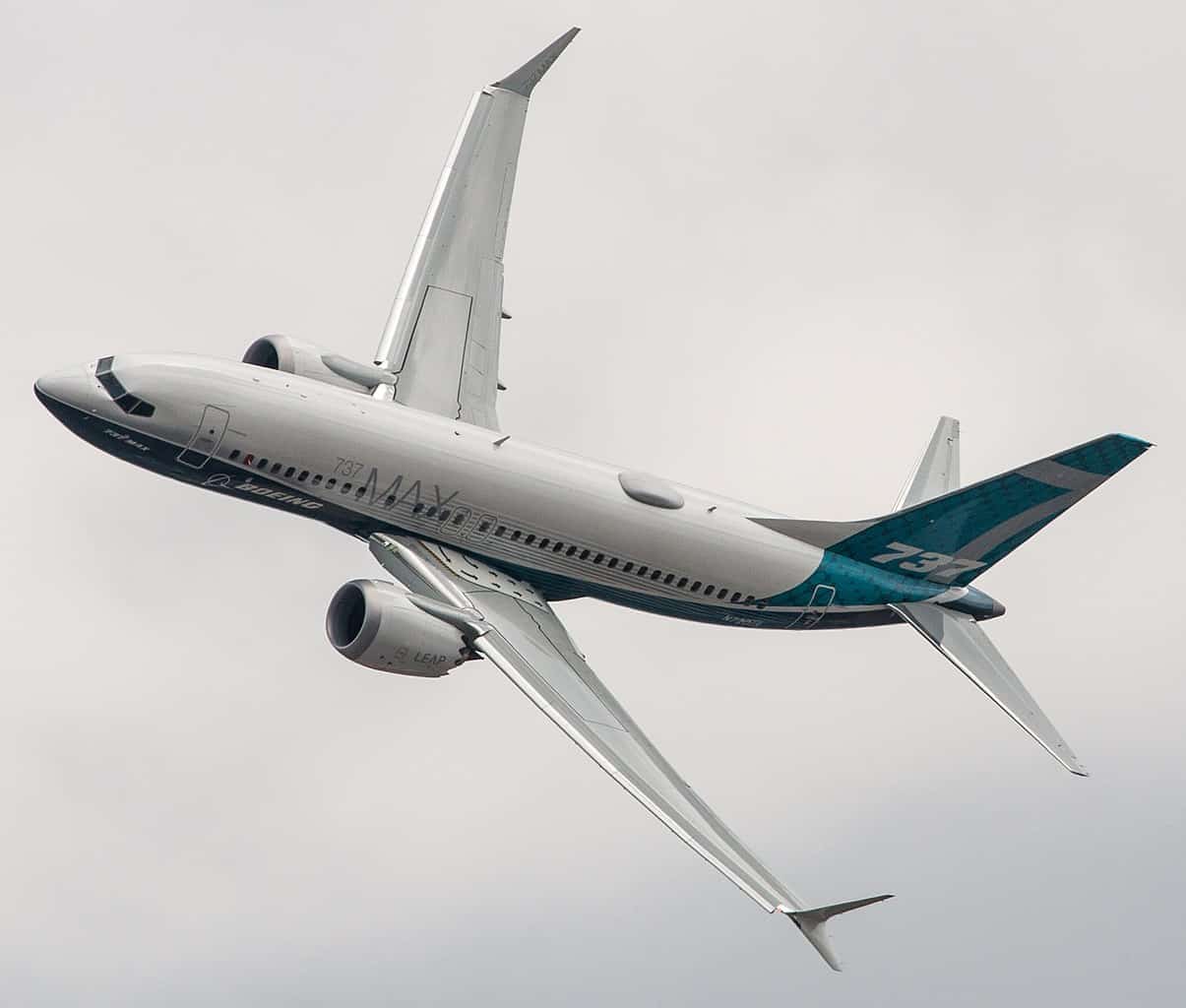

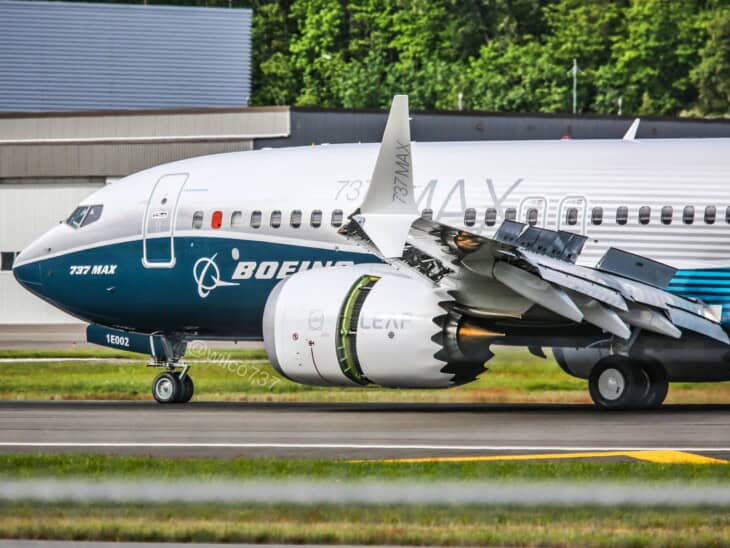
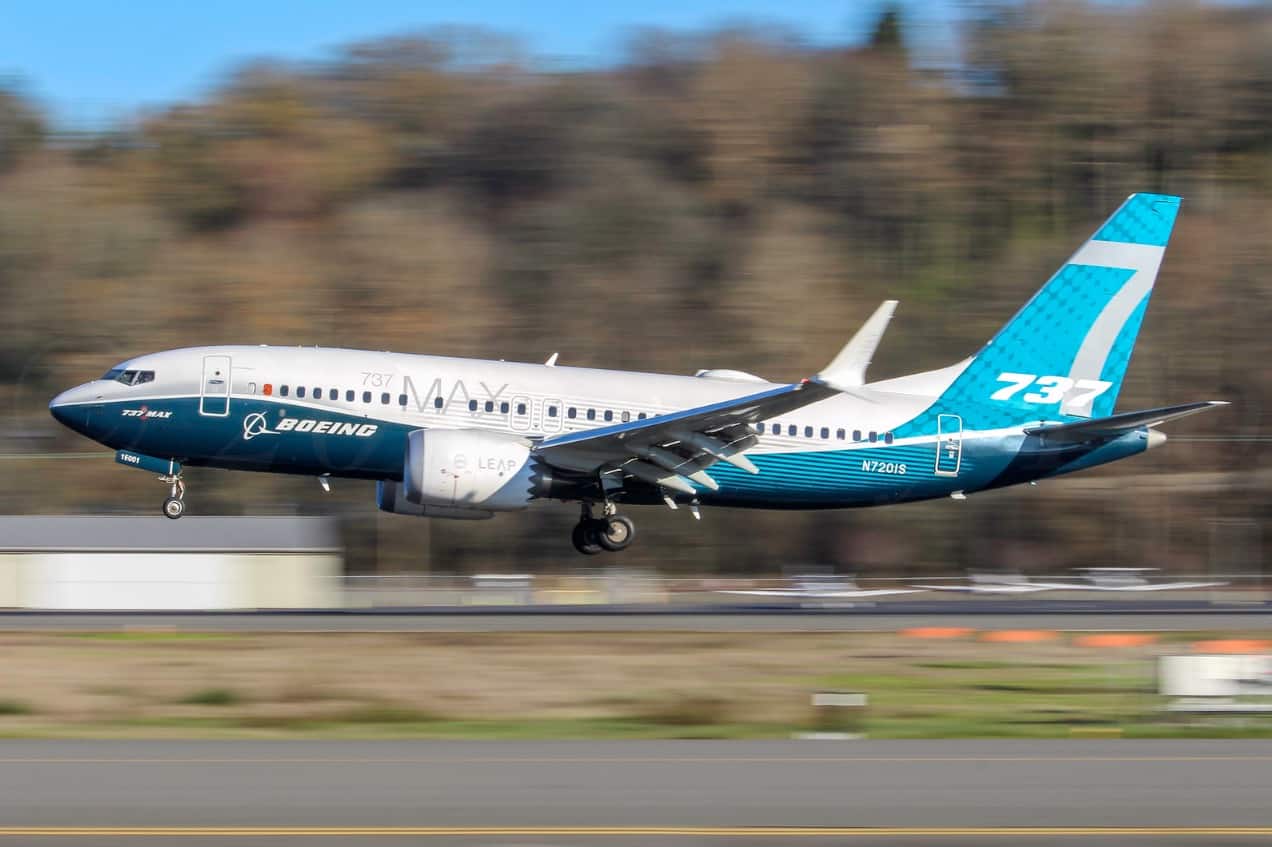
The Boeing 737 MAX 7 is the smallest and longest-range member of the 737 MAX family, sized to seat about 138 to 153 passengers in two classes and up to 172 in a single-class layout. It is the direct replacement for the Boeing 737-700, the workhorse that built Southwest Airlines.
It is also the MAX that almost did not happen. The 737-7, as Boeing calls it internally, first flew in March 2018 and was supposed to be certified in 2019. The FAA finally signed it off on August 3, 2026, roughly seven years late.
On August 3, 2026, the FAA issued an amended type certificate and an updated Production Limitation Record for the Boeing 737 MAX-7. The amended type certificate confirms the aircraft meets all applicable design and safety requirements. The Production Limitation Record authorizes Boeing to build and deliver it.
In its statement, the FAA said the approval followed “almost a decade of extensive review” and “years of sustained work to resolve complex technical issues.” The agency said it performed or directly reviewed significant work on flight controls, system safety assessments, human factors, and flightcrew alerting.
FAA safety inspectors will stay on site at Boeing production facilities to monitor manufacturing, including Boeing’s Safety Management System and safety culture. That ongoing oversight is a direct legacy of the MAX crisis.
The MAX 7 rolled out in February 2018 and made its first flight on March 16, 2018. Certification was targeted for 2019, with entry into service to follow immediately.
Then two 737 MAX 8s crashed. Lion Air Flight 610 went down in October 2018 and Ethiopian Airlines Flight 302 in March 2019, killing 346 people between them and triggering a worldwide grounding. Certification work on every remaining MAX variant stopped while regulators rebuilt their approach to the whole program, a story covered in detail in our feature on the Boeing 737 MAX crisis.
A second obstacle was legal rather than technical. The Aircraft Certification, Safety, and Accountability Act of 2020 required any aircraft certified after December 27, 2022 to carry a modern flightcrew alerting system. The MAX 7 and MAX 10 use the older 737 alerting architecture and would have missed that deadline.
In December 2022, Congress attached an exemption to the year-end spending bill, clearing the FAA to certify both jets without a full redesign. The amendment came with strings: Boeing agreed to retrofit safety enhancements across the MAX fleet within three years of the MAX 10 being certified.
The final delay was the engines. In late 2023, engineers found that the engine anti-ice system on the LEAP-1B could overheat the composite engine inlet if it was left on too long in dry air, potentially weakening the structure around it. Boeing withdrew a safety exemption request in January 2024 and redesigned the system instead, which pushed certification out by another two years.
The FAA required three specific improvements before it would sign the aircraft off, each tied to requirements in the Aircraft Certification, Safety, and Accountability Act and to NTSB recommendations.
The first was updated flight-control software. The second was an upgraded flightcrew alerting system that gives pilots clearer information and warnings when something goes wrong. The third was the redesigned engine anti-ice system, which prevents the inlet from overheating.
All three are now part of the certified 737-7 configuration, and the flight deck and software changes flow across the MAX family rather than being unique to this variant.
The 737 MAX 7 is 116 feet 8 inches (35.56 m) long with a wingspan of 117 feet 10 inches (35.92 m) including the split-tip winglets. Tail height is 40 feet 4 inches (12.3 m).
The fuselage is the same 737 cross-section Boeing has used since 1967, with an outside diameter of 12 feet 4 inches (3.76 m). Inside, the cabin is 11 feet 7 inches (3.54 m) wide. That gives six-abreast seating with a single aisle.
Boeing lists 153 seats in a two-class layout and 172 in a single-class high-density configuration. Airlines typically land somewhere between 135 and 160 seats. Southwest, the launch customer, has settled on 150.
Lower-deck cargo volume is 1,114 cubic feet (31.5 m³), split between forward and aft holds. The cabin itself is the Boeing Sky Interior, with pivoting overhead bins, LED lighting, and larger windows.
Two CFM International LEAP-1B turbofans power the MAX 7, rated up to 29,317 pounds of thrust (130 kN) each. The LEAP-1B is the single biggest reason the MAX exists: its larger fan and higher bypass ratio are what deliver the family’s roughly 20 percent cut in fuel burn and CO2 versus the previous generation.
Normal cruise is Mach 0.79, about 453 knots (521 mph, 839 km/h) at altitude. Maximum operating speed is Mach 0.82, roughly 473 knots. Service ceiling is 41,000 feet.
Boeing publishes a range of up to 3,800 nautical miles (4,370 miles, 7,040 km), the longest of any 737 MAX variant. The MAX 7 carries the same 6,800 US gallons (25,800 L) of fuel as its stretched siblings but weighs less, so it can go farther.
Maximum takeoff weight is 177,000 pounds (80,500 kg) in the high-gross-weight configuration, with a maximum landing weight of 145,500 pounds (66,000 kg). Takeoff field length at maximum weight is around 6,900 feet (2,100 m). Landing field length is about 4,900 feet (1,500 m).
The MAX 7 is a stretch of the Boeing 737-700, not a straight swap. Boeing added two seat rows, so the MAX 7 seats roughly 12 more passengers than the -700 in a comparable layout.
The bigger gains are in economics. The LEAP-1B engines, the advanced winglets, and the reshaped tail cone give the MAX 7 substantially lower fuel burn per seat than the CFM56-powered -700, along with a smaller noise footprint.
Range also improves. The MAX 7 keeps the full-size MAX wing and fuel load on a shorter, lighter airframe, which is exactly why it out-ranges every other MAX.
The MAX 7 is the short one. The 737 MAX 8 is 13 feet longer and seats up to 210, and it is by far the best-selling variant of the family.
The 737 MAX 9 stretches further again to 220 seats, and the 737 MAX 10 tops the family at 230 with a novel extending main landing gear to keep the tail clear on rotation. The MAX 10 is still awaiting its own FAA certification.
All four share the same wing, engines, systems, and flight deck, so a pilot type-rated on one can fly any of them. That commonality is the main reason airlines buy across the family rather than mixing manufacturers.
Against the competition, the MAX 7 sits between the Airbus A220-300, which is smaller and newer, and the Airbus A320neo, which is larger. That awkward middle position is part of why the MAX 7 has sold slowly outside one customer.
Southwest Airlines is the launch customer and holds the overwhelming majority of MAX 7 orders. Reported figures cluster around 260 aircraft after Southwest converted part of its original order to the larger 737-8.
Other operators have largely walked away during the delay. Allegiant Air, which had ordered the type, converted its MAX 7 order to the high-density 737-8-200 instead.
Roughly 30 finished MAX 7 airframes were reported parked in storage waiting for the paperwork. Those aircraft now need retrofit work to bring them up to the certified configuration before they can be handed over.
Southwest plans to take a first batch of deliveries through the end of 2026 but does not intend to fly the type in scheduled passenger service until the first quarter of 2027, which leaves time for pilot training and operational integration.
Boeing’s last published list price for the 737 MAX 7, from 2019, was 99.7 million dollars. Boeing has not published list prices since.
No airline pays list. Large fleet orders of the kind Southwest places typically carry discounts well over 40 percent, so the real transaction price is considerably lower.
Boeing also offers the airframe as the BBJ MAX 7, a corporate and VIP version with auxiliary fuel tanks in the lower hold. Those tanks trade cargo volume for range, pushing it into the intercontinental class used by heads of state and corporate flight departments.
The BBJ shares the 737-7 type certificate, so it benefits from the same August 2026 approval.
The 737 MAX 7 has never carried a paying passenger, so it has no service record of its own. What it does have is the most heavily scrutinized certification of any recent airliner.
The MCAS software that caused the Lion Air and Ethiopian crashes was rewritten across the whole MAX family before the fleet returned to service in late 2020. The MAX 7 additionally required updated flight-control software, a better crew alerting system, and the redesigned engine anti-ice system before the FAA would approve it.
Since the 2020 return to service, the MAX has flown millions of flights worldwide. The most serious subsequent event, the January 2024 Alaska Airlines door plug blowout, involved a MAX 9 and was traced to a manufacturing quality escape rather than a design flaw.
Yes. It was certified in August 2026 after nearly a decade of FAA review, and the agency required updated flight-control software, an improved flightcrew alerting system, and a redesigned engine anti-ice system before approving it. It shares its design with the wider MAX fleet, which has flown millions of flights since returning to service in late 2020.
Three things stacked up. The 2018 and 2019 MAX 8 crashes halted certification work across the program, a legal deadline on modern crew-alerting systems required a congressional exemption in December 2022, and an engine anti-ice overheating problem found in late 2023 forced a redesign. The FAA certified the aircraft on August 3, 2026.
Southwest Airlines is the launch customer and holds the vast majority of orders, reported at around 260 aircraft. Allegiant Air converted its MAX 7 order to the larger 737-8-200 during the delay, leaving Southwest as effectively the only significant customer.
Two 737 MAX 8s crashed: Lion Air Flight 610 in October 2018 and Ethiopian Airlines Flight 302 in March 2019, with 346 people killed in total. Both were traced to the MCAS flight-control system, which was redesigned before the fleet returned to service. No MAX 7 was involved.
Boeing certifies it for up to 172 passengers in a single-class layout and lists 153 in a two-class configuration. Real airline layouts usually fall between 135 and 160 seats, and Southwest has configured its aircraft with 150.
Up to 3,800 nautical miles, which is about 4,370 miles (7,040 km). That is the longest range in the 737 MAX family, because the MAX 7 carries the same fuel load as its longer siblings on a lighter airframe.
It cruises at Mach 0.79, around 453 knots (521 mph, 839 km/h), with a maximum operating speed of Mach 0.82. Service ceiling is 41,000 feet.
The MAX 8 is about 13 feet longer and carries up to 210 passengers versus 172 for the MAX 7. The MAX 7 flies farther, up to 3,800 nautical miles against roughly 3,500 for the MAX 8. They share the same wing, engines, systems, and pilot type rating.
Southwest expects to put the type into scheduled passenger service in the first quarter of 2027. Deliveries began after the August 2026 certification, but the aircraft need retrofit work and the airline needs time for pilot training and network planning.
Two CFM International LEAP-1B turbofans, rated at up to 29,317 pounds of thrust (130 kN) each. The LEAP-1B is what gives the MAX family roughly 20 percent better fuel efficiency than the CFM56-powered 737 Next Generation.
Sources and references used for research and fact-checking.