Jumbo Passenger Jets
Boeing 777-9
ICAO: B779
The longest Dreamliner, trading range for the most seats in the family.
Updated: by Tim de Vries

The latest aviation news and stories sent to your inbox.
The Boeing 787-10 is the longest Dreamliner, stretching the 787-9 by 18 feet to seat around 330 passengers in two classes. It trades range for capacity, which makes it a dense medium and long-haul aircraft rather than an ultra-long-haul one. Built only in Charleston, South Carolina, it entered service with Singapore Airlines in April 2018.
Live Fleet Activity (B78X)
Fetching live data…
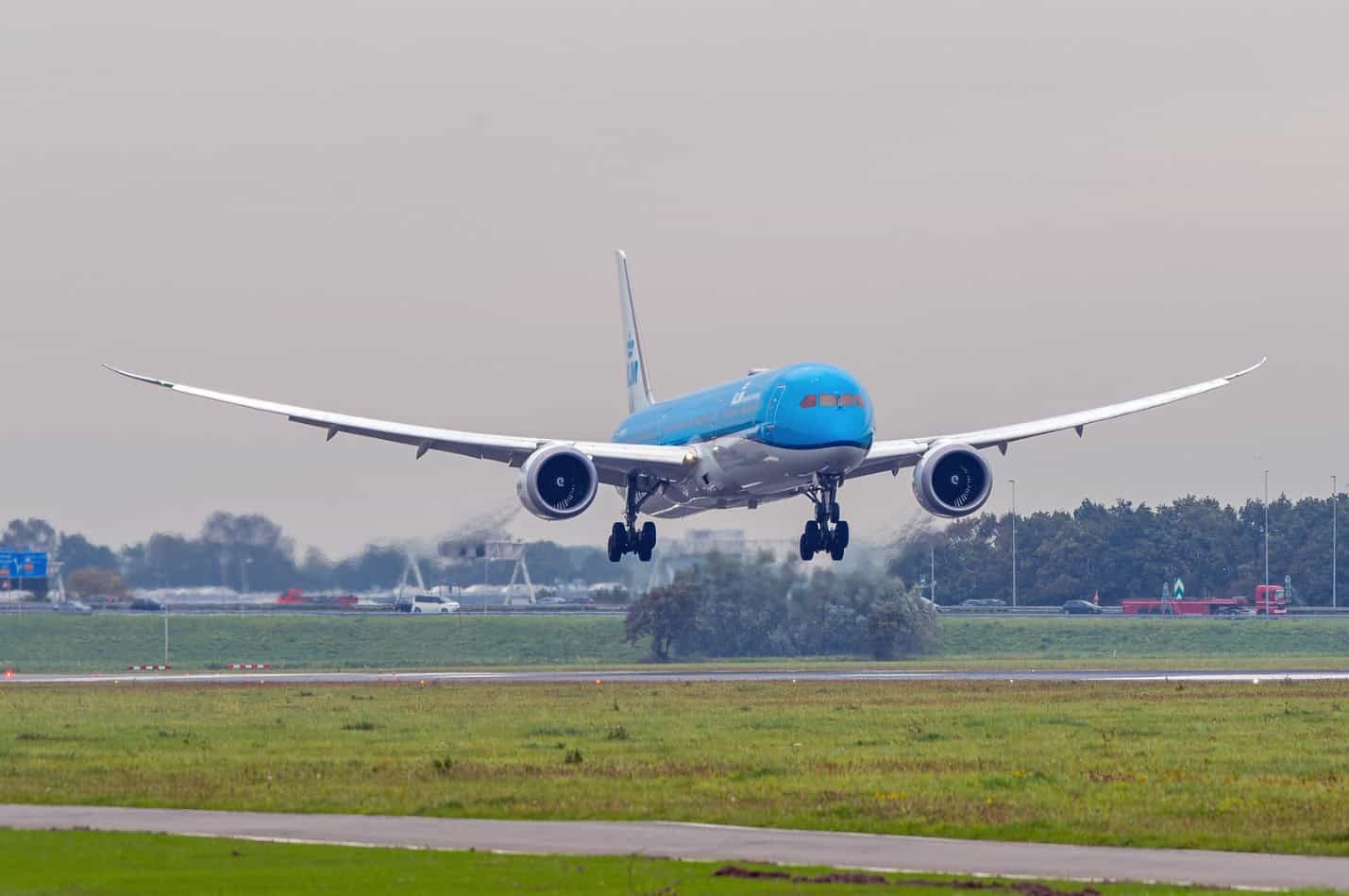


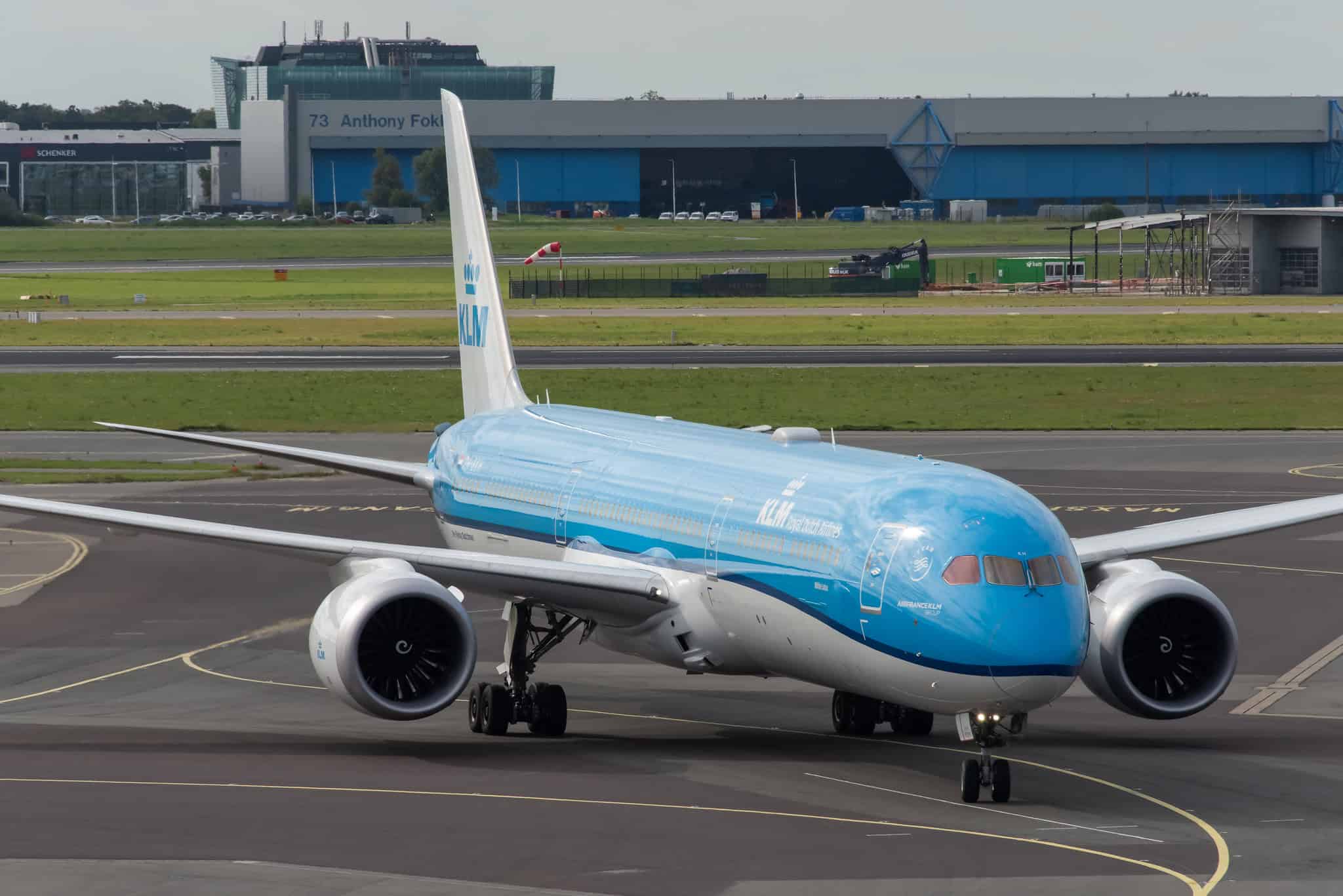


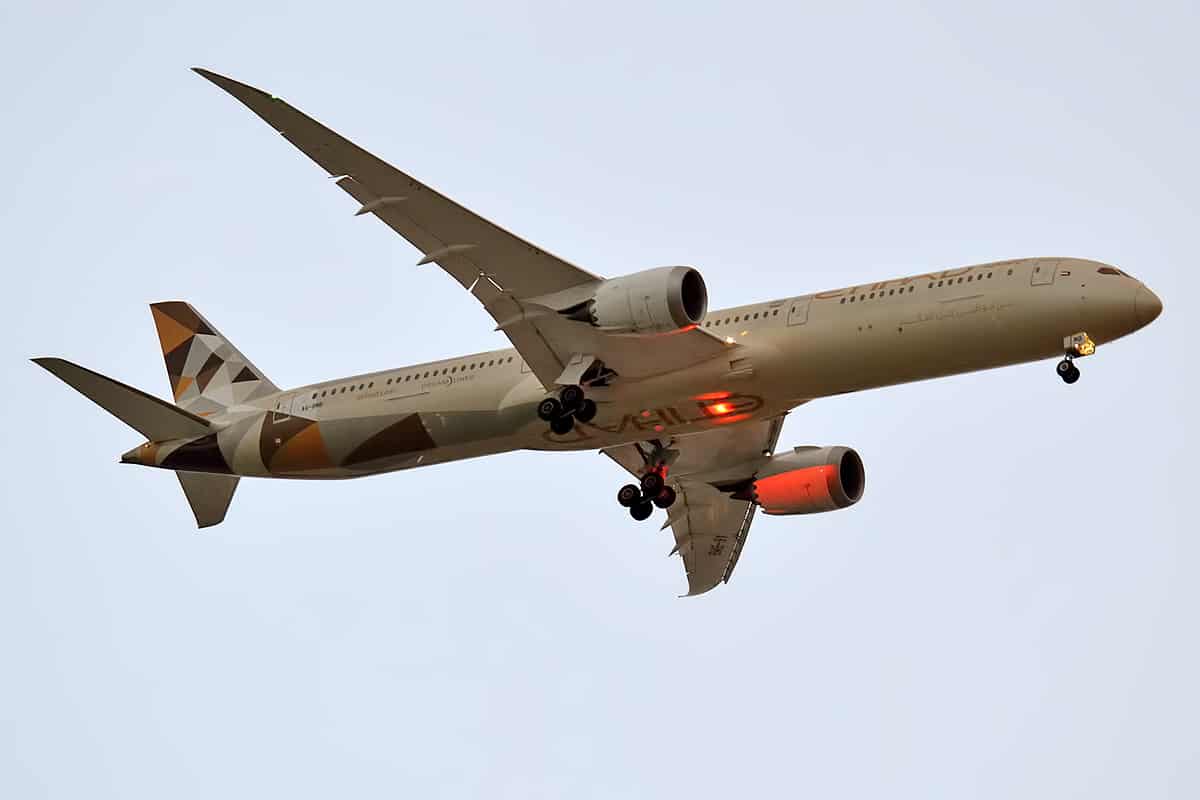
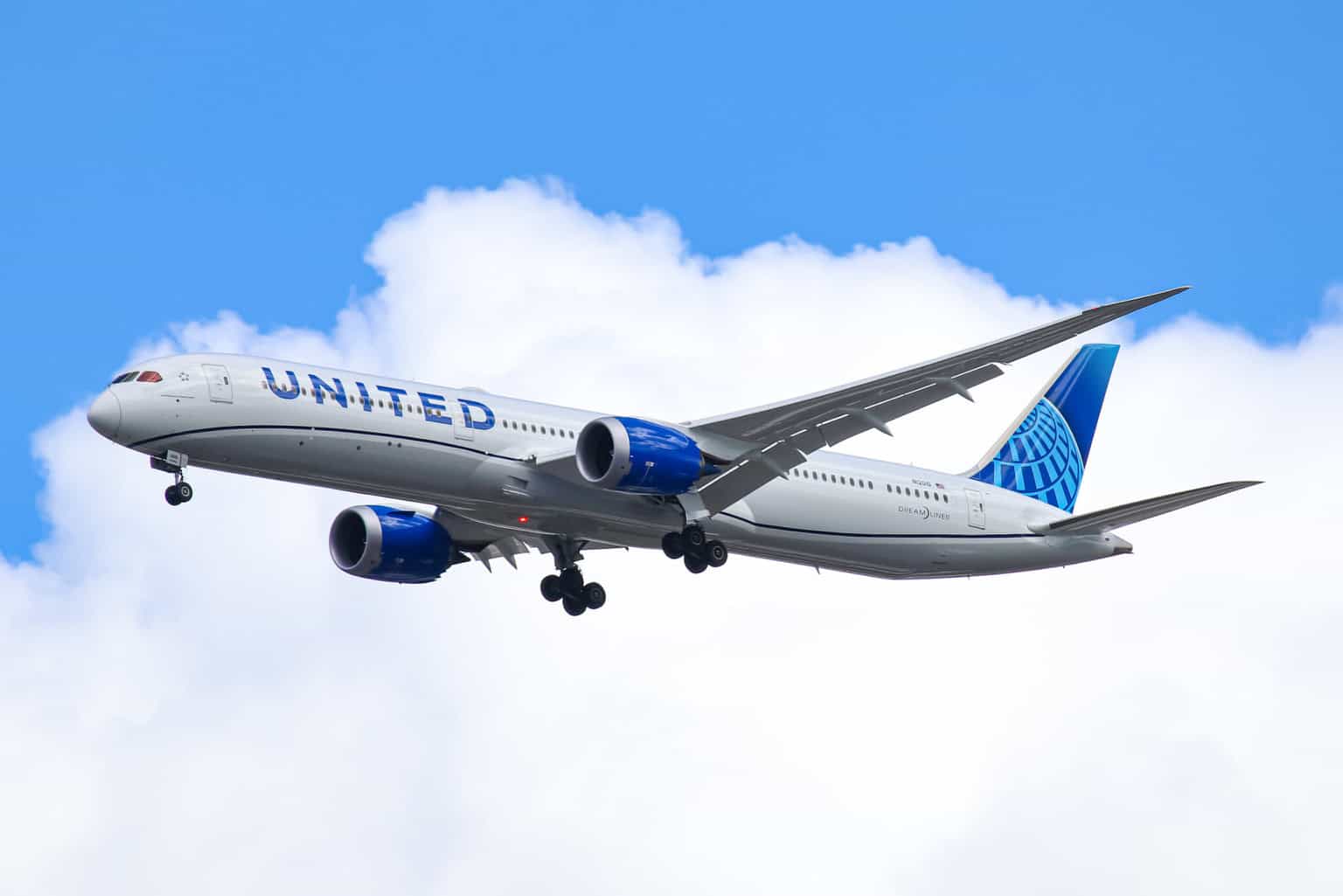


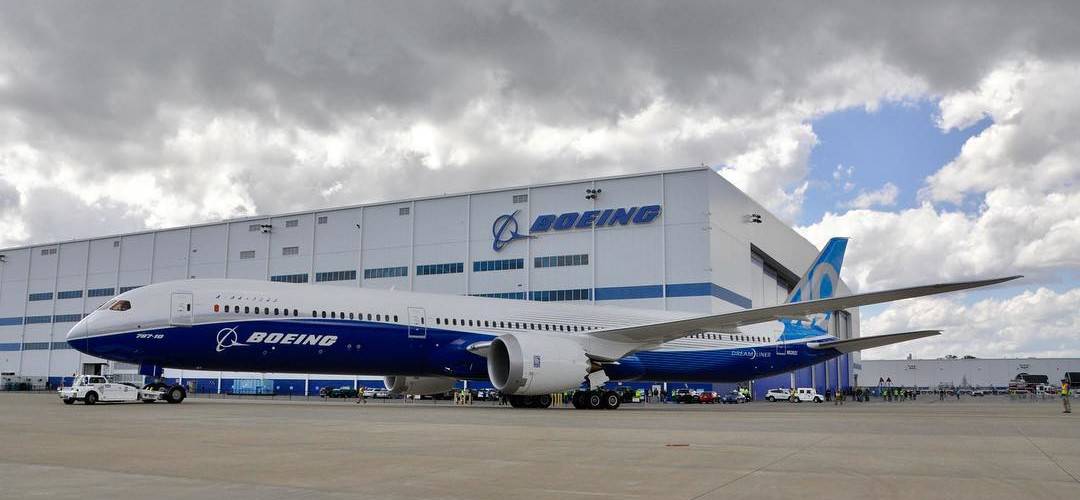

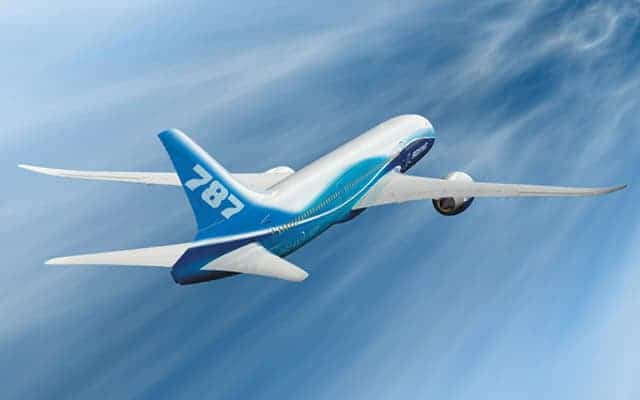

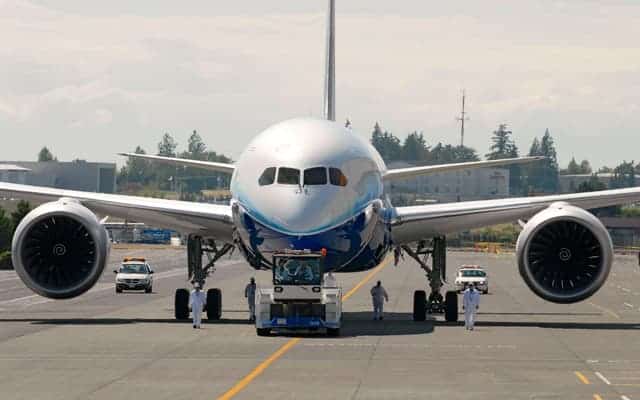
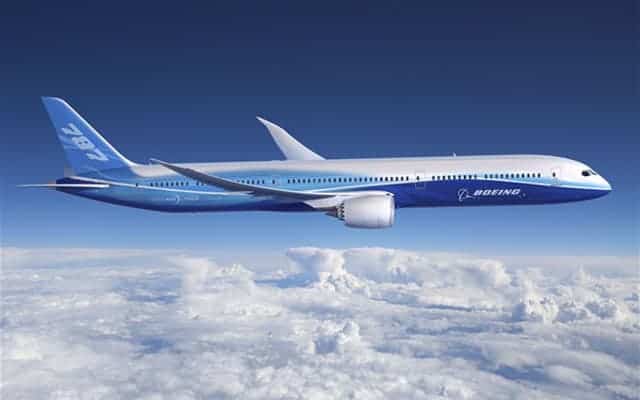
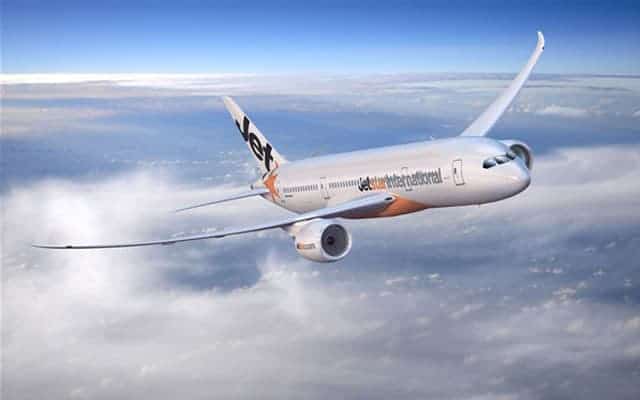
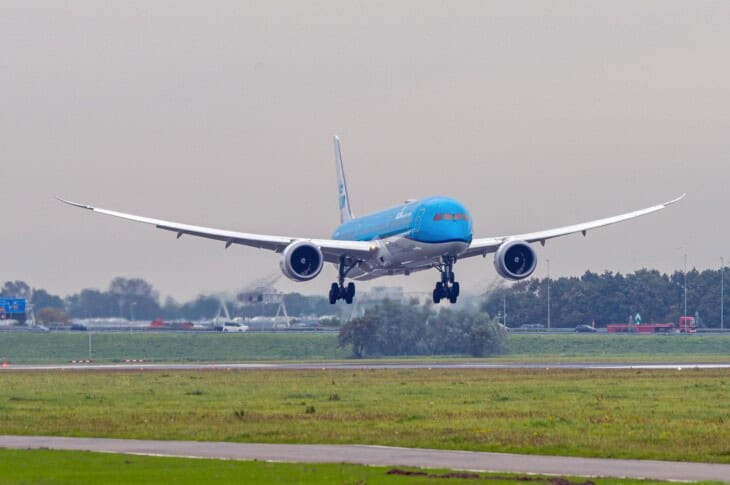
The Boeing 787-10 is the longest and highest-capacity member of the Dreamliner family. It is a twin-engine, twin-aisle widebody built almost entirely from carbon fiber composite, and yes, it is a Dreamliner: the 787-8, 787-9 and 787-10 are three lengths of the same aircraft.
At 224 ft 1 in (68.30 m) it is 18 ft (5.5 m) longer than the 787-9 and 38 ft (11.6 m) longer than the original 787-8. The wing, the cockpit, the systems and the engines are shared with the shorter variants.
That commonality is the whole point. An airline already flying the 787-9 can add 787-10s without a new pilot type rating, a separate spares pool or a second maintenance program.
The trade for that extra fuselage is range. The 787-10 carries more people than any other Dreamliner and flies them less far, which makes it a dense medium and long-haul aircraft rather than an ultra-long-haul one.

Boeing began studying a further stretch of the 787-9 in December 2005, pushed by interest from Emirates and Qantas. The idea was an aircraft with roughly the capacity of the Boeing 777-200 and the Airbus A350-900, but with a shorter range.
Singapore Airlines made it real. On May 30, 2013 the airline said it would order 30 of the stretch if Boeing launched it, and on June 18, 2013 Boeing launched the 787-10 at the Paris Air Show with orders and commitments for 102 aircraft.
Those first five customers were Air Lease Corporation with 30, Singapore Airlines with 30, United Airlines with 20, British Airways with 12 and GE Capital Aviation Services with 10.
Major assembly began in March 2016. The 787-10’s mid-fuselage sections are too large to ship to Everett, Washington, so the variant is built only in Charleston, South Carolina, making it the first Boeing airliner assembled exclusively there.
Boeing later followed it. Since March 2021 all 787 final assembly, not just the 787-10, has been done at the South Carolina factory.
The first aircraft rolled out on February 17, 2017 and flew on March 31, 2017, a first flight lasting 4 hours and 48 minutes. Singapore Airlines took the first delivery on March 25, 2018 and put the type into service on April 3, 2018.
Three different seat counts get quoted for the 787-10, and all three are correct. They just answer different questions.
The figure airlines plan around is roughly 330 in two classes. Boeing’s own benchmark layout puts 32 business seats at 85-inch pitch and 298 economy seats at 32-inch pitch, and the company’s current published range for the variant is 300 to 375 seats in two classes.
The figure most often repeated in press coverage is 336, which is the number Boeing and its customers use when describing a typical configuration. Delta used exactly that number when it ordered the type in January 2026.
The number in the specification panel on this page is 440. That is the certified maximum: the most passengers EASA has approved for emergency evacuation, in a single-class cabin with four pairs of Type A exits.
The certification is more interesting than it looks. Swap in narrower Type C exits and the approved maximum drops, to 355 with one pair changed and to 300 with two pairs changed. No airline flies a 440-seat 787-10, but the certification sets the ceiling any high-density operator could work toward.
The full specification table for the aircraft is on this page. A few of those figures get quoted against each other, so they are worth untangling.
Range. Boeing currently publishes up to 7,500 nautical miles (13,890 km) for the 787-10, achieved at maximum takeoff weight with a 49,800 lb (22.6 t) payload in standard atmosphere at sea level. Most references still carry 6,330 nautical miles, which is what Boeing published when the aircraft entered service in 2018.
The jump is not 1,170 nautical miles of new capability. Boeing restated the whole family at once, taking the 787-8 from 7,305 to 8,000 nautical miles and the 787-9 from 7,565 to 8,300, so the change is mostly in how the figure is measured.
Maximum takeoff weight. Boeing now lists 574,000 lb (260,360 kg). The EASA type certificate, at its December 2025 issue, still certified 560,000 lb (254,011 kg). The gap is the increased takeoff weight the FAA approved in March 2026, covered in the next section.
Ceiling. The 787-10 is limited to 41,100 ft, while the 787-8 and 787-9 are certified to 43,100 ft. Sources that list 43,100 ft for the whole Dreamliner family are wrong about this variant, and it is the single most commonly misreported 787-10 number.
Speed. The panel stores speeds in knots, but the certified limit is a Mach number: VMO/MMO is 350 KEAS or Mach 0.90. Mach 0.90 works out to about 516 knots at altitude, and normal cruise is Mach 0.85, or about 488 knots.
Payload. The 126,500 lb (57,500 kg) maximum payload is roughly the gap between the 425,000 lb maximum zero fuel weight and the 298,700 lb operating empty weight. It is a structural limit, not a number any airline reaches with passengers alone.
On March 23, 2026 Boeing announced that the FAA had certified an increased maximum takeoff weight for both the 787-9 and the 787-10. For the 787-10 the increase is about 14,000 lb (6,350 kg).
An airline can spend that weight in one of two ways. It buys either about 11,000 lb (5 t) of extra payload or more than 400 nautical miles (740 km) of extra range, not both at once.
Every 787-9 and 787-10 assembled as of December 2025 is structurally capable of the higher rating. Airlines can activate it at delivery or later, and some will not: a higher certified weight raises the airport and navigation fees a given aircraft pays, so the capability is only worth buying where the route needs it.
The change had been coming for years. Boeing formally acknowledged the increased gross weight variants in January 2022, and the request traces back to airlines like Air New Zealand wanting a 787 that could fly Auckland to Los Angeles without leaving payload behind.
The 787-10 is offered with two engine choices, the same pairing as the rest of the family: the Rolls-Royce Trent 1000 and the GE Aerospace GEnx-1B. On the 787-10 those are the Trent 1000-J3 and the GEnx-1B76 series.
Published thrust for the variant is usually given as 76,000 lbf (338 kN) per engine, which is the class rating and where the “76” in GEnx-1B76 comes from. The EASA type certificate lists higher certified takeoff ratings: 78,129 lbf for the Trent 1000-J3 and 78,500 lbf for the GEnx-1B76/P2, each a five-minute takeoff rating flat rated to 30 degrees C.
Thrust is the reason one big order never happened. Emirates committed to 40 787-10s at the 2017 Dubai Air Show, but Tim Clark had doubts the aircraft could hit its payload and range targets out of Dubai in summer heat. By the 2019 show Emirates had switched the order to 30 787-9s.
The flight deck comes from Rockwell Collins, now Collins Aerospace, and is common across the Dreamliner family. It uses five 15.1-inch LCD displays plus dual head-up displays, and the same supplier provides the crew alerting, communications and integrated surveillance systems.

This is the comparison that decides which Dreamliner an airline buys, and it comes down to one trade.
The 787-10 is 18 ft (5.5 m) longer and carries roughly 40 more passengers in a comparable two-class layout. Its cargo hold takes 40 LD3 containers against the 787-9’s 36, or 190.3 m³ against 172 m³.
The 787-9 flies farther. Boeing publishes up to 8,300 nautical miles for the 787-9 against 7,500 for the 787-10, and the 787-9 is certified 2,000 ft higher, which gives it more flexibility on long sectors.
The two variants share a wing and engines, so the longer aircraft is working harder for the same lift. That is the mechanism behind both the shorter range and the lower ceiling.
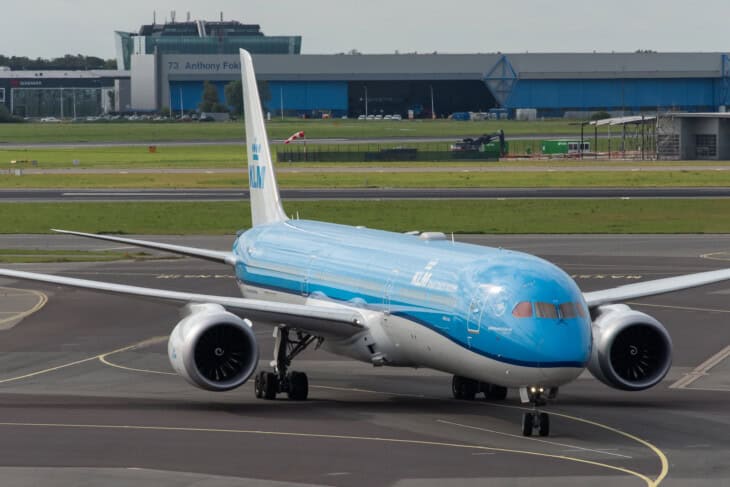
In practice, airlines buy 787-10s for dense routes of eight to twelve hours and 787-9s for the thin, very long ones. Singapore Airlines, the launch customer and still the largest operator, fits its 787-10s with a regional two-class cabin rather than a long-haul one.
Boeing positioned the 787-10 to replace the Boeing 767-400ER and the Airbus A330-300, and to compete with the Airbus A350-900. Boeing argues the 787-10 has better economics on shorter sectors, where its extra seats matter more than the A350’s extra range.
Air Lease Corporation’s Steven Udvar-Hazy put the gap more modestly than Boeing did, saying that identically configured, the 787-10 has “a little bit of an edge” on the A350-900, but less than the 10 percent Boeing claimed.
Against the 777-300ER, the 787-10 is the smaller aircraft. The 777-300ER is longer, heavier and carries more people, so the 787-10 is a replacement for it only on routes where an airline is willing to trade capacity for much lower fuel burn per flight.
The Airbus A330-900 sits below both. It is cheaper to buy and shorter-ranged, which makes it the A350’s regional stablemate rather than a direct 787-10 rival.
As of June 2026, Boeing had booked 547 orders for the 787-10 and delivered 143, leaving a backlog of 404 aircraft.
Ten airlines operated the type, with about 131 aircraft in service. Singapore Airlines is the largest operator with 26, followed by United Airlines with 21, Korean Air with 15, KLM with 14, British Airways and EVA Air with 12 each, All Nippon Airways and Etihad Airways with 10 each, Vietnam Airlines with 6 and Saudia with 5.
Deliveries have been steady rather than spectacular: 15 in 2018, 34 in 2019, then a COVID-era collapse to 12 in 2020 and none at all in 2021. The type has since run at roughly 20 a year.
The order book has grown sharply. Delta Air Lines ordered 30 firm 787-10s with options on 30 more in January 2026, aimed at its transatlantic and South American network, and Korean Air finalized an order including 25 787-10s on September 16, 2026.
The 787-10 inherits the Dreamliner cabin, and the composite fuselage is what makes it different from an aluminum aircraft. Composite avoids the metal fatigue that comes with higher cabin pressure and the corrosion that comes with higher humidity, which let Boeing change both.
Cabin altitude is the equivalent of 6,000 ft rather than the 8,000 ft of older conventional airliners, and humidity can be set as high as 15 percent against about 4 percent on previous aircraft. Cabin air comes from electrically driven compressors instead of engine bleed air.
The windows measure 10.7 by 18.4 in (27 by 47 cm), which the composite fuselage allows without extra structural reinforcement. Instead of pull-down shades they use electrochromic smart glass with five dimming levels, adjustable by passengers and overridable by the crew, though even the darkest setting keeps some transparency.
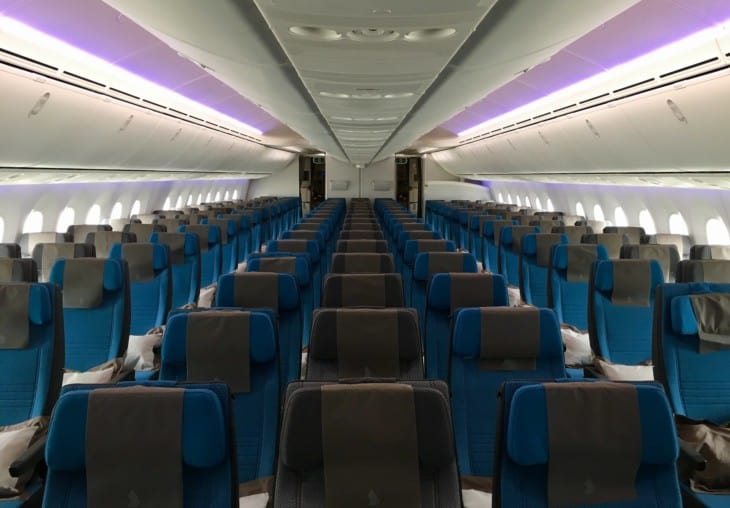
The cabin is 18 ft 0 in (5.49 m) wide, which in economy means nine seats abreast in a 3-3-3 layout on almost every operator. A handful of airlines have gone to eight abreast for a premium economy product, but nine is the norm.
If you are picking a seat, the trade is the same on any 787-10. The forward cabin is quieter because it sits ahead of the engines, the rear is noisier but often emptier, and the exit rows behind each of the four door pairs buy legroom at the cost of a fixed armrest and no under-seat storage.
Boeing’s last published list price for the 787-10 was $338.4 million, quoted for 2019. The 787-9 was $292.5 million and the 787-8 $248.3 million on the same list.
Boeing stopped publishing list prices after that, and the figures were never what anyone paid. Reported market prices for the 787-8 have run as much as 46 percent below its list price, and discounts go deeper for a launch customer or a large repeat order.
The useful comparison is the one Delta made when it ordered: the 787-10 delivers the lowest per-seat operating cost of any widebody Boeing offers, and about 25 percent lower fuel consumption than the aircraft it replaces. On a dense route, that per-seat figure matters more than the sticker.
By the measure airlines use, yes. It has the lowest per-seat operating cost of any Boeing widebody and burns about 25 percent less fuel than the aircraft it typically replaces, which is why the order book stood at 547 in June 2026 and grew again with Delta and Korean Air orders in 2026.
Its limitation is range, not quality. The 787-10 gives up roughly 800 nautical miles against the 787-9, so it is the wrong aircraft for ultra-long-haul and the right one for dense eight to twelve hour routes.
Yes. Dreamliner is the name of the whole 787 family, and the 787-10 is simply its longest variant, alongside the 787-8 and 787-9. Its ICAO type designator is B78X.
It depends on which 777. The 787-10 is 224 ft 1 in (68.30 m) long, longer than the 777-200 at about 210 ft (64 m), but shorter than the 777-300 and 777-300ER at 242 ft (73.8 m).
By weight the 787-10 is the smaller aircraft against the larger 777s. Its 574,000 lb maximum takeoff weight sits between the 777-200’s 545,000 lb and the 777-300ER’s 700,000 to 775,000 lb.
The quietest economy seats are in the forward cabin, ahead of the wing and the engines. Exit rows behind each of the four door pairs give the most legroom, but come with fixed armrests and no under-seat storage.
Almost every 787-10 operator flies nine abreast in economy, in a 3-3-3 layout, so window and aisle seats are the pairs worth targeting and the middle seat of each center block is the one to avoid.
About 330 in a typical two-class cabin, and Boeing quotes a planning range of 300 to 375 seats. The certified maximum is 440 passengers in a single-class layout with four pairs of Type A exits, though no airline flies that configuration.
Boeing currently publishes up to 7,500 nautical miles (13,890 km), measured at maximum takeoff weight with a 49,800 lb (22.6 t) payload. Older sources give 6,330 nautical miles, the figure Boeing published when the aircraft entered service in 2018.
About 9,100 ft (2,770 m) at maximum takeoff weight, in standard atmosphere at sea level with high thrust selected. That is marginally less than the 787-9’s 9,300 ft even though the 787-10 is heavier, because the 787-10 uses higher-rated engines.
The 787-10 is certified to a maximum operating altitude of 41,100 ft, against 43,100 ft for the 787-8 and 787-9. The longer fuselage sits on the same wing, so the aircraft runs out of usable lift lower down. It is a genuine difference between the variants, not a rounding error.
Only in North Charleston, South Carolina. Its mid-fuselage sections are too large to transport to Boeing’s Everett plant in Washington, which makes the 787-10 the first Boeing airliner assembled exclusively outside the Puget Sound region.
April 3, 2018, with Singapore Airlines. The aircraft first flew on March 31, 2017 and was first delivered on March 25, 2018.
Sources and references used for research and fact-checking.