

Table of Contents
Look along a row of tails at a big airport and you are reading a list of words that were never really meant to be brands. KLM, Qantas, SAS, LOT, TAP, ANA.
Most of them are legal descriptions. Somebody wrote down what the company was on the day it was registered, shortened it to fit on an aircraft, and nobody ever changed it back.
That is what makes airline names worth reading. A modern brand is engineered to mean nothing in particular so it can never go out of date, while an old airline name is a confession. It tells you how small, how local and how state-owned the company was on its first day.
What Do Airline Names Stand For?
They fall into three groups, and the group tells you roughly when the airline was born.
The oldest carry a royal warrant granted by an actual monarch. The middle group are literal descriptions, usually an acronym of a region, a ministry or a merger. The newest are coined words, chosen precisely because they mean nothing at all.
The three kinds of airline name
Royal warrant: a monarch granted the word (KLM, Royal Jordanian, Royal Air Maroc). Literal description: an acronym of the place or the paperwork (Qantas, SAS, TAP, Avianca). Coined word: invented to mean nothing, so it never expires (Vueling, Azul, easyJet).
KLM Was Royal a Month Before It Existed
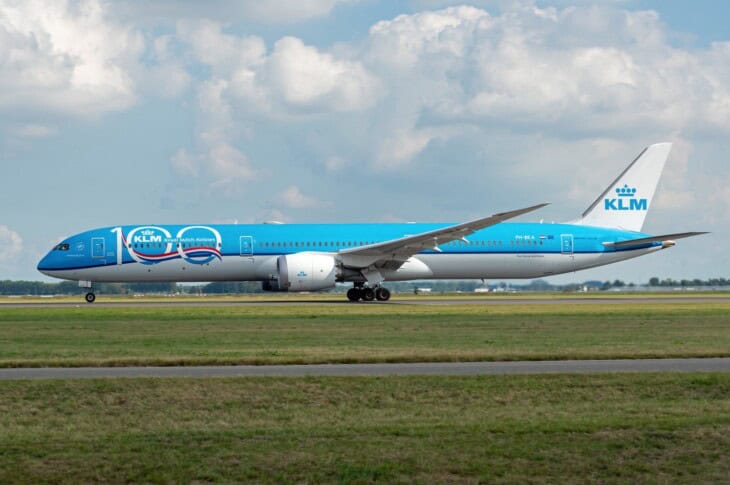
KLM is the oldest airline in the world still flying under its original name, and that name is the strangest of the lot.
The full 1919 title was Koninklijke Luchtvaart Maatschappij voor Nederland en Koloniën: Royal Aviation Company for the Netherlands and Colonies. The Dutch initials are all that survived contact with the rest of the world.
Queen Wilhelmina granted the word “Koninklijke” in September 1919. The company was not founded until 7 October, and it did not fly until 17 May 1920, when a leased de Havilland DH-16 with a British pilot took off from Croydon for Amsterdam.
So the Dutch crown ennobled an airline that owned no aircraft, employed no pilot and operated no route. It was a bet on civil aviation, placed on paper, eight months early.
"Royal" is a licence, not a title
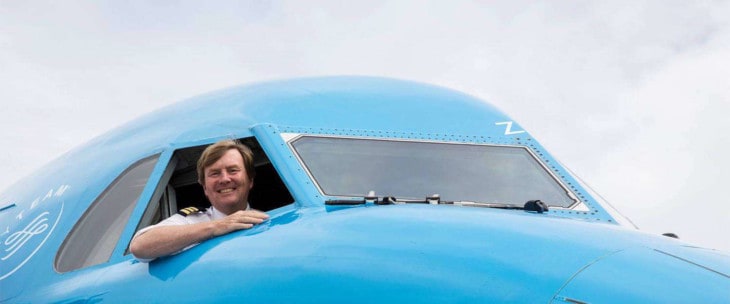
The Dutch royal predicate is granted for a maximum of 25 years, after which the holder must apply to have it reconfirmed. The usual bar is a century of trading and demonstrable national importance. KLM cleared it at zero years old, and has had to re-earn the word roughly once a generation ever since.
The colonial half of the name is long gone. The royal half is still on the fuselage, and it is still conditional: the predicate can be withdrawn if the holder damages its own reputation.
Royal Jordanian, Royal Air Maroc and Royal Brunei carry versions of the same thing. In each case the word is a state’s permission, not a marketing adjective somebody picked in a meeting.
The Acronyms Describe Companies That Stopped Existing
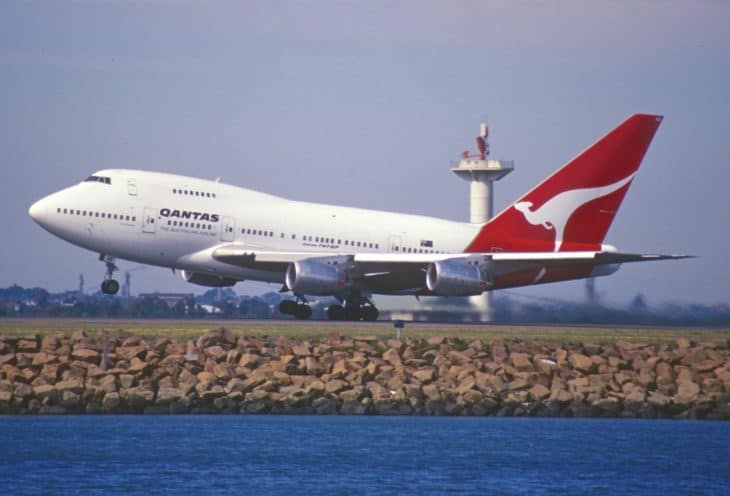
Qantas is the purest case. It stands for Queensland and Northern Territory Aerial Services, which is what a handful of aviators and pastoralists registered at Winton, in outback Queensland, on 16 November 1920.
That company was an air taxi and mail run serving two thinly populated Australian jurisdictions. Within a generation it was flying to London. The name never caught up, and by then it was worth more than accuracy would have been.
SAS is a fossil of the same kind. The Scandinavian Airlines System was assembled in 1946 from the Danish, Norwegian and Swedish national carriers, each standing behind its own government’s share.
Norway sold its last shares in 2018. Air France-KLM has since moved to take majority ownership, with the Danish state holding the largest remaining public stake. The “System” in the name is an arrangement that no longer exists.
LOT is the trap in the set. It is not an acronym at all: lot is simply the Polish word for “flight”, and the airline has been Polskie Linie Lotnicze LOT since 1929. Almost everyone outside Poland reads those three letters as initials for something.
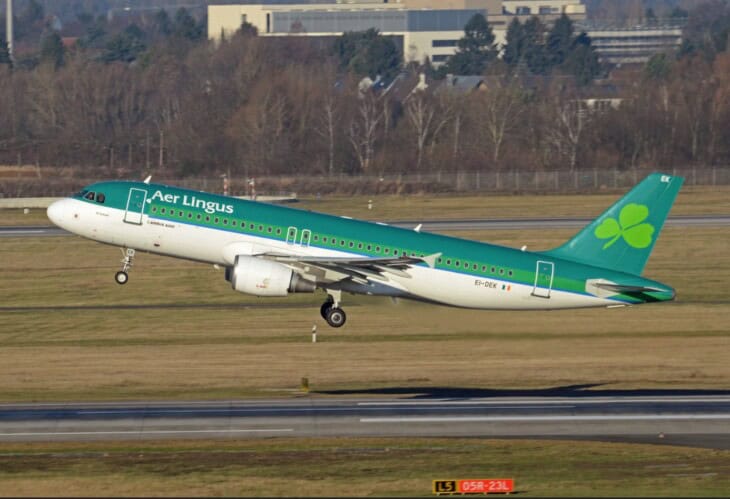
Aer Lingus is a spelling accident that stuck. It is an anglicised rendering of the Irish aer loingeas, meaning air fleet, proposed when the airline was registered in 1936. “Lingus” is not a word in Irish.
| Airline | What the name actually is | The catch |
|---|---|---|
| KLM | Koninklijke Luchtvaart Maatschappij, Dutch for Royal Aviation Company | The “Royal” was granted a month before the company was founded |
| Qantas | Queensland and Northern Territory Aerial Services | Named for two outback jurisdictions it outgrew within a decade |
| SAS | Scandinavian Airlines System | The “System” was a three-government consortium that has since dissolved |
| LOT | Not an acronym. Polish for “flight” | Read as initials by nearly everyone outside Poland |
| Aer Lingus | Anglicised Irish aer loingeas, air fleet | “Lingus” does not exist in Irish; it is a corruption of loingeas |
| TAP | Transportes Aéreos Portugueses | Bolted on “Air Portugal” in 1979 so foreigners could tell what it sold |
| ANA | All Nippon Airways | Its airline code, NH, is left over from Nippon Helicopter |
| Avianca | Aerovías del Continente Americano | Until 2004 the same six letters stood for Aerovías Nacionales de Colombia |
When the Initials Outlive the Words Behind Them
Once an airline has been three letters for long enough, the letters become the asset and the words become negotiable.
Avianca has done this in full. The acronym was coined in 1940 for Aerovías Nacionales de Colombia, National Airways of Colombia. When the airline was reorganised out of bankruptcy in December 2004, the legal name became Aerovías del Continente Americano, Airways of the American Continent.
Same six letters, different sentence, much larger ambition. The words were retrofitted to the airline rather than the other way round.

American aviation got there first. Until 1950 TWA stood for Transcontinental & Western Air, an accurate description of a domestic airline and an obstacle to becoming a global one.
Under Howard Hughes it became Trans World Airlines and kept the initials the public had already learned. That is a large part of how TWA stayed famous long after it stopped flying.
The two-letter codes fossilise in exactly the same way. ANA was founded in December 1952 as Japan Helicopter and Aeroplane Transports and became All Nippon Airways in 1957, but its code is still NH, for Nippon Helicopter. Airport codes hide the same kind of ghost, remembering airfields and men that nobody outside an archive could name.
The Names That Had to Be Replaced
Sometimes the confession becomes a liability, and the airline pays to escape it.
Trans-Canada Air Lines had an English-only name in an officially bilingual country. A 1964 Act of Parliament, proposed by a young MP named Jean Chrétien, replaced it with Air Canada, which was already the airline’s French name and worked in both languages. It took effect on 1 January 1965.
Three months later, Tasman Empire Airways Limited became Air New Zealand. TEAL had been named for the Tasman Sea and the British Empire, and by 1965 only one of those was still a useful word to have on an aircraft.
A name can also outlive the company entirely. Alitalia, a compound of ali and Italia, wings of Italy, stopped flying in October 2021. Its successor ITA Airways then paid 90 million euros at auction for the Alitalia brand and internet domain, and has never flown a single passenger under it.
That is what a famous name is worth once the airline behind it is gone: enough to buy so that nobody else can have it.
1919
A queen ennobles an airline that does not exist yet. Wilhelmina grants KLM the “Koninklijke” predicate in September, a month before the company is founded and eight months before it flies.
1920
Qantas is registered at Winton. Queensland and Northern Territory Aerial Services Limited, an outback air taxi and mail operation, files the name it still uses.
1946
Two names from opposite directions. Denmark, Norway and Sweden merge their carriers into the Scandinavian Airlines System, while two men in a Manila hotel bar invent Cathay Pacific.
1950
TWA keeps its initials and swaps its words. Transcontinental and Western Air becomes Trans World Airlines under Howard Hughes.
1965
Two flag carriers rename in one year. Trans-Canada Air Lines becomes Air Canada on 1 January, and Tasman Empire Airways becomes Air New Zealand on 1 April.
2004
Avianca rewrites the phrase behind the acronym. Aerovías Nacionales de Colombia becomes Aerovías del Continente Americano, with the same six letters on the tail.
2021
A dead airline’s name sells for 90 million euros. ITA Airways buys the Alitalia brand and domain at auction, then declines to use it.

The Myth: These Names Were Chosen to Sound Grand
The assumption worth dropping
That flag carriers picked sweeping, imperial names to project national ambition. A few did. Most were named by lawyers filling in a company registration, and several of the romantic ones were invented on the spot by people with almost no aircraft.
Pan American World Airways is the airline everyone is thinking of, and it did mean exactly what it said. It also said it well before it was true, which is part of what made Pan Am’s collapse so strange to watch.
Most of the others were paperwork. Queensland and Northern Territory Aerial Services is not ambition, it is a jurisdiction list. Transportes Aéreos Portugueses is a government department describing itself in the third person.
Even the romantic names are often accidents. Cathay Pacific was dreamed up in the bar of the Manila Hotel in 1946 by an American and an Australian who liked “Cathay”, the medieval European word for China, and added “Pacific” for an ocean they had no aircraft capable of crossing.
The rest are borrowed from somewhere older than aviation. El Al comes from the Book of Hosea and means roughly “to the skies”. Etihad is Arabic for “union”, pointing at the 1971 federation of the seven emirates.
Delta is the least grand of all. It began as a crop-dusting business in the Mississippi Delta and took the region’s name when it started carrying passengers in 1928. One of the largest airlines in the world is named after a floodplain.
Why New Airlines Pick Names That Mean Nothing
Every descriptive name has a shelf life, and modern airlines have stopped signing up for one.
Vueling, launched in Barcelona in 2004, is the Spanish vuelo with an English “-ing” bolted onto it. It names no region, no government and no aircraft type, which is precisely the point.
Azul went further and made the decision in public. David Neeleman crowdsourced the name of his Brazilian airline in 2008, drawing roughly 110,000 registered users to a suggestions site. Samba won the vote.
He overruled it and chose Azul, Portuguese for blue, on the grounds that it was more neutral and would travel better. A colour cannot date, cannot be mistranslated into a joke, and cannot be outgrown.
That is the whole modern logic. A coined name carries no history, so there is never a moment when the company has to explain why the words on its tail no longer describe it.
None of this appears on a boarding pass, but it is all still sitting there in plain sight.
The next time you look up at a tail, read the name as a date stamp. “Royal” means a monarch signed something. An acronym means a region, a ministry or a merger that mattered once. A short invented word you cannot translate means the airline was founded recently enough to know better.
Sources and references used for research and fact-checking.
- KLM Royal Dutch Airlines, The history of KLM
- KLM Newsroom, KLM's "Royal" Predicate Extended
- National Museum of Australia, Qantas established
- Britannica, Scandinavian Airlines System
- NZHistory, Manatū Taonga Ministry for Culture and Heritage, TEAL becomes Air New Zealand
- Airline History, Avianca (Aerovias del Continente Americana) history
Get the Newsletter
The latest aviation news and stories sent to your inbox.
About the Author

Tim is the owner and lead editor of AeroCorner since 2019, overseeing aviation content covering aircraft, airlines, airports, and the broader aviation industry. Through years of researching, writing, editing, and publishing aviation-focused content, he has developed extensive practical knowledge of commercial aviation and air travel. Based in Asia and a frequent traveler himself, Tim also brings firsthand passenger experience to AeroCorner’s coverage. Outside of publishing, he has also explored aviation firsthand through hands-on flight training in New Zealand.