


Table of Contents
Boeing bet that its 737 and 787 would absorb the 757’s market. Twenty-two years on, more than 400 of the originals are still flying.
Boeing rolled the 1,050th and last Boeing 757 out of its Renton factory on October 28, 2004. When that jet was delivered in 2005, Boeing explained why it had stopped: the newest 737s and “the potential of the all-new Boeing 787” would “fulfill the 757 market’s needs.”
Neither did. The aircraft now taking over the 757’s long, thin passenger routes is the Airbus A321XLR, which reached its first airline, Iberia, on October 30, 2024, almost exactly 20 years after the last 757 rolled out.
The originals have not gone anywhere. Fleet data from ch-aviation counted 436 Boeing 757s still active in February 2026, and more than 60 percent of them now carry cargo instead of passengers.
Boeing bet on two jets that were the wrong size
The 757 did not die for lack of ability. By the early 2000s, airlines were gravitating toward smaller 737s and A320s because they carried less financial risk, and a large fleet of young 757s already in service dulled demand for new ones.
A 2003 sales push for the stretched 757-300 and the 757 freighter produced only five new orders. In October 2003, after Continental Airlines switched its remaining 757-300 orders to the 737-800, Boeing announced the end of production.
What Boeing gave up was a rare combination. A 757-200 carries about 200 passengers in two classes over 3,915 nautical miles, and after the FAA cleared Rolls-Royce-powered 757s for twin-engine North Atlantic flights in 1986, airlines put them on thin transatlantic routes.


Boeing’s two answers did not match that. The 787 became a twin-aisle long-hauler: its smallest version, the 787-8, typically seats 248 people over 7,305 nautical miles, nearly twice the 757-200’s reach.
The 737 went the other way. Its largest version, the 737 MAX 10, still falls hundreds of nautical miles short of a 757-200’s range, and Boeing only completed its final certification flight on July 28, 2026, with deliveries targeted for 2027.
Boeing did study a true successor. Its New Midsize Airplane, explored from 2015 in 225-seat and 275-seat versions, was meant to replace 757s and 767s until new CEO David Calhoun ordered a clean-sheet reevaluation on January 22, 2020. It has not been launched.

436 Boeing 757s still fly, and most of them carry boxes
Boeing built 1,050 757s for 55 customers: 913 passenger 757-200s, 80 factory freighters, a single combi, and 55 of the stretched 757-300.
The February 2026 ch-aviation count, published by Simple Flying, found 436 still active with 45 operators. That includes 268 757-200s flying cargo, 132 757-200s carrying passengers, and 32 757-300s.

Those two figures hide a second life. Boeing built only 80 757s as freighters, so at least 188 of the cargo 757s flying today started out carrying passengers and were converted later.
| Operator | Active 757s | Flies them as |
|---|---|---|
| Delta Air Lines | 83 | Passenger |
| UPS Airlines | 68 | Freighter |
| FedEx Express | 63 | Freighter |
| United Airlines | 51 | Passenger |
| SF Airlines | 42 | Freighter |
Three of the five biggest 757 operators never sell a seat on one. The average active 757 is just over 30 years old, and the oldest, registered N144DC, is 43.9.
The passenger side is still busy. The type was scheduled on 11,698 commercial flights in March 2026, about 377 a day, offering more than 2.37 million seats that month.
Why the A321XLR is still not a perfect 757
In the long Boeing vs. Airbus contest, this market went to Airbus without a new airplane. The A321LR was first delivered in November 2018 with 4,000 nautical miles of range, and the A321XLR pushed that to 4,700, almost 800 more than the 757-200.
Airbus also claims 30 percent lower fuel burn per seat than “previous generation competitor aircraft.” With fuel prices elevated in 2026, that is most of the argument.
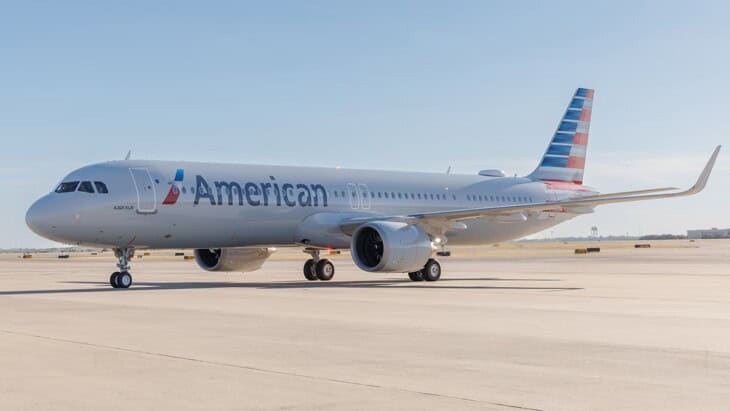
The gaps that remain are physical. The 757 has a wing of about 2,000 square feet (185 m²); the A321neo has 1,318 square feet (122.4 m²), about a third less.
That big wing and a high thrust-to-weight ratio let the 757 take off from short runways and hot, high airports where rivals needed a longer run. Simple Flying lists that short-field and high-altitude ability among the reasons FedEx still flies its 757s.
Size is the other gap. Put a 757-300 next to an A321 and the Boeing is about 32 feet (10 m) longer, and Delta’s 16 757-300s seat 234 people each.
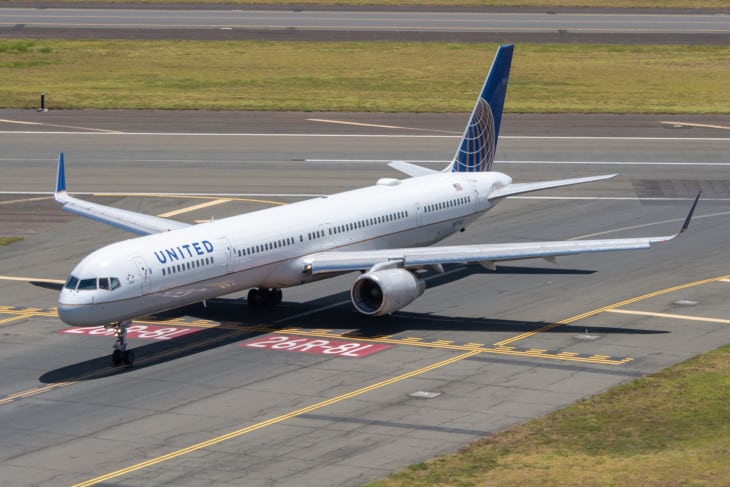
There is no exact modern equivalent for that mix of size and runway performance, which is why Delta expects at least some of its 757s to fly into the 2030s.
Even United concedes the XLR is not quite what was advertised. “Originally, when Airbus marketed it, it was a lot further than what it is right now as constructed and as built,” United executive Patrick Quayle said in August 2026.
The last passenger 757s are leaving on a timetable
United took its first A321XLR in June 2026, and on December 1 it starts flying the jet from Washington Dulles to Amsterdam and Dublin. It is set to take over United’s 757 flying, though the airline has not named a retirement date.
“As the one fleet is building up, the other fleet will be draining down,” Quayle said.
Icelandair will retire its last eight 757s in the winter of 2026-27, months ahead of its old end-of-summer-2027 plan. Fuel is the reason: director Snorri Tomasson called the jets “very high on variable cost.”

American got out earlier, retiring its 34 757s in April 2020. Delta, still the largest operator, went from 127 757s in October 2023 to 83 by August 2026.
The US government flies 10 more. In July 2026, a C-32A, the Air Force’s version of the 757-200, carried the president out of Ankara while Air Force One flew as a decoy, according to The Washington Post.
The freighters have the most time left, but not unlimited time. Because production stopped in 2004, the supply of 757s to convert is finite, and Leeham News names the converted A321 as the alternative in the same freight volume class.
Boeing said in 2005 that its other jets would take care of the 757’s market. Two decades later the passenger job is going to Airbus, and the jet Boeing stopped building was still scheduled on more than 11,000 flights as recently as March.
Sources and references used for research and fact-checking.
- Boeing, Boeing Marks Completion of its 757 Commercial Airplane Program
- Boeing, Boeing Closes Chapter in Aviation History with Final 757 Delivery
- Wikipedia, Boeing 757
- Simple Flying, How Many Boeing 757s Are Still Flying In 2026?
- Simple Flying, Why FedEx Is Hanging On To Its Aged Boeing 757s
- Airbus, Airbus delivers first A321XLR to Iberia
- Wikipedia, Airbus A321neo
- Wikipedia, Boeing 787 Dreamliner
- Boeing, 737-10 completes final certification flight
- Wikipedia, Boeing New Midsize Airplane
- Simple Flying, When Will Delta Air Lines Retire Their Boeing 757s?
- Airport Spotting, Delta Plans to Keep The Boeing 757 Flying Into the 2030s
- AirlineGeeks, United Details A321XLR Debut, 757 Phaseout
- Simple Flying, End Of An Era: Icelandair Accelerates Boeing 757 Retirement To This Winter
- Air Data News, Icelandair to retire Boeing 757 fleet earlier as fuel costs reshape network
- American Airlines Newsroom, A fond farewell to five fantastic fleets
- Leeham News and Analysis, The P2F freighters, 757-200P2F versus A321P2F
Get the Newsletter
The latest aviation news and stories sent to your inbox.
About the Author

Tim is the owner and lead editor of AeroCorner since 2019, overseeing aviation content covering aircraft, airlines, airports, and the broader aviation industry. Through years of researching, writing, editing, and publishing aviation-focused content, he has developed extensive practical knowledge of commercial aviation and air travel. Based in Asia and a frequent traveler himself, Tim also brings firsthand passenger experience to AeroCorner’s coverage. Outside of publishing, he has also explored aviation firsthand through hands-on flight training in New Zealand.