Mid Size Passenger Jets
The biggest 737 ever built, still waiting on its FAA certificate.
Updated: by Tim de Vries
The latest aviation news and stories sent to your inbox.
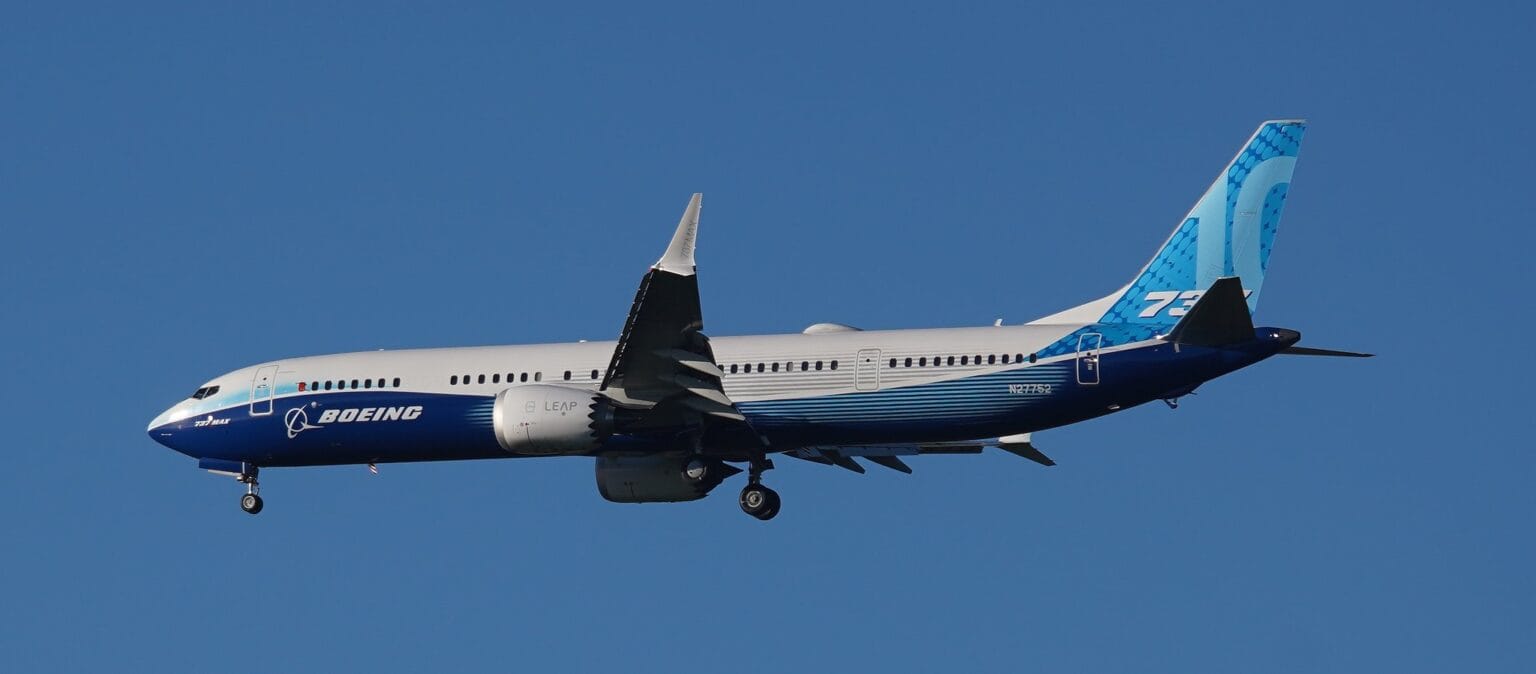
The Boeing 737 MAX 10 is the longest and highest-capacity member of the 737 family, a stretch of the 737 MAX 9 built to compete with the Airbus A321neo. It seats up to 230 passengers and has more than 1,400 orders from airlines including United, Alaska, Delta and Ryanair. It has not entered service: flight testing ended in July 2026, and in late September 2026 the FAA put certification on hold while it reviews a flight-guidance software issue.
Live Fleet Activity (B3XM)
Fetching live data…
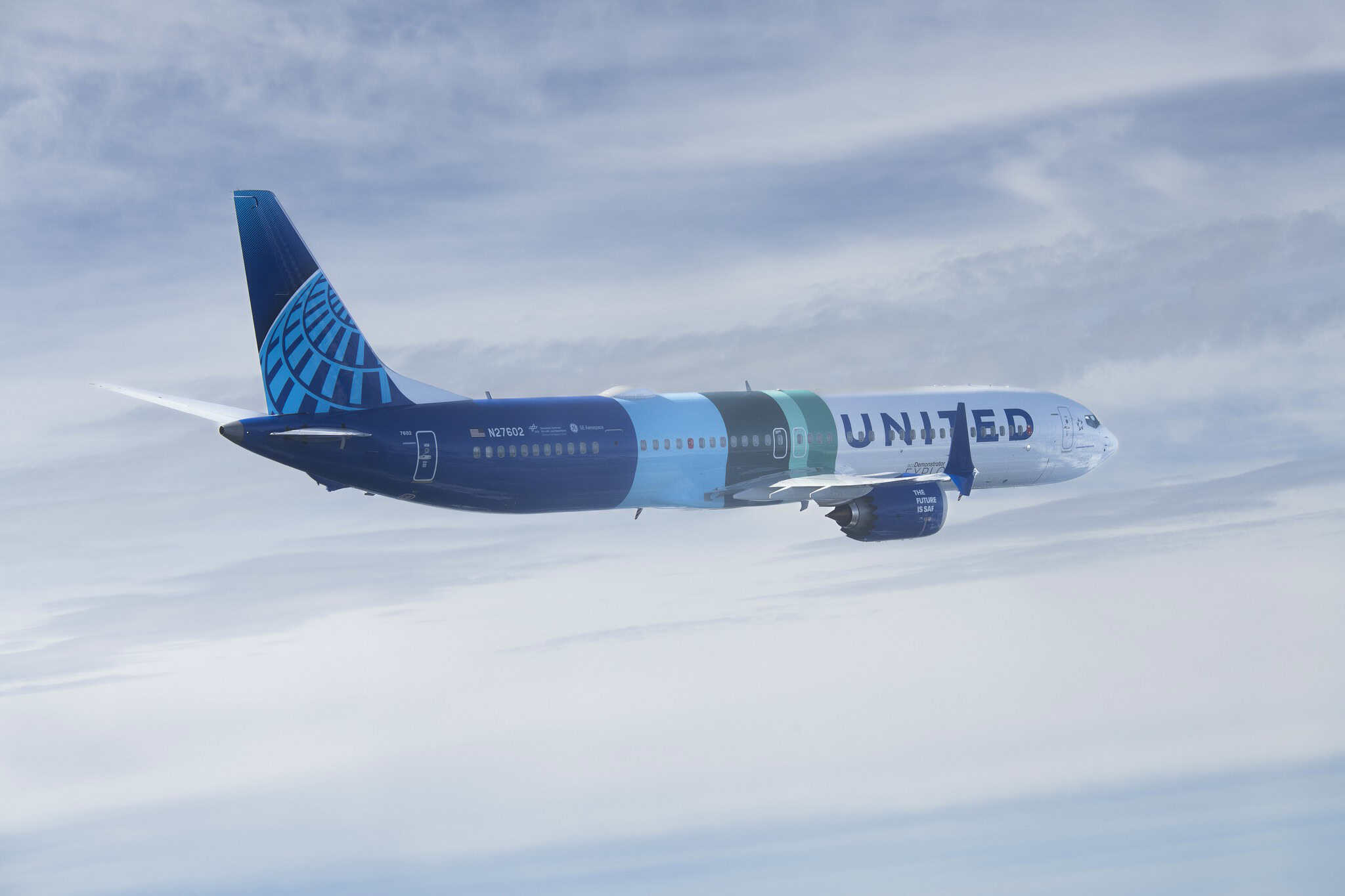


The Boeing 737 MAX 10 is the longest and highest-capacity 737 ever built. It stretches the 737 MAX 9 by 66 inches to seat up to 230 passengers, and Boeing designed it to take on the Airbus A321neo.
It is also the only MAX still without an FAA certificate. Boeing launched it in 2017, flew it in 2021 and finished certification flight testing in July 2026. On September 28, 2026, the FAA said it would delay approval while it reviews a flight-guidance software problem, and no airline has received one.
As of September 30, 2026, the 737 MAX 10 is not certified and has no approval date. The FAA says “safety dictates the certification timeline.”
The flying part is done. Boeing’s final certification flight took place on July 28, 2026, closing a test campaign of 976 flights and more than 2,060 flight hours across three test aircraft. What remained was paperwork: on September 16, CEO Kelly Ortberg told investors certification would come “very soon.”
Ten days later, Boeing disclosed a software fault in the flight management computer. According to Airways Magazine, versions 14 and 14.1 of the software can drop out of vertical navigation (VNAV) into a simpler pitch mode if the crew changes the flight plan after a missed approach, which means extra work for the pilots at a busy moment.
The problem traces to a software update introduced by GE Aerospace in November 2024, and it affects the wider MAX family rather than the MAX 10 alone. The 737-10 used version 14.1 during its certification testing.
“We haven’t concluded whether this is a safety-of-flight issue or not, but we will be delaying the 10 … until we’re satisfied that we don’t have an issue here,” FAA Administrator Bryan Bedford said on September 28. He added that “the pilots remain in control of the airliner” and that the concern is crew workload.
The FAA is convening a Corrective Action Review Board to assess the fault. Before the hold, Boeing was targeting first deliveries in 2027; since the hold it has given no new certification date.
Boeing launched the MAX 10 at the Paris Air Show on June 19, 2017, with more than 240 orders and commitments from over 10 customers. Entry into service was then planned for 2020.
The two MAX 8 crashes of 2018 and 2019 and the worldwide grounding that followed stopped work on the remaining variants, a story told in our feature on the Boeing 737 MAX crisis. The first MAX 10 was rolled out in Renton in November 2019, and it made its first flight on June 18, 2021, when Boeing was targeting service entry in 2023.
Then came a legal deadline. A 2020 safety law required aircraft certified after December 2022 to carry a modern crew-alerting system, which the 737 cockpit lacks. Congress exempted the MAX 7 and MAX 10 in December 2022, on condition that Boeing add a third angle-of-attack input and a switch to silence the stick shaker, and retrofit both to MAX jets in the U.S., Europe and Canada within three years of MAX 10 certification.
The last major hurdle was the engine anti-ice system. In 2023 Boeing found that leaving it running after icing conditions had passed could overheat the composite engine inlet, and in January 2024 it withdrew a request to exempt the MAX 7 from the fix. It finished the redesign in November 2025.
The smaller 737 MAX 7 cleared the same hurdles and was certified on August 3, 2026. That left the MAX 10 as the last variant waiting, until the software issue surfaced just as its approval appeared days away.

Boeing stretched the MAX 9 by 66 inches, adding fuselage plugs ahead of and behind the wing. The result is 143 ft 8 in (43.80 m) long, the longest 737 ever.
A longer fuselage scrapes its tail sooner on rotation, so the main landing gear had to be taller without changing the wheel wells. Boeing’s answer is a levered main gear that telescopes about 9.5 inches longer on the ground and shortens itself as it retracts, using a linkage inspired by carrier aircraft.
The other changes are smaller. Boeing lists a mid-cabin exit door with a variable exit limit rating, a lighter flat aft pressure bulkhead and a wing modified for lower drag at low speed.
What did not change is the engine. In 2016 Boeing studied an uprated LEAP-1B of about 31,000 pounds of thrust for the stretch, but the launched design kept the MAX 9’s engine. The MAX 10 flies the CFM LEAP-1B, with the top LEAP-1B28B1 rating at 2 × 29,317 lbf (130 kN) per EASA’s type certificate.
The MAX 10 is certified for a maximum of 230 seats in a single-class layout. Boeing’s product page gives 185 to 210 seats in two classes, and its airport planning document uses a 204-seat two-class layout.
The cabin uses the six-abreast 737 cross-section, derived from the Boeing 707 and 727, at 11 ft 7 in (3.54 m) wide inside. The cabin height is 7 ft 3 in (2.20 m), and the MAX 10 simply has more cabin, fitted with Boeing’s Sky Interior and LED lighting.

Airlines plan to fill it very differently. Alaska Airlines will fit 12 lie-flat Aurora Suites to at least 25 of its MAX 10s from 2028 for transcontinental first class, the first time it will offer a bed on a 737, along with a new Premium Reserve cabin on select aircraft.
Delta says nearly one-third of the seats on its MAX 10s will be premium. United planned lie-flat seats for the type in 2018, and CEO Scott Kirby told CNBC in August 2026 that hundreds of them are in storage: “They don’t fit on other airplanes.”
The full specification table for the 737 MAX 10 is on this page. A few of its figures need context, because competitors and even customers quote different ones.
Range is the most confused number. Boeing’s current figure for the MAX 10 is up to 3,100 nm (3,570 mi, 5,740 km), shorter than the MAX 9’s 3,300 nautical miles because the stretch adds weight but no extra fuel: every MAX variant carries the same tankage. Delta’s fact sheet and some databases still quote 3,300 nautical miles for the MAX 10.
Maximum takeoff weight is 198,000 lb (90,000 kg) in the heaviest option. Boeing’s airport planning document lists two lighter weight options as well.
Runway length is the MAX 10’s weak point. EUROCONTROL lists a takeoff distance of 8,850 ft (2,700 m) at maximum weight, and Leeham News has pointed out that its field performance is much poorer than the Airbus A321XLR’s, which limits it at smaller airports.
Not as a planned mission. The customer plans published so far are domestic and transcontinental: Alaska’s cross-country first class, and Delta’s core hubs such as New York, Boston, Atlanta and Los Angeles.
Airline range is quoted with light payloads and ideal conditions, and westbound North Atlantic flights fight strong headwinds, as our explainer on why transatlantic flights take a different route each way shows. Airbus’s long-range single-aisle, the Airbus A321XLR, is rated for up to 4,700 nautical miles.
The MAX 10 exists because the A321neo was winning. Airbus’s stretched single-aisle had outsold the MAX 9 roughly five to one when Boeing studied the MAX 10 in 2016.
At launch, Boeing claimed the MAX 10 would have “the lowest seat-mile cost of any single-aisle airplane ever produced,” with 5% lower trip and seat-mile costs. The trade is range and runway, where the A321XLR is well ahead, against commonality with the 737s airlines already fly.
That commonality is the MAX 10’s biggest selling point. Boeing built the MAX so pilots could fly it on their existing 737 type rating, and most of the MAX 10’s big customers already fly 737s. United, for one, bought it to replace older Boeing 757-200s.

Boeing’s order data showed 1,404 MAX 10s on order as of June 2026, second only to the 737 MAX 8 within the MAX family. United is the biggest customer, with 167 on order according to its latest quarterly filing.
Alaska Airlines ordered 105 in January 2026, the largest order in its history, with rights to 35 more. Delta has 100 on order with options for 30, and Ryanair ordered 150 with options on another 150 in 2023.
Other customers include American Airlines, Lufthansa Group, Vueling and WestJet, which is expected to be the launch customer. Boeing has built about a dozen customer airframes plus three test aircraft, and in July 2026 it began loading MAX 10 fuselages onto a new production line in Everett.
The last list price Boeing published for the MAX 10 was $134.9 million. Airlines pay far less than list after negotiation.
The MAX 10 has not carried a passenger yet, so it has no service record. It is built with the changes made to the MAX family after the crashes, and its 2026 flight tests validated the enhanced angle-of-attack system and the redesigned engine anti-ice system.
The current software fault is being treated as a workload problem, not a loss of control. Bedford said pilots train for the go-around scenario involved, and the FAA has said it “won’t hesitate to take action if needed.”
Four major U.S. airlines, Alaska, American, Southwest and United, confirmed to Airways Magazine that their in-service MAX fleets do not run the affected software versions.
As of September 30, 2026, it is not certified. Flight testing ended in July 2026, but on September 28 the FAA put approval on hold while it reviews a flight management software issue, with no new date given.
Boeing still targets first deliveries in 2027, and Alaska and United both planned their first MAX 10s for 2027. Those plans depend on certification, which has slipped repeatedly since the original 2020 target.
Up to 230 in a single-class layout. Boeing quotes 185 to 210 seats in a typical two-class cabin.
It is not planned for it. Its published range is up to 3,100 nm (3,570 mi, 5,740 km) under ideal conditions, and customers have announced domestic and transcontinental routes, not Atlantic crossings.
It has not entered service, and the FAA will not certify it until it is satisfied the current software issue is resolved. It is built with the design changes made to the MAX family after the 2018 and 2019 crashes.
The MAX 10 is 66 inches longer, seats up to 230 instead of 220, and uses a levered main landing gear to avoid tail strikes. It gives up about 200 nautical miles of range to the MAX 9 in exchange.
It is 143 ft 8 in (43.80 m) long, the longest 737 ever built, with a wingspan of 117 ft 10 in (35.92 m).
Boeing’s last published list price was $134.9 million. Airlines negotiate large discounts: Leeham News estimated some launch customers paid about a third of list.
Sources and references used for research and fact-checking.