
Mid Size Passenger Jets
The Boeing 767-300 is the stretched widebody twinjet that entered service with Japan Airlines in 1986, carrying roughly 20 percent more passengers than the 767-200 and becoming the core of the 767 family.
Updated: by Tim de Vries
The latest aviation news and stories sent to your inbox.
The Boeing 767-300 stretched the original 767-200 by about 21 feet and entered airline service with Japan Airlines on October 20, 1986. Boeing delivered 104 of the base model before the longer-range 767-300ER, the freighter and later conversions took over. This page describes the base -300, and the body explains where the 300ER differs.
Live Fleet Activity (B763)
Fetching live data…


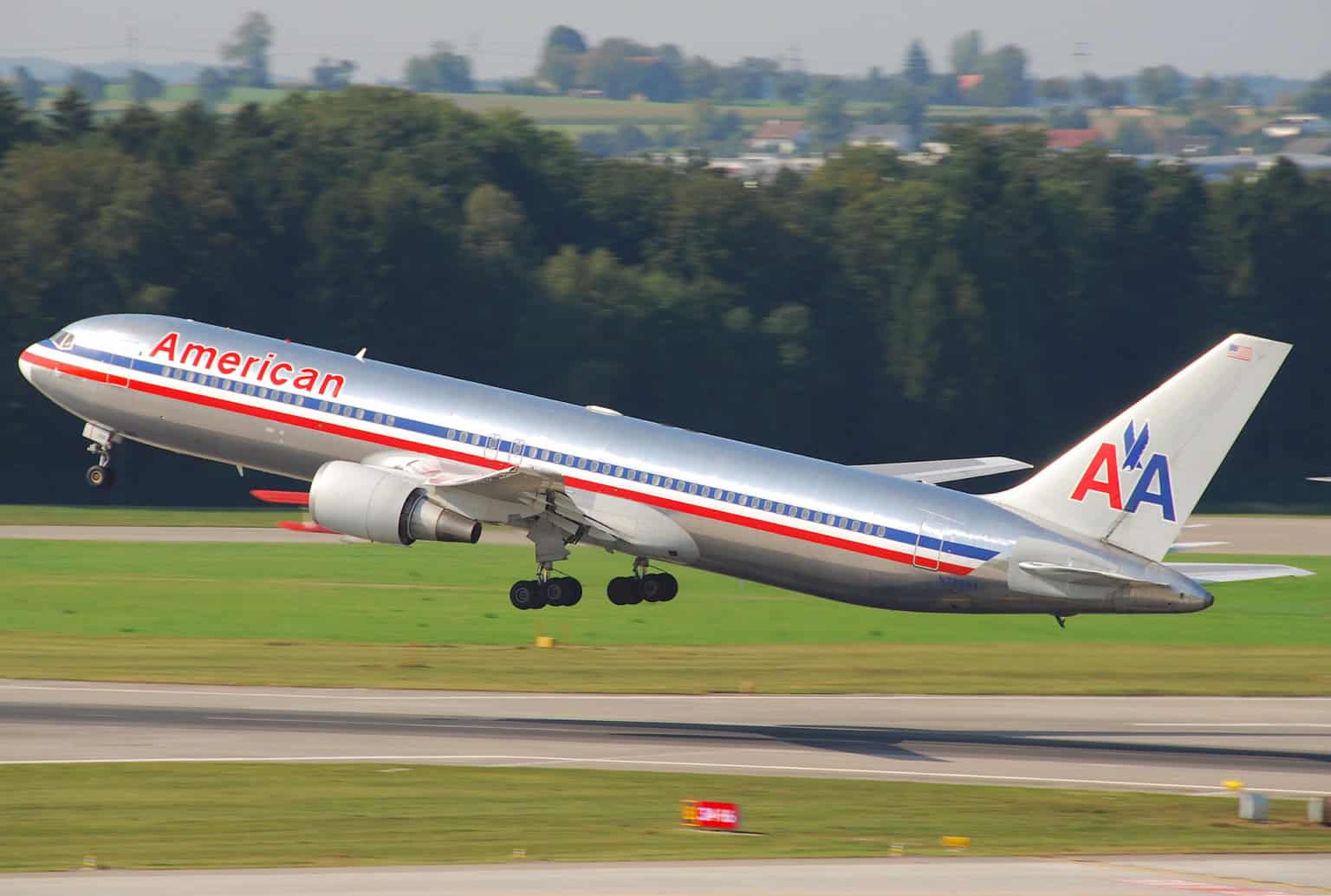
The Boeing 767-300 is the first stretched version of the 767 widebody twinjet. It is about 21 feet longer than the 767-200 and carries roughly 20 percent more passengers.
Boeing announced it in 1983, and it first flew on January 30, 1986. Japan Airlines put it into service on October 20, 1986.
This page describes the base 767-300. The longer-range 767-300ER, which Boeing sold far more of, is covered below because the two are easy to confuse.
The 767-300 and 767-300ER look the same from the outside. The ER has more fuel tankage and a higher maximum takeoff weight, which together buy much more range.
The base model typically seats 269 passengers over 3,900 nautical miles. The 300ER typically seats 218 in a three-class layout and flies 5,980 nautical miles.
Boeing delivered 104 base 767-300s and 583 767-300ERs, plus 279 of the 767-300F freighters as of September 2026. The -300 and -300ER together make up about two-thirds of all 767s sold.
“-300ER” is a marketing designation, not a separately certificated model. Both variants fly under the same FAA type certificate, and ICAO gives both the code B763.

Boeing built the stretch by adding fuselage sections both ahead of and behind the wing. The wings, engines and most systems stayed largely unchanged, which kept development cost low.
Japan Airlines placed the first order in September 1983. The 767-300ER followed, entering service with American Airlines on March 3, 1988.
The -300 and -300ER were Boeing’s second-largest widebodies, behind only the 747, until the 777 arrived in 1995. The base -300 was built from 1986 to 2000.
The freighter version, the 767-300F, debuted in October 1995 and is the model still in production today.
Buyers could choose Pratt & Whitney PW4000, General Electric CF6 or Rolls-Royce RB211 turbofans. Thrust options range from 48,000 to 60,600 lbf per engine.
British Airways took the first RB211-powered 767, a -300, in February 1990. Months later, cracks in the engine pylons grounded its 767 fleet, because the RB211 weighs 2,205 lb (1,000 kg) more than the other options. Boeing redesigned the parts in 1991 and reinforced the pylons on every 767 in service.

The full specification table for the aircraft is on this page. A few figures need context, because they change between variants.
The range in the table belongs to the base 767-300 flying a typical 269-passenger layout. A 767-300ER is the aircraft that crosses the Atlantic and the Pacific with a long-haul cabin.
The seat count of 351 is the regulatory maximum for the exit layout, not what airlines sell. The 767-300 typically has either two overwing exits or a mid-cabin door plus one overwing exit. A higher-capacity layout with an extra aft exit raises the limit from 290 to 351.
The wingspan is the same on the -200, -300 and -300ER. Retrofit blended winglets exist on many 300ERs, which is why the table lists the base wing without them.
Delta Air Lines is the largest passenger operator of the 767 family.
Many passenger 767-300s have been converted to cargo aircraft, including Israel Aerospace Industries’ 767-300BDSF program. IAI had converted 100 767-300ERs by February 2022.
The factory-built 767-300F can carry 52.7 tonnes over 3,225 nautical miles. It is why the design stayed in production long after its passenger sales faded.
The Boeing 767-200 is the shorter original, and the Boeing 767-400 is the second, longer stretch. The 767-400ER is 21 feet longer than the -300 and has raked wingtips.
The Boeing 777-300ER is a much larger long-haul twinjet one size up from the 767. The 767 itself sits above the narrowbody 757.
The service ceiling of the 767-300 is 43,100 ft (13,100 m). Airlines typically cruise lower, with the type’s cruise speed quoted at 39,000 ft.
The 777 is bigger. The 767-300 is 180 ft 3 in (54.94 m) long, and the 777-300ER is a clearly larger aircraft with more seats and more range. The 767 belongs in the mid-size widebody class.
It was the first widebody twinjet to cross the Atlantic routinely under ETOPS rules, which began loosening in 1985. The 300ER and later the freighter then kept it relevant for decades.
The ER has more fuel capacity and a higher maximum takeoff weight, so it flies 5,980 nautical miles against 3,900 for the base model. Both share the same fuselage and wing.
Boeing delivered 104 base 767-300s, 583 767-300ERs and 279 767-300Fs as of September 2026, with 9 freighters still on order.
The ICAO type designator for all 767-300 variants is B763.
Sources and references used for research and fact-checking.