

Table of Contents
On October 17, 2022, Bernard Arnault told the radio station Radio Classique that LVMH had sold its private jet after Twitter accounts spent months posting its flights. “The result now is that no one can see where I go because I rent planes when I use private planes,” he said.
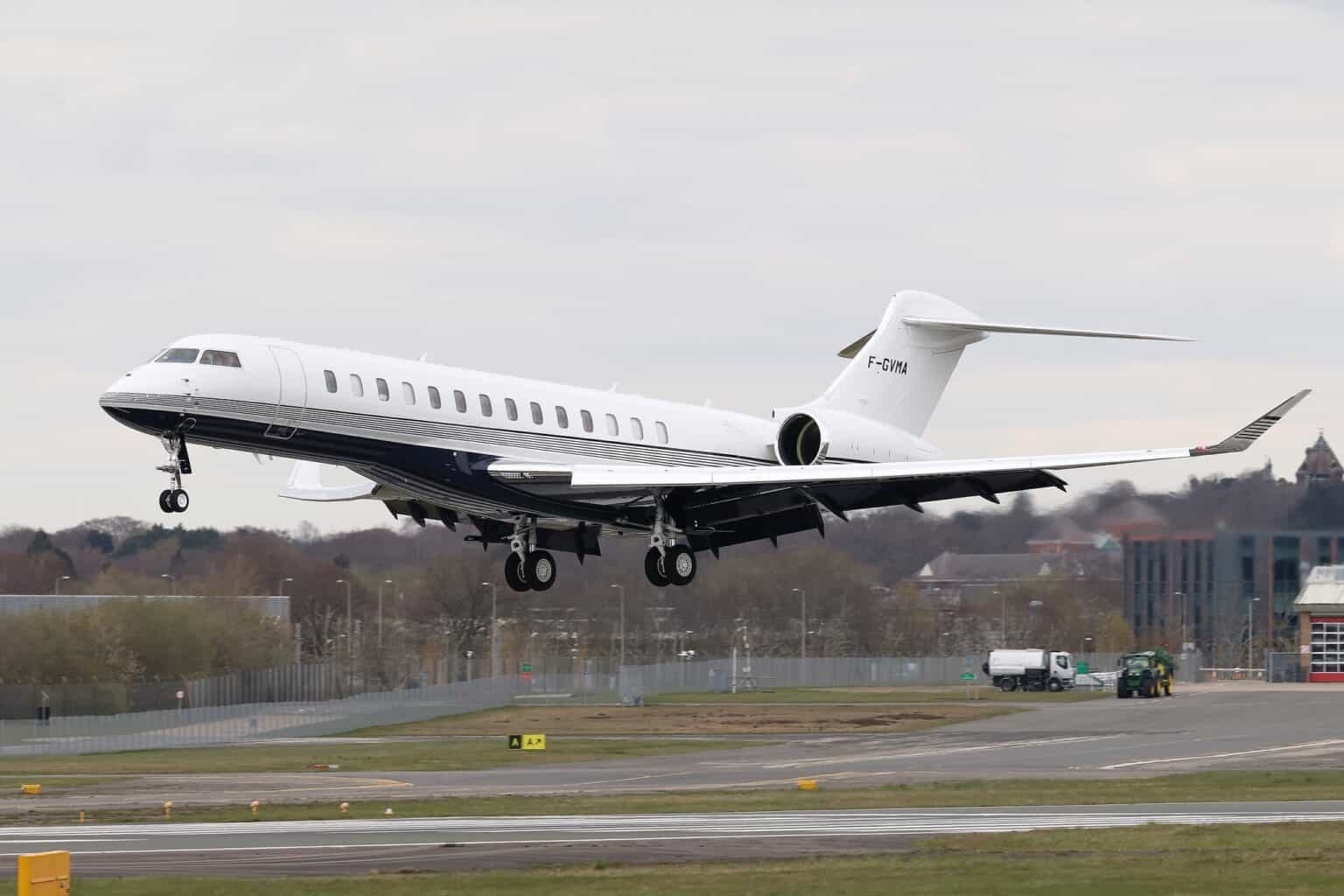
The jet was never really his, and renting did not make him invisible. It was the group’s Bombardier Global 7500, and a rented jet broadcasts its position exactly like an owned one. What Arnault gave up was the one public link between a tail number and his name.
This account is built from the French civil aircraft register (DGAC, October 2026 file), Arnault’s own words on Radio Classique as reported by Bloomberg, his son Antoine’s interviews, and the European ADS-B rules.
Spring 2022
The trackers start. Two Twitter accounts, @i_fly_Bernard and @laviondebernard, begin posting the flights of LVMH’s jet and the jets of other French billionaires, and highlighting their emissions.
Summer 2022
The jet is sold. LVMH sells its Bombardier Global 7500 over the summer, Antoine Arnault later says. Private jets have become a political fight in France.
Sept. 1, 2022
Off the French register. A tracker account posts that LVMH’s private jet has not been registered in France since that date.
Sept. 10, 2022
The trackers notice. Bernard’s Airplane posts: “So Bernard, are you hiding?”
Oct. 2022
The defense. On France 5’s C à Vous, Antoine Arnault calls the plane “a work tool” in a “hyper-competitive” industry.
Oct. 17, 2022
The admission. Bernard Arnault confirms the sale on Radio Classique, a station LVMH owns, and says he now rents planes.
July 21, 2025
The return to private aviation. L Catterton, 40% owned by LVMH and the Arnault family office, leads an $800 million investment for a 20% stake in Flexjet.
Oct. 2026
The record today. The French register still lists F-GVMA, Global 7500 serial number 70020, as a deregistered aircraft, with no owner data.
What happened
For about six months in 2022, two Twitter accounts, I Fly Bernard (@i_fly_Bernard) and Bernard’s Airplane (@laviondebernard), followed the flights of French billionaires and their companies. I Fly Bernard’s bio read: “63 French billionaires emit as much CO2 as 50 per cent of the population.”
Their main subject was LVMH’s Bombardier Global 7500, registered F-GVMA, the largest business jet Bombardier built at the time. Euronews reported that the two accounts had built more than 100,000 followers between them.
The timing mattered. Private jets had turned into a political fight in France that summer, with arguments over whether to ban, tax or regulate private flights. The trackers supplied the evidence for each side of it.
Then the jet disappeared from the feeds. One tracker account posted that LVMH’s private jet had not been registered in France since September 1, 2022. On September 10, Bernard’s Airplane asked: “So Bernard, are you hiding?”
Antoine Arnault, Bernard’s son and an LVMH board member, defended the plane on France 5’s C à Vous. “This plane is a work tool,” he said. “Our industry is hyper-competitive.”
On October 17, Bernard Arnault confirmed it on Radio Classique. “Indeed, with all these stories, the group had a plane and we sold it,” he said, before adding the line every outlet led with: no one could now see where he went, because he rented planes.


What the record shows
The French civil aircraft register, kept by the DGAC, still carries the jet. Its October 2026 data file lists F-GVMA as a Bombardier BD-700-2A12, the Global 7500’s certification name, serial number 70020.
The owner, lessee and mortgage fields are empty. The register explains why: aircraft struck off the register “ne mentionnent plus les données relatives aux personnes,” no longer show any data about people, under the EU’s GDPR privacy rules.
So the record confirms the part of the story that can be checked: the Global 7500 that flew as F-GVMA is no longer on the French register. It cannot confirm the buyer. We did not find serial number 70020 on the US register either, and we are not printing a new registration we could not verify.
The serial number is the constant. A registration can change many times over an airframe’s life, but the manufacturer’s serial number, 70020 here, never does, which is how a sold jet is traced from one country’s register to the next.
The register also shows what did not happen next. No aircraft in the October 2026 file lists an owner or lessee with LVMH in its name, so we found no sign of a French-registered replacement.
The ownership was corporate from the start. Arnault’s own words were “the group had a plane,” and Antoine’s defense was about competitors, not comfort. “It’s not very good that our competitors can know where we are at any moment,” he said on the radio. “That can give ideas, it can also give leads, clues.”
What most accounts get wrong
Most headlines said Arnault sold his private jet so he could not be tracked. Two things in that sentence are off. The jet belonged to LVMH, which is how both Arnaults described it. And renting does not hide an aircraft: a chartered business jet in Europe broadcasts its identity and position just as the Global 7500 did. What renting hides is the passenger. The trackers can still follow the plane. They just no longer know which plane to follow.
Why renting beats tail-number tracking
Accounts like I Fly Bernard do not intercept anything secret. A business jet flying under instrument flight rules in Europe has to transmit ADS-B Out, an automatic broadcast of its identity, position and altitude, if it weighs 12,566 pounds (5,700 kg) or more at takeoff or cruises faster than 250 knots.
That requirement comes from EU Regulation 1207/2011 and its later amendments. The broadcast carries the aircraft’s unique 24-bit address, which its state of registry assigns, and which maps to one registration. Volunteers with inexpensive ground receivers pick it up and pool it online.
The last link is the register. The French register still names a company that owns an aircraft today: its live entries list owners and lessees, and only the addresses of private individuals are withheld. A corporate jet on that register is a tail number with a company name attached.
Put those three together and an owned jet tracks itself. The aircraft broadcasts, the receivers hear it, and the register says whose it is. That chain is what made F-GVMA a daily post.
A chartered jet breaks the chain at the last step. The broadcast still goes out, but the register names the charter operator or its lessor, and the same airframe might carry a different client tomorrow. A tracker sees a jet land in Paris, not who stepped off it.
Selling the jet abroad breaks the chain a second way. An aircraft that moves to another country’s register gets a new registration, and with it a new 24-bit address, so a tracker watching for F-GVMA’s old code hears nothing.
That is what the trackers ran into in September 2022. The mark F-GVMA left the register, and whatever the airframe flew as next, nothing on the map tied it to LVMH.
That is the real meaning of “no one can see where I go.” The planes are as visible as ever. The person has simply stopped being attached to any one of them.
That is also why the same tactic does not work for a celebrity who keeps one jet, like the Falcon 7X at the center of the Taylor Swift jet-tracking fight.
Charter carries a cost an owner does not pay: the aircraft is not always the same, not always where you want it, and not set up the way you left it.
Jet cards and fractional shares, which sell guaranteed access to a fleet, are the middle ground the private aviation industry sells against that problem. The cheapest version of fleet flying is the empty leg flight.
What changed
For LVMH, the trackers went quiet on the one jet they could name. Nothing changed in the rules: the European ADS-B mandate still applies to every jet of that size, owned or chartered.
The bigger change came three years later, and it ran the other way. On July 21, 2025, L Catterton, a private equity firm that CNBC reported is 40% owned by LVMH and Arnault’s family office, led an $800 million investment for a 20% stake in Flexjet.
Flexjet sells fractional ownership, leases and jet cards, and CNBC put its fleet at 318 aircraft at the time. Directional Aviation Capital kept control of the company, and the deal included brand partnerships and collaborations.
There is no public record of which aircraft Arnault flies on today, and we are not guessing.
But the structure he described in 2022, flying private without owning the plane, is exactly the model Flexjet sells, and it is the kind of flying that leaves no name on any one tail. Compare Elon Musk’s private jets, which are still owned, still registered, and still tracked.
FAQ
Sources and references used for research and fact-checking.
- Direction Générale de l'Aviation Civile (DGAC), Registre d'immatriculation des aéronefs, data file (October 2026): F-GVMA, Bombardier BD-700-2A12, serial 70020
- Fortune (Bloomberg), LVMH boss Arnault sells private jet so people on Twitter won't track him
- Euronews, World's second richest man sells private jet after Twitter activists track every flight
- Entrepreneur, The Second-Richest Man in the World Sold His Private Jet, Thanks to Twitter Users
- CNBC via NBC Washington, LVMH-backed investor group takes 20% stake in private jet company Flexjet
- Universal Weather and Aviation, ADS-B Update 2026
Get the Newsletter
The latest aviation news and stories sent to your inbox.
About the Author

Tim is the owner and lead editor of AeroCorner since 2019, overseeing aviation content covering aircraft, airlines, airports, and the broader aviation industry. Through years of researching, writing, editing, and publishing aviation-focused content, he has developed extensive practical knowledge of commercial aviation and air travel. Based in Asia and a frequent traveler himself, Tim also brings firsthand passenger experience to AeroCorner’s coverage. Outside of publishing, he has also explored aviation firsthand through hands-on flight training in New Zealand.