Jumbo Passenger Jets
Boeing 787-10 Dreamliner
ICAO: B78X
Boeing's largest twin-engine jet, built to replace the 777-300ER with a folding wing and new GE9X engines
The latest aviation news and stories sent to your inbox.
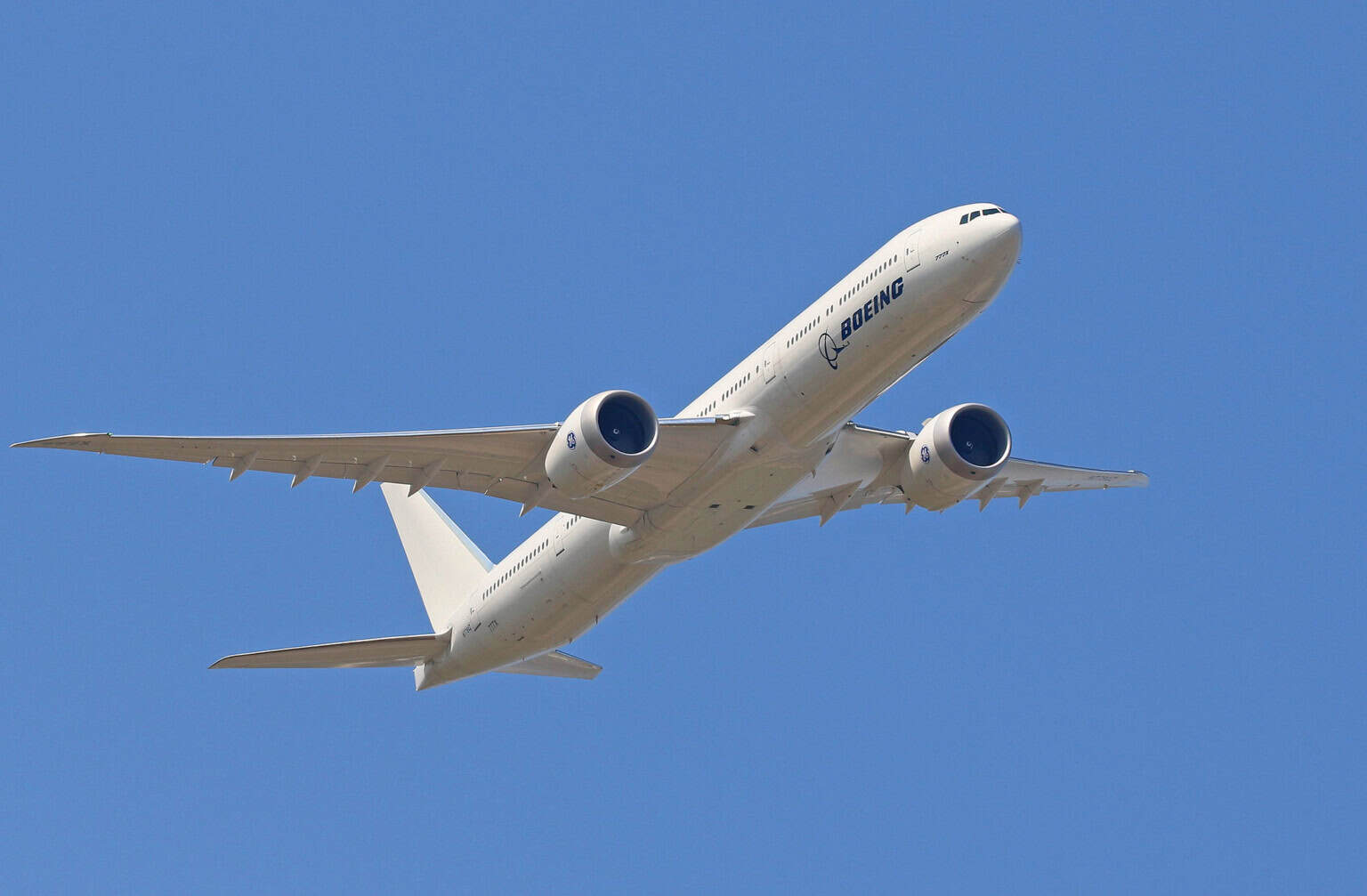
The Boeing 777-9 is the larger of Boeing’s two new 777X widebody jets, built to succeed the 777-300ER with a wider cabin, a longer folding wing, and new General Electric GE9X engines. It seats up to 426 passengers and flies as far as 8,000 nautical miles (14,820 km). First flown in January 2020, it is now completing FAA certification testing, with first delivery to launch customer Lufthansa expected in 2027.
Live Fleet Activity (B779)
Fetching live data…

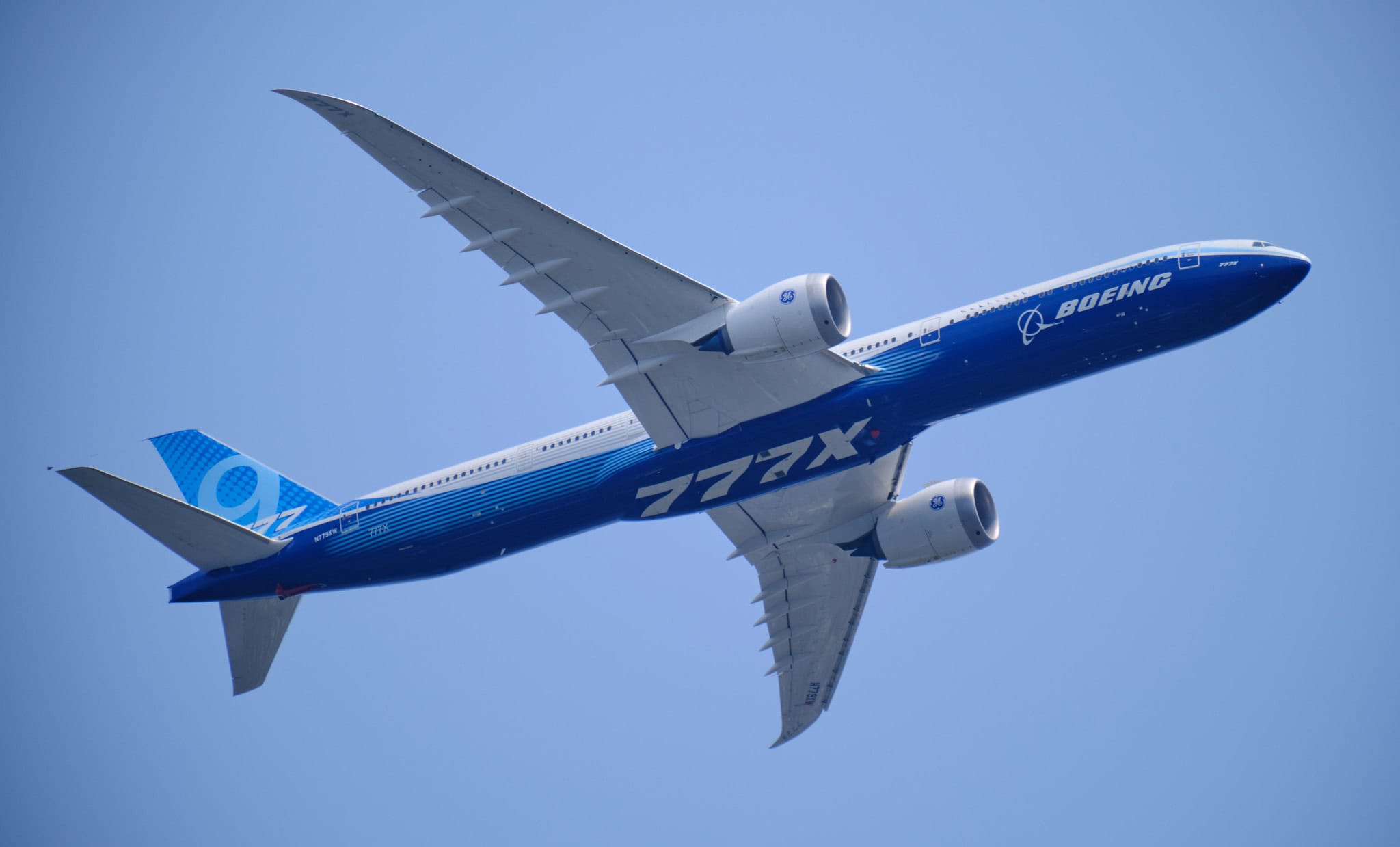


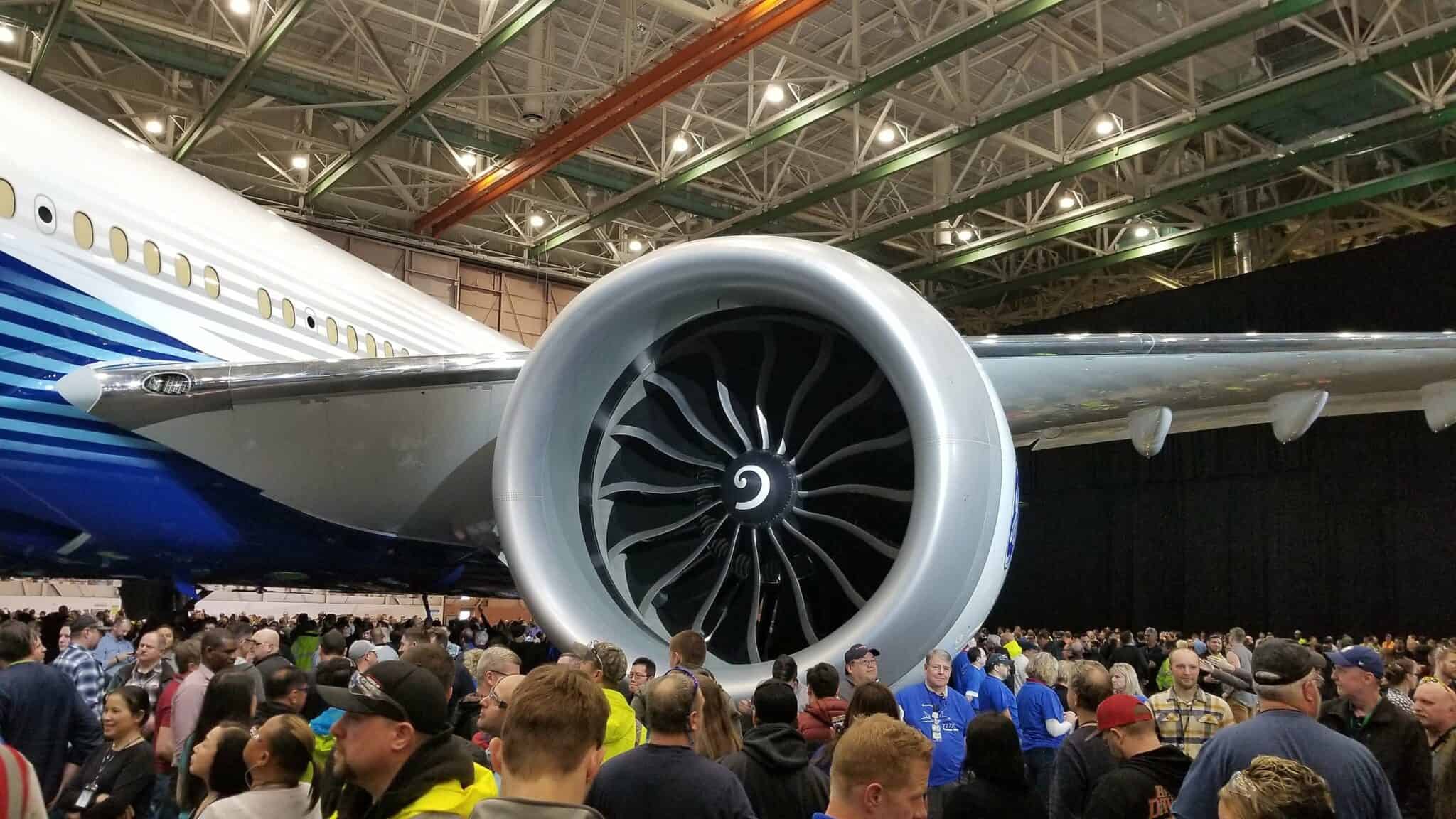

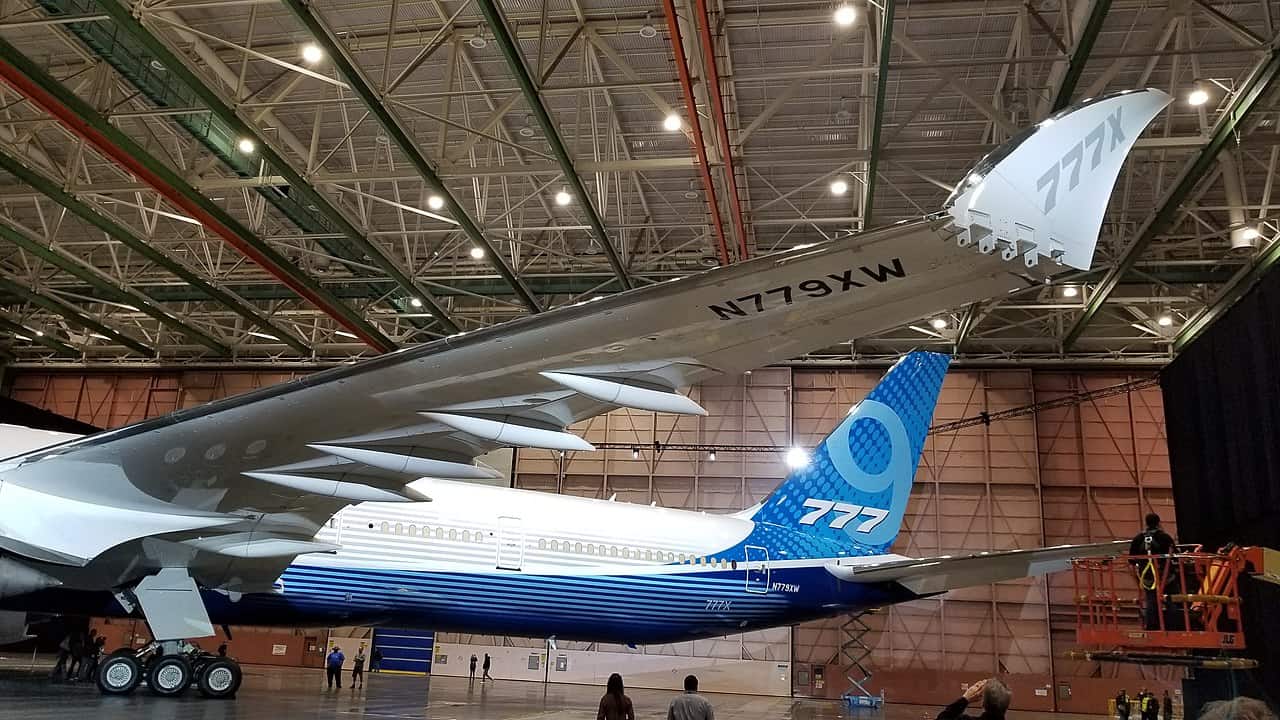

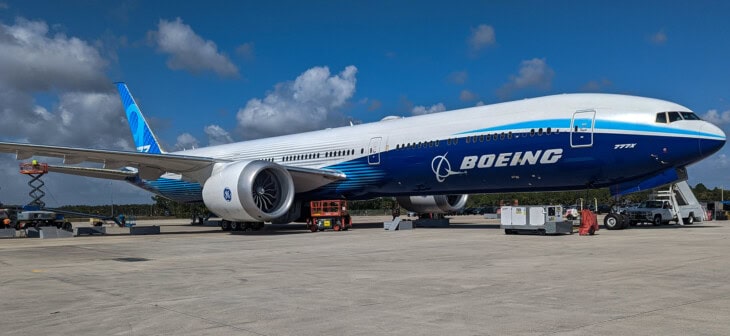
The Boeing 777-9 is the larger of Boeing’s two 777X widebody jets, built to replace the 777-300ER with a bigger cabin, longer folding wings, and a new generation of General Electric engines. It seats up to 426 passengers and flies as far as 8,000 nautical miles (14,820 km).
Boeing first planned to deliver the 777-9 in 2020. After five years of delays, flight-test aircraft are now well into FAA certification, and Lufthansa is due to take the first one in 2027.
The 777-9 is the highest-capacity twin-engine jet Boeing has ever built, and the launch member of the 777X family alongside the smaller, longer-range 777-8. It is powered by two General Electric GE9X engines, the largest jet engines ever certified, each producing 110,000 lb of thrust.
Its signature feature is a folding wingtip. The wing spans 235 feet 5 inches (71.8 m) in flight, wider than an Airbus A350-1000, then folds inward by 11 feet on each side so the aircraft can still use standard airport gates built for the 777-300ER.
Boeing launched the 777X program at the 2013 Dubai Airshow, where Emirates, Lufthansa, Etihad, and Cathay Pacific placed initial orders. Lufthansa is the launch customer for the 777-9 specifically.
The first 777-9 airframe rolled out at Boeing’s Everett, Washington plant in March 2019, and the aircraft made its maiden flight on January 25, 2020. Boeing’s original target was to deliver the first 777-9 in 2020.
That schedule slipped repeatedly. A GE9X engine compressor issue surfaced in 2019, the FAA tightened its certification requirements for new derivative aircraft after the 737 MAX grounding, COVID-19 disrupted the test program, and cracked engine-mounting hardware was found on a test aircraft in August 2024, halting flights for several months.
Flight testing resumed on January 16, 2025. As of October 2025, Boeing and its airline customers expect the first 777-9 delivery to slip once more, to 2027, seven years behind the original plan.
The 777-9 is now deep into the FAA’s Type Inspection Authorization process, the formal flight-test phase that leads to certification. The FAA cleared Boeing to begin TIA Phase 3 on November 6, 2025, then approved Phase 4A in March 2026.
In May 2026, Boeing flew Lufthansa’s first production 777-9, fitted with a full passenger cabin, for the first time. The program entered TIA Phase 4B in June 2026, the stage where FAA flight crews fly the aircraft themselves rather than just observing.
Boeing has built five 777-9 test aircraft, and a fourth production airframe is running a separate ground-based fatigue test, simulating a full lifetime of flight cycles at roughly 160 cycles a day. By mid-2026 it had passed 63,000 cycles on the way to a 120,000-cycle target meant to demonstrate three lifetimes of structural durability.
The 777-9 is 251 feet 9 inches (76.7 m) long and 64 feet 1 inch (19.5 m) tall, making it the longest commercial jet Boeing builds. Maximum takeoff weight is 775,000 lb (351,534 kg).
Boeing rates the cabin for 375 to 450 passengers in a two-class layout, with 414 as the commonly cited reference figure and up to 426 in a denser configuration. Cabin width is 235 inches (5.97 m), about 16 inches wider than the A350’s cabin, letting the 777-9 keep 10-abreast economy seating with 18-inch-wide seats.
Range is 8,000 nautical miles (14,820 km), enough to connect most city pairs nonstop, including long transpacific and Europe-to-Australia routes. Fuel capacity is 52,136 US gallons (197,356 liters).
Boeing says the 777-9 burns 20% less fuel per seat and produces a 40% smaller noise footprint than the 777-300ER it replaces, largely from the GE9X engines and the longer, more efficient wing.
The 777-8 is the 777-9’s smaller sibling in the same 777X family, sharing the same wing, engines, and flight deck. It seats fewer passengers, 350 to 425 in two-class configuration, in exchange for more range.
Boeing rates the 777-8 at up to 9,500 nautical miles versus the 777-9’s 8,000, a gap wide enough that airlines pick between the two based on whether a route needs more seats or more range. The 777-8 is also shorter, at 232 feet 6 inches (70.9 m) against the 777-9’s 251 feet 9 inches.
Qatar Airways is the only announced 777-8 passenger customer so far; most 777X orders, including the largest from Emirates, are for the 777-9.
The 777-300ER has been Boeing’s best-selling widebody for two decades, and the 777-9 is meant to succeed it on the same routes with a meaningfully lower cost per seat. Both aircraft carry roughly the same passenger count in practice, but the 777-9’s GE9X engines and folding wing cut fuel burn by around 20% per seat.
The 777-9’s extended wingspan would not fit existing 777-300ER gates without the folding wingtip. That single mechanism is what let Boeing add span, and the aerodynamic efficiency that comes with it, without forcing airports to rebuild.
As of late 2025, the 777-9 has more than 600 firm orders across its customer base. Emirates is the largest buyer by a wide margin, with 270 aircraft on order, followed by Qatar Airways, Singapore Airlines, Cathay Pacific, British Airways, ANA, and launch customer Lufthansa.
Emirates has also pushed back publicly on taking early-production 777-9s, preferring to wait for aircraft built to the latest standard once Boeing works through the post-certification production ramp.
It combines the largest passenger cabin of any twin-engine jet Boeing builds with a folding wingtip that lets a longer, more efficient wing fit existing airport gates. Its GE9X engines are the largest and most powerful jet engines ever certified.
No. The 777X is the overall program name for Boeing’s two new widebody variants, the 777-8 and the 777-9. The 777-9 is the larger, higher-capacity, shorter-range member of that family.
It has been delayed roughly five years past its original 2020 target because of an engine compressor issue, tighter FAA certification rules introduced after the 737 MAX, COVID-19 disruption, and a 2024 engine-mount hardware crack that grounded the flight-test fleet for months. It is now in FAA Type Inspection Authorization testing, with first delivery to Lufthansa expected in 2027.
No. The Airbus A380 is significantly larger, with a double-deck cabin seating well over 500 passengers and a wingspan of about 261 feet (79.75 m) against the 777-9’s 235 feet 5 inches. The 777-9 is the largest twin-engine jet, not the largest airliner overall.
Sources and references used for research and fact-checking.