Military Transport Planes
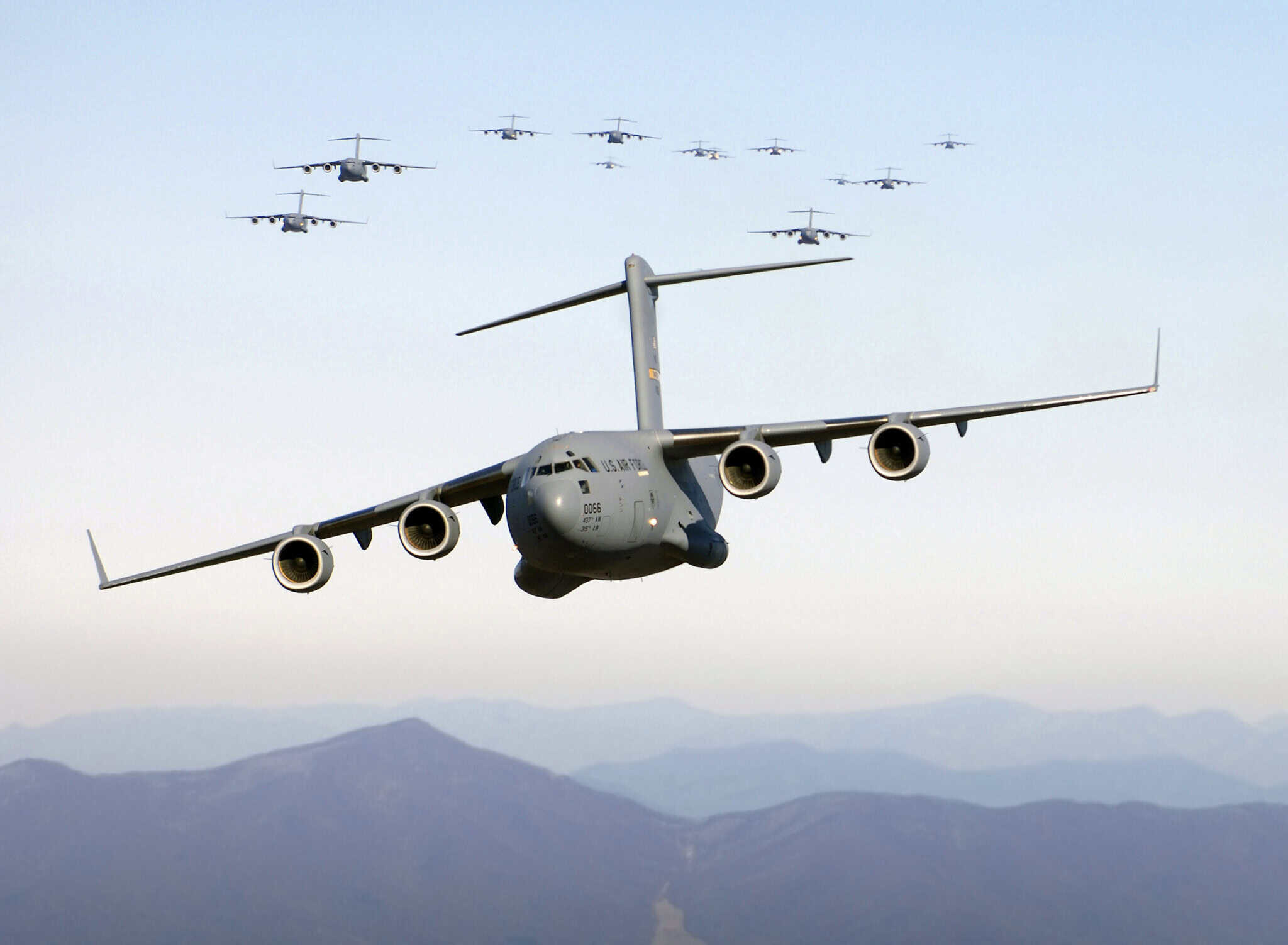
The Boeing C-17 Globemaster III is a four-engine military transport that carries heavy cargo between continents like a strategic airlifter, then lands it on short, rough runways near the front like a tactical one.
Updated: by Tim de Vries
The latest aviation news and stories sent to your inbox.
The Boeing C-17 Globemaster III is a four-engine military transport that flies heavy cargo between continents and then lands it on short, austere runways near the front line. First flown in 1991, it entered U.S. Air Force service in 1995. Production ended in 2015, and the Air Force plans to keep the fleet flying until 2075.
Live Fleet Activity (C17)
Fetching live data…


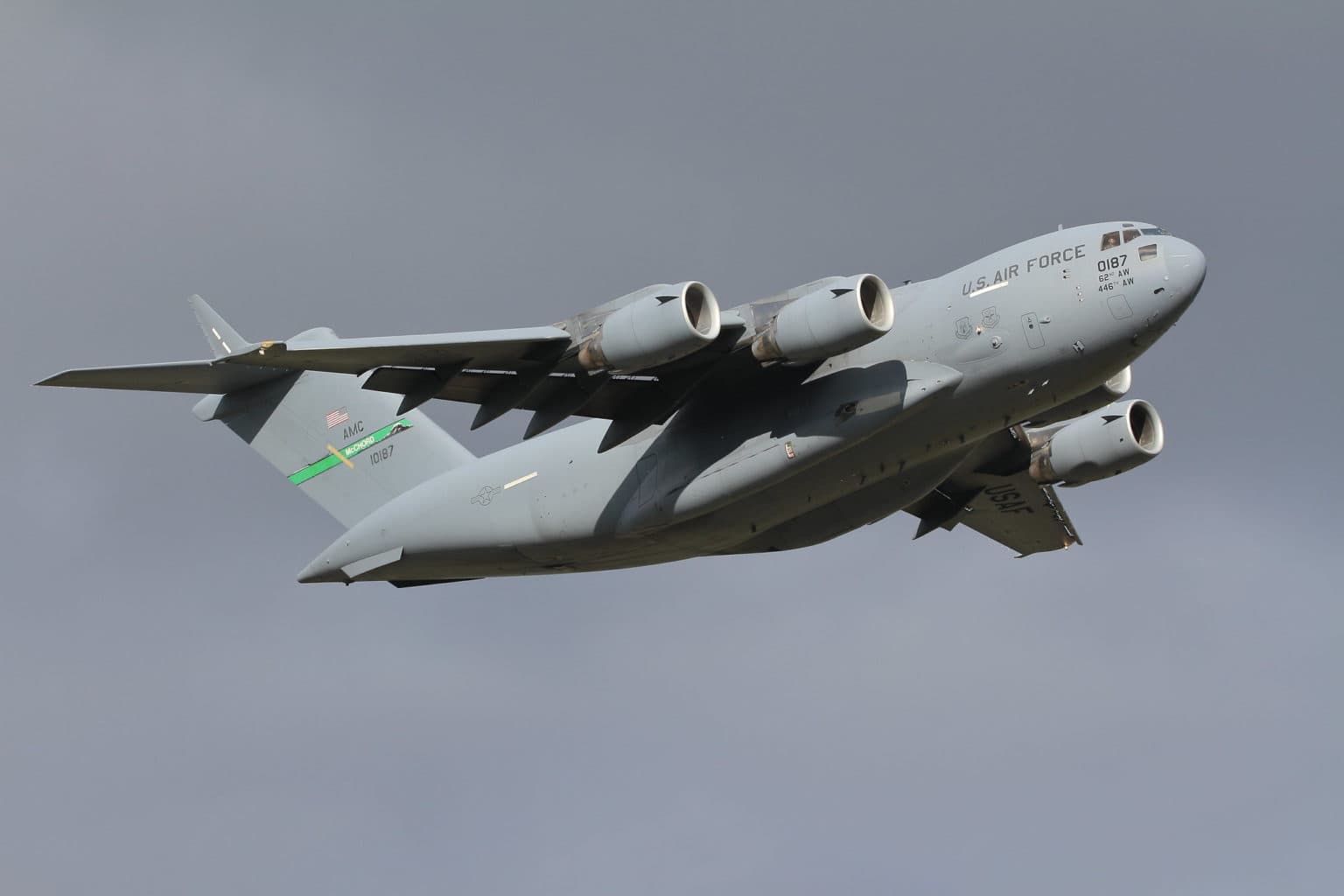
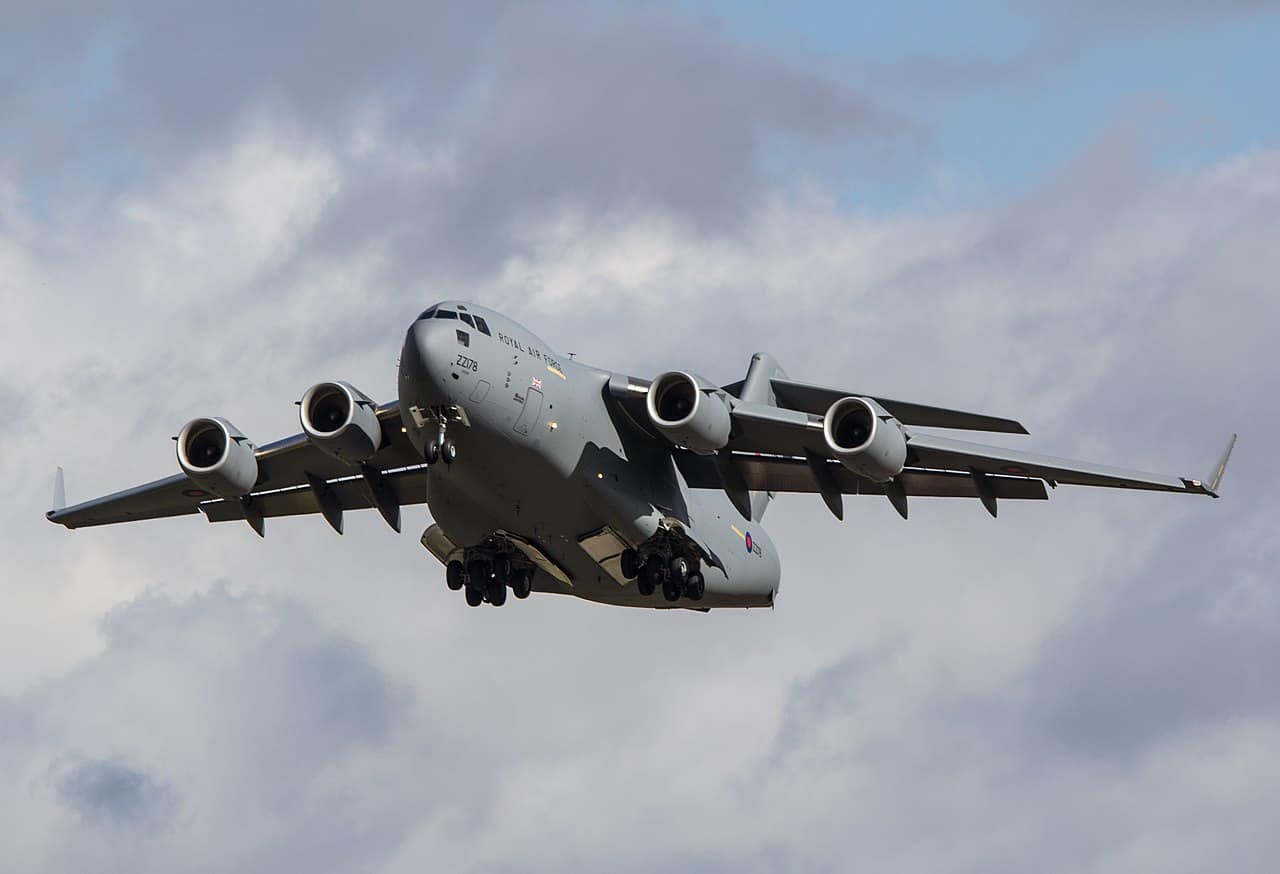
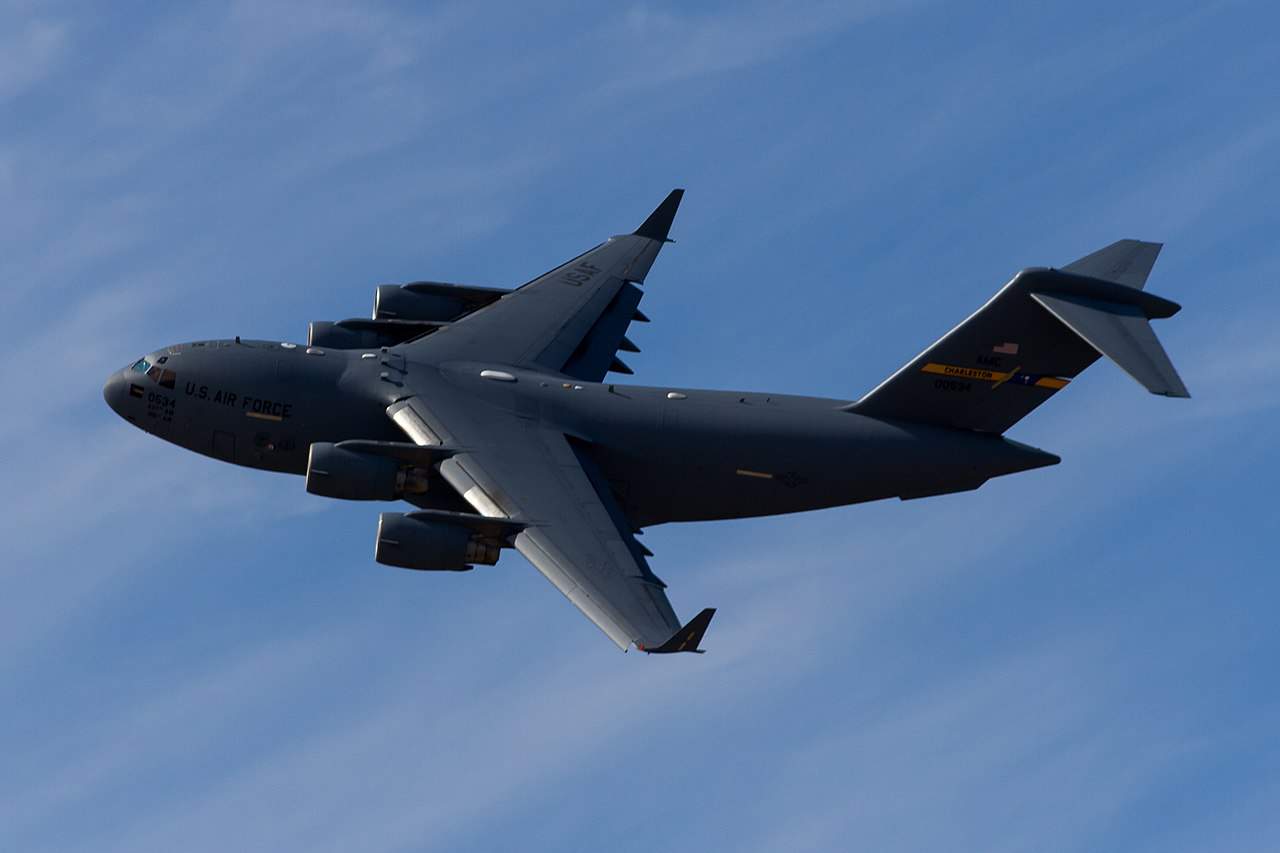
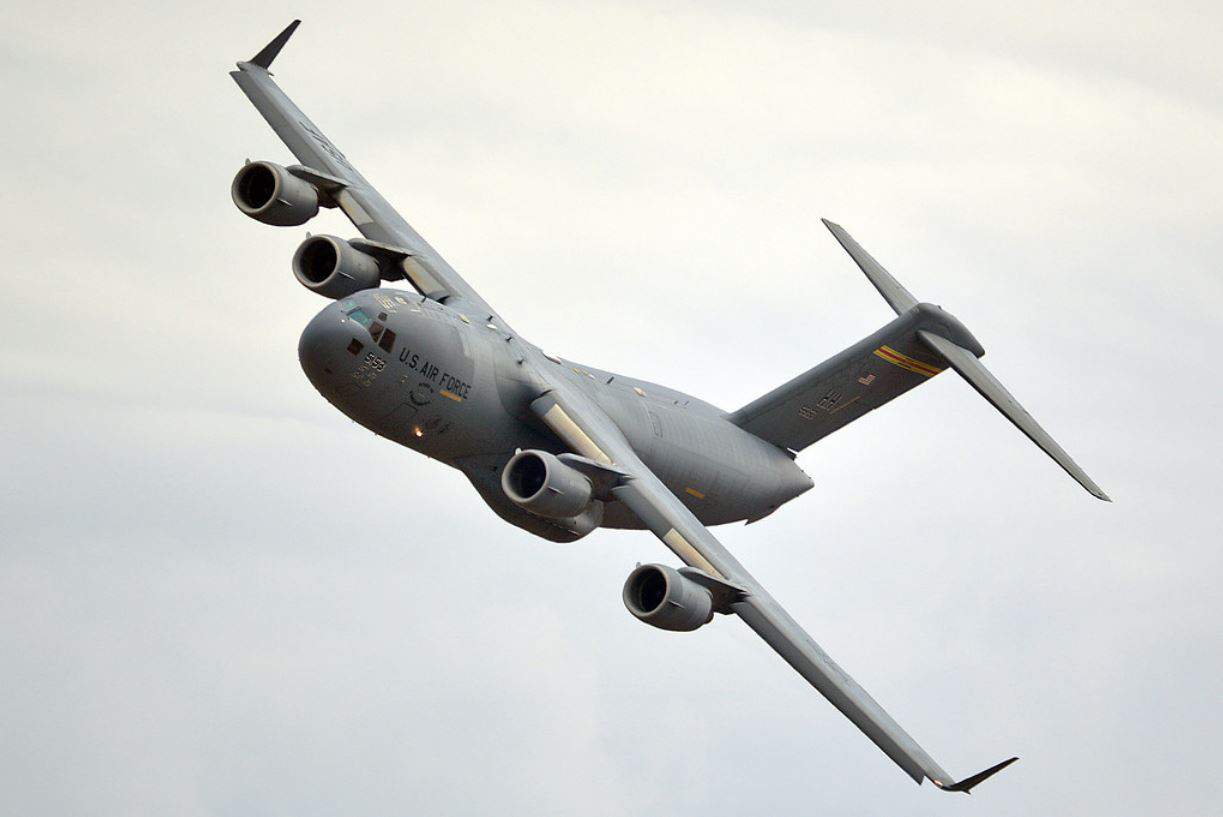
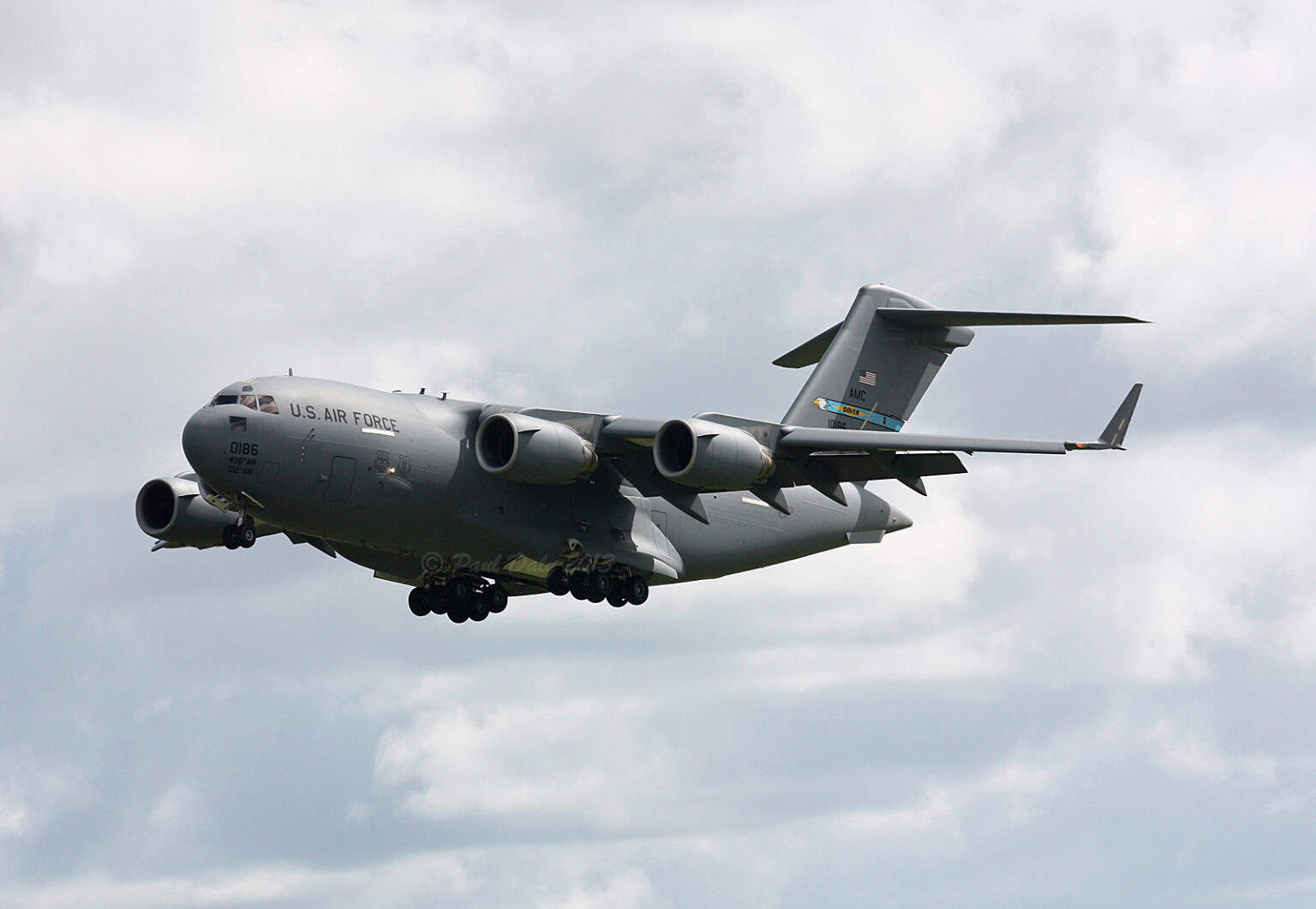
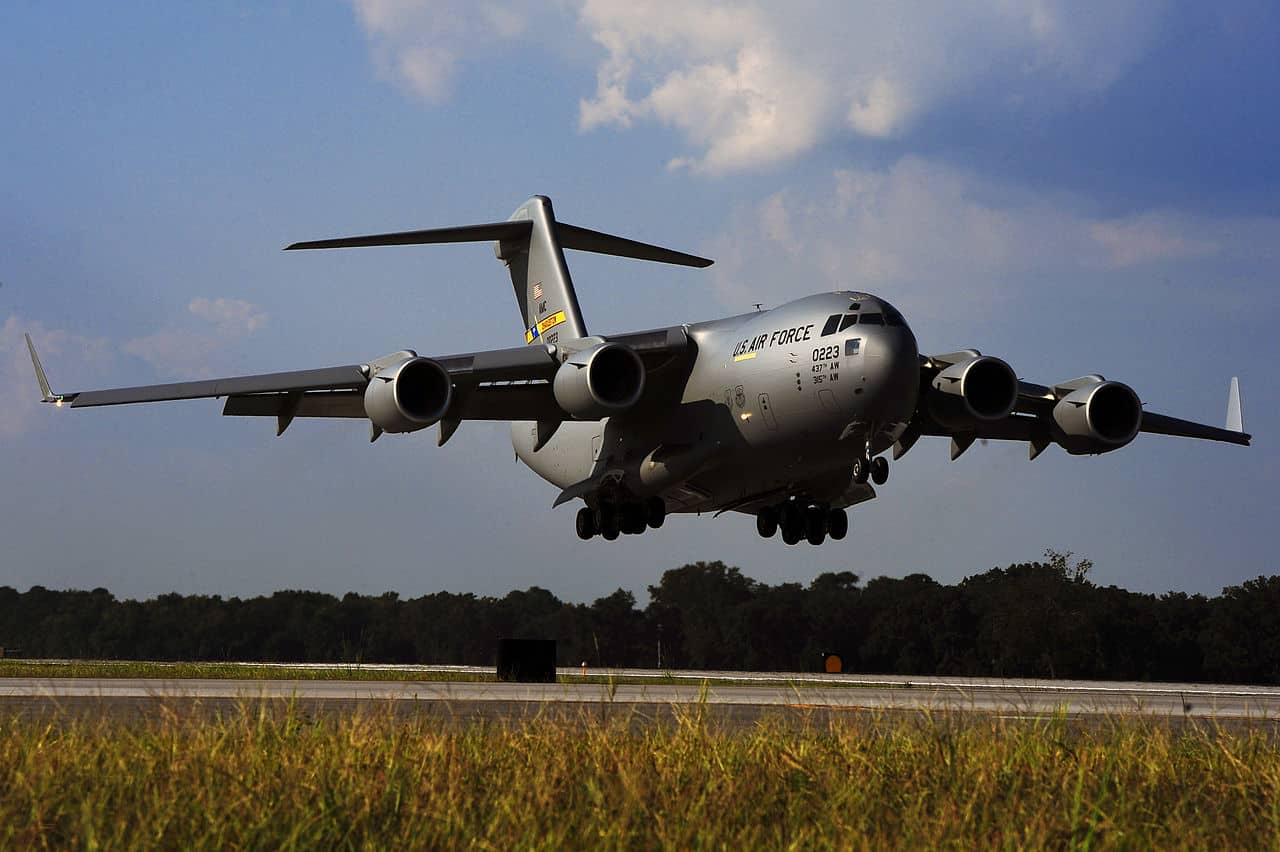
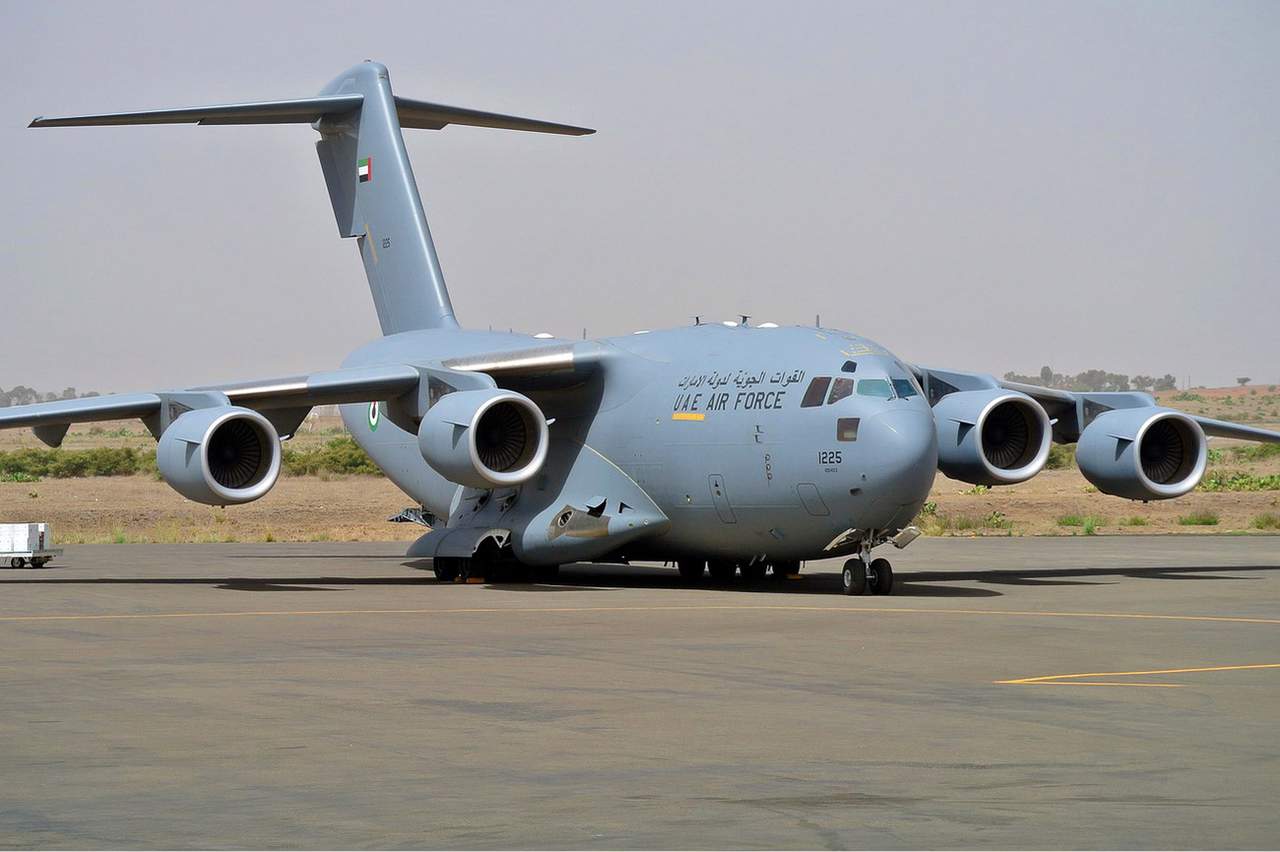


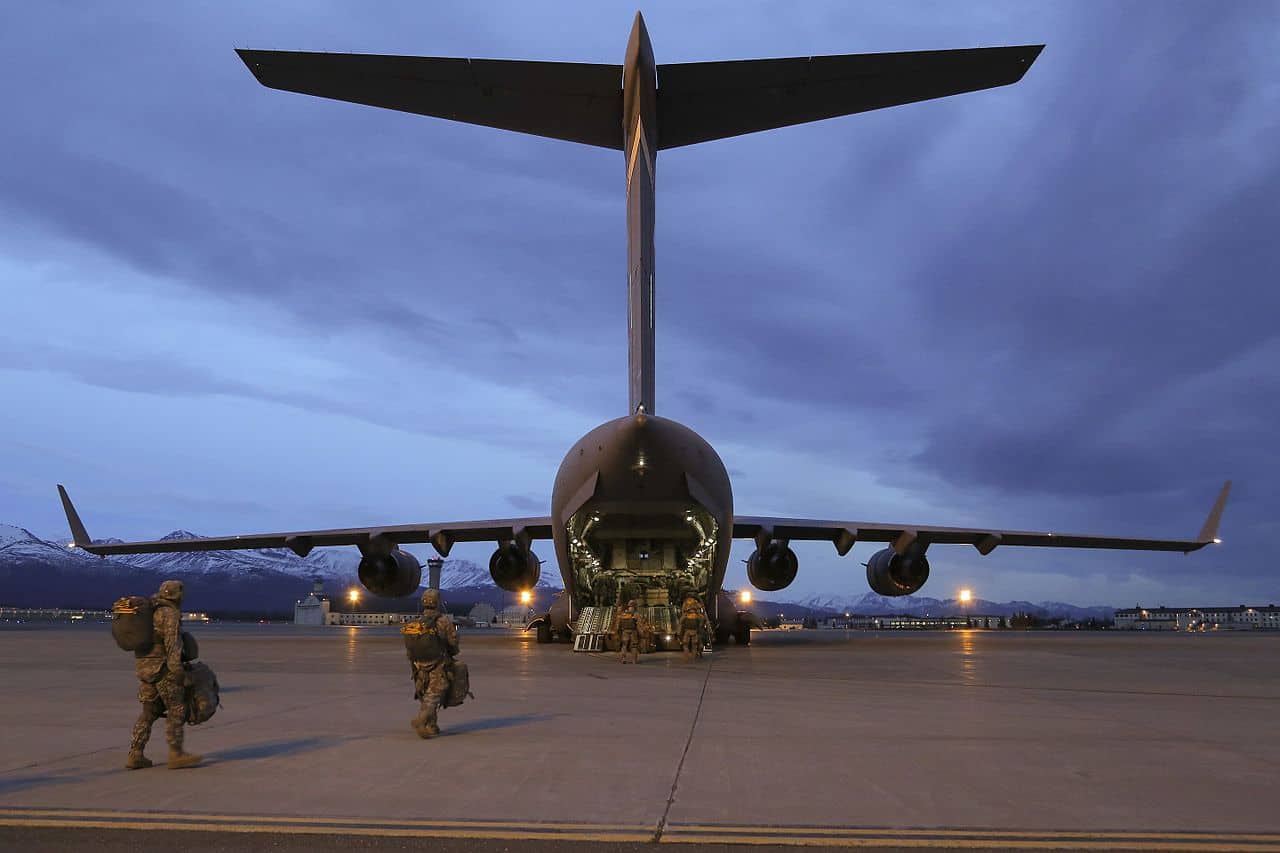

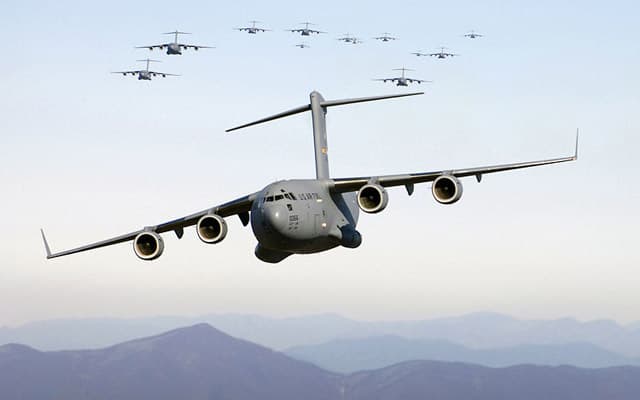
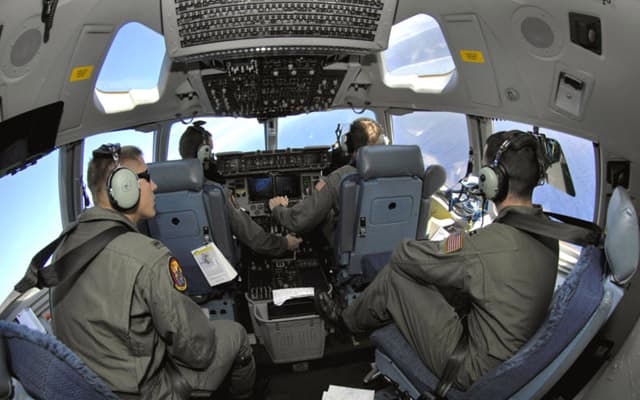
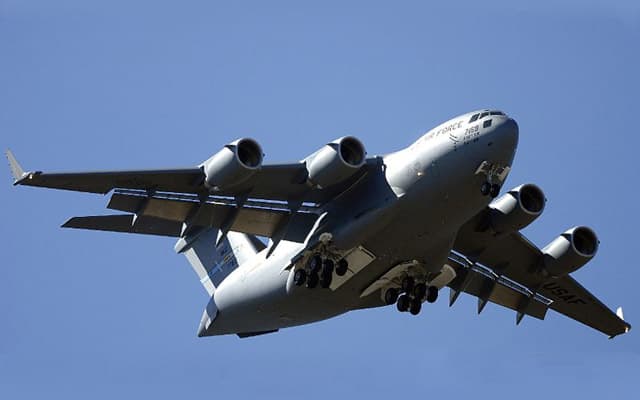
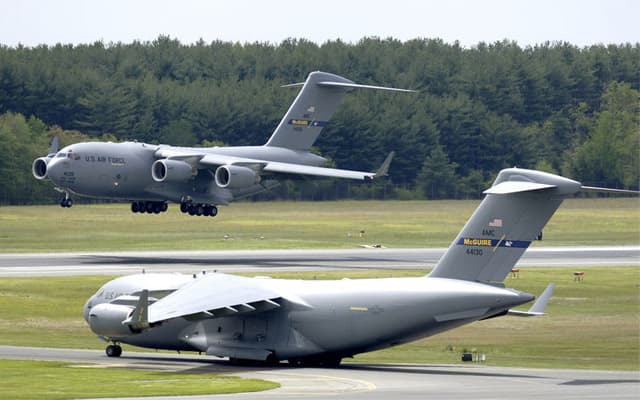

The Boeing C-17 Globemaster III is a four-engine military transport built to do two jobs at once. It carries heavy cargo between continents like a strategic airlifter, then lands it on short, rough runways near the front like a tactical one.
It first flew in 1991 and entered U.S. Air Force service in January 1995. Production ended in 2015, and the Air Force now plans to keep the type flying until 2075.
The C-17 carries the name of two earlier piston-engined Douglas transports, the C-74 Globemaster and the C-124 Globemaster II. The full specification table for the aircraft is on this page.
The C-17’s roots go back to the 1970s Advanced Medium STOL Transport competition, which pitted the Boeing YC-14 against the McDonnell Douglas YC-15. Both designs exceeded their requirements, but the competition was canceled before a winner was chosen.
In November 1979 the Air Force started a new program, called C-X, for a larger transport with longer range. It was meant to take over the work of the aging C-141 Starlifter and some of the duties of the C-5 Galaxy.
McDonnell Douglas won on August 28, 1981, with a design based on the YC-15 but larger, with swept wings and more powerful engines. Tight budgets delayed the program by four years, and the full-scale development contract did not follow until December 1985.
The Air Force wanted 210 aircraft at that point. In April 1990, Defense Secretary Dick Cheney cut the planned buy to 120.
The first C-17 flew from McDonnell Douglas’s plant in Long Beach, California, on September 15, 1991, about a year behind schedule.
In an October 1992 static test, the C-17 wing failed at 128 percent of its design limit load, short of the 150 percent requirement. About $100 million went into a redesign.
A second test in September 1993 ended at 145 percent. A later review of the data found the wing had not been loaded correctly and did meet the requirement after all.
In late 1993 the Defense Department gave the contractor two years to fix production problems and cost overruns, or see the contract end after the 40th aircraft. Accepting those terms left McDonnell Douglas with a loss of nearly $1.5 billion on the development phase.
The program recovered. The C-17 was awarded the Collier Trophy in 1994, and by September 1995 it was reported to be meeting all of its performance and reliability targets.
The planned fleet grew once the aircraft proved itself. The Air Force raised its order from 120 to 180 in 2002, eventually capped its fleet at 223, and took its final delivery on September 12, 2013.
Boeing, which merged with McDonnell Douglas in 1997, kept building a small number of unsold “white tail” aircraft for export customers. The last C-17 was completed and flown at Long Beach in November 2015, and Boeing closed the plant afterward.
India bought one of the remaining aircraft in 2017 and took delivery of it, its 11th C-17, in August 2019. Boeing says it delivered 275 C-17As in total: 222 to the U.S. Air Force and 53 to international partners. Other published counts, including Wikipedia’s, give a figure of 279 built.
Production ended because orders dried up, not because the aircraft was retired. In April 2009 Defense Secretary Robert Gates said no C-17s would be ordered beyond the 205 then planned, and the Air Force asked to shut the line while Congress kept pushing for more aircraft.
Export sales slowed too. In 2015 The Wall Street Journal suggested that Airbus’s lower-cost A400M Atlas had taken international sales away from the C-17.
The Air Force calls the C-17 the most flexible cargo aircraft to enter its airlift force. It can deliver troops and cargo to main operating bases or straight to forward bases, fly tactical airlift and airdrop missions, and carry patients on aeromedical evacuation flights.
It is designed to airdrop 102 paratroopers with their equipment. On March 26, 2003, 15 C-17s dropped 1,000 paratroopers of the 173rd Airborne Brigade over Bashur, Iraq, the biggest combat airdrop since the 1989 U.S. invasion of Panama.
For medical missions, two flight nurses and three medical technicians join the regular crew. The standard medical load is 36 litter patients plus 54 walking patients and attendants.
Some of its regular missions are unusual. A C-17 accompanies the president on trips to carry the presidential limousine, Marine One, and security teams.
Since 1999, C-17s have also flown every year to Antarctica for Operation Deep Freeze. The flight between Christchurch, New Zealand, and McMurdo Station takes about five hours each way.
Humanitarian flights fill a large part of its record, including relief after the 2010 Haiti earthquake and the 2023 Turkey-Syria earthquakes. On August 15, 2021, a single C-17 flew 823 Afghan citizens out of Kabul, a record for the type.
In 2021, the Air Force Research Laboratory also used the C-17 to test Rapid Dragon. The system turns a cargo aircraft into a cruise missile launcher by releasing palletized JASSM-ER missiles from the hold.
Everything is loaded through a large rear ramp and door that accommodates virtually all of the U.S. Army’s air-transportable equipment. A single load can be one 69-ton (63 metric ton) M1 Abrams main battle tank, two Bradley fighting vehicles, or three Stryker armored vehicles.
The cargo floor has rollers for pallets that flip over to leave a flat surface for wheeled and tracked vehicles. There are 18 positions for standard 463L pallets. For a sense of how that compares with other heavy haulers, see our ranking of the largest cargo planes.
The cabin height shown in the specification panel, 12 ft 4 in (3.76 m), is the cargo hold’s clearance forward of the wing. Aft of the wing, the ceiling rises to 13 feet 6 inches (4.11 m).
Seating depends on the mission. The seat count in the panel is the 102-paratrooper figure, but with palletized seats added to the sidewall seats the aircraft can carry 134 troops.
With sidewall seats alone, it carries 54 troops and still leaves room for 13 pallets of cargo.
The normal crew is just three: two pilots and a loadmaster. The Air Force says the small crew reduces manpower requirements, risk exposure, and long-term operating costs.
The C-17 flies on four Pratt & Whitney F117-PW-100 turbofans, based on the commercial PW2040 used on the Boeing 757. The Air Force says the design made maximum use of commercial off-the-shelf equipment.
The thrust reversers do more than slow the aircraft after landing. They direct exhaust upward and forward, which keeps runway debris away from the engines, and they give enough reverse thrust for the aircraft to back up under its own power.
Crews can also use the reversers in flight at idle-reverse, adding drag for a maximum-rate descent.
A high-lift wing with slats and externally blown flaps gives the C-17 its short-field ability. The Air Force says it can take off and land on runways as short as 3,500 feet (1,070 m) and as narrow as 90 feet (27.4 m), and turn around on them with a three-point star turn.
Those runway figures depend heavily on weight. The takeoff distance in the panel, 8,200 feet (2,500 m), is the takeoff run at maximum takeoff weight, while at 395,000 pounds (179,200 kg) the run drops to 3,000 feet (914 m).
The short-field claims were contested early on. A 1997 GAO report found that a C-17 with a full payload could not land on a wet 3,000-foot (914 m) runway, and that simulations pointed to about 5,000 feet (1,524 m) being needed.
Published C-17 range figures vary because each one assumes a different payload. The panel shows 2,420 nautical miles with a 157,000-pound (71,200 kg) payload, while the Air Force quotes about 2,400 nautical miles with 164,900 pounds (74,800 kg) and an initial cruise altitude of 28,000 feet.
Later aircraft also carry more fuel. From Block 13 in 2001, production aircraft had a sealed center wing bay used as an extra tank, which Boeing informally calls the C-17 ER.
With a 160,000-pound (72,600 kg) payload, the first 71 aircraft have an unrefueled range of about 2,400 nautical miles and the extended-range aircraft about 2,800.
With no payload at all, Boeing says the C-17 can fly more than 6,200 nautical miles. Aerial refueling removes the limit, which is why the Air Force fact sheet simply lists its range as global.
The Air Force gives a cruise speed of about 450 knots (518 mph) at 28,000 feet, or Mach 0.74. Flugzeuginfo lists a maximum operating Mach number of 0.77, and the Federation of American Scientists also gives a speed of Mach 0.77.
Higher “top speed” figures also circulate online. Flugzeuginfo also lists a never-exceed speed of 518 knots (596 mph), which is a limit rather than a normal flying speed, so this page does not list a separate maximum speed.
The C-17 is much bigger than the C-130J Super Hercules. A standard C-130J is 97 feet 9 inches (29.8 m) long with a wingspan of 132 feet 7 inches (40.4 m), against the C-17’s length of 174 ft (53.04 m) and wingspan of 169 ft 10 in (51.77 m).
The gap in lifting power is wider still. The C-130J’s maximum allowable payload is 42,000 pounds (19,050 kg), and the stretched C-130J-30 carries 44,000 pounds (19,960 kg), so a C-17 lifts roughly four times as much.
The two aircraft split the work. The Air Force says the turboprop C-130 primarily performs the tactical part of the airlift mission from rough dirt strips, while the C-17 hauls far heavier loads over intercontinental distances.
The history ties them together. The 1970s competition that produced the YC-15, the C-17’s ancestor, was launched to find a replacement for the C-130.
The C-5M Super Galaxy, which the Air Force calls the largest aircraft in its inventory, is the bigger of the two. It is 247 feet 10 inches (75.5 m) long and can carry up to 281,000 pounds (127,460 kg) of cargo, about 64 percent more than a C-17.
The C-17 was designed to share the Galaxy’s workload rather than replace it. The C-X requirement called for an aircraft that could do the C-141’s work and some C-5 duties, freeing the Galaxy fleet for outsize cargo. Both appear in our ranking of the biggest military airplanes.
The C-17’s runway advantage over the C-5 also proved smaller than first claimed. A 1994 GAO report found that earlier studies credited the C-17 with access to 6,400 more airfields outside the U.S., but once runway strength was counted as well as size, that advantage shrank to 911.
There is no Western aircraft in the C-17’s class in production today, according to a June 2026 report by The War Zone. Airbus positions its turboprop A400M between the C-130 and the C-17.
Outside the West, China’s Xian Y-20 and Russia’s Ilyushin Il-76 are the only in-production aircraft that compare with it on any level, the same report says. Our guide to the types of cargo planes explains where each class fits.
The U.S. Air Force is by far the largest operator. Its fact sheet lists 222 aircraft: 157 with the active-duty force, 47 with the Air National Guard, and 18 with the Air Force Reserve.
Air Mobility Command flies them from Travis Air Force Base in California, Dover in Delaware, Joint Base Lewis-McChord in Washington, Joint Base Charleston in South Carolina, and Joint Base McGuire-Dix-Lakehurst in New Jersey. Pacific Air Forces bases C-17s in Alaska and Hawaii, and aircrew training takes place at Altus Air Force Base, Oklahoma.
Seven other countries operate their own C-17s: the United Kingdom, Australia, Canada, India, Kuwait, Qatar, and the United Arab Emirates. A further three aircraft fly with the multinational Strategic Airlift Capability program.
Published fleet counts give India 11, flown by No. 81 Squadron, the “Skylords,” from Hindon Air Force Station. The United Kingdom, Australia, Qatar, and the UAE each have eight, Canada has five designated CC-177, and Kuwait has two.
The three Strategic Airlift Capability aircraft are based at Pápa Air Base in Hungary and flown by multinational crews, with one of the three contributed by the U.S. As of 2024, the member nations were Bulgaria, Estonia, Finland, Hungary, Lithuania, the Netherlands, Norway, Poland, Romania, Slovenia, Sweden, and the United States.
Allied C-17s have flown some notable missions. A Royal Air Force C-17 carried the body of Queen Elizabeth II from Edinburgh to RAF Northolt on September 13, 2022.
On March 16, 2024, an Indian Air Force C-17 airdropped Navy commandos and two raiding boats about 1,600 miles (2,600 km) from the Indian coast, in the operation that freed the pirate-held cargo ship ex-MV Ruen.
The C-17 has one fatal crash on record. On July 28, 2010, a C-17 crashed at Elmendorf Air Force Base, Alaska, while practicing for an air show, killing all four people aboard, and a military investigation found that pilot error caused a stall.
That crash is also the only C-17 hull loss in the published accident record. In June 2012 the Air Force ordered its final C-17 to replace the lost aircraft.
Other serious incidents ended in repairs rather than write-offs. In January 2009 a crew landed at Bagram Air Base, Afghanistan, with the landing gear up after failing to follow the pre-landing checklist.
In January 2012 a C-17 overran the runway at Forward Operating Base Shank, Afghanistan, and was returned to service at a reported repair cost of $69.4 million.
In July 2012 a C-17 carrying Gen. Jim Mattis, then head of U.S. Central Command, landed by mistake at Peter O. Knight Airport, a small field four miles from its destination at MacDill Air Force Base in Tampa. In December 2025, a C-17 landed at Charleston International Airport with its nose gear collapsed.
The C-17 is not going away soon. Under the Air Force’s Airlift Recapitalization Strategy, the fleet must stay viable through 2075, by which point the youngest airframes will be about 60 years old.
To get there, Boeing won a contract in February 2026 to modernize the C-17A flight deck, replacing obsolete avionics with a modular open systems architecture that makes new equipment easier to add. The Air Force’s Fiscal Year 2027 budget request includes $564.3 million for C-17 modernization aimed at operational capability, component obsolescence, safety, and reliability.
A replacement exists only on paper. Under the Next-Generation Airlifter plan, the first new aircraft would arrive as early as Fiscal Year 2038 and reach initial operational capability in 2041, replacing both the C-5 and C-17 one-for-one, with the C-5M retiring first around 2045.
The Air Force expects to buy 274 of the new aircraft over about five decades. As of September 2026 the program was still defining its requirements, with an Analysis of Alternatives expected in Fiscal Year 2027.
Meanwhile, the idea of building new C-17s has returned. In June 2026 the House Armed Services Committee directed the Air Force to brief it by March 1, 2027, on the feasibility of restarting production, and Boeing said it was “encouraged” by interest from operators.
A restart would not be simple. Boeing sold its Long Beach C-17 facilities in 2019, and RAND has estimated that restarting C-17A production would cost $2.1 billion to $2.7 billion in 2011 dollars, before any aircraft are bought. No restart decision had been announced as of September 2026.
The U.S. Air Force fact sheet lists 222 C-17s: 157 with the active-duty force, 47 with the Air National Guard, and 18 with the Air Force Reserve. Boeing also says it delivered 222 C-17s to the Air Force.
The C-17 is much bigger. It is about 76 feet (23 m) longer than a standard C-130J, its wingspan is about 37 feet (11 m) wider, and it can lift roughly four times the C-130J’s maximum payload of 42,000 pounds (19,050 kg).
The C-17 has not been retired; only its production has ended. Boeing completed the last one in November 2015 after orders dwindled, with the Air Force capping its fleet at 223. The type is planned to stay in U.S. service until 2075, and the House Armed Services Committee has asked the Air Force to study restarting production.
The C-17 carries troops and heavy cargo over long distances and delivers them directly to short, austere airfields. It also flies airdrop, aeromedical evacuation, and humanitarian relief missions, carries the president’s limousine and helicopters on trips, and flies supplies to McMurdo Station in Antarctica.
The Air Force lists a unit cost of $202.3 million in fiscal 1998 constant dollars. In 2017, the U.S. State Department approved a proposed sale of one C-17 to India valued at about $366 million.
The Air Force quotes about 2,400 nautical miles when carrying 164,900 pounds (74,800 kg) of cargo, and later extended-range aircraft fly farther with a similar load. With no payload, Boeing says the C-17 can fly more than 6,200 nautical miles, and with aerial refueling it describes the range as virtually unlimited.
Yes. A C-17 can carry one 69-ton (63 metric ton) M1 Abrams main battle tank. Alternative vehicle loads include two Bradley fighting vehicles or three Stryker armored vehicles.
Crews nicknamed the C-17 “the Moose” because, during ground refueling, its pressure relief vents make a sound like the call of a female moose.
No. The last C-17 was completed in November 2015, and Boeing sold its Long Beach production facilities in 2019. The House Armed Services Committee has asked the Air Force for a restart feasibility briefing by March 1, 2027, but no restart decision had been announced as of September 2026.
Boeing says it delivered 275 C-17As, 222 to the U.S. Air Force and 53 to international partners. Other published counts, including Wikipedia’s, give a figure of 279 built.
Sources and references used for research and fact-checking.