Military Transport Planes
Lockheed C-130H Hercules
ICAO: C130
The first jet-powered strategic airlifter, from Vietnam to the Hanoi Taxi.
Updated: by Tim de Vries

The latest aviation news and stories sent to your inbox.
The Lockheed C-141 Starlifter was the U.S. Air Force’s first jet-powered strategic transport and the first aircraft built to the 463L cargo-handling system. It flew from 1963 to 2006, carried troops and supplies to Vietnam, brought American prisoners of war home in 1973, and was stretched into the C-141B to carry far more volume. The C-17 Globemaster III replaced it.
Live Fleet Activity (C141)
Fetching live data…


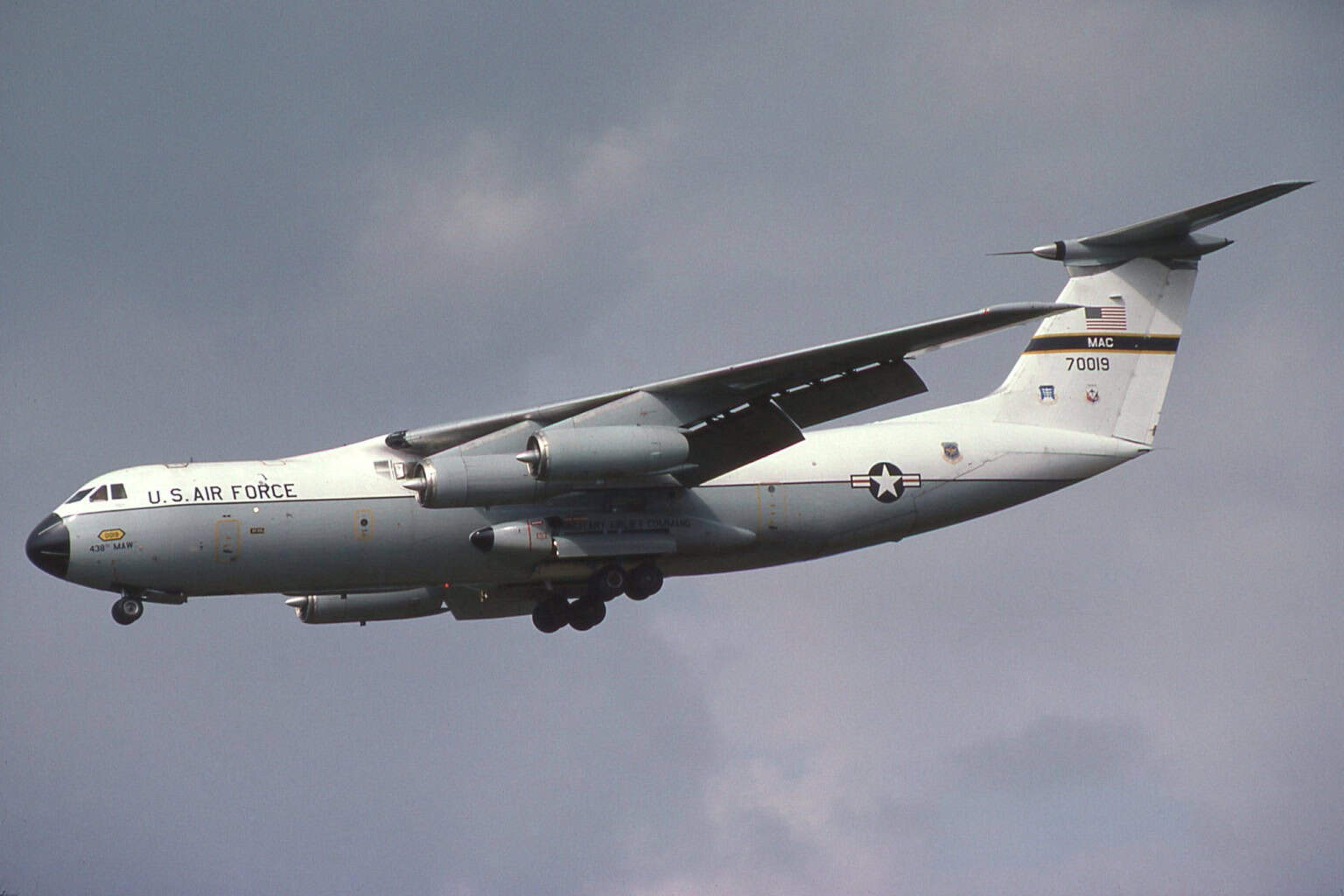
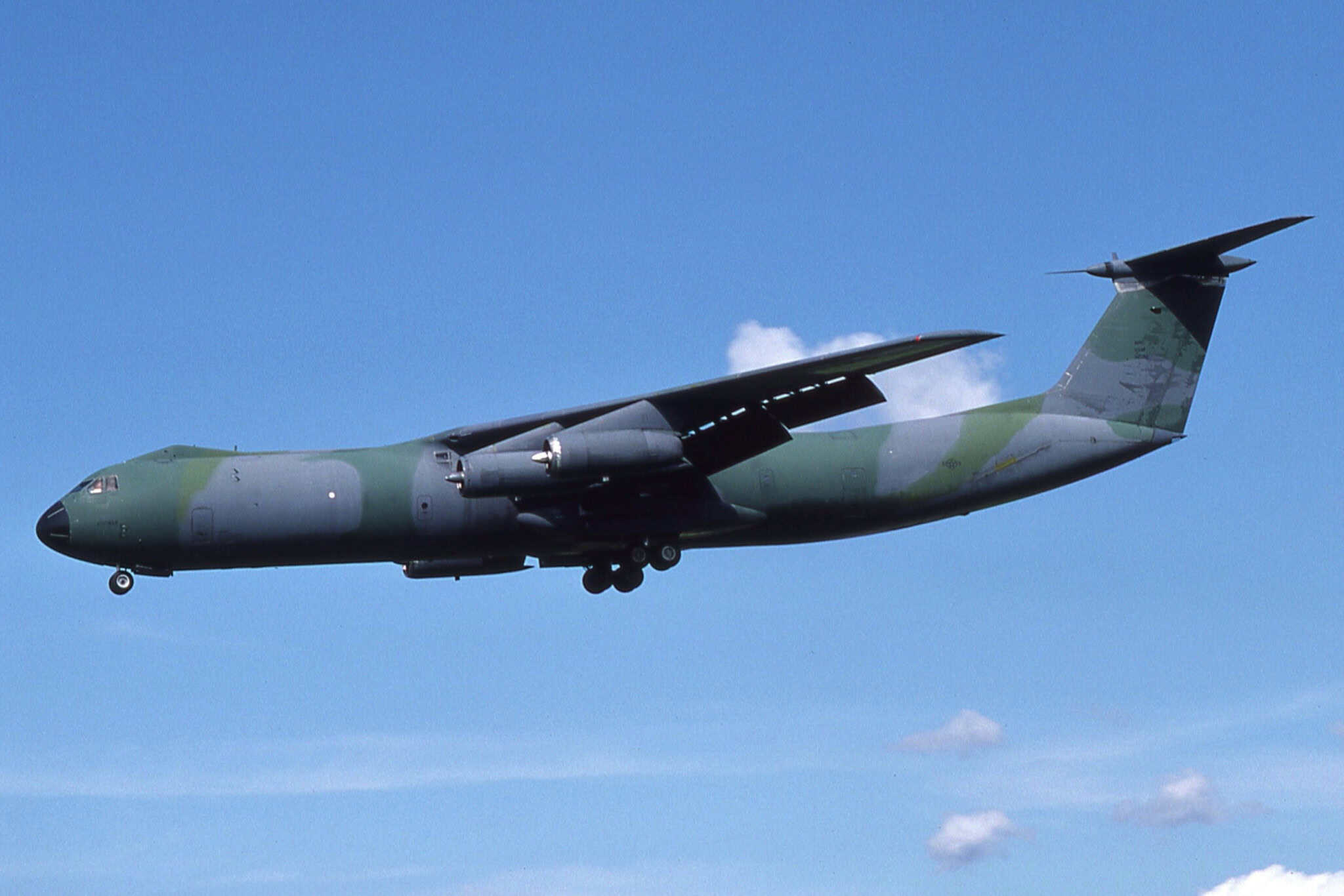


The Lockheed C-141 Starlifter was the first jet-powered strategic airlifter in the U.S. Air Force. It flew from 1963 until its final retirement flight on May 6, 2006.
It carried troops and supplies to Vietnam, flew the first Operation Homecoming mission that brought American prisoners of war out of Hanoi in 1973, and was stretched in the 1970s to carry far more cargo. The C-17 Globemaster III replaced it.
In 1960 the Air Force issued Specific Operational Requirement 182 for an aircraft that could move cargo over strategic distances. It asked for a radius of at least 3,500 nautical miles (6,500 km) with a 60,000 lb (27,000 kg) load.
Lockheed’s design won in March 1961 and became the C-141. The fleet it was meant to replace relied on piston transports such as the Douglas C-124 Globemaster II.
The prototype was rolled out in Marietta, Georgia, in August 1963. Lockheed says President John F. Kennedy pushed a button at the White House that sent the signal to open the hangar doors.
The first C-141A flew on December 17, 1963, the 60th anniversary of the Wright brothers’ first powered flight. There was no separate prototype, so the first flight was made by the first production aircraft, serial 61-2775. It entered operational service at Tinker Air Force Base, Oklahoma, in April 1965.
The C-141 was the first aircraft designed to work with the Air Force’s 463L cargo-handling system. Pallets could be unloaded, the aircraft refuelled and a full load put back aboard, all in under an hour.
The high wing left the cargo compartment clear of structure. Rollers in the floor move pallets, and when they are flipped over the floor becomes flat enough to drive vehicles aboard.
The cabin could be reconfigured for roughly 30 missions, from paratroop drops through paratroop doors on both sides to carrying about 103 litter patients on medical evacuation flights.

The first C-141 missions to Vietnam flew in August 1965. A trip from Travis Air Force Base, California, to Tan Son Nhut in South Vietnam took about 72 hours with stops in the C-124. The C-141 cut it to about 36 hours.
On return legs the aircraft carried wounded troops. Lockheed counts about 6,000 medical evacuation flights between 1965 and 1972.
The aircraft’s most famous airframe is serial 66-0177, the Hanoi Taxi. On February 12, 1973, it landed at Gia Lam Airport near Hanoi on the first mission of Operation Homecoming, the return of American prisoners of war. There were 40 former prisoners aboard that first flight.
The same airframe was later stretched to C-141B standard and upgraded to a C-141C. It retired with about 39,470 flight hours and 10,900 landings.
Crews found that the C-141A often ran out of space before it reached its weight limit. Pallets filled the cabin, but the aircraft could still lift more.
Lockheed fixed that by inserting fuselage plugs ahead of and behind the wing. The stretch added 23 ft 4 in (7.11 m) and a receptacle for aerial refuelling.
The result was the C-141B. About 270 C-141As were converted. The first flight of a modified aircraft was in 1977, and the Air Force received its first C-141B in December 1979. Conversion of the fleet finished in the early 1980s.
The Air Force described the program as equal to buying roughly 90 new aircraft in added capacity. In the 1990s, 63 aircraft were upgraded again to C-141C standard with GPS and TCAS.

In 1969 a C-141A flew the Apollo 11 astronauts and their quarantine trailer from Hawaii to Houston after the first Moon landing.
During the October 1973 Yom Kippur War, C-141 crews flew about 420 missions and delivered more than 10,000 tons of equipment and supplies to Israel.
It was also the first jet transport from which U.S. Army paratroopers jumped, and the first jet to land in the Antarctic. For nearly three decades C-141 crews landed on the ice at McMurdo Station without skis.
One aircraft went to NASA as a company demonstrator and became the Kuiper Airborne Observatory, carrying a 36-inch infrared telescope for two decades.
The full specification table for the aircraft is on this page. A few figures need context to be read correctly.
The panel’s range of 2,550 nm · 2,930 mi · 4,720 km is the published range with a typical load. With less cargo and a slower speed the aircraft could fly much farther, and Wikipedia lists a ferry range of 6,140 miles (9,880 km).
The panel gives a maximum speed of 493 kt · 567 mph · 913 km/h. That is a top speed, not a normal cruise. The Air Force fact sheet quotes about 500 mph (Mach 0.66) for the same aircraft, and the two sources do not match to the digit.
Payload is the other figure that varies. Lockheed gives a usual C-141B load of about 69,000 lb (31,200 kg) of cargo, and the Air Force fact sheet gives 68,000 lb (30,600 kg). Both are usable loads, not the largest weight the aircraft could ever lift.
The Air Force said the C-141B receptacle could transfer its fuel load in about 26 minutes, which allowed longer non-stop flights and fewer fuel stops.
The C-141 left service with all active-duty Air Force units on September 16, 2004. The Air Force Reserve and Air National Guard flew it for two more years.
Lockheed counts 285 aircraft built between 1963 and 1968, with 1967 the peak year. The 284 military aircraft logged more than 10.6 million flight hours, and 251 went to the boneyard at Davis-Monthan Air Force Base to be dismantled.
On May 6, 2006, the Hanoi Taxi was flown from the Patterson side of Wright-Patterson Air Force Base to the National Museum of the U.S. Air Force. It was the last C-141 in the Air Force inventory.
The C-17 Globemaster III took over most of its work, and Reserve units such as the 445th Airlift Wing moved on to the C-5 Galaxy.

We found no airworthy C-141 as of October 2026. The Air Force withdrew the last ones in 2006, and the aircraft that survive are static exhibits, including the Hanoi Taxi at the National Museum of the U.S. Air Force.
The Kuiper Airborne Observatory, the one C-141 that NASA flew, was grounded in October 1995. Wikipedia reports it was scrapped in 2025, with certain sections preserved for display.
We found no airworthy C-141 as of October 2026. The Air Force retired the last one in 2006, and NASA’s Kuiper Airborne Observatory, the only civil example, has been grounded since 1995 and was reportedly scrapped in 2025.
The Air Force retired it in stages. Active-duty units gave it up on September 16, 2004, and the last aircraft, the Hanoi Taxi, went to the National Museum of the U.S. Air Force on May 6, 2006. Most of the fleet went to Davis-Monthan Air Force Base for dismantling.
Yes. The C-17 Globemaster III took over most of the C-141’s strategic airlift role, and some units moved to the C-5 Galaxy instead.
The C-141A filled its cabin before it reached its weight limit. Adding fuselage plugs created the C-141B, which carried more cargo and could be refuelled in flight.
Lockheed built 285 between 1963 and 1968. Of these, 284 served with the Air Force and one went to NASA.
It was C-141 serial 66-0177, which flew the first Operation Homecoming mission to Hanoi on February 12, 1973. It became the last C-141 in Air Force service and is now on display at the National Museum of the U.S. Air Force.
Sources and references used for research and fact-checking.