Military Transport Planes
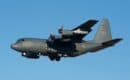
Lockheed C-130H Hercules
ICAO: C130
The upgraded giant built to carry the heaviest loads across the globe
The latest aviation news and stories sent to your inbox.
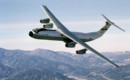
The Lockheed C-5M Super Galaxy is the modernized version of the C-5 Galaxy, designed to extend the service life and performance of one of the largest military transport aircraft ever built. With new engines and updated systems, it remains a cornerstone of U.S. strategic airlift capability.
Live Fleet Activity (C5M)
Fetching live data…
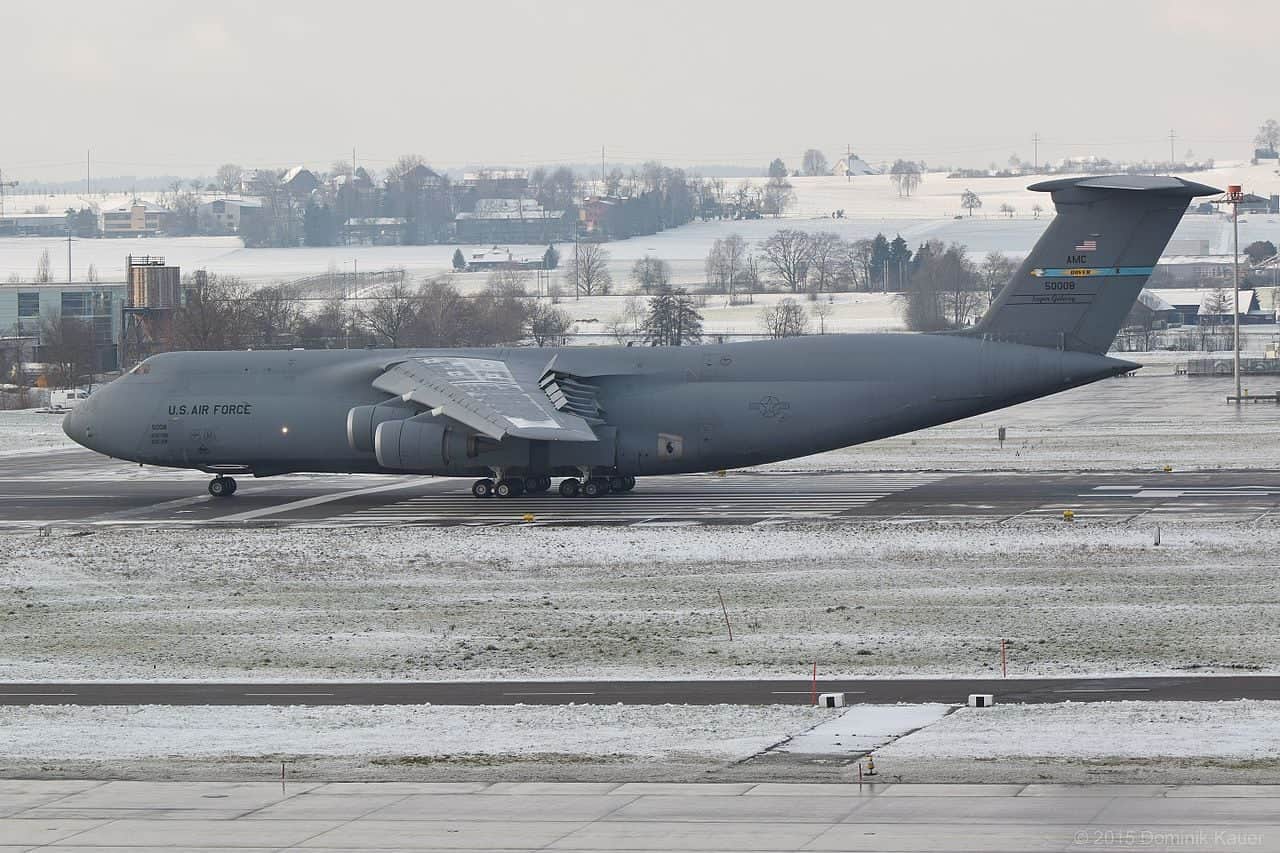

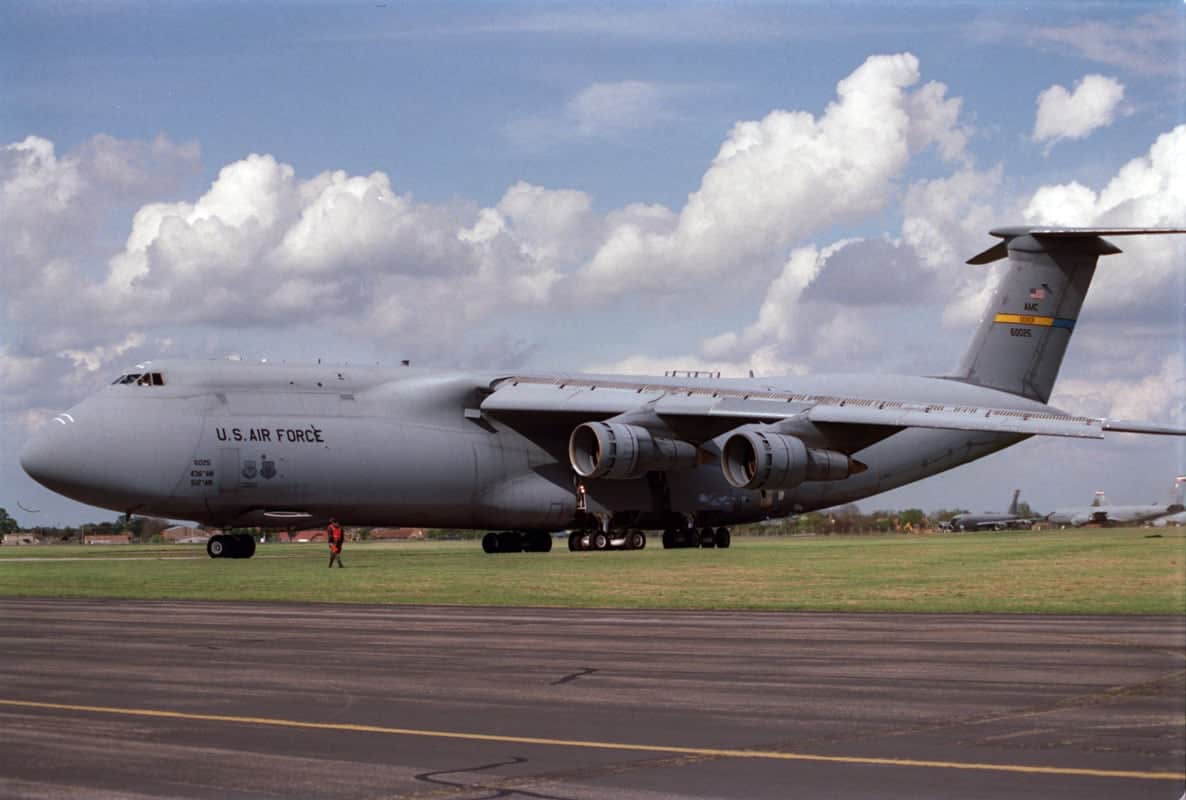


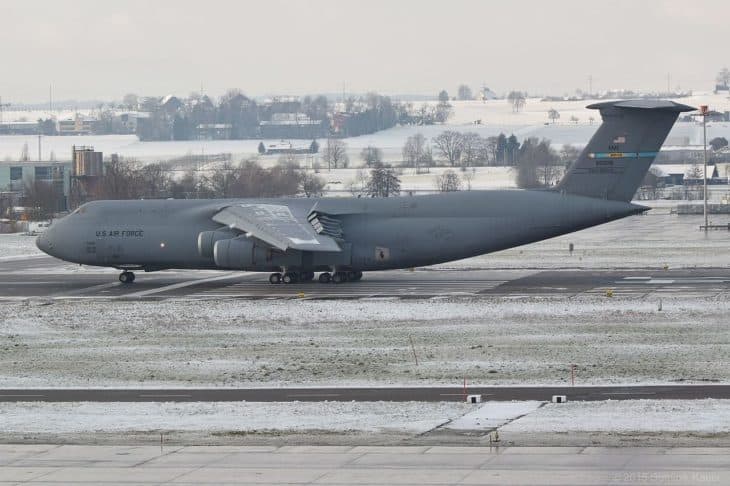
The C-5M Super Galaxy is the result of a comprehensive modernization program applied to selected C-5 aircraft originally introduced in the late 1960s. The upgrade effort, known as the Reliability Enhancement and Re-engining Program, was developed to improve mission readiness, fuel efficiency, and operational performance while reducing maintenance demands.
A key feature of the C-5M upgrade is the installation of new General Electric F138 turbofan engines, which replace the older TF39 engines used on earlier C-5 variants. These modern engines provide greater thrust, improved fuel economy, and enhanced climb performance, allowing the aircraft to depart with heavier payloads and operate more efficiently on long-range missions.
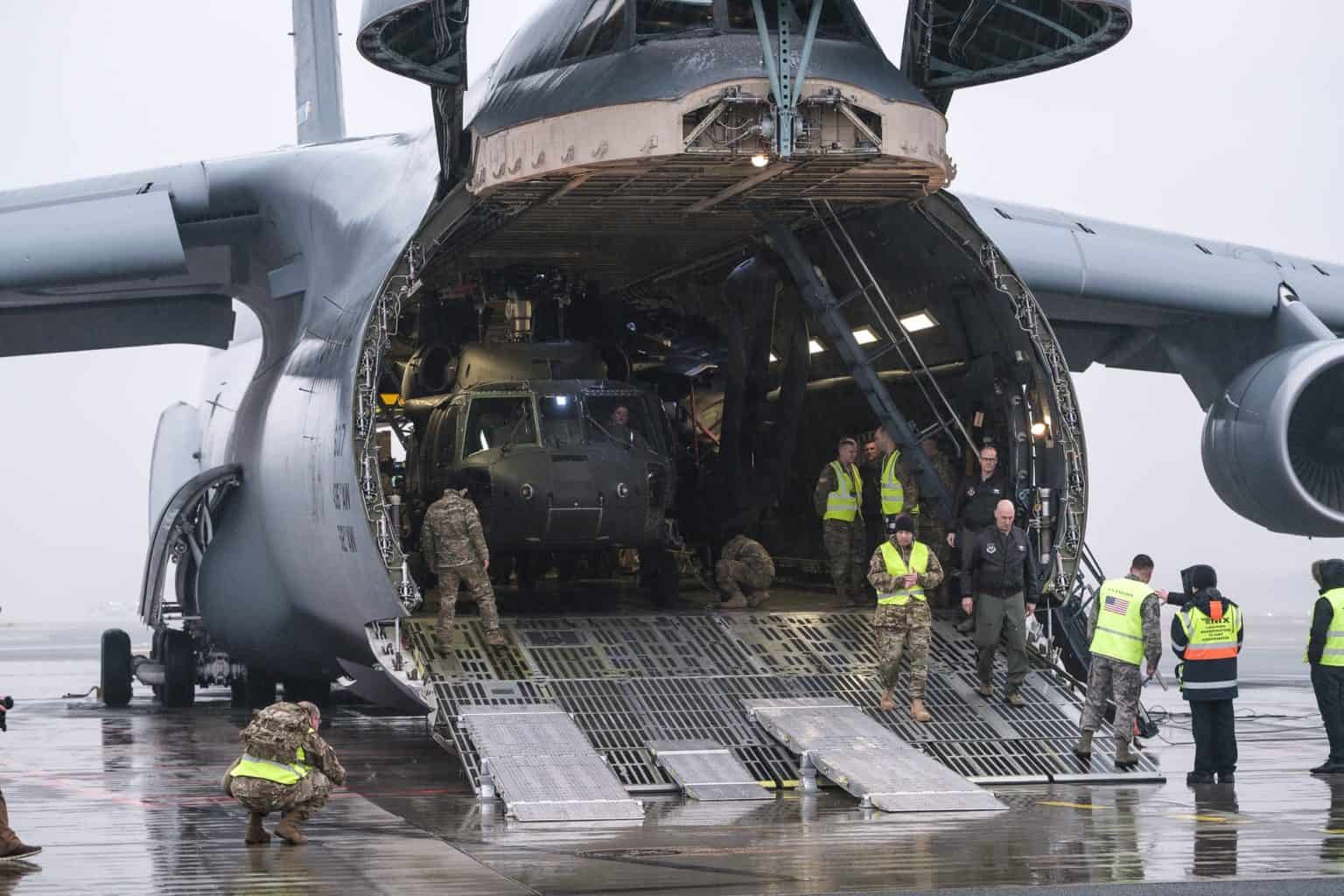
The aircraft retains the distinctive high-wing configuration and nose-and-tail loading design that allow it to transport oversized cargo such as armored vehicles, helicopters, and large military equipment. With a maximum payload capacity exceeding 270,000 pounds, the C-5M remains one of the most capable strategic airlifters in service.
Advanced avionics upgrades further improve reliability and situational awareness for crews. The modernization effort significantly increased aircraft availability rates, ensuring the platform could continue supporting global deployments, humanitarian relief missions, and large-scale military logistics.
Today, the C-5M Super Galaxy continues to serve as a critical asset in U.S. Air Force operations, combining massive cargo capacity with upgraded performance suited for modern strategic mobility demands.
The aircraft family originated from a strategic requirement to move outsized equipment without disassembly. Design work responded to anticipated Cold War logistics, emphasizing intercontinental range and the ability to carry vehicles and large assemblies that exceeded the capacity of existing transports. The resulting configuration prioritized internal volume and structural load paths.
Multiple prototype and early production airframes exercised structural and handling characteristics under realistic loading conditions. Early flight testing emphasized low-speed handling with heavy loads, ground loading operations, and long-range navigation systems integration. Findings shaped reinforcement of primary structures and refinements to the landing gear and cargo handling fittings.
Sustainment costs and aging systems eventually prompted a multi-stage fleet refurbishment approach. Work packages addressed structural fatigue, corrosion mitigation, systems obsolescence, and human factors in the cockpit and cargo compartment. Contracting drew on both the original manufacturer and specialist suppliers to execute long-term maintenance and update efforts.
The airlifter uses a high-capacity fuselage centered around a continuous cargo deck with unobstructed length for palletized or rolling loads. The floor and attachment points are engineered for concentrated wheel and track loads, and access arrangements permit drive-through carriage of vehicles when both ends are opened. Internal systems support mechanized winches and restraints.
Wing design concentrates lift and fuel capacity into a robust center-wing box fed by multiple spars. Engines are podded beneath the wing to simplify maintenance and to keep the fuselage clear for cargo operations. Landing gear is distributed to spread ground loads, allowing operation from reinforced bases and selected civil fields with heavy pavements.
Cockpit and avionics philosophy favors integrated digital displays and automated navigation and flight management, while retaining manual controls for critical flight regimes. Upgrades over the life of the fleet introduced modern communication suites and traffic collision avoidance systems to meet evolving airspace requirements. Crew accommodations balance mission endurance with workload reductions.
Distinctive operational aids include ground handling features such as a variable-height landing gear system to facilitate ramp operations and cargo alignment. Structural access points and panels are arranged to expedite depot-level maintenance. Systems redundancy is incorporated for flight-critical elements to maintain mission capability in degraded conditions.
The platform is optimized for strategic airlift missions, trading raw speed for load-carrying capability and long unrefueled range. Cruise profile is in the high subsonic regime suitable for long transoceanic flights. The flight envelope emphasizes stable handling with large mass and predictable low-speed characteristics for loaded approaches.
Payload capacity dictates base selection and runway length requirements, which can limit operations to well-prepared fields in some theaters. Fuel load and routing choices determine practical unrefueled range for a particular mission, and in-flight refueling extends strategic reach where needed. Turnaround time on the ground depends heavily on cargo handling assistance and surface infrastructure.
Operational endurance supports long-duration sorties with crew rest provisions and sustainment systems on board. Climb performance with heavy loads is constrained relative to smaller transports, influencing routing and airspace clearance; mission planning routinely incorporates step climbs and en route fueling options when operating near performance limits.
Maintenance demands and depot cycles represent an important operational consideration. Structural inspections, landing gear overhauls, and major systems refurbishments require scheduled deep maintenance events. These sustainment activities shape sortie generation rates and are a major factor in fleet availability for extended deployments.
The family includes multiple production and retrofit configurations that reflect incremental improvements in structure, systems, and mission equipment. Some iterations introduced modifications to the flight deck, cargo handling systems, and airframe longevity treatments. Retrofit programs typically targeted life-extension and operational reliability rather than radical redesign.
Specialized conversions adapted several airframes for unique missions, including space payload transport support and modified internal fittings for bulky but fragile items. Those conversions focused on securing delicate cargo, environmental control, and specialized loading hardware while retaining primary transport capability.
Training and test variants exist to support crew qualification and experimental work. These airframes received instrumentation and additional avionics for telemetry and systems validation. Their role in validating corrective measures and procedural changes was important to the overall fleet sustainment strategy.
The airlifter fleet has been employed in strategic movements of heavy military hardware, large-scale lift requirements, and selected humanitarian relief efforts where volume and load size exceed conventional transports. Its operational concept emphasizes theater-to-theater movement of outsized and heavy items, including units not readily adaptable to containerization.
Deployment patterns concentrated on major logistics hubs and established military airbases capable of handling the weight and ground support needs. The aircraft has operated in both scheduled strategic airlift rotations and on-demand missions requiring expedited delivery of bulky equipment or relief supplies. Mission planning routinely accounts for ground-handling resources and route clearances.
In service, crews and maintainers developed specialized loading procedures and tooling to reduce on-ground turnaround. Fleet experience highlighted the need for predictive maintenance and parts provisioning to sustain continuous global operations. Lessons learned influenced subsequent procurement and base infrastructure decisions.
The transport has supported large-scale military operations by moving armored formations, engineering equipment, and other outsized materiel to forward areas. Its role typically occurs in the logistics tail, enabling force projection by transporting components that cannot be air-dropped or containerized. Missions often integrate with sealift and smaller airlift elements.
The platform has also been used for rapid reconstitution and redistribution of equipment between theaters, providing strategic flexibility to commanders. It is not designed for tactical airdrop of heavy armored vehicles; instead the emphasis is on intact delivery to prepared or semi-prepared locations where roll-on, roll-off unloading is feasible.
Risk mitigation for operations into austere or contested environments relies on route planning, staging through intermediate bases, and coordination with theater logistics and ground handling. Security and forward basing considerations often dictate the tempo and routing of missions in higher threat environments.
Primary operation has remained with the national air force that procured the type for strategic mobility. Units responsible for the fleet are organized under mobility commands with a mix of active duty and reserve elements to provide global reach and surge capacity. Airlift squadron structures include aircrew, loadmaster, and maintenance components tailored to heavy cargo work.
Collaborative use with allied militaries has occurred through ad hoc lift agreements and pooled logistics efforts, with individual sorties supporting multinational exercises and relief missions. Third-party maintenance contractors and aerospace industry partners have supported depot-level overhauls and complex modifications when required.
Several retired airframes have transitioned to static display, testbed roles, or been cannibalized for spares. The remaining operational fleet is concentrated at a limited number of well-equipped bases capable of supporting the aircrafts unique ground and maintenance requirements.
The program demonstrated the operational value and challenges of very large strategic airlift. Experience from operating and sustaining this class of transport informed procurement decisions for later airframes, particularly in areas of life-cycle logistics planning and the economics of mid-life refurbishment.
Technical lessons include the importance of modular systems to permit progressive upgrades without wholesale airframe replacement and the need to align base infrastructure investment with aircraft capability. Sustainment models developed for the fleet influenced subsequent approaches to contractor support and depot maintenance planning.
The airlifter remains a study in balancing extraordinary capacity against sustainment burden. Its service record provides practical data on how nations can maintain strategic mobility using specialized heavy transports while managing lifecycle cost, infrastructure, and operational employment constraints.
Sources and references used for research and fact-checking.