Military Transport Planes
Lockheed C-130H Hercules
ICAO: C130
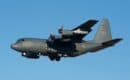
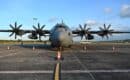
The current-production Hercules, with six-blade propellers and a three-person crew
Updated: by Tim de Vries
The latest aviation news and stories sent to your inbox.
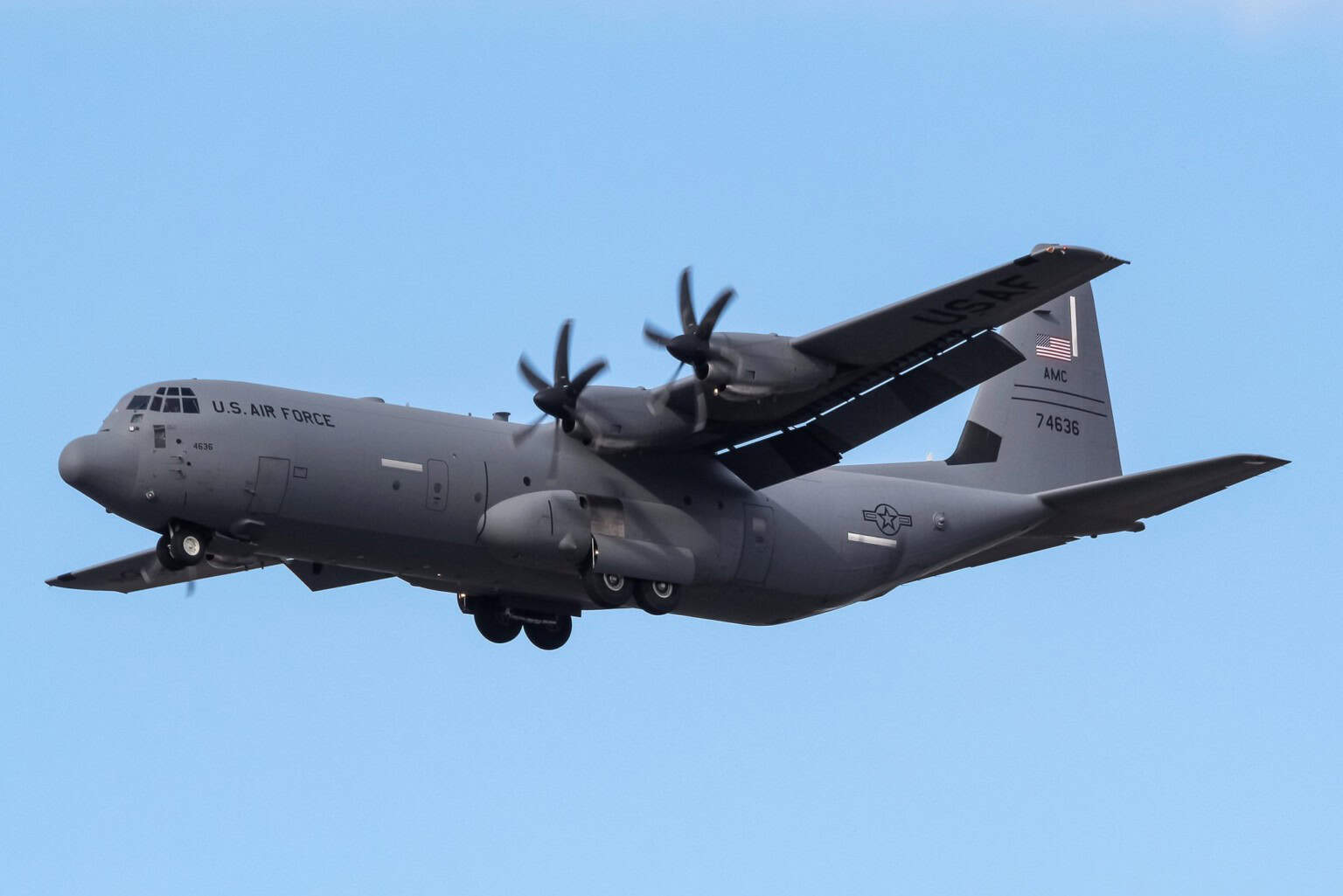
The Lockheed Martin C-130J Super Hercules is the current production Hercules. It keeps the high-wing, rear-ramp layout of the 1950s original but adds Rolls-Royce AE 2100D3 engines, six-blade composite propellers and a digital cockpit flown by two pilots and a loadmaster.
Live Fleet Activity (C130)
Fetching live data…


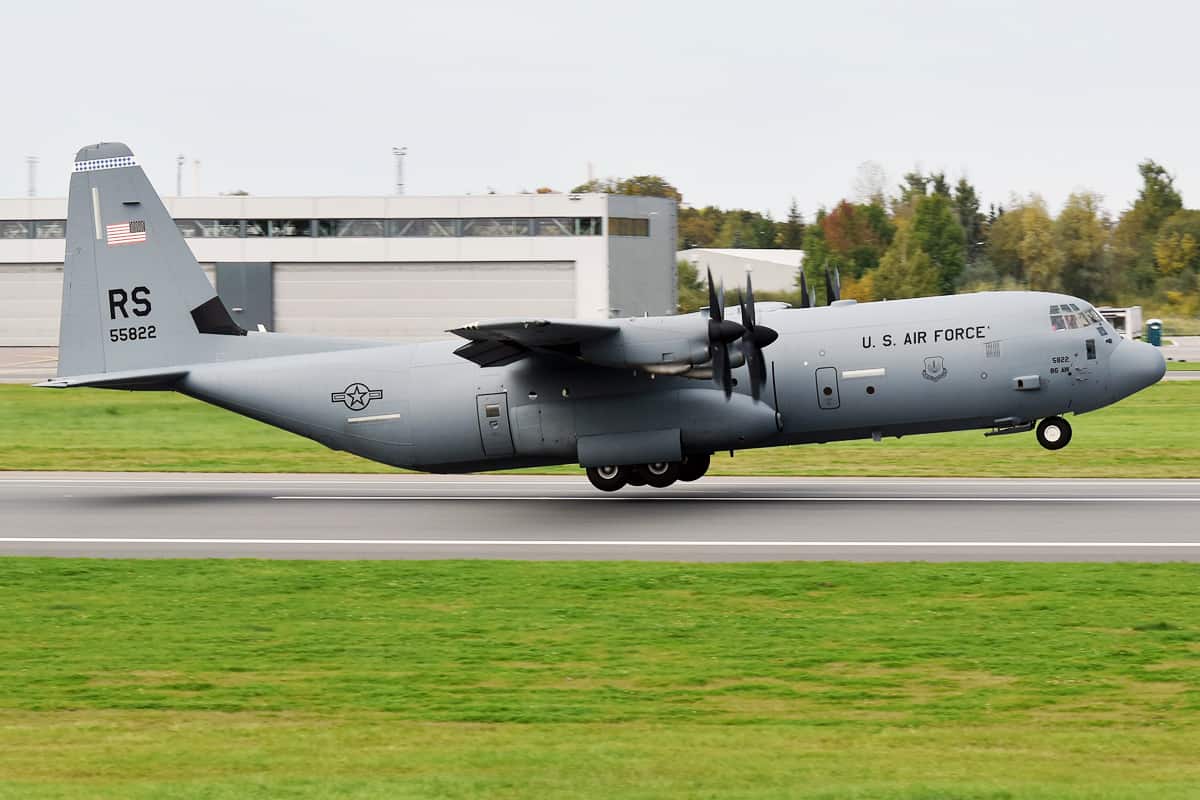
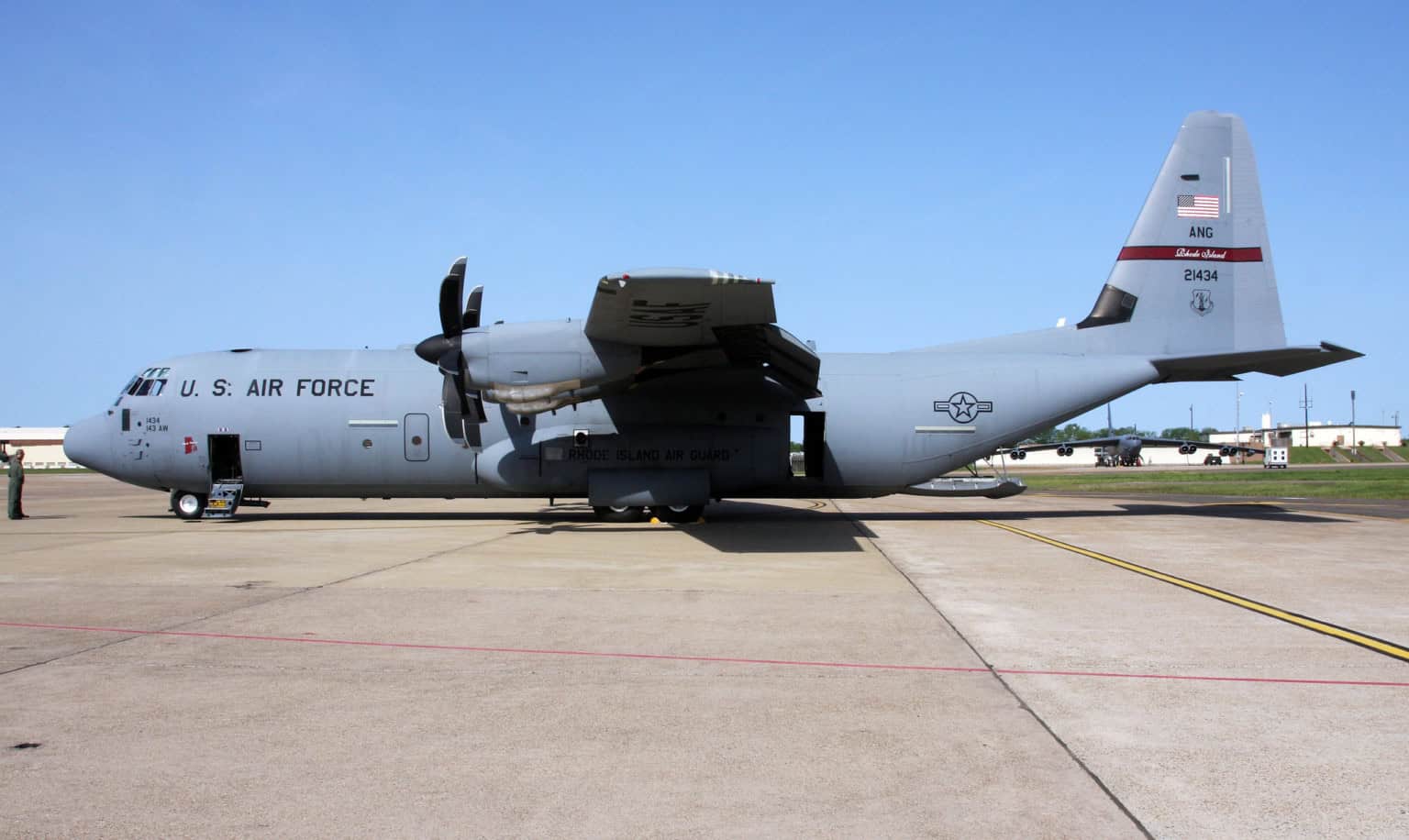

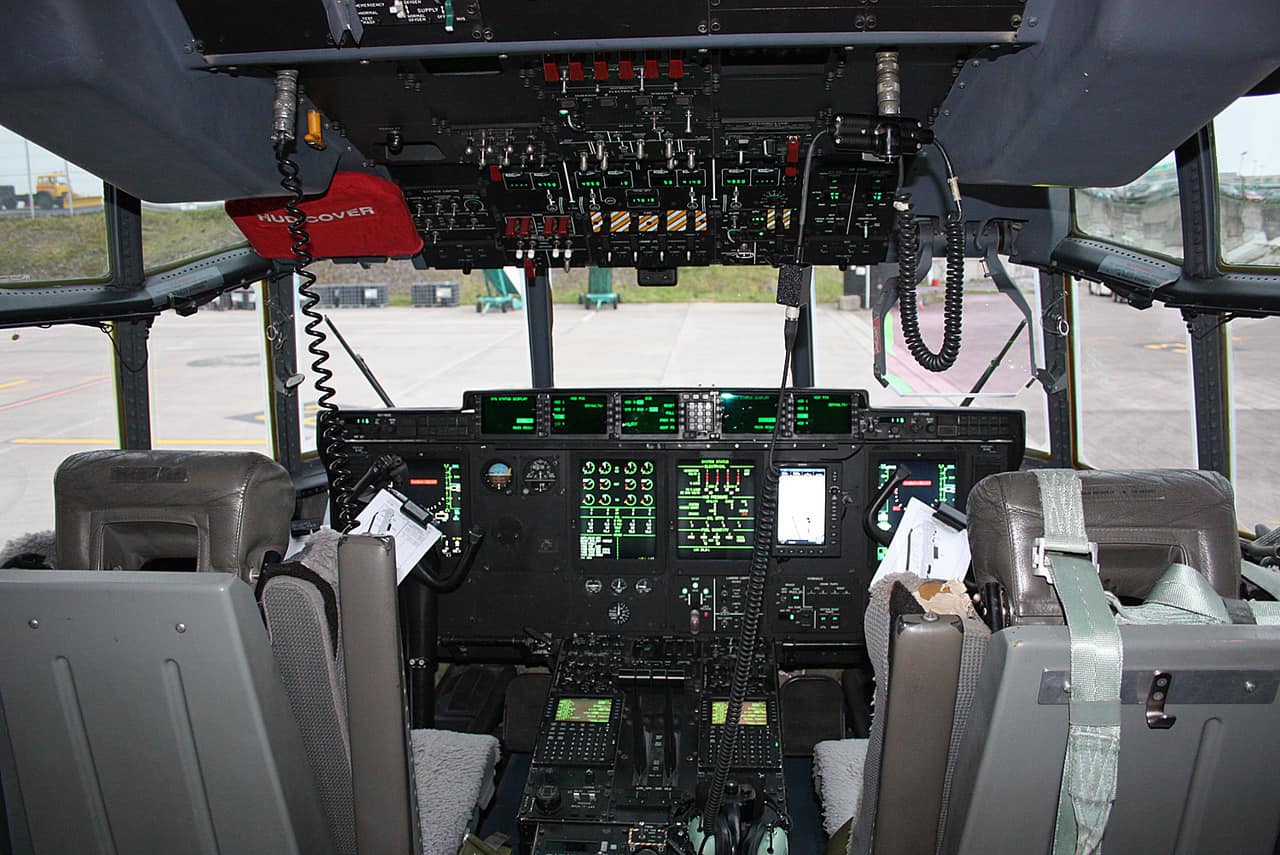
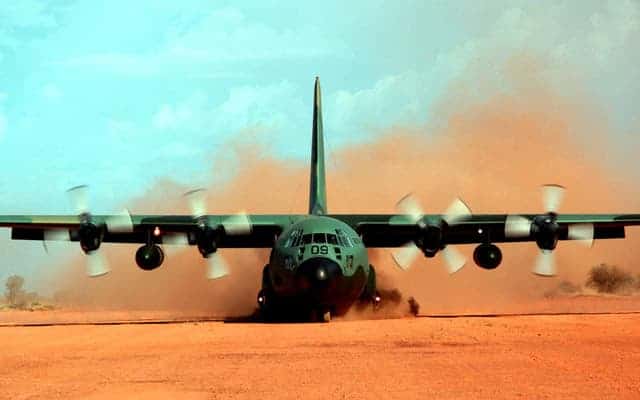
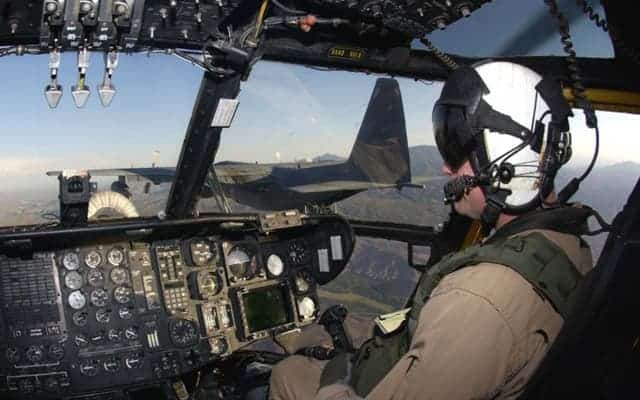
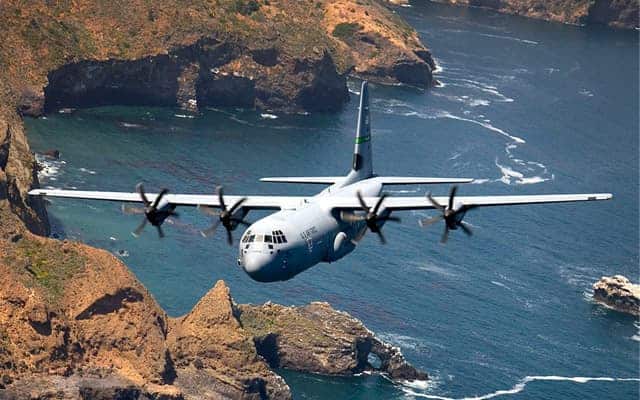
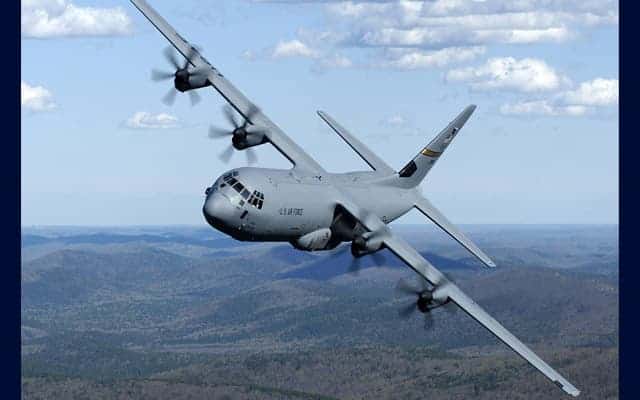
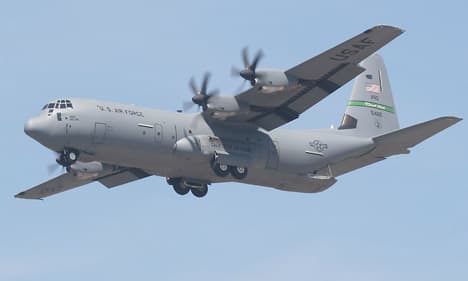
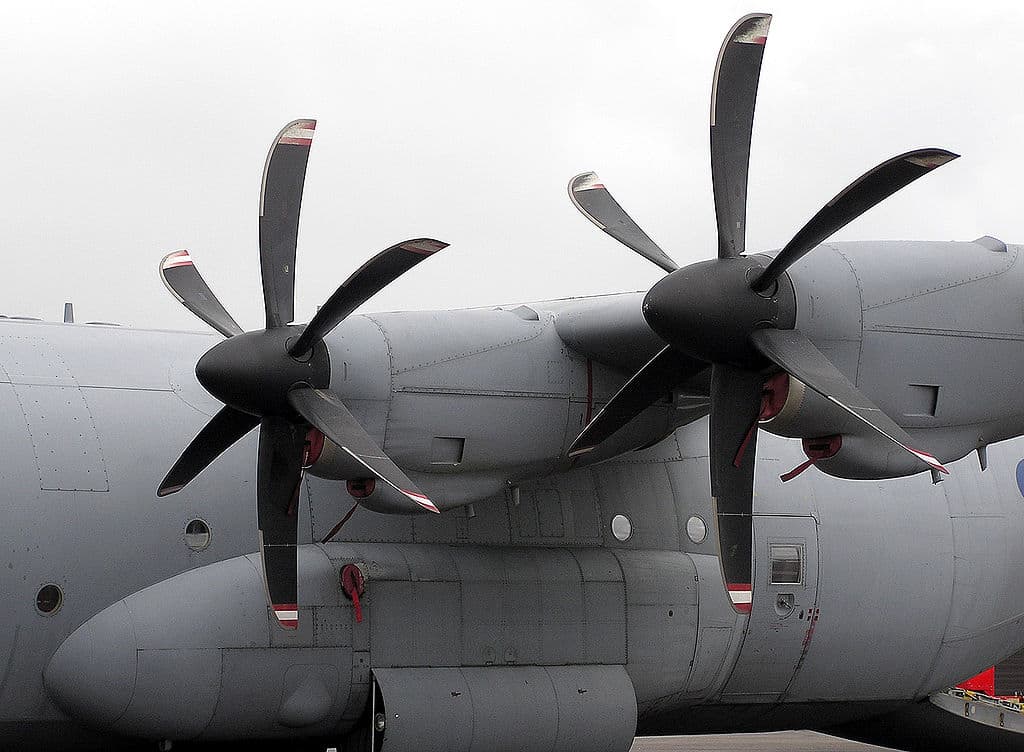
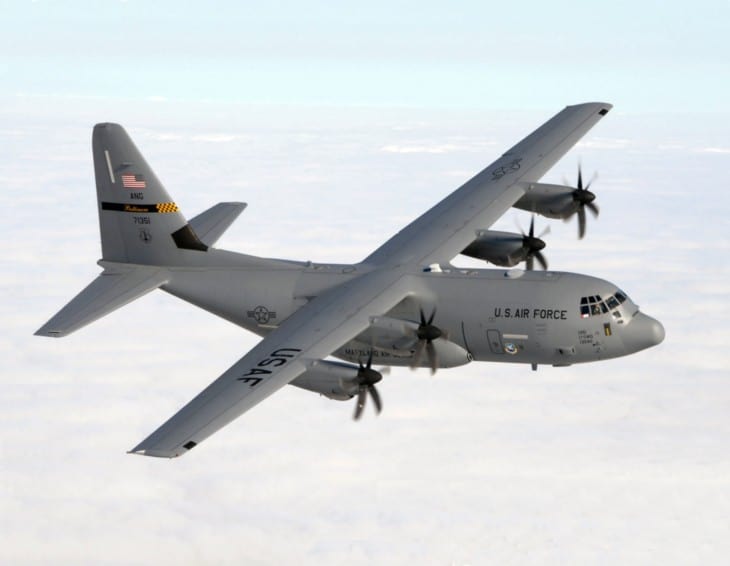
The C-130J Super Hercules is the current production version of the Lockheed C-130 Hercules. It looks much like the transport the Air Force first specified in 1951, but the engines, propellers and cockpit are all new.
It first flew on April 5, 1996, and Lockheed Martin’s September 2026 fact sheet counts more than 570 deliveries and 27 countries, including customers whose aircraft have yet to arrive. The same fact sheet puts the fleet past 3 million flight hours.
The Air Force’s own fact sheet sums up the difference in one sentence: compared with older C-130s, the J model climbs faster and higher, flies farther at a higher cruise speed, and takes off and lands in a shorter distance.
The cause is the powerplant. Four Rolls-Royce AE 2100D3 turboprops replaced the Allison T56 engines of the C-130E and C-130H, and each drives a six-blade Dowty R391 composite propeller with blade tips swept back 35 degrees.
The cockpit changed as much as the engines. The Air Force describes a two-pilot flight station with integrated digital avionics, color multifunction displays and head-up displays.
That is why the crew shrank. The Air Force lists five crew on a C-130E or C-130H (two pilots, a navigator, a flight engineer and a loadmaster) and three on the C-130J: two pilots and a loadmaster.

The Royal Air Force placed the launch order on December 16, 1994. According to Wikipedia’s account of the program, the order was paired with a British commitment to buy 40 to 50 aircraft of the proposed European transport that became the Airbus A400M.
The aircraft was harder to finish than it looked. Software integration problems cost three months, and a stall problem cost another nine. The extra engine power and the jump from four propeller blades to six had changed how the aircraft behaved at low speed.
Lockheed Martin spent five months on 20 aerodynamic fixes that did not work, then added a stick pusher to the cockpit. A separate icing problem turned up in late 1997: the more efficient engines no longer produced enough bleed air to keep the tail warm.
The FAA type certificate came in September 1998 after 4,000 hours of flight testing. Wikipedia notes that civil certification was not required for the RAF order, but the Air Force and the Royal Australian Air Force wrote it into their contracts. The Air Force says the C-130J entered its inventory in February 1999.
The program nearly stalled in Washington as well. On December 23, 2004, the Pentagon approved a budget decision to end Air Force C-130J procurement. It did not stick: Wikipedia, citing FlightGlobal, counts 273 Air Force C-130Js and variants in use by March 2022.
There are two fuselage lengths, and most people searching for C-130J specs do not realize it. The C-130J-30 is the stretched version, and the Air Force says it adds 15 feet to the fuselage.
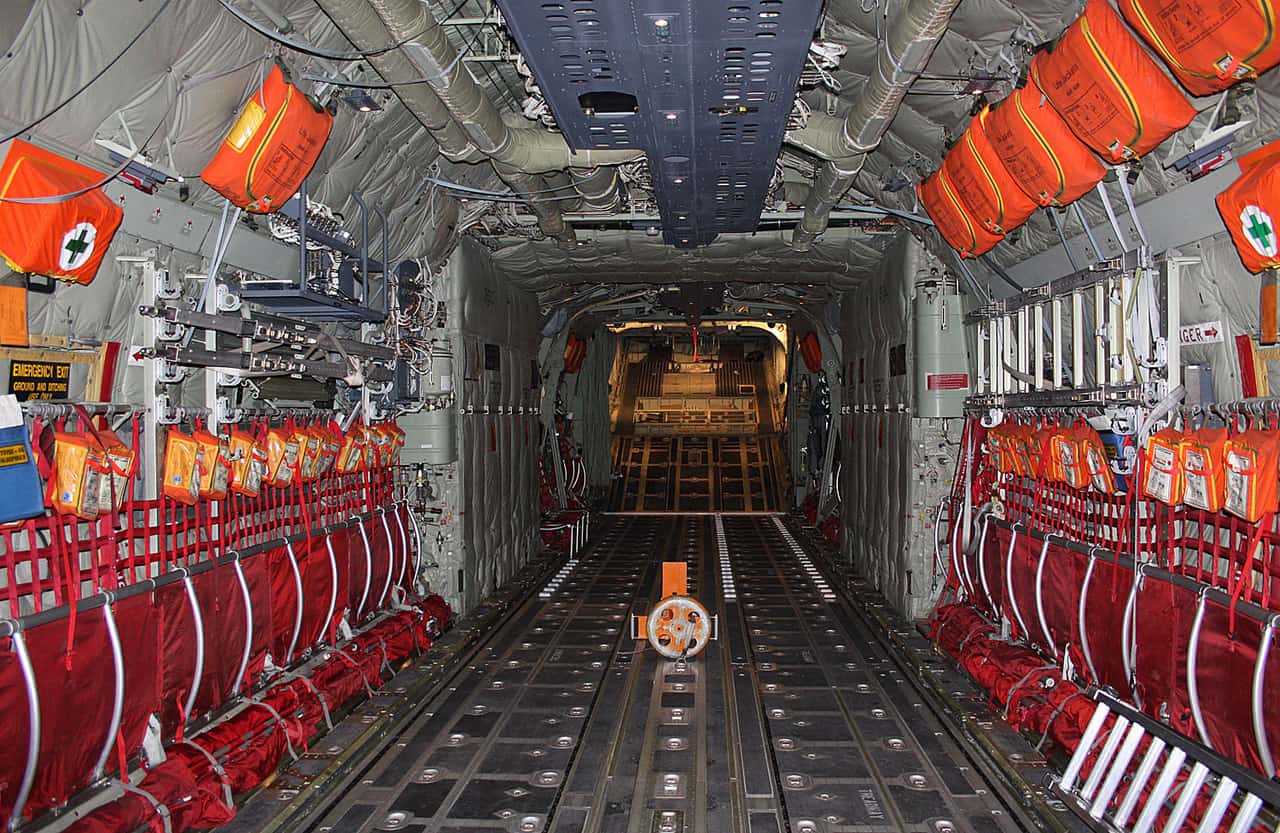
The cargo compartment grows with it. The Air Force lists 6 pallets, 90 combat troops or 72 litters for the standard aircraft, and 8 pallets, 128 combat troops or 97 litters for the C-130J-30.
Lockheed Martin says the stretched version has the longer range, the most pallet and passenger capacity and the best short-field performance. Most operators on its September 2026 list fly the C-130J-30.

The full specification table for the aircraft is on this page, and it describes the standard C-130J. Four of its figures have more than one honest answer.
Start with length. The panel gives the standard aircraft at 97 ft 9 in (29.79 m), while the C-130J-30, the version most operators fly, is 112 ft 9 in (34.37 m) long, according to Lockheed Martin.
Speed depends on the source. The Air Force publishes a top speed of 362 kt (417 mph) at 22,000 feet, which is Mach 0.59. Lockheed Martin’s own table lists a maximum cruise speed of 365 knots true airspeed, and it quotes the same figure for both fuselage lengths.
Range depends on the load. The panel uses the Air Force’s figure of 1,800 nm (2,070 mi) at maximum normal payload. Lockheed Martin quotes its range with 40,000 lb of payload instead: 1,980 nmi for the shorter KC-130J, HC-130J and MC-130J and 2,160 nmi for the C-130J-30.
Ceiling carries a payload condition too. The panel figure of 28,000 ft (8,500 m) is the Air Force’s, with 42,000 lb (19,100 kg) on board. With a 44,500 lb payload, the Air Force gives the C-130J-30 a ceiling of 26,000 ft.
Lockheed Martin lists 20 mission sets. The production variants it offers are the C-130J and C-130J-30 for combat delivery, the KC-130J tanker, the MC-130J for special operations, two versions of the HC-130J for search and rescue, and the LM-100J civil air freighter.
The MC-130J is an Air Force-only variant. The HC-130J comes in an Air Force version, the Combat King II, and a separate Coast Guard version for search and rescue and maritime missions.
The WC-130J weather reconnaissance aircraft, the Air Force’s Hurricane Hunter, is listed as a previously delivered variant. The U.S. Navy has named its planned TACAMO communications version the E-130J, based on the C-130J-30.
Some operators use their own designations. The Royal Canadian Air Force calls the C-130J-30 the CC-130J. The Royal Air Force called the C-130J-30 the Hercules C4 and the C-130J the Hercules C5, and it retired both in 2023.

A standard C-130J is a transport and carries none. The armed versions are conversions or special-mission kits.
The AC-130J Ghostrider is the Air Force gunship. Lockheed Martin lists it as a modification for air support, air interdiction and armed reconnaissance, and as a variant only the Air Force flies.
The Marine Corps added a weapon kit to the KC-130J tanker for its Harvest HAWK program. Wikipedia shows one in Afghanistan in 2011 with a targeting sight and Hellfire missiles on the left wing.
The Hercules family’s core job is tactical airlift: hauling troops, vehicles and cargo into short, rough airstrips. The Air Force says the C-130 can airdrop loads up to 42,000 pounds or land on dirt strips on its high-flotation landing gear.
The same airframe flies aeromedical evacuation, search and rescue, aerial refueling, special operations, weather reconnaissance, Antarctic resupply and, with a removable tank system, wildfire fighting.
Indian Air Force C-130Js have flown into some of the highest airstrips anywhere. On August 20, 2013, one landed at Daulat Beg Oldi in Ladakh at 16,614 feet, which Wikipedia lists as the highest landing of a C-130J.
For a sense of how long the Hercules shape has been proving itself, the Navy once landed a C-130 on an aircraft carrier. The C-130J is the latest descendant of that design.
Lockheed Martin’s September 2026 operator list runs from Australia and Canada to Norway, Qatar and Tunisia. It names the U.S. Air Force, Coast Guard, Navy, Marine Corps and NOAA as U.S. operators, and Pallas Aviation as a civil operator of the LM-100J.
The U.S. totals are older. Wikipedia, citing FlightGlobal, counted 273 Air Force, 65 Marine Corps and Navy, and 15 Coast Guard C-130Js and variants in use in March 2022.
New orders are still arriving. Lockheed Martin announced Mexico’s second C-130J-30 on September 23, 2026, after the first in January 2026, and says Mexico is the first Latin American nation to join the Super Hercules fleet.
New Zealand’s Defence Force took its first C-130J-30 on September 4, 2024, to replace its C-130H fleet, and lists a capacity of 128 passengers. Canada’s CC-130J fleet replaced older Hercules in the same way. The older Canadian aircraft are covered on the CC-130H page.
The Air Force’s published unit cost is the figure shown in the page header: $75.5 million in fiscal 2017 dollars. That is a U.S. Air Force budget figure, not an export price.
Wikipedia gives an earlier flyaway cost of $62 million in 2008 for the standard C-130J. The two numbers come from different years and different measures, so they are not directly comparable.
Governments buy the military versions. Lockheed Martin’s civil option is the LM-100J air freighter, and the C-17 Globemaster III is the much larger strategic airlifter the Hercules works alongside.
The C-130J has a long record, but it has had fatal accidents. On March 15, 2012, a Royal Norwegian Air Force C-130J-30 flew into Kebnekaise in Sweden in bad weather, and all five crew died.
On March 28, 2014, an Indian Air Force C-130J-30 crashed near Gwalior less than ten minutes after takeoff, killing all five on board.
On October 2, 2015, a U.S. Air Force C-130J crashed about 28 seconds after takeoff from Jalalabad, Afghanistan. All 11 people aboard died, along with three Afghan troops in a guard tower on the ground.
The C-130J has new Rolls-Royce AE 2100D3 engines with six-blade composite propellers and a digital cockpit. It needs three crew where the C-130H needs five. The Air Force says it climbs faster and higher, flies farther at a higher cruise speed, and uses less runway.
It is mainly a tactical transport for troops, vehicles and cargo on short or rough strips. Variants also fly refueling, special operations, search and rescue, weather reconnaissance, firefighting and gunship missions.
The most recent count we could source is from March 2022: 273 Air Force, 65 Marine Corps and Navy, and 15 Coast Guard C-130Js and variants. Lockheed Martin says more than 570 have been delivered worldwide as of September 2026.
The standard transport does not. The AC-130J Ghostrider gunship is an Air Force conversion, and the Marine Corps has fitted a Hellfire missile kit to the KC-130J tanker.
The C-130J-30 has a fuselage 15 feet longer. The Air Force lists 8 pallets and 128 combat troops for it, against 6 pallets and 90 troops for the standard C-130J.
The minimum crew is three: two pilots and a loadmaster. Specialized Air Force versions such as the AC-130J carry more.
Sources and references used for research and fact-checking.