Military Transport Planes
Italy's short-field airlifter with C-130J engines and cockpit
Updated: by Tim de Vries

The latest aviation news and stories sent to your inbox.
The C-27J Spartan is a twin-turboprop tactical transport built in Italy by Leonardo, developed from the Aeritalia G.222 with the C-130J’s Rolls-Royce AE 2100 engines, six-blade propellers and glass-cockpit technology. It first flew in 1999 and carries up to 60 troops or 24,900 lb (11,300 kg) of cargo into short, rough airstrips. By May 2026, 21 operators had ordered 100, although the U.S. Coast Guard and Australia are retiring theirs.
Live Fleet Activity (C27J)
Fetching live data…


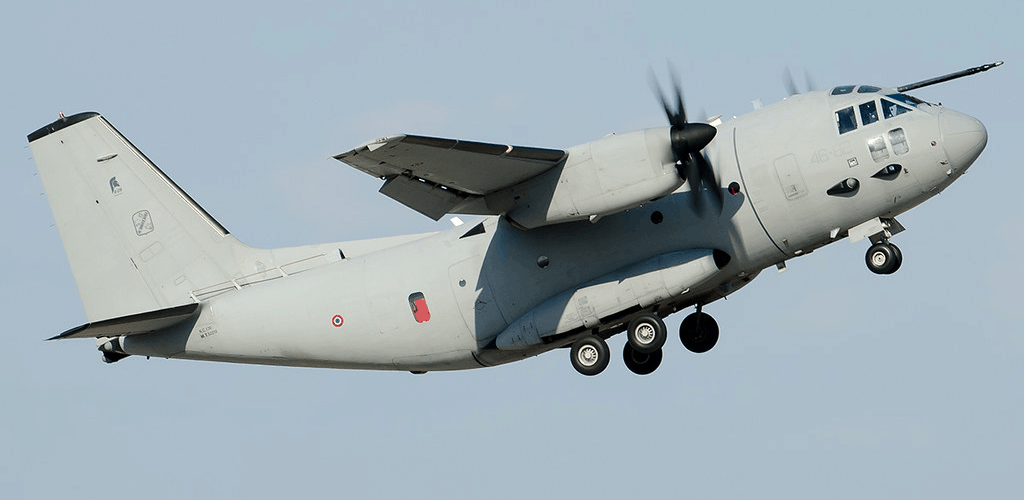


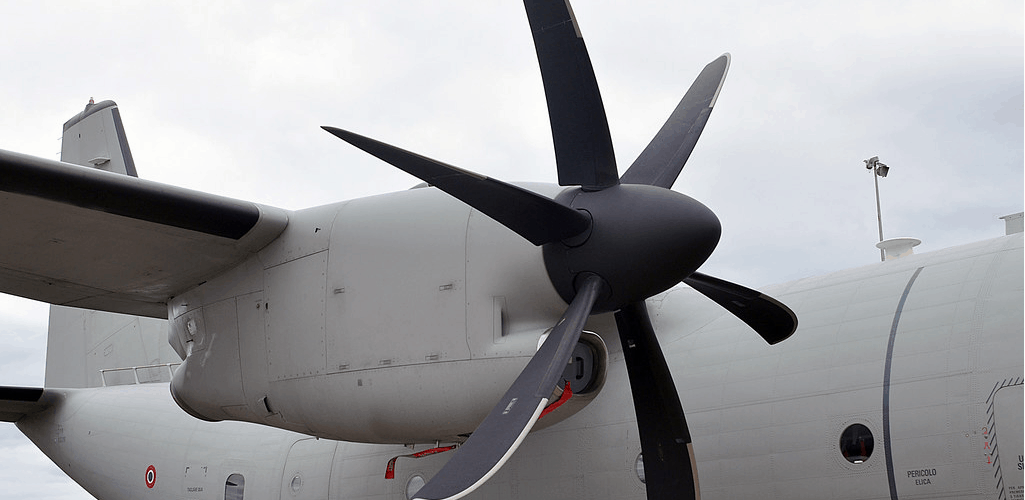


The C-27J Spartan is a twin-turboprop tactical transport aircraft built in Italy by Leonardo’s Aircraft Division, known as Alenia Aeronautica and then Alenia Aermacchi until 2016. It sits one size below the C-130J Super Hercules and was designed to haul troops and cargo into short, rough airstrips that are often out of reach for bigger airlifters.
The aircraft first flew on September 24, 1999, and Italy accepted its first production example in October 2006. By May 2026, Leonardo said 21 operators had ordered 100 aircraft, the type was in service in 18 countries, and the fleet had flown about 295,000 hours.
In the United States the story is more complicated. The Air Force bought 21 and gave them away within a few years, and the Coast Guard, which took 14 of them, now plans to retire its fleet by the end of fiscal year 2028.
The Spartan is a heavily reworked version of the Aeritalia G.222, an Italian STOL transport that first flew in July 1970. Fiat, Aeritalia and Alenia built 111 of them between 1970 and 1993.
The “C-27” name is American. In 1990 the U.S. Air Force picked the G.222 as a rapid-response intra-theater airlifter and bought ten, designated C-27A Spartan and based at Howard Air Force Base in Panama, and the new aircraft took its designation from them.
In 1995 Alenia and Lockheed Martin began discussing an improved G.222, and in 1997 they formed a joint company, Lockheed Martin Alenia Tactical Transport Systems, to develop it. The design ended up with the C-130J’s Rolls-Royce AE 2100 engine and six-blade propeller, a C-130J-style glass cockpit, and a fully digital MIL-STD-1553 avionics architecture.
Those changes gave the C-27J about 35 percent more range and a 15 percent faster cruise speed than the G.222. Italy placed the launch order for 12 aircraft two months after the first flight, and the type gained Italian civil certification in June 2001 and military certification that December.
Leonardo rates the standard troop load at 46 seats, rising to 60 in a high-density layout. For airborne operations the cabin takes 34 fully equipped paratroopers, or up to 46 lightly equipped ones, who jump from the ramp or the side paratroop doors.
As an air ambulance it carries up to 36 standard stretchers plus six medical attendants. A roll-on VIP module seats six VIPs and 18 escorts.
For cargo, the hold takes three HCU-6/E 463L pallets plus a smaller HCU-12/E on the ramp, or six HCU-12/E pallets. Airforce Technology notes that the cabin accepts Hercules pallets and that the floor is as strong as a Hercules floor, and Leonardo says loads can come straight off C-130 or CH-47 Chinook class aircraft without being repacked.
The Spartan can also airdrop up to about 19,800 pounds (9,000 kg) on two platforms, or six A22 container bundles. Its wide, tall cabin decided at least one competition: Australia picked it over the rival C-295 partly because it fit the Army’s G-Wagen vehicle.
Up front, Airforce Technology describes a two-pilot flight deck very similar to the C-130J’s, with five LCD displays and night-vision-goggle compatibility. The minimum crew is the two pilots, with a loadmaster added when the mission needs one, and the RAAF lists all three as its crew.
The aircraft has its own auxiliary power unit for missions from improvised airfields, and Leonardo says the APU can also restart the engines in flight. Leonardo qualifies it from -67°F (-55°C) up to ISA+35°C, which works out to 122°F (50°C) at sea level.
The full specification table for the C-27J is on this page. A few of its figures depend heavily on how the aircraft is loaded, and a few that get quoted for it are not in the table at all.
Range. The 2,730 nm (3,140 mi, 5,060 km) range in the panel is Leonardo’s figure for a 10,000 lb (4,536 kg) payload. Leonardo’s maximum range is 3,160 nm (5,852 km).
The RAAF and Wikipedia quote a much shorter 920 to 950 nm (1,700 to 1,760 km) “at maximum takeoff weight.” That is the same takeoff weight with far more of it taken up by cargo instead of fuel.
Speed. The panel’s maximum speed of 325 knots (374 mph) is Leonardo’s top cruising speed in true airspeed. Its cruise speed of 315 knots (362 mph) is the normal cruise from Wikipedia’s specification block, and the Coast Guard’s fact sheet lists a 290-knot cruise with 12 hours of endurance.
Weight. Leonardo publishes two maximum takeoff weights. The panel’s 70,000 lb (31,800 kg) comes from its product page, and its Next Generation brochure gives 71,650 lb (32,500 kg). The brochure credits the new winglets with up to 2,205 lb (1,000 kg) of extra takeoff weight.
Payload. The 24,900 lb (11,300 kg) in the panel is the absolute maximum payload. Leonardo lists a separate tactical maximum payload of 17,196 lb (7,800 kg).
Short-field performance. At maximum takeoff weight at sea level, Leonardo gives a takeoff ground run of 2,264 feet (690 m). The landing ground roll at maximum landing weight is 1,279 feet (390 m).
Those are ground rolls, not distances over a 50-foot obstacle, so they will not match runway-length figures quoted elsewhere.
The two aircraft share an engine family, propellers and cockpit concept, and they were developed together by one partnership. Lockheed Martin then entered the C-130J against the C-27J in the U.S. Joint Cargo Aircraft competition, and the partnership broke up in 2006.
The Hercules is much bigger. A standard C-130J has a 42,000 lb maximum allowable payload and seats 92 passengers or 64 paratroopers, while the Spartan’s maximum payload is a little under 60 percent of that.
The C-27J’s case is efficiency on small loads. It uses two engines instead of four, which pays off on missions where a Hercules would fly with a partly empty hold, and it is built for the short, unprepared strips at the end of the supply chain.
That argument has not always won. When the Pentagon cut the U.S. fleet in 2012, it said the C-130 could take over the mission, and one lifecycle estimate reported during that fight put a C-27J at $308 million over its life against $213 million for a C-130 over 25 years.
The U.S. Army wanted a light airlifter to replace its C-23 Sherpa and take the “last tactical mile” resupply burden off its CH-47 helicopters. In June 2007 the Pentagon awarded a $2.04 billion contract for 78 C-27Js, including training and support, through the Joint Cargo Aircraft program.
In 2009 the Army handed the whole program to the Air Force, which cut the buy to 38. Air National Guard crews took the C-27J to Kandahar, Afghanistan, in August 2011, and by June 2012 the deployment had flown more than 3,200 missions carrying over 25,000 passengers and 1,400 tons of cargo.
In January 2012 the Defense Department announced it would retire all its C-27Js, citing budget pressure and spare airlift capacity. The Air Force had spent $567 million on 21 aircraft, and some newly built Spartans were flown straight to the Davis-Monthan boneyard in Arizona.
Those 21 aircraft went to two new owners. Seven went to U.S. Army Special Operations Command in 2014, where they fly near-continuous freefall training for the Special Warfare Center’s Military Free Fall School from North Carolina and Yuma Proving Ground, Arizona. The Aviationist calls the Spartan the largest aircraft the U.S. Army employs.
The other 14 went to the Coast Guard under the 2014 National Defense Authorization Act. Thirteen were regenerated from storage at Davis-Monthan, and the Coast Guard took the 14th and final aircraft in October 2017.
Air Station Sacramento, California, became the first operational C-27J unit and had its full complement of six aircraft by May 2017. The plan was to “missionize” all 14 as HC-27J patrol aircraft with the Minotaur mission system, a surface-search radar and electro-optical sensors.
The first missionized prototype, CGNR 2712, flew on September 6, 2023, at Naval Air Station Patuxent River. That December the Coast Guard grounded the fleet after inspections found cracks of varying degrees on all 14 aircraft, and Leonardo said operators could make the repair at their own bases.
The program then ran out of money. The Further Consolidated Appropriations Act of 2024 allocated it nothing, and the Coast Guard canceled HC-27J missionization.
Four aircraft were in the process when it ended, and the Coast Guard says none of them had a valid airworthiness certificate and all four will be disposed of. Its fiscal 2026 budget plans for a ten-aircraft C-27J fleet, eight operational and two in depot maintenance, and notes that these airframes “were never outfitted to support Coast Guard missions.”
The Coast Guard plans to decommission every C-27J by the end of fiscal year 2028, and Sacramento is moving to the HC-130J. The station marked the arrival of its first HC-130J on September 10, 2026, and expects a second in spring 2027.
Italy is the launch customer and flies 12 with the 46th Air Brigade at Pisa. Its aircraft have in-flight refueling and a defensive aids suite, and a pair deployed to Afghanistan for NATO from September 2008 to January 2009.
Australia bought 10 to replace the DHC-4 Caribou, flown by No. 35 Squadron from RAAF Base Amberley since 2015. In April 2026 the government said it would retire them early and use commercial aircraft for Pacific transport, after years of poor availability. No retirement date had been set when the decision was announced.
Other operators and customers, with the fleet sizes and orders Wikipedia lists, include:
Production continues. Peru’s fifth aircraft, ordered in May 2026, will be the country’s first Next Generation model, and the Saudi patrol aircraft are due from 2029.
C-27J Next Generation. Launched in November 2020, it adds new avionics that meet the Performance Based Navigation standard for unrestricted civil airspace, plus winglets that improve climb performance and raise the maximum takeoff weight.
MC-27J Praetorian. A special-mission version with roll-on, roll-off ISR consoles, sensors and a 30 mm cannon that fires through the left rear door. It first flew in March 2014, and Italy converted three C-27Js to the standard in 2016.
EC-27 “Jedi”. An Italian electronic warfare package announced in 2010, built to jam radio links, including the remote detonators used to trigger roadside bombs. It has been compared to the U.S. EC-130H Compass Call.
HC-27J. The Coast Guard’s patrol version, described above, whose missionization was canceled after one prototype flew.
C-27J MPA. A maritime patrol and anti-submarine version with search sensors, up to five operator stations and six wing pylons for torpedoes, anti-ship missiles or mines. Leonardo says Saudi Arabia’s four are the first C-27J MPAs ordered with maritime weapons integration.
AC-27J Stinger II. A proposed U.S. Air Force gunship from 2008, with 16 planned. It was put on hold in 2009, and Air Force Special Operations Command stayed with the C-130 for its gunships.
Operators can also fit the Spartan for aerial firefighting with six roll-on Guardian containers holding 6,000 liters (1,585 gallons) of water or retardant, or with the MAFFS II system.
When Italy launched the program in 1999, the C-27J had a basic price of $24 million. Wikipedia, citing the U.S. Air Force’s fiscal 2013 budget, gives a 2012 flyaway cost of $31.7 million, which is the figure shown in the page header.
Export deals cost far more per aircraft because they bundle training, spares and support. Mexico signed a $200 million contract for four aircraft and a support agreement in 2011, and Australia’s 2011 request for 10 aircraft and related support was valued at $950 million.
The C-27J Spartan is made by Leonardo’s Aircraft Division in Italy, which was Alenia Aeronautica and then Alenia Aermacchi until 2016. The earlier C-27A was the U.S. designation for the Aeritalia G.222, the aircraft the C-27J was developed from.
Yes, but only two services fly it. The Army’s special operations command uses seven for parachute training, and the Coast Guard is flying its remaining C-27Js until it decommissions them by the end of fiscal year 2028. The Air Force gave up its fleet after the 2012 budget cuts.
The Air Force bought 21 C-27Js and passed them to the Army (7) and the Coast Guard (14). Four Coast Guard aircraft caught in the canceled missionization program are to be disposed of, and the Coast Guard’s fiscal 2026 budget plans for a ten-aircraft fleet until the type leaves service by the end of fiscal year 2028.
The C-27J carries a little under 60 percent of a C-130J’s payload but uses two engines instead of four. Against the smaller C-295 its selling point is a wider, taller cabin, which helped it win Australia’s order.
Leonardo rates it for 46 troops, or 60 in a high-density layout. It can drop 34 fully equipped paratroopers, or up to 46 lightly equipped ones, and it can carry 36 stretchers in the medevac role.
Yes. Peru ordered its fifth aircraft in May 2026 for delivery in 2027, and Saudi Arabia’s four maritime patrol aircraft are due from 2029.
Congress allocated no money for the HC-27J mission-system program in the fiscal 2024 appropriations act, so the Coast Guard canceled it. Its own budget documents say the airframes were never outfitted for Coast Guard missions, and Air Station Sacramento is switching to the HC-130J.
Sources and references used for research and fact-checking.