

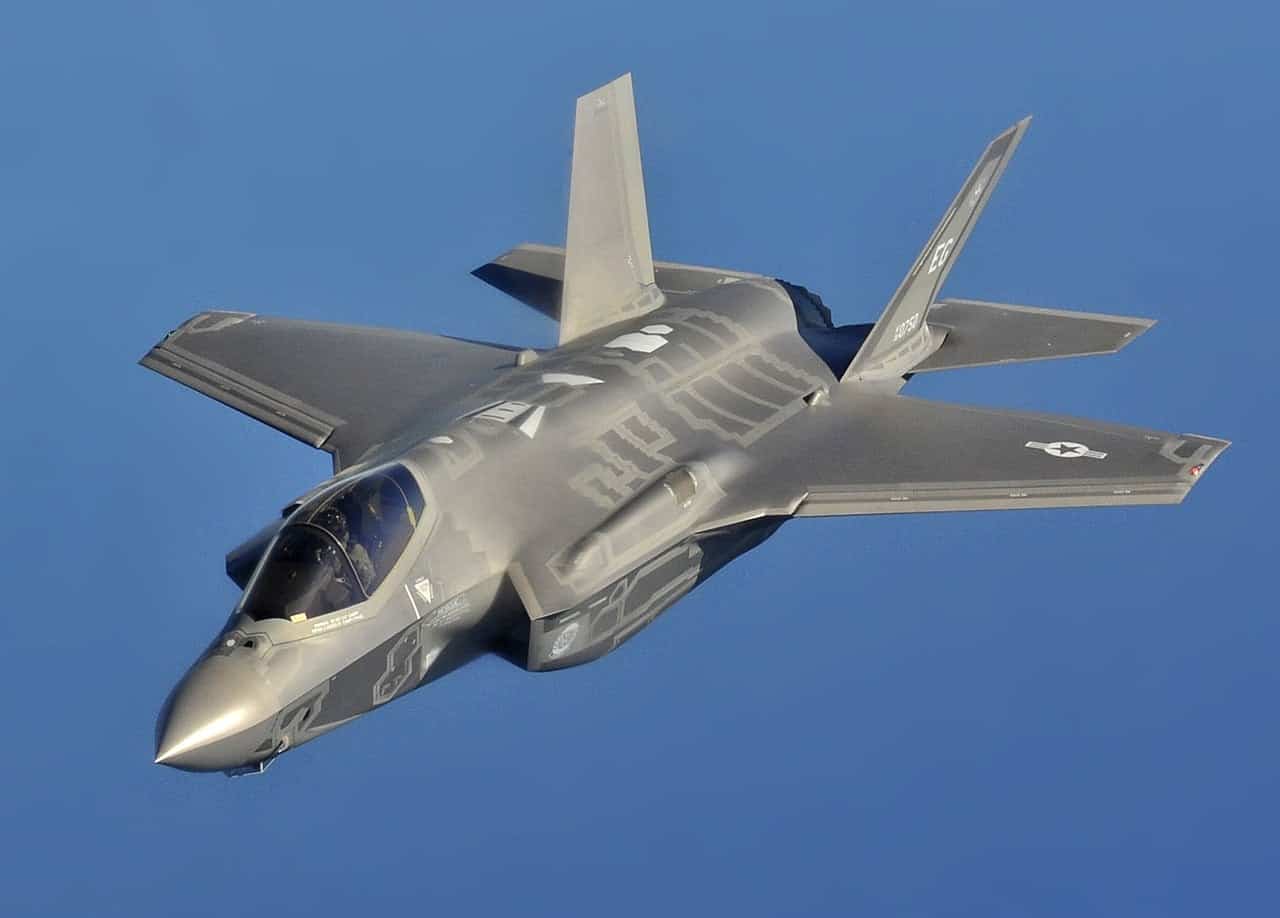
The best American fighter jet in service today is the Lockheed Martin F-22A Raptor. Nothing else the United States flies combines stealth, supercruise and thrust-vectoring agility in one airframe, and twenty years after it entered service it is still the aircraft every other air superiority fighter gets measured against.
The F-35A Lightning II is the more important aircraft. It is more numerous, better connected, and it is what the United States is actually buying. But at pure air dominance, the aircraft it was never designed to replace still wins.
We rank by fielded combat capability as of September 2026: sensor and weapons reach, kinematics and payload, survivability, and how many airframes are genuinely in frontline American units. A capability that exists only in a brochure does not score.
Eleven types make the list, spread across the Air Force, Navy and Marine Corps. For the global picture, see our ranking of the best fighter jets in the world.
| Aircraft | Service | Role | Top speed | Status in 2026 |
|---|---|---|---|---|
| 1. Lockheed Martin F-22A Raptor | Air Force | Air dominance | Mach 2 class, supercruise | In service, out of production |
| 2. Lockheed Martin F-35A Lightning II | Air Force | Stealth multirole | Mach 1.6 | In service, in production |
| 3. Lockheed Martin F-35C Lightning II | Navy and Marine Corps | Carrier stealth multirole | Mach 1.6 | In service, in production |
| 4. Lockheed Martin F-35B Lightning II | Marine Corps | STOVL stealth multirole | Mach 1.6 | In service, in production |
| 5. Boeing F-15EX Eagle II | Air Force | Multirole missile truck | Mach 2.5 | In service, in production |
| 6. Boeing F-15E Strike Eagle | Air Force | Fighter-bomber | Mach 2 class | In service, out of production |
| 7. Boeing F/A-18E/F Super Hornet | Navy | Carrier multirole | Mach 1.8+ | In service, production ending 2027 |
| 8. Lockheed Martin F-16C/D Fighting Falcon | Air Force | Multirole | Mach 2 at altitude | In service, upgraded not replaced |
| 9. Boeing EA-18G Growler | Navy | Airborne electronic attack | Mach 1.8 class | In service, out of production |
| 10. Boeing F/A-18C/D Hornet | Marine Corps | Multirole | Mach 1.7+ | In service, sundown 2030 |
| 11. Boeing F-15C/D Eagle | Air National Guard | Air superiority | Mach 2 class | Retiring, last jets to 2031 |
How we ranked them
Four measures, weighted in this order: sensor and weapons reach, kinematic performance and payload, survivability against a modern air defence network, and how many airframes are genuinely in frontline American units. We rank fighters and strike fighters flown by the US military now, so the A-10 attack jet, every jet trainer, and every retired or prototype type is covered separately at the end. Figures are published specifications from the operating service where one exists.
The best American fighter jets in service today
Two companies build every fighter on this list. Lockheed Martin holds the four stealth slots plus the F-16, and Boeing holds the rest through its acquisition of McDonnell Douglas.
1. Lockheed Martin F-22A Raptor
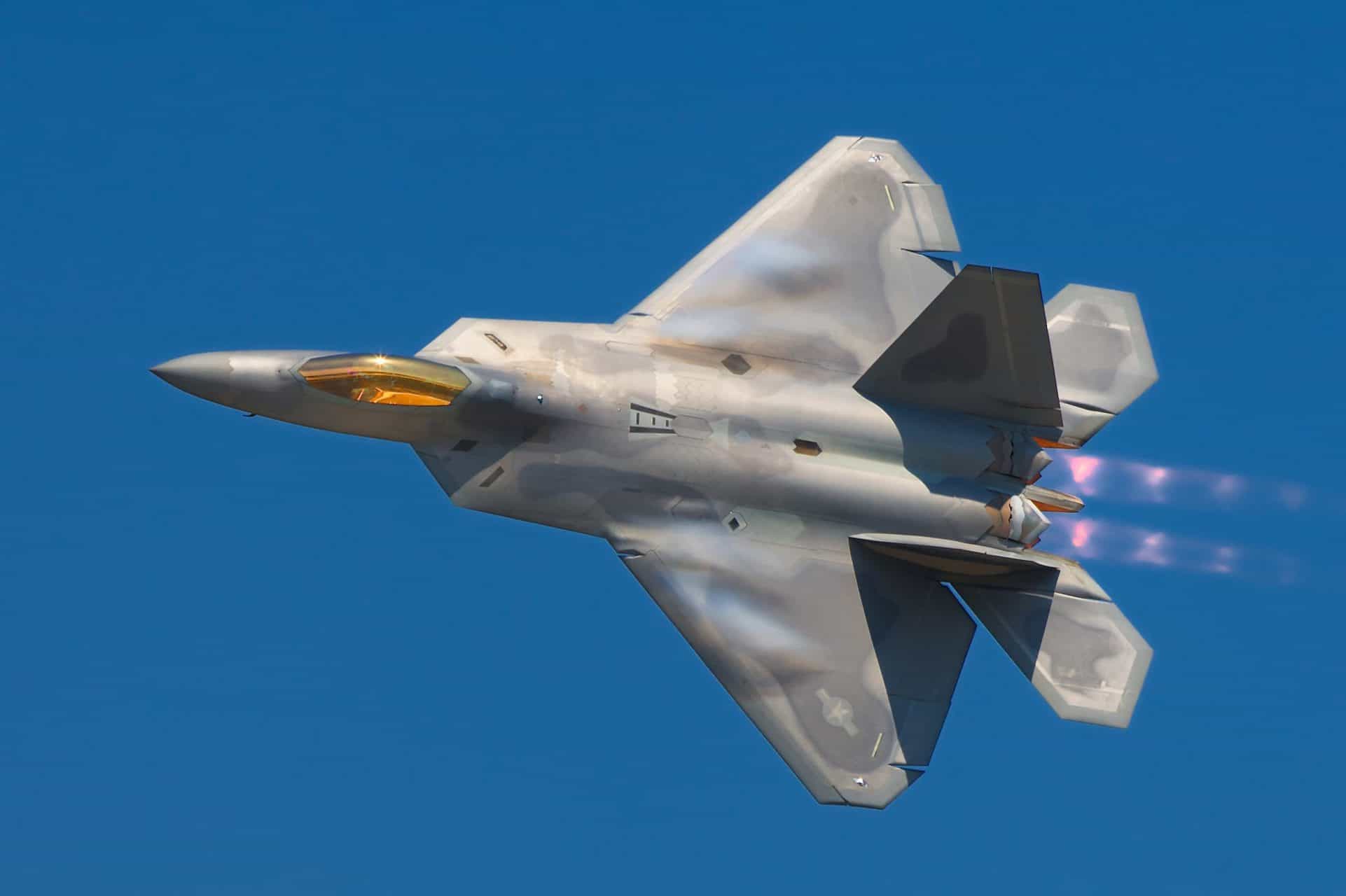
The F-22 Raptor reached initial operating capability in December 2005 and has not been surpassed in the air-to-air role since. The Air Force’s own fact sheet claims it “cannot be matched by any known or projected fighter aircraft.”
Two Pratt & Whitney F119 engines in the 35,000-pound thrust class give it something almost no other fighter has: the ability to cruise above Mach 1.5 without afterburner. That is supercruise, and it expands both the speed and the range at which the Raptor can fight.
Two-dimensional thrust-vectoring nozzles handle the low-speed end. In the air-to-air configuration it carries six AIM-120 AMRAAMs and two AIM-9 Sidewinders inside its weapon bays, plus an M61A2 20 mm cannon with 480 rounds.
The catch is arithmetic. The 195th and final Raptor left the Marietta line in May 2012, and only 187 of those were operational aircraft rather than test airframes.
The Air Force fact sheet listed a total force of 183 as of August 2022. Reporting through 2026 puts the surviving fleet around 184 to 185, of which 32 are training-only Block 20 jets and roughly 143 are combat-coded.
That shortage is why the Raptor keeps outliving its own retirement notices. The Air Force has repeatedly asked to retire the Block 20 fleet; Congress has refused, current law bars retiring any Raptor before September 2027, and Lockheed Martin has pitched upgrading those 32 jets to combat standard instead at a cost it put above $3.3 billion.
2. Lockheed Martin F-35A Lightning II
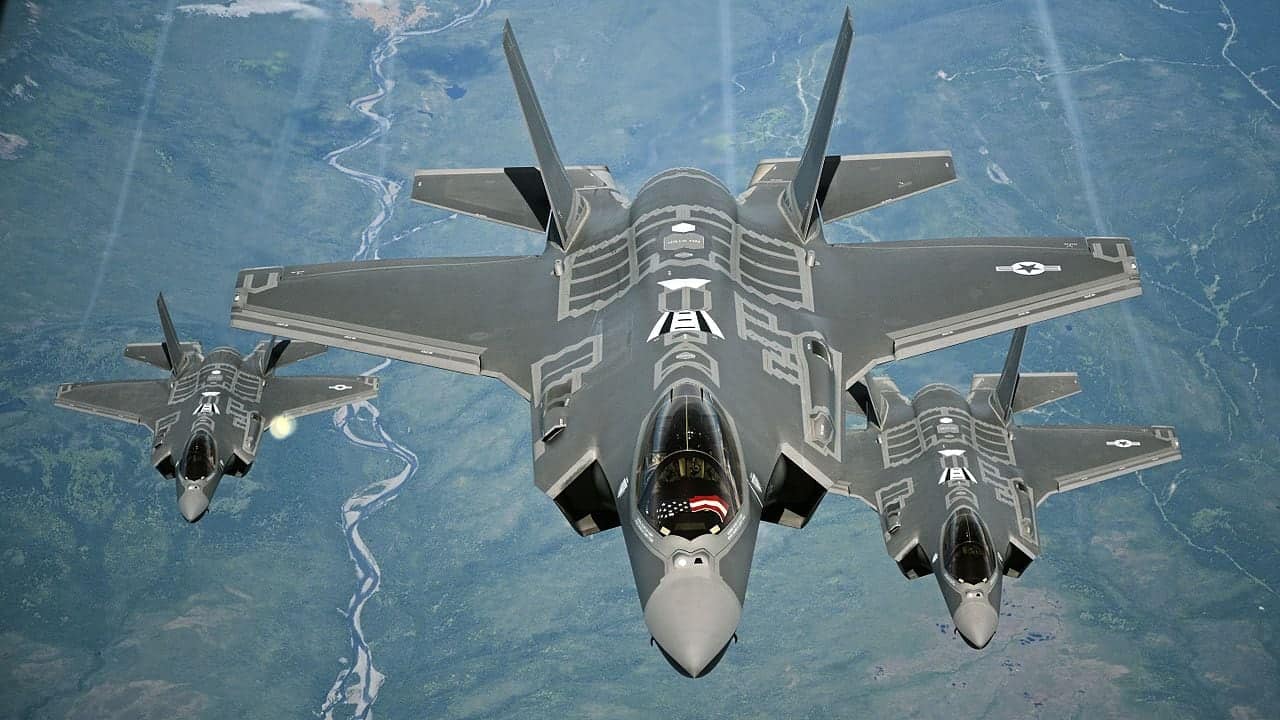
The F-35A is the conventional runway variant and the version the US Air Force buys in the largest numbers. The global F-35 fleet passed 1,300 aircraft after a record 191 deliveries in 2025, and the Air Force wants to be taking up to 100 F-35As a year by 2030.
A single Pratt & Whitney F135 produces 43,000 pounds of thrust, pushing it to Mach 1.6 with a ceiling above 50,000 feet and more than 1,350 miles (2,170 km) of range on internal fuel. Payload is 18,000 pounds (8,160 kg).
Raw numbers undersell it. The Distributed Aperture System gives the pilot a spherical infrared view through the airframe, the Electro-Optical Targeting System handles precision strike, and the whole picture is fused and pushed onto the helmet visor and out to every other aircraft in the formation.
It ranks second rather than first because readiness has not kept pace with capability. The GAO reported that the fleet’s full mission capable rate fell from 38.1 percent in 2021 to 24.6 percent in fiscal 2025, and the F-35A led the three variants at just 28.5 percent.
The Block 4 upgrade keeps moving right
Block 4 is the package that turns the F-35 into the aircraft it was sold as: more than 70 major upgrades riding on the Technical Refresh 3 hardware. It was originally due to be fielded in 2026. It slipped to 2029, then to around 2031. Deliveries of TR-3 jets restarted in July 2024 on a truncated software load that is not combat ready, and as of May 2026 none of those aircraft had been cleared for operational use.
3. Lockheed Martin F-35C Lightning II
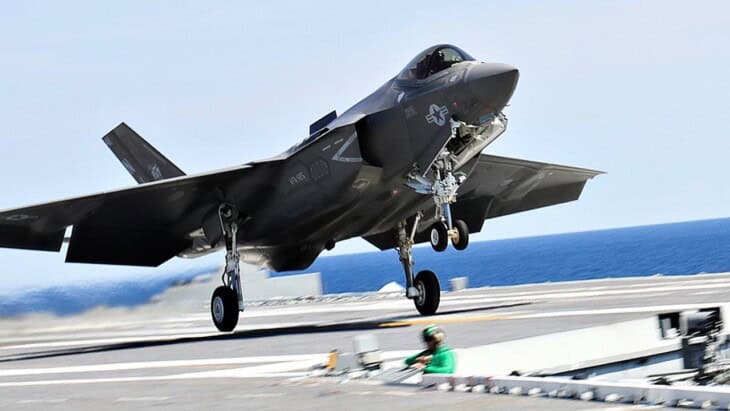
The F-35C is the carrier variant, and it is the reason a US carrier air wing can now send a stealth aircraft against a defended coastline. Bigger wings, a stronger structure and a tailhook cost it agility and buy it approach speed control and range.
The Navy’s program of record is 273 aircraft, with more than 100 delivered fleet-wide. The Marine Corps takes a slice of that total and expects to field 56 F-35Cs by the end of 2026 so its squadrons can deploy aboard Navy carriers.
It sits above the F-35B because carrier decks reach further than amphibious ships, and it sits below the F-35A because there are far fewer of them.
It is the only stealth aircraft an American carrier can launch, which changes what a US carrier group can be sent against. Our ranking of carrier-based fighter jets puts it against its foreign rivals.
4. Lockheed Martin F-35B Lightning II
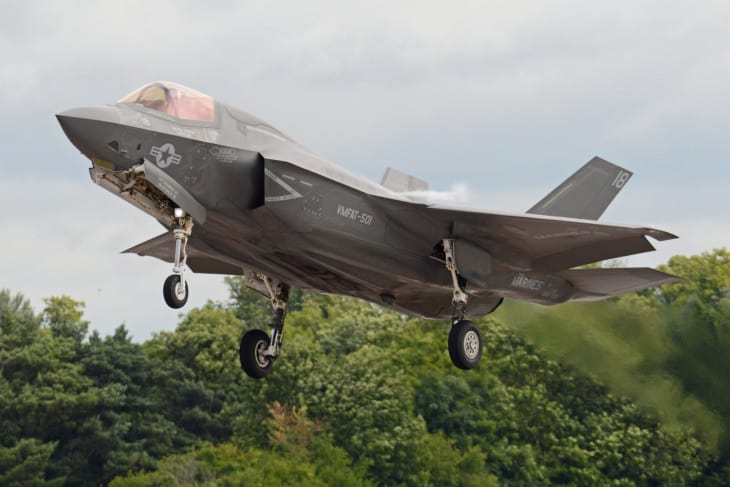
The F-35B is the short takeoff and vertical landing variant, built so the Marine Corps can operate stealth fighters from amphibious assault ships and from strips too short for a conventional jet.
A shaft-driven lift fan behind the cockpit and a swivelling rear nozzle do the work. The mechanism costs internal fuel and weapons bay volume, which is why the B has the shortest legs and the smallest internal payload of the three variants.
The Marines expect 205 F-35Bs in the fleet by the end of 2026. It ranks fourth on raw capability and first on what it makes possible: a Marine Expeditionary Unit can now take fifth-generation airpower to sea without a supercarrier.
5. Boeing F-15EX Eagle II
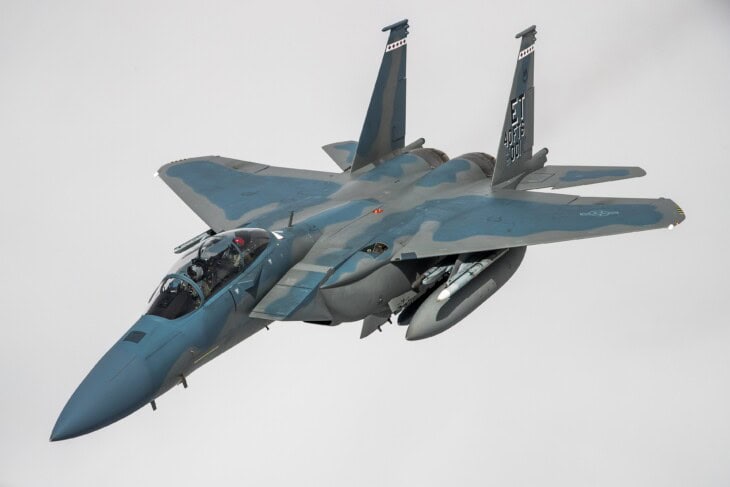
The F-15EX is the newest non-stealth fighter the US buys, and it exists because stealth is not the only thing that matters. It is a fifty-year-old airframe rebuilt around a modern digital backbone, and it hauls more ordnance than anything else on this list.
Two General Electric F110-GE-129 engines take it to a published Mach 2.5. It carries a 29,500-pound (13,300 kg) payload across two extra weapons stations, which translates to as many as 12 AIM-120 AMRAAMs, and it runs the APG-82 AESA radar.
The first aircraft was delivered on 11 March 2021 and initial operational capability followed in July 2024. Boeing handed over the 22nd airframe on 28 August 2026, and five went to Portland Air National Guard Base between January and August of that year.
The buy has grown sharply. The 2026 defense budget programmed 149 aircraft through fiscal 2031; the 2027 request more than doubled the eventual total to 267. At roughly $94 million each it is not a cheap alternative to the F-35, and it was never meant to be one.
The missile truck logic
A stealth fighter is quiet because it carries its weapons inside, and a bay that small limits how many it can carry. The F-15EX gives up stealth entirely and carries twelve air-to-air missiles in the open, standing off behind the F-22s and F-35s and shooting on targets they find. That is why the Air Force is buying a fourth-generation design in 2026 and why it costs about as much as a stealth fighter.
6. Boeing F-15E Strike Eagle
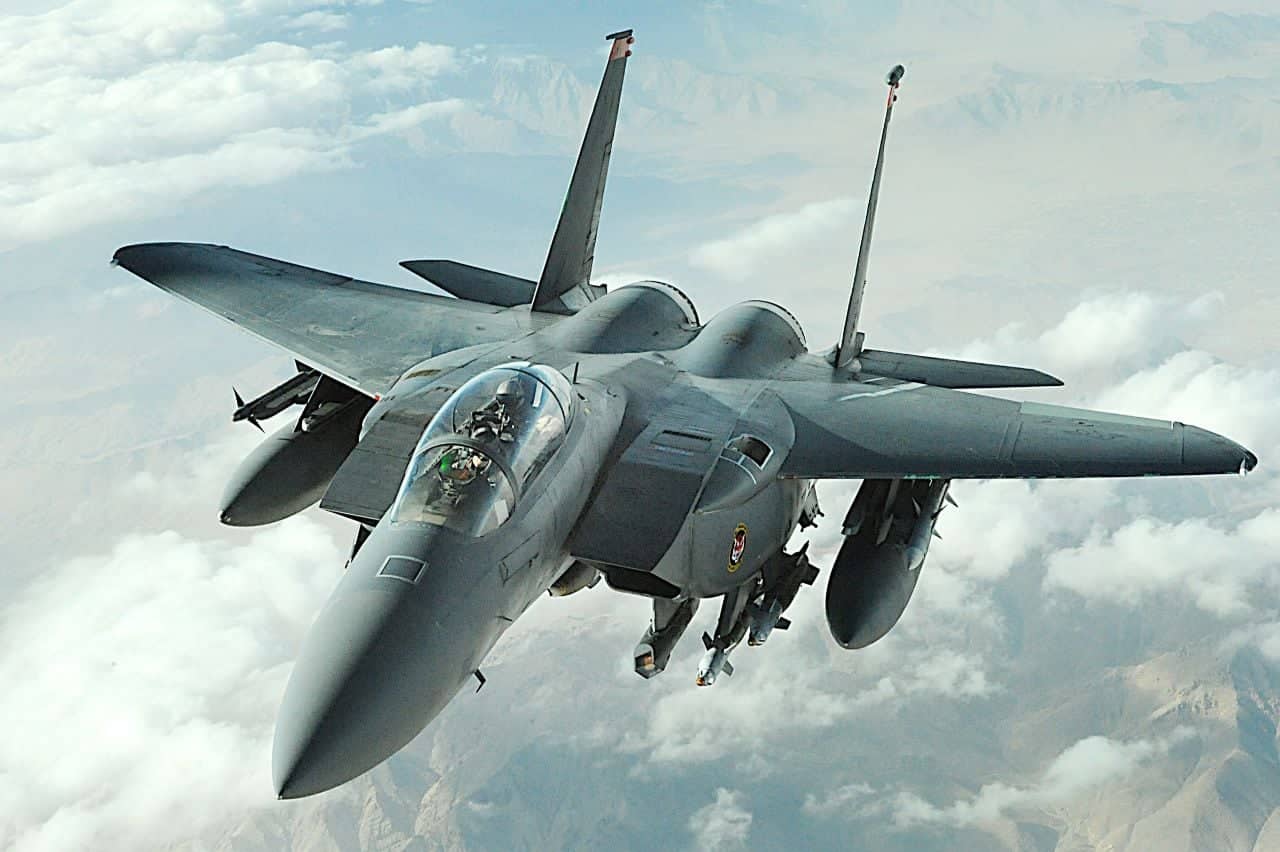
The F-15E Strike Eagle took an air superiority airframe and gave it a back seat, conformal fuel tanks and the sensors to put bombs on target at night in bad weather. It reached initial operational capability on 30 September 1989, and the 4th Fighter Wing’s 336th squadron became the first operational F-15E unit that October.
The second crewmember is the point. A weapon systems officer works the radar, the targeting pod and the threat picture while the pilot flies, which is why the type keeps drawing the longest and most complex missions.
The Air Force fact sheet gives the F-15 a top speed of 1,875 mph (3,020 km/h) in the Mach 2 class, a 65,000-foot ceiling, and a ferry range of 3,450 miles (5,550 km) with conformal and external tanks. It is one of the fastest fighter jets ever fielded.
7. Boeing F/A-18E/F Super Hornet
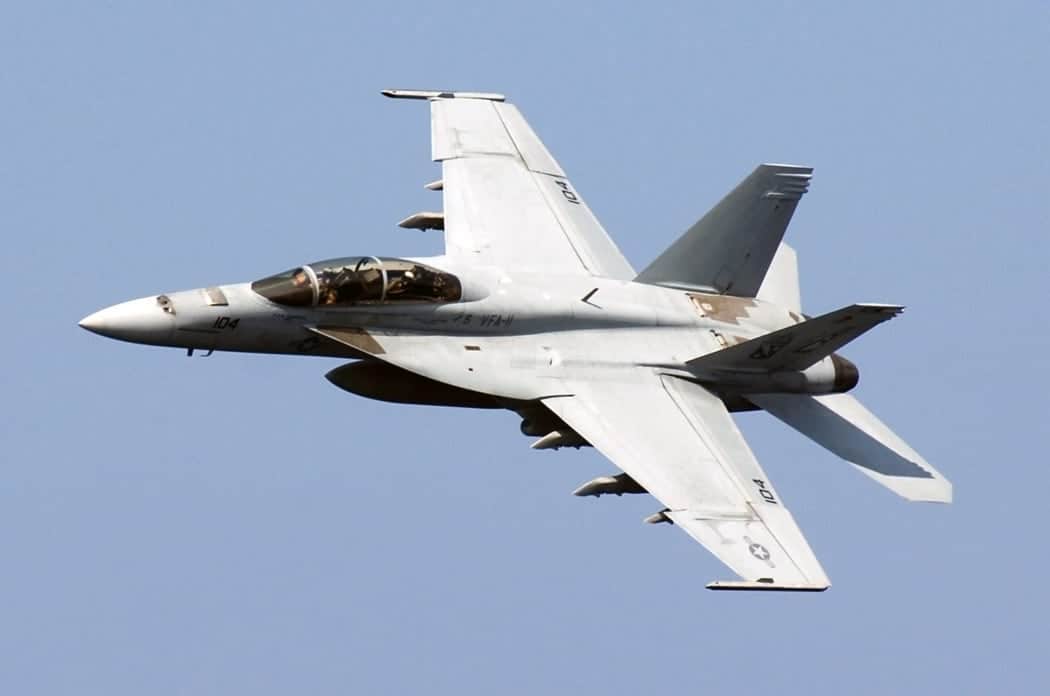
The F/A-18E/F Super Hornet entered fleet service in 1999 as the replacement for the F-14 Tomcat, and it still flies most of the sorties off an American carrier deck. The single-seat E and two-seat F share the same airframe.
Two F414-GE-400 engines produce 22,000 pounds of static thrust each, good for Mach 1.8 and a ceiling above 50,000 feet. Combat range is 1,275 nautical miles clean with two AIM-9s, and the Navy put the unit cost at $67.4 million in fiscal 2021.
It also refuels the rest of the air wing, which is a large part of why the Navy cannot simply retire it. The Navy credits the type with proven capability to replace the S-3 Viking as an aerial tanker.
Production is ending. Northrop Grumman has finished the final centre fuselage, aft fuselage and vertical tail shipsets, and delivery of the last 17 Block III aircraft is expected to run from winter 2026 into spring 2027. Existing jets are being upgraded to Block III standard through 2030.
8. Lockheed Martin F-16C/D Fighting Falcon
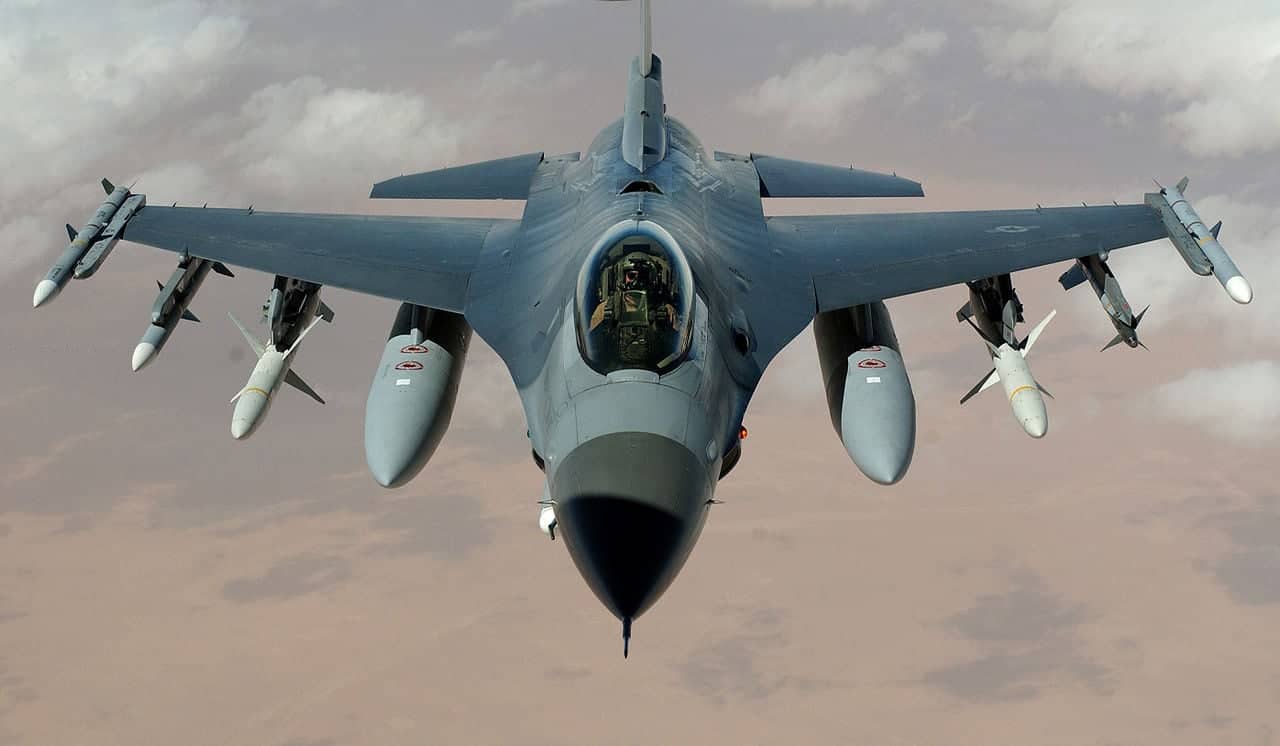
The F-16 Fighting Falcon is the most numerous fighter America flies. The Air Force fact sheet listed a total force of 1,017 F-16C/Ds, and that fleet still does the everyday work of air policing, strike and training.
One engine, 27,000 pounds of thrust, Mach 2 at altitude, a ceiling above 50,000 feet and a ferry range beyond 2,002 miles (3,220 km). Fly-by-wire controls, a side-stick and a reclined seat were all designed to help the pilot hold up under hard manoeuvring.
The story of the last decade is that the F-16 was supposed to be gone by now. Instead, service life extension work has taken airframes from 8,000 to 12,000 flight hours, and the Air Force has told Congress it will keep at least 600 flying through the 2030s.
9. Boeing EA-18G Growler

The EA-18G Growler is a Super Hornet airframe turned into an airborne electronic attack aircraft. Naval Air Systems Command dates its initial operational capability to September 2009 and its first deployment, with VAQ-132, to November 2010.
It is on this list because it fights, and because the rest of the strike package depends on it. Navy budget documents recorded a fleet of 160 aircraft, flown from NAS Whidbey Island apart from the forward-deployed VAQ-141 in Japan.
The Next Generation Jammer Mid-Band pod reached initial operational capability in December 2024 and is replacing the ALQ-99 system the fleet has used since the Vietnam era. The pods are not cheap: one 2024 Raytheon contract worked out to roughly $45 million per shipset.
10. Boeing F/A-18C/D Hornet
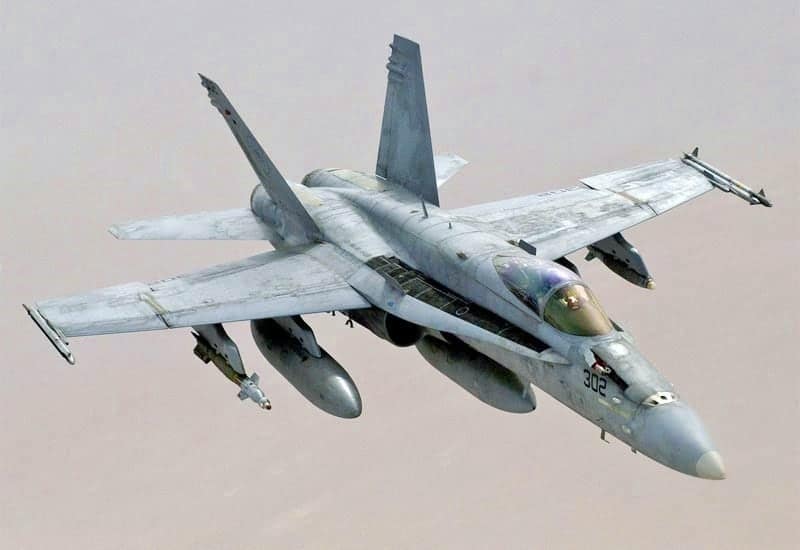
The original F/A-18 Hornet was, in the Navy’s words, the nation’s first all-weather fighter and attack aircraft. It proved the idea in Desert Storm by shooting down enemy fighters and bombing targets on the same mission.
Production of the C and D models ended in 2000 and the Navy retired the F/A-18C from combat roles in April 2018. What is left is a Marine Corps fleet, described by the Navy as the bridging platform to the F-35 until a planned sundown in 2030.
It is meaningfully smaller than the Super Hornet that replaced it: 56 feet long against 60.3, a 51,900-pound maximum takeoff weight against 66,000, and a combat range of 1,089 nautical miles against 1,275.
11. Boeing F-15C/D Eagle
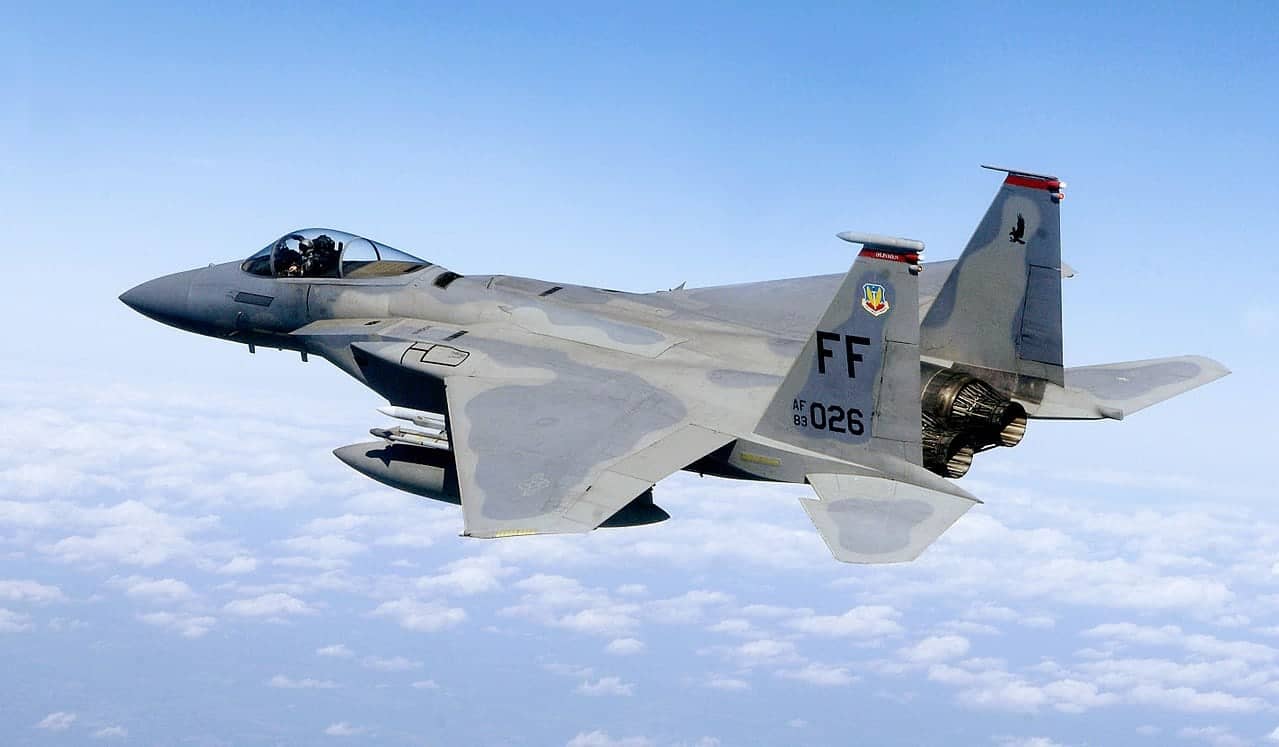
The F-15C/D Eagle is the aircraft most Americans picture when they hear “fighter jet,” and it is nearly gone. It reached initial operating capability in September 1975 and the Air Force fact sheet listed a total force of 249 in 2019.
The last active-duty F-15C flew its final sortie with the 18th Wing at Kadena on 24 January 2025. The Massachusetts Air National Guard’s 104th Fighter Wing flew its last Eagles out of Barnes in October 2025.
What survives is a homeland defence remnant. The Air Force plans to carry 42 F-15C/Ds in the combat-coded inventory through 2028 and the last 21, at Fresno with the California Air National Guard’s 144th Fighter Wing, through 2030, with full retirement in fiscal 2031.
What comes next: the F-47 and the Navy’s F/A-XX
Neither aircraft is on the ranked list, because neither has flown. Both will reshape it.
Boeing won the Air Force’s Next Generation Air Dominance contract on 21 March 2025, and the aircraft was designated F-47. Boeing has started building the first airframe, and Air Force Chief of Staff General David Allvin has committed to a first flight in 2028.
The Air Force wants at least 185 of them at a projected unit cost around $300 million. Publicly released figures are thin: a combat radius beyond 1,000 nautical miles, speed above Mach 2, and the ability to control uncrewed collaborative combat aircraft.
There is a scheduling problem underneath the confidence. The purpose-built next-generation engine is not expected until the early 2030s, so the first F-47s are set to fly on an interim propulsion arrangement years before the engine they were designed around arrives.
Why it is called the F-47
The Air Force says the number carries three meanings at once. It honours the P-47 Thunderbolt of the Second World War, it marks 1947 as the year the Air Force became a separate service, and it recognises the 47th president’s support for the program. The F prefix matters too: the aircraft skipped the X and Y prototype designations entirely and went straight to a production fighter number.
The Navy’s equivalent is F/A-XX, a carrier-based sixth-generation fighter meant to replace the Super Hornet. Lockheed Martin was eliminated in 2025, leaving Boeing and Northrop Grumman, and the contract was expected around August 2026 but had not been announced by early September.
Congress has pushed money at it regardless, directing a single engineering and manufacturing development award and taking fiscal 2026 support to roughly $1.69 billion. Our guide to sixth-generation fighter jets covers what separates these aircraft from the F-22 and F-35.
The near-misses: what is not on this list, and why
Lists of American fighter jets are unusually prone to including aircraft that are not fighters, are not American front-line equipment, or are not flying. Here is where we drew the line.
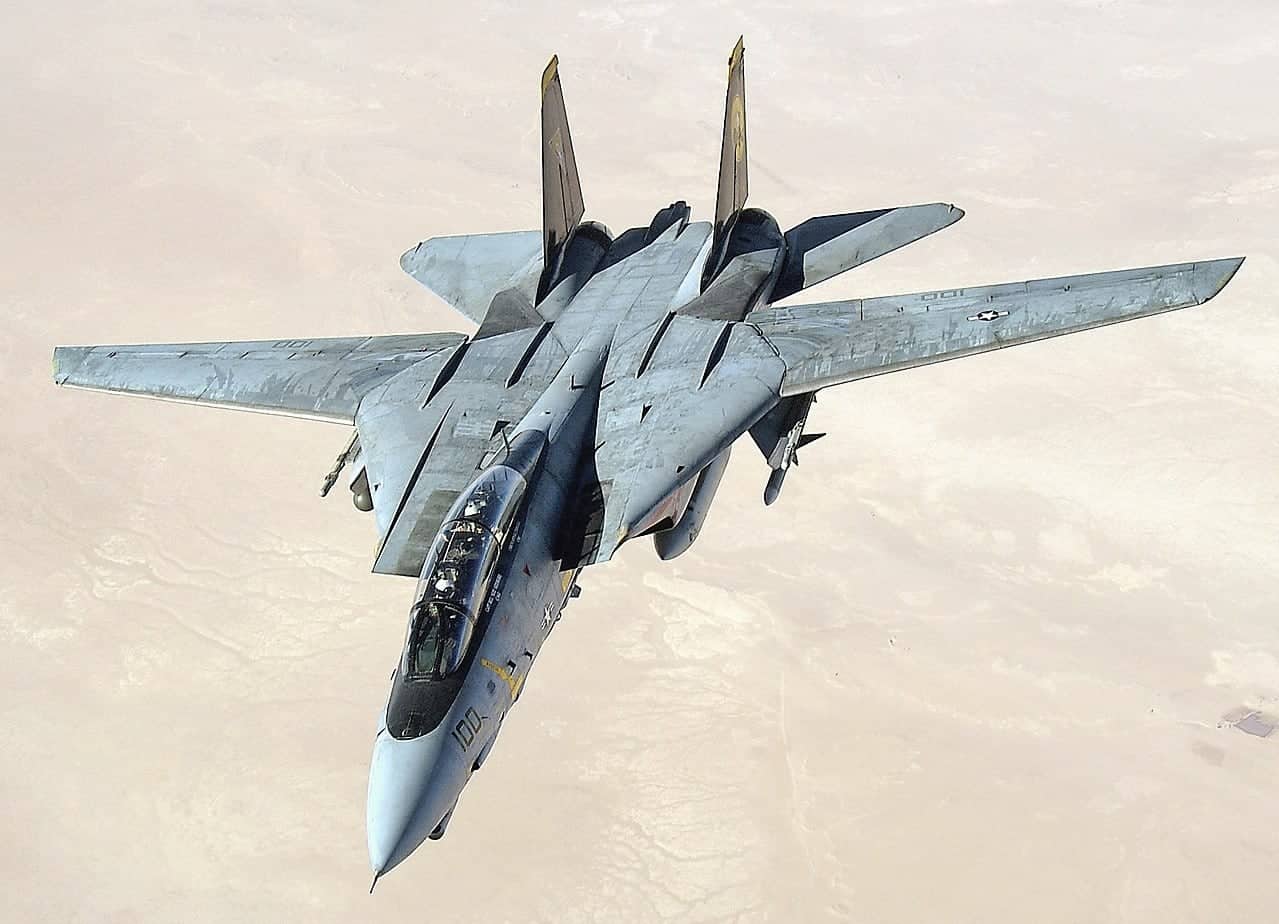
The Grumman F-14 Tomcat is the most common mistake. It flew its last US Navy combat mission over Iraq on 8 February 2006 and its final Navy flight that September, and the Super Hornet took its place.
The A-10 Thunderbolt II is an attack aircraft, not a fighter, which is what the A in its designation means. It is also outliving its obituaries: the Air Force asked to retire all 162 in fiscal 2026, Congress capped the cut at a floor of 103 airframes, and three squadrons have since been extended through 2030.

Jet trainers are not fighters either. The T-38 Talon, the T-45 Goshawk, the T-1 Jayhawk and the incoming T-7A Red Hawk all exist to train aircrew, and none of them is combat equipment.
The Northrop F-5 flies with US aggressor units, playing the enemy in training rather than serving as front-line equipment. The YF-17 never entered US service at all: it was a prototype, and Northrop’s work on it fed into the Hornet that Boeing builds today.
The F-117 Nighthawk is the odd case. It was officially retired in 2008, yet a portion of the fleet is still flown from Tonopah for testing and to play a stealthy adversary in training, and the Air Force intends to keep them flying until at least 2034.
It appears on our list of stealth fighter jets rather than here, because despite the F in its designation it was built to drop bombs, not to fight other aircraft.

How many fighter jets does the US have?
For the Air Force, the September 2026 report to Congress on fighter force structure gives two numbers. The combat-coded total aircraft inventory for fiscal 2026 is 1,271 fighters, and the primary mission aircraft inventory is 1,098.
That second figure is the one that matters legally. Title 10 requires the Air Force to hold a primary mission aircraft inventory of not less than 1,145 fighters, which puts the service 47 aircraft below its own statutory floor.
The fleet is old and getting smaller before it gets bigger
The average age of a US Air Force fighter is 27.4 years, roughly twice the age of the US Navy’s fighter fleet. The service does not expect to climb back above the congressional minimum until around fiscal 2030, when it projects 1,146 primary mission aircraft. Getting there depends on buying up to 100 F-35As and 24 F-15EXs a year by 2030, rates it is not hitting today.
The Navy and Marine Corps add several hundred more strike fighters on top of that: the Super Hornet and Growler fleets, the Marine Hornets, and the growing F-35B and F-35C force. Counting them together is harder than it sounds, because services count airframes, squadrons and combat-coded jets differently.
The safest summary is that the United States fields well over 2,000 fighter and strike fighter aircraft across three services, and that the Air Force share of that total is currently shrinking rather than growing. Our breakdown of the types of fighter jets the US operates explains how the categories fit together.
FAQ
Sources and references used for research and fact-checking.
- U.S. Air Force, F-22 Raptor Fact Sheet
- U.S. Air Force, F-35A Lightning II Fact Sheet
- U.S. Air Force, F-15 Eagle Fact Sheet
- U.S. Air Force, F-16 Fighting Falcon Fact Sheet
- U.S. Navy, F/A-18A-D Hornet and F/A-18E/F Super Hornet Strike Fighter Fact File
- USNI News, Report to Congress on U.S. Air Force Fighter Force Structure
- The Aviationist, USAF Fighter Fleet Is Below Congressional Minimum
- Code One Magazine, Lockheed Martin, Last F-22 Raptor Delivered
- 19FortyFive, The Air Force Wants to Retire 32 F-22 Raptor Fighters. Congress Says No, and Upgrading Them Would Cost $3.3 Billion
- Naval Air Systems Command, EA-18G Growler
- Air & Space Forces Magazine, GAO: Just Over One in Four F-35As Fully Mission Capable
- European Security & Defence, F-35 Block 4: Upgrade and Future Role
- Army Recognition, Lockheed Martin's F-35 Program Crosses 1,300 Aircraft With Record 2025 Deliveries
- Army Recognition, U.S. Marine Corps to Field 261 F-35B/C Stealth Fighter Jets by End of 2026
- Air & Space Forces Magazine, F-15EX Eagle II
- Army Recognition, U.S. Air Force Expands F-15EX Eagle II Fleet to 149 Fighter Jets With Production Through 2031
- MiGFlug, F-15EX Eagle II: Pentagon Warning on Doubling the Buy
- The War Zone, Last New F/A-18 Aft Fuselages Built As Super Hornet Production End Approaches
- 19FortyFive, The US Navy EA-18G Growler Costs About $67,000,000
- DSIAC, U.S. Navy Declares Initial Operational Capability for the Next Generation Jammer Mid-Band System
- National Security Journal, The U.S. Air Force's F-16 Viper Fighter Keeps Getting So Many Upgrades It Could Fly Until 2040
- Air & Space Forces Magazine, Air Force to Retain F-15C Four More Years for Homeland Defense
- The Aviationist, End of an Era at Barnes ANG Base with Final F-15 Eagle Flight
- The War Zone, First F-47 6th Generation Fighter Now Being Built
- Army Recognition, US Air Force's first F-47 fighter will take off in 2028 years before its next-gen engine is ready
- The National Interest, Air Force Fighter Jet F-47: How the Military Aircraft Got Its Name
- Forbes, Is The U.S. Navy Close To Announcing Next-Gen F/A-XX Contract Award?
- Wikipedia, McDonnell Douglas F-15E Strike Eagle
- The Aviationist, U.S. Navy's Last F-14 Tomcat Flight, On This Day, In 2006
- Army Recognition, U.S. Air Force to keep retired F-117 Nighthawk stealth jets flying until 2034
- Military Times, Air Force extends 3 A-10 squadrons, each expected to keep 18 Warthogs
Get the Newsletter
The latest aviation news and stories sent to your inbox.
About the Author

Tim is the owner and lead editor of AeroCorner since 2019, overseeing aviation content covering aircraft, airlines, airports, and the broader aviation industry. Through years of researching, writing, editing, and publishing aviation-focused content, he has developed extensive practical knowledge of commercial aviation and air travel. Based in Asia and a frequent traveler himself, Tim also brings firsthand passenger experience to AeroCorner’s coverage. Outside of publishing, he has also explored aviation firsthand through hands-on flight training in New Zealand.