

Fighter Jets
The cheap supersonic light fighter built for America's allies, still flying six decades on.
Updated: by Tim de Vries
The latest aviation news and stories sent to your inbox.
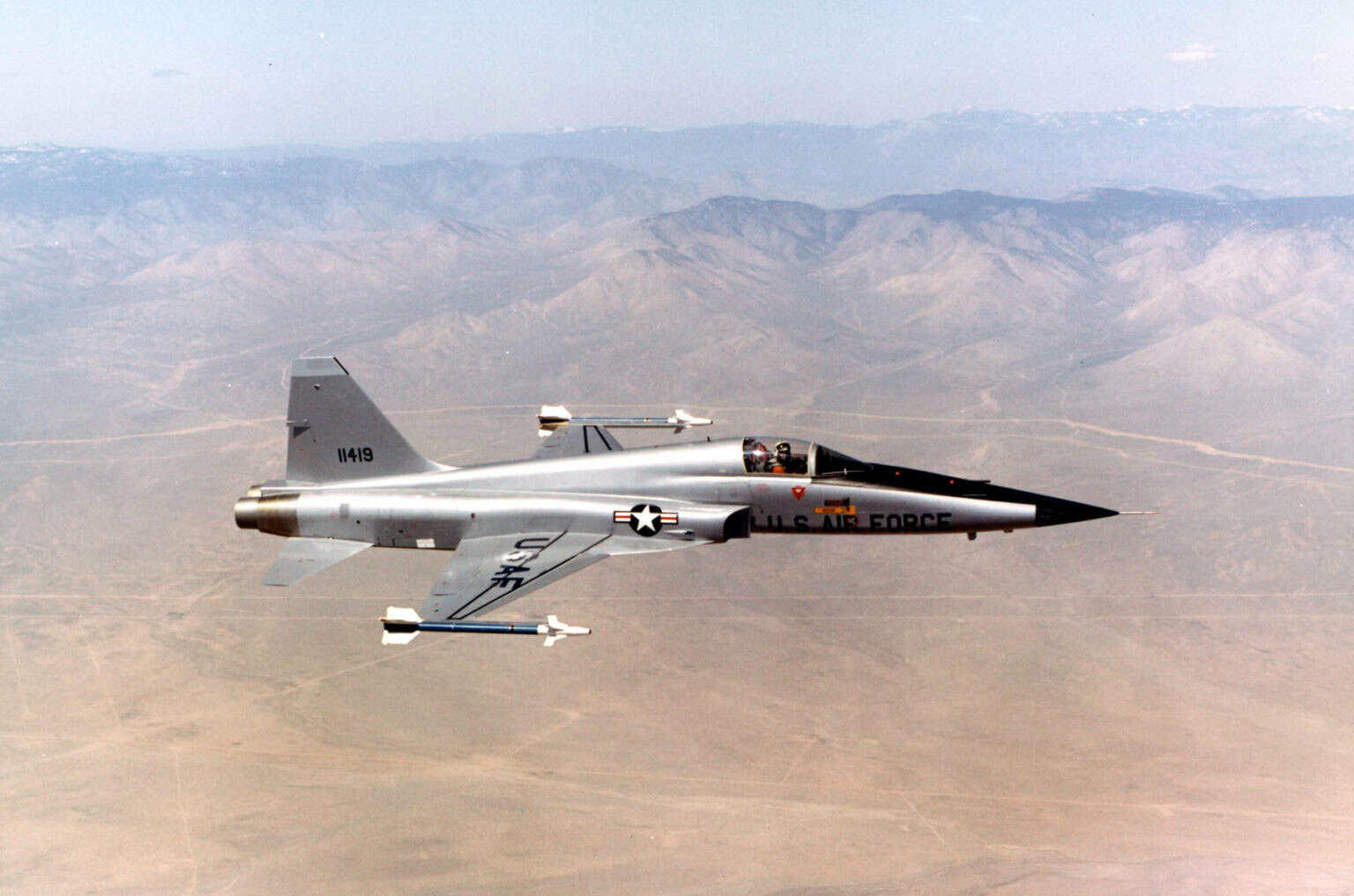
The Northrop F-5 is a small, twin-engine supersonic fighter that Northrop developed as a private venture in the late 1950s and sold to US allies as a cheap, easy-to-maintain alternative to heavier jets. More than 2,600 were built across the F-5A/B Freedom Fighter and F-5E/F Tiger II families. It is still flying in 2026, with the US Navy and Marine Corps using it to play the enemy in training, although South Korea and Switzerland plan to retire theirs by the end of 2027.
Live Fleet Activity (F5)
Fetching live data…
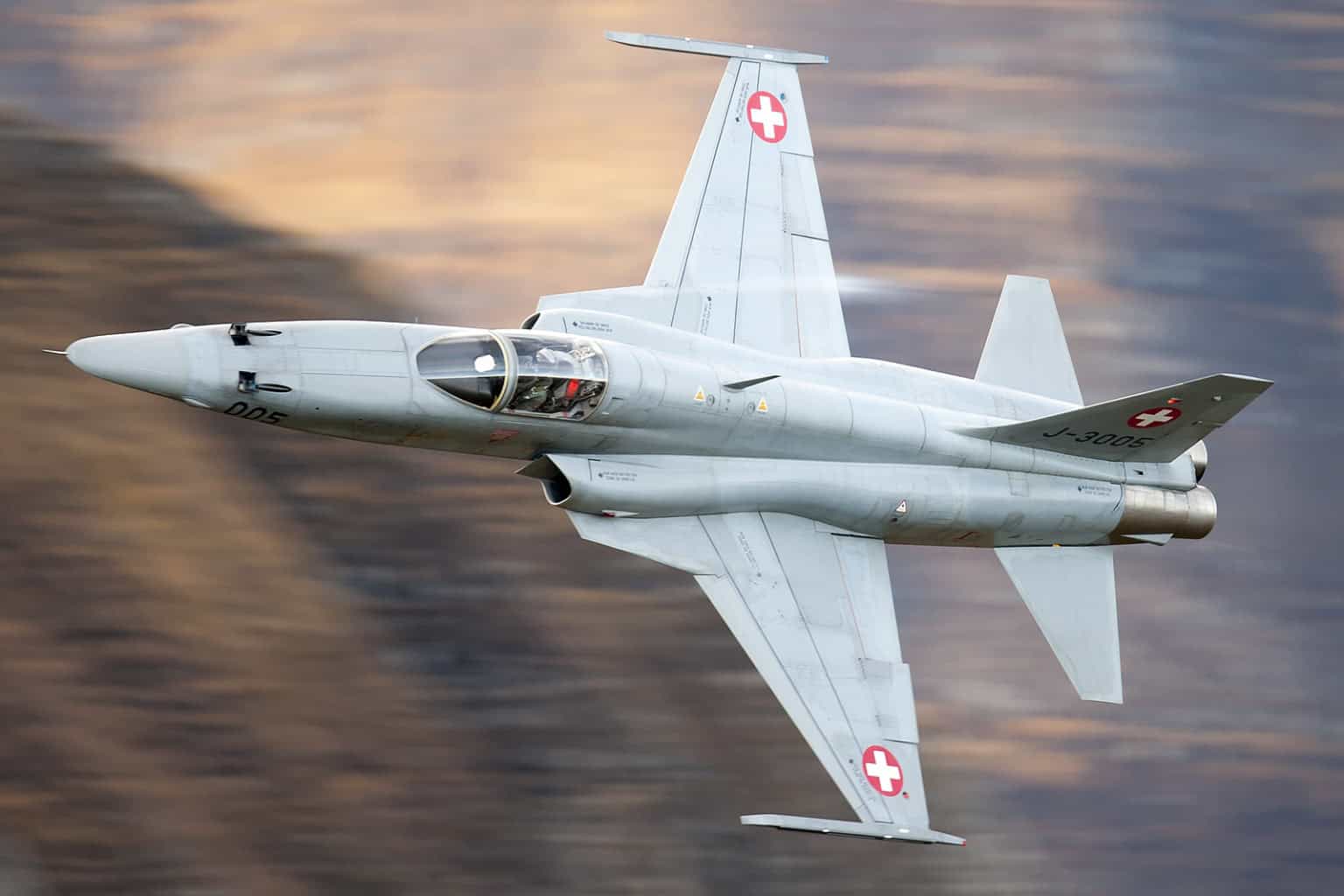


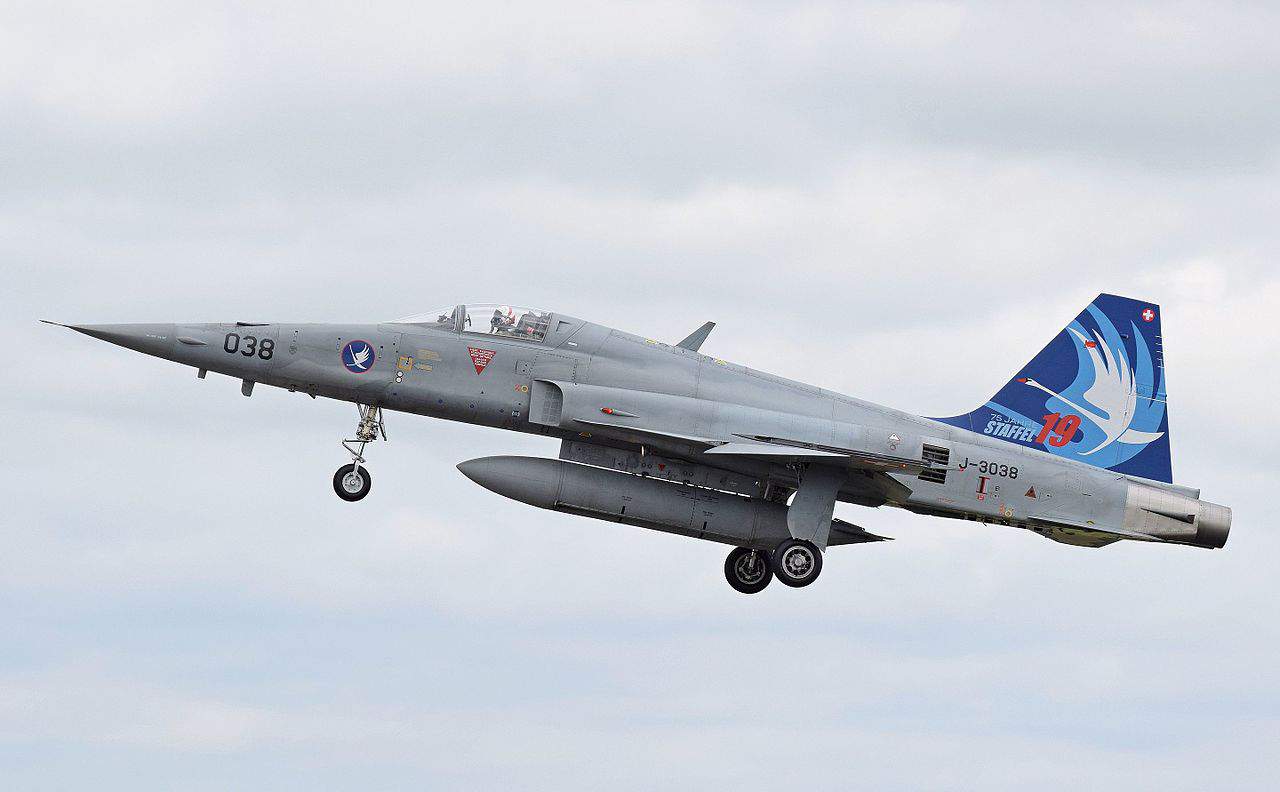

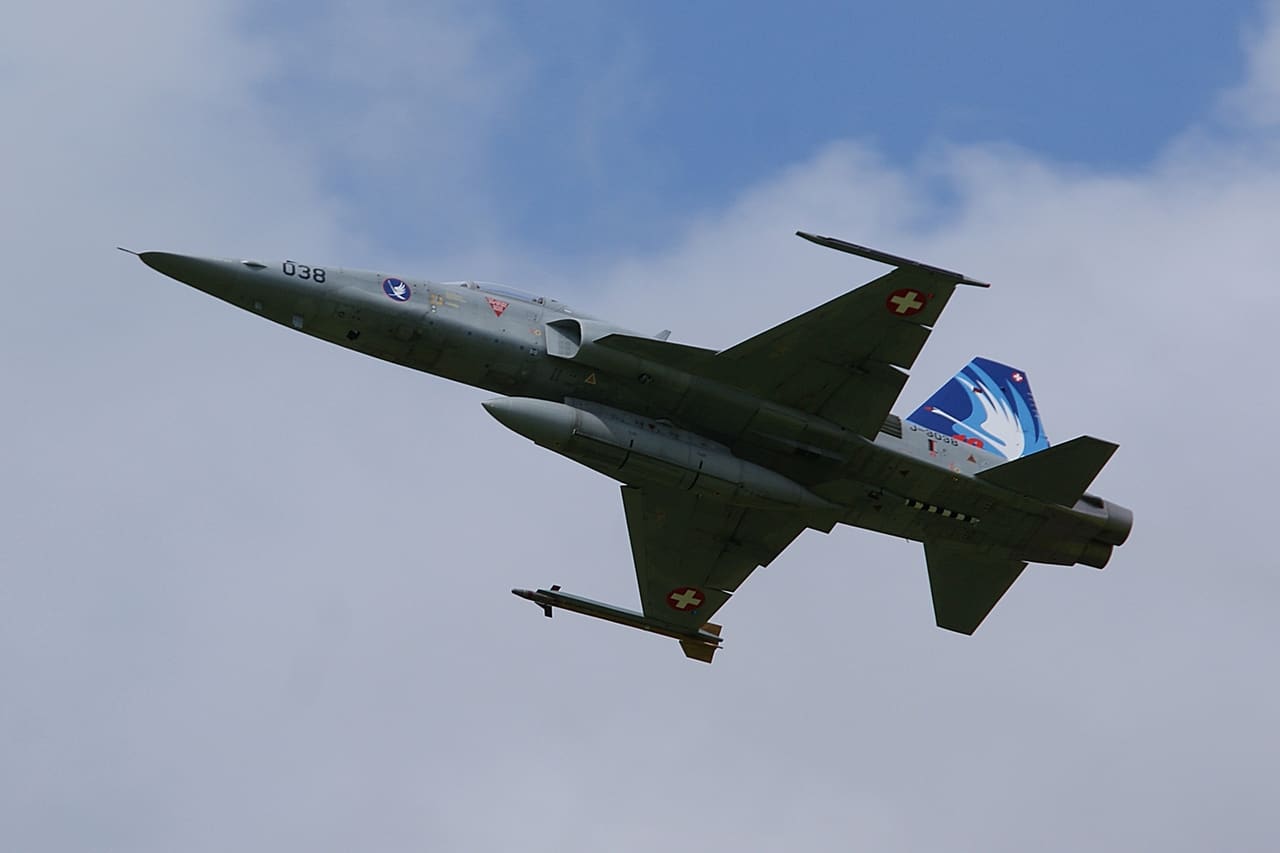
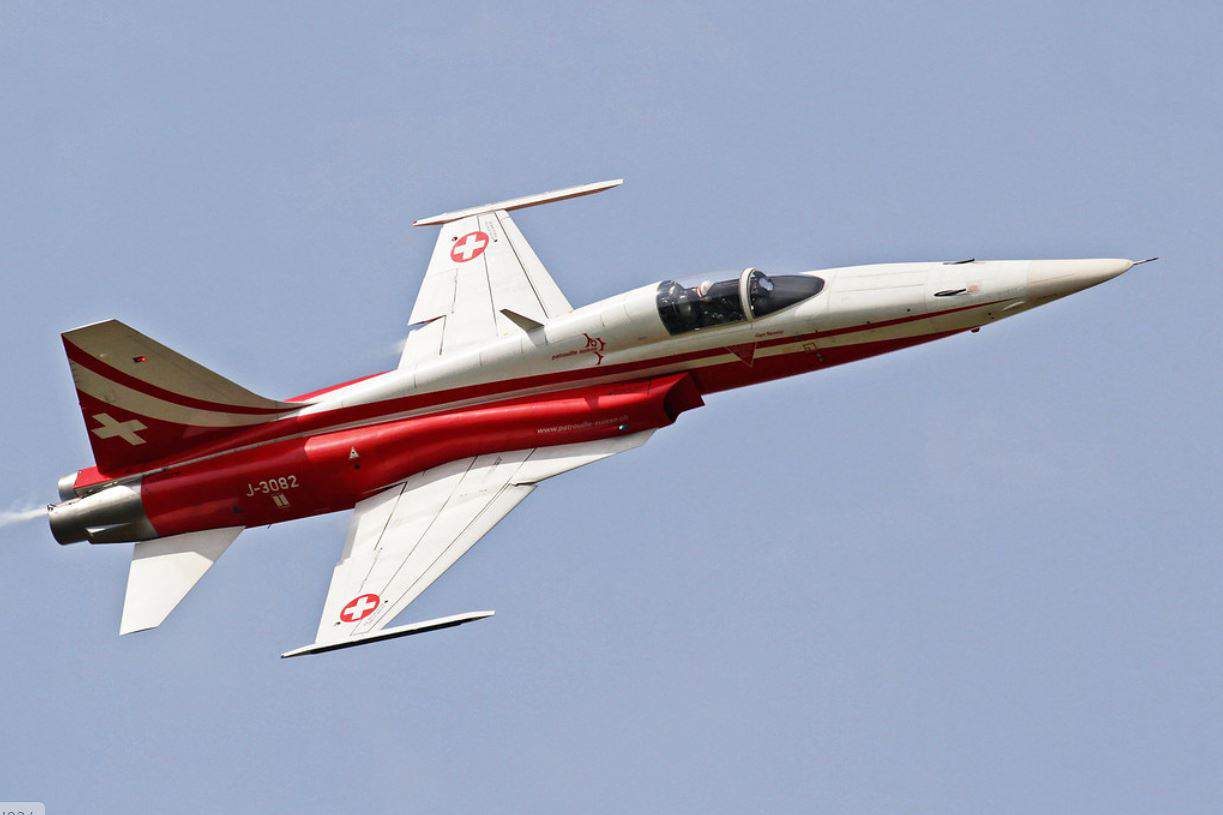
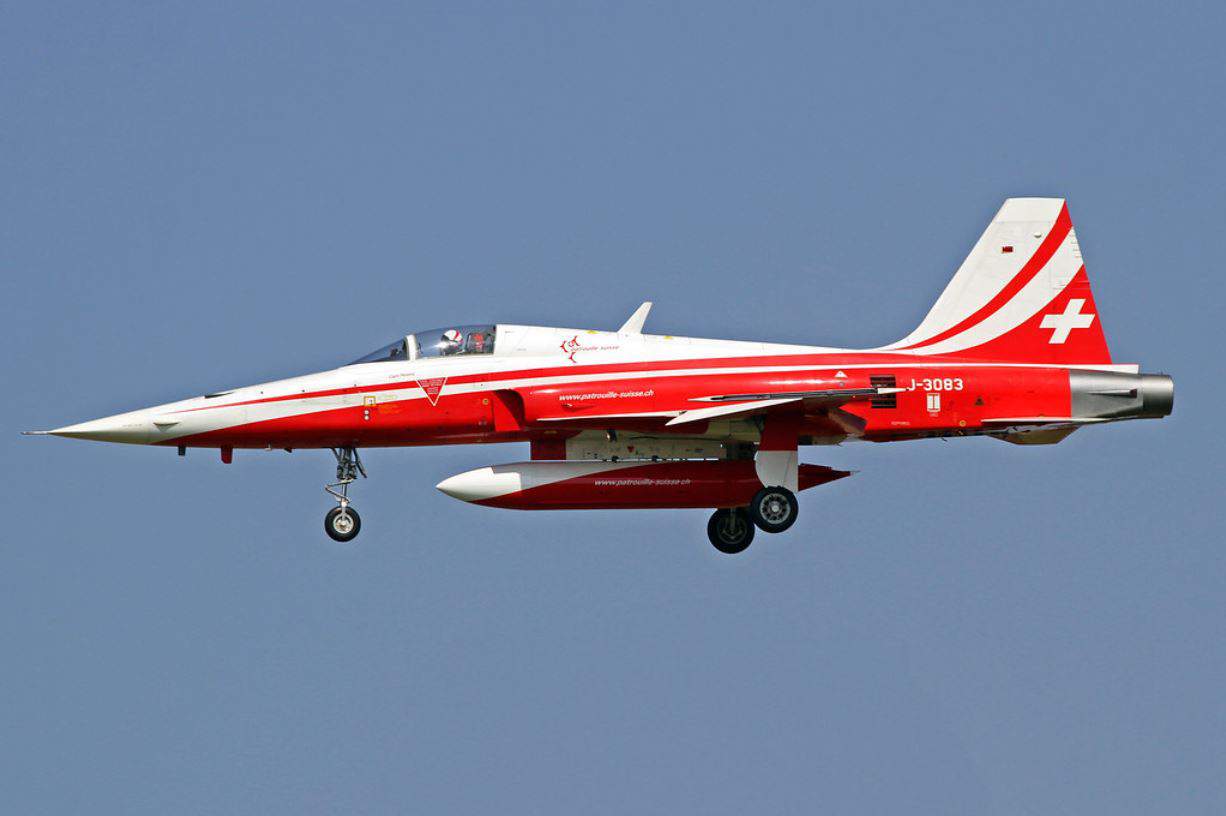
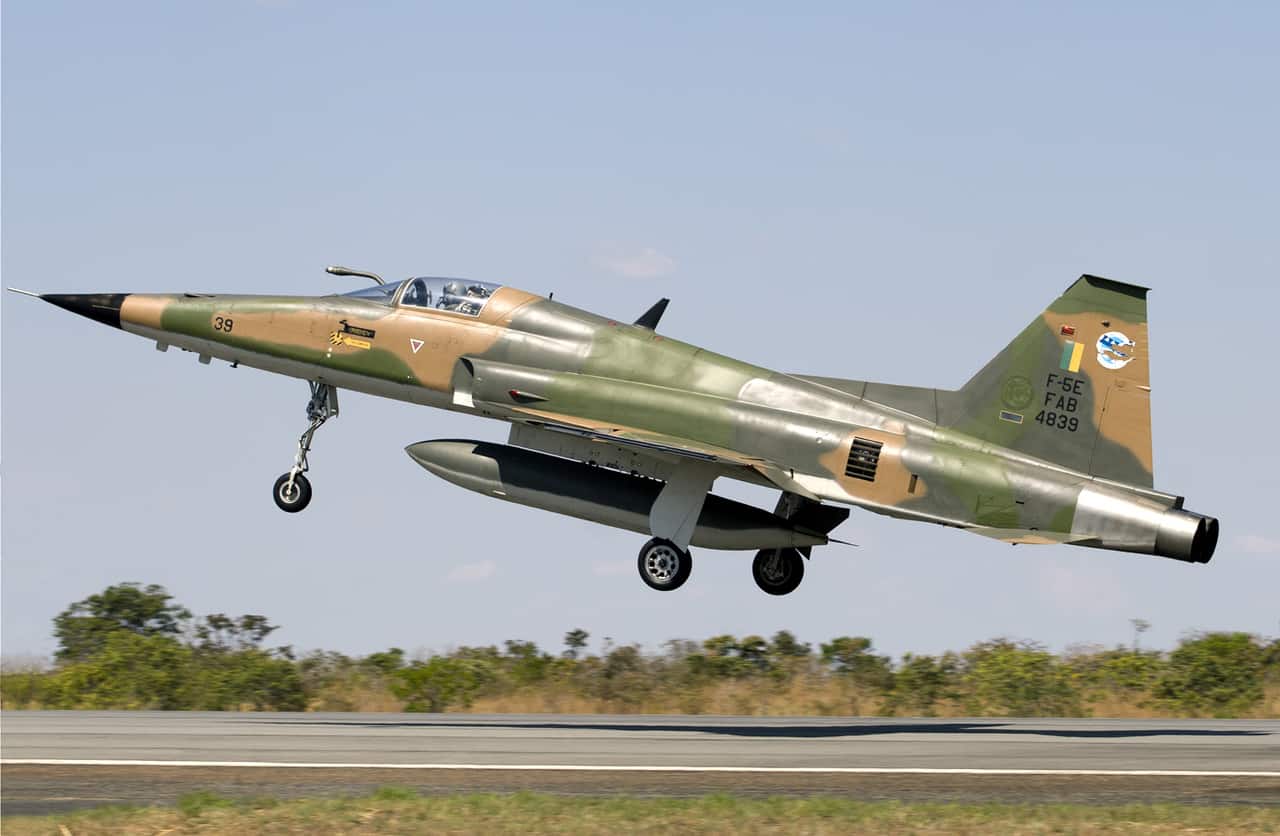
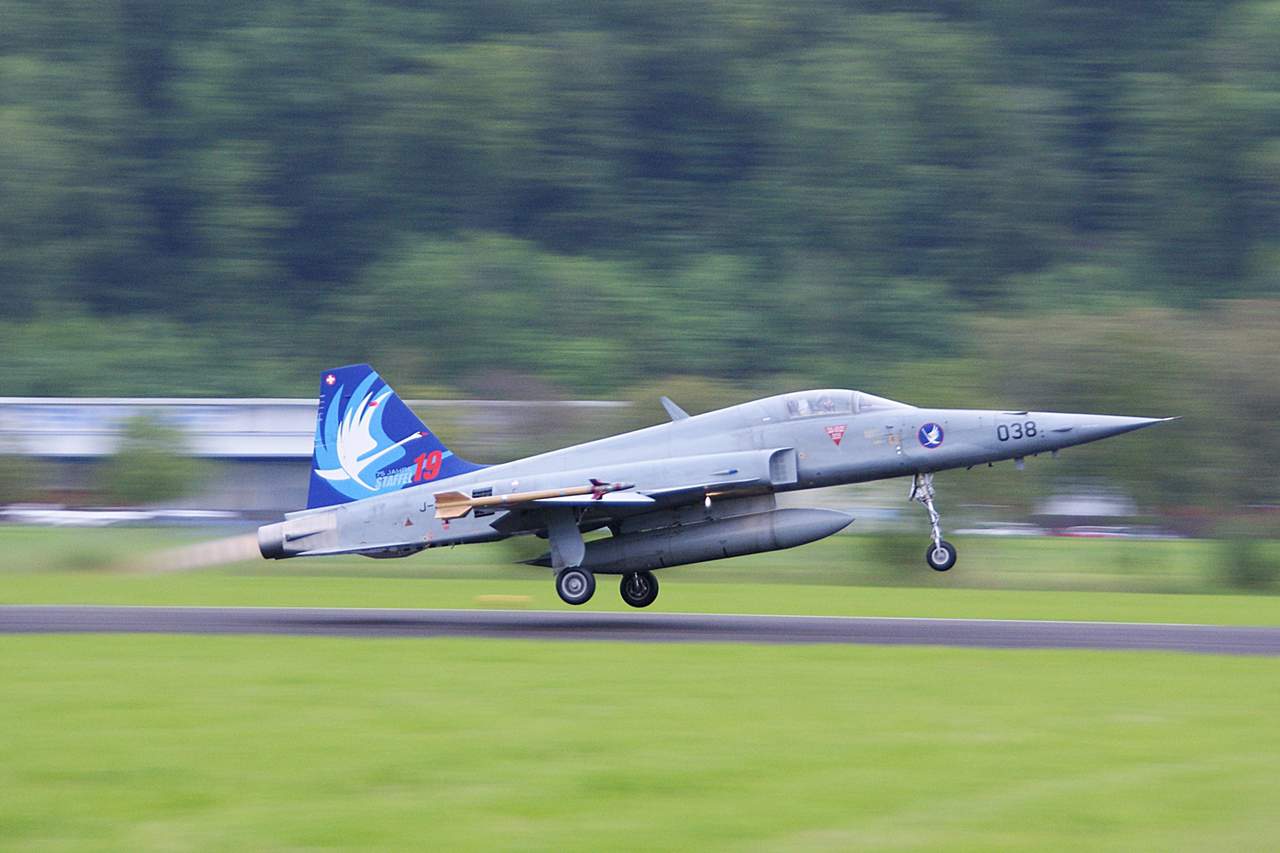
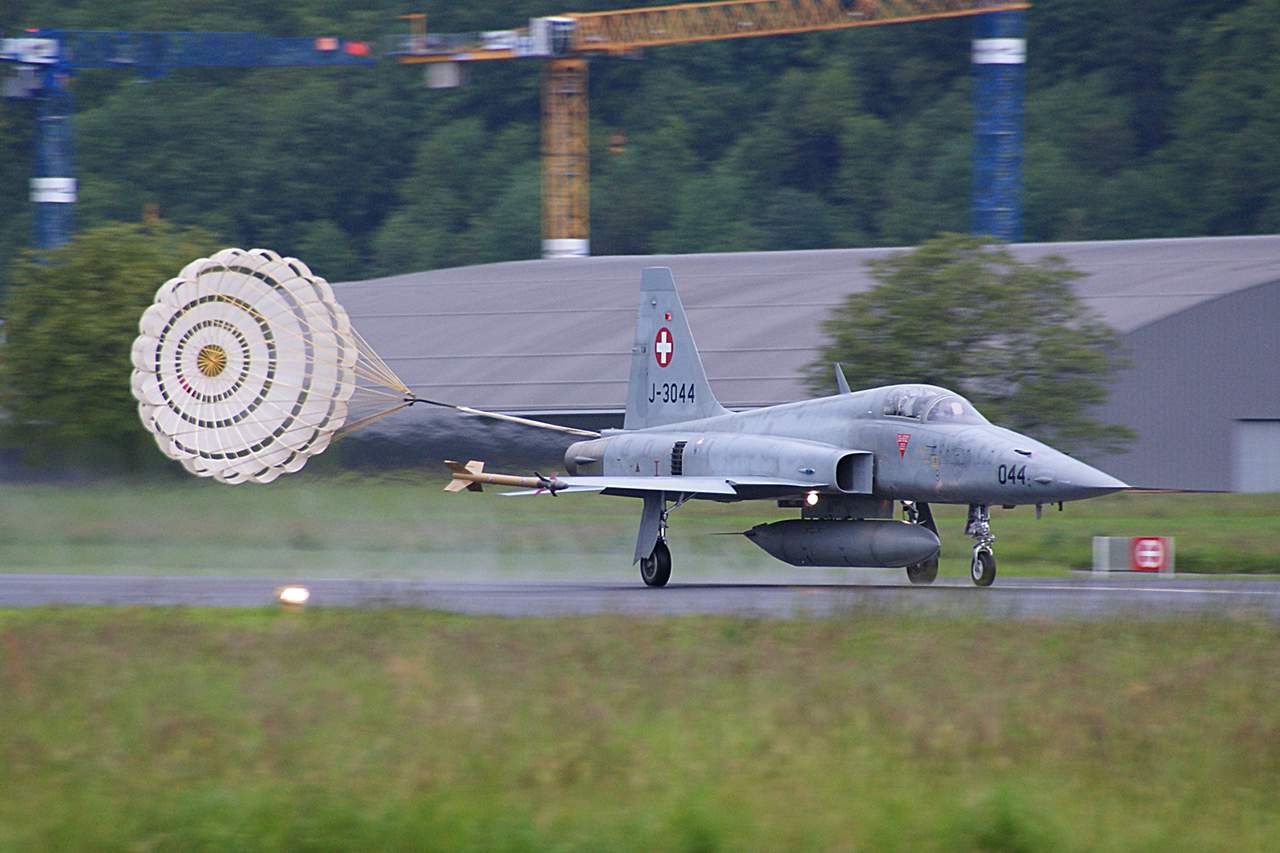
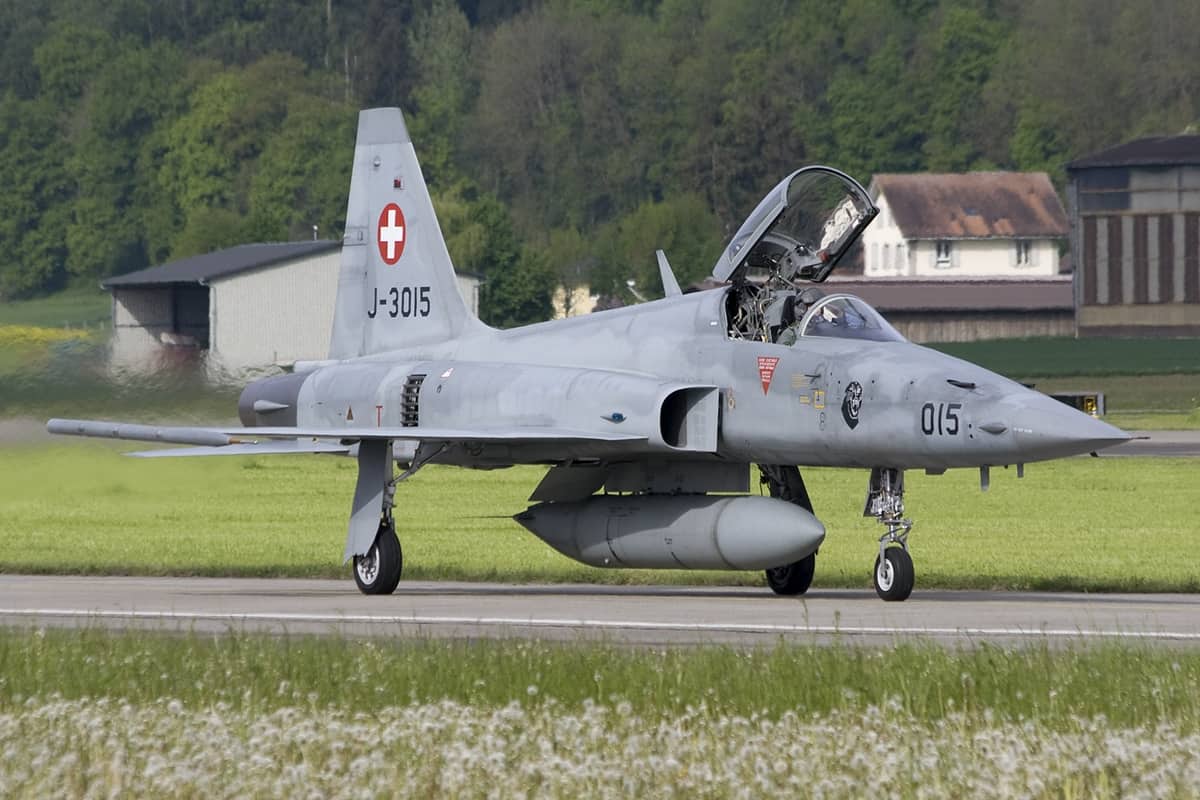
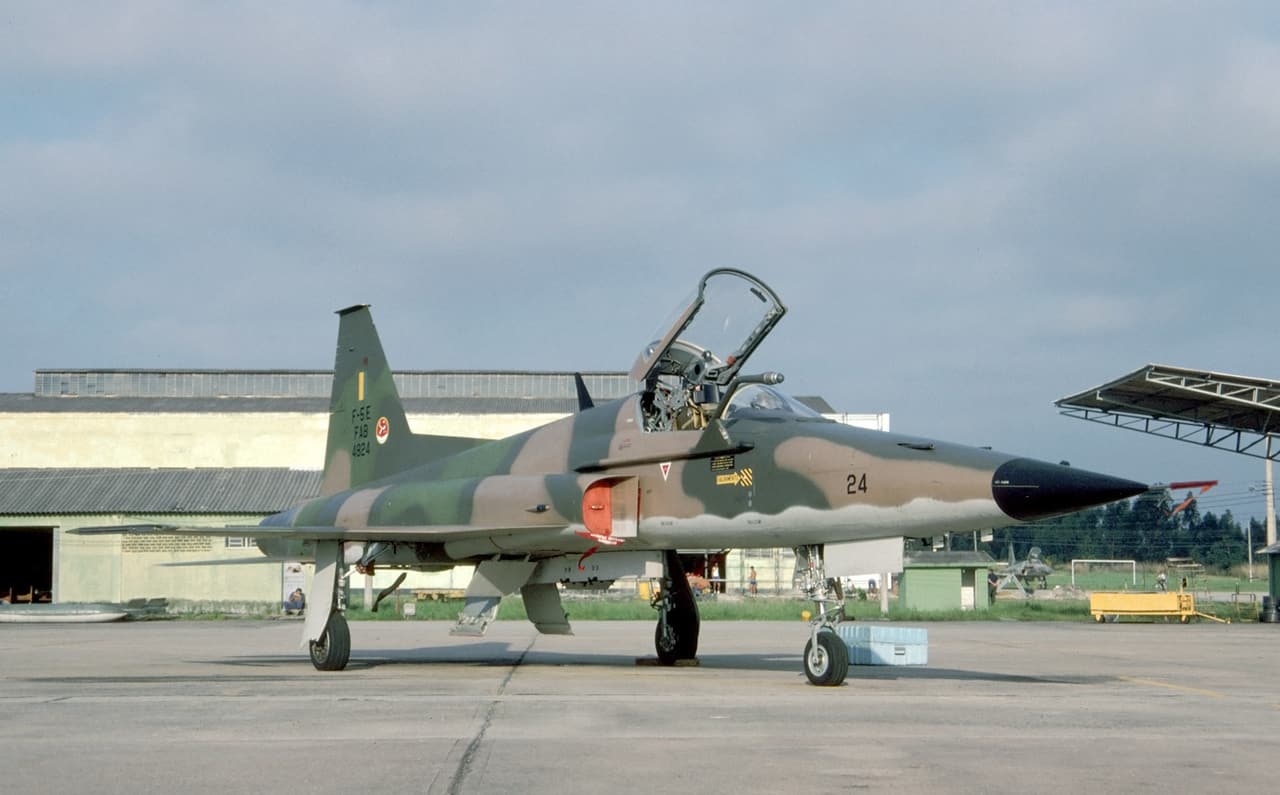

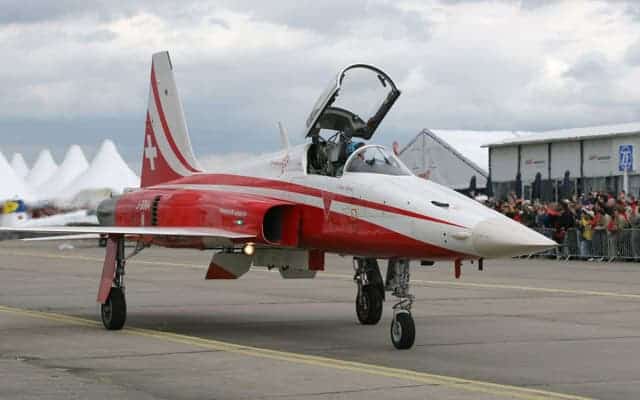
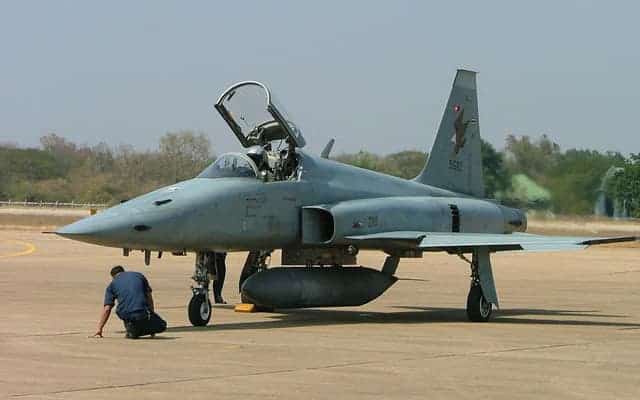
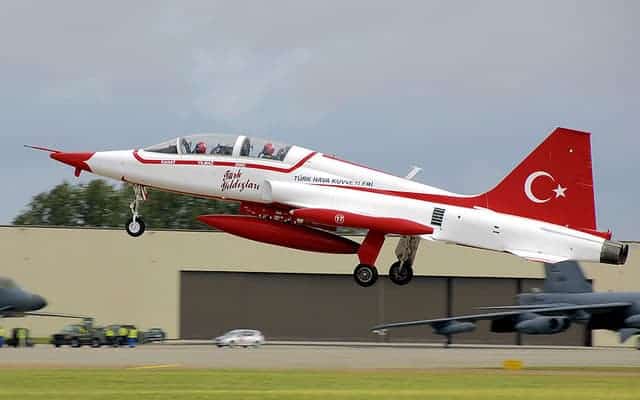
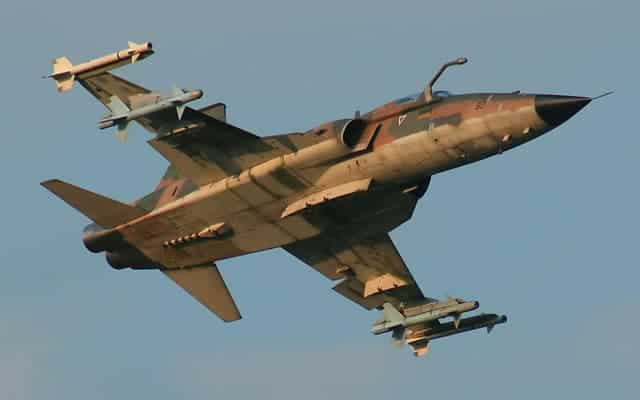
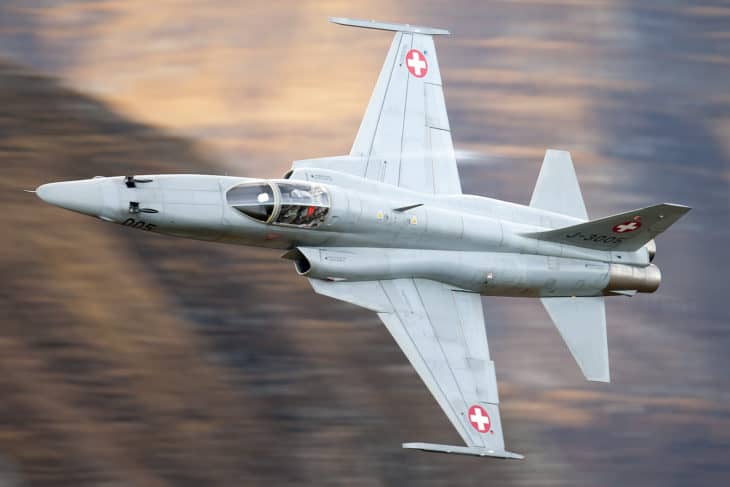
The Northrop F-5 is a small, twin-engine supersonic fighter that Northrop started as a privately funded project in the late 1950s. It was built to be cheap to buy, simple to maintain and easy to fly.
It comes in two main families. The original F-5A and F-5B are the Freedom Fighter, and the extensively updated F-5E and F-5F are the Tiger II.
More than 2,600 F-5s were built in the United States and under license abroad. Smaller and simpler than contemporaries such as the F-4 Phantom II, it cost less to buy and to operate, which made it a popular export fighter during the Cold War.
The F-5A Freedom Fighter entered service in 1964, and more than 800 were produced through 1972 for American allies. It was designed mainly as a daytime air superiority fighter but proved a capable ground-attack aircraft as well.
In 1970 Northrop won the International Fighter Aircraft competition, a program to give US allies a better answer to the Soviet MiG-21. The winning design, first called the F-5A-21, became the F-5E Tiger II, and it first flew on August 11, 1972.
The Tiger II got more powerful J85-21 engines, more fuel, a larger wing and improved leading-edge extensions for a better turn rate. Northrop built 792 F-5Es, 146 two-seat F-5Fs and 12 RF-5E reconnaissance jets, and Korean Air and Taiwan built 68 and 308 more under license.
About 1,400 Tiger IIs were built in total before production ended in 1987. The specification panel on this page describes the single-seat F-5E.
The F-5 and the T-38 Talon are siblings, both grown from Northrop’s N-156 design. The design team wrapped a small, highly aerodynamic airframe around two compact General Electric J85 engines, and the concept split into the N-156T trainer and the N-156F fighter.
The US Air Force picked the trainer first, selecting the N-156T as its T-33 replacement in July 1956. The first YT-38 flew on April 10, 1959, and 1,189 Talons had been built by the time production ended in January 1972.
The Air Force did not need a light fighter at the time, so the N-156F had to wait. The first one flew at Edwards Air Force Base on July 30, 1959, and broke the sound barrier on that first flight.
It found its customer on April 25, 1962, when the Department of Defense chose it for the Military Assistance Program, which supplied aircraft to allied nations. It was designated F-5A that August, and Norway placed the first international order on February 28, 1964.
More than 3,800 F-5s and T-38s were built at Northrop’s plant in Hawthorne, California. Canadair built another 240 first-generation F-5s under license, and CASA in Spain built 70.
The full specification table for the F-5E is on this page. A few of its figures need context, because the F-5’s published numbers are often quoted against each other in ways that do not compare.
The first is speed. The F-5E’s top speed is Mach 1.63 at 36,000 feet, 938 knots (1,079 mph, 1,737 km/h), and that is a clean airframe at altitude. Its maximum cruise speed is Mach 0.98 and its economical cruise is Mach 0.8, both at 36,000 feet.
The second is range. The 2,010 nautical mile (2,310 mile) figure is a ferry range, the figure for a one-way delivery flight on external fuel tanks. With a 20-minute fuel reserve, the published ferry range falls to 1,385 nm (1,594 miles) with the empty tanks kept, or 1,590 nm (1,830 miles) with them dropped.
A combat mission is far shorter. Carrying two Sidewinders and 5,200 lb (2,360 kg) of ordnance, with five minutes of full-power combat at sea level and a 20-minute reserve, the F-5E’s combat radius is only 120 nm (138 miles).
A lighter load stretches that a long way. The Federation of American Scientists gives a combat radius of 656 miles (1,056 km) for the F-5E carrying only fuel and two Sidewinders, though it does not state the reserve assumed.
The third is thrust and payload. Each J85 is rated at 5,000 lbf with afterburner and about 3,500 lbf without it, and the 7,000 lb (3,200 kg) payload is shared across seven stations, including the two wingtip missile rails.
Only three of the pylons are plumbed for fuel. Every drop tank the F-5 carries takes one of those stations, and with it part of the weight allowance that could otherwise go to weapons.
The F-5E carries two 20 mm M39A2 revolver cannons in the nose, with 280 rounds per gun. Its original air-to-air weapon was a pair of AIM-9 Sidewinders on the wingtip rails.
Upgrades widened the menu. F-5s upgraded after 1995 can carry the AGM-65 Maverick air-to-surface missile, and Singapore’s F-5S and other modernized F-5Es could carry four AIM-120 AMRAAMs.
The radar changed through the production run. Early F-5Es had the Emerson Electric AN/APQ-153, later ones the AN/APQ-159, and the US Navy’s F-5N adversary jets fly with the AN/APG-69.
Several operators fitted new radars of their own. Chile’s F-5 Tiger III Plus upgrade used the Elta EL/M-2032, and Brazil’s F-5M received the Grifo-F along with a refurbished cockpit.
Yes, repeatedly. Its combat debut came in October 1965, when the US Air Force sent 12 F-5As to the 4503rd Tactical Fighter Squadron in Vietnam for a combat evaluation called Skoshi Tiger.
Fitted with aerial refueling probes, armor and better instruments and redesignated F-5C, they flew more than 2,600 sorties over six months from Bien Hoa and Da Nang. One was lost in combat, killing its pilot, Major Joe Baggett.
The evaluation was declared a success, with the F-5 rated as capable a ground-attack aircraft as the F-100 Super Sabre, though with a shorter range. South Vietnam went on to fly it in numbers, making it one of the less famous fighter jets of the Vietnam War.
When Saigon fell in 1975, North Vietnam captured about 877 aircraft, reportedly including 87 F-5As and 27 F-5Es. Vietnam later passed several of the F-5s to the Soviet Union, Poland and Czechoslovakia.
In Africa, Ethiopia flew F-5Es in the Ogaden War of 1977 and 1978 against Somalia’s MiG-21MFs and MiG-17s. They were used to win air superiority because they could fire the AIM-9B Sidewinder.
Iran flew its F-5s hard in the Iran-Iraq War, meeting Iraqi MiG-21s, MiG-23s, MiG-25s, Su-20/22s, Mirage F1s and Super Etendards. The exact record is unknown, because Iraqi, Iranian, Western and Russian claims differ widely.
Kenyan Air Force F-5s later supported Kenyan ground forces fighting in Somalia during Operation Linda Nchi, which began on October 16, 2011.
Iran was the first foreign operator of the F-5E Tiger II. It had received 104 F-5As and 23 two-seat F-5Bs by 1972, followed by 166 F-5E/Fs between 1974 and 1976.
After the 1979 revolution, Iran kept the fleet flying first with spare parts from foreign sources and later through its own aircraft industry. As of 2024, about 35 F-5Es and 15 F-5Fs were estimated to be operational.
That fleet has since taken losses. In June 2025 the Israeli military said it struck two F-5s at Dezful, and on March 1, 2026, an Israeli strike at Tabriz destroyed an F-5 and an F-4 on the runway as they prepared to take off.
On March 5, 2026, US Central Command released footage showing another F-5 destroyed at Ahvaz airport. Iran flies the F-5 alongside other American-built fighters, including the F-4 Phantoms still flying in 2026.
The most serious claim involves a US base. NBC News reported in April 2026, citing US officials, that in the opening days of the war an Iranian F-5 bombed Camp Buehring in Kuwait despite its air defenses, the first time an enemy fixed-wing aircraft had struck an American base in years.
The Department of War did not confirm or deny the report at the time, and The Aviationist noted that the aircraft type could be wrong. As of August 2026, Iran had not published how many of its F-5E/Fs remained flightworthy, so the fleet’s current strength is unknown.
The F-5’s longest American career has been playing the enemy. The US Navy used it extensively to train pilots against MiG-21-type threats, and the Air Force and Marine Corps flew it as an aggressor too.
The US Air Force flew F-5Es in its 64th and 65th Aggressor Squadrons at Nellis Air Force Base from 1975 to 1990. The Marines bought used F-5s from the Air Force in 1989 to replace the F-21 Kfirs of VMFT-401 at Marine Corps Air Station Yuma.
The Navy used F-5Es extensively at its Fighter Weapons School, TOPGUN, while the school was at NAS Miramar in California. The jet also had a famous screen role: the fictional “MiG-28” in the 1986 film Top Gun was a repainted F-5.
Today’s Navy and Marine jets are mostly F-5Ns, low-hour ex-Swiss F-5Es updated with modern avionics, which reached initial operational capability in 2003. NAVAIR lists 25 F-5Ns with the Navy and 13 with the Marine Corps, plus three two-seat F-5Fs.
Three “FrankenTigers” were also made by grafting the front fuselage of an older F-5F onto the rear of a low-hours ex-Swiss F-5E. In 2020 the US agreed to buy 22 more retired Swiss jets, 16 F-5Es and six F-5Fs, and a Marine Corps KC-130J collected the first on March 18, 2024.
The F-5 was still one of the world’s most common fighters in the early 2020s. There were 412 in service in December 2021, making it the tenth most common active fighter and attack jet, and it is one of the oldest fighter planes still in service.
That number is falling fast. Singapore retired its last F-5s in 2015. Taiwan ended more than half a century of F-5 flying in July 2025, when three RF-5E reconnaissance jets and two F-5F two-seaters flew a final formation over Hualien Air Base before the ceremony that retired them.
South Korea’s air force chief said in May 2026 that the service will retire its F-5s before the end of 2027, with the first KF-21 Boramae deliveries due in the second half of 2026. Brazil operated 35 upgraded F-5EMs and four F-5FMs in 2024 and is withdrawing them gradually through 2029 as the Saab Gripen E/F arrives.
Switzerland’s case is still open. Its F-5s are due to be withdrawn by the end of 2027 as they reach their flight-hour limits, but on June 4, 2026, the National Council voted 111 to 63 to ask the government to study flying them until the end of 2030, amid delays to Swiss F-35A deliveries.
Defense Minister Martin Pfister opposed the idea as costly with little practical benefit, and the vote asks for a study, not an extension. The Patrouille Suisse display team, which flies the F-5, was planned to keep it until 2027.
Iran and the US Navy and Marine Corps are the other large operators, and smaller fleets survive elsewhere. Bahrain operated 12 F-5E/Fs for conversion training in 2024, and Mexico had five F-5Es and two F-5Fs combat-ready in 2021.
We could not find a sourced flyaway price for a single F-5E, so this page does not quote one. The figures that survive are whole-contract prices, which are not the same thing as a per-aircraft cost.
In October 1974, Brazil ordered 36 F-5Es and six F-5Bs from Northrop for $72 million. In June 1976, Kenya ordered 10 new F-5Es and two F-5Fs for $70 million.
Used jets have been far cheaper. The 22 retired Swiss F-5E/Fs the US bought in 2020 cost $32.4 million for the lot.
Private owners have them too. FAA figures have shown 18 privately owned F-5s in the US, including Canadair-built CF-5Ds.
The F-5 was also the starting point for the design studies that produced the Northrop YF-17 and the F/A-18 Hornet.
Its direct successor was meant to be the F-20 Tigershark, an advanced single-engine development of the F-5E. Northrop spent about $1.2 billion of its own money on it, but no export customer emerged and the program was canceled without selling a single aircraft.
Iran built its own versions instead. The Azarakhsh is an F-5E built or modified in Iran, the Saeqeh adds canted twin vertical tails, and the Kowsar, announced in 2018, is a two-seat derivative.
Yes. The F-5 is a supersonic light fighter, designed mainly for daytime air superiority and also widely used for ground attack. The single-seat F-5A and F-5E are the fighters, and the two-seat F-5B and F-5F are combat-capable trainers.
For the job it was built for, yes. It was cheap to buy and run, reliable and hard to spot in the air, and by the end of 2009 Singapore had flown its F-5s for more than 170,000 hours with only two F-5Es lost in accidents.
Its weaknesses were short range, especially with bombs, and a design aimed mainly at daytime air combat.
Yes. It flew more than 2,600 sorties in the Skoshi Tiger evaluation in Vietnam that began in 1965, fought in the Ogaden War and the Iran-Iraq War, and supported Kenyan forces in Somalia from 2011.
In 2026, Iranian F-5s were destroyed in Israeli and US strikes, and NBC News reported that one bombed a US base in Kuwait, which the US military did not confirm at the time.
Both come from Northrop’s N-156 design. The T-38 Talon is the two-seat supersonic trainer the US Air Force bought, about 1,200 of them, while the F-5 is the fighter developed from the N-156F, with nose cannons and weapons pylons. The F-5E Tiger II moved further from the trainer, with more powerful engines, more fuel and a larger wing than the F-5A.
The F-5E’s top speed is Mach 1.63 at 36,000 feet, 938 knots (1,079 mph, 1,737 km/h). NAVAIR lists the US Navy’s F-5N at Mach 1.64 and the two-seat F-5F at Mach 1.56, both at 36,000 feet.
The F-5 is American, designed and built by Northrop, now Northrop Grumman, in Hawthorne, California. It was also built under co-production and license agreements in Canada, Taiwan, South Korea, Spain and Switzerland.
More than 2,600. Published production totals give 1,204 first-generation F-5A/B/C/D aircraft and 1,399 F-5E/F Tiger IIs, including license-built jets, with production ending in 1987.
We could not find a sourced flyaway price for a single F-5E. Contract prices give a rough idea: Kenya paid $70 million in 1976 for 10 F-5Es and two F-5Fs, and in 2020 the US bought 22 retired Swiss F-5E/Fs for $32.4 million.
Yes, as of September 2026, though the fleet is shrinking fast. The US Navy and Marine Corps fly it as a training adversary, South Korea, Switzerland and Brazil still operate it, and Iran was flying it during the 2026 war.
South Korea and Switzerland plan to retire theirs by the end of 2027 and Brazil by 2029. Swiss lawmakers have asked the government to study flying them until 2030.
Yes. The enemy “MiG-28” in the 1986 film Top Gun does not exist; the jets on screen were repainted Northrop F-5s. The real F-5 has a genuine TOPGUN connection too, having flown for years as an adversary aircraft at the Navy’s Fighter Weapons School at NAS Miramar.
Sources and references used for research and fact-checking.
_061006-F-1234S-070.jpg)