Fighter Jets
Lockheed Martin F-35 Lightning II
ICAO: F35
Single-engine multirole fighter and the world's most common fixed-wing military aircraft.
Updated: by Tim de Vries

The latest aviation news and stories sent to your inbox.
The F-16 Fighting Falcon is a single-engine multirole fighter designed by General Dynamics and built today by Lockheed Martin. It was the first production fighter designed to be slightly unstable and flown by fly-by-wire, and the first built to pull 9 g. More than 4,600 have been built, and with 2,102 in active service in 2026 it is the most common fixed-wing military aircraft in the world.
Live Fleet Activity (F16)
Fetching live data…
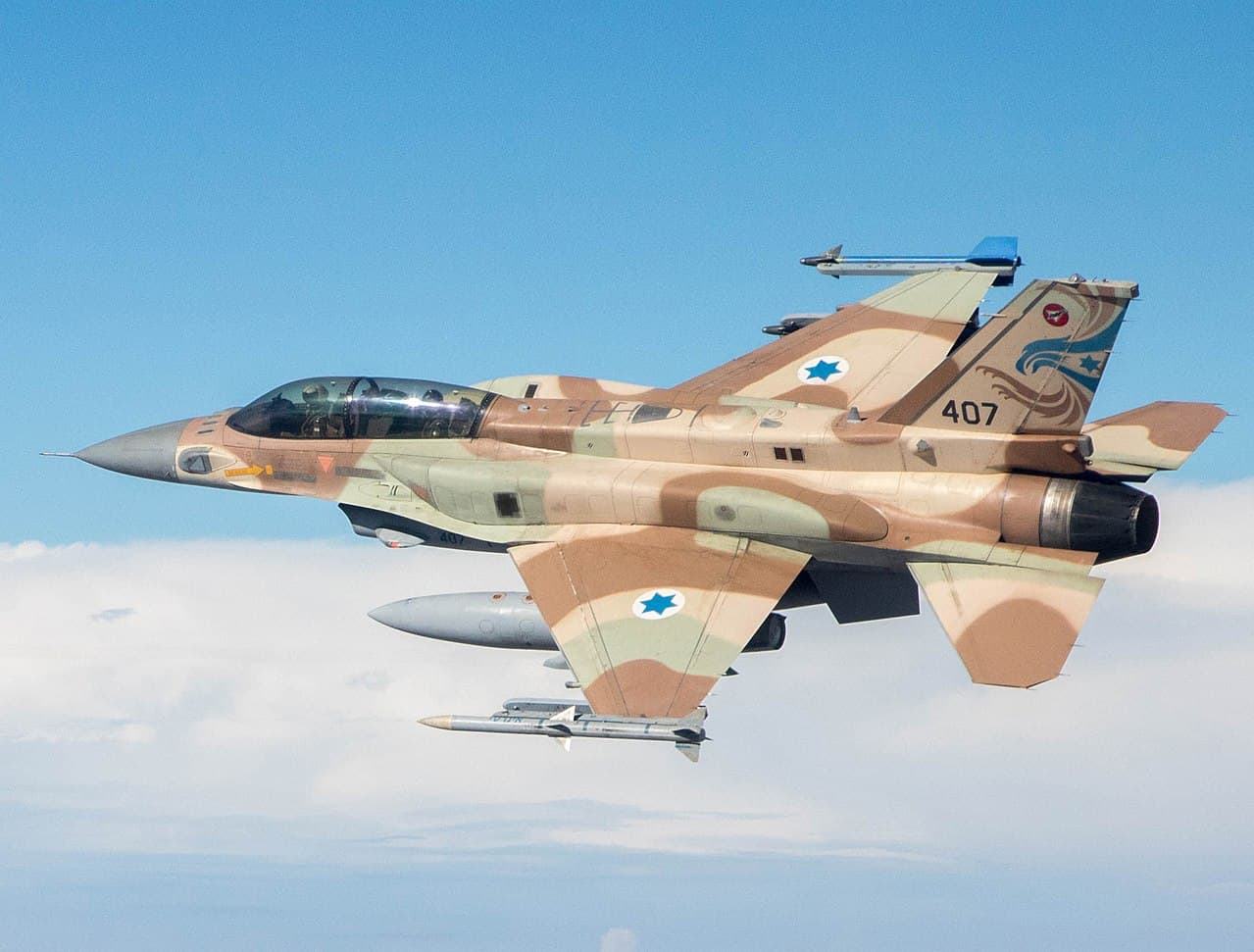
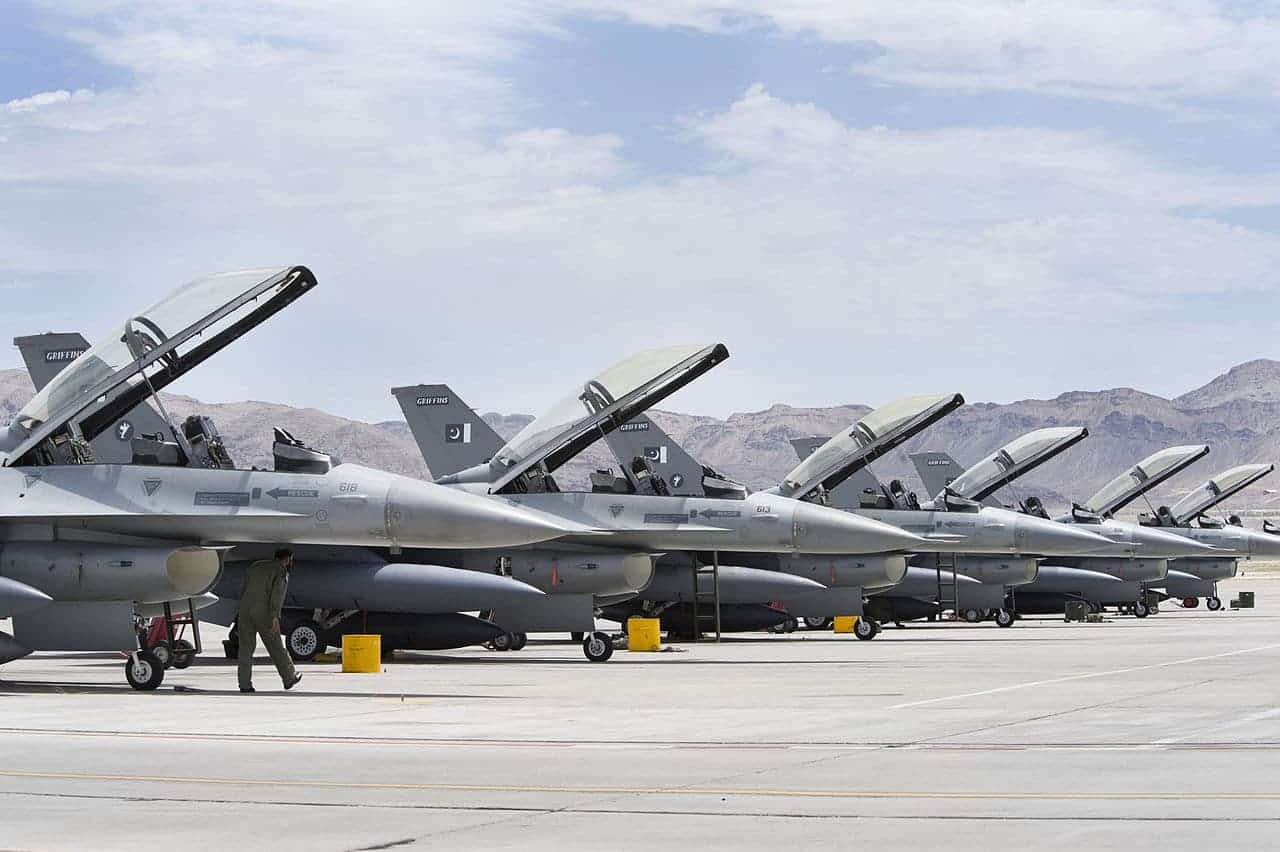
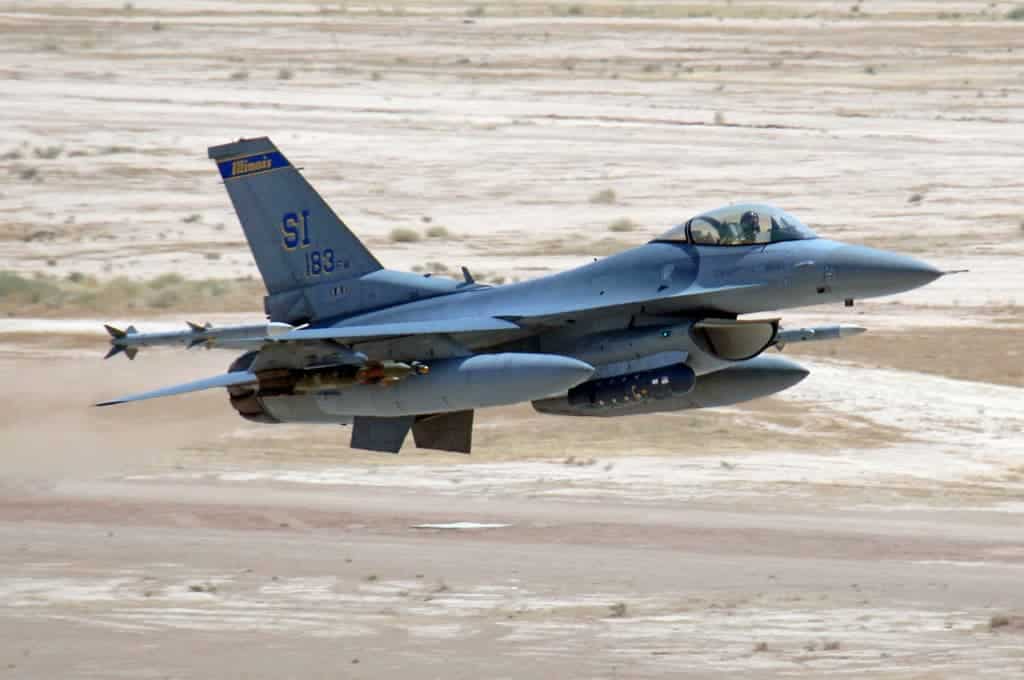
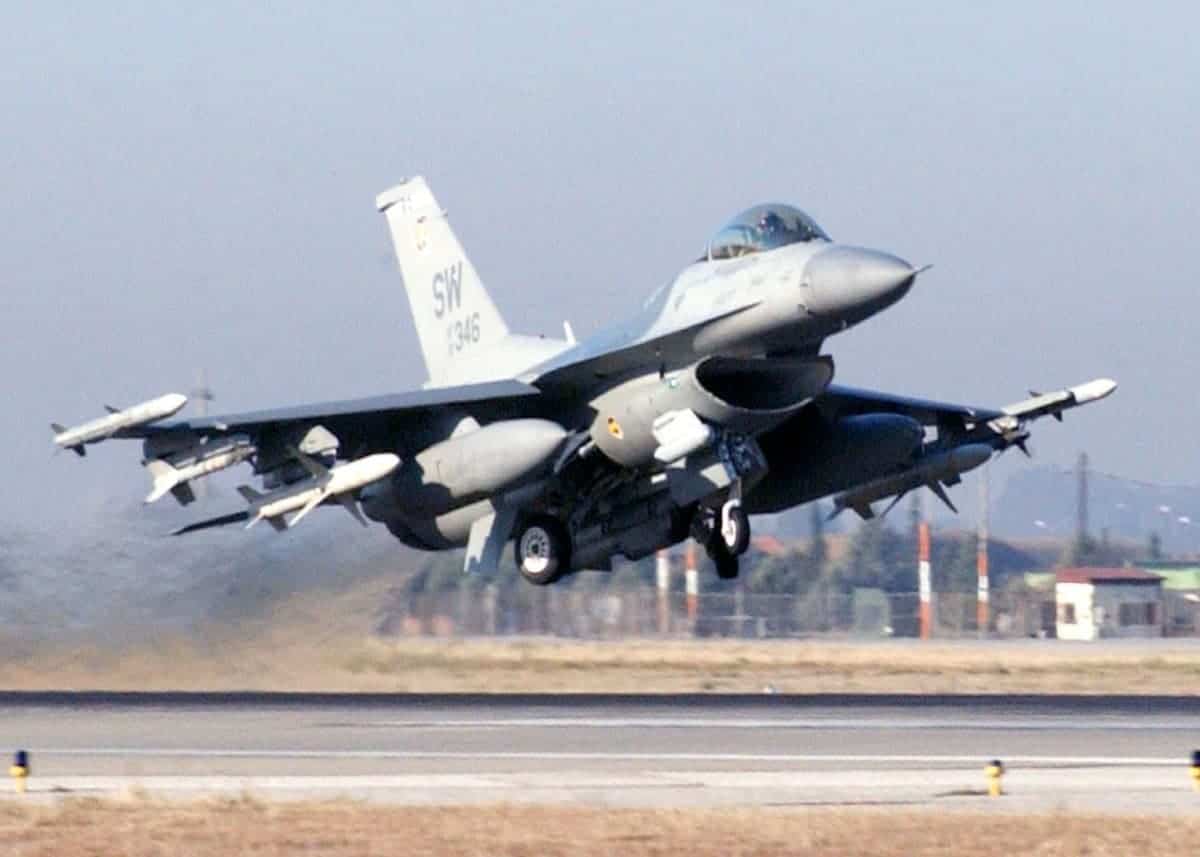
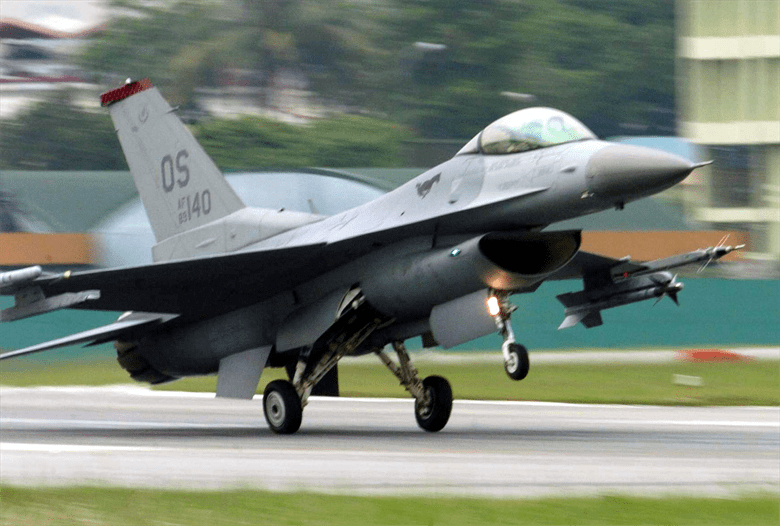
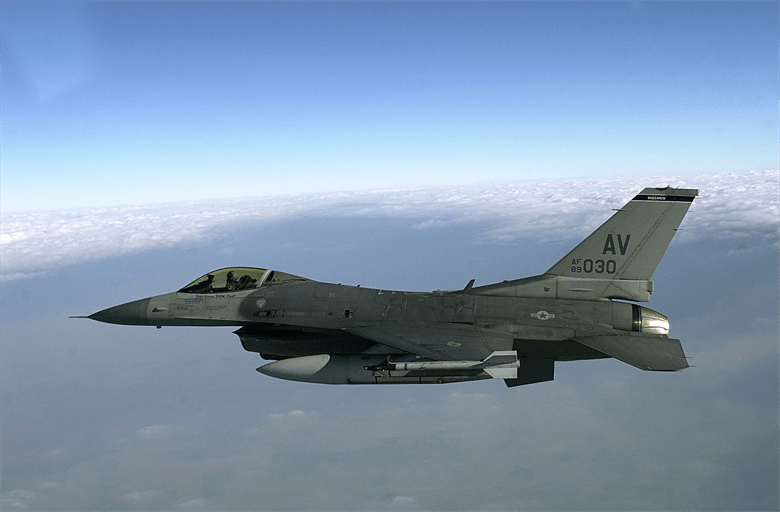
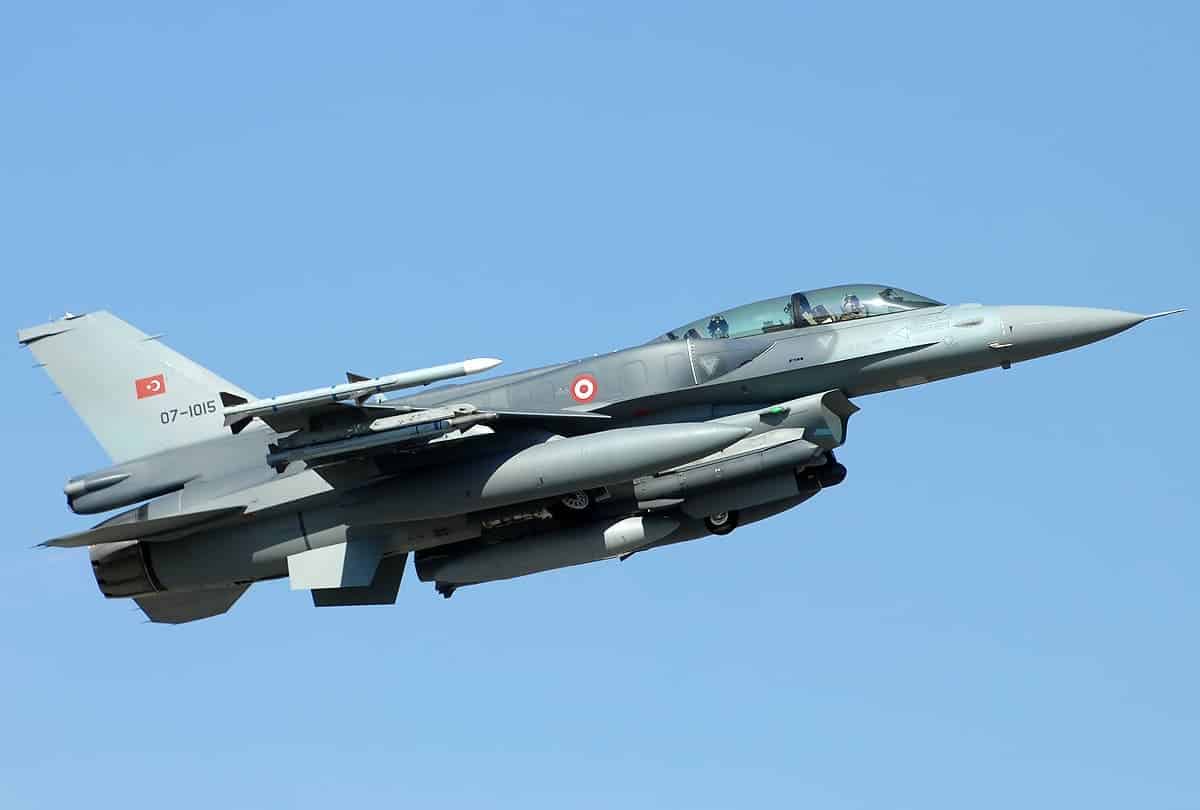

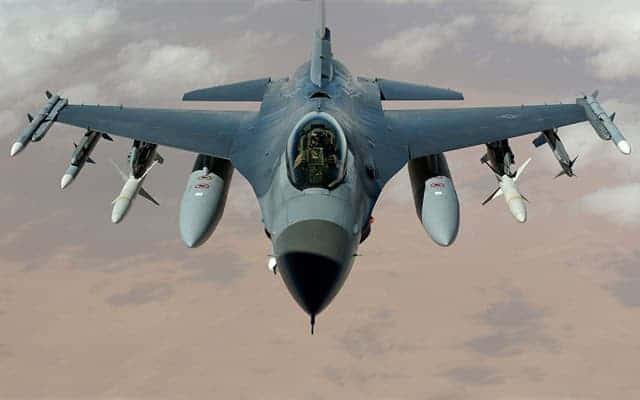

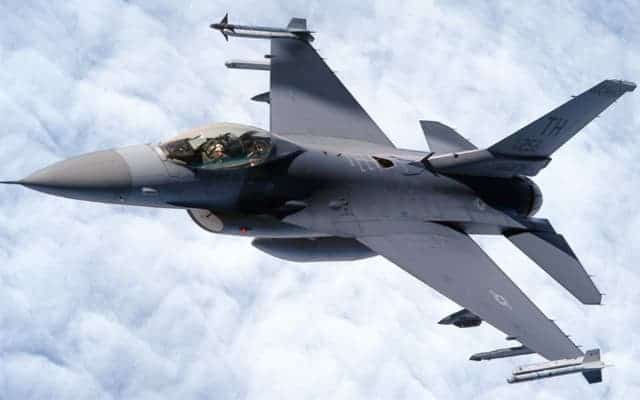
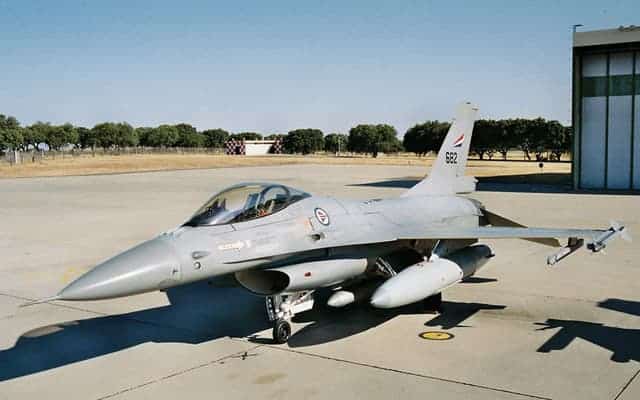
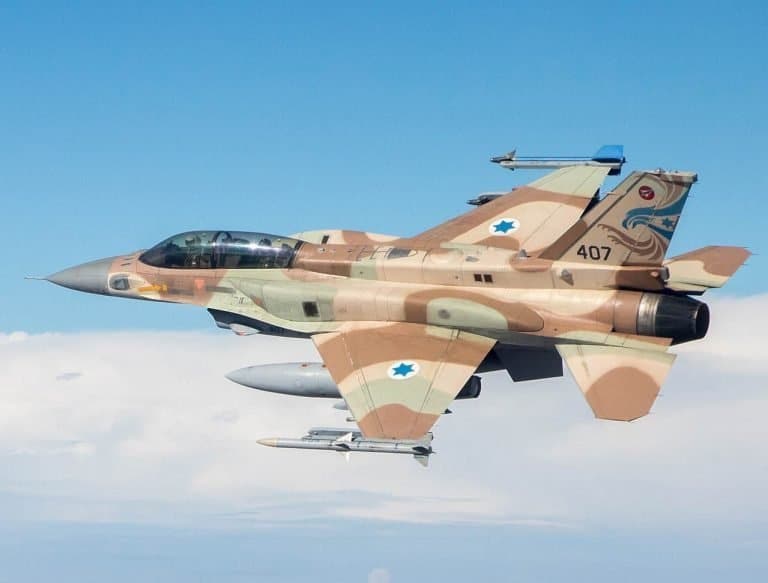
The F-16 Fighting Falcon is a single-engine, supersonic multirole fighter. General Dynamics designed it in the early 1970s, and it has been built as a Lockheed Martin fighter since 1995.
No fixed-wing military aircraft is more common. As of 2026, 2,102 F-16s were in active service around the world, about 15 percent of all active combat aircraft.
More than 4,600 have been built. The U.S. Air Force is its primary user, and the air forces of 25 other nations have bought it. We rank its rivals in our guide to single-engine fighter jets.
The F-16 grew out of an argument inside the Air Force. Colonel John Boyd and mathematician Thomas Christie developed energy-maneuverability theory, and Boyd’s circle, known as the Fighter Mafia, pushed for a small, agile and affordable fighter.
The Lightweight Fighter request for proposals, issued on January 6, 1972, asked for a 20,000-pound (9,100 kg) class air-to-air day fighter. It was to be optimized for combat between Mach 0.6 and 1.6 at 30,000 to 40,000 feet, with an expected flyaway cost of $3 million.
General Dynamics answered with the YF-16 and Northrop with the twin-engine YF-17. The losing Northrop design was later developed into the Navy’s F/A-18 Hornet.
The YF-16 flew before it was meant to. On January 20, 1974, a high-speed taxi test turned into an unplanned first flight after a roll oscillation scraped a wingtip missile fin on the runway, and the official first flight followed on February 2.
On January 13, 1975, Air Force Secretary John McLucas named the YF-16 the winner. He cited its lower operating costs, greater range, and maneuver performance that was “significantly better” than the YF-17’s, especially at supersonic speeds.
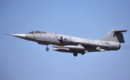
Four NATO allies followed. Belgium, Denmark, the Netherlands and Norway needed to replace their F-104G Starfighters, and they jointly produced an initial 348 F-16s with the United States, with final assembly in Belgium and the Netherlands.
The first F-16A flew in December 1976, and the first production-standard jet on August 7, 1978. The first operational F-16A was delivered to the 388th Tactical Fighter Wing at Hill Air Force Base, Utah, in January 1979.
The type was named Fighting Falcon on July 21, 1980. Pilots and crews call it the Viper instead, after its perceived resemblance to the snake and to the Colonial Viper starfighter from the television series Battlestar Galactica.
In Air Force service the F-16 mainly replaced the F-105 Thunderchief and the F-4 Phantom II. By 1996 it had also replaced the F-4G Wild Weasel in the job of suppressing enemy air defenses.
The F-16 was the first production fighter intentionally designed to be slightly aerodynamically unstable, a concept called relaxed static stability. A fly-by-wire flight control system keeps it flyable, and the instability both reduces drag and improves maneuverability.
It was also the first fighter purpose-built to pull 9 g. To help the pilot cope, the seat back is reclined 30 degrees instead of the usual 13, and the control stick sits on an armrest rather than between the pilot’s knees.
A frameless bubble canopy gives a clear view forward, upward and over the shoulder. The engine produces more thrust than the jet weighs, and the roll rate reaches 324 degrees per second.
Armament starts with an internal 20 mm M61A1 rotary cannon with 500 rounds. Eleven hardpoints, including two wingtip missile rails, carry up to six air-to-air missiles plus bombs, fuel tanks and sensor pods.
The F-16A is the original single-seat fighter and the F-16B its two-seat version, which first flew on August 8, 1977. The improved single-seat F-16C first flew on June 19, 1984, alongside the two-seat F-16D.
From there the jet evolved in production blocks. Block 25 added the APG-68 radar and the AMRAAM missile, Block 30/32 the HARM anti-radiation missile and more powerful engines, and Block 40/42 LANTIRN pods and a wide-angle head-up display for night and all-weather attack.
Block 50/52 was developed to take over the F-4G’s defense-suppression role, with a longer-range radar and uprated engines. The Air Force ordered 1,446 F-16C/Ds in all.
Export customers pushed the design further. The United Arab Emirates invested heavily in the F-16E/F Block 60, and Israel flies the two-seat F-16I Sufa, alongside the other types in our guide to Israeli fighter jets.
Japan built its own derivative, the Mitsubishi F-2. The Air Force also flies an F-16-based test aircraft, the X-62 VISTA.
There is no difference in the aircraft. Fighting Falcon is the official name and Viper the nickname crews have always used.
Lockheed Martin now uses the nickname for its newest version, the F-16V, which covers new-build Block 70/72 jets and upgrades of older ones. Its core is the Northrop Grumman APG-83 active electronically scanned array radar, which Lockheed says brings fifth-generation fighter radar capabilities.
The Block 70/72 airframe is rated for 12,000 flight hours, more than 50 percent beyond earlier production F-16s, according to Lockheed Martin. It adds a large center pedestal display and comes with the Automatic Ground Collision Avoidance System, which has saved multiple pilots since it entered Air Force service in late 2014.
Every F-16 has a single afterburning turbofan, but it can come from either Pratt & Whitney or General Electric. Of the 1,446 F-16C/Ds the Air Force ordered, 556 got F100-series engines and 890 got the GE F110.
The Increased Performance Engines arrived in the early 1990s: the F110-GE-129 on the Block 50, rated at 29,588 pounds of thrust, and the F100-PW-229 on the Block 52, rated at 29,160. The specification table on this page shows the Pratt & Whitney engine.
Earlier jets had much less. The F100-PW-220 on the Block 32 and Block 42 is rated at about 24,000 pounds, while the most powerful F-16 engine is the UAE’s F110-GE-132, at 32,500 pounds.
The full specification table for the aircraft is on this page. A few of its figures need context that a table cannot give.
The top speed of 1,176 knots is Mach 2.05, and it applies only at 40,000 feet with a clean jet. At sea level the F-16 is limited to about Mach 1.2, or 800 knots.
The 2,277 nautical mile range is a ferry figure with three drop tanks. Combat range is far shorter: Wikipedia’s specification lists about 295 nautical miles on a high-low-high mission carrying four 1,000-pound (450 kg) bombs.
Maximum takeoff weight depends on the block. Air & Space Forces Magazine lists 37,500 pounds (17,000 kg) for Block 30/32 jets, 42,300 pounds (19,200 kg) for Block 40/42 and 48,000 pounds (21,800 kg) for Block 50/52, and the table on this page uses 42,300 pounds.
Israel flew the F-16 in combat first. On April 28, 1981, an Israeli F-16 shot down a Syrian Mi-8 helicopter over the Bekaa Valley with its cannon, after a Sidewinder missile failed.
On June 7, 1981, eight Israeli F-16s escorted by F-15s bombed the Osirak nuclear reactor under construction near Baghdad in Operation Opera. In the 1982 Lebanon War, the Israeli Air Force credited its F-16s with 44 air-to-air kills, mostly MiG-21s and MiG-23s.
One Israeli jet, F-16A Netz 107, carries 6.5 kill markings plus one for the Osirak raid, a record for an F-16.
In the 1991 Gulf War, 249 U.S. Air Force F-16s flew 13,340 sorties, more than any other Coalition aircraft. The Air Force’s first F-16 air-to-air kill came on December 27, 1992, when an F-16D shot down an Iraqi MiG-25, also the first kill for the AIM-120 AMRAAM.
Over Bosnia in February 1994, U.S. Air Force F-16Cs shot down four of the six Serb attack jets they engaged. On November 24, 2015, two Turkish F-16s shot down a Russian Su-24 that Turkey said had violated its airspace, a claim Russia rejected.
Ukraine first used its F-16s in combat on August 26, 2024, intercepting Russian cruise missiles. In July 2026, Gen. Dan Caine, chairman of the Joint Chiefs of Staff, told a Senate hearing that a Ukrainian F-16 had shot down a Russian fighter.
It is widely reported to be the Su-35 Ukraine claimed on July 8, 2026, the first time a Ukrainian F-16 downed a Russian fighter.
Romanian F-16s have scored too. On May 19, 2026, a Romanian jet on NATO’s Baltic Air Policing mission shot down a Ukrainian drone that Russian jamming had sent over Estonia, Romania’s first aerial victory since 1945.
In August 2026 another used its cannon on a Russian naval drone near a Black Sea gas platform.
We found no single official count, so the answer comes from the losses on record. In the 1991 Gulf War, three F-16s were lost to confirmed enemy action: two to radar-guided SA-6 and SA-3 missiles and one to a shoulder-launched SA-16.
On June 2, 1995, Scott O’Grady’s F-16C was shot down by an SA-6 over Bosnia, and he was rescued on June 8. On May 2, 1999, an F-16 flown by David Goldfein, later Air Force Chief of Staff, was downed over Serbia by an SA-3.
On February 10, 2018, a Syrian S-200 missile hit an Israeli F-16I during a strike on targets around Damascus. Both crew ejected over Israel.
Ukraine has lost five F-16s since August 2024. Pilots were killed in the losses of August 2024, April 2025 and June 2025, and ejected safely in May 2025 and July 2026.
Russia said its air defenses shot down the April 2025 jet. The causes of the other losses have not all been made public.
Yes, in large numbers. In fiscal 2024 the Air Force had 704 F-16Cs and 134 F-16Ds, about 40 percent of its fighter inventory, flown by active duty, Air National Guard and Air Force Reserve units.
The Thunderbirds demonstration team flies the F-16 as well. One of its F-16Cs crashed near China Lake, California, on December 3, 2025, and the pilot ejected safely.
The service plans to keep upgrading the jet to stay ahead of threats through 2040 or beyond. A structural life extension is taking 350 airframes past 8,000 flight hours, and upgrades add the APG-83 radar and an internal electronic warfare suite that began flight testing in late 2024.
Training has shifted, though. Luke Air Force Base ended 42 years of Air Force F-16 pilot training on March 24, 2025, after graduating more than 20,000 Viper pilots, and still hosts Singapore’s F-16 training.
The F-16 is also economical to fly by current standards. The Pentagon’s fiscal 2026 reimbursement rates bill an Air Force F-16C at $14,818 per flight hour, against $17,321 for the F-15EX and $18,600 for the F-35A.
The F-16 is still in production. After the last Fort Worth-built jet was delivered to Iraq on November 14, 2017, Lockheed Martin moved the line to Greenville, South Carolina, where the first new jet rolled out in 2023.
In August 2026 Lockheed reported 119 Block 70/72 jets in backlog and 41 delivered, for customers in seven countries, and expected more F-16 deliveries in 2026 than in 2025. Peru signed its contract in April 2026.
What a new F-16 costs depends on what is counted. The Air Force’s unit cost is $18.8 million for an F-16C/D in fiscal 1998 dollars, the figure in this page’s price field.
Export deals run far higher because they bundle weapons, engines, training and support. On April 1, 2025, the U.S. cleared the Philippines to buy 20 Block 70/72 jets for an estimated $5.58 billion, about $279 million per aircraft, a ceiling that also covers missiles, bombs, spare engines and support.
For how that compares with other fighters, see our list of the most expensive fighter planes.
The F-16 was bought to complement the larger, twin-engine F-15 Eagle, which the Air Force could not afford in the numbers its missions needed. We compare the two head to head in our F-16 vs F-15 comparison.
Many air forces are now replacing their F-16s with the stealthy F-35. The Viper is faster, at Mach 2 against the F-35A’s Mach 1.6, but the F-35 is far harder to find on radar, a trade we cover in our F-35 vs F-16 comparison.
For the Raptor matchup, see our F-22 vs F-16 comparison. The F-16 also features in our ranking of the best fighter jets in the world.
We found no single official count. Confirmed combat losses include three F-16s in the 1991 Gulf War, Scott O’Grady’s jet over Bosnia in 1995, an F-16 over Serbia in 1999 and an Israeli F-16I hit by a Syrian missile in 2018. Ukraine has lost five F-16s since August 2024, one of which Russia says its air defenses shot down.
The F-16. It reaches Mach 2.05 at 40,000 feet in a clean configuration, and the Air Force lists it at 1,500 mph (2,400 km/h). The F-35A is listed at Mach 1.6, about 1,200 mph (1,930 km/h).
It is the most widely used: more than 4,600 built and 2,102 in active service in 2026, more than any other fixed-wing military aircraft. It is a fourth-generation jet without stealth, though, so fifth-generation fighters such as the F-22 and F-35 hold the edge in heavily defended airspace.
Yes. The Air Force had 704 F-16Cs and 134 F-16Ds in fiscal 2024, about 40 percent of its fighter inventory, and plans to keep upgrading them through 2040 or beyond. The Thunderbirds demonstration team also flies the F-16.
Fighting Falcon is the official name, given on July 21, 1980. Pilots and crews prefer Viper, after the snake and the Colonial Viper starfighter from Battlestar Galactica, and Lockheed Martin now uses the name for its newest version, the F-16V.
The Air Force puts an F-16C/D at $18.8 million in fiscal 1998 dollars. New Block 70/72 export deals cost far more because they include weapons, engines and support: the Philippines was cleared in 2025 to buy 20 jets for up to an estimated $5.58 billion. Under the Pentagon’s fiscal 2026 rates, an F-16C costs $14,818 per flight hour.
More than 4,600, and the production line is still open. Lockheed Martin had delivered 41 Block 70/72 jets and had 119 more in backlog as of August 2026.
The F-16 is a fourth-generation fighter. The APG-83 radar on the Block 70/72 brings what Lockheed Martin calls fifth-generation radar capabilities, but the jet has no stealth, as our guide to the five generations of fighter planes explains.
Sources and references used for research and fact-checking.