Fighter Jets
Boeing F-15EX Eagle II
ICAO: F15
The jet that made the fighter-attack designation mean something.
Updated: by Tim de Vries

The latest aviation news and stories sent to your inbox.
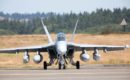
The McDonnell Douglas F/A-18 Hornet was the first American combat aircraft designed from the start to fly both the fighter and the attack mission in one sortie. It entered service with the Marine Corps in 1983 and became the backbone of the U.S. Navy’s carrier air wings for a generation. The Navy retired its last legacy Hornets in 2019, but the type still flies with the Marine Corps, Finland, Spain, Switzerland and Kuwait.
Live Fleet Activity (F18H)
Fetching live data…
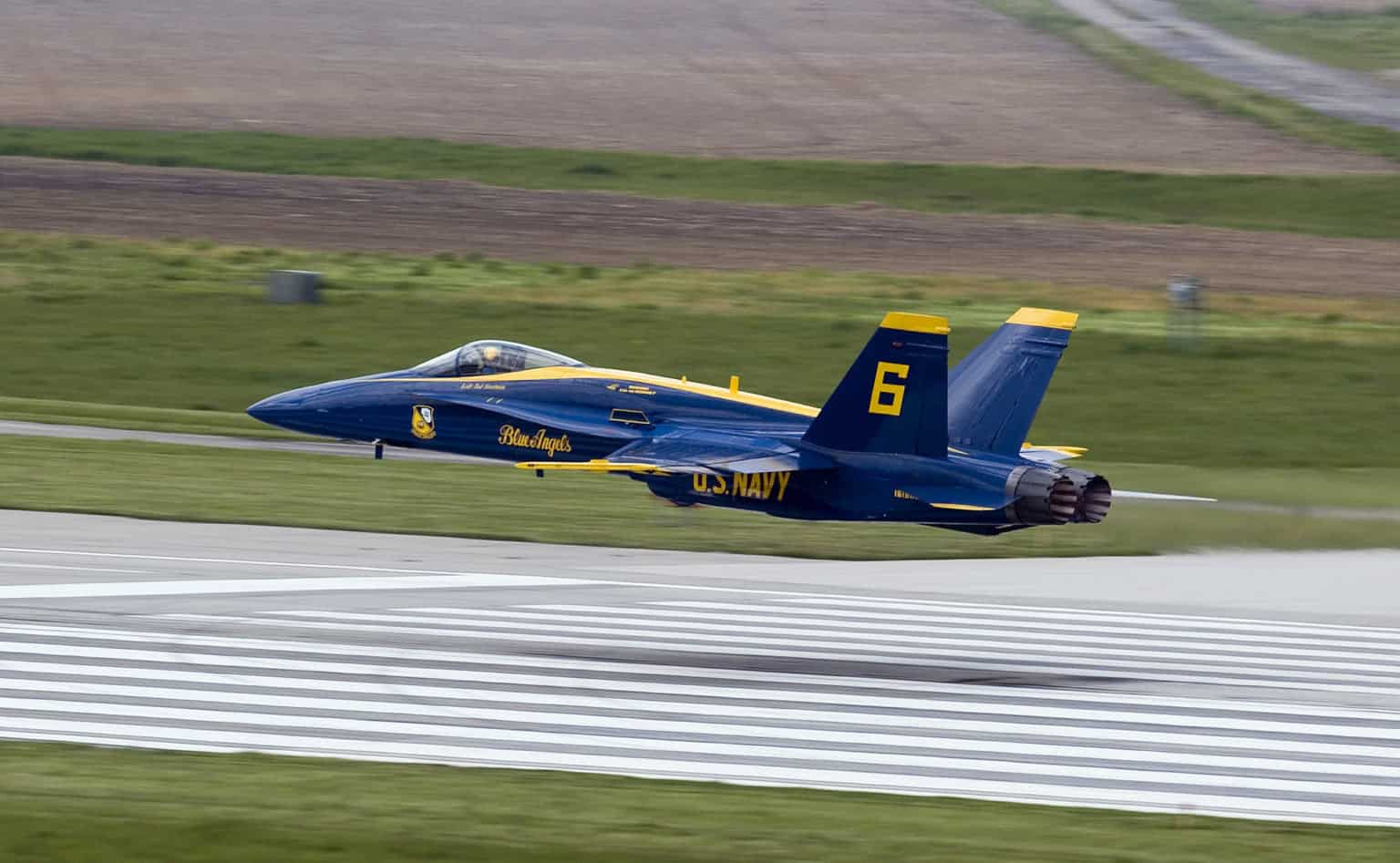


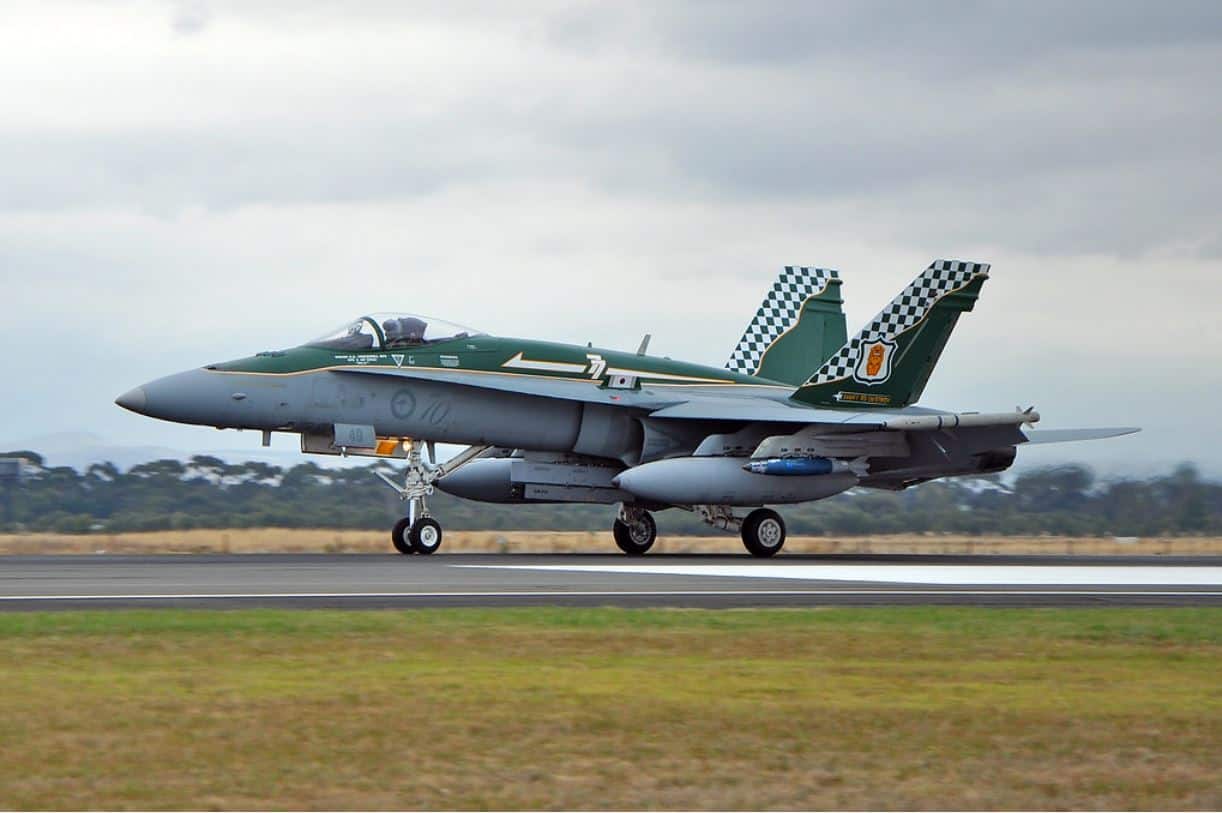
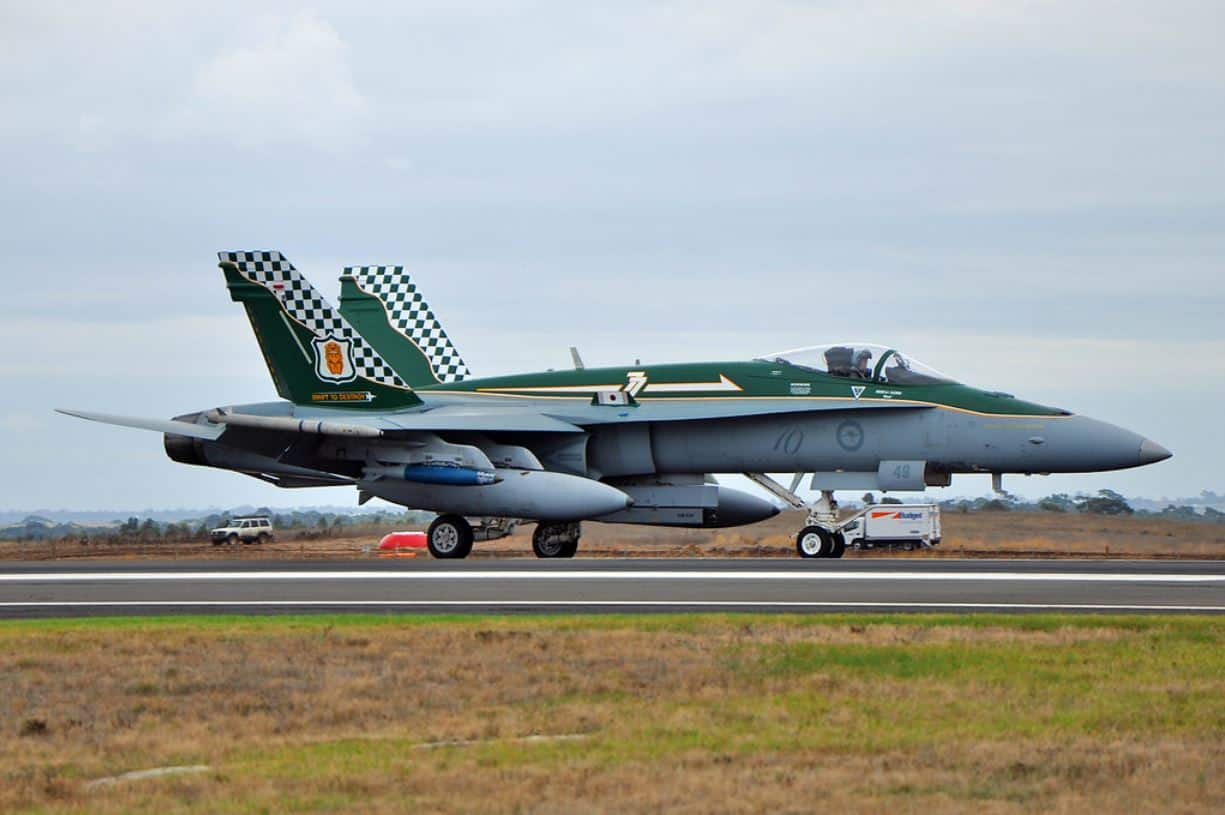

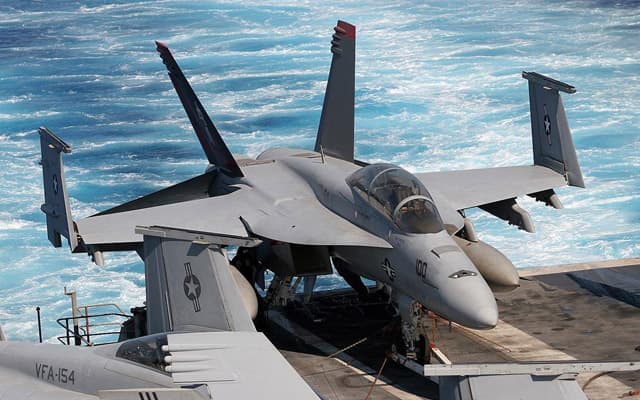
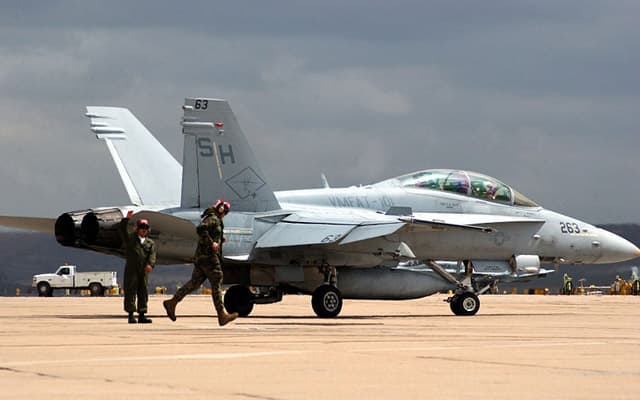
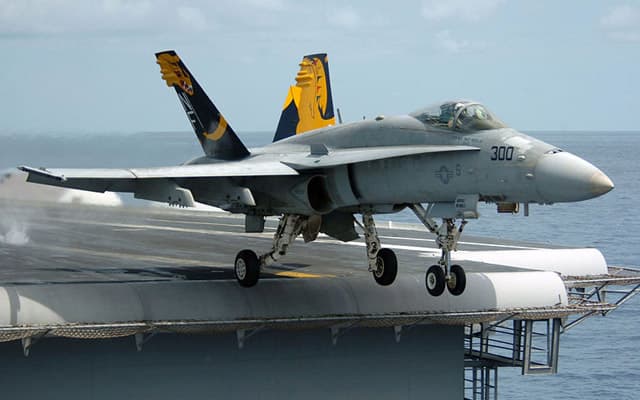

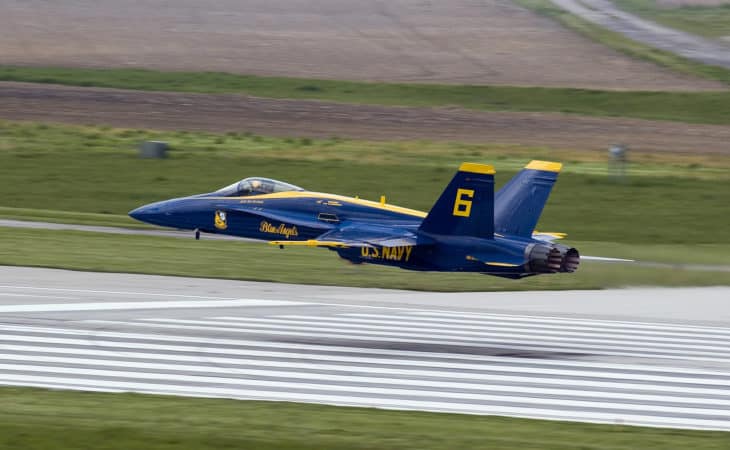
The F/A-18 Hornet was the first American combat aircraft designed from the outset to fly the fighter mission and the attack mission on the same sortie. The slash in its designation was a real engineering claim rather than a marketing flourish, and the Hornet spent forty years proving it.
It entered Marine Corps service in 1983, flew from United States Navy carrier decks until 2019, and is still in front-line service with the Marine Corps and six foreign air arms as of September 2026.
The Hornet exists because Northrop lost. Its YF-17 Cobra was beaten by the General Dynamics YF-16 in the United States Air Force Lightweight Fighter fly-off, and the design looked finished.
The Navy, however, was running its own VFAX requirement for a carrier-capable multirole fighter, and it was unenthusiastic about putting a single-engine jet over open ocean. Northrop teamed with McDonnell Douglas, which had the carrier aircraft experience, and the two firms reworked the YF-17 into something heavier, stronger and salt-water tolerant.
The result first flew on 18 November 1978. Production of the A, B, C and D models ran from 1974 to 2000 and totaled 1,480 aircraft.
Before the Hornet, a carrier air wing divided the work between specialists. F-4 Phantom IIs and later F-14 Tomcats did the fighting, while A-7 Corsair IIs and A-6 Intruders did the bombing.
That split cost the Navy two sets of spare parts, two maintenance pipelines and two training tracks on every deck. The Hornet replaced the A-7 and the remaining Phantoms with one airframe that could do both jobs in one flight.
It entered service with the Marine Corps on 7 January 1983 and with the Navy on 1 July 1984. For a look at how the rest of the deck is organized, see our guide to the types of aircraft the Navy flies.
The F/A-18A and F/A-18C are single-seat fighters. The F/A-18B and F/A-18D carry a second crew member, and both two-seaters remain fully combat capable rather than being trainers only.
The second cockpit was not free. It was created by relocating avionics equipment and accepting a six percent reduction in internal fuel, which is why the two-seat jets trade a little endurance for a second set of eyes.
The C and D models, which arrived from the late 1980s, added night-attack capability and compatibility with the AIM-120 AMRAAM. Earlier A-models later upgraded with the newer radar and AMRAAM capability are designated F/A-18A+, and Marine Corps C models given the mid-life upgrade are known as F/A-18C+.
The Hornet entered service with the Hughes AN/APG-65. In 1992 that was replaced by the AN/APG-73, a faster and more capable set built by Hughes and later by Raytheon, and that is the radar listed in this page’s specification panel.
The Marine Corps has since gone further, fitting part of its remaining fleet with the APG-79(V)4 active electronically scanned array. An AESA radar on a jet designed in the 1970s is the clearest sign of how much growth the airframe still had in it.
The full specification table for this aircraft is on this page, above. A few of its figures get quoted against each other online, so they are worth separating.
Range is the main one. Both NAVAIR and the NATOPS-derived specification block give 1,089 nautical miles clean with two Sidewinders, and that is the figure in the panel.
The air-to-air combat radius, meaning how far out the jet can go and still come home with fuel to fight, is roughly 400 nautical miles. Ferry range with three external tanks is quoted at 1,546 nautical miles by NAVAIR and 1,800 nautical miles elsewhere. These describe three different missions, not three contradictory measurements.
Speed is stored in knots. The 1,034 knots in the panel is the top speed at 40,000 feet, which works out to Mach 1.8, while at sea level the limit is closer to Mach 1.06.
Thrust is quoted two ways as well. Each F404-GE-402 produces about 11,000 pounds of thrust dry and 17,750 pounds in afterburner, and NAVAIR rounds the afterburning figure to 17,700.
Internal fuel is 10,860 pounds. The gallon figure in the panel is that weight converted at jet fuel density, and external tanks add to it without changing the internal number.
The type first saw combat in April 1986, when Hornets of VFA-131, VFA-132, VMFA-314 and VMFA-323 flew from USS Coral Sea against Libyan air defenses. Those were suppression of enemy air defense missions during Operation Prairie Fire and the Benghazi strike that formed part of Operation El Dorado Canyon.
The Gulf War in 1991 was the type’s largest deployment. The Navy sent 106 F/A-18A and C models and the Marine Corps sent 84 A, C and D models.
It was not without cost. On 5 February 1991 an F/A-18A flown by Lieutenant Robert Dwyer was lost over the northern Persian Gulf after a mission into Iraq, and he was listed as killed in action, body not recovered.
Hornets went on to fly Operation Southern Watch, operations over Bosnia and Kosovo through the 1990s, Operation Enduring Freedom from 2001 and Operation Iraqi Freedom from 2003. One F/A-18C was lost to friendly fire in 2003 when a Patriot missile battery engaged it.
On 17 January 1991, four F/A-18Cs of VFA-81, the Sunliners, launched from USS Saratoga in the Red Sea. Each carried four 2,000-pound Mk 84 bombs, tasked against the H-3 airfield in western Iraq.
En route, an E-2C Hawkeye warned them of MiG-21s closing head-on. Lieutenant Commander Mark Fox downed one with an AIM-9 Sidewinder and Lieutenant Nick Mongillo downed the other with an AIM-7 Sparrow.
Then both pilots rolled back onto the attack run and put their bombs on the target. No aircraft type had ever demonstrated the fighter-attack promise so plainly: they won the air battle and completed the strike without swapping jets or jettisoning ordnance.
Fox was flying bureau number 163508 and Mongillo bureau number 163502. These remain the only confirmed United States Navy air-to-air kills of Operation Desert Storm.
The most common misconception about this aircraft is that the F/A-18E/F Super Hornet is a modernized Hornet. It is a substantially larger and largely new aircraft that inherited the name and the general layout.
The Super Hornet is about 20 percent larger. Its published empty weight is 32,081 pounds against the legacy jet’s 23,000 pounds, its maximum takeoff weight is 66,000 pounds against 51,900 pounds, and it carries roughly a third more internal fuel at 14,700 pounds versus 10,860 pounds.
Its General Electric F414-GE-400 engines were derived from the Hornet’s F404, so the family resemblance is real, but the two airframes share very few parts. The EA-18G Growler electronic attack aircraft is built on the Super Hornet, not on the legacy Hornet.
Air traffic control treats them as separate types too. The legacy Hornet family carries the ICAO designator F18H, while the Super Hornet and Growler share F18S.
Because the YF-17 and the YF-16 competed directly, the Hornet and the F-16 Fighting Falcon are natural rivals, and readers ask which is better constantly.
The honest answer is that they were built for different customers with different problems. The F-16 is lighter, single-engine and optimized for agility and cost, while the Hornet is twin-engine, stressed for catapult launches and arrested landings, and available with a second crew member.
Neither jet is better in the abstract. We compare them measure by measure in our F-16 vs F-18 head-to-head, and the Hornet’s carrier credentials are covered further in our ranking of the best carrier-based fighter jets.
The Hornet is the aircraft most Americans have actually seen fly. The Navy’s Blue Angels flew it for 34 years, taking it on in 1986 as the replacement for the A-4 Skyhawk.
The team used the F/A-18A and B from 1986 to 2010, then the C and D from 2010 to 2020. Their final demonstration flight in a legacy Hornet took place on 4 November 2020, and they opened the 2021 season in Super Hornets.
The United States Navy retired the legacy Hornet from fleet service on 1 February 2019, and the final Navy F/A-18C operational flight came on 2 October 2019.
The Marine Corps is the last American operator. It held 179 aircraft as of 2024 and was down to about 125 jets across three operational squadrons by May 2026.
Marine Hornet operations are scheduled to end at Marine Corps Air Station Beaufort by 1 August 2028, at MCAS Miramar by 1 August 2029 and at Naval Air Station Joint Reserve Base Fort Worth by 1 August 2030, with the F-35 taking over.
Abroad, the type is still widely flown. Canada operates roughly 92 CF-188 Hornets including ex-Australian airframes and is replacing them with the F-35A, as covered in our overview of Canadian fighter jets.
Finland flies 62 Hornets from a 1992 order for 57 C models and seven D models, with the F-35A replacing them. Spain operates about 83 EF-18s, the E standing for España, from an original order of 60 EF-18A and 12 EF-18B delivered between 1985 and 1990.
Switzerland has 30 aircraft from a purchase of 26 C models and eight D models delivered between 1996 and 1999, with F-35As on order. Kuwait retains 27 Hornets alongside newer types, and Malaysia flies eight F/A-18Ds. Australia retired its fleet in 2021.
There is a pleasing symmetry in how production ended. The very last F/A-18C was assembled in Finland and delivered to the Finnish Air Force in August 2000, and the last F/A-18D went to the United States Marine Corps the same month.
The type returned to headlines in March 2026. On 2 March, three United States Air Force F-15E Strike Eagles were shot down over Kuwait by Kuwaiti air defenses during active combat.
US Central Command stated that all six aircrew ejected safely, were recovered and were in stable condition, and Kuwait’s Ministry of Defence confirmed that American aircraft had crashed and that an investigation was under way.
The Wall Street Journal subsequently reported, citing three sources familiar with initial reports, that the weapon involved was a single Kuwaiti F/A-18 Hornet that fired three missiles. That attribution has not been officially confirmed, and the outlets relaying it noted they could not independently verify it.
Yes. The United States Navy retired its legacy Hornets in 2019, but the Marine Corps still operates about 125 F/A-18C and D models and will fly them until 2030. Canada, Finland, Spain, Switzerland, Kuwait and Malaysia all continue to operate the type.
The Super Hornet is a larger, later and largely separate aircraft rather than an upgraded Hornet. It is around 20 percent bigger, has a maximum takeoff weight of 66,000 pounds against 51,900 pounds, carries about 33 percent more internal fuel, and uses F414 engines derived from the Hornet’s F404.
Neither is better outright, because they were designed for different services. The F-16 is lighter, single-engine and built for agility and low cost, while the Hornet is twin-engine, carrier-capable and available with a second crew member.
This question is usually asked about the F-15 Eagle rather than the Hornet, and it is a claim worth treating carefully. The Hornet’s own confirmed air-to-air record in United States service is two MiG-21s, both shot down on 17 January 1991, the opening day of Operation Desert Storm.
Its top speed is 1,034 knots at 40,000 feet, which is Mach 1.8. Lower down the limit falls sharply, to around Mach 1.06 at sea level, and normal cruise is about 480 knots.
A total of 1,480 F/A-18A, B, C and D model Hornets were built. That figure covers all legacy variants including the export aircraft, and excludes the separate Super Hornet production run.
Legacy Hornet production ended in 2000, when the St. Louis line switched over to the Super Hornet. The final F/A-18C was assembled in Finland and delivered in August 2000, and the last F/A-18D was delivered to the Marine Corps that same month.
The Hornet is a fourth-generation fighter, sharing that class with the F-16, the F-15 and the Su-27. You can see how the classes are drawn in our guide to the five generations of fighter planes.
Yes. Lieutenant Commander Mark Fox and Lieutenant Nick Mongillo of VFA-81 each downed an Iraqi MiG-21 on 17 January 1991 while flying a bombing mission against the H-3 airfield, then continued to the target and dropped their bombs. Those remain the only confirmed US Navy air-to-air kills of the Gulf War.
In United States Navy service the Super Hornet took over, and the F-35 is replacing the remaining Marine Corps Hornets by 2030. Most export operators are also moving to the F-35A, including Canada, Finland and Switzerland.
Sources and references used for research and fact-checking.