Fighter Jets
Boeing F-15EX Eagle II
ICAO: F15
The Boeing F-15SE Silent Eagle was a stealth-shaped F-15E offered to export customers in 2009. One demonstrator flew in 2010, and no air force ever ordered it.
Updated: by Tim de Vries
The latest aviation news and stories sent to your inbox.
The Boeing F-15SE Silent Eagle was an F-15E Strike Eagle reworked to carry weapons inside conformal bays and to reflect less radar energy. Boeing unveiled it on March 17, 2009, and flew one demonstrator in 2010. South Korea was its biggest chance, and it walked away in 2013.
Live Fleet Activity (F15)
Fetching live data…
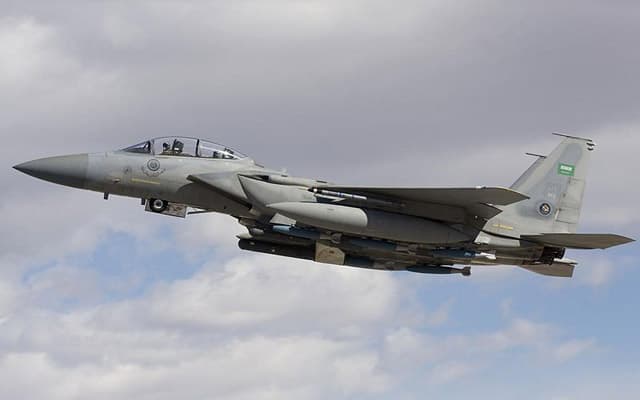
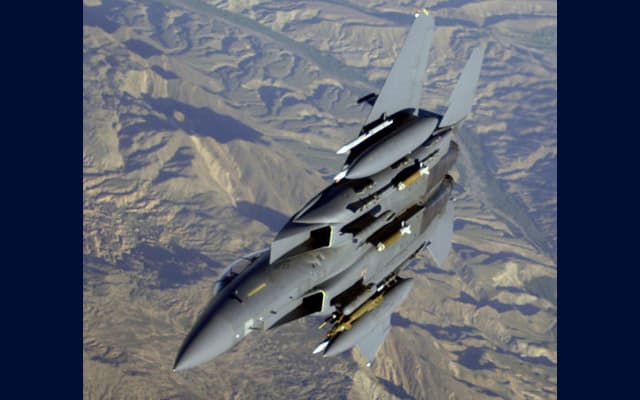
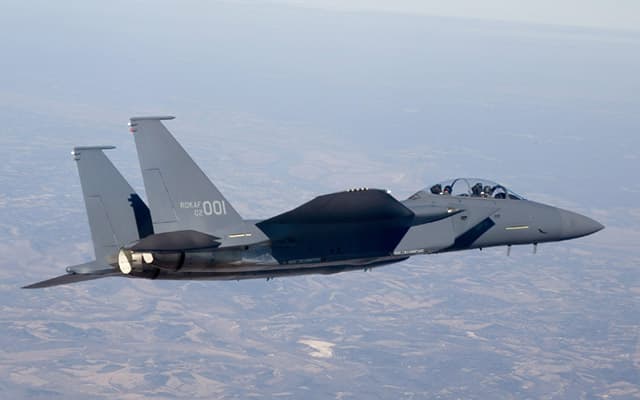
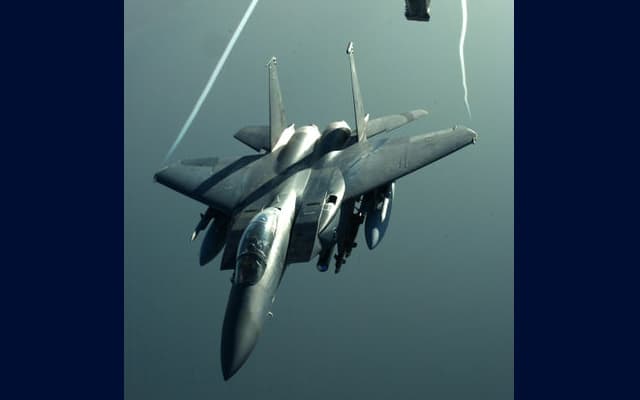
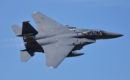
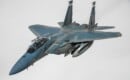
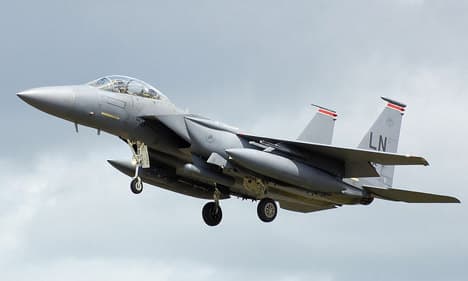
The F-15SE Silent Eagle was Boeing’s attempt to give the F-15 Strike Eagle some stealth without building a new airplane. Boeing unveiled it on March 17, 2009, as a configuration aimed at “international customers” who wanted stealth features at a lower cost.
It was built on the F-15E Strike Eagle, itself a two-seat strike version of the F-15 Eagle. Nobody ordered it. The full specification table for the aircraft is on this page.
The big change was the conformal weapons bay. Boeing redesigned the conformal fuel tanks on the sides of the fuselage so they could carry weapons inside instead of on pylons under the wings.
Boeing said the bays could hold AIM-9 and AIM-120 air-to-air missiles, plus JDAM and Small Diameter Bomb strike weapons. Standard conformal fuel tanks stayed available for customers who preferred range and an external load.
The vertical tails were also tilted outward. Boeing said the canted tails improved aerodynamic efficiency and reduced weight. Coatings and treatments on the airframe were meant to cut the radar return further.
Inside, the design added a Digital Electronic Warfare System from BAE Systems working with Raytheon’s active electronically scanned array radar. Those upgrades would have helped the pilot see threats and avoid them, which matters as much as a low radar signature.
Only one Silent Eagle was ever built, a demonstrator called F-15E1. It made its first flight with a conformal weapons bay on July 8, 2010, from St. Louis, opening and closing the bay around an instrumented test missile.
Six days later, on July 14, 2010, it fired an inert AIM-120 AMRAAM from the left bay over the Point Mugu range in California. That was the proof Boeing wanted: a missile could leave the bay without trouble.
The demonstrator was never followed by a production jet. Many accounts call the Silent Eagle “never built”, which is not quite right, because one flying airframe did exist.
The Silent Eagle’s best chance was South Korea’s F-X Phase III competition, a purchase of 60 fighters planned for 2017 to 2021. The F-35 had been ruled out on cost, and the Eurofighter Typhoon bid was found to have irregularities.
That left the F-15SE as the only bid standing. On September 24, 2013, South Korea’s procurement agency said that “based on evaluation results on capacities and cost” it would not select it, and the competition was reopened.
Analyst Richard Aboulafia of the Teal Group said at the time that the air force had effectively overruled the agency and wanted F-35s. South Korea later chose the F-35A.
Without Korea there was no launch customer, and Boeing did not take the stealth package further.
Boeing turned to a less ambitious route. The F-15SA for Saudi Arabia, then the F-15QA for Qatar, added fly-by-wire controls and a modern cockpit but dropped the weapons bays.
That line led to the F-15EX Eagle II, which the US Air Force now buys. The Silent Eagle’s cockpit and electronic warfare ideas survived. The stealth shaping did not.
For a plain comparison of how today’s fighters rank, see our guide to the best fighter jets in the world.
The speed and range on this page come from Boeing-era design figures, not from a fielded fleet. Performance was a goal for an export design, and only the demonstrator ever flew.
The unit price is also an estimate. With no customer there was never a contract, so the figure should be read as a marketing-era ballpark, not a price anyone paid.
It was a Boeing export version of the F-15E Strike Eagle with conformal weapons bays, canted tails and radar-reducing treatments. Boeing unveiled it on March 17, 2009.
Only one demonstrator, the F-15E1, was built and flown, starting in July 2010. No production aircraft were ordered.
It lost its main chance when South Korea rejected it on September 24, 2013, citing capacity and cost. With no launch customer, Boeing moved to the F-15SA and F-15EX.
The F-15EX Eagle II is the most advanced F-15 in production. It carries the fly-by-wire controls and modern cockpit that came out of the Silent Eagle era, but it has no stealth weapons bays.
Yes. The Strike Eagle is built on the F-15 Eagle airframe and carries air-to-air missiles, though its main job is ground attack.
Sources and references used for research and fact-checking.