

Table of Contents
The best Japanese fighter jet in 2026 is the Lockheed Martin F-35A Lightning II, the stealth fighter Japan has ordered in larger numbers than any other international F-35 customer. The most numerous is still the F-15J Eagle, with roughly 200 in service.
The Japan Air Self-Defense Force (JASDF) flies four frontline fighter types: the F-35A, the F-35B, the F-15J and the home-built Mitsubishi F-2. This list ranks them by combat capability in 2026, then covers the trainer, the prototype and the sixth-generation jet that will replace part of the fleet.
| Rank | Aircraft | Role | In JASDF service since | Fleet in 2026 |
|---|---|---|---|---|
| 1 | Lockheed Martin F-35A | Stealth multirole fighter | 2018 | 105 planned, more than 40 in service |
| 2 | Lockheed Martin F-35B | Stealth short-takeoff, vertical-landing fighter | 2025 | 42 planned, 8 due by March 2026 |
| 3 | Mitsubishi F-15J/DJ Eagle | Air superiority fighter | 1981 | About 200 |
| 4 | Mitsubishi F-2A/B | Multirole and anti-ship strike fighter | 2000 | About 90 |
| 5 | Kawasaki T-4 | Jet trainer, Blue Impulse mount | 1988 | 212 built |
| Next | GCAP | Sixth-generation fighter | Target 2035 | In development |
How this ranking works
The list ranks aircraft the JASDF actually flies in 2026 by what they can do in combat: stealth, sensors, weapons and the missions they are built for. Fleet size and top speed are noted, but a bigger or faster fleet does not outrank a newer stealth jet. Retired types and the X-2 demonstrator appear in their own sections, unranked.
1. Lockheed Martin F-35A Lightning II
The F-35A Lightning II is the most capable fighter in Japanese service, and it is fast becoming the backbone of the fleet. Japan selected it in 2011, and the first JASDF jet arrived at Misawa Air Base in 2018.
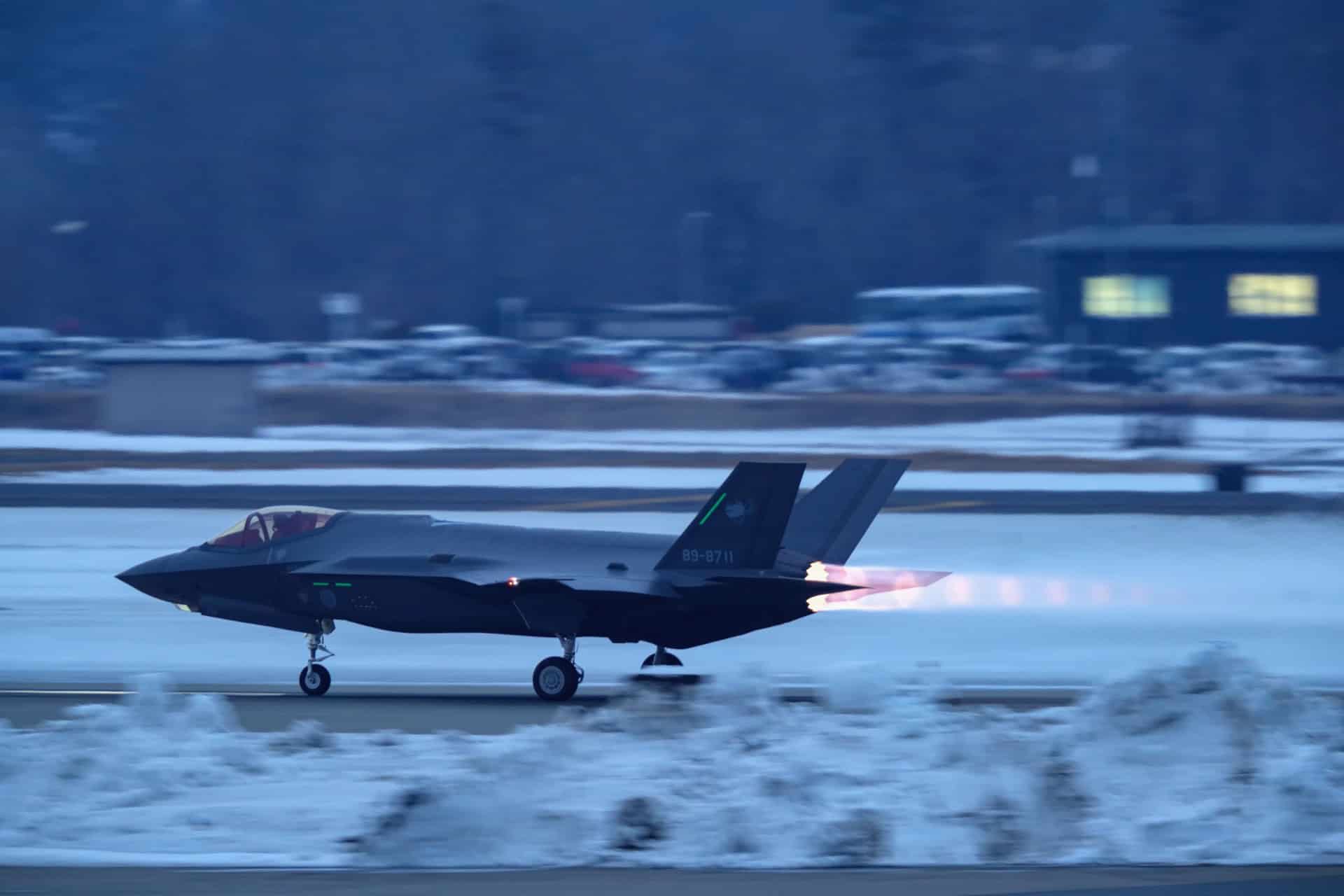

The 302nd Tactical Fighter Squadron declared initial operational capability in 2019, and the 301st became the second F-35 squadron in 2020. The 303rd at Komatsu began converting from the F-15J in 2025, and Chitose in Hokkaido is lined up as the next F-35A base, with deliveries there planned from fiscal 2030.
Japan’s plan calls for 147 F-35s in total: 105 F-35As and up to 42 F-35Bs. That is the largest order from any international customer. More than 40 F-35As were in service by 2026.
Many of them were built in Japan. Mitsubishi Heavy Industries runs one of the program’s three final assembly and check-out lines, at Nagoya, where F-35As for the JASDF are put together.
The F-35A tops out at Mach 1.6 (about 1,200 mph) and flies more than 1,350 miles (2,170 km) on internal fuel, according to the U.S. Air Force. Its advantage is not speed but stealth and sensor fusion, which is why it leads every ranking of stealth fighter jets flying today.
2. Lockheed Martin F-35B Lightning II
The F-35B is the short-takeoff, vertical-landing version of the same jet, and it gives Japan stealth fighters that can fly from its own ships.
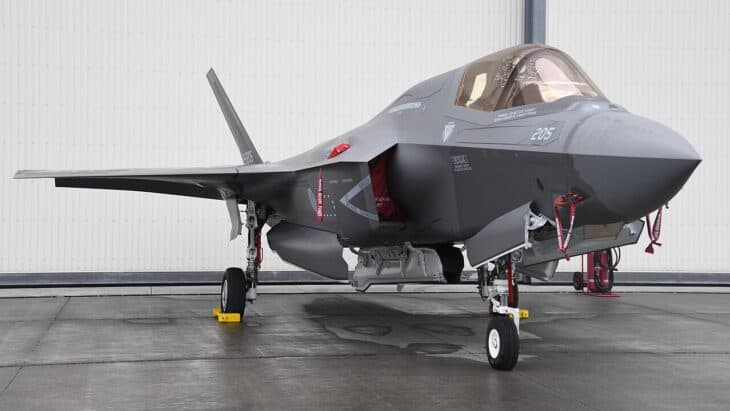
The first three JASDF F-35Bs arrived at Nyutabaru Air Base on Kyushu in August 2025, and two more followed in October. A temporary F-35B squadron began training sorties on November 4, 2025, and the JASDF expected eight jets by the end of March 2026.
The Ministry of Defense plans to revive the 202nd Tactical Fighter Squadron, disbanded in 2000, as the permanent F-35B unit under the fiscal 2026 budget.
Their ships are the helicopter destroyers JS Kaga and JS Izumo, which are being modified to carry the jet. In October and November 2024, U.S. Marine Corps F-35Bs flew more than 100 short takeoffs and vertical landings from Kaga off Southern California. That puts Japan among the navies covered in our list of the best carrier-based fighter jets.
Japan's fastest fighter is not its newest
The F-15J reaches Mach 2.5 at high altitude, and the F-2 reaches Mach 2.0. The F-35A tops out at Mach 1.6. Japan’s best fighter is the slowest of the three, because stealth and sensors now matter more than raw speed.
3. Mitsubishi F-15J Eagle
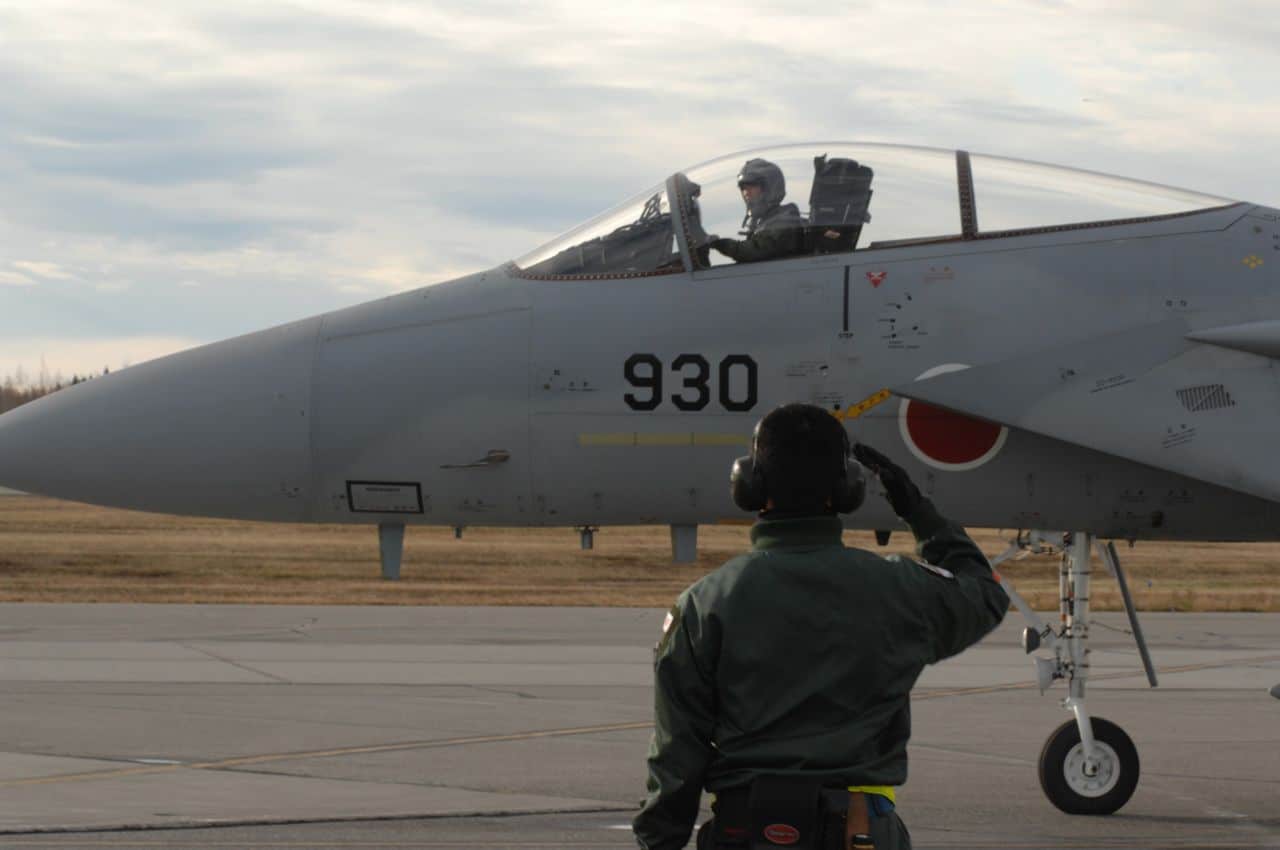
The F-15J is Japan’s workhorse and, by numbers, its main fighter jet. It is a license-built version of the McDonnell Douglas F-15 Eagle, adapted and built in Japan.

Japan acquired 203 F-15Js and 20 two-seat F-15DJs. McDonnell Douglas built 2 F-15Js and 12 F-15DJs in St. Louis, and Mitsubishi built the rest under license. The F-15J first flew on June 4, 1980, and entered service on December 7, 1981.
Roughly 200 remain in service, flying from Chitose, Komatsu, Nyutabaru and Naha. The Eagle can reach Mach 2.5 at high altitude, the fastest of Japan’s fighters.
Japan is not retiring all of them. The Japan Super Interceptor (JSI) upgrade gives part of the fleet an AN/APG-82 AESA radar, new electronic warfare gear and room for more than 16 air-to-air missiles, double the current eight. Tokyo approved 68 jets for the upgrade in 2022, and recent reporting puts current funding at 54.
Japan’s Ministry of Defense signed four more JSI contracts worth about $268 million in May 2026. The older jets that miss the upgrade are the ones the F-35 is replacing first.
The F-15J is still on the front line
In December 2025, J-15 fighters flying from a Chinese aircraft carrier near Okinawa intermittently pointed their radar at JASDF F-15s that were intercepting them, according to Japan’s Joint Staff. The same report counts 595 JASDF scrambles in fiscal 2025, about 61% of them against Chinese aircraft.
4. Mitsubishi F-2
The Mitsubishi F-2 is Japan’s frontline home-built fighter. It is based on the Lockheed Martin F-16, but it is a much-changed aircraft designed around Japan’s anti-ship mission.


Its wing has 25% more area than the F-16’s and is made of co-cured graphite-epoxy composite, the first use of that technique on a production tactical fighter. Its J/APG-1 radar made the F-2 one of the first combat aircraft to fly with an active electronically scanned array (AESA).
The F-2 first flew on October 7, 1995, and entered service in 2000. 98 were built, including four prototypes, and the jet carries Japan’s ASM-1, ASM-2 and ASM-3 anti-ship missiles out to a combat radius of about 518 miles (833 km).
The 2011 tsunami hit the fleet hard. It damaged or destroyed 18 F-2Bs at Matsushima Air Base; 13 were repaired and 5 were written off. Counts of the jets still flying range from 85 to 91.
The F-2 is still busy. From September 9 to 22, 2026, JASDF F-2As flew in Exercise Veer Guardian at Jodhpur, the first time Japanese fighter jets had operated from Indian soil.
5. Kawasaki T-4 (the trainer behind Blue Impulse)
The Kawasaki T-4 is not a fighter but a core JASDF jet trainer. It is subsonic, with a top speed of 645 mph (1,038 km/h) at sea level.

The prototype first flew on July 29, 1985, and production jets arrived from September 1988. Kawasaki built about 208 production aircraft plus 4 prototypes.
Blue Impulse, the JASDF’s aerobatic team and Japan’s answer to the U.S. Navy’s Blue Angels, has flown the T-4 since 1995. The fleet is aging, and in May 2025 Mitsubishi said it would promote its T-X design as the replacement.
The Next Japanese Fighter Jet: GCAP
Japan’s next fighter is the Global Combat Air Programme (GCAP), a sixth-generation stealth jet it is building with the United Kingdom and Italy. In Japan it replaces the F-2; in Britain and Italy it replaces the Eurofighter Typhoon.
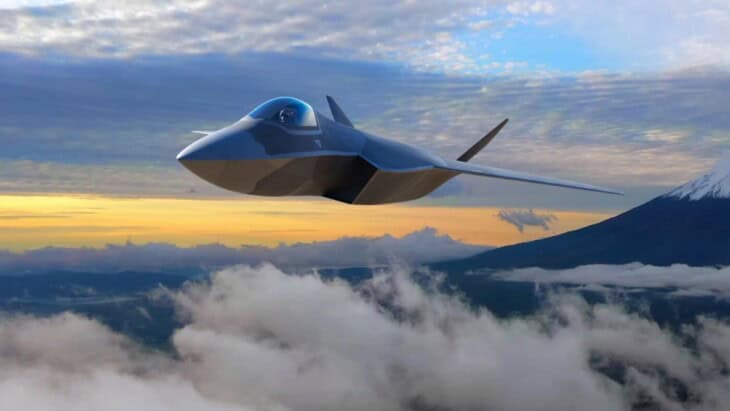
The three countries merged Japan’s F-X project with the UK-Italian Tempest on December 9, 2022, and signed the treaty in Tokyo in December 2023. Edgewing, the industrial joint venture owned equally by BAE Systems, Leonardo and Japan Aircraft Industrial Enhancement Co, launched on June 20, 2025.
Service entry is targeted for 2035. Edgewing won a £4.6 billion contract in July 2026, the same month Canada joined GCAP as its first observer nation. Our guide to sixth-generation fighter jets compares it with the American and Chinese programs.
What about Japan's own stealth fighter?
Japan did fly a home-built stealth jet, the X-2 Shinshin, but it was a technology demonstrator and never a weapon. The research fed Mitsubishi’s F-X work, which became Japan’s share of GCAP.
The Prototype: Mitsubishi X-2 Shinshin
The X-2 Shinshin first flew on April 22, 2016, from Nagoya Airfield to Gifu. It was built to prove that Japan could make the technologies a stealth fighter needs, not to go into production.

Its two IHI XF5-1 engines were the first Japanese-built engines with afterburners, and three paddles at each nozzle vectored the thrust. The X-2 flew 34 of 50 planned sorties before testing ended in March 2018.
Retired Japanese Fighter Jets
Two older types defined the JASDF for decades. The first is the McDonnell Douglas F-4 Phantom II: Japan took 154 of them, 140 F-4EJs and 14 RF-4E reconnaissance jets, most built by Mitsubishi.
Mitsubishi’s last F-4EJ, finished in 1981, was the last F-4 built anywhere in the world. The reconnaissance RF-4s retired on March 9, 2020, and the final F-4EJ Kai Phantoms retired on March 17, 2021. Three other air forces still fly the type, as our story on the F-4 Phantoms still flying in 2026 explains.
The second is the Mitsubishi F-1, Japan’s first domestically developed supersonic combat aircraft. It was a strike version of the Mitsubishi T-2 trainer, with the rear seat replaced by avionics, and it flew anti-ship strikes with ASM-1 and ASM-2 missiles.
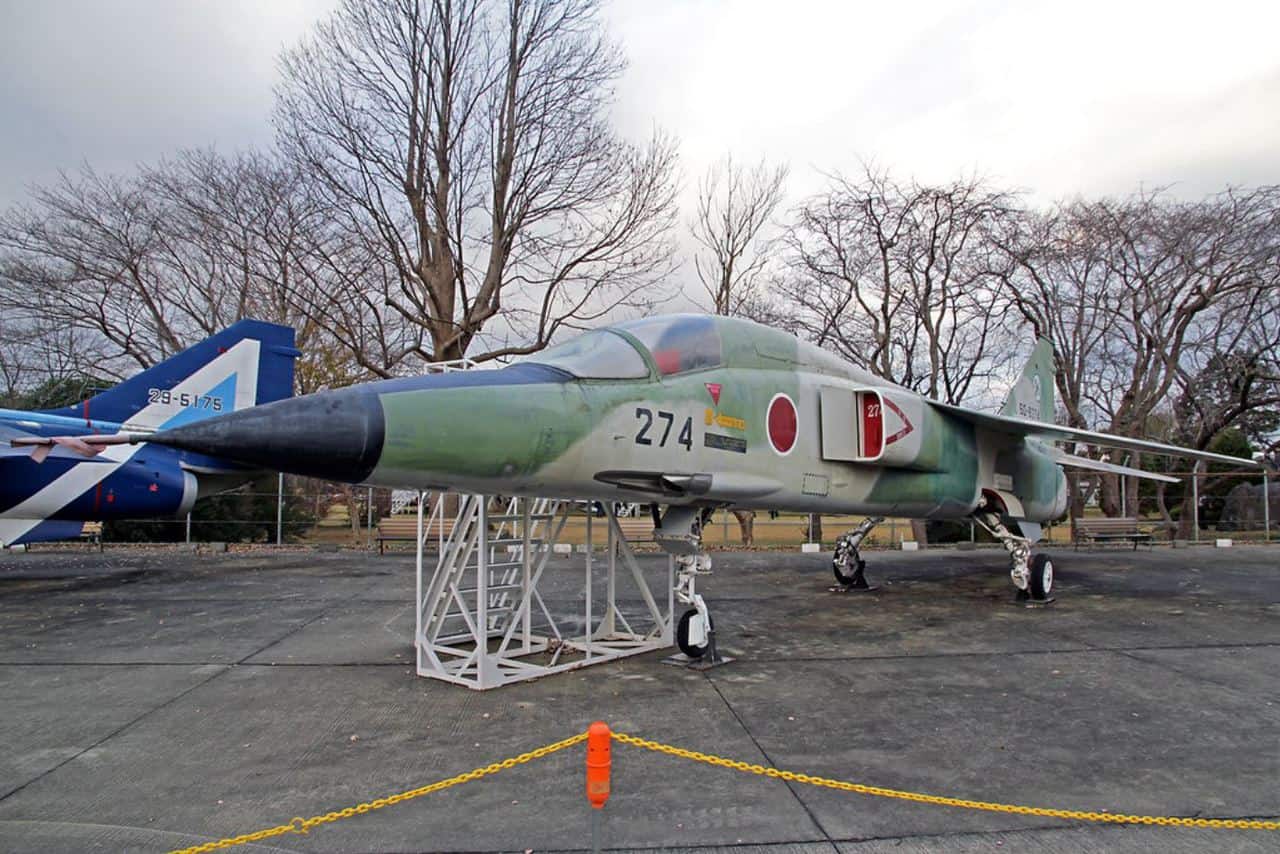
The F-1 first flew on June 3, 1975, and entered service in 1977. Mitsubishi built 77, and the last six retired on March 9, 2006, when they reached their airframe-hour limits.
How Japan’s Fighter Fleet Compares
The JASDF, founded on July 1, 1954, fields about 320 fighters. That is small next to the fleets covered in our ranking of the best Chinese fighter jets, and it is why Japan is betting on quality: stealth F-35s, upgraded Eagles and a sixth-generation jet shared with two partners.
The workload has eased from its peak. JASDF fighters scrambled 1,168 times in fiscal 2016 and 595 times in fiscal 2025.
The service itself is about to change its name. Japan’s parliament passed a law on June 26, 2026, renaming it the Air and Space Self-Defense Force during fiscal 2026, the first name change for any branch of Japan’s Self-Defense Forces since the 1950s.
For how Japan’s F-35s stack up against the rest of the world, see our ranking of the best fighter jets in the world.
FAQ
Sources and references used for research and fact-checking.
- Wikipedia, Japan Air Self-Defense Force
- Lockheed Martin, F-35 in Japan
- Wikipedia, Lockheed Martin F-35 Lightning II operators
- U.S. Air Force, F-35A Lightning II fact sheet
- The Aviationist, Chitose Set To Be Japan's Next F-35A Base
- The Aviationist, Japan Starts F-35B Training Flights
- Stars and Stripes, Modified Japanese carrier completes F-35B trials off Southern California
- Wikipedia, Mitsubishi F-15J
- Militarnyi, Japan Signs New Contract to Upgrade F-15Js to JSI Standard
- Japan Ministry of Defense, Joint Staff, Annual Report on JASDF fighters scramble (FY2025)
- Wikipedia, Mitsubishi F-2
- Telangana Today, Veer Guardian-2026: Japanese fighter jets operate from Indian soil for first time
- Wikipedia, Kawasaki T-4
- Wikipedia, Global Combat Air Programme
- Wikipedia, Mitsubishi X-2 Shinshin
- Wikipedia, McDonnell Douglas F-4 Phantom II non-U.S. operators
- Wikipedia, Mitsubishi F-1
- The Defense Post, Japan Approves Air and Space Self-Defense Force Reorganization
Get the Newsletter
The latest aviation news and stories sent to your inbox.
About the Author

Tim is the owner and lead editor of AeroCorner since 2019, overseeing aviation content covering aircraft, airlines, airports, and the broader aviation industry. Through years of researching, writing, editing, and publishing aviation-focused content, he has developed extensive practical knowledge of commercial aviation and air travel. Based in Asia and a frequent traveler himself, Tim also brings firsthand passenger experience to AeroCorner’s coverage. Outside of publishing, he has also explored aviation firsthand through hands-on flight training in New Zealand.