

Table of Contents
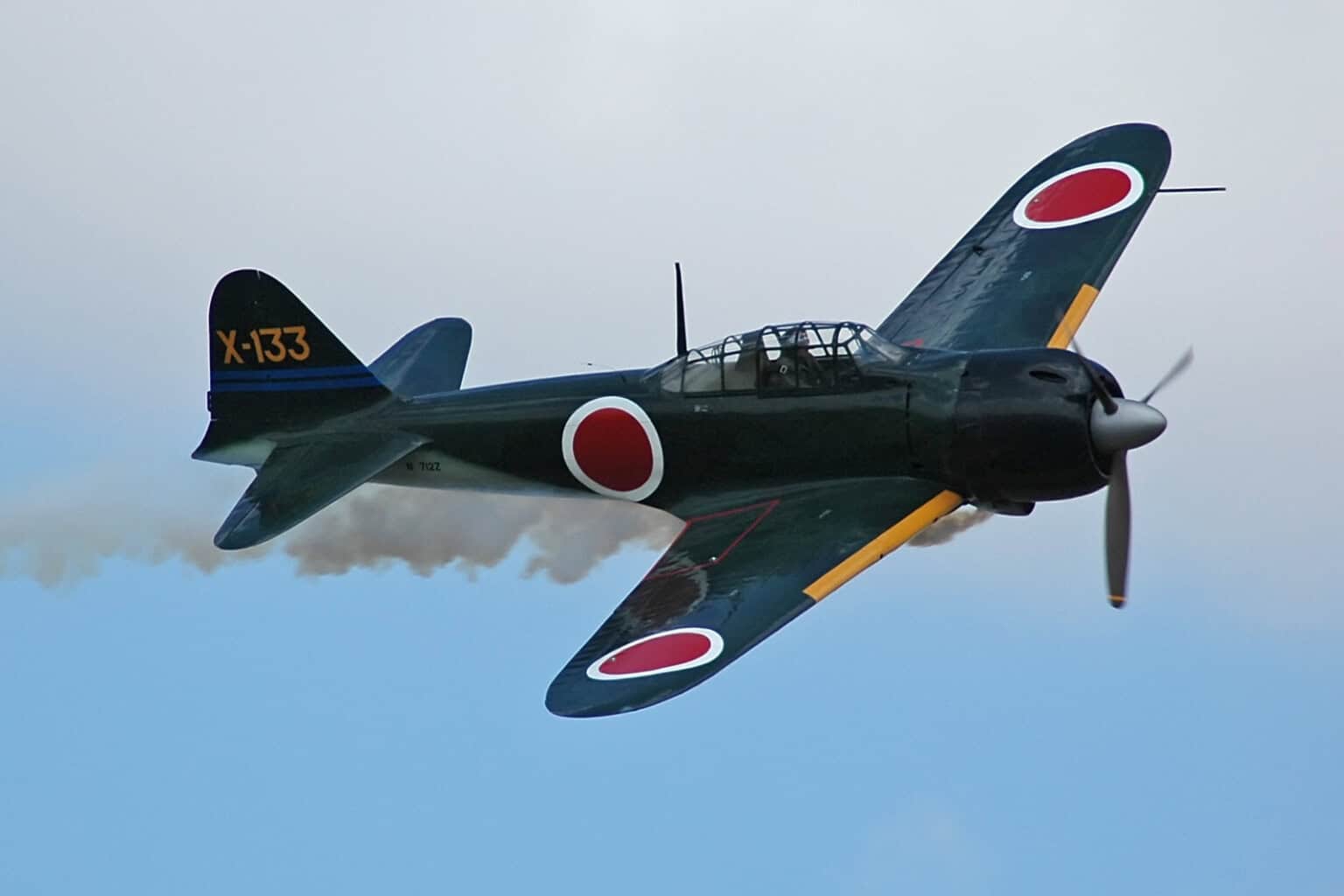
The most important Japanese fighter plane of World War II was the Mitsubishi A6M Zero. The best one Japan built in large numbers was the Nakajima Ki-84 Hayate, which arrived in 1944, when it was too late to change the outcome.
This list ranks on combat record, impact on the war and production scale, not top speed alone. By that measure the Zero is first, because no other Japanese aircraft did as much or was built in such numbers.
Japan’s two air arms bought their own fighters, so the list mixes Imperial Japanese Army and Imperial Japanese Navy types. Bombers and attack aircraft are covered separately in our guide to Japanese bombers of WW2.
The Best Japanese Fighter Planes of WW2, Ranked
| Rank | Aircraft | Allied name | Built | Top speed | Service |
|---|---|---|---|---|---|
| 1 | Mitsubishi A6M Zero | Zeke | 10,815 to 10,939 | 331 mph (533 km/h) | Navy |
| 2 | Nakajima Ki-84 Hayate | Frank | 3,514 | 427 mph (687 km/h) | Army |
| 3 | Kawanishi N1K-J Shiden and Shiden Kai | George | 1,413 to 1,430 | 370 mph (595 km/h) | Navy |
| 4 | Nakajima Ki-43 Hayabusa | Oscar | 5,819 to 5,919 | 329 mph (530 km/h) | Army |
| 5 | Kawasaki Ki-61 Hien | Tony | 3,058 to 3,078 | 360 mph (580 km/h) | Army |
| 6 | Kawasaki Ki-100 | None in wide use | 378 to 396 | 360 mph (580 km/h) | Army |
| 7 | Mitsubishi J2M Raiden | Jack | 621 | 365 mph (587 km/h) | Navy |
| 8 | Nakajima Ki-44 Shoki | Tojo | 1,225 | 376 mph (605 km/h) | Army |
| 9 | Nakajima Ki-27 | Nate | 3,368 | 292 mph (470 km/h) | Army |
| 10 | Nakajima J1N1 Gekko | Irving | 479 | 315 mph (507 km/h) | Navy |
How this ranking was made
Fighters are ranked on what they achieved in combat, how much they mattered to the war, and how many were built. A superb fighter that reached a few hundred pilots in the last months of the war ranks below a good one that fought for four years. Ranked on performance alone, the Ki-84 and the Shiden Kai would lead and the Zero would fall into the lower half.
1. Mitsubishi A6M Zero


The Zero is the most famous symbol of Japanese air power in the war, and the Mitsubishi A6M Zero was the Allies’ main opponent in the Pacific air war. Japan built more of it than any other combat aircraft: 10,815 by the US Air Force Museum’s count, and 10,939 by another widely used tally.
Designer Jiro Horikoshi met a Navy demand for speed, agility and very long range with an underpowered engine. He could only do it by making the aircraft extremely light.
So the Zero had no armor for the pilot and no self-sealing fuel tanks. The result was one of the longest-ranged single-engine fighters of the war, able to fly more than 1,600 miles (2,600 km).
It first saw combat over China in the late summer of 1940, and 125 Zeros from six carriers took part in the attack on Pearl Harbor. In the first months of the Pacific war, a P-40 in a dogfight with a well-flown Zero was at a real disadvantage.
Its range also played tricks on Allied commanders. Zeros turned up over battlefronts so far from their bases that the Allies believed there were several times as many as actually existed.
The answer, learned by the Flying Tigers in China and at Midway, was to refuse the dogfight. American pilots used hit-and-run diving attacks and heavier guns against a fragile airframe, and paired tactics such as the Thach Weave.
The Zero was Japan's most important fighter, not its best
The Zero’s reputation was earned in 1941 and 1942. By 1943, American fighters with 2,000 hp engines were faster and much better armed. Later Zeros added armor and self-sealing tanks, but according to the National Museum of the US Air Force their weight rose 28 percent while power rose only 16 percent. It ranks first here for 1941 and 1942, not for how it aged.
Delays in newer Japanese designs kept it in front-line service to the end of the war. In the final phase, Zeros were adapted for kamikaze attacks.
2. Nakajima Ki-84 Hayate

The Nakajima Ki-84 Hayate is generally considered the best Japanese fighter to operate in large numbers. The Allies called it Frank, and 3,514 were built, including 95 on a separate production line in Harbin, Manchuria.
It broke with the Japanese design tradition that produced the Zero and the Ki-43. The Army wanted the Ki-43’s agility combined with performance to match the best Western fighters, and it accepted the weight of armor and self-sealing fuel tanks to get there.
Power came from Nakajima’s compact 18-cylinder Homare engine, rated at about 2,000 hp for takeoff with water injection. Its published top speed is 427 mph (687 km/h) at about 23,000 feet (7,000 m).
The first prototype flew in April 1943 and the type entered service in March 1944. It first deployed to China, and its first major operation was the battle for Leyte in the Philippines.
What held it back was Japan, not the design. Manufacturing defects multiplied, good fuel became hard to find, and poorly heat-treated late-war steel left landing gear prone to buckling.
When one was in good condition, it was Japan’s fastest fighter. It is second rather than first only because it arrived in 1944, when experienced pilots to fly it had grown scarce.
3. Kawanishi N1K-J Shiden and Shiden Kai
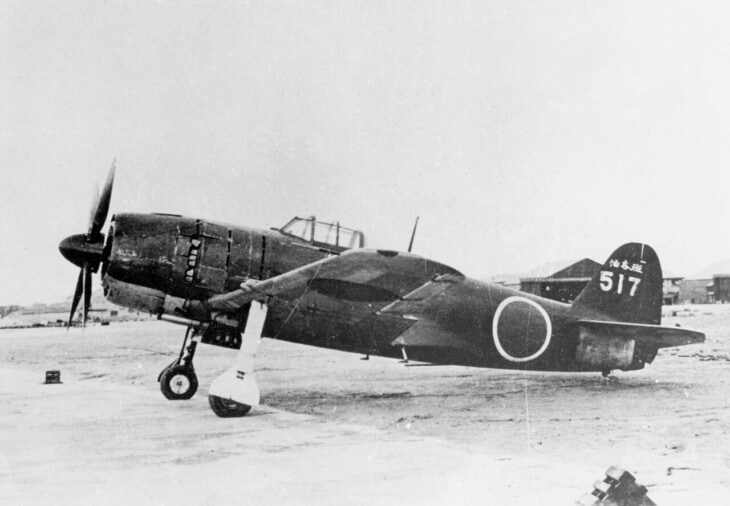
The Smithsonian calls the N1K2-J Shiden Kai an exceptionally good fighter, and it was a better dogfighter than any earlier Navy fighter. The Allies called both land-based versions George.
One of Japan's best fighters started life as a floatplane
The N1K began as the N1K1 Kyofu, a fighter on floats meant for islands with no airstrip. In December 1941 Kawanishi’s designers proposed a land-based version. It kept one unique feature: flaps that deployed automatically in a hard turn, triggered by a mercury switch. According to the Smithsonian, no other World War II fighter used a similar system.
The first land version, the N1K1-J Shiden, flew on 27 December 1942 and reached combat early in 1944. It inherited the floatplane’s mid-mounted wing and long, awkward landing gear, and 1,007 were delivered.
Kawanishi redesigned it almost at once. The Shiden Kai moved the wing to the bottom of the fuselage, shortened the landing gear and shed about 550 pounds (250 kg), and it first flew on 1 January 1944.
It carried four 20 mm cannon and could reach about 370 mph (595 km/h) at 18,000 feet (5,480 m). In skilled hands it could hold its own against the Hellcats and Corsairs covered in our list of American fighter planes of WW2.
The Navy gave it to the 343rd Kokutai, an elite group of veteran pilots led by Minoru Genda, one of the planners of Pearl Harbor. In 1945 it fought US Navy Hellcats over the Inland Sea and Corsairs over Kagoshima Bay.
It ranks third because there were too few. Factory problems and B-29 raids held Shiden Kai production to between 406 and 423, and its weak climb and high-altitude performance made it a poor B-29 interceptor.
4. Nakajima Ki-43 Hayabusa
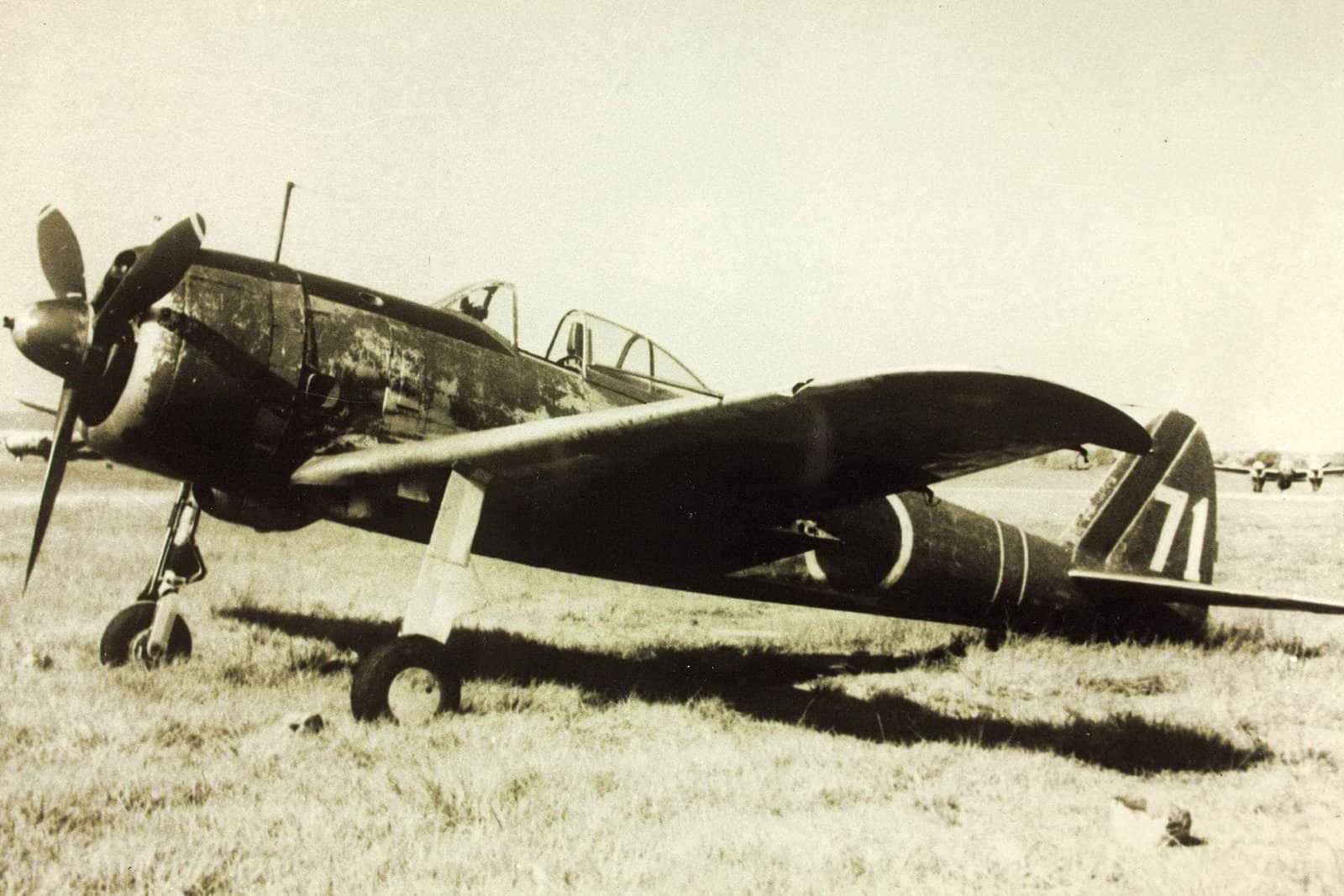
The Ki-43 was the Army’s Zero, and American pilots often called it exactly that. Its official Allied name was Oscar.
It was the most widely used Army fighter, equipping 30 flying regiments, and the second most produced Japanese fighter after the Zero. Between 5,819 and 5,919 were built, depending on the count.
Entering service in October 1941, it fought in China, Burma, Malaya, New Guinea, the Philippines and over Japan itself. Early on it held air superiority over P-36s, P-40s, Buffalos and Hurricanes.
Its weakness was the Zero’s weakness. Early versions had no armor, no self-sealing tanks and only two machine guns, and Allied pilots reported that a nimble Ki-43 was hard to hit but broke apart or burned after a few hits.
The Ki-43-II added pilot armor and crude rubber-coated fuel tanks. By then the P-38, P-47, P-51, Hellcat and Corsair had arrived, and hundreds of Ki-43s ended the war on kamikaze missions.
5. Kawasaki Ki-61 Hien
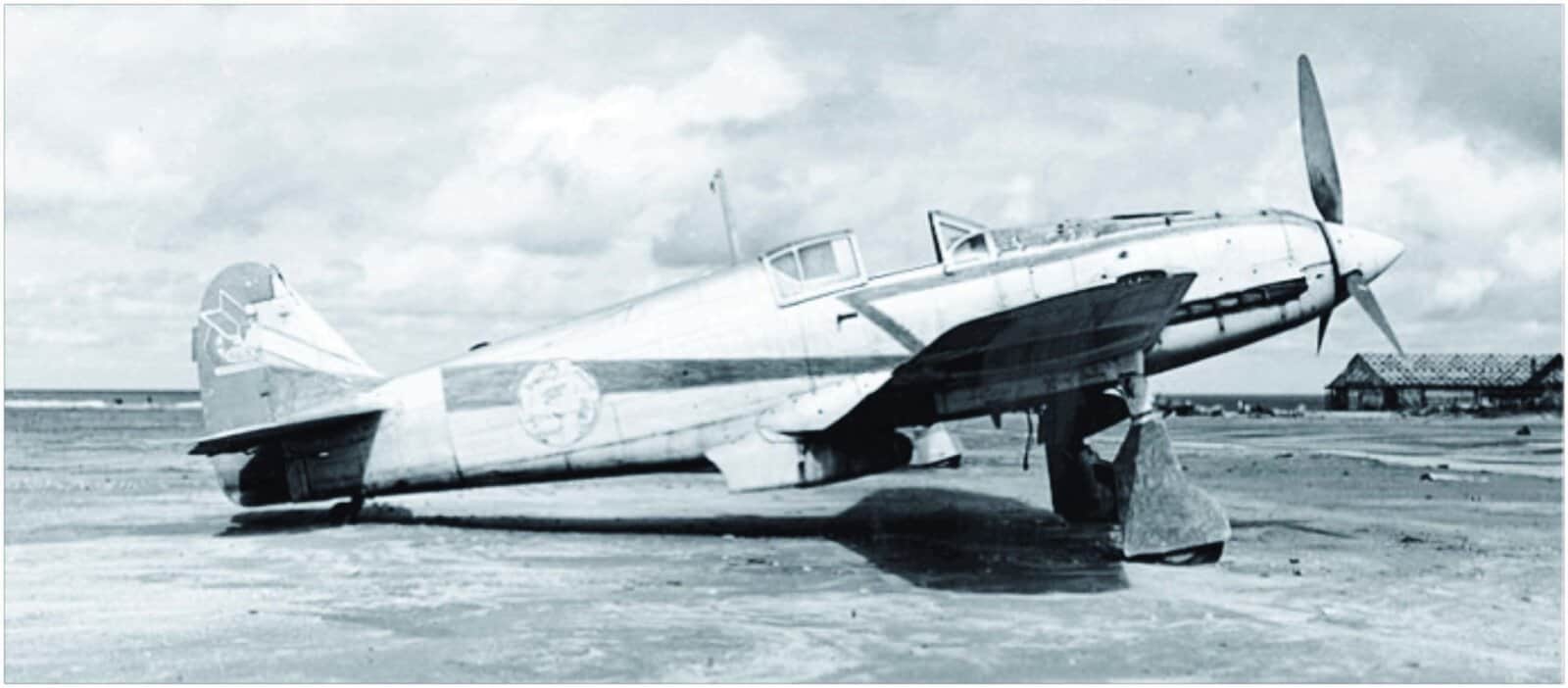
Every other fighter on this list uses an air-cooled radial engine. The Ki-61 was the only mass-produced Japanese fighter of the war with a liquid-cooled inverted V engine: the Ha-40, a Kawasaki licence build of the Daimler-Benz DB 601.
That is the engine family behind the Messerschmitt Bf 109, the mainstay of the German fighter planes of WW2. It gave the Ki-61 a slim nose that looked nothing like any other Japanese fighter.
The Allies thought it was German, then Italian
When the Ki-61 first appeared, Allied intelligence took it for a Bf 109, then for an Italian Macchi C.202. The code name it was finally given, Tony, was chosen because the aircraft looked Italian.
Designed by Takeo Doi, it first flew in December 1941 and entered service in 1942. Between 3,058 and 3,078 were built.
The engine was also its weakness. The Ha-40 needed manufacturing standards Japanese factories struggled to meet, and it proved unreliable, especially in the heat of the South Pacific, where fuel pumps gave trouble.
6. Kawasaki Ki-100
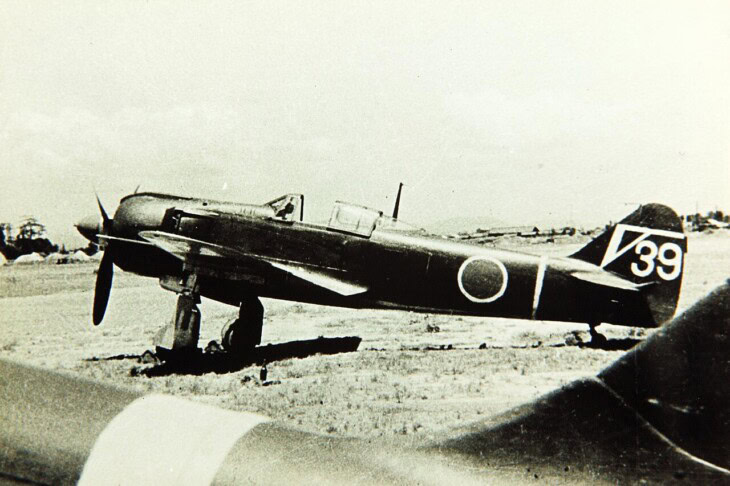
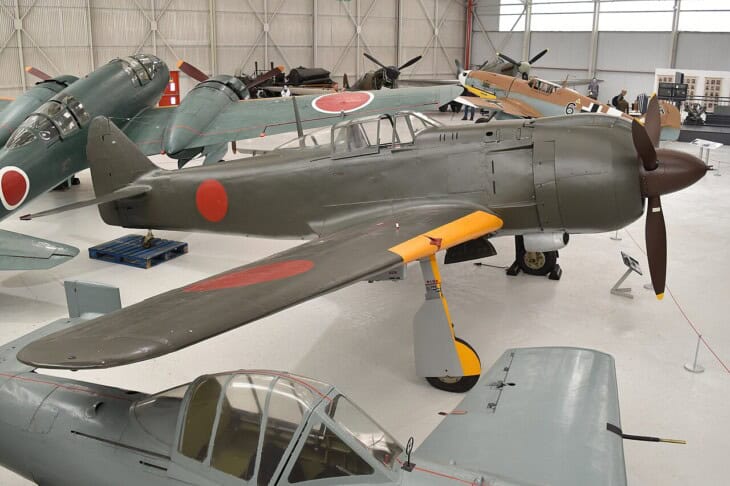
The Ki-100 was an accident that turned out to be one of the Army’s best interceptors of the war. Only 378 to 396 were built, and it flew in combat for about five months.
A bombing raid created one of Japan's best fighters
On 19 January 1945 an American raid destroyed the factory at Akashi building engines for the improved Ki-61-II, leaving 275 finished airframes with no engines. Kawasaki fitted them with the Mitsubishi Ha-112-II radial instead. The makeshift result flew better than the aircraft it replaced in every respect except top speed.
The radial cost about 18 mph (29 km/h) of top speed, but it was lighter and far more reliable. Instructors from the Akeno Army Flying School flew it against the Ki-84 in March and April 1945, and it went into production as the Army Type 5 Fighter.
It made its combat debut on 9 March 1945. Unlike most Japanese fighters it could dive with a P-51 Mustang, and a well-handled one could out-turn the Mustangs and P-47s escorting B-29s over Japan.
Its record also shows how unreliable wartime claims are. On 25 July 1945, pilots of the 244th Sentai claimed 12 Hellcats for two losses; the US Navy squadron recorded losing two Hellcats and claimed two Ki-100s.
7. Mitsubishi J2M Raiden

The Raiden came from Jiro Horikoshi, the designer of the Zero, and it was almost the Zero’s opposite. It was a local-defense interceptor built for speed, climb and firepower, with agility a secondary concern.
Its big Mitsubishi Kasei engine sat behind a long cowling, cooled by an intake fan and driving the propeller through an extension shaft. That made for a stubby, powerful aircraft, and the Allies called it Jack.
It entered service in December 1942, but only 621 were built. Its main job became defending Japan against the B-29, and without a turbocharger it was handicapped at the altitudes where the bombers flew.
8. Nakajima Ki-44 Shoki
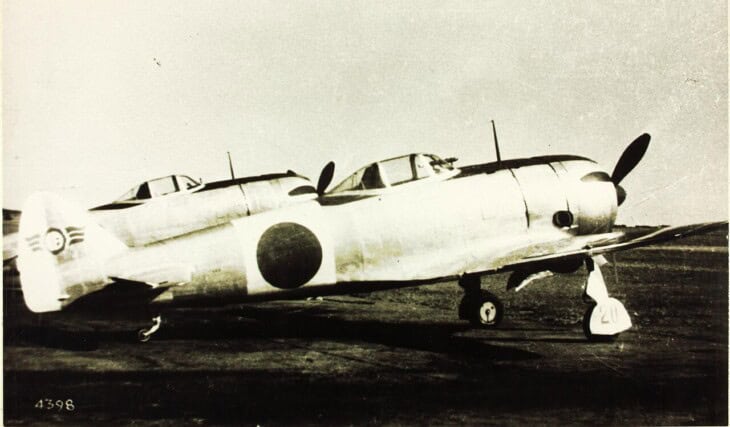
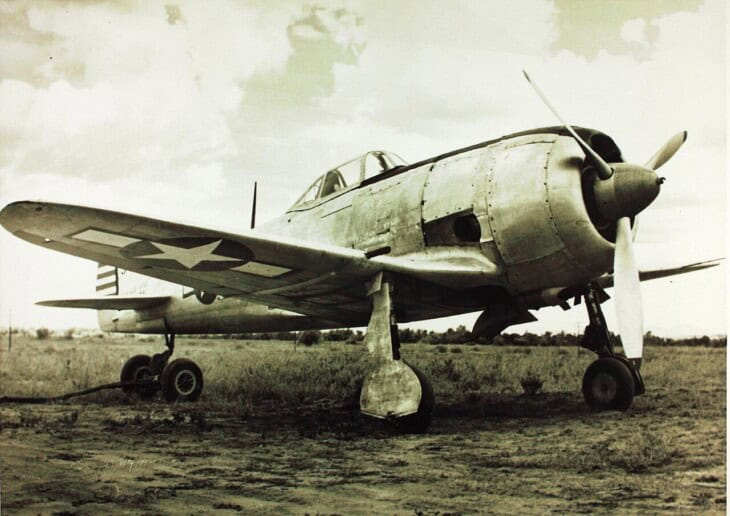
The Ki-44 was the Army’s attempt at a fighter that won on speed and climb, not agility. Its name means “Devil Queller”, and the Allies called it Tojo.
Small wings gave it a high wing loading and a fast landing speed, which many Japanese pilots trained on the nimble Ki-27 and Ki-43 disliked. In return it was the fastest-climbing Japanese fighter when it appeared in 1942.
It was also better armed, with four 12.7 mm guns or a mix of machine guns and 20 mm cannon. When B-29s began bombing the Japanese mainland in June 1944, it was the only interceptor in Army service.
Pilots in some Ki-44 units tried to ram B-29s once their ammunition ran out. A total of 1,225 were built.
9. Nakajima Ki-27

The Ki-27 looks out of place next to the others, with its fixed landing gear. It was the Army’s main fighter from late 1937 until shortly after Japan entered World War II, and the Allies called it Nate.
Its war started before Pearl Harbor. It held air superiority over China until Soviet-supplied I-16s arrived in numbers, and in 1939 it fought the Soviet Air Force at Khalkhin Gol, in Mongolia.
Japanese pilots there claimed 1,340 aircraft, six times the losses the Soviets admitted. Warrant Officer Hiromichi Shinohara claimed 58 Soviet aircraft in a Ki-27, 11 of them in a single day.
A total of 3,368 were built before production ended in 1942. In the last year of the war, some were loaded with up to 1,100 pounds (500 kg) of explosives and flown as kamikazes.
10. Nakajima J1N1 Gekko

The twin-engine J1N1 was meant to be a long-range escort fighter, and the Navy rejected it for that job. The airframes were turned into reconnaissance aircraft instead, and the Allies called it Irving.
In early 1943, Commander Yasuna Kozono of the 251st Kokutai at Rabaul fitted one with 20 mm cannon firing upward at 30 degrees, against orders. It worked well enough that the Navy ordered a dedicated night fighter, the J1N1-S Gekko.
It was used against B-29s at night over Japan, usually getting only one pass at the faster bombers. A few crews did well: Lieutenant Sachio Endo was credited with eight B-29s destroyed and eight damaged. Only 479 were built.
Did Japan Have Jet Fighters in WW2?
No Japanese jet fighter ever saw combat. Japan flew its first jet, a rocket interceptor and a radical propeller fighter in the final weeks of the war, all as prototypes.
The Nakajima Kikka was Japan’s first turbojet-powered aircraft, influenced by the Messerschmitt Me 262 but not a copy of it. It flew on 7 August 1945, the day after the Hiroshima bombing, and was damaged in a hard landing four days later.
It was not even conceived as a fighter. The Navy’s specification asked for a jet that could carry an 1,100-pound (500 kg) bomb.
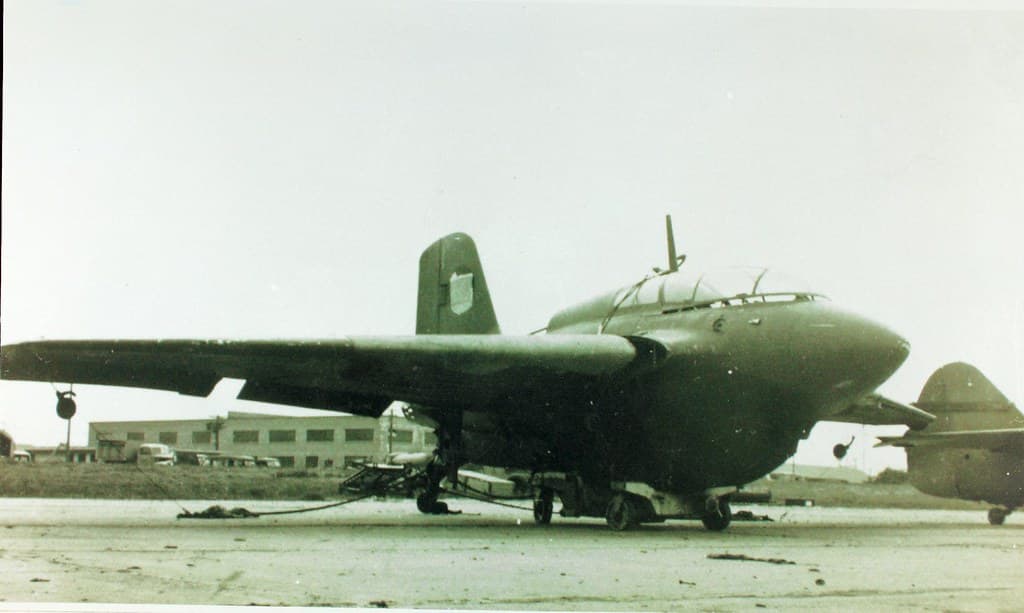
The Mitsubishi J8M Shusui was meant to be a licence-built Me 163 rocket fighter. Submarine losses meant most of the German material never arrived, so Japanese engineers rebuilt it largely from an operating manual.
Its powered prototype first flew on 7 July 1945, and only seven were built. The Kyushu J7W Shinden, a canard fighter with its propeller at the back, flew three short flights in August 1945 before the surrender.
The Me 262 that inspired the Kikka was the world’s first operational jet fighter, and our guide to German jet aircraft of WW2 covers the designs Japan was trying to copy.
Which Japanese Fighters Did Not Make the List
Mitsubishi A5M
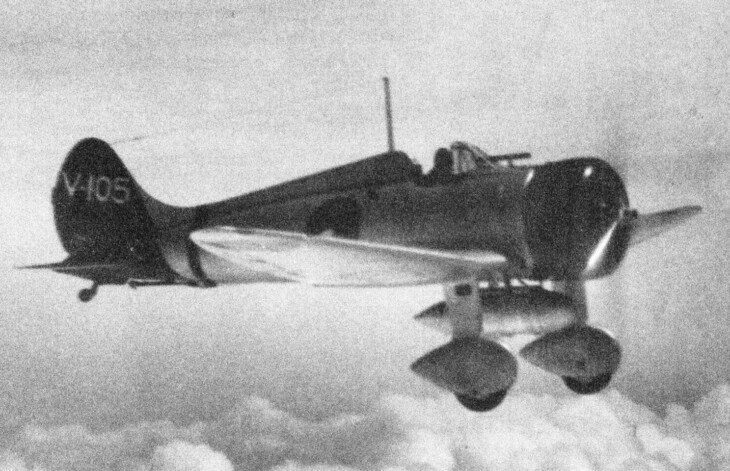
The A5M, code-named Claude, was the world’s first low-wing monoplane carrier fighter to enter service, and the Zero’s direct predecessor from the same design team. From 1937 it outclassed almost every Chinese fighter it met.
By Pearl Harbor it had been replaced on the front-line carriers, and it last fought as a fighter at the Battle of the Coral Sea on 7 May 1942. A total of 1,094 were built, and it misses the list because its war was mostly over by 1942.
Kawasaki Ki-45 Toryu
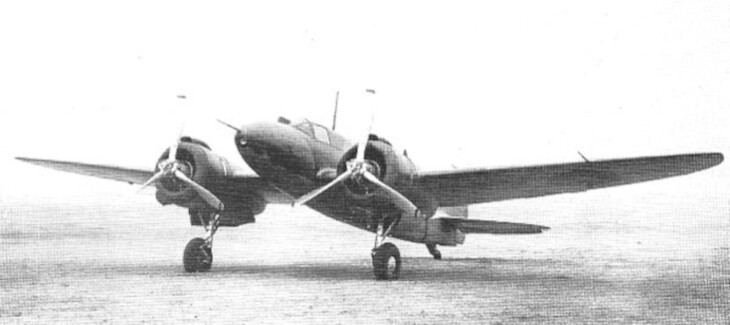
The twin-engine Ki-45, code-named Nick, was built as a heavy escort fighter and, like most of its kind, lost out to smaller single-engine fighters. Its heavy cannon armament proved effective against B-29 raids from June 1944.
Its performance was not enough to reach B-29s flying at 33,000 feet (10,000 m), and it ended up being used for ramming attacks. About 1,700 were built.
Why Japanese Fighters Have Names Like Zeke, Oscar and Frank
Every Japanese fighter carried two official names: the maker’s project code, such as Ki-43, and a military designation based on the year it entered service. The Zero was the Navy Type 0 Carrier Fighter, for the imperial year 2600, or 1940.
Several aircraft entering service in the same year carried the same type number, and the US Army and Navy each used their own identification systems. For the first year of the Pacific war, Allied crews struggled to report quickly what they had seen.
In mid-1942, Captain Frank T. McCoy of the Allied Technical Air Intelligence Unit in Australia fixed it. Fighters got boys’ names and bombers got girls’ names, while trainers were named after trees and gliders after birds.
McCoy, who grew up in Tennessee, gave many of them deliberately comical hillbilly names, such as Zeke and Rufe. Not all of them stuck: many Allied personnel kept calling the Zeke the Zero.
How Many Planes Did Japan Build in WW2?
Japan built about 65,300 aircraft of all types during the war, according to the US Strategic Bombing Survey. Output rose from an average of 642 a month in the first nine months to a peak of 2,572 in September 1944.
Losses kept pace. The Survey put total losses at roughly 50,000 aircraft, and more than 60 percent of them were training, ferrying and other non-combat losses.
That is the story behind this list. Japan built excellent fighters, but not enough of them, and not enough trained pilots or good fuel to fly them, a contrast our look at the most produced aircraft in WW2 makes plain.
By late 1944 many of those aircraft were being spent as kamikazes. From October 1944 to the end of the Okinawa campaign, the Survey counted 2,550 kamikaze missions, of which 475, or 18.6 percent, scored hits or damaging near misses.
How Japanese Fighters Compared to the Rest of the War
Japanese designers were asked for agility and range first, and they delivered both. For most of the war that came at the cost of armor, self-sealing tanks and firepower, which is why the best Japanese fighters are the late ones that finally added them.
The natural comparisons are the British fighter planes of WW2, built for defending home airspace, and the Russian WW2 fighter planes, built for low-altitude fighting over the front. Ranked purely on speed, the order changes again, as our list of the fastest planes of WW2 shows.
If you came here for the jets Japan flies today rather than in 1945, those are ranked in our list of the best fighter jets of Japan.
FAQ
Sources and references used for research and fact-checking.
- National Museum of the United States Air Force, Mitsubishi A6M2 Zero
- Smithsonian National Air and Space Museum, Kawanishi N1K2-J Shiden Kai GEORGE
- United States Strategic Bombing Survey, Summary Report (Pacific War)
- Southern Museum of Flight, When Death Whistled: The F4U Corsair
- Wikipedia, Mitsubishi A6M Zero
- Wikipedia, Nakajima Ki-84 Hayate
- Wikipedia, Kawanishi N1K
- Wikipedia, Nakajima Ki-43 Hayabusa
- Wikipedia, Kawasaki Ki-61
- Wikipedia, Kawasaki Ki-100
- Wikipedia, Mitsubishi J2M Raiden
- Wikipedia, Nakajima Ki-44 Shoki
- Wikipedia, Nakajima Ki-27
- Wikipedia, Nakajima J1N Gekko
- Wikipedia, Nakajima Kikka
- Wikipedia, Mitsubishi J8M Shusui
- Wikipedia, Kyushu J7W Shinden
- Wikipedia, Mitsubishi A5M
- Wikipedia, Kawasaki Ki-45
- Wikipedia, World War II Allied names for Japanese aircraft
Get the Newsletter
The latest aviation news and stories sent to your inbox.
About the Author

Tim is the owner and lead editor of AeroCorner since 2019, overseeing aviation content covering aircraft, airlines, airports, and the broader aviation industry. Through years of researching, writing, editing, and publishing aviation-focused content, he has developed extensive practical knowledge of commercial aviation and air travel. Based in Asia and a frequent traveler himself, Tim also brings firsthand passenger experience to AeroCorner’s coverage. Outside of publishing, he has also explored aviation firsthand through hands-on flight training in New Zealand.