

Table of Contents
Military planes are grouped into 12 types by the job they do: fighters, attack aircraft, bombers, multirole fighters, transports, tankers, maritime patrol, reconnaissance and surveillance, airborne early warning, electronic warfare, trainers, and unmanned aircraft. Every fixed-wing aircraft in an air force fits one of those missions.
This guide covers all 12 types, names the aircraft flying each mission in 2026, and explains the letter codes on their designations. The table below is the quick version, and the sections after it show what each type actually does.
| Type | What it does | Current examples |
|---|---|---|
| Fighter | Destroy enemy aircraft and control the airspace | F-22 Raptor, F-15EX Eagle II |
| Attack | Strike ground targets and support troops in contact | A-10C Thunderbolt II, AC-130J Ghostrider |
| Bomber | Deliver heavy weapon loads over long distances | B-2 Spirit, B-52H Stratofortress, B-21 Raider |
| Multirole | Switch between air-to-air and air-to-ground in one airframe | F-35 Lightning II, F/A-18E/F Super Hornet, Rafale |
| Transport | Move troops, cargo, and vehicles by air | C-17 Globemaster III, C-130J Super Hercules, C-5M |
| Tanker | Refuel other aircraft in flight to extend their reach | KC-46 Pegasus, KC-135 Stratotanker |
| Maritime patrol | Hunt submarines and watch the sea for long periods | P-8A Poseidon, Kawasaki P-1 |
| Reconnaissance (ISR) | Gather intelligence with cameras, radar, and sensors | U-2S Dragon Lady, RC-135 Rivet Joint |
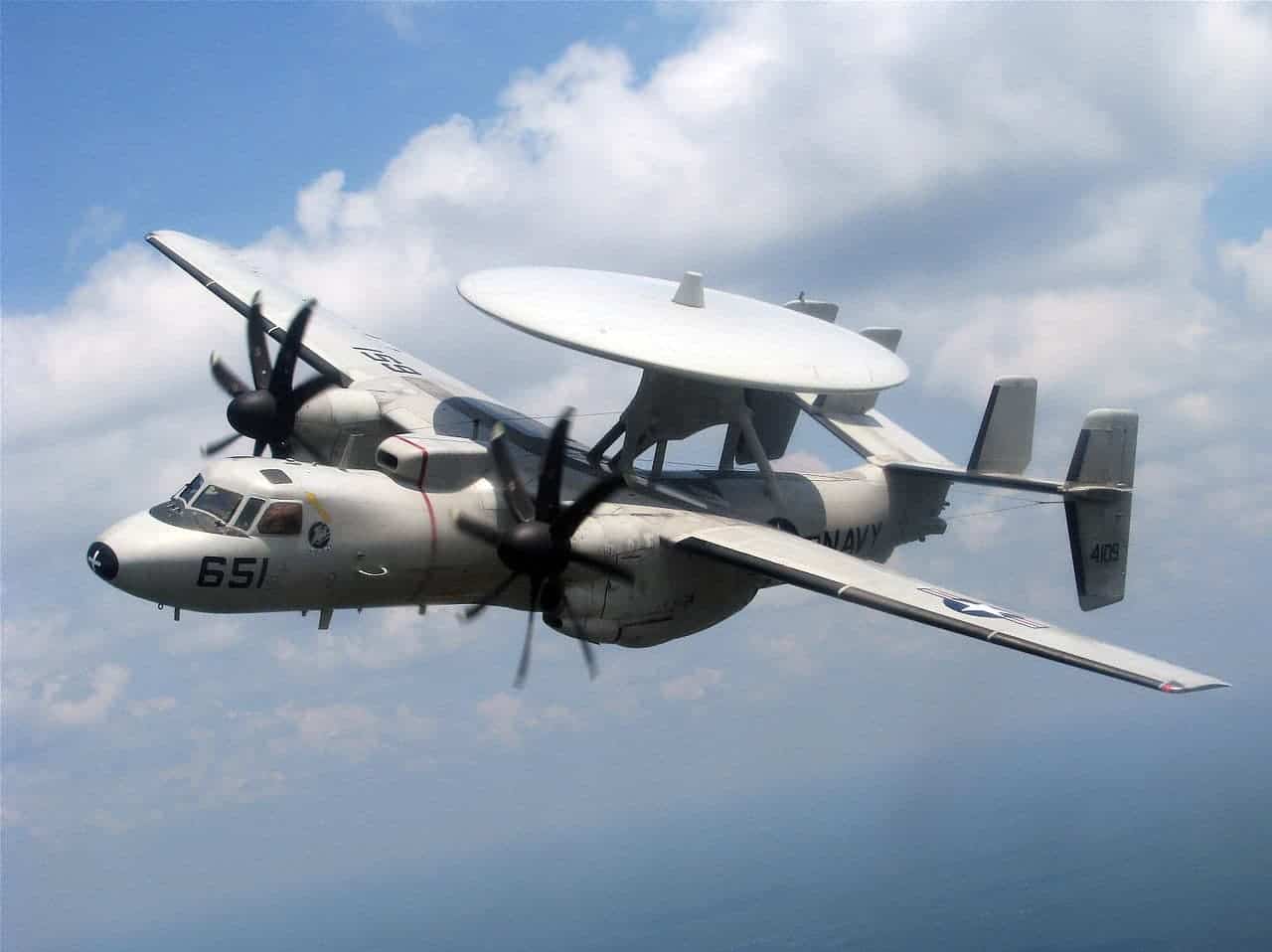
| Airborne early warning | Carry a radar aloft and direct the air battle | E-3 Sentry, E-2D Hawkeye, E-7 Wedgetail |
| Electronic warfare | Jam enemy radar and communications | EA-18G Growler, EC-37B Compass Call |
| Trainer | Teach pilots to fly before they reach frontline types | T-6 Texan II, T-38 Talon, T-7A Red Hawk |
| Unmanned (UAV) | Fly strike and surveillance missions with no crew aboard | MQ-9 Reaper, RQ-4 Global Hawk, MQ-4C Triton |
Military aviation is older than most people assume. The US Army Signal Corps bought its first airplane, the Wright Military Flyer, on August 2, 1909, for $30,000 and designated it Signal Corps Airplane No. 1.
What has changed since then is specialization. That one aircraft was expected to do everything; a modern air force splits the work across a dozen distinct designs.
How to Read a Military Aircraft Designation
US military aircraft names are not random. Since 1962 they have used the Tri-Service designation system, in which the first letter tells you the aircraft’s basic mission.
A – Attack
B – Bomber
C – Cargo / transport
E – Special electronic mission
F – Fighter
K – Tanker
O – Observation
P – Maritime patrol
R – Reconnaissance
T – Trainer
U – Utility
X – Experimental
A second letter in front modifies that mission. The KC-135 is a cargo aircraft converted into a tanker, the AC-130 is a cargo aircraft converted into a gunship, and the EA-18G is an attack aircraft converted for electronic warfare.
Once you know the letters, most military aircraft names decode themselves. The same logic applies to the rotary-wing fleet, which we cover in our guide to the types of military helicopters.
Careful: "the 7 categories of aircraft" is a different question
Search for aircraft categories and you will find a list of seven: airplane, rotorcraft, glider, lighter-than-air, powered-lift, powered parachute, and weight-shift-control. That is the FAA’s civil certification list, and it describes how an aircraft flies, not what it does. Military types are grouped by mission instead, which is why a fighter and a tanker sit in the same FAA category but are completely different aircraft.
1. Fighter Aircraft
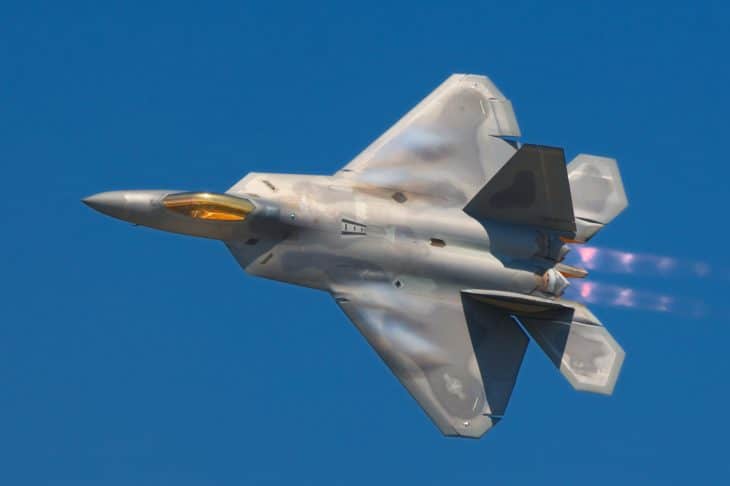
A fighter exists to destroy other aircraft and take control of the airspace. Everything about the design serves that: high thrust-to-weight ratio, tight turning performance, a powerful radar, and air-to-air missiles.
Modern fighters rarely fight the way films depict. Radar and long-range missiles mean most engagements are decided beyond visual range, often before the other pilot knows anyone is there.
The F-22 Raptor is the purest example in service. It combines stealth, supercruise, and thrust vectoring, and the US Air Force operates roughly 180 of them, a fleet it has never expanded because production ended in 2011.
The F-15EX Eagle II sits at the opposite end of the same category. It is not stealthy, but it carries more missiles than any US fighter and is being bought new to keep squadron numbers up. Other frontline examples include the Eurofighter Typhoon, the Russian Su-35, and the Chinese J-20.
The next generation is already under contract. Boeing won the US Air Force’s Next Generation Air Dominance contract in March 2025 with the F-47, which is targeting a first flight in 2028 and a combat radius beyond 1,000 nautical miles.
For a deeper breakdown of the current fleet, see our guides to the types of US fighter jets, stealth fighter jets, and sixth-generation fighter jets.
2. Attack Aircraft
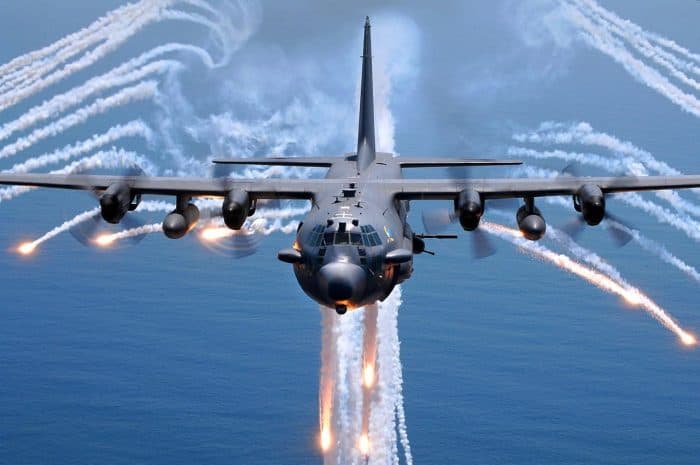

Attack aircraft hit targets on the ground, usually close to friendly troops. That mission demands accuracy, loiter time, and the ability to absorb ground fire, which is the opposite of what a fighter optimizes for.
The A-10C Thunderbolt II is the definitive example. It was built around a 30 mm rotary cannon, carries a titanium bathtub around the cockpit, and flies low and slow enough to identify targets visually.
Its retirement has become an annual argument. The Air Force asked to divest all 162 remaining A-10s in fiscal 2026, but Congress blocked the plan in the FY2026 defense authorization act, and the service now expects to fly the type through 2030.
The other branch of the category is the gunship. The AC-130J Ghostrider is a transport airframe fitted with side-firing 30 mm and 105 mm guns, and it orbits a target rather than making passes at it.
That idea started with the AC-47 Spooky over Vietnam and has never been bettered for supporting troops through a long night. The mission itself is explained in our guide to close air support.
3. Bombers
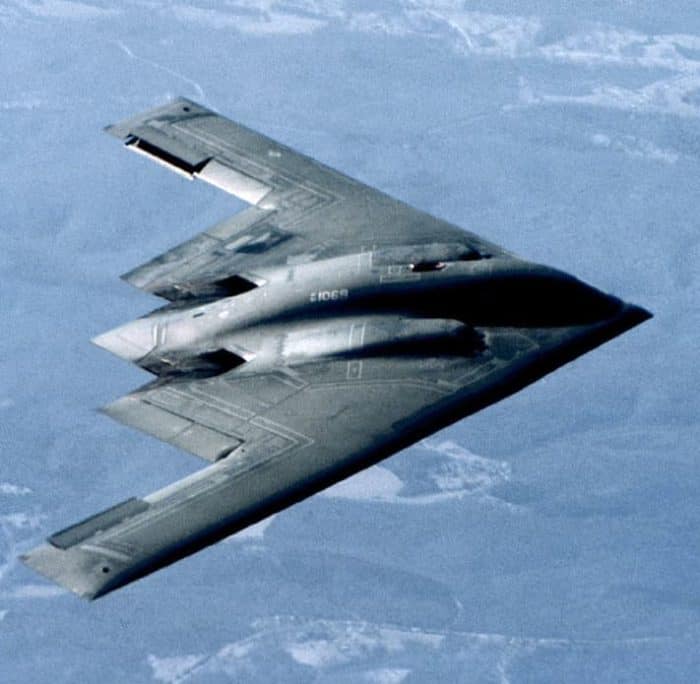
Bombers carry the heaviest weapon loads over the longest distances. They trade agility for payload and range, which is why they are escorted or rely on stealth rather than defending themselves.
The US operates three types, and each solves the problem differently. The B-2 Spirit uses a flying wing shape to defeat radar, and only 20 remain in service.
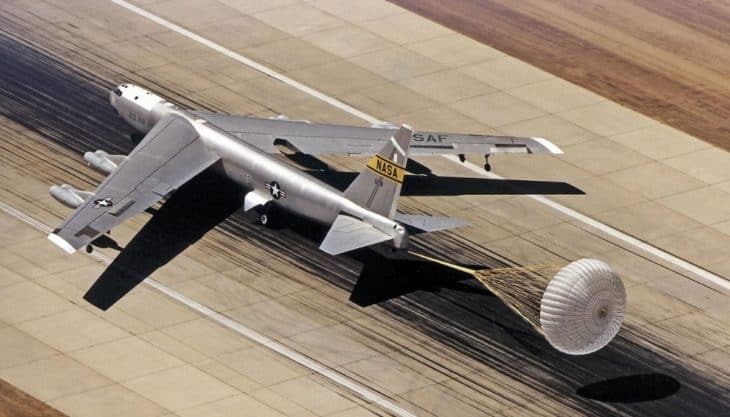
The B-52H Stratofortress is the opposite approach: no stealth at all, but enormous capacity and a re-engining program intended to keep it flying into the 2050s. The B-1B Lancer sits between them, with swing wings and the largest internal payload of the three.
The B-21 Raider is the newcomer. Two test aircraft were flying from Edwards Air Force Base by mid-2026, an operational test pilot joined the flight test program in June 2026, and the Air Force expects the first delivery to Ellsworth Air Force Base in 2027.

The B-52 will outlive the bomber built to replace it
The B-52 entered service in 1955. The B-58 Hustler, the FB-111, and the B-1’s original mission all came and went, and the B-2 fleet stopped at 21 aircraft. Re-engined as the B-52J, the Stratofortress is planned to serve past 2050, which would give the design a service life of roughly a century.
Our guide to the types of bomber planes covers the light, medium, and heavy distinctions in more detail.
4. Multirole Combat Aircraft
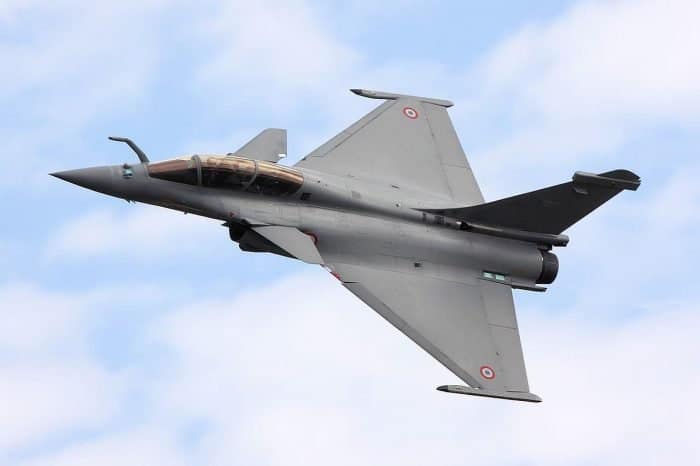
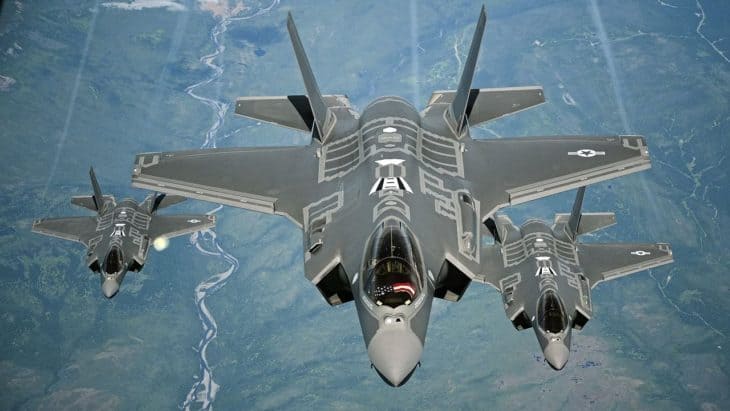
A multirole aircraft does the fighter job and the attack job in the same airframe, often on the same sortie. This is now the default for most air forces because buying one type is cheaper than buying three.
The F-35 Lightning II is the clearest case. It flies air-to-air, strike, reconnaissance, and electronic attack missions, and comes in three versions: conventional, short takeoff and vertical landing, and carrier-capable.
The F/A-18E/F Super Hornet carries the distinction in its designation, where the F and A stand for fighter and attack. The Dassault Rafale, Eurofighter Typhoon, and Saab JAS 39 Gripen fill the same role in European service.
Aircraft that can change roles mid-mission on short notice are sometimes called swing-role. That flexibility is the whole point of the category.
5. Military Transport Aircraft


Transports, also called airlifters, move troops, vehicles, and cargo. They are the least glamorous type and the one an air force cannot function without.
The category splits by range and by where the aircraft can land. Strategic airlifters like the C-17 Globemaster III and the C-5M Super Galaxy cross oceans; tactical airlifters like the C-130J Super Hercules land on short, unpaved strips near the front.

Cargo is usually palletized so it can be rolled off quickly, or dropped by parachute so the aircraft never has to land at all. The Airbus A400M Atlas was designed to do both jobs in one airframe.
Calling every transport a cargo plane is not quite right, since these aircraft also carry paratroopers, medical evacuation cases, and passengers. Our guide to the types of cargo planes covers the freight side, and the biggest military airplanes ranks the largest of them.
VIP and Executive Transports
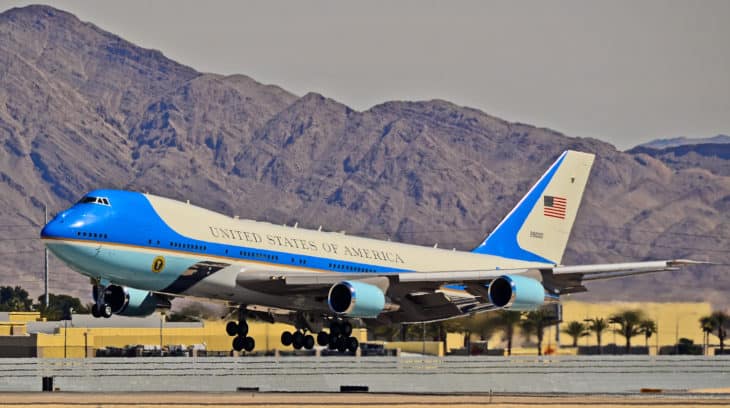
A small subset of the transport fleet carries heads of state and senior commanders. The VC-25A that serves as Air Force One is a modified Boeing 747, and the C-32A and C-37 are military versions of the 757 and Gulfstream business jets.
These aircraft are fitted with secure communications and defensive systems rather than weapons. We look at the crews who fly them in our piece on who pilots Air Force One.
6. Aerial Refueling Tankers
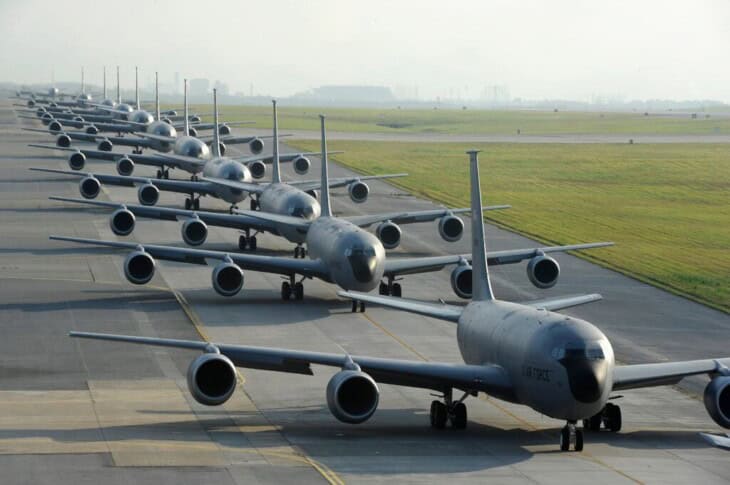
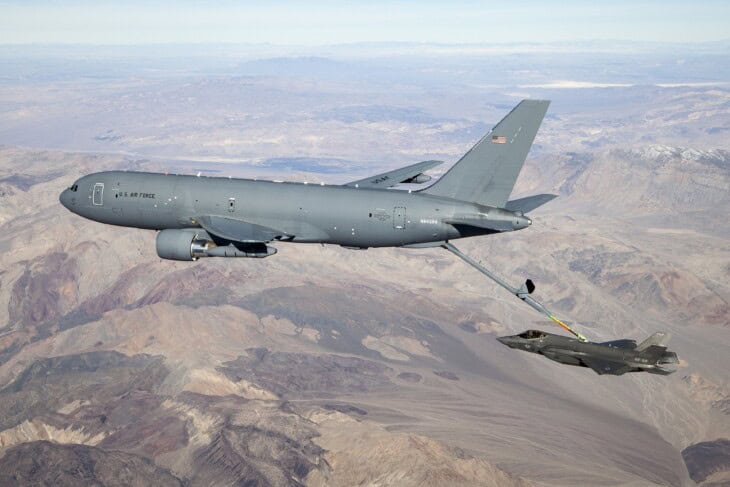
Tankers pass fuel to other aircraft in flight. They are what turns a fighter with a 600-mile radius into one that can cross an ocean, and no other type multiplies the reach of a whole air force so directly.
The KC-135 Stratotanker has done the job since 1957 and still forms the bulk of the US fleet. Its replacement, the KC-46 Pegasus, is based on the Boeing 767, and roughly 105 had been accepted by early 2026 against a contract for 183.
There are two ways to transfer the fuel. US Air Force aircraft use a rigid boom flown into a receptacle by an operator on the tanker, while Navy and most NATO aircraft use a probe-and-drogue system where the receiving pilot flies a probe into a trailing basket.
The Airbus A330 MRTT fills the same role for many other air forces and can carry passengers and freight on the same flight.
7. Maritime Patrol Aircraft
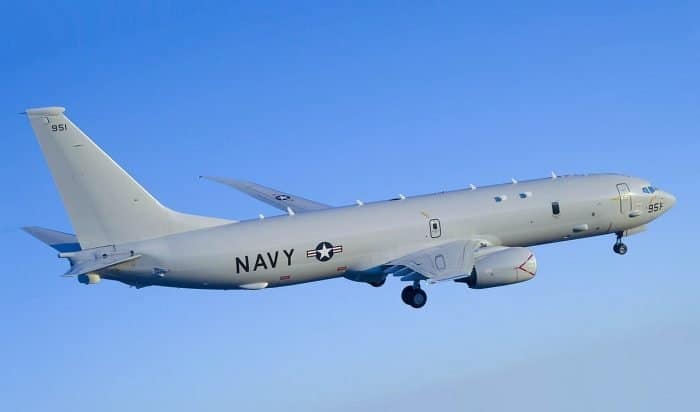
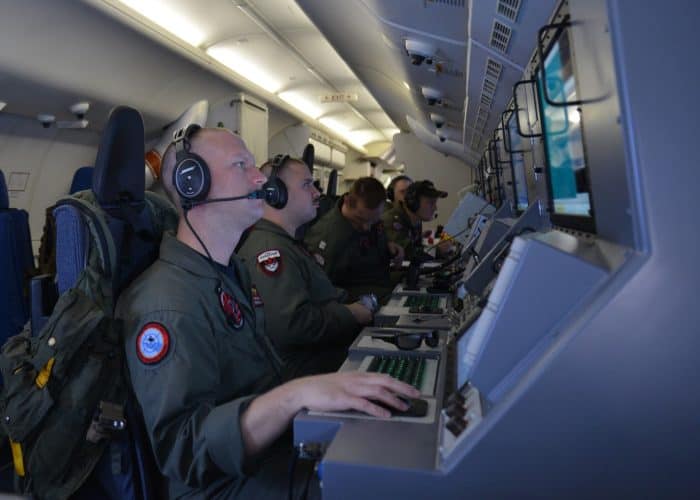
Maritime patrol aircraft spend hours over open water searching for submarines and surface ships. The mission rewards endurance and sensor capacity rather than speed.
The P-8A Poseidon is the current US aircraft, built on a Boeing 737-800 airframe and carrying torpedoes, anti-ship missiles, and sonobuoys it drops into the sea to listen for submarines.

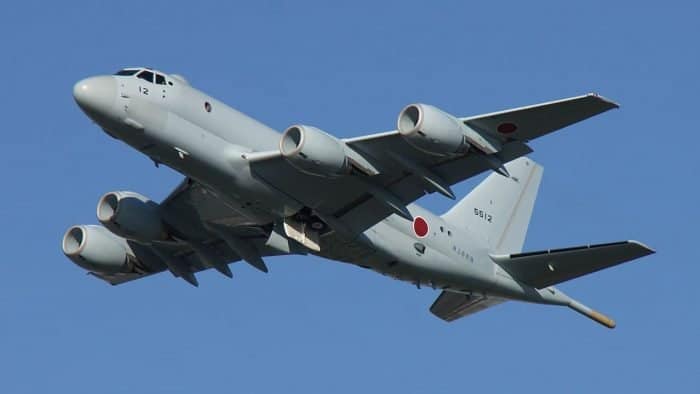
Japan took the other approach with the Kawasaki P-1, which was designed from a clean sheet for the patrol role rather than adapted from an airliner. It has no civil counterpart.
Older names for the type include patrol bomber and maritime reconnaissance aircraft. The naval fleet more broadly is covered in our guide to the types of navy planes.
8. Reconnaissance and Surveillance Aircraft


Reconnaissance and surveillance aircraft gather intelligence. The military groups this work under ISR, for intelligence, surveillance, and reconnaissance.
The U-2S Dragon Lady still flies the high-altitude imagery mission it was designed for in the 1950s, operating above 70,000 feet in a pressure suit. It has outlasted every attempt to retire it.
The RC-135 Rivet Joint does something different: instead of photographing the ground, it listens, collecting and locating enemy radar and radio emissions. That is signals intelligence rather than imagery.
Much of this work has shifted to satellites and unmanned aircraft, which can loiter far longer than a crewed aircraft and put nobody at risk over hostile territory.
9. Airborne Early Warning and Control Aircraft

An airborne early warning and control aircraft, or AEW&C, carries a large radar high into the sky so it can see much farther than any ground station. Radar on the ground is limited by the horizon; radar at 30,000 feet is not.
These aircraft do more than watch. The crew directs fighters onto targets and manages the airspace, which is closer to air traffic control than to flying a combat mission.

The E-3 Sentry, recognizable by the rotating dome above its fuselage, has flown the mission since 1977, and only 16 remain in US service. The Navy’s carrier-based equivalent is the E-2D Advanced Hawkeye.
The E-7 Wedgetail is meant to replace the Sentry. The Pentagon tried to cancel it in the fiscal 2026 budget request, and Congress reversed that decision, adding $649 million to keep the program alive and requiring the E-3 fleet to stay in service until enough Wedgetails arrive.
10. Electronic Warfare Aircraft

Electronic warfare aircraft attack the enemy’s radar and radio systems rather than the enemy’s aircraft. Jamming a surface-to-air missile battery can be more useful than bombing it.
The EA-18G Growler is the US Navy’s aircraft for this, a Super Hornet variant fitted with jamming pods and anti-radiation missiles that home in on radar transmitters. It usually flies alongside the strike package it is protecting.
The Air Force uses the EC-37B Compass Call, a Gulfstream airframe that jams enemy communications and command networks. Almost every aircraft in this category started life as something else and was converted.
11. Training Aircraft
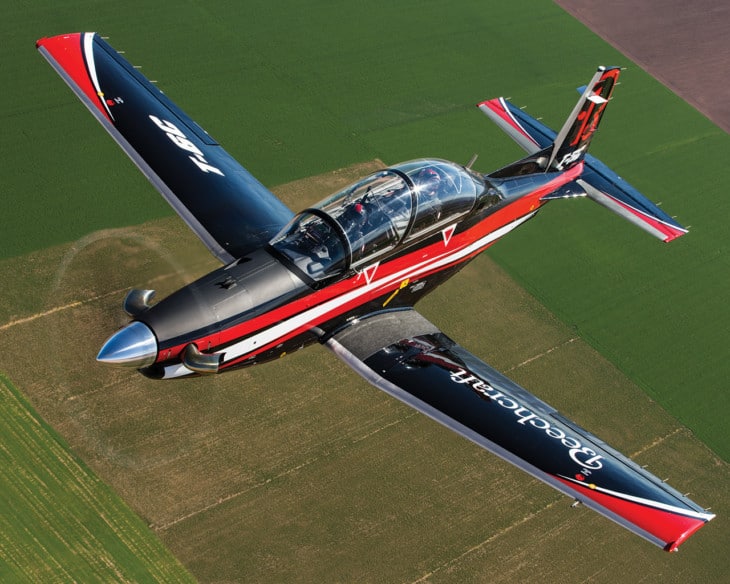

No pilot moves straight into a frontline aircraft. Trainers teach flying, then instrument work, then the handling of a fast jet, in stages.
The T-6 Texan II is the turboprop most US military pilots start on. Those heading to fighters and bombers then move to the T-38 Talon, a supersonic jet trainer that first flew in 1959.
The T-38’s age is the reason for its replacement. The T-7A Red Hawk entered low-rate production after passing its Milestone C decision, the first aircraft was delivered in December 2025, and the Air Force plans to buy 351 of them.
Some trainers are armed and double as light attack aircraft, which is why smaller air forces often buy them: one airframe covers training and border patrol. The T-6 is a modern example of that thinking.
12. Unmanned Aircraft (UAVs)

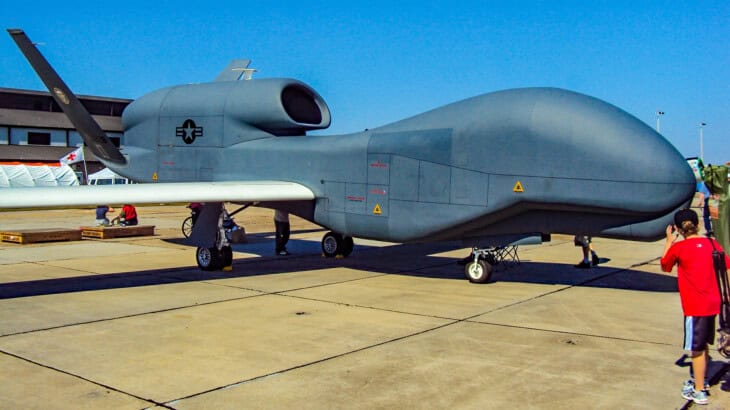
Unmanned aircraft fly with no crew aboard, controlled from a ground station that may be thousands of miles away. They now fill missions that used to require a crewed aircraft, particularly the long and dangerous ones.
The MQ-9 Reaper is the best known, an armed aircraft that carries Hellfire missiles and can stay airborne for well over 24 hours. The M in its designation marks it as multi-mission and the Q marks it as unmanned.
Surveillance types go further. The RQ-4 Global Hawk flies high-altitude reconnaissance, and the Navy’s MQ-4C Triton does the same over the ocean, complementing the crewed P-8A.
The next step is aircraft designed to fly alongside fighters as controlled wingmen, carrying weapons and sensors on behalf of the crewed jet. Our guide to the types of drones covers the wider category.
How Military Aircraft Types Fit Together
The 12 types split into two families. Fighters, attack aircraft, bombers, multirole aircraft, and electronic warfare aircraft are combat types that put weapons on targets or clear the way for those that do.
Transports, tankers, maritime patrol, ISR, early warning, trainers, and unmanned aircraft are support types. They rarely make the news, and no combat mission happens without them.
The ratio surprises people. A strike package of four fighters may depend on a tanker, an early warning aircraft, and a jammer, which means the supporting cast outnumbers the aircraft dropping the weapons.
Categories also blur at the edges. The F-35 is a fighter, a strike aircraft, and a sensor platform at once, and the trend across every modern air force is toward fewer types doing more jobs.
Some designs resist that trend by simply refusing to age out. See the oldest military planes still in service and the fastest military aircraft in the world for the extremes of the current fleet.
Sources and references used for research and fact-checking.
- U.S. Air Force, Aircraft Fact Sheets
- National Museum of the United States Air Force, Wright 1909 Military Flyer
- Northrop Grumman, Northrop Grumman Advances B-21 Raider Across Test and Production
- Defense Security Monitor, USAF Will Fly A-10 to 2030
- Air & Space Forces Magazine, Congress Poised to Save E-7 Wedgetail in New NDAA
- U.S. Air Force, Air Force greenlights T-7A Red Hawk for production following Milestone C
Get the Newsletter
The latest aviation news and stories sent to your inbox.
About the Author

Articles credited to the AeroCorner Editorial Team are created or maintained by multiple aviation contributors working under a shared editorial framework. Content is researched using authoritative aviation sources and reviewed to ensure clarity, technical accuracy, and consistency across AeroCorner.