

Table of Contents
There are four types of drones by airframe: multi-rotor, fixed-wing, single-rotor, and fixed-wing hybrid VTOL. Every other “type” you have seen on a list is not a fifth airframe. It is the same four aircraft sorted a different way.
That is why one guide tells you there are three types of drones, the next says four, and a third counts 21. They are not disagreeing about the aircraft. They are counting on different axes.
Drones get classified four ways: by airframe (how it stays up), by size and weight (which regulator or military group it falls into), by mission (what job it does), and by who is allowed to fly it. This guide covers all four, with photos and named examples.
The range inside the single word “drone” is enormous. It runs from a 70-gram (2.5 oz) reconnaissance aircraft that fits in a belt pouch to a 32,250-pound (14,630 kg) surveillance aircraft with a wider wingspan than a Boeing 737.
| Airframe type | How it flies | Can it hover? | Typical endurance | Named example |
|---|---|---|---|---|
| Multi-rotor | Three or more powered rotors | Yes | 20 to 45 minutes | DJI Phantom, DJI Mavic |
| Fixed-wing | Wings generate lift, like an airplane | No | Hours to over a day | Boeing Insitu ScanEagle |
| Single-rotor | One main rotor plus a tail rotor | Yes | 1 to 8 hours | Northrop Grumman MQ-8C Fire Scout |
| Fixed-wing hybrid VTOL | Rotors for takeoff, wings for cruise | Yes, then transitions | 1 to 10+ hours | Bell V-247, Quantum Systems Vector |
How this guide is organized
Airframe first, because it is the only axis where the categories are genuinely exclusive: a drone is a multi-rotor or it is not. Size, mission and legal class come after, because a single aircraft sits in all three at once. A DJI Mavic is a multi-rotor, a Group 1 small UAS, a camera drone, and a registration-required aircraft, all simultaneously.
The 4 Types of Drones by Airframe
This is the classification that matters most, because the airframe decides everything downstream. It sets how long the drone stays up, whether it can hover, how much it can carry, and how hard it is to land.
1. Multi-Rotor Drones
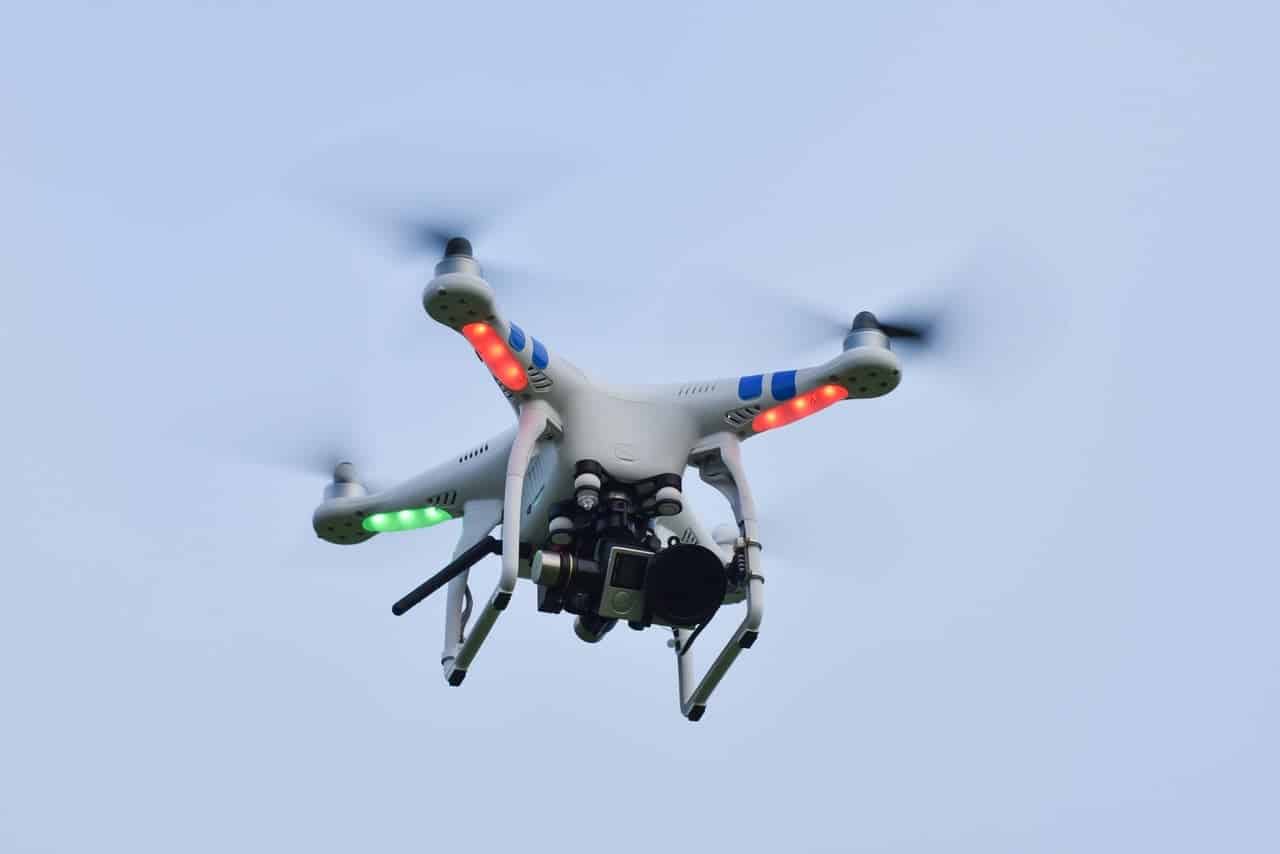
Multi-rotor drones use three or more powered rotors and change direction by varying the speed of each one. Almost every drone you have actually seen in person is one of these.
They are named by rotor count: tricopter (three), quadcopter (four), hexacopter (six), octocopter (eight). The quadcopter is by far the most common because four rotors is the cheapest arrangement that gives full stable control.
The strength is precision. A multi-rotor can hold a fixed point in the air, pivot around a subject, and take off from a space the size of a dinner plate. That is why every camera drone is one.
The weakness is endurance. Rotors have to work continuously just to stay airborne, so battery life is short. Most consumer models manage 20 to 45 minutes, and adding rotors for lifting power shortens that further.
2. Fixed-Wing Drones

A fixed-wing drone is a small airplane. The wings generate lift, so the motor only has to provide forward thrust rather than hold the whole aircraft up.
That efficiency is the entire point. A fixed-wing drone can stay airborne for hours where a quadcopter measures its life in minutes, and the largest military examples pass 30 hours on a single sortie.
The trade is that it cannot hover, and it cannot stop. It has to keep flying forward or it stalls, which makes it useless for inspecting a single point and awkward to recover.
Landing is the hard part. Small fixed-wing drones are belly-landed on grass, hand-caught, or flown into a net or a hook. The ScanEagle uses a vertical wire called a Skyhook that snags the wingtip.
3. Single-Rotor Drones
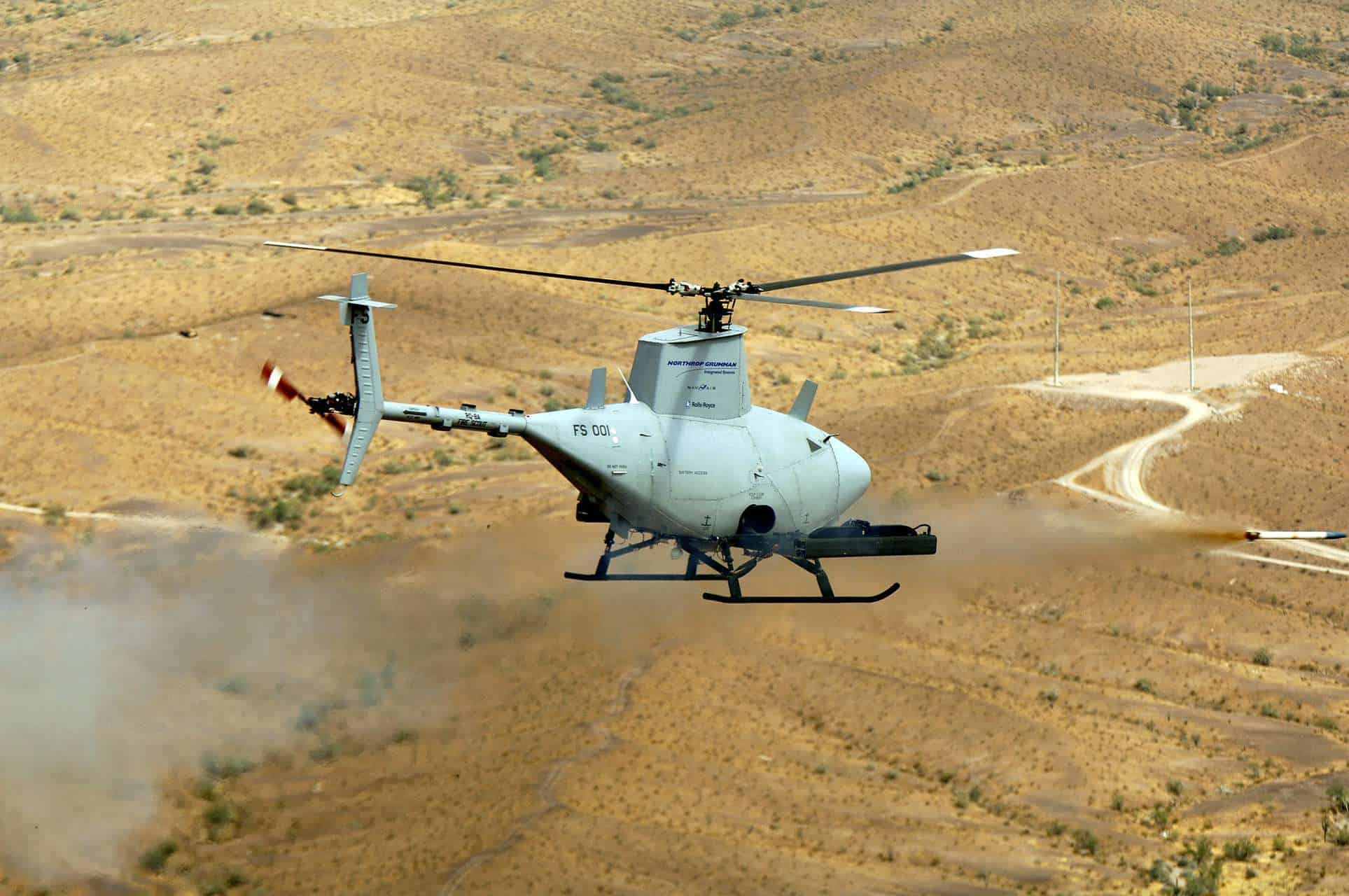
A single-rotor drone is an unmanned helicopter: one large main rotor for lift, a small tail rotor to stop the fuselage spinning. It is the rarest of the four types in civilian use.
One big slow rotor is aerodynamically more efficient than four small fast ones, so a single-rotor drone hovers longer and lifts more than a multi-rotor of the same weight. Many run on gasoline rather than batteries, which extends endurance again.
The costs are complexity and danger. A helicopter rotor head has swashplates, pitch links and a gearbox that a quadcopter simply does not, and a large exposed blade is genuinely hazardous.
The category is thinning out at the top end. The US Navy is retiring its remaining MQ-8C Fire Scouts by the end of fiscal 2026, roughly a decade after buying them, leaving agricultural sprayers and heavy-lift utility helicopters as the main users.
4. Fixed-Wing Hybrid VTOL Drones
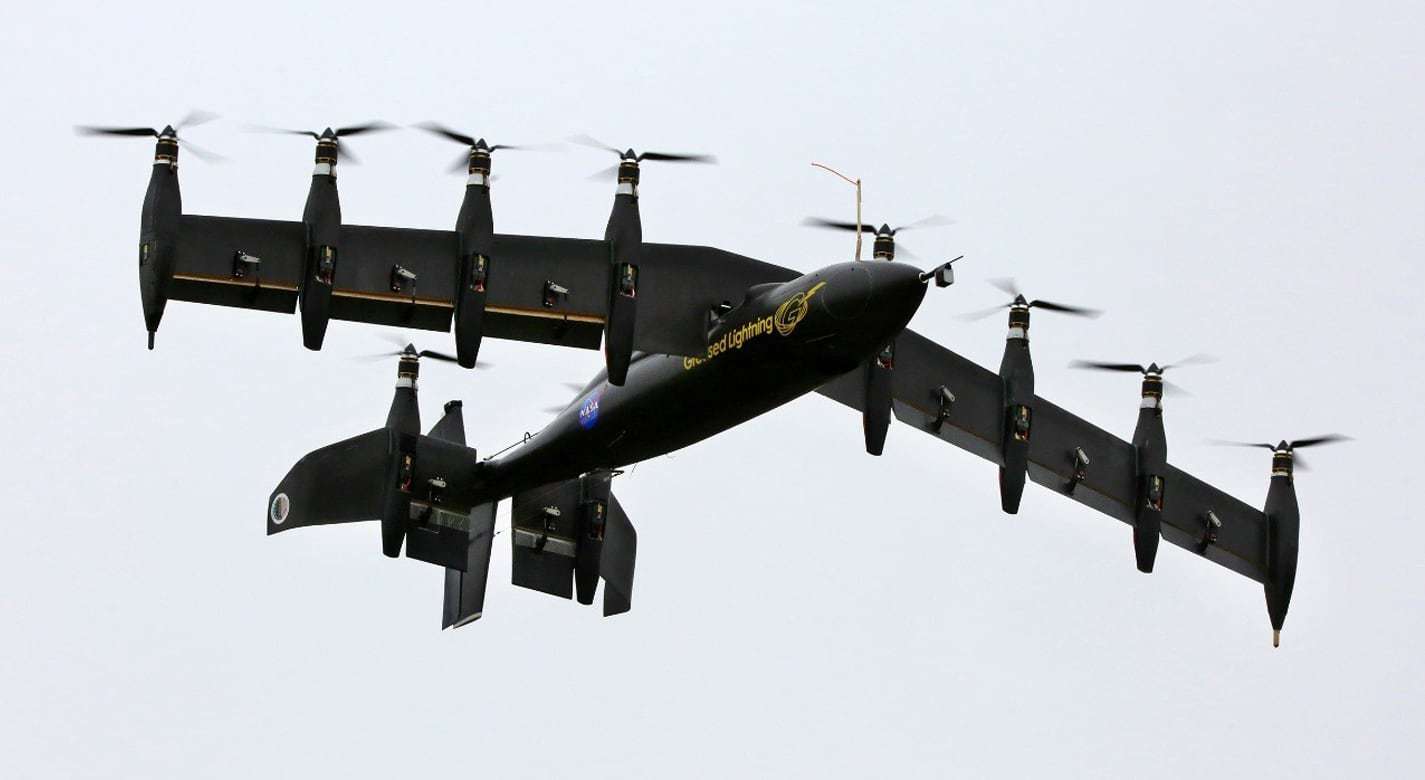
A hybrid VTOL drone takes off vertically on rotors, transitions to horizontal flight, and then cruises on its wings like an airplane. It is an attempt to get the endurance of a fixed-wing without needing a runway, a catapult, or a net.
The idea is old. Tiltrotor and tailsitter designs were flown in the 1950s and 1960s and mostly abandoned, because the transition between hover and forward flight was too much for a human pilot and the flight controls of the era.
Cheap flight-control computers changed that. A modern autopilot manages the transition in a couple of seconds, and hybrid VTOL is now the standard airframe for long-range mapping and pipeline survey work.
The penalty is dead weight. The lift rotors are carried, unused, through the entire cruise, so a hybrid is less efficient than a pure fixed-wing of the same size and costs noticeably more.
How Many Types of Drones Are There?
There are four types by airframe, five official size groups in US military use, and no fixed number at all by mission, because a new mission category appears every few years.
Lists that promise 10, 14 or 21 types are almost always mixing the axes together. They will count “fixed-wing” and “racing drone” and “military drone” as three items on one list, when a racing drone is a multi-rotor and a military drone can be any of the four.
If someone asks you what the three types of drones are, they usually mean multi-rotor, fixed-wing and hybrid VTOL, with single-rotor folded in as a helicopter variant. Four is the more complete answer.
Types of Drones by Size and Weight
The second axis is size, and this one has actual legal force behind it. The US Department of Defense sorts every drone into one of five groups by weight, operating altitude and speed.
| DoD group | Max weight | Normal altitude | Airspeed | Examples |
|---|---|---|---|---|
| Group 1 | Under 20 lb (9 kg) | Below 1,200 ft AGL | Under 100 knots | Black Hornet, RQ-11B Raven, DJI Mavic |
| Group 2 | 21 to 55 lb (10 to 25 kg) | Below 3,500 ft AGL | Under 250 knots | Boeing Insitu ScanEagle |
| Group 3 | 55 to 1,320 lb (25 to 599 kg) | Below 18,000 ft MSL | Under 250 knots | RQ-7 Shadow, Insitu Integrator |
| Group 4 | Over 1,320 lb (599 kg) | Below 18,000 ft MSL | Any airspeed | MQ-8 Fire Scout, MQ-1C Gray Eagle |
| Group 5 | Over 1,320 lb (599 kg) | Above 18,000 ft MSL | Any airspeed | MQ-9 Reaper, RQ-4 Global Hawk |
Notice that Groups 4 and 5 have the same weight floor. The only thing separating them is altitude, which is why the Reaper and the Global Hawk are Group 5 and the Gray Eagle is not.
The civilian side draws its lines in different places. In the United States, a drone under 55 pounds (25 kg) is a small unmanned aircraft system, and 0.55 pounds (250 g) is the threshold above which a recreational drone must be registered with the FAA.
Nano and Micro Drones

The smallest useful drones weigh less than a smartphone. The best-known is the Teledyne FLIR Black Hornet, a pocket-sized helicopter used by soldiers to look around a corner or over a wall without exposing anyone.
The current Black Hornet 4 weighs about 70 grams (2.5 oz), flies for more than 30 minutes, and works at ranges beyond 3 km (roughly 2 miles). It carries both a thermal and a visible-light camera and keeps flying in 25-knot winds.
Small and Consumer Drones
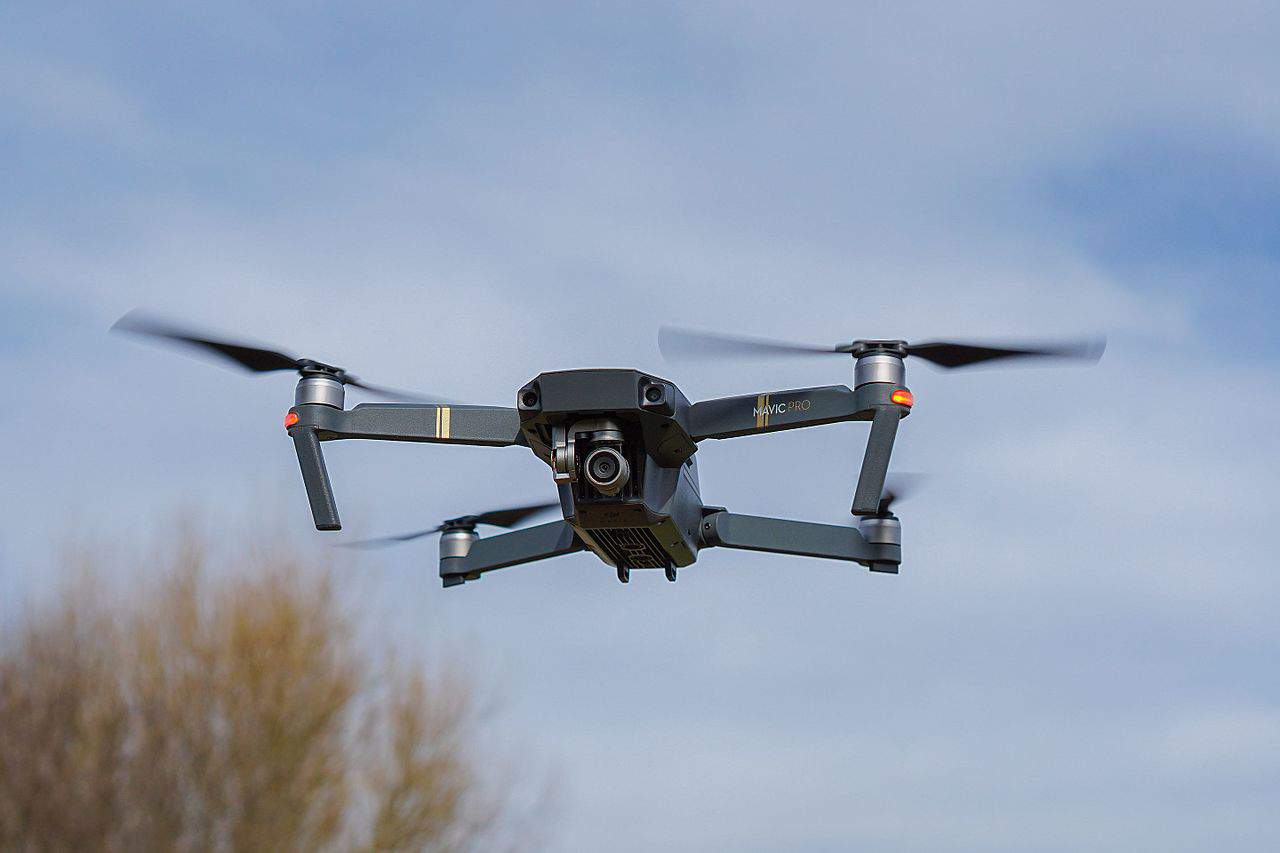
This is the size class almost every drone owner actually buys: folding camera drones that fit in a jacket pocket and weigh between 250 grams and about 2 pounds (900 g).
Manufacturers deliberately design models to land just under 250 grams, because that keeps a recreational flyer below the FAA registration threshold. It is the single most influential number in consumer drone design.
MALE and HALE Drones
At the large end, drones are described by endurance and altitude rather than weight. MALE means Medium Altitude Long Endurance and HALE means High Altitude Long Endurance.
A MALE drone such as the MQ-9 Reaper works in the 25,000 to 50,000 foot band for a day at a time. A HALE drone such as the RQ-4 Global Hawk climbs to 60,000 feet, above almost all other air traffic, and stays there for 30 hours or more.
The word "drone" covers a 200,000-fold weight range
A Black Hornet 4 weighs 70 grams. An RQ-4 Global Hawk has a maximum takeoff weight of 32,250 pounds, or about 14,630 kg. That is a factor of roughly 209,000 between two aircraft the same noun is used for, and the Global Hawk’s 130.9-foot wingspan is wider than a Boeing 737-800’s.
Types of Military Drones
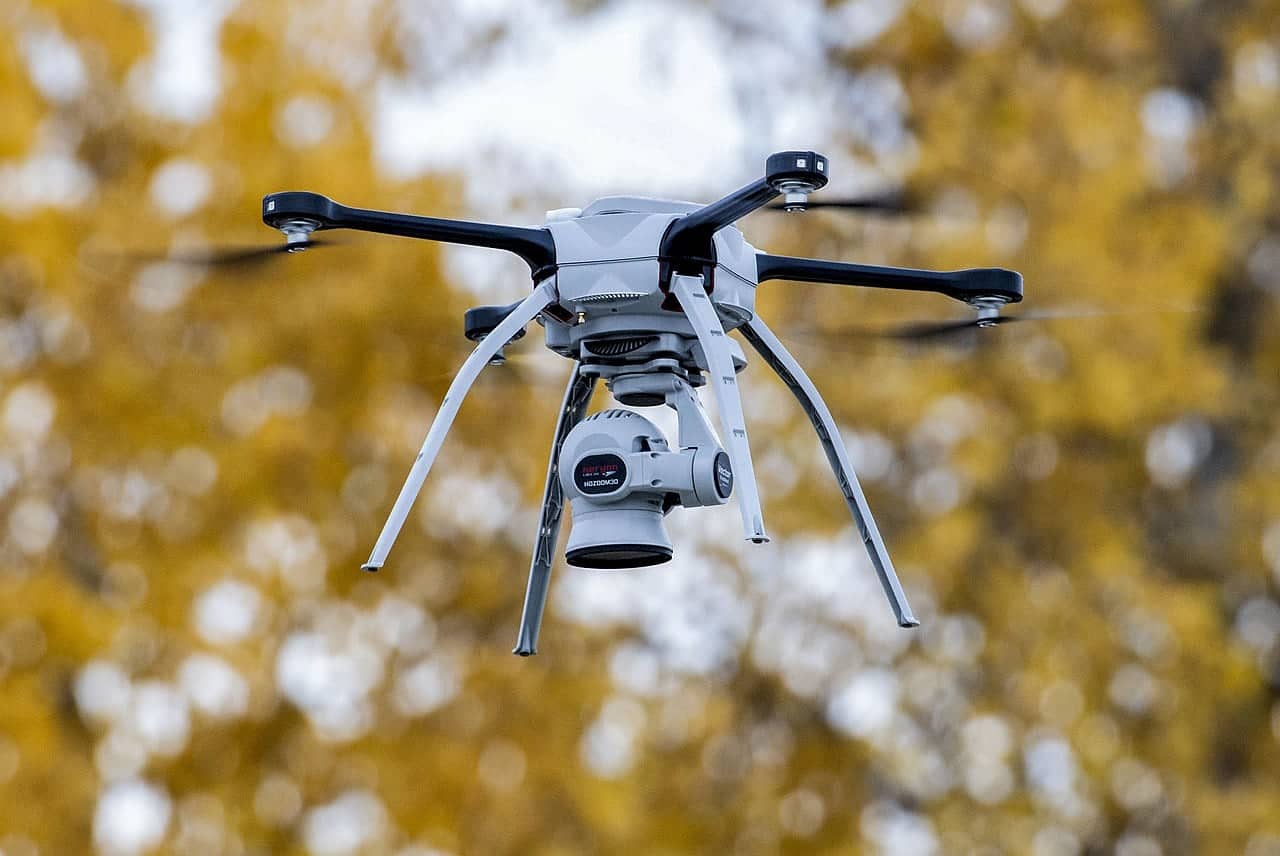
Militaries sort drones by mission, and the mission list has changed more in the last four years than in the previous twenty. The table below is the current set of roles as of 2026.
| Military drone type | What it does | DoD group | Named examples |
|---|---|---|---|
| Personal reconnaissance (nano) | Looks around a corner for one squad | 1 | Teledyne FLIR Black Hornet 4 |
| Small hand-launched tactical | Overhead view for a platoon, launched by throwing it | 1 | AeroVironment RQ-11B Raven, Puma |
| Catapult-launched ISR | Long-endurance watch from a ship or small base | 2 to 3 | Boeing Insitu ScanEagle, RQ-7 Shadow |
| Armed MALE | Surveils and strikes, a day at a time | 4 to 5 | MQ-9 Reaper, Bayraktar TB2, Wing Loong II |
| HALE ISR | Wide-area surveillance from 60,000 ft | 5 | RQ-4 Global Hawk, MQ-4C Triton |
| Stealth UCAV | Penetrating strike against defended airspace | 5 | GJ-11 Sharp Sword |
| Loitering munition | Searches, then destroys itself on the target | 1 to 3 | Switchblade 600, Lancet, Shahed-136 |
| FPV attack quadcopter | Short-range strike flown by a soldier with goggles | 1 | Improvised and commercial quadcopters |
| Target and decoy | Imitates an aircraft or missile to be shot at | 2 to 4 | MQM-107 Streaker, BQM-167 Skeeter |
| Collaborative combat aircraft | Uncrewed wingman flying alongside fighters | 5 | YFQ-42A, YFQ-44A, MQ-28 Ghost Bat |
For a ranking of the individual aircraft rather than the categories, see our guide to the best military drones in the world. What follows is how the roles differ.
Small Tactical Drones

The AeroVironment RQ-11B Raven is the archetype. It has a 4.5-foot wingspan, weighs about 4.2 pounds (1.9 kg), and is launched by a soldier throwing it into the air.
It flies for up to 90 minutes at around 500 feet, carries day and thermal cameras, and lands by being flown into the ground and coming apart into pieces that clip back together. More than 19,000 airframes have been delivered.
Reconnaissance and Surveillance Drones

Unarmed ISR drones are the workhorses of the category, and there are far more of them than there are armed ones. Their whole job is to be somewhere, watching, for longer than a crewed aircraft could manage.
The IAI Heron family is the most widely exported example, flown by Israel, Germany, India, Canada and others. The Heron TP has an 85-foot wingspan and stays airborne past 30 hours.
Armed Combat Drones
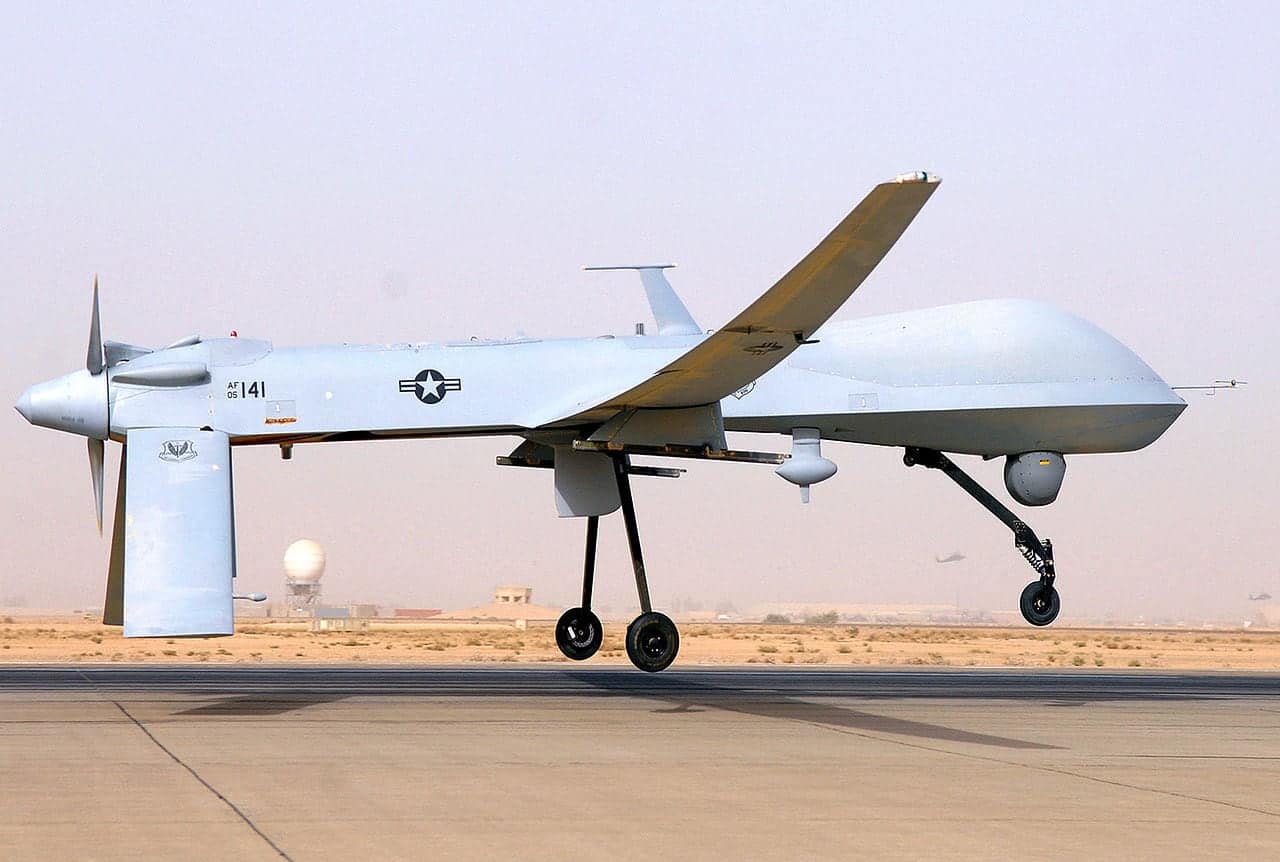
This is the type most people picture when they hear “military drone.” The MQ-1 Predator defined it, but the Air Force retired the Predator on 9 March 2018 after more than two million combat flight hours.
Its replacement, the MQ-9 Reaper, flies for over 27 hours, operates up to 50,000 feet, cruises at 240 knots and carries a 3,850-pound (1,746 kg) payload. The differences between the Reaper and the Predator are larger than the shared airframe shape suggests.
The type is no longer American-dominated. Turkey’s Bayraktar TB2 has been exported to more than 30 countries, and China’s Wing Loong II sells to operators the US will not supply.
High-Altitude Surveillance Drones
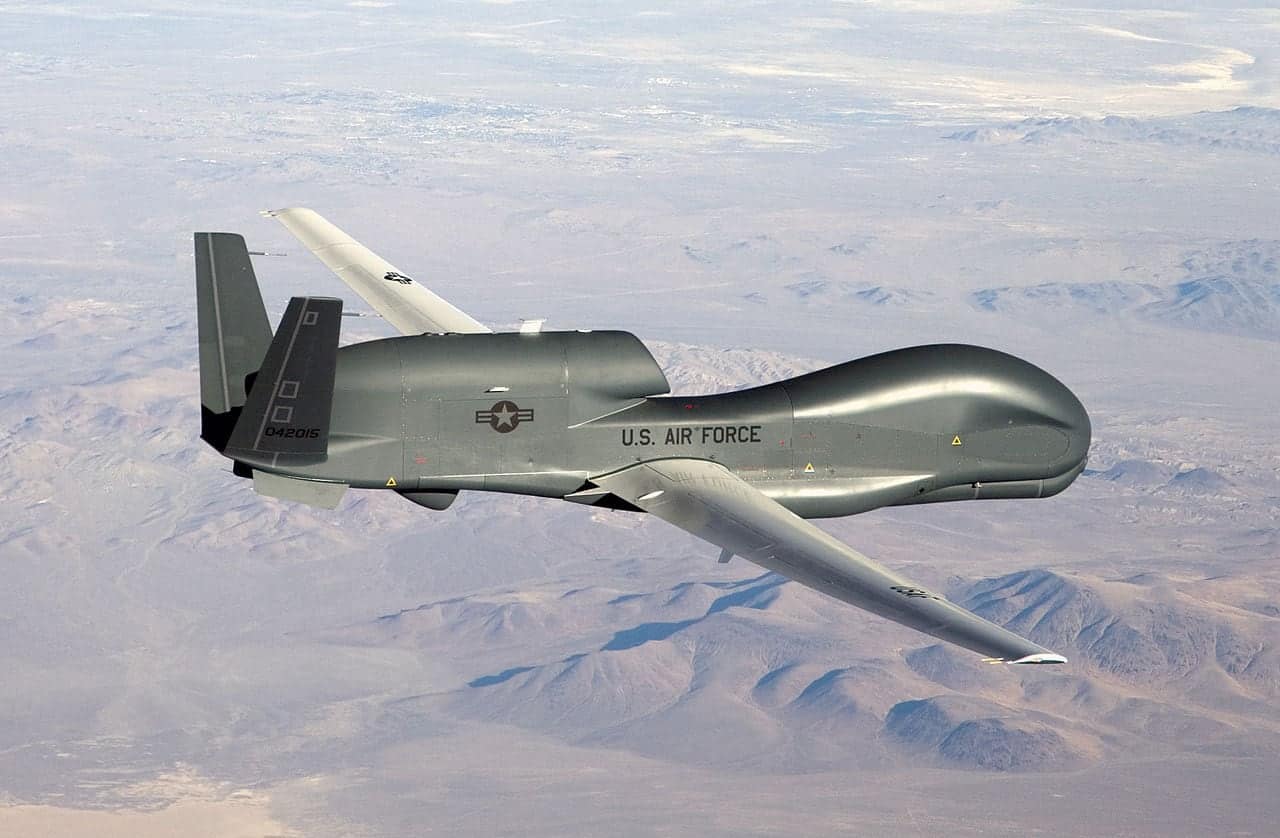
The RQ-4 Global Hawk is the largest drone most people can name. It has a 130.9-foot wingspan, a maximum takeoff weight of 32,250 pounds (14,630 kg), a 60,000-foot ceiling and over 32 hours of endurance.
The fleet has been shrinking for years. The Block 30 aircraft were retired in the early 2020s, leaving nine Block 40 airframes, and Congress has pushed the planned retirement from 2027 out to at least 2030.
Target and Decoy Drones
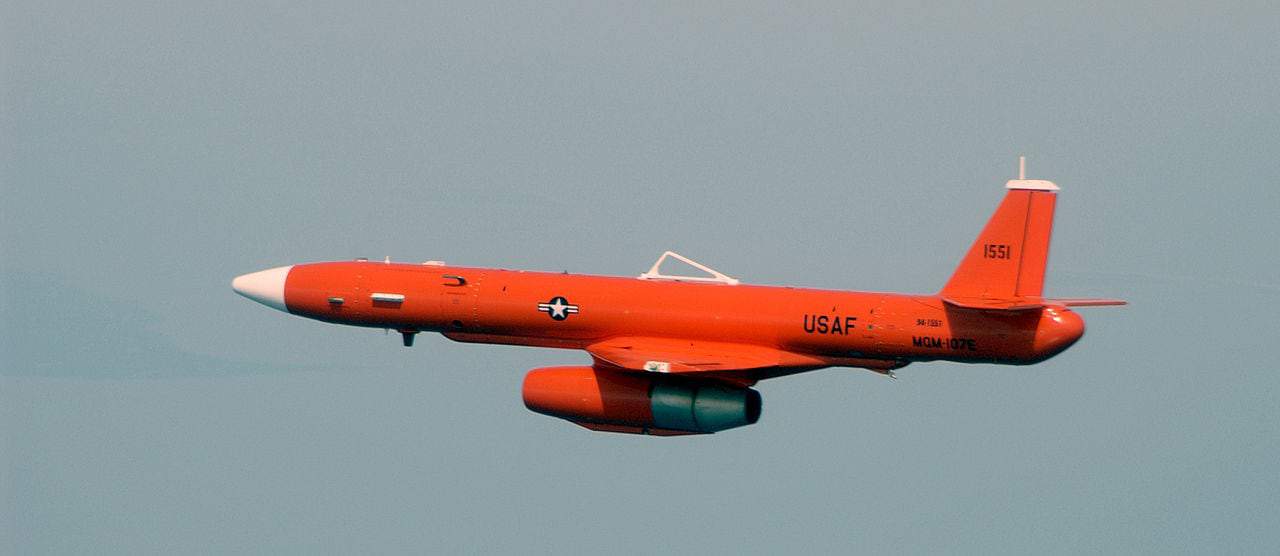
The oldest military drone category is also the least glamorous: aircraft built to be shot down. Target drones give missile crews and fighter pilots something real to engage during training.
Decoy drones do the opposite job in combat. They imitate the radar signature of a crewed aircraft or an incoming missile, drawing air defenses into firing at nothing and revealing their positions.
Loitering Munitions and FPV Attack Drones
.jpg)
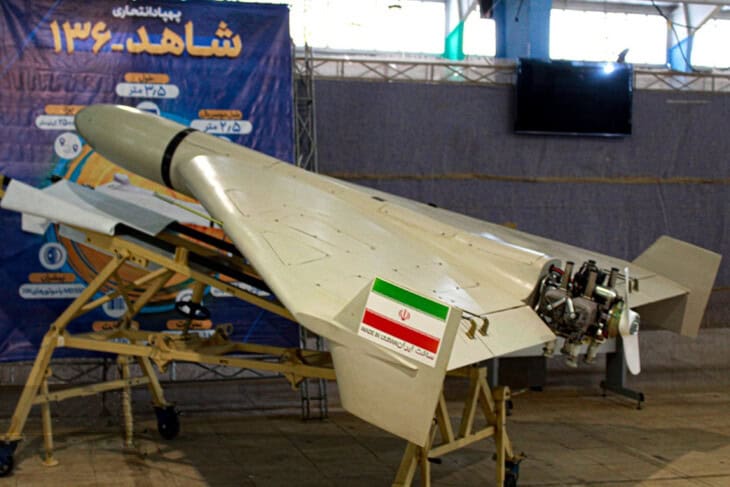
This is the category that did not meaningfully exist on lists like this one a decade ago and now dominates the news. A loitering munition searches for a target and then flies into it, destroying itself.
The class spans a $500 quadcopter with a grenade taped to it up to the Shahed-136, a one-way attack aircraft with a 1,550-mile (2,500 km) range. We cover the class separately in our guide to the best kamikaze drones and loitering munitions.
The distinction that matters is reusability. Every other military drone in this section comes home; these do not, which puts them somewhere between an aircraft and a guided weapon.
"Military drone" no longer means what it did in 2015
For twenty years the default mental image was a Predator over a desert: expensive, remotely piloted from another continent, flown by an air force. The most numerous military drones in 2026 are small first-person-view quadcopters costing a few hundred dollars, built from commercial parts and flown by infantry a mile away. Any list that stops at the Reaper is describing the wrong war.
Types of Commercial and Consumer Drones
Civilian drones are sorted the same way military ones are, by job rather than airframe. Almost all of them are multi-rotors; the exceptions are the long-range mapping and survey aircraft.
| Drone type | What it is for | Airframe | Typical price |
|---|---|---|---|
| Toy and beginner | Learning to fly, indoor use | Multi-rotor | Under $100 |
| Camera and photography | Aerial photo and video | Multi-rotor | $300 to $2,000 |
| FPV racing and freestyle | Racing and acrobatics through goggles | Multi-rotor | $200 to $1,000 |
| Cinema and prosumer | Broadcast and film work | Multi-rotor | $2,000 to $15,000 |
| Mapping and survey | Photogrammetry, LiDAR, land survey | Fixed-wing or hybrid VTOL | $15,000 to $120,000 |
| Agricultural spraying | Crop spraying and spreading | Multi-rotor | $15,000 to $60,000 |
| Inspection | Towers, turbines, roofs, confined spaces | Multi-rotor | $3,000 to $40,000 |
| Delivery | Medical supplies, retail, food | Fixed-wing or hybrid VTOL | Operated as a service |
| Public safety | Search and rescue, fire, police | Multi-rotor | $5,000 to $30,000 |
Photography and Camera Drones
This is the largest civilian category by a wide margin, and the reason most people own a drone at all. What separates a camera drone from a toy is the gimbal: a motorised mount that holds the camera steady while the airframe moves.
Without a gimbal, every gust shows up in the footage. With one, a $500 drone produces video that would have needed a helicopter and a crew twenty years ago.
Mapping and Survey Drones
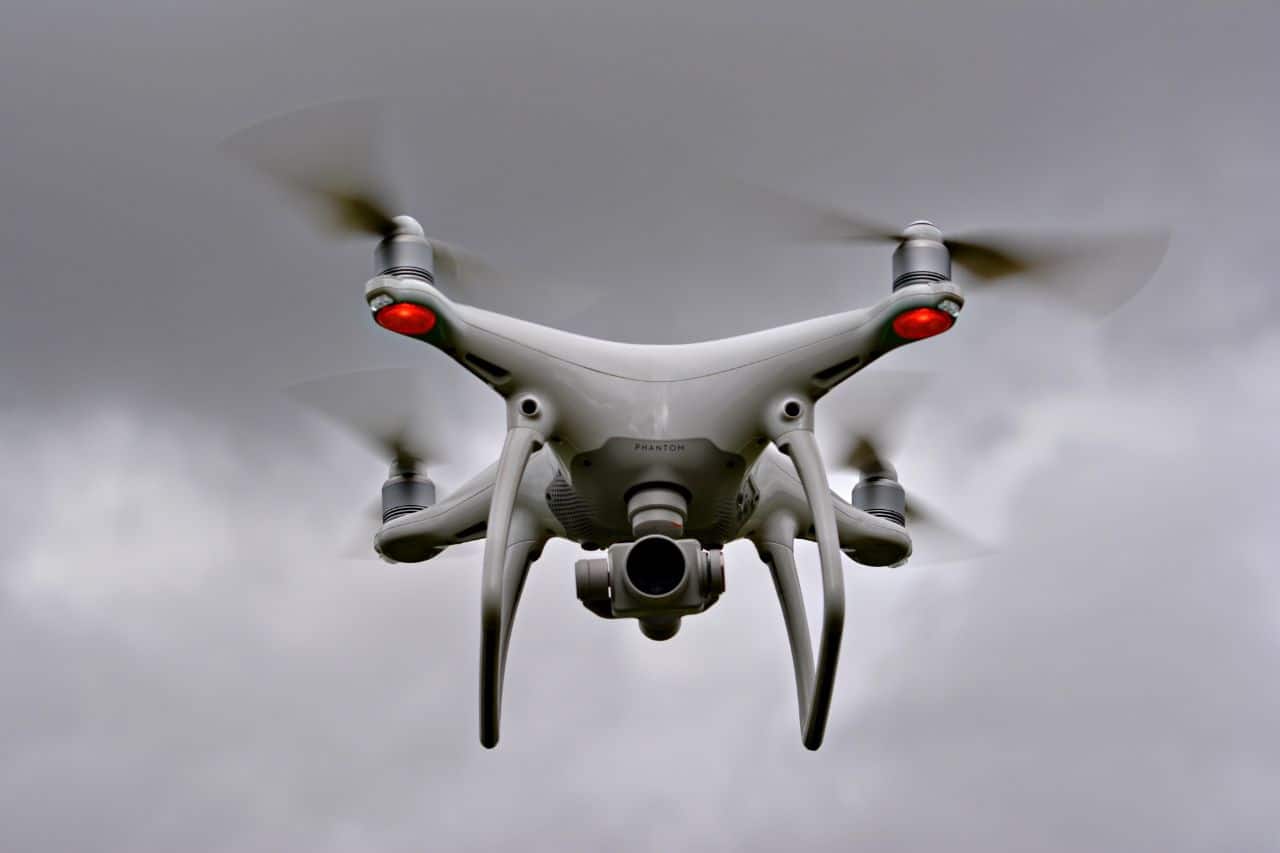
A survey drone is not flown so much as dispatched. The operator draws a boundary on a map, the aircraft flies a grid pattern on satellite navigation, and software stitches the overlapping photos into a measurable 3D model.
Accuracy comes from knowing exactly where each photo was taken. Survey-grade models use RTK positioning, which corrects satellite fixes against a ground station and gets position error down to about an inch (a few centimeters).
Large sites are where the fixed-wing and hybrid VTOL airframes earn their keep. Covering several square miles in one flight is not something a quadcopter’s battery will allow.
FPV and Racing Drones

FPV stands for first-person view: the pilot wears goggles fed by a camera on the nose and flies as though sitting in the aircraft. It is a completely different skill from flying a camera drone by looking at a tablet.
Racing quads carry no gimbal, no obstacle sensors and no return-to-home. Everything that is not motor, battery, frame or camera has been removed, and the flight controller lets the pilot rather than the software decide the attitude.
The same design philosophy is what made FPV quadcopters into weapons in Ukraine. A cheap, fast, disposable airframe that a person can fly precisely into a target turned out to be a military capability nobody had budgeted for.
A quadcopter has been clocked at 408 mph
Guinness World Records certified a top speed of 657.59 km/h, or 408 mph, for a battery-powered remote-controlled quadcopter, set by Luke and Mike Bell with their Peregreen V4. That is faster than a Formula 1 car has ever gone and roughly the cruising speed of a World War II fighter, from a battery-powered aircraft you could hold in two hands.
Agricultural and Delivery Drones
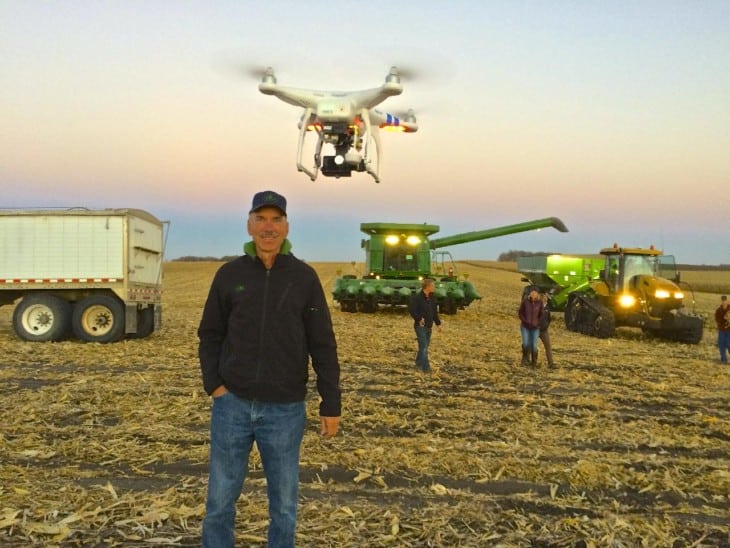
Agricultural spraying is the largest commercial drone category worldwide by number of aircraft in daily use. DJI alone reports an installed base of more than 300,000 agricultural drones.
These are big multi-rotors built around a tank. A DJI Agras T50 carries 40 kg (88 lb) of spray, and the larger T100 carries 100 kg (220 lb), which is more than most people expect a battery-powered rotorcraft to lift.
Delivery drones are the newest category and are almost always operated as a service rather than sold. Zipline has passed 2.5 million commercial deliveries, and Wing has completed more than 400,000, both flying autonomously beyond the operator’s line of sight.
Who Can Fly Which Type of Drone
The fourth axis is legal, and in the United States it is the simplest of the four. Almost everything a private person flies falls under one of two sets of rules.
Fly for fun and you are a recreational flyer: you take a free online safety test, keep the drone in sight, and register it with the FAA if it weighs 0.55 pounds (250 g) or more.
Fly for any kind of work or payment and the rules change. You need a Part 107 remote pilot certificate, and the drone must be registered regardless of how little it weighs.
Any drone that must be registered must also broadcast Remote ID, a signal carrying its identity and position that anyone nearby can receive. Enforcement began in March 2024.
The term you will meet next is BVLOS, meaning beyond visual line of sight. Flying a drone you cannot see is how delivery and long-range survey work, and it currently requires specific FAA approval rather than being allowed by default.
None of this settles what happens when someone else’s drone appears above your yard, which is a question of state law and privacy rather than aviation rules. We cover that in our guide to drones flying over private property.
Which Type of Drone Should You Choose?
Start with whether you need to hover. If the job is looking closely at one thing, a bridge, a roof, a subject on the ground, it is a multi-rotor and nothing else will do.
If the job is covering ground, a fixed-wing or hybrid VTOL will do it in one flight where a quadcopter needs six and a bag of spare batteries. That is the whole decision in most cases.
For a first drone, buy something under 250 grams with a gimbal. It stays below the registration threshold, it survives beginner mistakes, and the camera is good enough that you will not immediately want to replace it. The engineering that goes into full-size aircraft shows up in miniature in these things, which is part of the appeal.
FAQ
Sources and references used for research and fact-checking.
- Congressional Research Service, Defense Primer: Categories of Uncrewed Aircraft Systems
- Federal Aviation Administration, Register Your Drone
- General Atomics Aeronautical Systems, MQ-9A Reaper
- Air & Space Forces Magazine, RQ-4 Global Hawk
- Teledyne FLIR Defense, Black Hornet 4 Personal Reconnaissance System
- New Atlas, World's fastest drone hits 408 mph to reclaim speed record
- U.S. Army, RQ-11B Raven Small Unmanned Aircraft Systems (SUAS)
Get the Newsletter
The latest aviation news and stories sent to your inbox.
About the Author

Articles credited to the AeroCorner Editorial Team are created or maintained by multiple aviation contributors working under a shared editorial framework. Content is researched using authoritative aviation sources and reviewed to ensure clarity, technical accuracy, and consistency across AeroCorner.