

Table of Contents
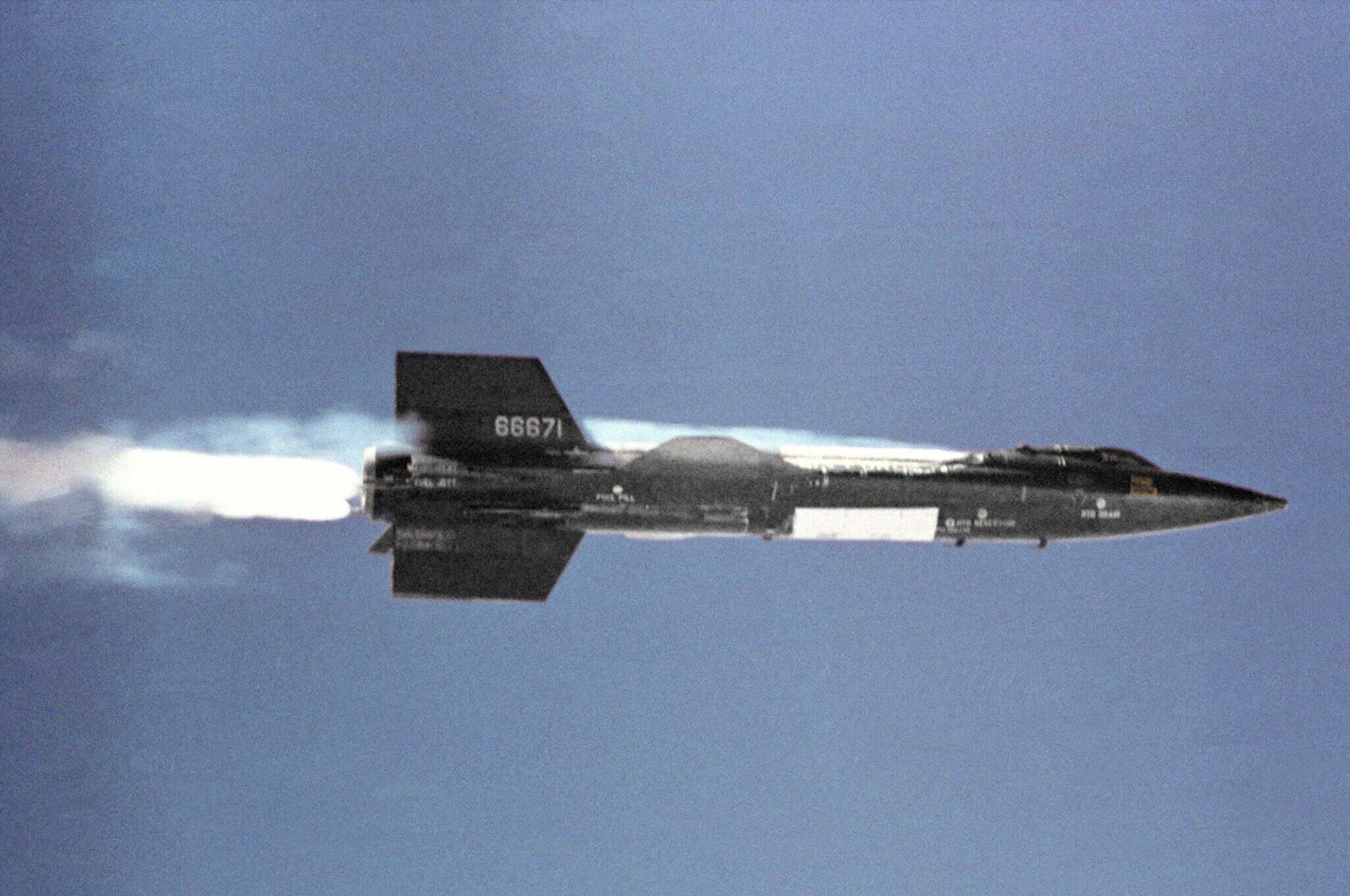
The most important X-plane ever flown is the North American X-15. Across 199 flights between 1959 and 1968 it reached Mach 6.7 and 354,200 feet, and NASA says its data fed Mercury, Gemini, Apollo and the Space Shuttle.
X-planes are the United States’ experimental research aircraft, the ones that carry an “X” designation because their only job is to test an idea. We rank the 12 that mattered most by impact: what each one proved first, and how far that knowledge traveled into aircraft and spacecraft that actually went into service.
The Bell X-1, the first aircraft to fly faster than sound in level flight, takes second. The full list of every X designation, from X-1 to the X-76 announced in March 2026, sits further down. Everything here is current as of October 2026.
| Rank | X-plane | Defining moment | Status (October 2026) |
|---|---|---|---|
| 1 | North American X-15 | Mach 6.7 and 354,200 ft | Retired 1968 |
| 2 | Bell X-1 | First supersonic level flight, 1947 | Retired |
| 3 | Lockheed Martin X-35 | Short takeoff, supersonic dash and vertical landing in one flight, 2001 | Became the F-35 |
| 4 | Boeing X-37B | 908 days in orbit, 2020 to 2022 | In orbit on its 8th mission |
| 5 | Lockheed Martin X-59 | Mach 1.4 at 55,000 ft, 2026 | In flight test |
| 6 | NASA X-43A | Mach 9.6 on scramjet power, 2004 | Program complete |
| 7 | Bell X-5 | Wings swept in flight, 1951 | Retired |
| 8 | Martin Marietta X-24B | Precise unpowered runway landings | Last powered flight 1975 |
| 9 | Northrop Grumman X-47B | Drone arrested landing on a carrier, 2013 | Retired |
| 10 | Grumman X-29 | Forward-swept wing, first flown 1984 | Retired |
| 11 | Rockwell-MBB X-31 | Controlled flight at 70 degrees angle of attack, 1992 | Retired 2003 |
| 12 | Bell X-2 | First flight past Mach 3, 1956 | Retired |
How this ranking works
Only aircraft with an official X designation qualify, so famous research jets without one, like the Douglas D-558-II Skyrocket, are covered separately below. Missiles and rockets that received X numbers are left out of the ranking. Each X-plane is scored on three things: a genuine first or record, whether its findings reached aircraft or spacecraft that went into service, and whether it still shapes what flies next. Looking for X-Plane, the flight simulator of the same name? This article is about the real aircraft.
1. North American X-15
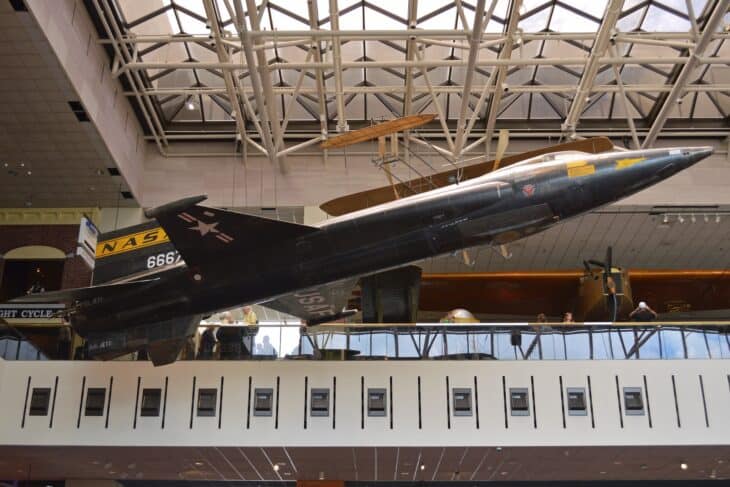
North American built three X-15s, and between them they flew 199 times with 12 pilots. Scott Crossfield made the first glide flight on June 8, 1959, and the first powered flight on September 17, 1959. Bill Dana flew the last one on October 24, 1968.
Air Force pilot Pete Knight took the modified X-15A-2 to 4,520 mph (7,274 km/h), or Mach 6.7, on October 3, 1967.
Four years earlier, on August 22, 1963, NASA pilot Joe Walker climbed to 354,200 feet, about 67 miles (108 km) up. That speed still puts it near the top of our ranking of the fastest aircraft in the world.
It beats the X-1 for first place because of what came after. The program produced more than 765 research reports, and NASA credits it with data used for Mercury, Gemini, Apollo, the Saturn rockets and the Space Shuttle.
It also had a cost. Michael Adams was killed on November 15, 1967, when his X-15 entered a spin he could not recover from after a failure in the adaptive flight control system.
Astronauts in an airplane
Eight military and civilian pilots flew the X-15 above 50 miles (80 km), the altitude the US uses for astronaut status. The three NASA civilians among them, Bill Dana, Jack McKay and Joe Walker, only received their astronaut wings later.
2. Bell X-1
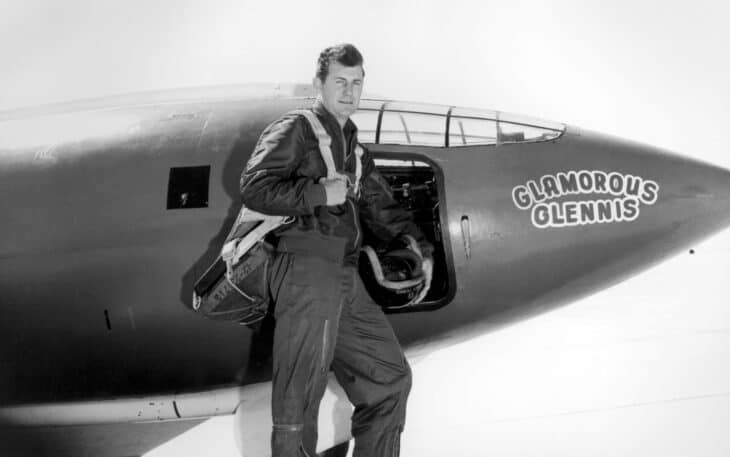

On October 14, 1947, Air Force Captain Chuck Yeager flew the X-1 “Glamorous Glennis” to Mach 1.06, about 700 mph (1,127 km/h), at 43,000 feet. It was the first time a pilot had flown faster than sound, and it was done after a drop from a B-29 bomber.
Yeager was not its first pilot. Jack Woolams made the first glide flight on January 19, 1946, and Bell pilot Chalmers “Slick” Goodlin made the first powered flight in December 1946. Bell built three of the rocket planes, later followed by the X-1A, X-1B and X-1D.
The X-1 settled whether the “sound barrier” was a wall, which makes it the most famous X-plane. It ranks second only because the X-15 carried the program much further, all the way to the edge of space.
3. Lockheed Martin X-35
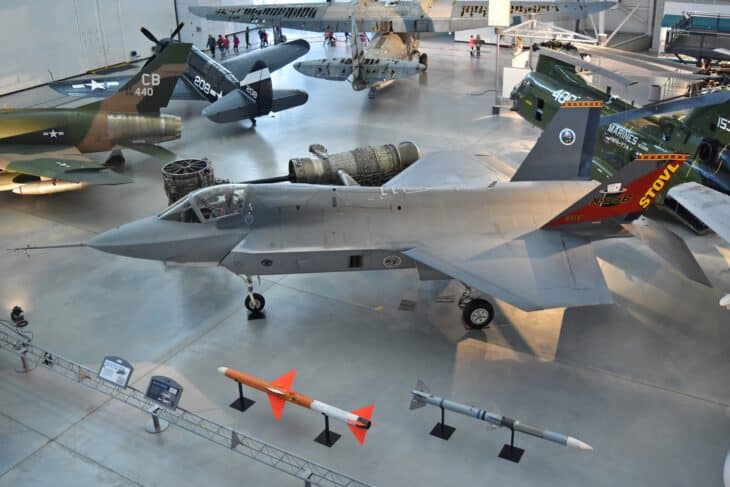

Most X-planes are never meant to become production aircraft. The X-35 is the clearest exception: it was Lockheed Martin’s entry in the Joint Strike Fighter contest, and it became the F-35 Lightning II.
The X-35A first flew on October 24, 2000, about five weeks after Boeing’s rival X-32. The decisive moment came on July 20, 2001, when the X-35B made a 450-foot short takeoff, climbed to 25,000 feet, dashed supersonic and came back for a vertical landing, an aviation first.
Lockheed Martin won the $18.9 billion development contract on October 26, 2001. No other X-plane led so directly to a front-line aircraft, which is why it outranks the record-breakers below it.
4. Boeing X-37B
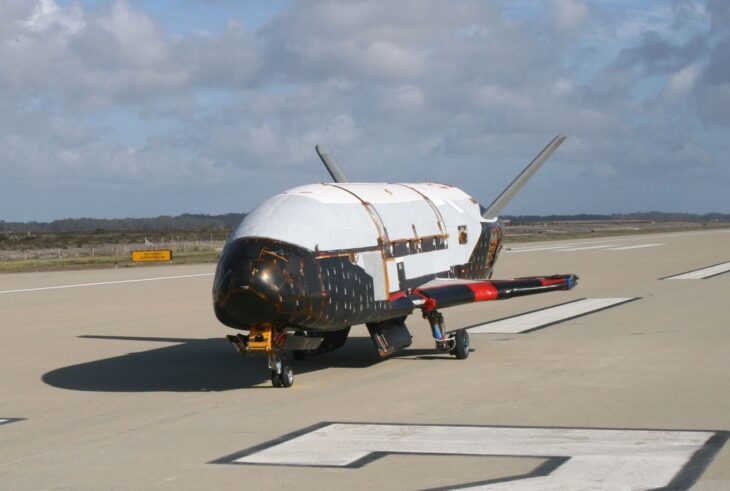

The X-37B is the only X-plane on this list that flies in orbit. Boeing built two of the uncrewed spaceplanes, and the first launched on an Atlas V on April 22, 2010.
Each mission has stayed up longer than the last, until the seventh. The sixth mission spent 908 days in orbit before landing at Kennedy Space Center on November 12, 2022, and the seventh returned on March 7, 2025, after more than 434 days.
The eighth mission launched on a Falcon 9 on August 21, 2025 (Eastern time), and the Space Force had announced no landing as of early October 2026. What it carries is largely secret, which is part of why it draws so many searches.
908 days without a pilot
The X-37B’s sixth mission lasted 908 days, nearly two and a half years, before the spaceplane landed itself on the Shuttle Landing Facility runway at Kennedy Space Center.
5. Lockheed Martin X-59
.jpg)
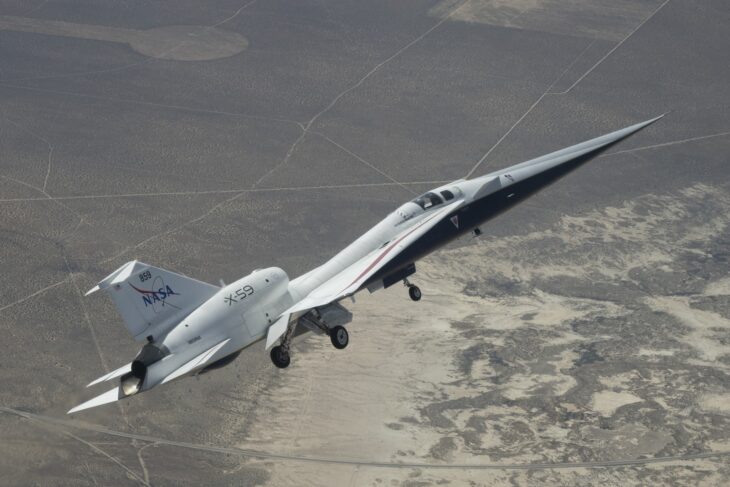
The X-59 is built to make a sonic boom quiet enough that supersonic flight over land could be allowed again. Lockheed Martin gives it a 99 ft 7 in (30.4 m) length, a single General Electric F414 engine and a design target below 75 PLdB, a measure of perceived loudness.
It first flew on October 28, 2025, and went supersonic for the first time on June 5, 2026. A week later it reached its design point of Mach 1.4, about 925 mph (1,489 km/h), at 55,000 feet, and by early October 2026 it had flown 38 times and touched Mach 1.53.
Its mission has been overtaken by politics. An executive order of June 6, 2025, told the FAA to repeal the 1973 overland supersonic ban, and the agency proposed a rule built on a sonic-boom limit in July 2026. The X-59’s community overflights, meant to show what people actually hear, have not started yet.
6. NASA X-43A
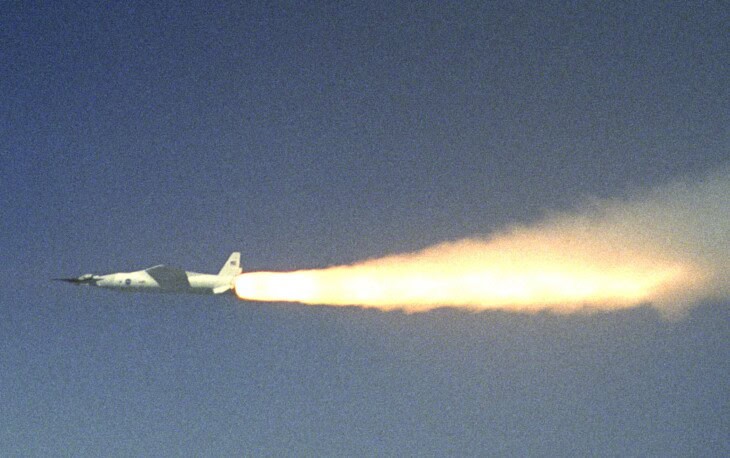
The X-43A was an uncrewed, 12-foot scramjet test vehicle, carried aloft by a B-52B and boosted by a modified Pegasus rocket. The first attempt failed in June 2001 when the booster went out of control.
The next two worked. It hit Mach 6.8 on March 27, 2004, and Mach 9.6, nearly 7,000 mph (11,300 km/h), on November 16, 2004, with the scramjet burning for about 10 seconds each time. Guinness World Records lists it as the fastest aircraft with an air-breathing engine.
Its successor, the Boeing X-51A Waverider, traded peak speed for duration: 210 seconds of scramjet flight at Mach 5.1 on May 1, 2013. Both feed today’s push for hypersonic aircraft.
7. Bell X-5
.jpg)
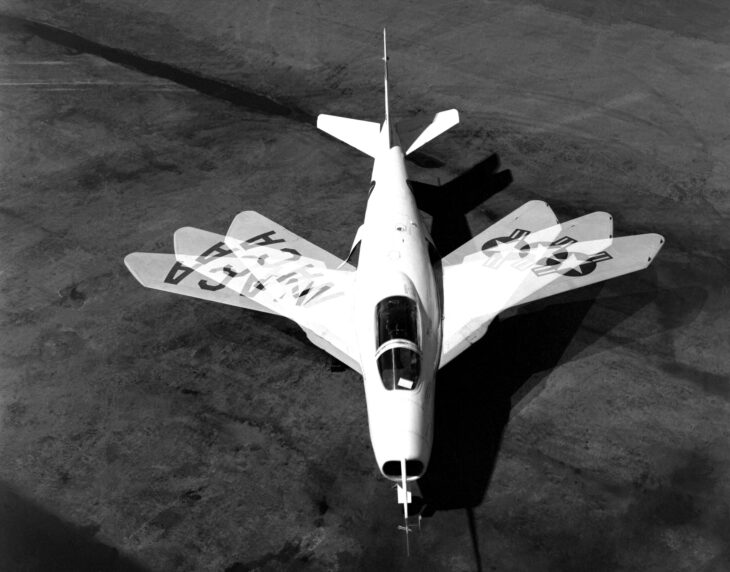
The X-5 first flew on June 20, 1951, and its wings could pivot from 20 to 60 degrees of sweep in flight, a change that took about 20 seconds. Its predecessor design could only have its sweep adjusted on the ground.
NASA says the X-5’s sliding mechanism was not practical, and a later Langley design moved the pivots outboard. That fix produced the swing-wing generation: the F-111, F-14, B-1, Tornado, Tu-160 and others.
Two were built, and one was lost. Major Raymond Popson was killed when the second X-5 entered a spin on October 13, 1953.
8. Martin Marietta X-24B
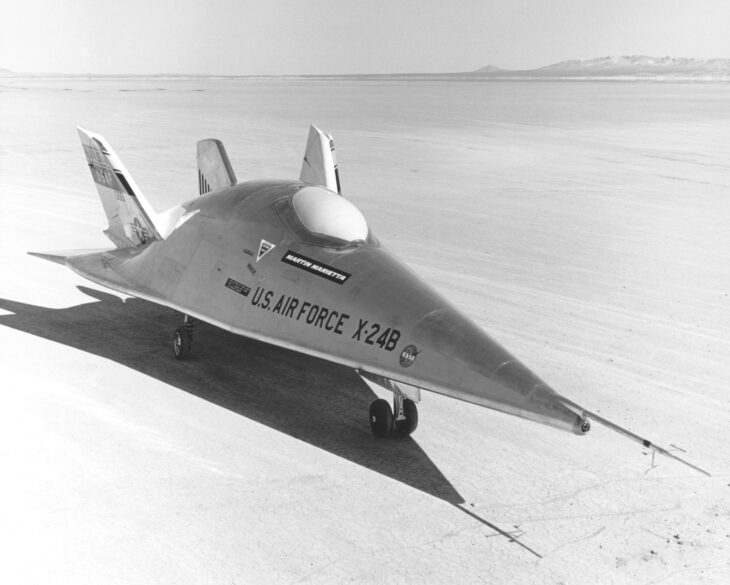

The X-24B was a wingless lifting body, rebuilt from the earlier X-24A, that got its lift from the shape of its fuselage. John Manke flew its first glide on August 1, 1973, and Mike Love took it to 1,164 mph (1,873 km/h) on October 25, 1974.
Its biggest contribution was a landing. Among its final flights were two precise, unpowered landings on the main concrete runway at Edwards, proof that a returning spacecraft could glide to a runway.
NASA says the lifting body program helped write the flight plan for Space Shuttle landings, down to the approach pattern and landing speed.
9. Northrop Grumman X-47B
_May_14,_2013,_in_the_Atlantic_Ocean_130514-N-FU443-684.jpg)
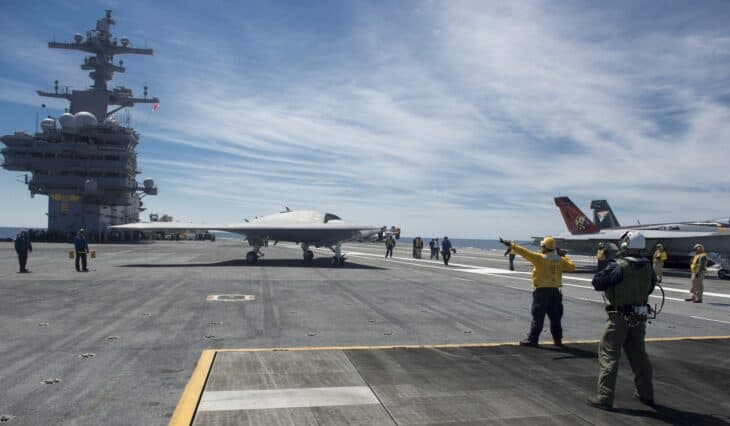
The X-47B was the first unmanned aircraft to make an arrested landing aboard a modern aircraft carrier, catching the 3 wire on USS George H.W. Bush on July 10, 2013. It had been catapulted off the same ship two months earlier, on May 14.
On April 22, 2015, it became the first unmanned aircraft to refuel autonomously in flight, taking on more than 4,000 pounds (1,800 kg) of fuel from a tanker. For where unmanned combat aircraft stand today, see our ranking of the best military drones in the world.
10. Grumman X-29

The Grumman X-29 flew its wings backward: a 30-degree forward sweep that cut transonic drag by as much as 20 percent. The first of two aircraft flew on December 14, 1984.
The shape was so unstable that a triple-redundant digital fly-by-wire system issued up to 40 corrections a second to keep it flying. The second X-29 reached 67 degrees angle of attack, with excellent control up to 45 degrees.
Forward-swept wings never made it into a production fighter. What the X-29 really proved was that computers could keep a deliberately unstable aircraft flying, a principle modern fighters rely on.
11. Rockwell-MBB X-31
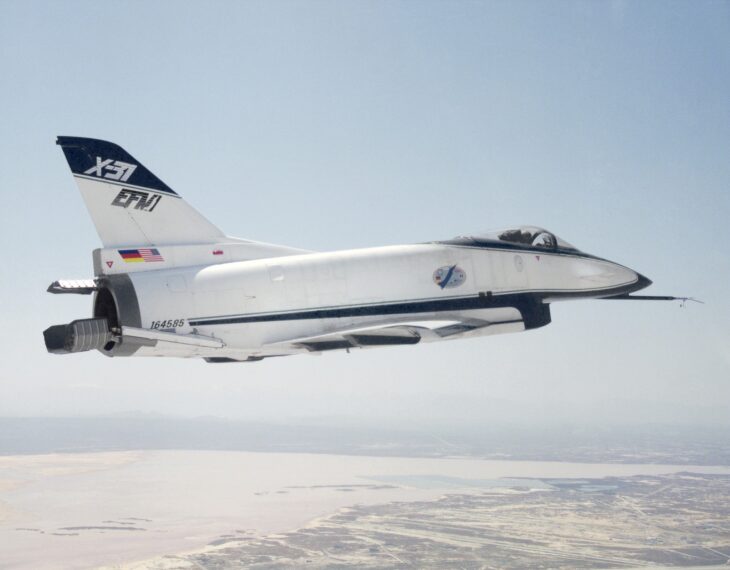

The X-31 was a US-German project, with two aircraft built to test thrust vectoring for close-in dogfighting. Ship 1 first flew on October 11, 1990, and the second X-31 reached controlled flight at 70 degrees angle of attack on November 6, 1992.
In simulated combat, NASA records a potential kill ratio of 30 to 1. The program flew 555 times before Ship 1 was lost on January 19, 1995, when ice in an unheated pitot probe fed bad data to the flight computers; the pilot ejected safely.
The surviving jet returned as the Navy’s VECTOR program and made the last X-31 flight on April 29, 2003.
12. Bell X-2
_Landing_with_Skids_Deployed.jpg)
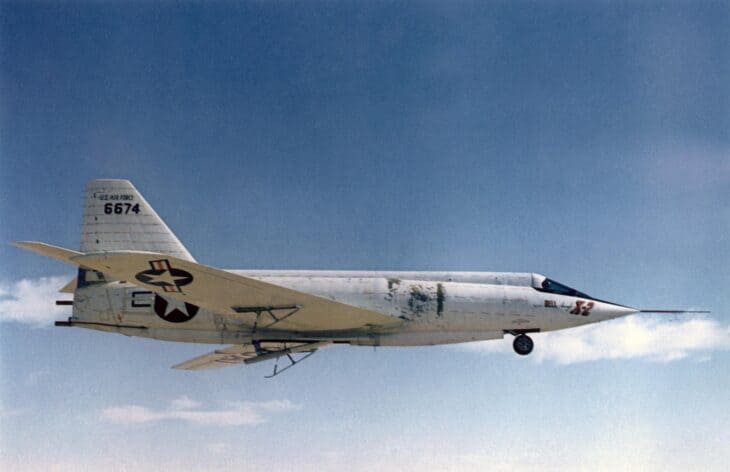
On September 27, 1956, Milburn Apt flew the X-2 to 2,094 mph (3,370 km/h), Mach 3.196, the first flight past three times the speed of sound. The aircraft then tumbled out of control from inertia coupling, and Apt was killed when his escape capsule hit the ground.
Weeks earlier, Iven Kincheloe had taken it to 126,200 feet, a record that stood until the X-15. It ranks 12th because the X-15 soon passed both of its records.
What about the Skyrocket and the SR-71?
The first aircraft to fly at Mach 2 was not an X-plane. Scott Crossfield reached Mach 2.005 in the Douglas D-558-II Skyrocket on November 20, 1953, in a Navy and NACA program that used a Douglas designation. The SR-71 Blackbird is missing for a different reason: it was a production reconnaissance aircraft built to fly operational missions, not a research vehicle.
The X-Planes Still to Come
Three new X-planes are being built as of October 2026. The DARPA and Aurora X-65 CRANE steers with jets of air instead of moving control surfaces; its wings were delivered in June 2026, and first flight has slipped to 2027.
General Atomics’ X-68A LongShot, designated on February 17, 2026, is an air-launched drone that carries air-to-air missiles, with a first launch from an F-15 expected around the end of 2026.
Bell’s X-76 SPRINT, announced on March 9, 2026, stops and folds its rotors in flight to cruise at 400 to 450 knots, with flight tests planned for early 2028.
The Boeing and NASA X-66, a truss-braced wing airliner demonstrator, was paused in April 2025 in favor of ground testing.
The X-62A VISTA, a heavily modified F-16, has become the Air Force’s AI test jet: in 2023 an AI flew it against a human-piloted F-16, and Air Force Secretary Frank Kendall rode in it under AI control in May 2024.
The X-Planes That Never Flew
Not every X number became an aircraft. Defense Secretary Robert McNamara canceled the X-20 Dyna-Soar spaceplane on December 10, 1963, and Congress ended funding for the X-30 National Aerospace Plane in 1994.
NASA stopped funding the X-33 on March 1, 2001, after spending $912 million on a vehicle that never flew. The all-electric X-57 Maxwell ended the same way in 2023, never leaving the ground.
Every X-Plane Ever Designated
The series runs from X-1 to X-68, plus the X-76, whose number nods to 1776 for the country’s 250th anniversary.
Several of the early numbers went to missiles and rockets, X-52 was skipped to avoid confusion with the B-52, and the X-58 and X-67 slots went to the XQ-58A and XQ-67A drones.
| Designation | Builder | What it tested |
|---|---|---|
| X-1 (and X-1A to X-1E) | Bell | Supersonic and high-altitude flight |
| X-2 Starbuster | Bell | Mach 3 and high-altitude flight |
| X-3 Stiletto | Douglas | Trapezoidal wing, titanium structure |
| X-4 Bantam | Northrop | Tailless transonic flight |
| X-5 | Bell | Variable wing sweep in flight |
| X-6 | Convair | Nuclear propulsion (never built) |
| X-7 | Lockheed | Ramjet test missile |
| X-8 Aerobee | Aerojet | Upper-atmosphere research rocket |
| X-9 Shrike | Bell | Guided missile technology |
| X-10 | North American | Navaho cruise missile testbed |
| X-11 | Convair | Atlas missile testbed |
| X-12 | Convair | Atlas missile testbed |
| X-13 Vertijet | Ryan | Jet-powered tail-sitting VTOL |
| X-14 | Bell | Vectored-thrust VTOL |
| X-15 (and X-15A-2) | North American | Hypersonic and high-altitude flight |
| X-16 | Bell | High-altitude reconnaissance (never flew) |
| X-17 | Lockheed | Reentry research missile |
| X-18 | Hiller | Tilt-wing V/STOL |
| X-19 | Curtiss-Wright | Tandem tiltrotor VTOL |
| X-20 Dyna-Soar | Boeing | Military spaceplane (canceled 1963) |
| X-21A | Northrop | Boundary-layer control |
| X-22 | Bell | Ducted-fan V/STOL |
| X-23 PRIME | Martin Marietta | Maneuvering reentry |
| X-24A and X-24B | Martin Marietta | Lifting bodies |
| X-25 | Bensen | Autogyro for downed pilots |
| X-26 Frigate | Schweizer | Training glider and quiet observation |
| X-27 | Lockheed | Fighter research (never flew) |
| X-28 Sea Skimmer | Osprey | Low-cost patrol seaplane |
| X-29 | Grumman | Forward-swept wing |
| X-30 NASP | Rockwell | Single-stage-to-orbit spaceplane (canceled) |
| X-31 | Rockwell-MBB | Thrust-vectoring supermaneuverability |
| X-32 | Boeing | Joint Strike Fighter demonstrator |
| X-33 | Lockheed Martin | Reusable launch vehicle (never flew) |
| X-34 | Orbital Sciences | Uncrewed reusable spaceplane (never flew) |
| X-35 | Lockheed Martin | Joint Strike Fighter demonstrator |
| X-36 | McDonnell Douglas | Scale tailless fighter |
| X-37 | Boeing | Reusable orbital spaceplane |
| X-38 | Scaled Composites | Space station crew return vehicle |
| X-39 | Not disclosed | Future aircraft technology |
| X-40A | Boeing | Scale X-37 prototype |
| X-41 | Not disclosed | Maneuvering reentry vehicle |
| X-42 | Orbital Sciences | Upper-stage rocket (never flew) |
| X-43A Hyper-X | Micro-Craft | Hypersonic scramjet |
| X-44 MANTA | Lockheed Martin | Tailless thrust vectoring (never flew) |
| X-45 | Boeing | Unmanned combat air vehicle |
| X-46 | Boeing | Naval unmanned combat air vehicle (never flew) |
| X-47A and X-47B | Northrop Grumman | Carrier-based unmanned combat air vehicle |
| X-48 | Boeing | Blended wing body |
| X-49 SpeedHawk | Piasecki | Compound helicopter |
| X-50 Dragonfly | Boeing | Canard rotor/wing |
| X-51 Waverider | Boeing | Hypersonic scramjet |
| X-52 | None | Skipped |
| X-53 | Boeing | Active aeroelastic wing |
| X-54 | Gulfstream | Low-boom supersonic research |
| X-55 | Lockheed Martin | Composite cargo aircraft |
| X-56 | Lockheed Martin | Flutter suppression |
| X-57 Maxwell | ESAero | All-electric propulsion (never flew) |
| X-58 | Kratos | Assigned as the XQ-58A Valkyrie drone |
| X-59 | Lockheed Martin | Quiet supersonic flight |
| X-60 | Generation Orbit | Air-launched hypersonic rocket |
| X-61 Gremlins | Dynetics | Air-launched, air-recovered drone |
| X-62 VISTA | Lockheed Martin and Calspan | In-flight simulator and AI flight |
| X-63 | ABL Space Systems | Launch vehicle testbed |
| X-64 | Invocon | Launch vehicle testbed |
| X-65 CRANE | Aurora Flight Sciences | Active flow control |
| X-66 | Boeing | Transonic truss-braced wing |
| X-67 | General Atomics | Assigned as the XQ-67A drone |
| X-68 LongShot | General Atomics | Air-launched missile-carrying drone |
| X-76 SPRINT | Bell | High-speed stop-fold rotor VTOL |
Some of the less famous numbers did serious work too. The remotely piloted Boeing X-48B, for one, flew 92 times between 2007 and 2010 to test the blended wing body shape for Boeing, NASA and the Air Force Research Laboratory.
FAQ
Sources and references used for research and fact-checking.
- NASA, X-15 Hypersonic Research Program
- NASA, 65 Years Ago: First Powered Flight of the X-15
- NASA, The X-15, the Pilot, and the Space Shuttle
- NASA, X-15 Space Pioneers Now Honored as Astronauts
- NASA, First Generation X-1
- Smithsonian National Air and Space Museum, Bell X-1
- NASA, Bell X-2 Fact Sheet
- Lockheed Martin, Lockheed Martin Joint Strike Fighter Takes Flight
- Lockheed Martin, The Hat Trick: History of Mission X
- Lockheed Martin, Lockheed Martin Begins Next Phase for JSF
- Boeing, Boeing JSF Concept Demonstrator Completes First Flight
- United Launch Alliance, Atlas V Successfully Launches OTV Mission
- US Space Force, X-37B Orbital Test Vehicle Concludes Sixth Successful Mission
- US Space Force, X-37B Orbital Test Vehicle Concludes Seventh Successful Mission
- US Space Force, US Space Force Launches Eighth X-37B Mission
- Boeing, X-37B
- NASA, NASA's X-59 Completes First Flight
- Lockheed Martin, X-59 Media Kit
- NASA, X-59 First Supersonic Flight
- NASA, X-59 Blog, June 12, 2026
- NASA, NASA's X-59 Completes Record Six Flights in One Week
- Federal Register, Leading the World in Supersonic Flight (Executive Order 14304)
- Federal Register, Enabling Supersonic Overland Flight (proposed rule)
- NASA, X-43A Hypersonic Scramjet
- NASA, Guinness Recognizes NASA's X-43A Scramjet Speed Record
- Guinness World Records, Fastest aircraft, air-breathing engine
- US Air Force, X-51A Waverider Achieves Breakthrough in Final Flight
- NASA, NASA Armstrong Fact Sheet: X-5 Research Aircraft
- NASA, Lifting Bodies
- Naval Air Systems Command, X-47B Makes First Arrested Landing at Sea
- Defense Media Network, First X-47B Carrier Catapult Launch
- US Navy, X-47B First to Complete Autonomous Aerial Refueling
- Wikipedia, Boeing X-37
- US Air Force, SecAF Kendall Experiences VISTA of Future Flight Test
- NASA, X-29 Demonstrator
- NASA, Sweeping Forward: Developing and Flight Testing the Grumman X-29A
- NASA, X-31 Demonstrator
- NASA, Flying Beyond the Stall: The X-31 and the Advent of Supermaneuverability
- NASA Armstrong, X-31
- NASA, D-558-II Transonic Aircraft
- DARPA, DARPA's New X-76: Speed of a Jet, Freedom of a Helicopter
- Bell, Bell Completes Critical Design Review on DARPA SPRINT X-Plane
- General Atomics, Air Force Awards DARPA GA-ASI LongShot New Designation X-68A
- Defense News, Two-Year Flight Delay for DARPA X-Plane That Steers With Air Bursts
- AIN, DARPA X-65 CRANE Project Moves Closer to First Flight
- NASA, NASA, Boeing Consider New Thin-Wing Aircraft Research Focus
- Air Force Test Center, NF-16D VISTA Becomes X-62A
- DARPA, DARPA AI Flies Against Human Pilot
- Air Force Historical Foundation, December 10, 1963
- NASA, X-30
- Spaceflight Now, NASA Cancels X-33 and X-34
- NASA, X-57 Project Creates Paths Toward Electric Aviation
- NASA, X-48B Blended Wing Body
- designation-systems.net, Appendix 4: Undesignated Vehicles and X-Planes
- designation-systems.net, Appendix 1: Early Missiles and Drones
- US Air Force, XQ-58A Valkyrie Demonstrator Completes Inaugural Flight
- US Air Force, AFRL's XQ-67A Makes First Successful Flight
- GlobalSecurity.org, X-52
- Wikipedia, List of X-planes
Get the Newsletter
The latest aviation news and stories sent to your inbox.
About the Author

Tim is the owner and lead editor of AeroCorner since 2019, overseeing aviation content covering aircraft, airlines, airports, and the broader aviation industry. Through years of researching, writing, editing, and publishing aviation-focused content, he has developed extensive practical knowledge of commercial aviation and air travel. Based in Asia and a frequent traveler himself, Tim also brings firsthand passenger experience to AeroCorner’s coverage. Outside of publishing, he has also explored aviation firsthand through hands-on flight training in New Zealand.