Future
The blended-wing-body demonstrator exploring new airliner efficiency concepts
The latest aviation news and stories sent to your inbox.
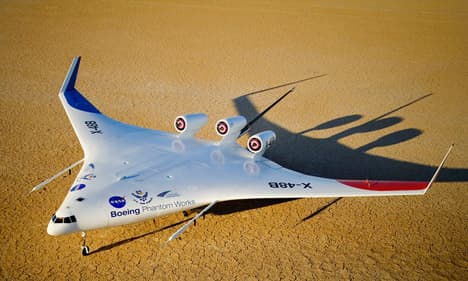
The Boeing X-48B was an experimental unmanned aircraft built to test blended-wing-body aerodynamics. Developed by Boeing Phantom Works in partnership with NASA, it aimed to validate fuel-efficient transport concepts. The aircraft provided data for future large-scale designs.
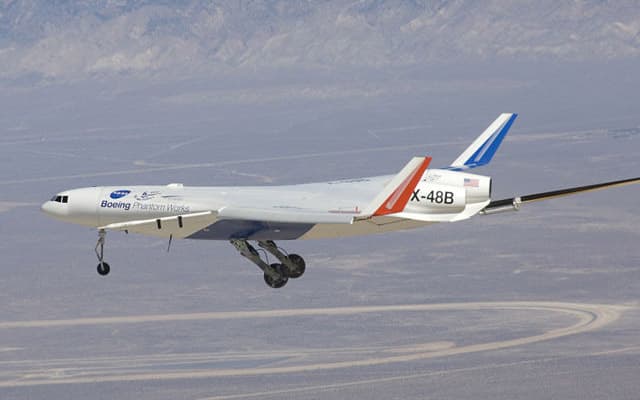

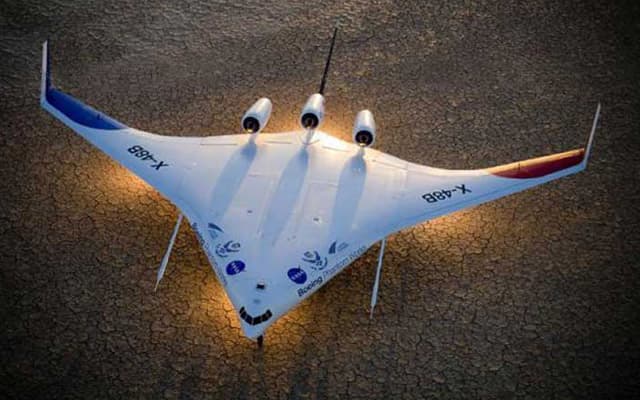

The X-48B program originated in the early 2000s as part of NASA’s efforts to explore advanced airframe configurations for future transports. The subscale demonstrator first flew in 2007 at Edwards Air Force Base. Unlike conventional tube-and-wing aircraft, the blended-wing-body configuration integrates the fuselage and wing into a single lifting surface, reducing drag and potentially improving fuel efficiency.
The remotely piloted X-48B had a wingspan of about 21 feet (6.4 m) and was powered by three small turbojet engines. Although much smaller than a commercial transport, its design allowed engineers to study flight characteristics, stability, and control laws representative of a much larger aircraft. The blended-wing-body concept offers potential advantages in payload volume and structural efficiency compared with traditional layouts.
Flight testing concluded in the early 2010s after dozens of research sorties. The data collected helped refine computational models and informed subsequent blended-wing research programs. While no full-scale commercial airliner has yet adopted the configuration, the X-48B demonstrated that unconventional airframes can be controlled effectively and may contribute to future sustainable aviation designs.