Military Aircraft
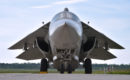
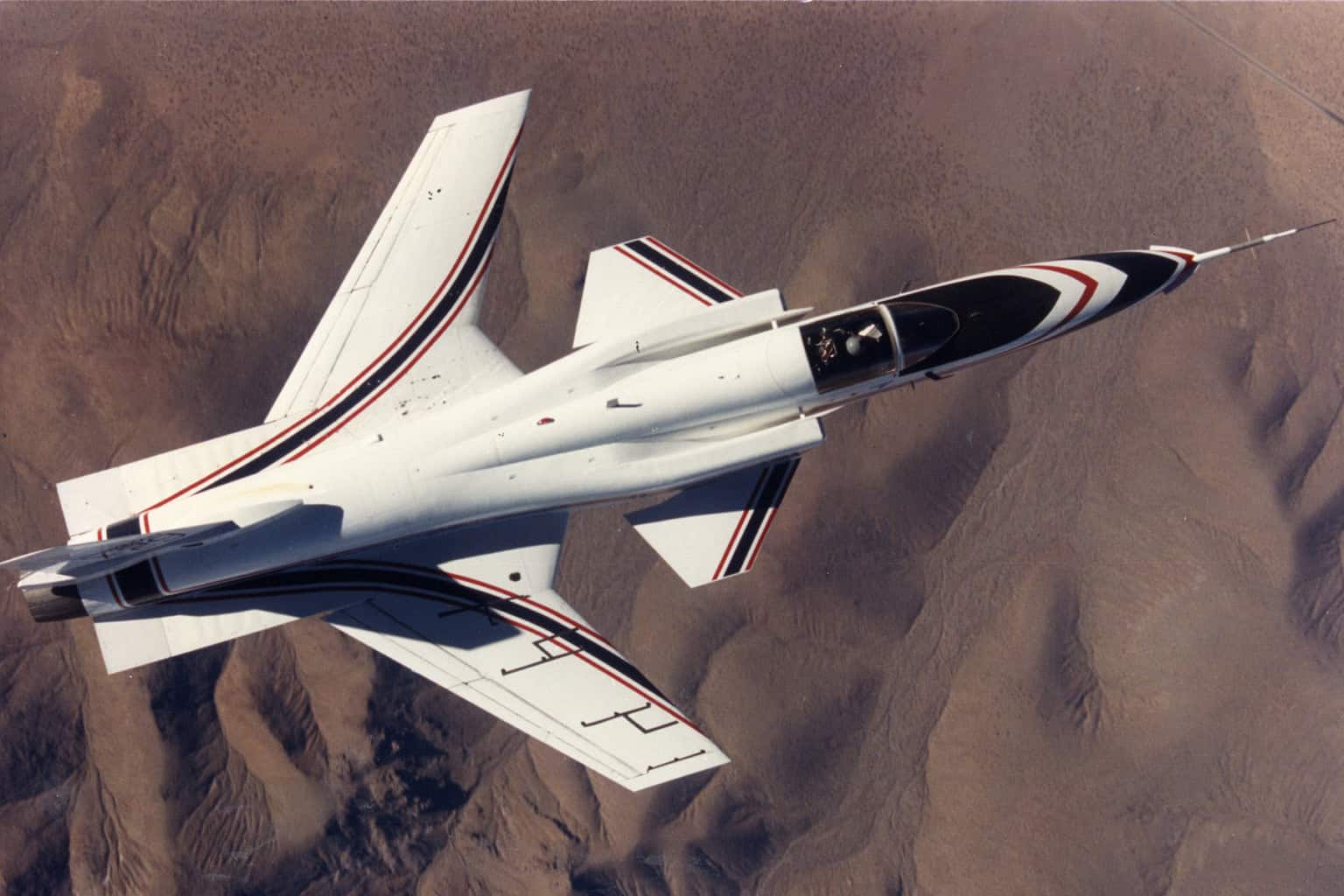
The Grumman X-29 was a NASA, DARPA and Air Force research jet built to test the forward-swept wing, a layout that needed computers to keep it stable.
Updated: by Tim de Vries
The latest aviation news and stories sent to your inbox.
The Grumman X-29 was an experimental single-engine jet with forward-swept wings and canards, built to test whether a computer could keep an inherently unstable aircraft under control. Two were built, and they flew 422 research missions between 1984 and 1992. It never entered production, but its composite wing and fly-by-wire lessons carried into later fighter design.
Live Fleet Activity (X29)
Fetching live data…


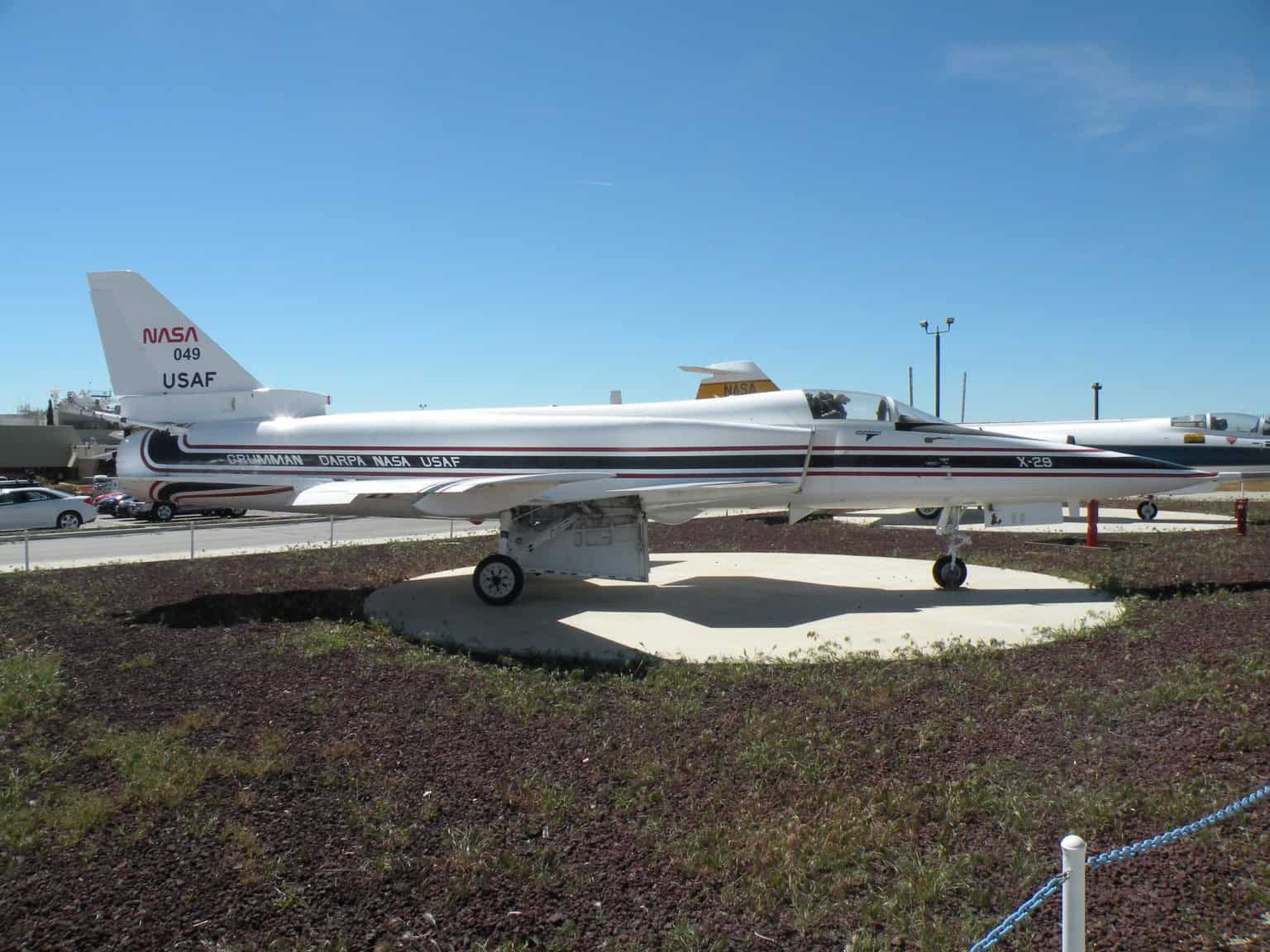

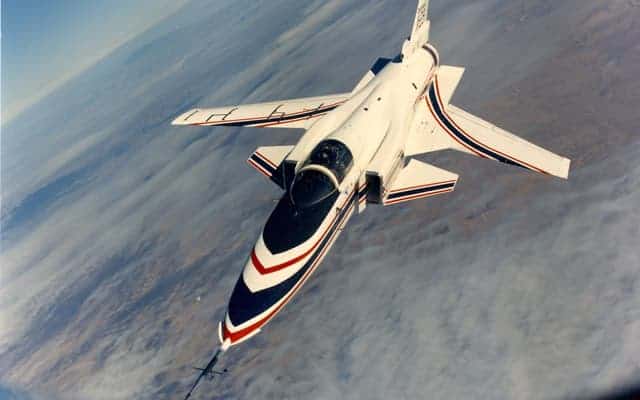
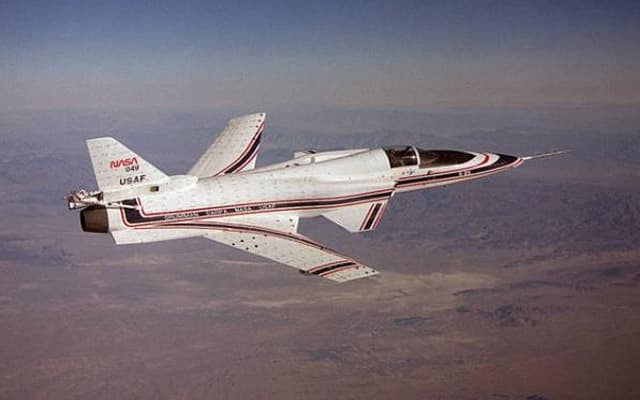
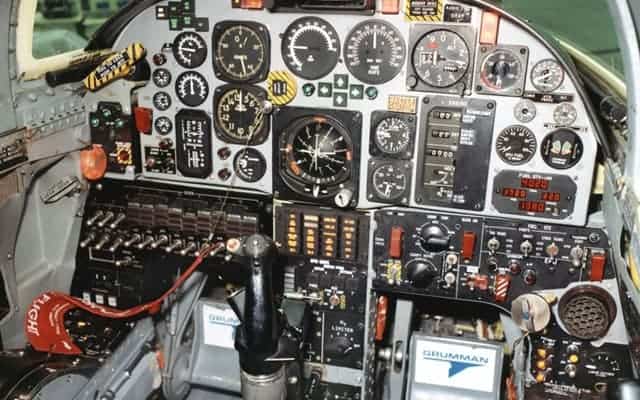
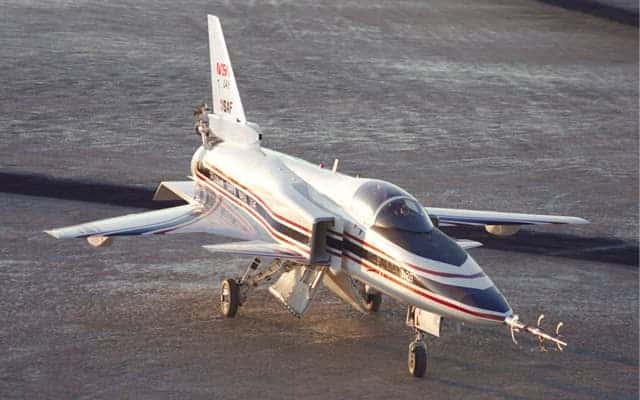
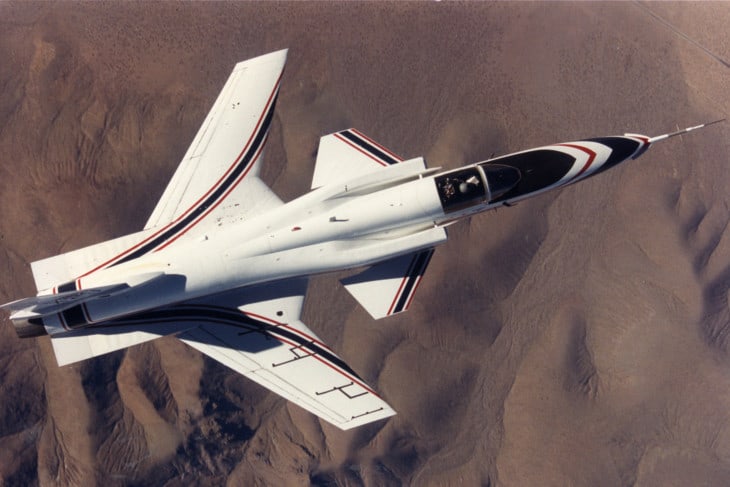
The Grumman X-29 was an experimental jet built to test a forward-swept wing, canard control surfaces and other new technologies. NASA, DARPA and the U.S. Air Force ran the program together.
Grumman won a December 1981 contract worth $87 million for two aircraft. The first flew on December 14, 1984, from Edwards Air Force Base in California.
The X-29 was a research tool, not a prototype fighter. It carried no weapons, and its job was to build an engineering database for future aircraft design.

The program set out to investigate high angle-of-attack handling and military utility. The structural problem was that a forward-swept wing tends to twist and diverge under load, which a conventional metal wing could not resist.
Grumman answered with a thin supercritical wing whose composite skin used aeroelastic tailoring, laid up to add strength and prevent divergence. The substructure and airframe were aluminum and titanium.
The wing span is 27 ft 2 in (8.29 m), and the pilot sat in a fuselage 48 ft 1 in long before the nose probe. The airframe reused two F-5A forward fuselages to save cost.
The canards sat ahead of the wings and shared lift with them. They gave primary pitch control.
The layout was highly unstable on purpose. The aircraft was balanced so that its center of gravity sat well behind the aerodynamic center, which is unstable by design and needs constant computer correction.
Three digital flight computers, backed by three analog ones, corrected the aircraft about 40 times a second.
On December 13, 1985, an X-29 became the first forward-swept-wing aircraft to fly supersonic in level flight. The test program ran from 1984 to 1992 in several phases.
The two aircraft flew 422 research missions in total. Aircraft No. 1 flew 242 of them in the first phase, and No. 2 flew 120 in the second plus 60 more with vortex flow control.
No. 2 first flew on May 23, 1989, and pushed into high angle-of-attack flight. NASA reports good control up to 45 degrees, and a momentary pitch-up reached 67 degrees. No. 1 was limited to 21 degrees.

The full specification table for the aircraft is on this page. A few figures need context.
The exterior length on the panel includes the pitot nose probe, which is why it runs longer than the fuselage figure above. NASA gives the maximum speed as Mach 1.6.
Sources disagree on empty weight and maximum altitude by a few hundred pounds and 5,000 feet, so we leave those to the panel and the references below.
The X-29 proved the forward-swept wing could work, but it did not prove it was worth building. The computer limited how fast the aircraft could start a pitch maneuver, so the extra agility predicted on paper never fully showed up.
The X-29 is also a lesson in cost: the wing needed special composite construction to survive its own loads.
NASA says the data went into an engineering database for future aircraft design.
Aircraft No. 1 is at the National Museum of the U.S. Air Force in Dayton, Ohio. Aircraft No. 2 is at NASA’s Armstrong Flight Research Center in California.

It did not fail as a research aircraft. It proved a forward-swept wing could be flown, but its control software limited the agility predicted for it, and no production fighter used the layout.
It was a forward-swept wing jet with canards that a computer flew at about 40 corrections per second. It was also the first forward-swept-wing aircraft to fly supersonic in level flight, on December 13, 1985.
No source ranks aircraft by instability, so there is no verified answer. NASA describes the X-29 as highly unstable, and it needed constant computer control to fly.
Partly. Each X-29 reused the forward fuselage of an F-5A, while the wing, canards and flight controls were new.
Two were built. They flew 422 NASA research missions between 1984 and 1992.
Sources and references used for research and fact-checking.