

Table of Contents
The fastest military aircraft in the world is the Lockheed SR-71 Blackbird, which flew at 2,193.2 mph (3,529.6 km/h) on 28 July 1976. That is Mach 3.3, and half a century later no crewed air-breathing aircraft has gone faster.
Notice what the SR-71 is not: a fighter. The single most common mistake in this topic is treating “fastest military aircraft” and “fastest fighter jet” as the same question. They are not, and the answers are different aircraft.
This ranking covers crewed military aircraft of every type, reconnaissance, interceptor, bomber and fighter, ordered by verified maximum speed in level flight. Status is as of 2026.
| Rank | Aircraft | Top speed | Role | Status |
|---|---|---|---|---|
| 1 | Lockheed SR-71 Blackbird | Mach 3.3 / 2,193 mph (3,530 km/h) | Reconnaissance | Retired 1999 |
| 2 | Mikoyan-Gurevich MiG-25 Foxbat | Mach 3.2 / 2,110 mph (3,395 km/h) | Interceptor / recon | Limited service |
| 3 | North American XB-70 Valkyrie | Mach 3.08 / 2,056 mph (3,309 km/h) | Bomber prototype | Never entered service |
| 4 | Mikoyan MiG-31 Foxhound | Mach 2.83 / 1,864 mph (3,000 km/h) | Interceptor | In service |
| 5 | McDonnell Douglas F-15 Eagle | Mach 2.5 / 1,650 mph (2,655 km/h) | Fighter | In service |
| 6 | Sukhoi Su-27 Flanker | Mach 2.35 / 1,550 mph (2,500 km/h) | Fighter | In service |
| 7 | Grumman F-14 Tomcat | Mach 2.34 / 1,544 mph (2,485 km/h) | Fighter | Retired by US 2006 |
| 8 | Lockheed Martin F-22 Raptor | Mach 2.25 / 1,500 mph (2,410 km/h) | Fighter | In service |
| 9 | Tupolev Tu-160 Blackjack | Mach 2.05 / 1,380 mph (2,220 km/h) | Bomber | In service |
| 10 | Convair B-58 Hustler | Mach 2.0 / 1,320 mph (2,125 km/h) | Bomber | Retired 1970 |
How this ranking works
The measure is verified maximum speed in level flight, in Mach and mph, for crewed aircraft built for and flown by armed forces. Rocket-powered and scramjet research aircraft such as the X-15 and X-43A were faster, but they were flight-test vehicles rather than military hardware, so they get their own section instead of distorting the ranking. Missiles, rockets and spacecraft are excluded. Where an aircraft has a demonstrated speed and a lower everyday limit, both are given.
1. Lockheed SR-71 Blackbird: Mach 3.3

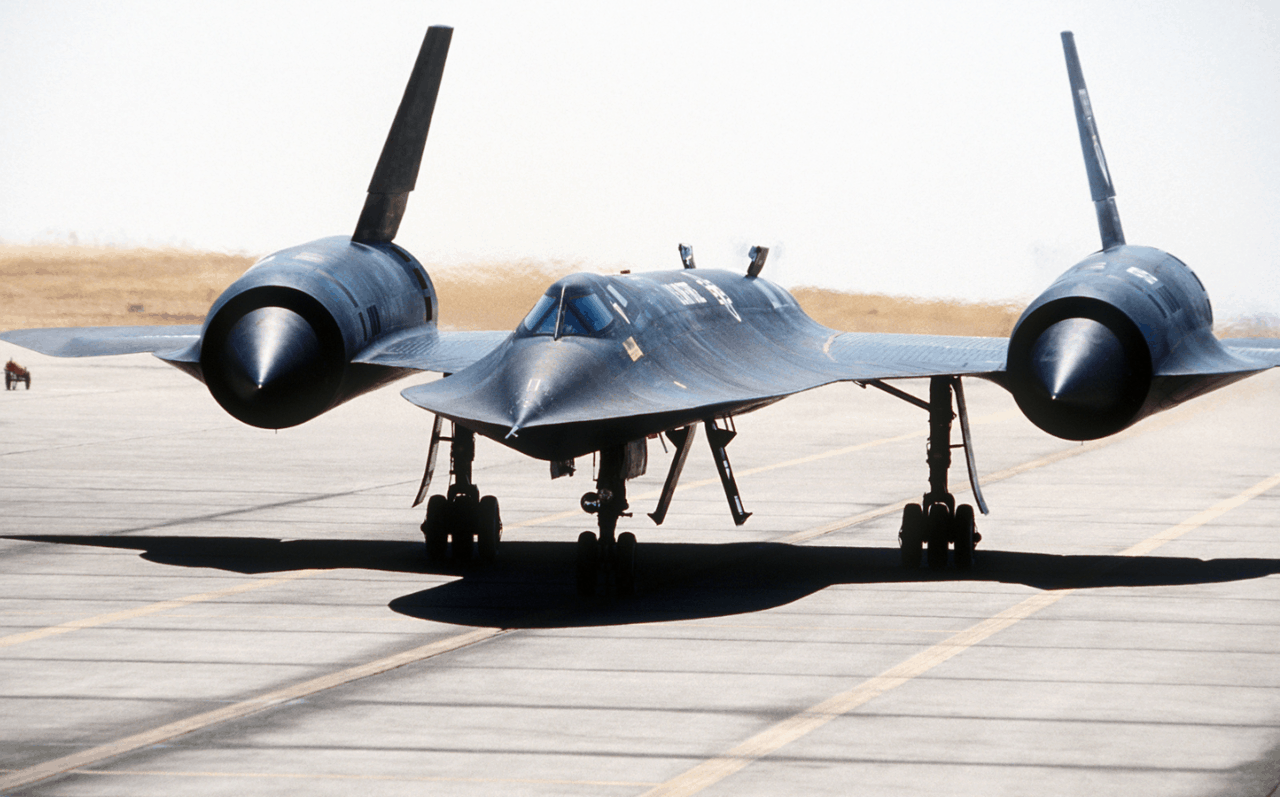


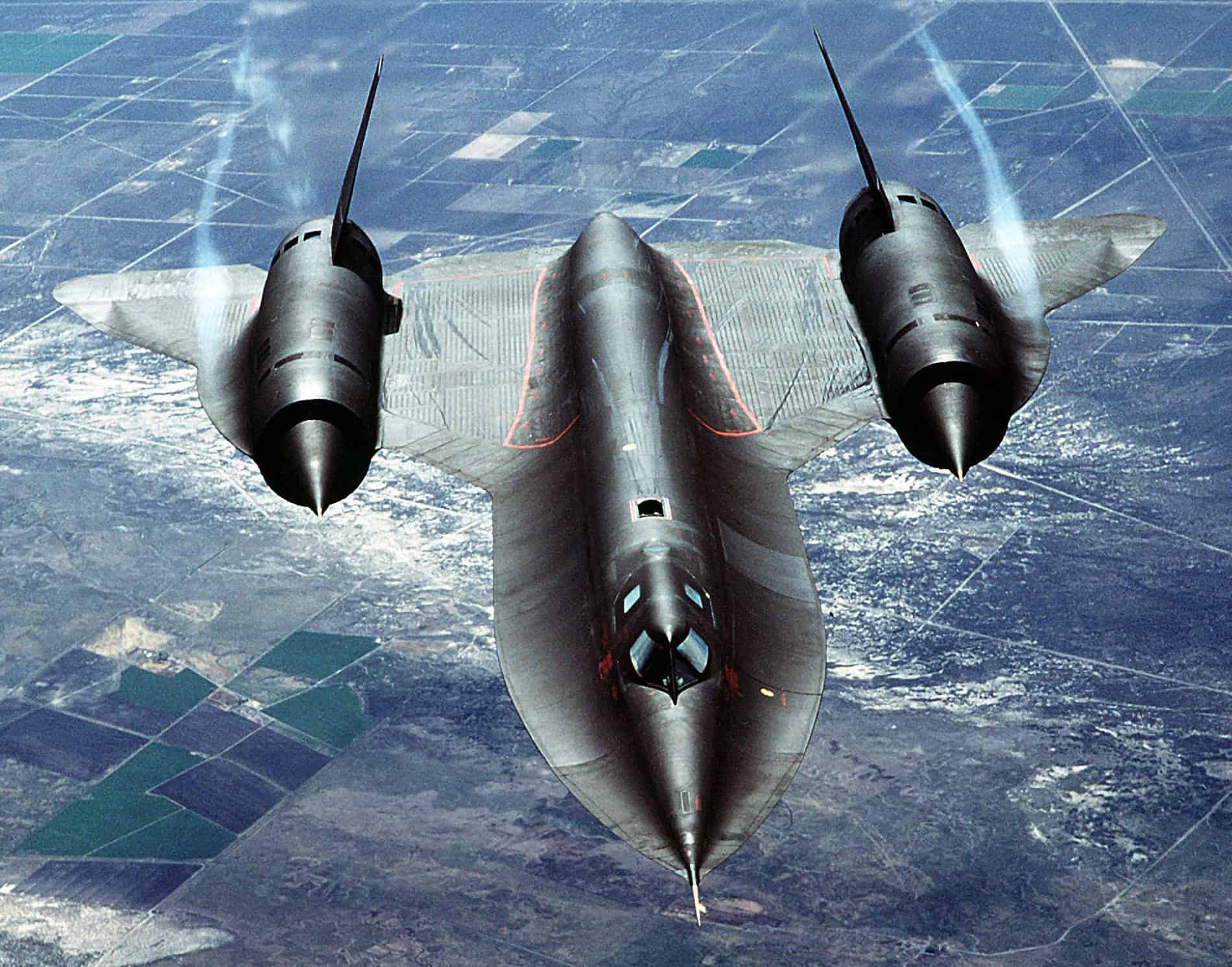
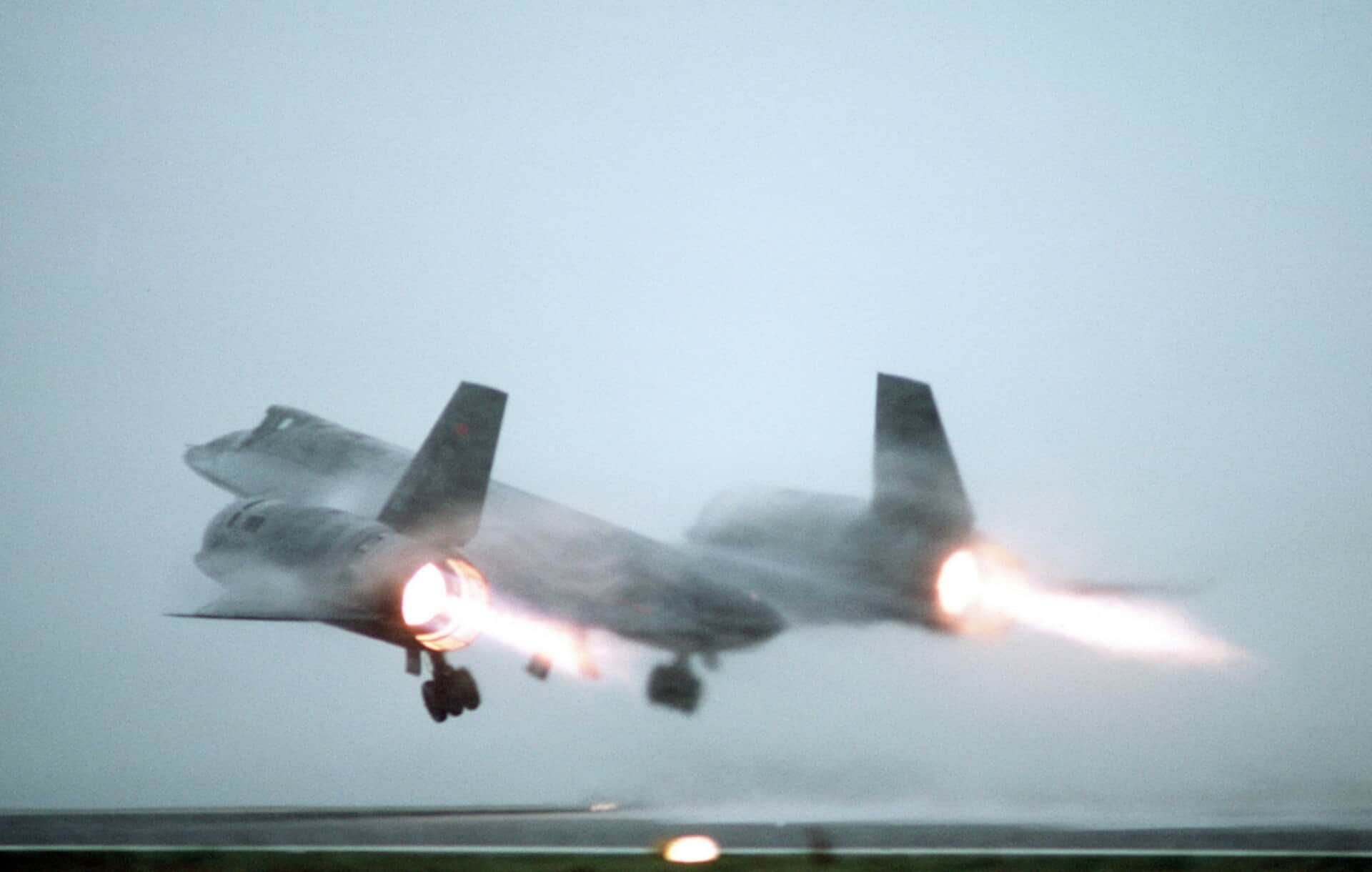


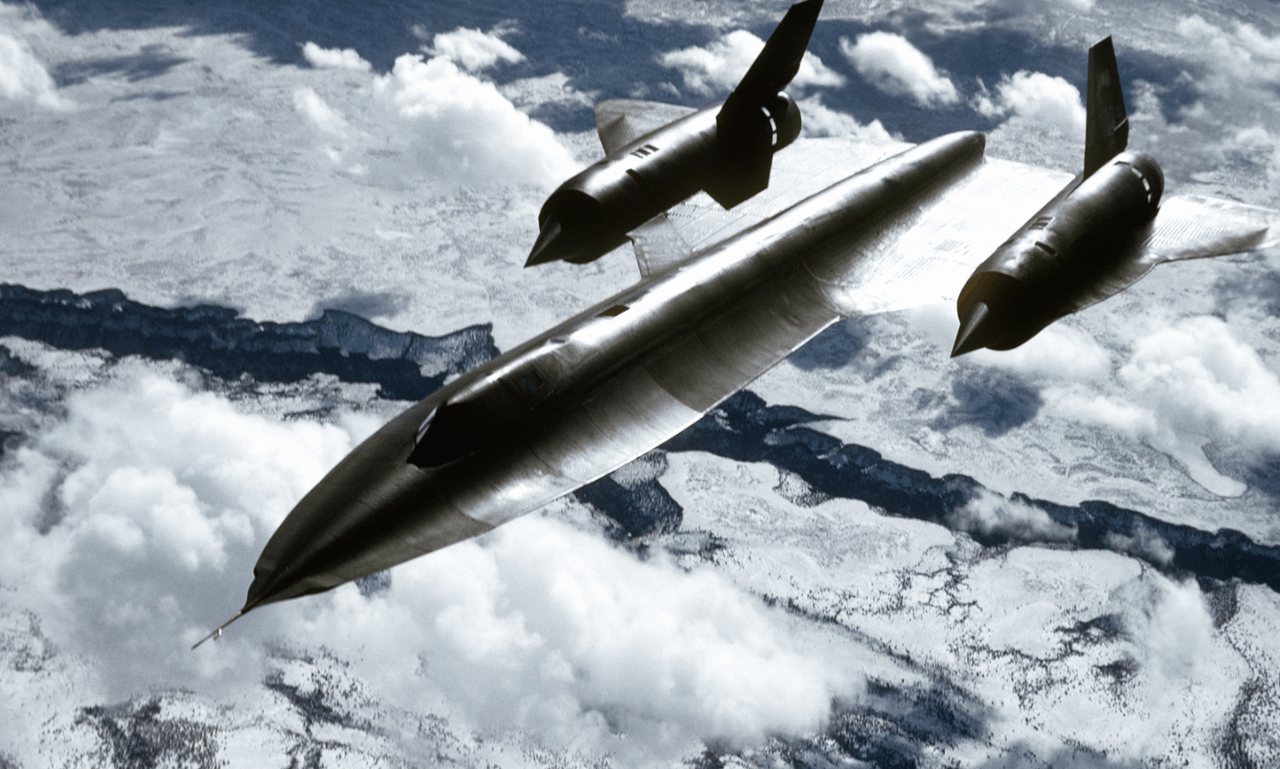


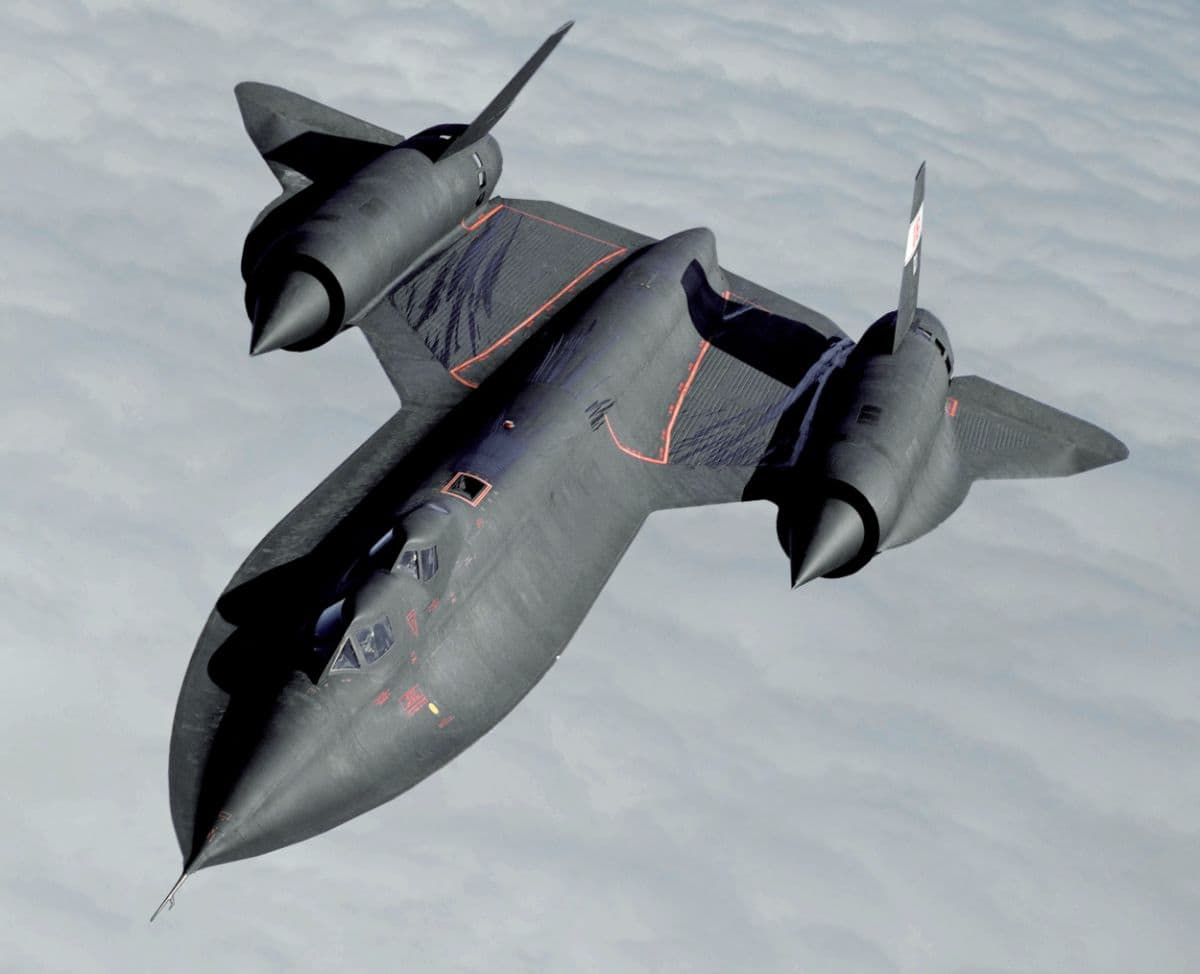

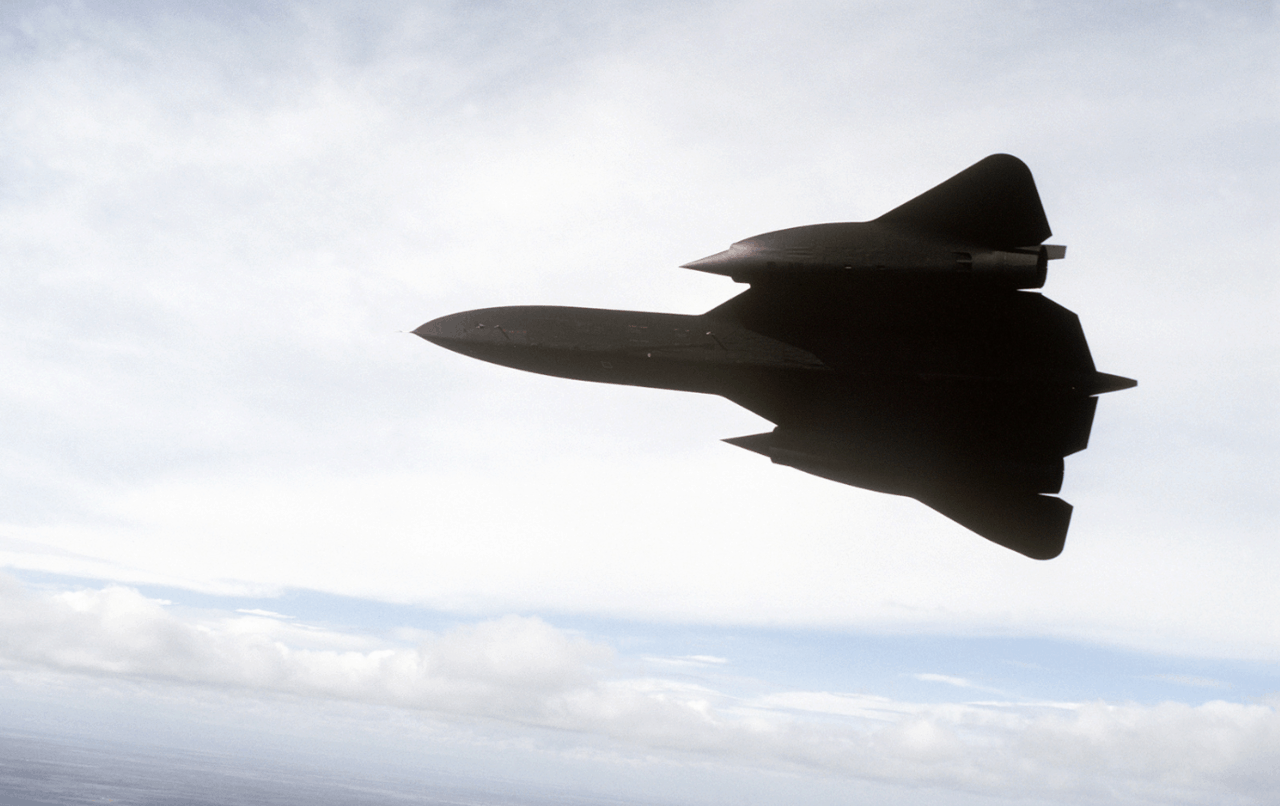
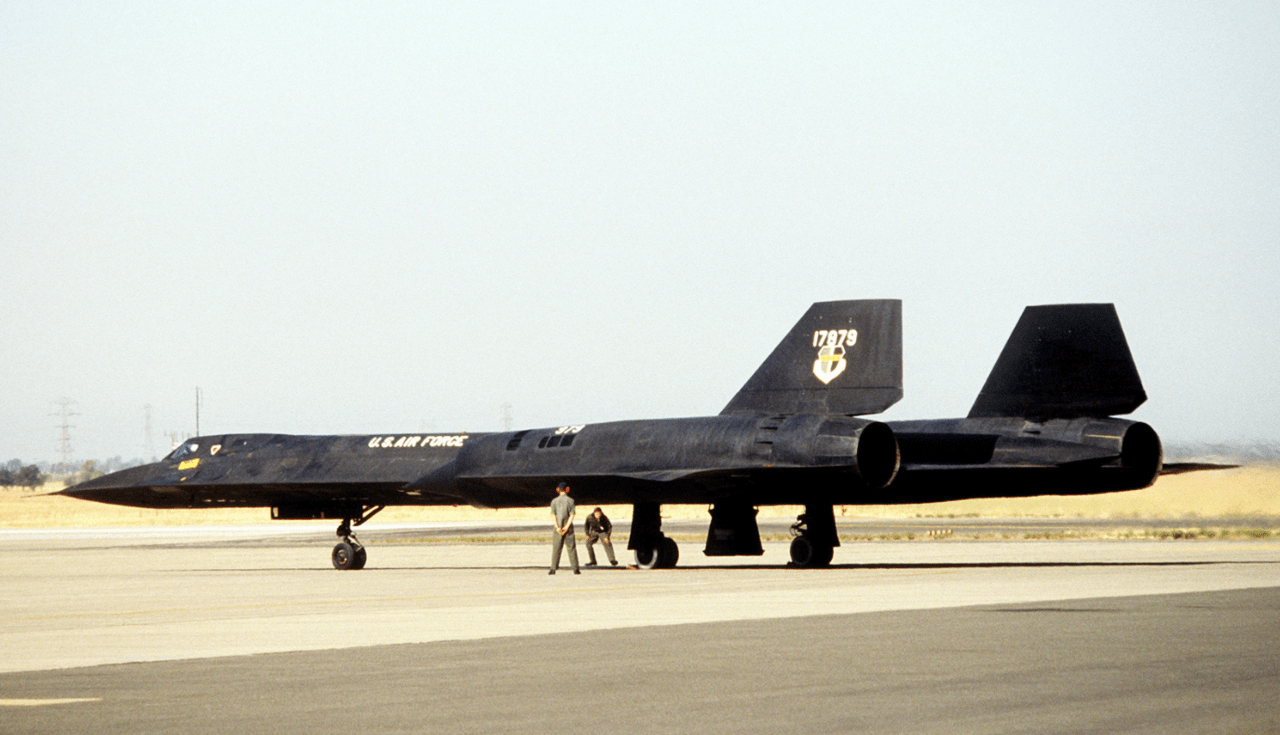

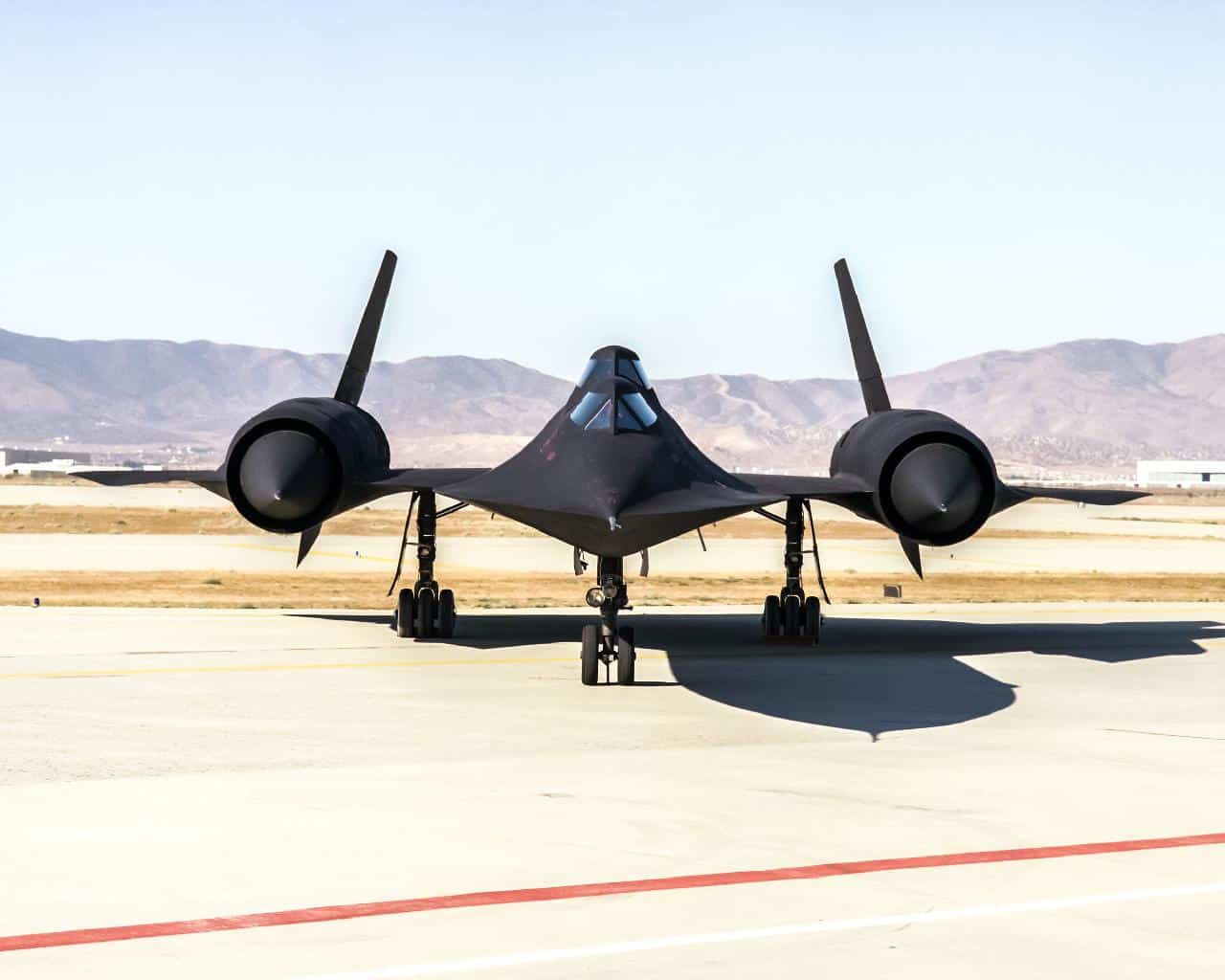
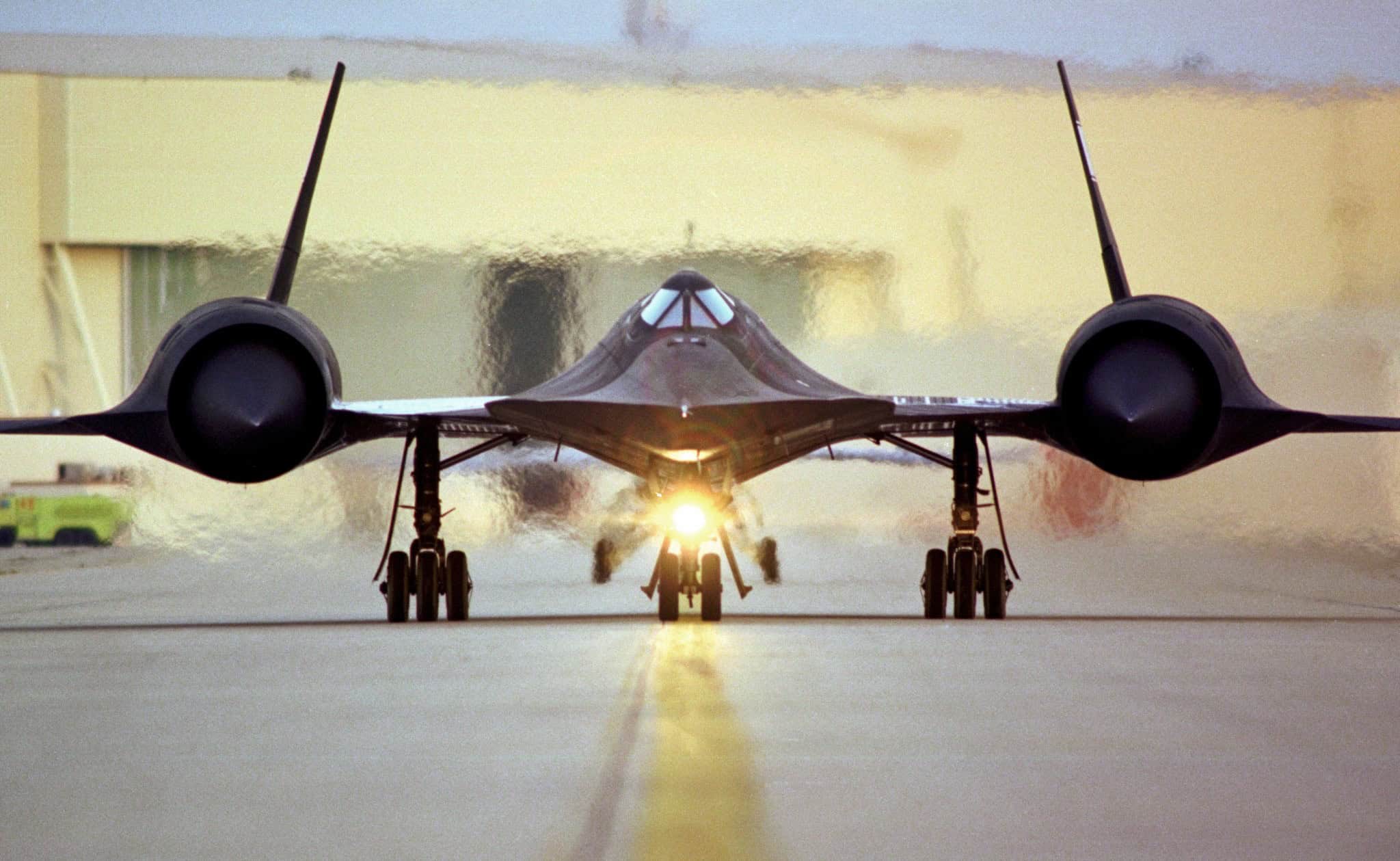

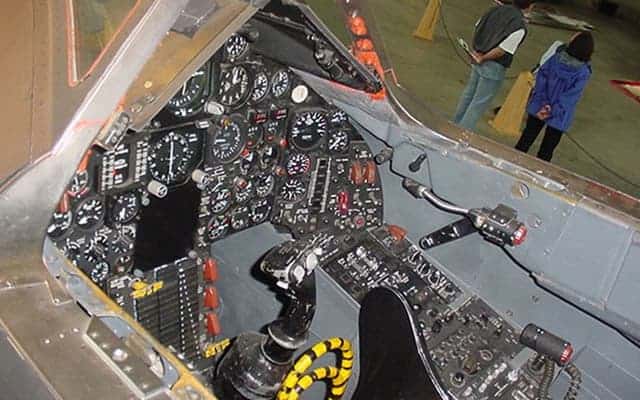
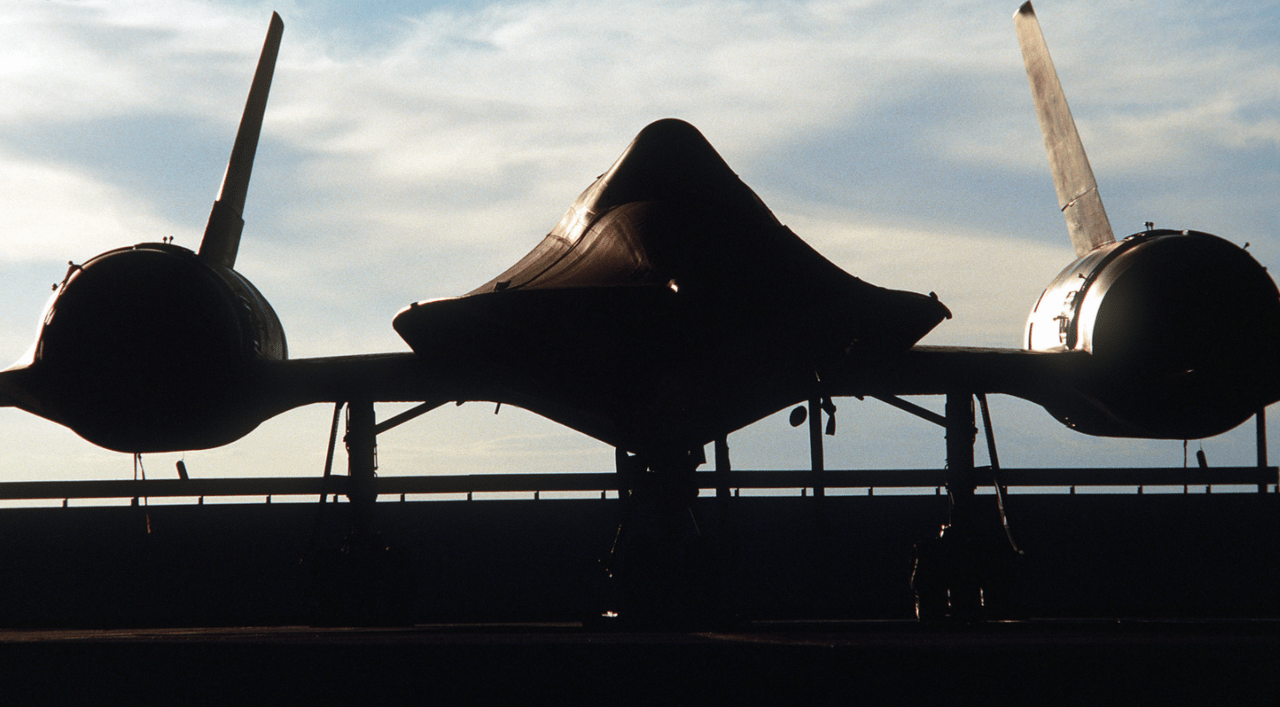

On 28 July 1976, Captain Eldon W. Joersz and Major George T. Morgan Jr. flew an SR-71 Blackbird over a measured course at Beale Air Force Base at 2,193.2 mph (3,529.6 km/h). The Fédération Aéronautique Internationale still lists it as the absolute speed record for an air-breathing crewed aircraft.
What separates the Blackbird from everything below it is that Mach 3.3 was not a stunt. The SR-71 cruised above Mach 3 for hours on operational reconnaissance missions, which no other aircraft on this list could do.
The airframe was roughly 85 percent titanium because aluminum would have softened at the 500 to 600 degree Fahrenheit skin temperatures of sustained Mach 3 flight. Its Pratt & Whitney J58 engines converted progressively into ramjets as speed rose, with most of the thrust at cruise coming from the inlet rather than the turbine.
The record flight was also not the aircraft’s ceiling. Crews were held to Mach 3.2 for the record attempt because of inlet and engine limits, and the Air Force has acknowledged higher speeds on operational flights.
It leaked fuel on the ramp on purpose
The Blackbird’s fuselage panels were built loose, because the airframe grew several inches as friction heated it to Mach 3 temperatures. On the ground the joints did not seal, so a fueled SR-71 dripped JP-7 onto the concrete until it flew, heated up and expanded shut. Crews took off with a partial load and topped off from a tanker minutes later.
2. Mikoyan-Gurevich MiG-25 Foxbat: Mach 3.2
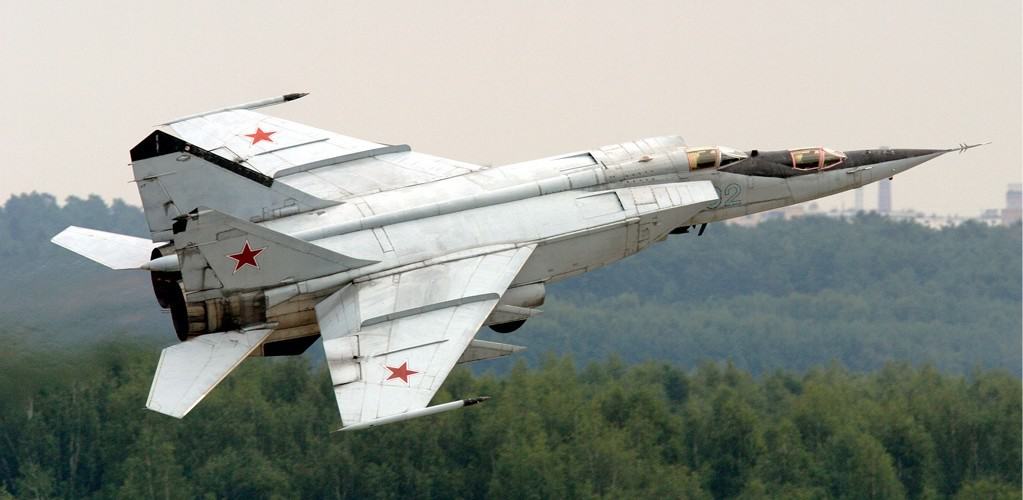
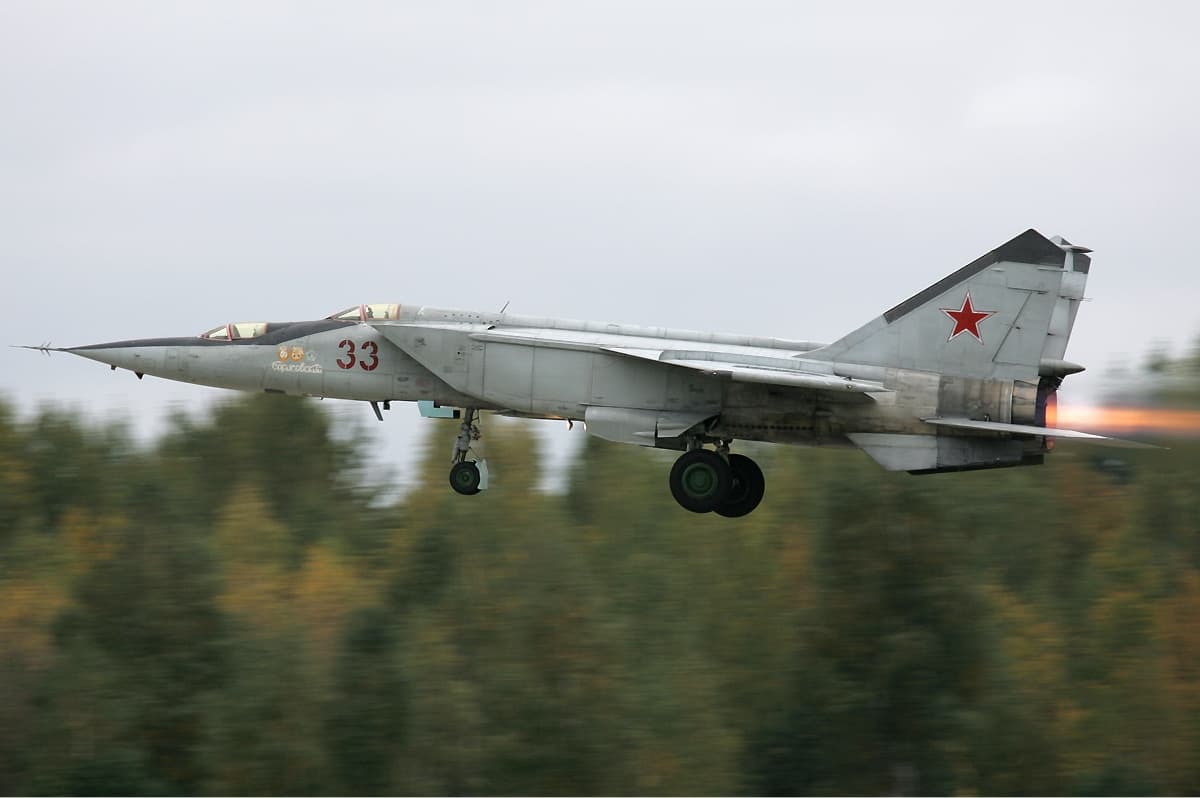


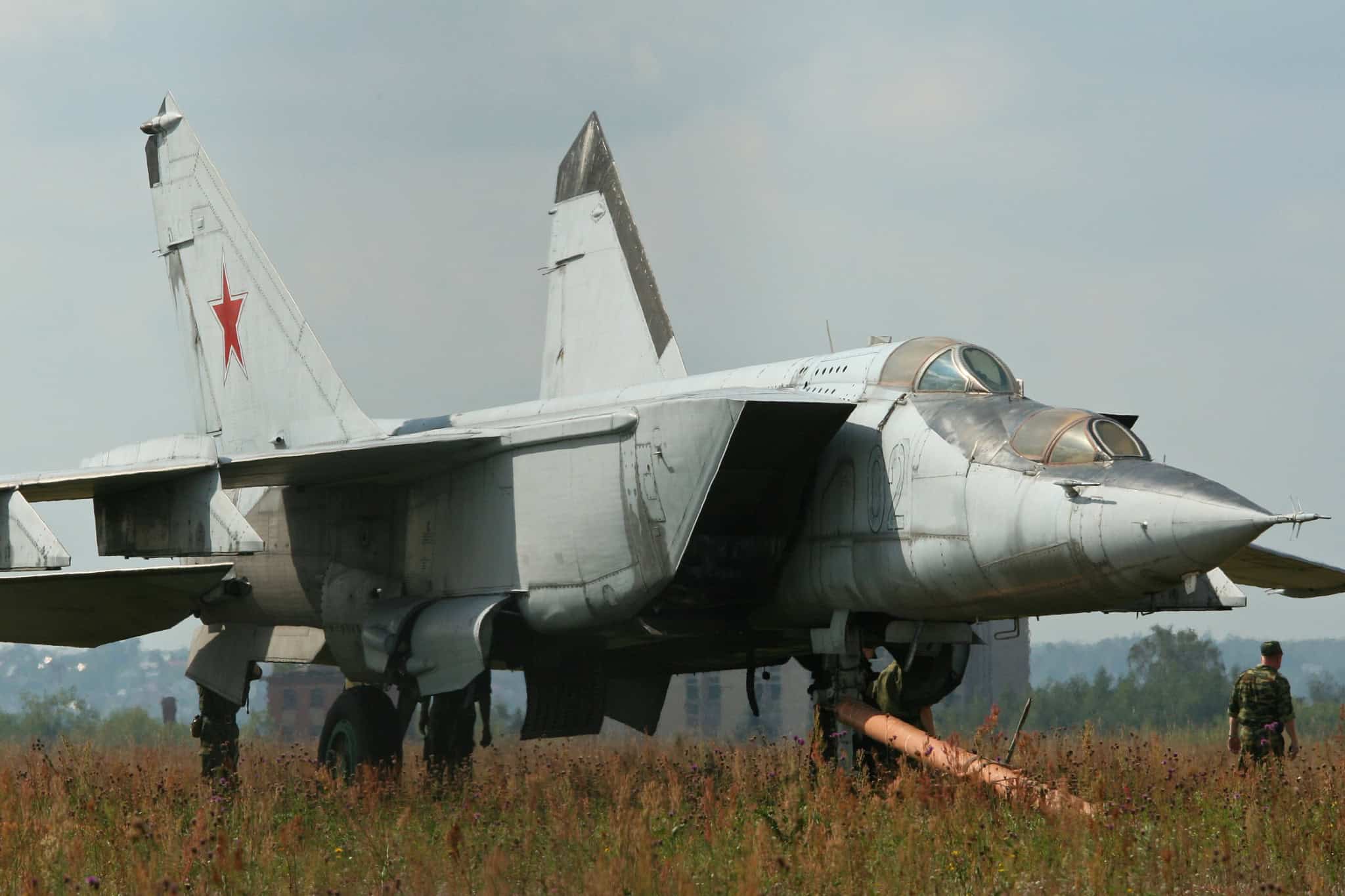
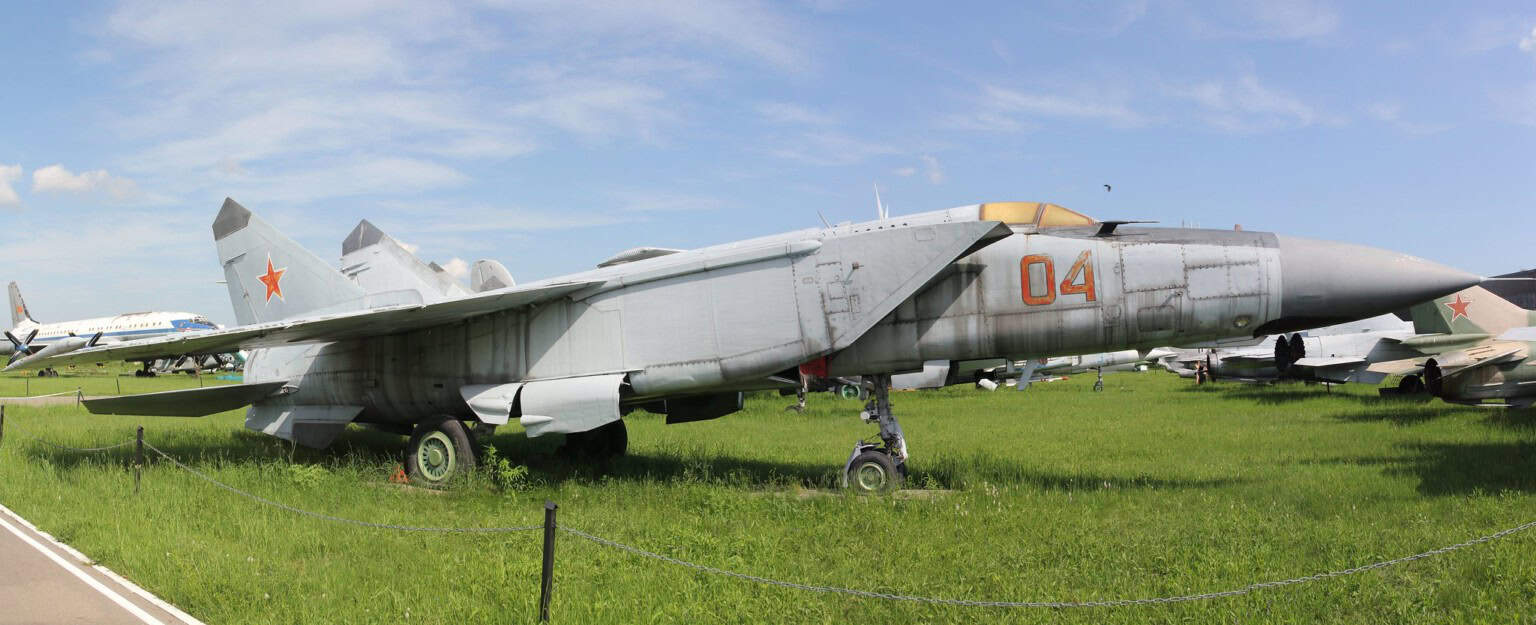
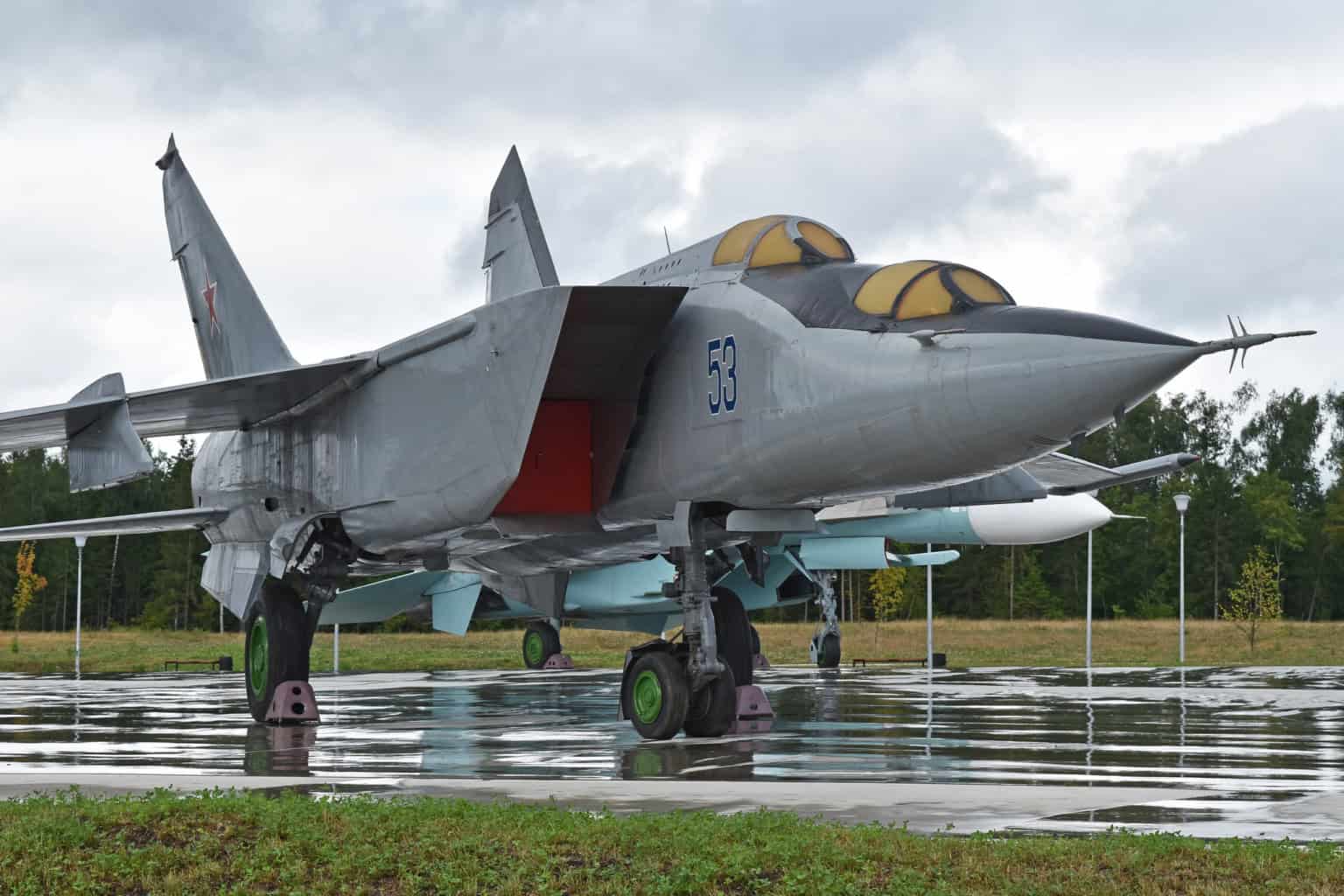


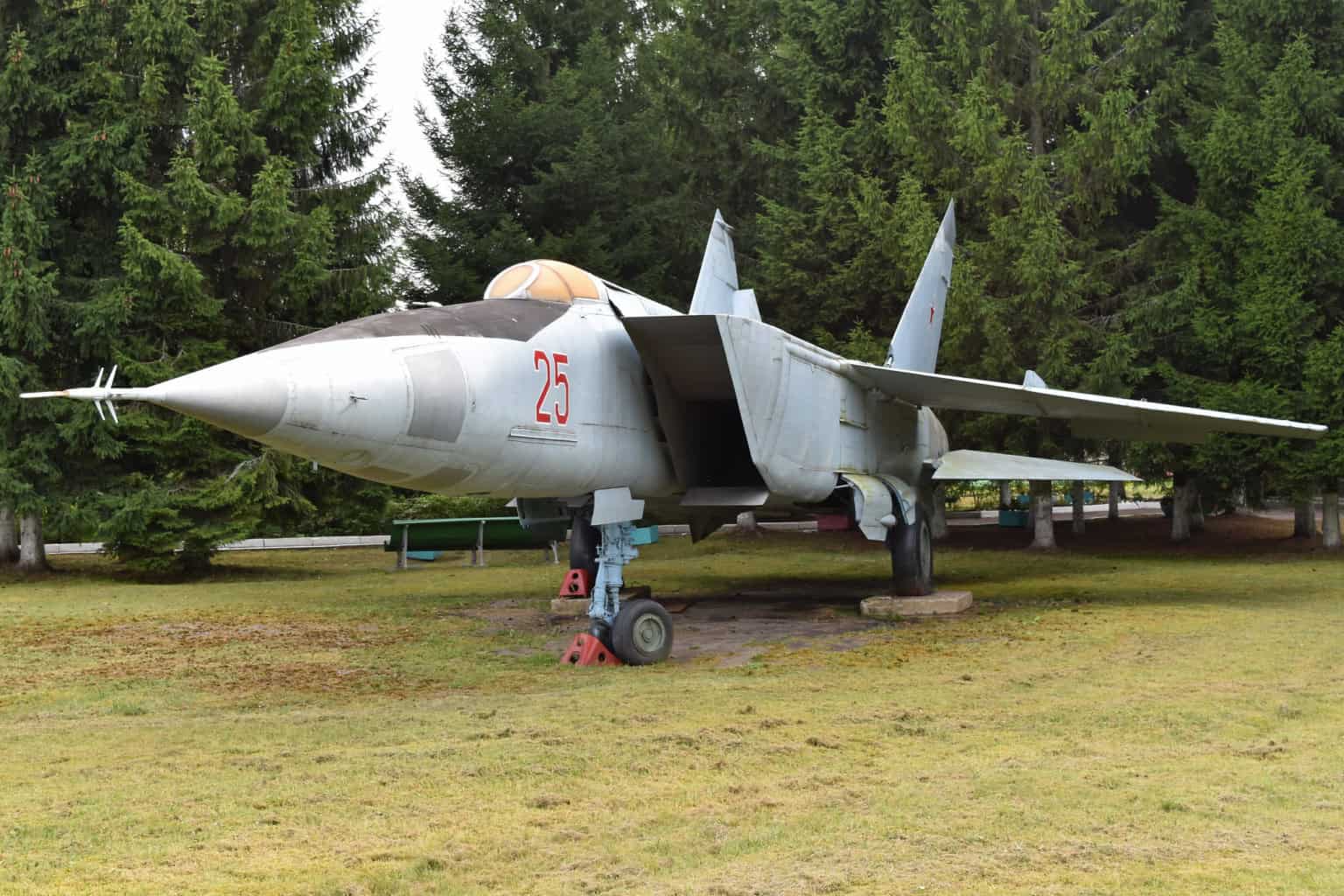
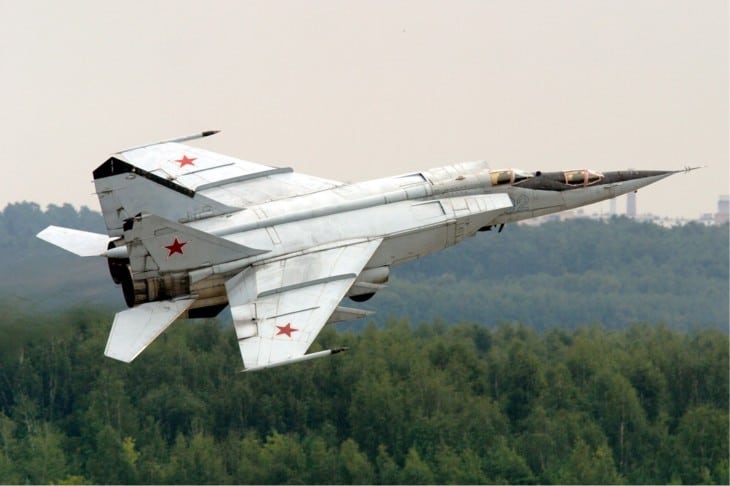
The MiG-25 Foxbat is the fastest combat aircraft ever to enter squadron service, and it comes with the biggest asterisk on this list. It has been tracked at Mach 3.2, roughly 2,110 mph (3,395 km/h), but Soviet pilots were forbidden from exceeding Mach 2.83 in normal operations.
The reason is that the Tumansky R-15 engines overheat past that limit. In 1971 a Soviet-crewed reconnaissance Foxbat over the Sinai accelerated to Mach 3.2 to escape an intercepting Israeli F-4 Phantom, and wrecked its engines doing it.
Western intelligence spent a decade assuming the Foxbat was a superfighter, and the F-15 Eagle was designed partly in response. That assumption collapsed on 6 September 1976, when Lieutenant Viktor Belenko defected to Japan with one and the aircraft was taken apart.
Inside was nickel steel rather than titanium, vacuum tube electronics, and an airframe optimized for a straight-line high-altitude dash against bombers. It was a magnificent interceptor and a poor dogfighter, which is why it never appears near the top of any list of the best fighter jets in the world.
3. North American XB-70 Valkyrie: Mach 3.08
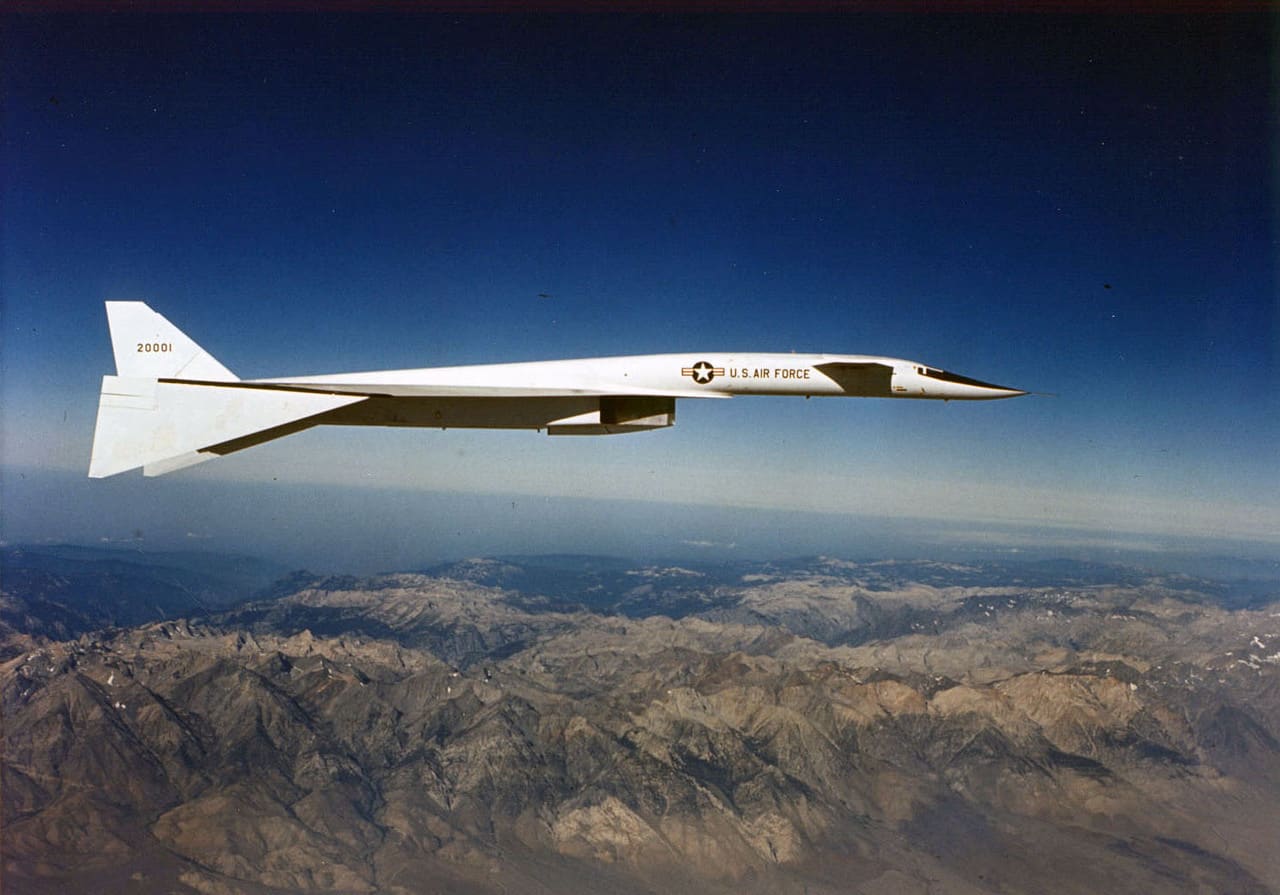

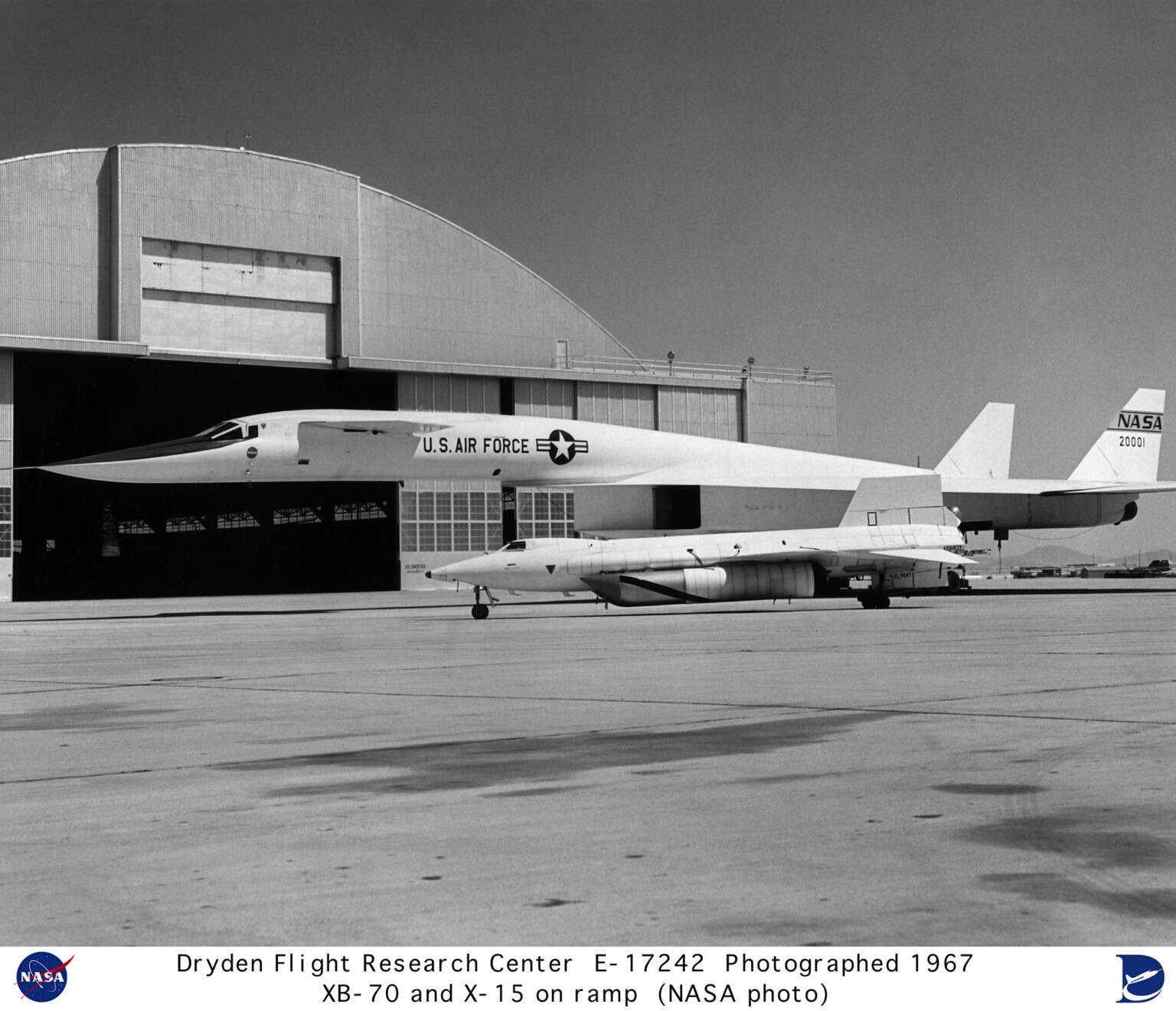
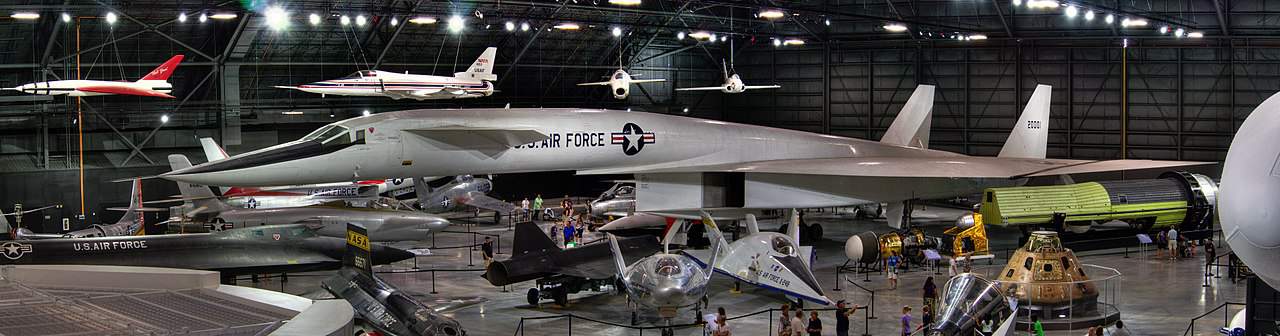


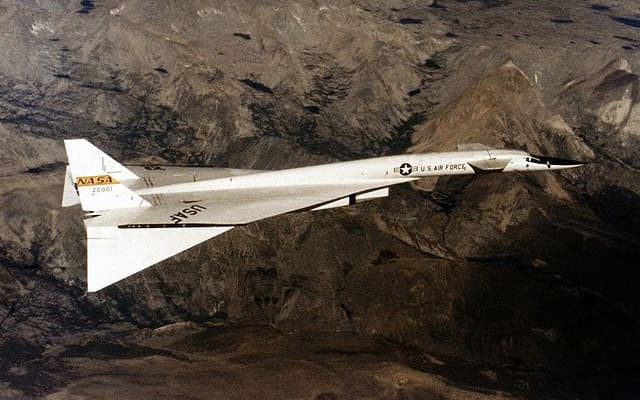
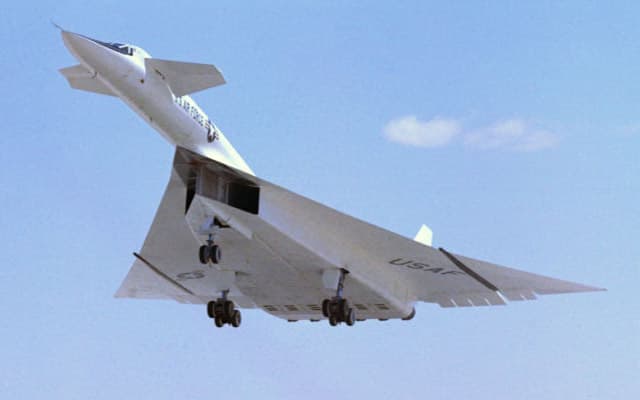
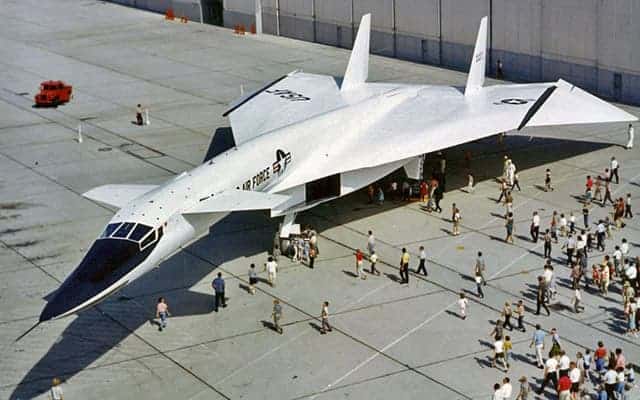
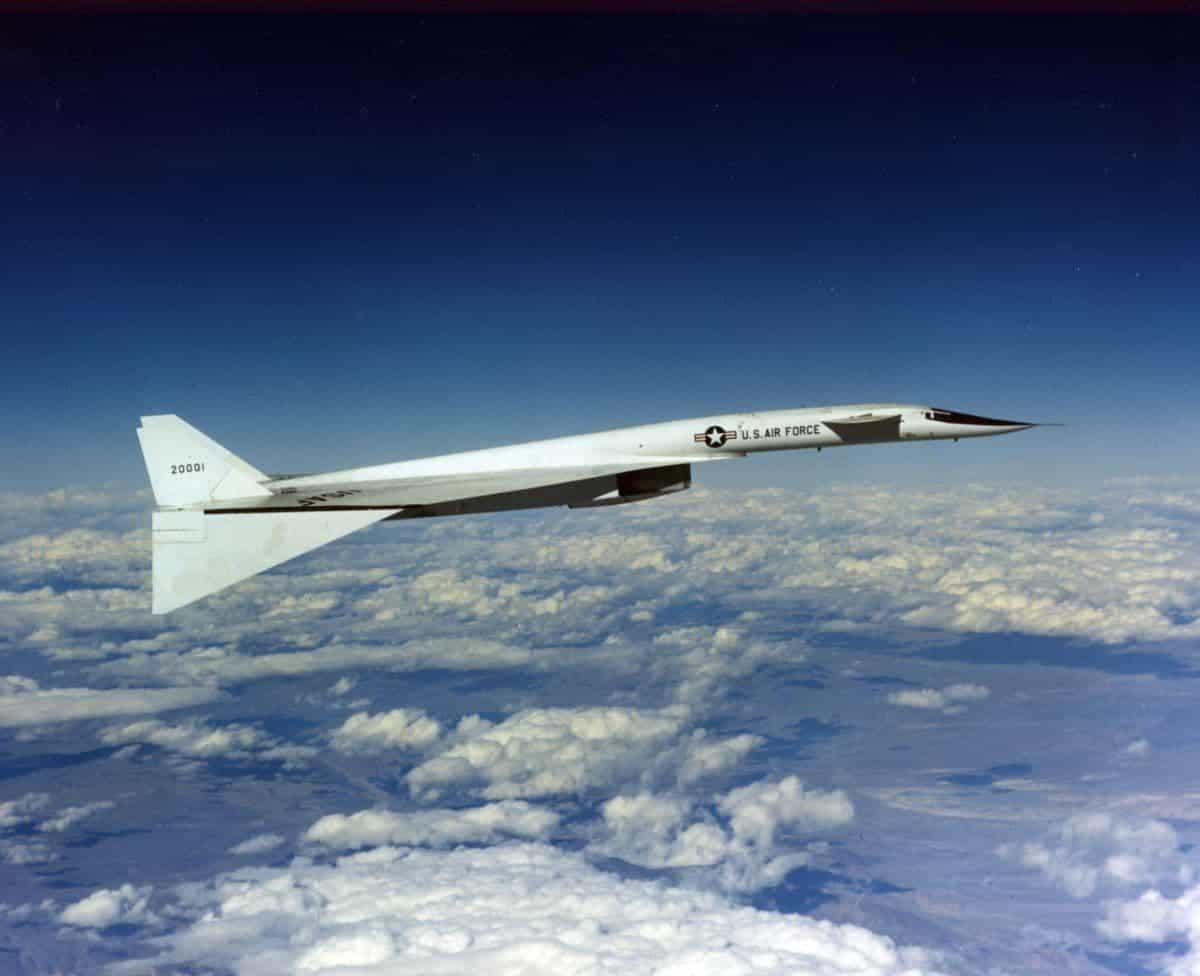
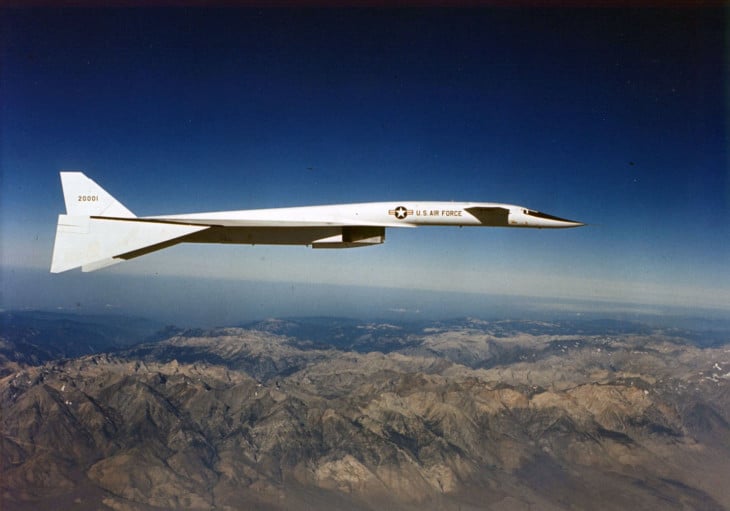
The XB-70 Valkyrie is the fastest bomber ever flown. On 12 April 1966 the second prototype held Mach 3.08, about 2,056 mph (3,309 km/h), for 20 minutes at 73,000 feet.
It is on this list rather than in the research section because it was a bomber program, built to deliver nuclear weapons at Mach 3 above 70,000 feet. It never entered service, and only two were built.
The Valkyrie rode its own shock wave, a technique called compression lift, with drooping wingtips that folded down at speed to trap the pressure wave under the delta wing. It was an extraordinary piece of engineering rendered pointless by the surface-to-air missile.
The program ended after the second prototype was destroyed in a mid-air collision during a photo shoot on 8 June 1966, killing two pilots.
4. Mikoyan MiG-31 Foxhound: Mach 2.83
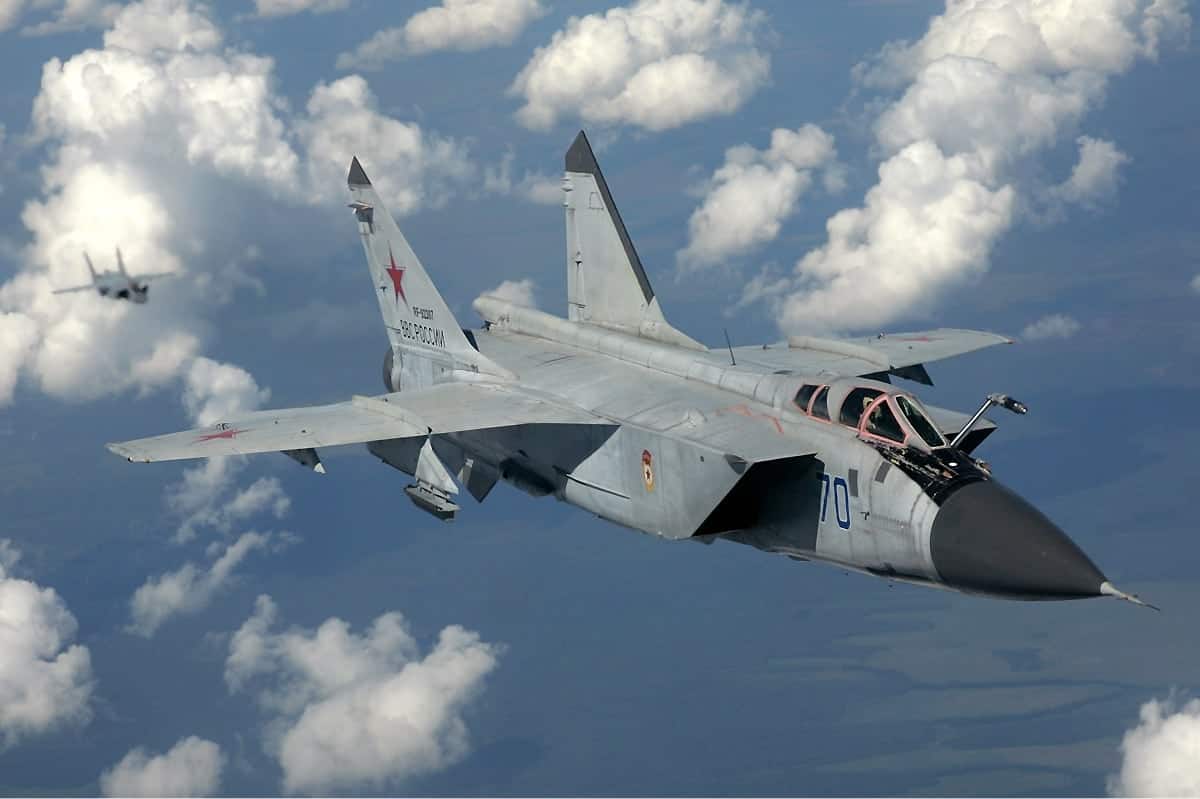
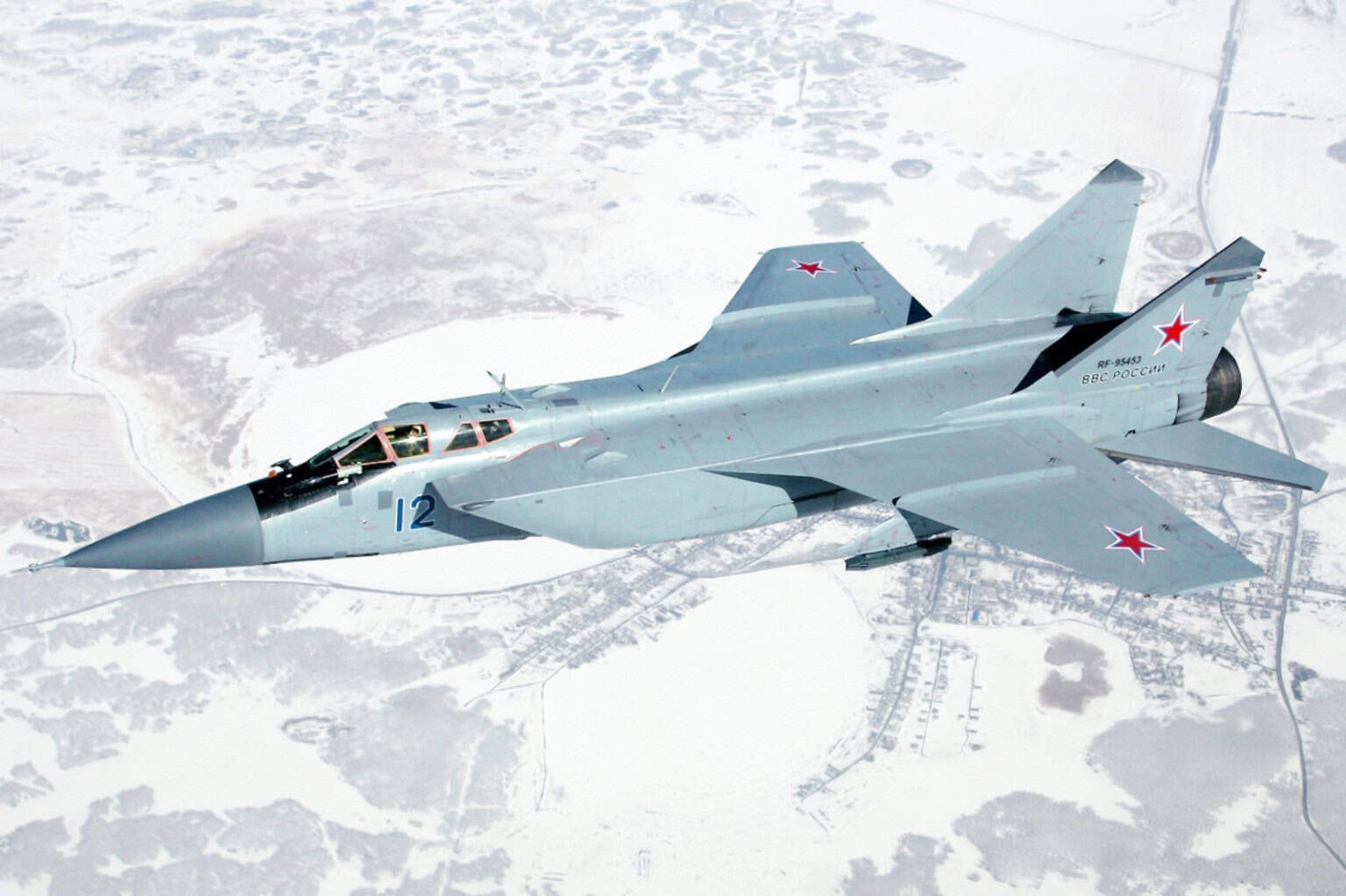
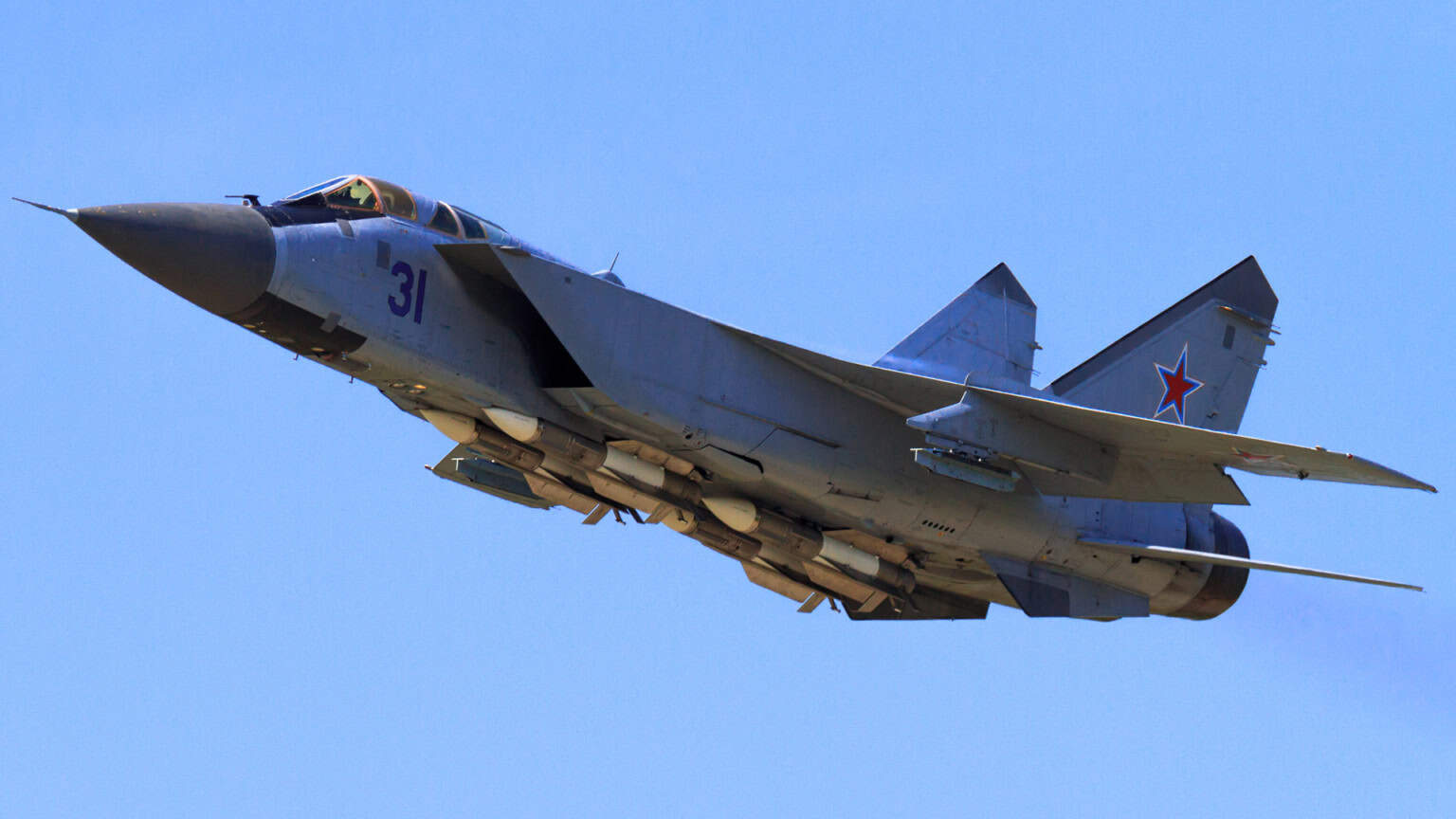


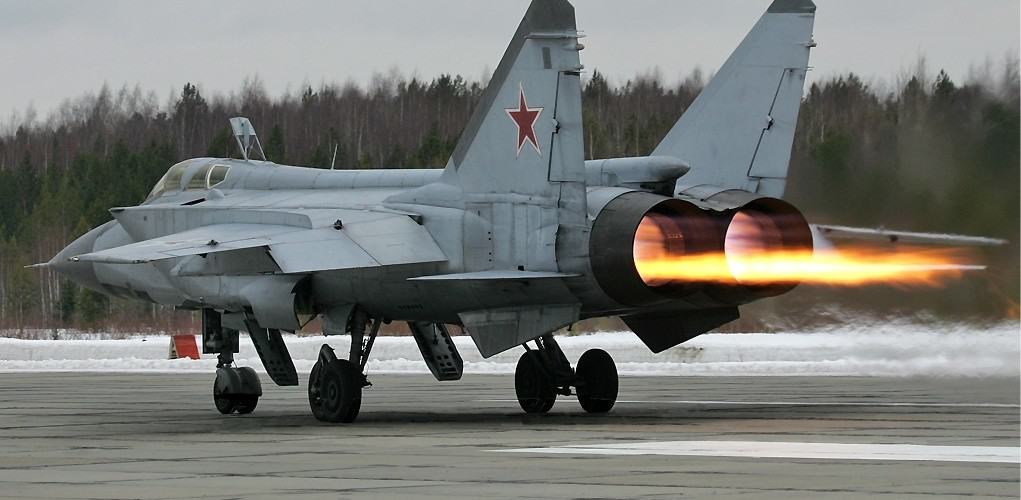


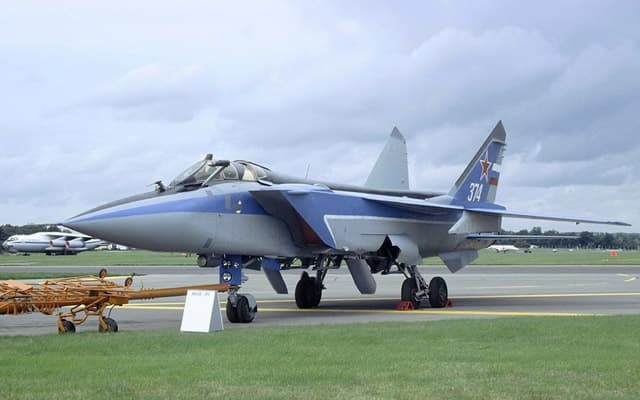
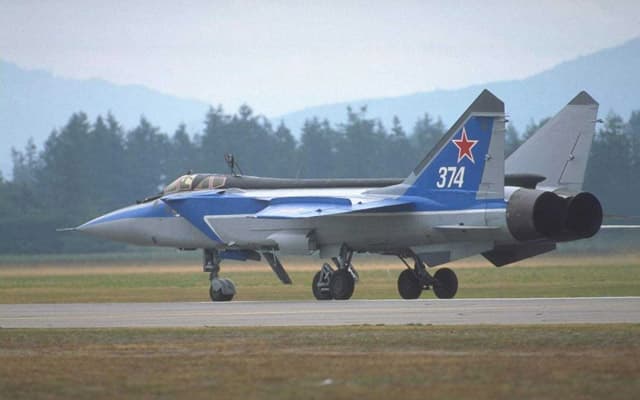
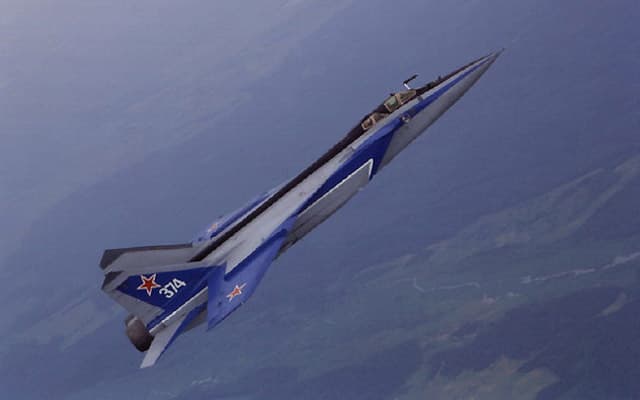
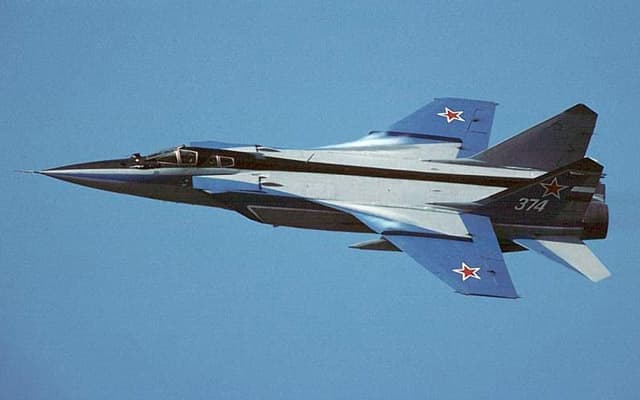
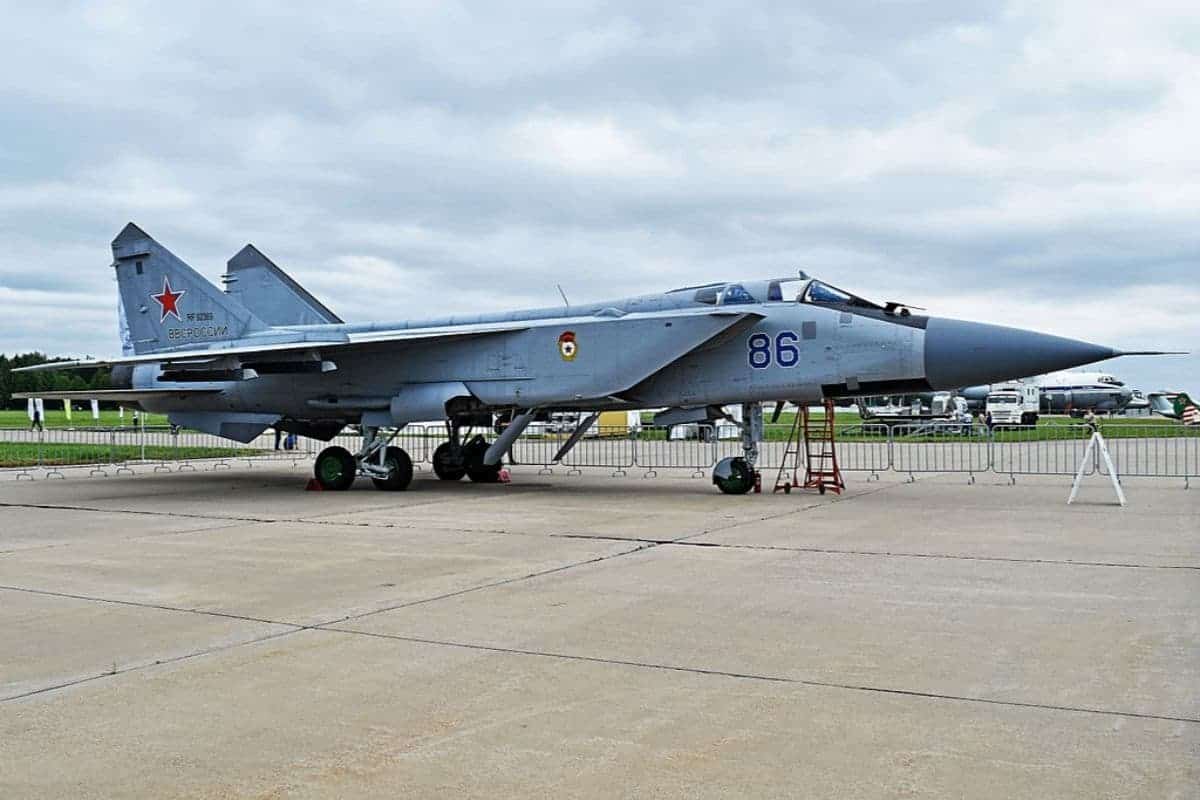
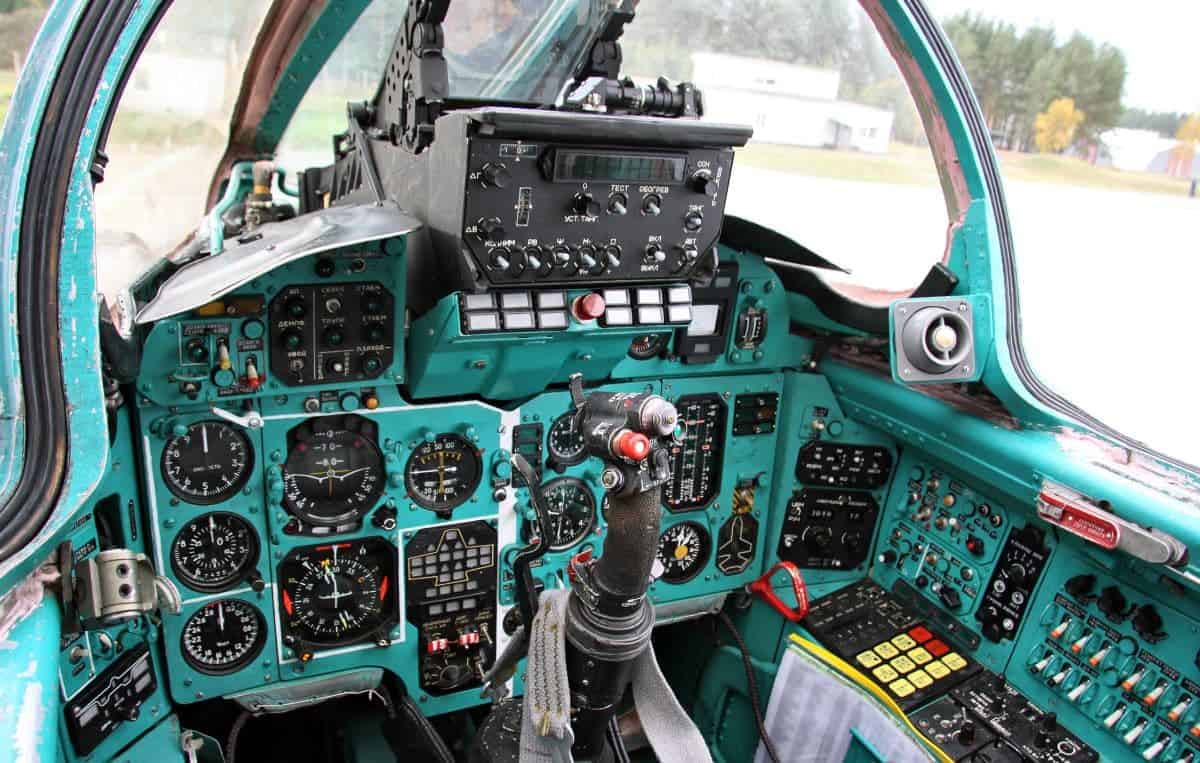
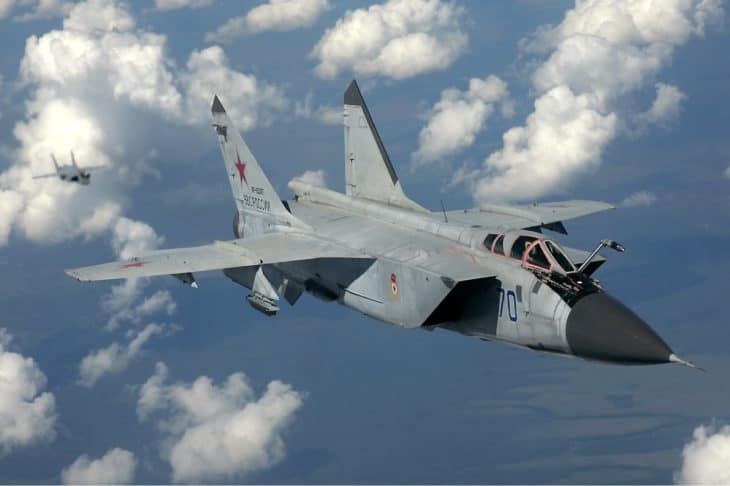
The MiG-31 Foxhound is the fastest military aircraft in service anywhere in the world today, at Mach 2.83 or 1,864 mph (3,000 km/h) at altitude. Nothing else currently flying comes close.
It is the Foxbat’s successor and keeps the same basic recipe: two enormous engines, a big steel and titanium airframe, and a job description that is closer to a flying missile launcher than a fighter. It also carries the Zaslon radar, the first electronically scanned array fitted to a fighter-type aircraft.
Unlike the MiG-25, the MiG-31 can sustain supersonic cruise around Mach 2.35 rather than dashing and running out. That endurance at speed is why Russia has kept it flying past its 40th year and adapted it to carry the Kinzhal air-launched ballistic missile.
5. McDonnell Douglas F-15 Eagle: Mach 2.5
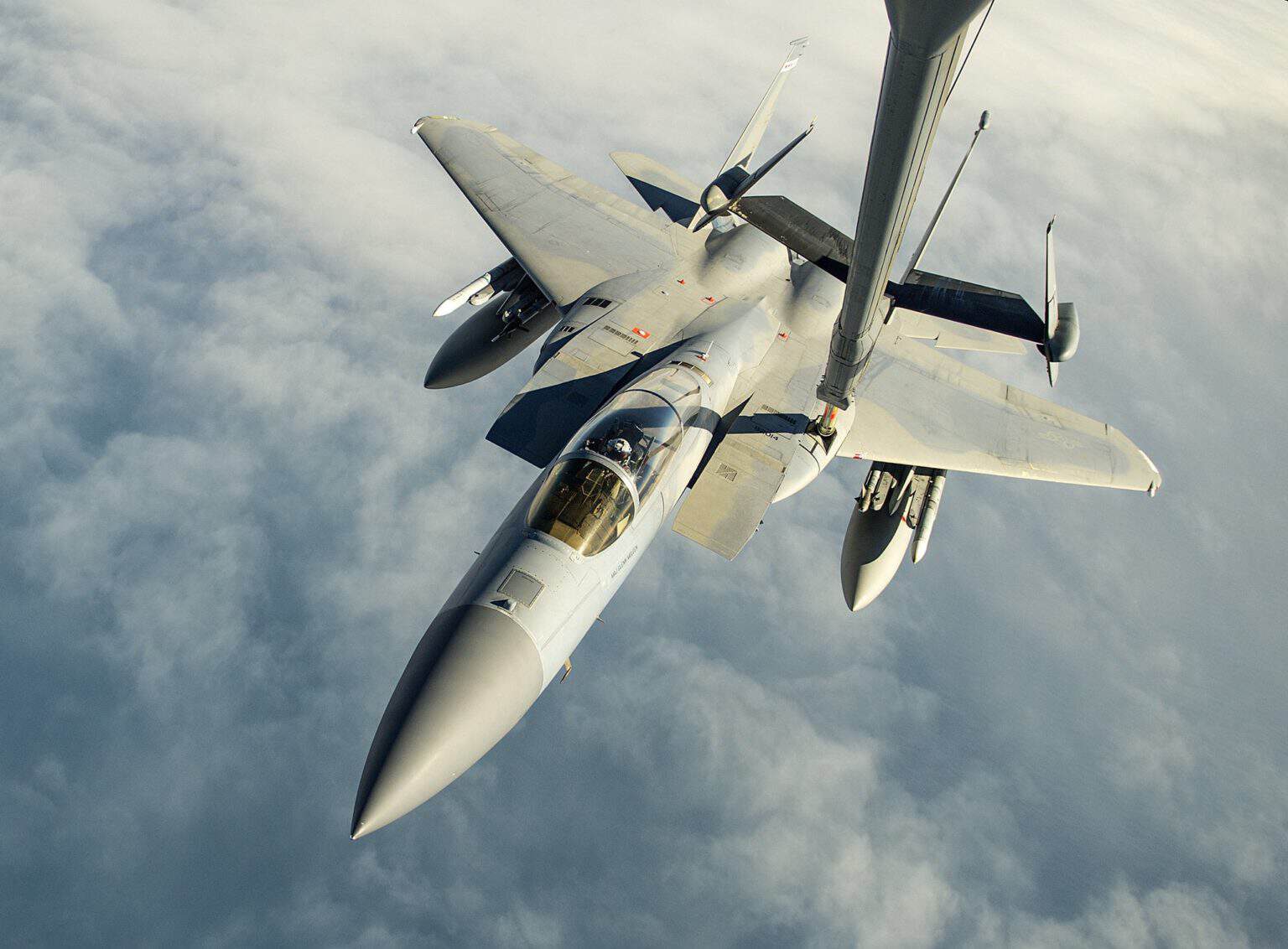
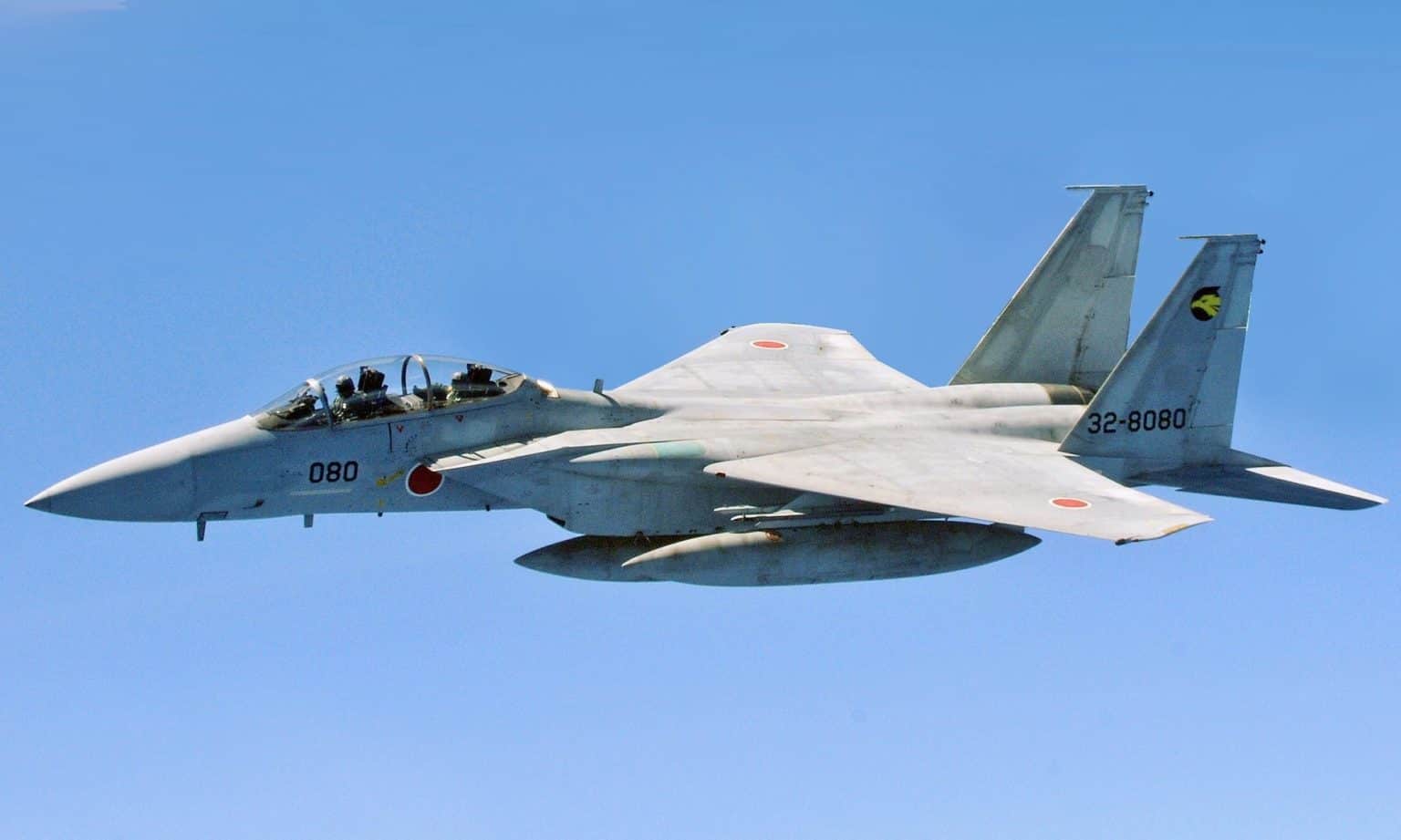
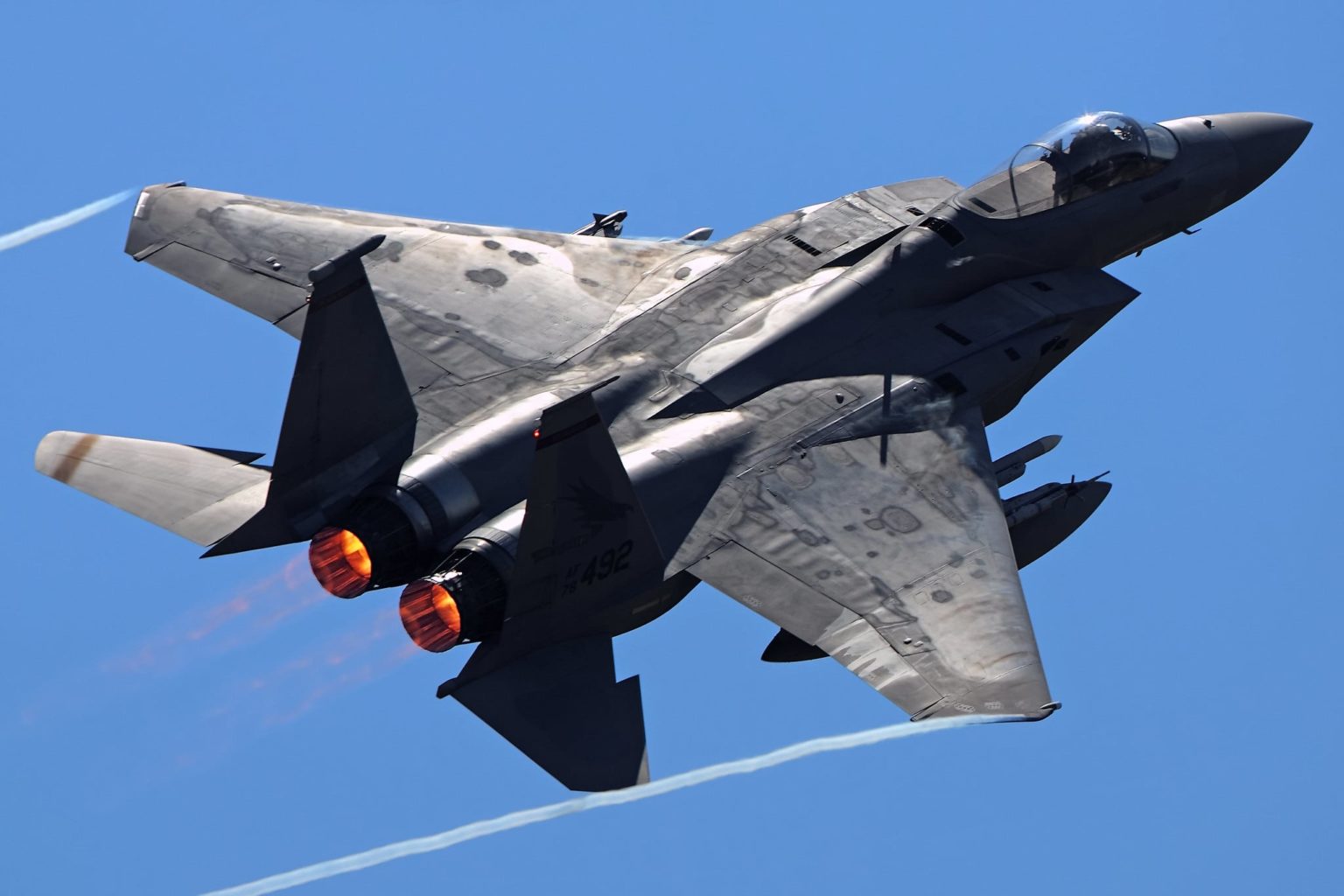
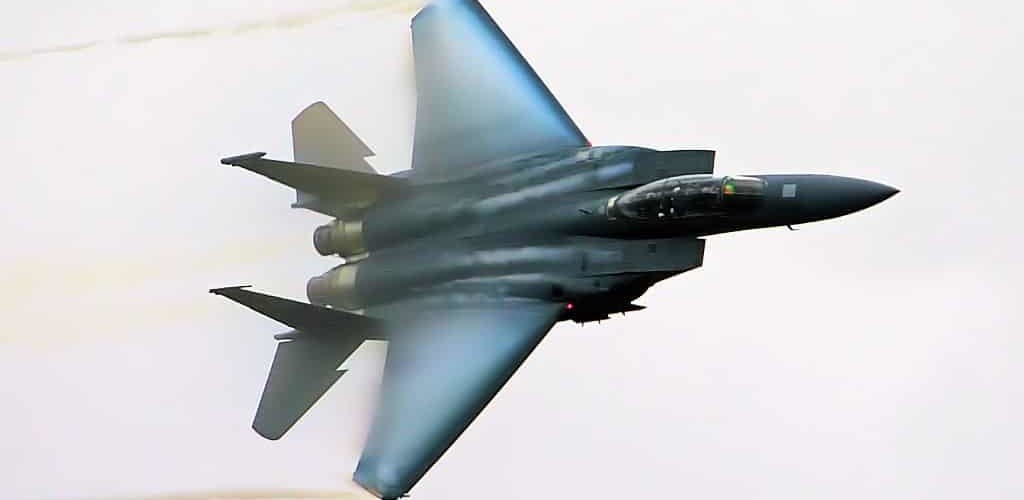


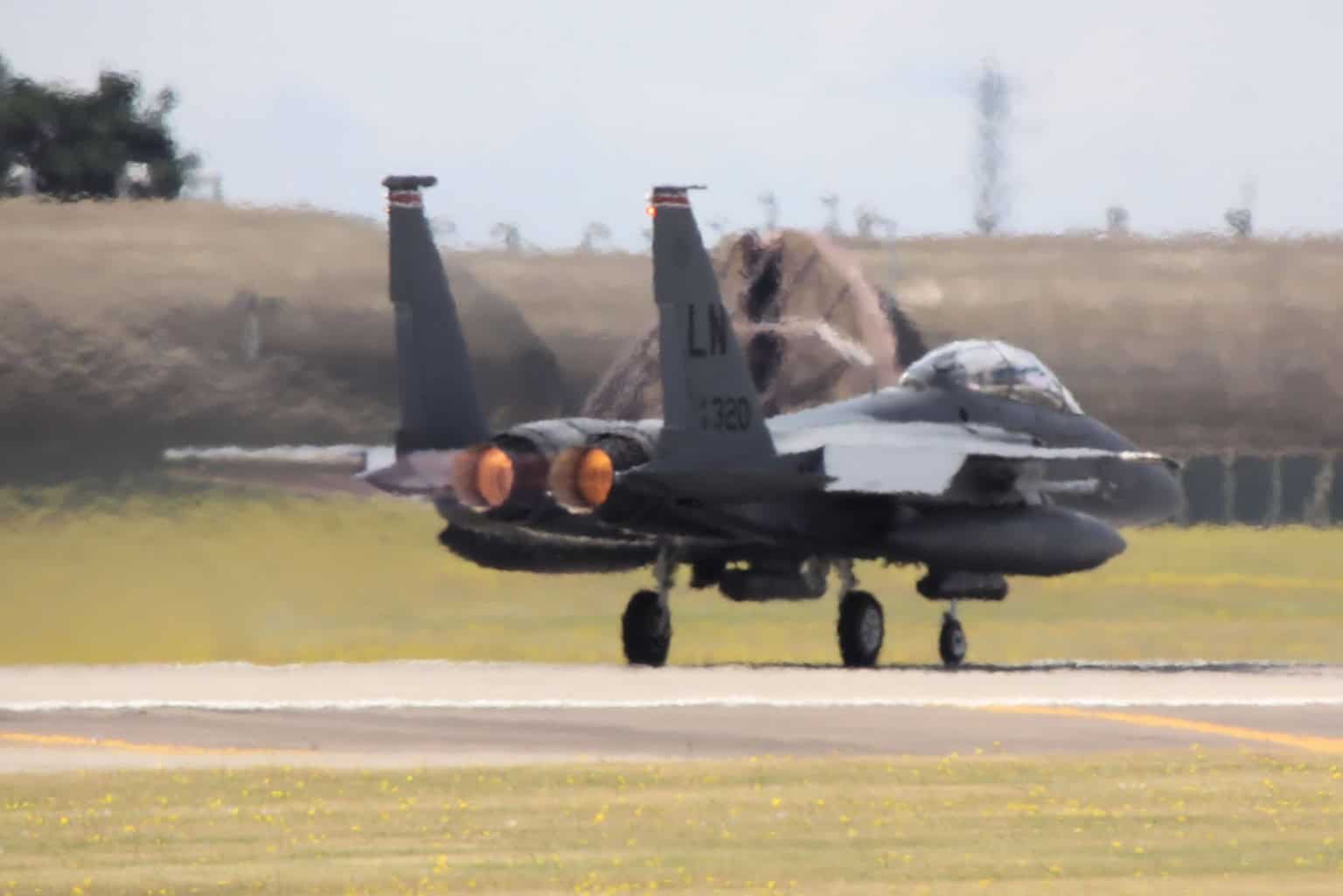
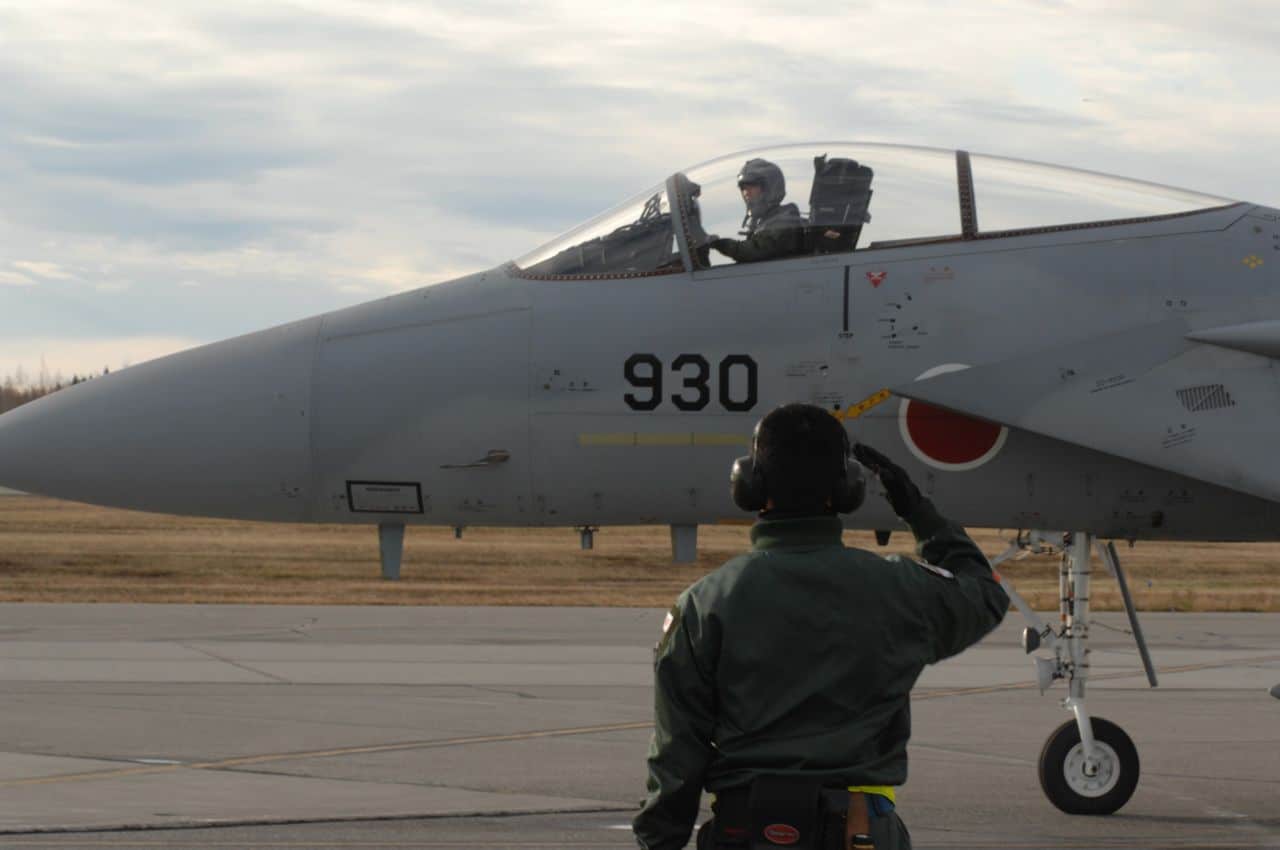
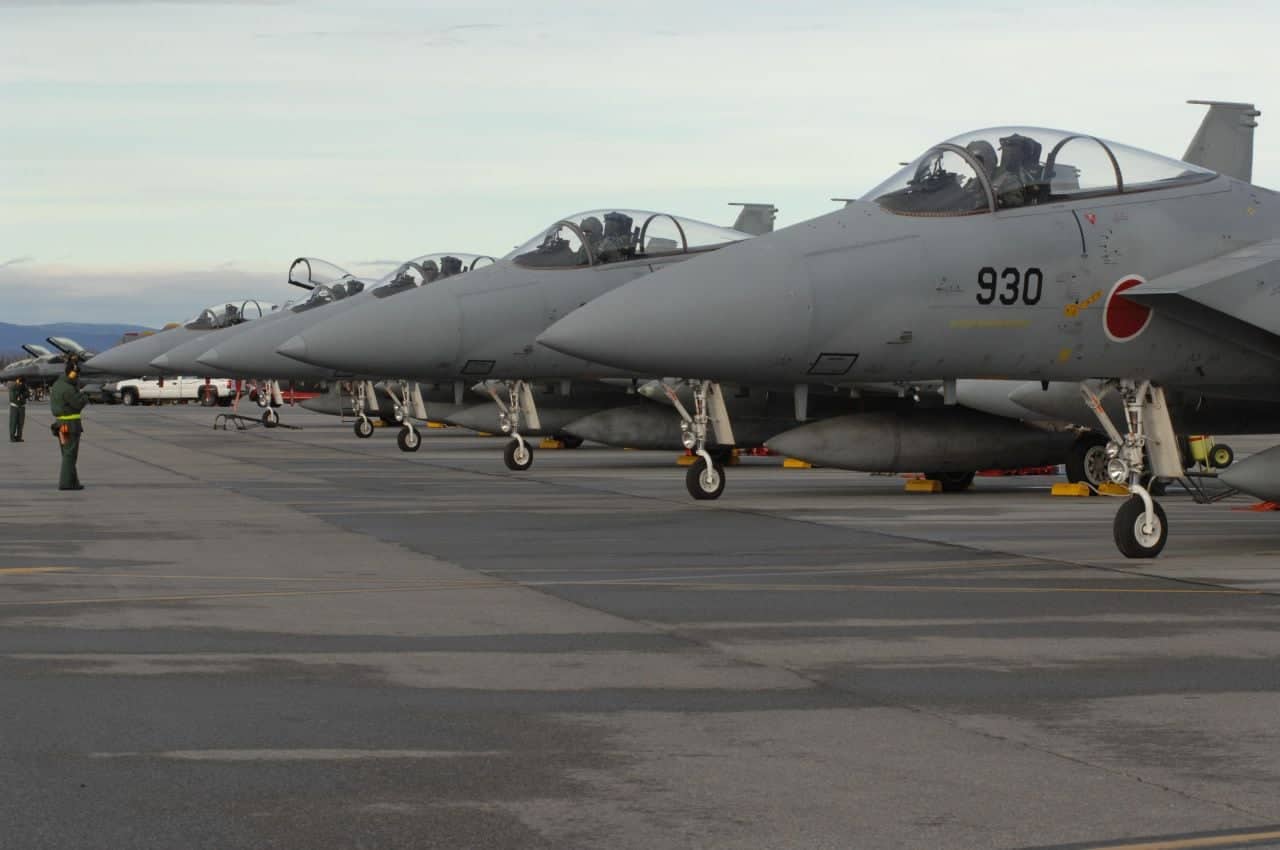
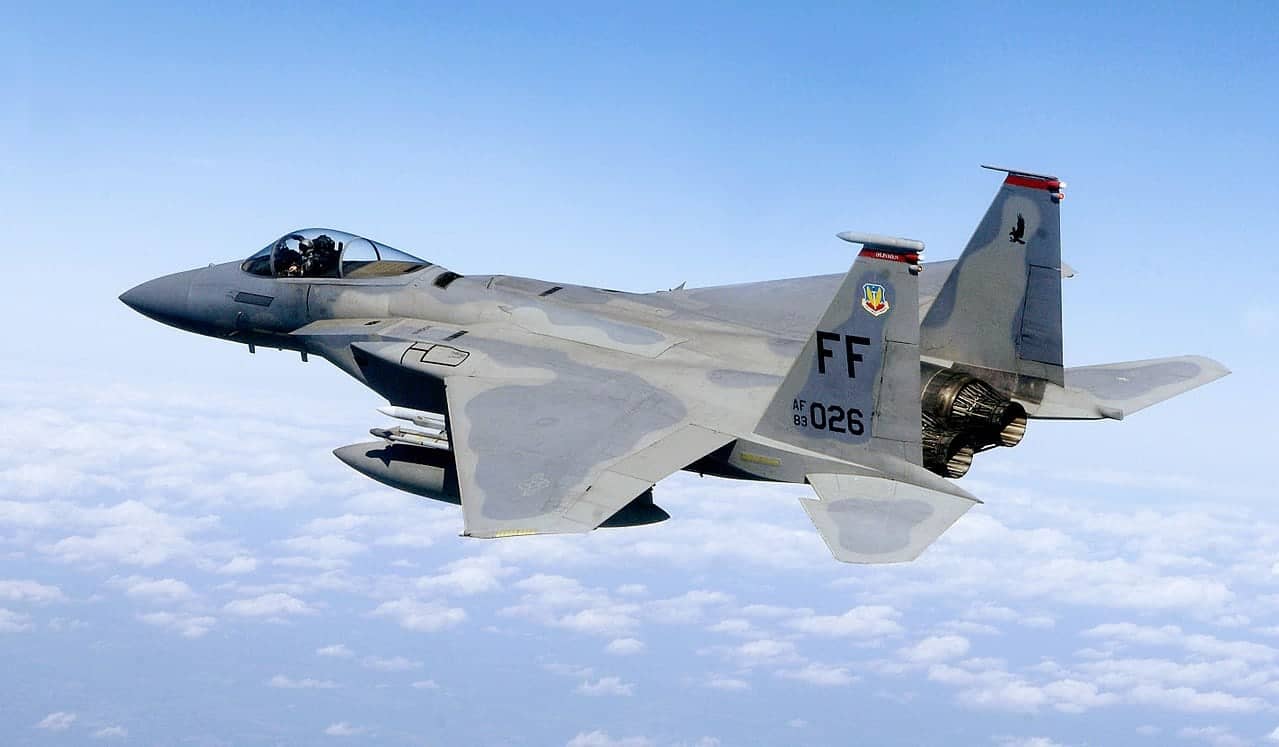
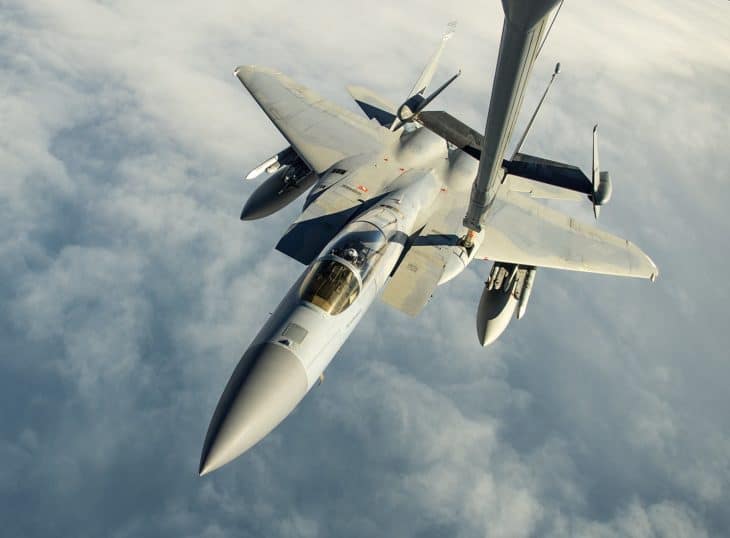
At Mach 2.5, roughly 1,650 mph (2,655 km/h), the F-15 Eagle is the fastest Western combat aircraft ever fielded and the fastest fighter in US service. A design that first flew in 1972 still holds that title in 2026.
The Eagle was built to beat the MiG-25 threat that turned out not to exist, and the overengineering paid off elsewhere. It has a thrust-to-weight ratio above 1:1, meaning it can accelerate while climbing vertically.
In 1975 an F-15 called Streak Eagle broke eight time-to-climb records, one of them reaching 98,425 feet in 3 minutes 27.8 seconds from brake release. The F-15EX Eagle II keeps the same airframe speed in production today.
For a ranking of fighters specifically, including the Mach 2 class aircraft that sit just below the Eagle, see our list of the fastest fighter jets.
6. Sukhoi Su-27 Flanker: Mach 2.35
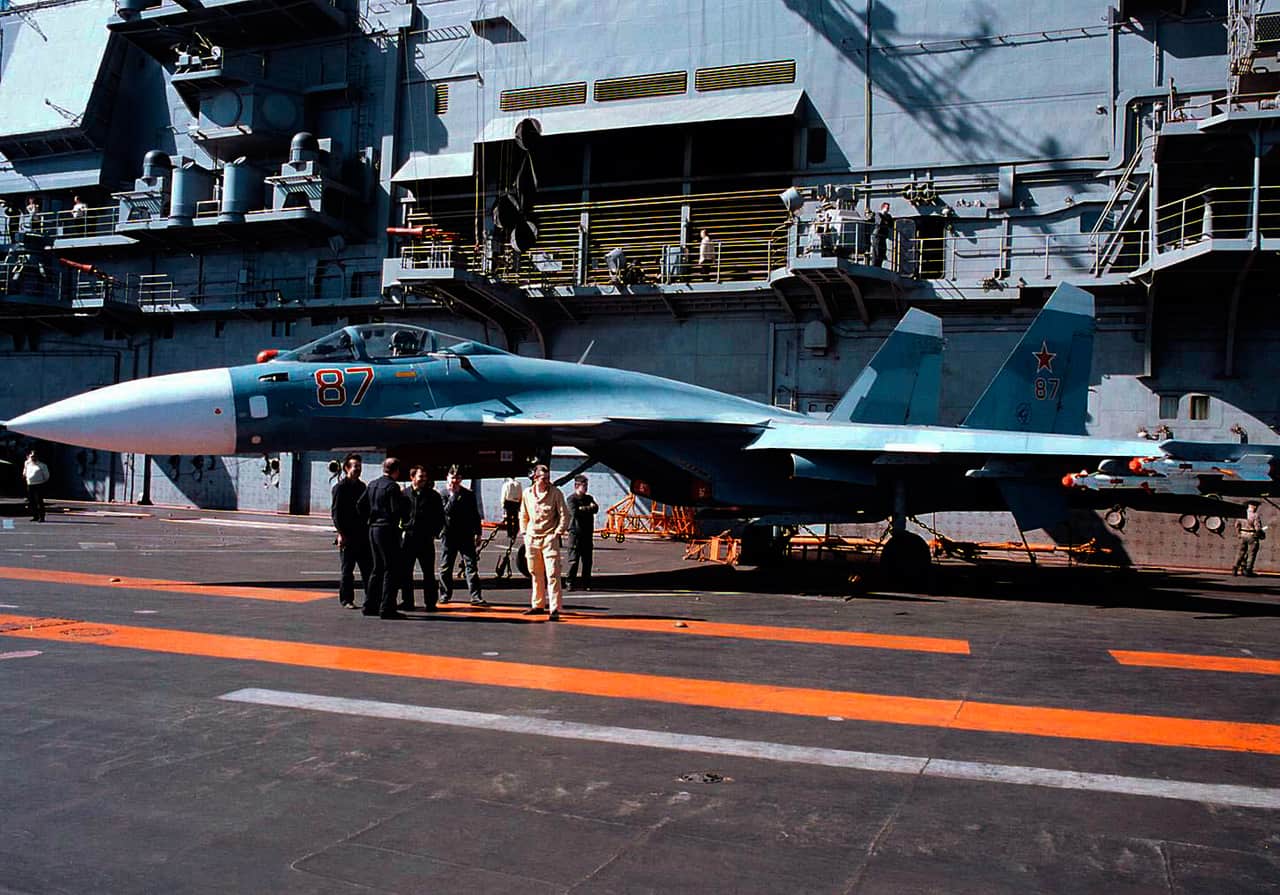
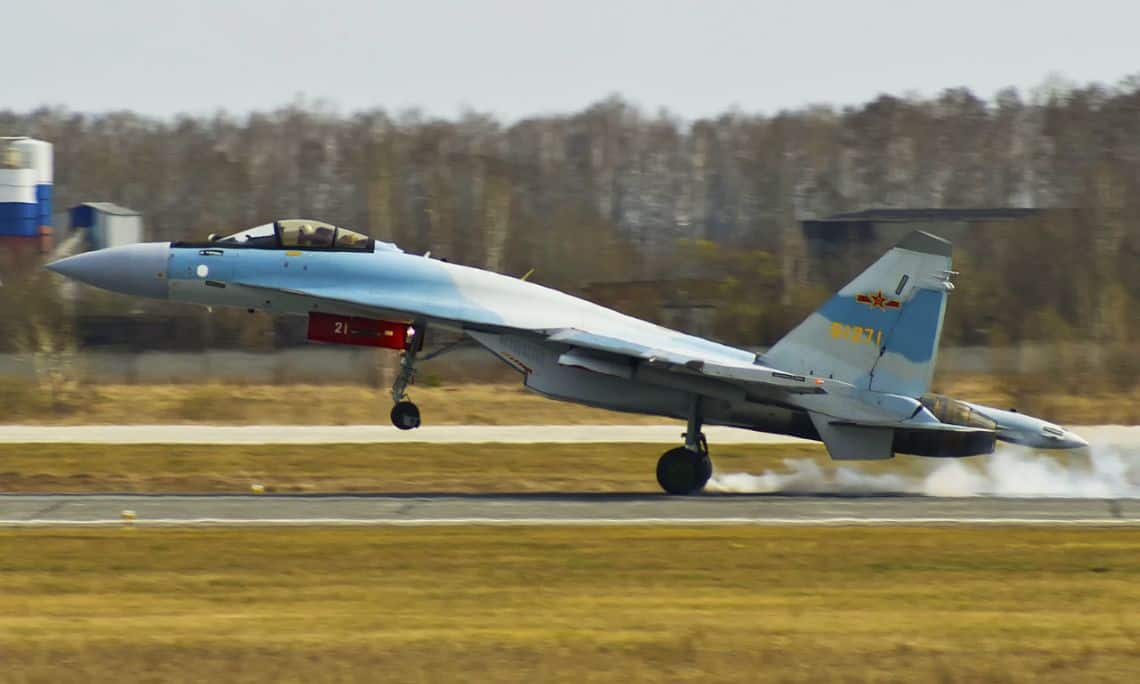
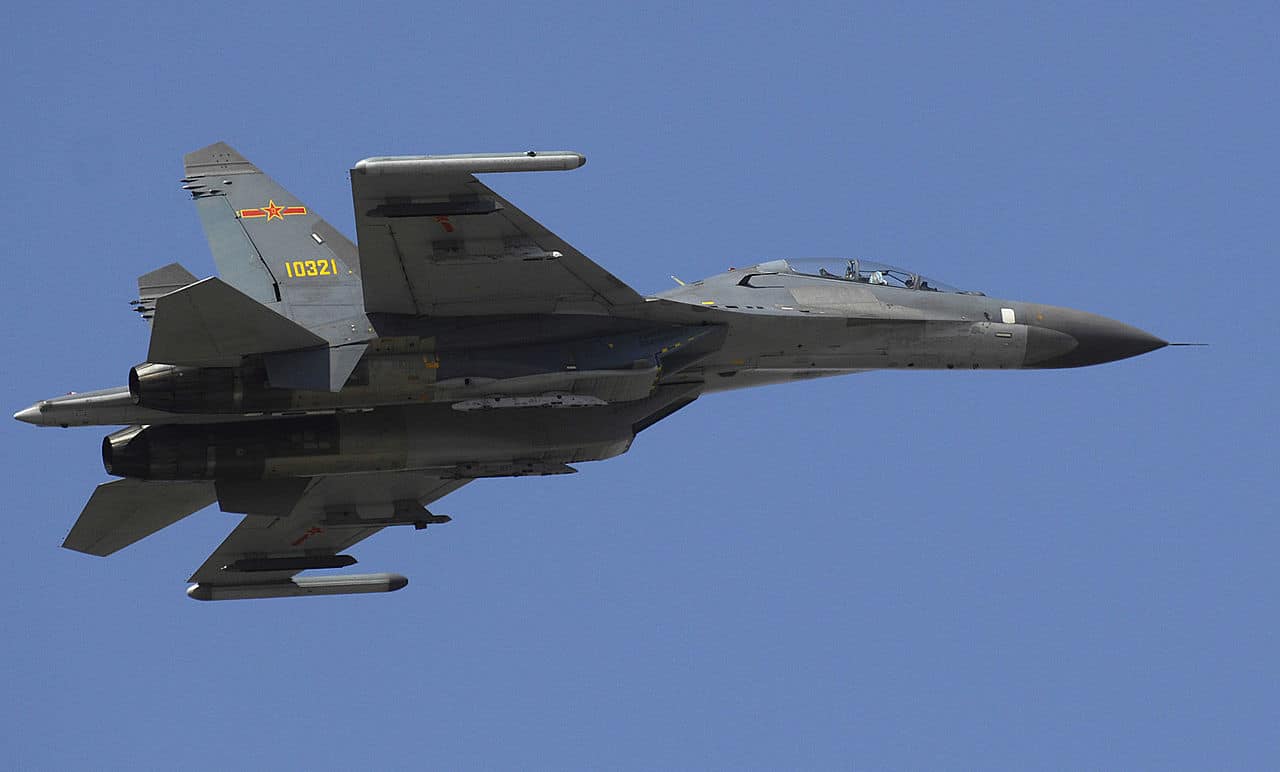


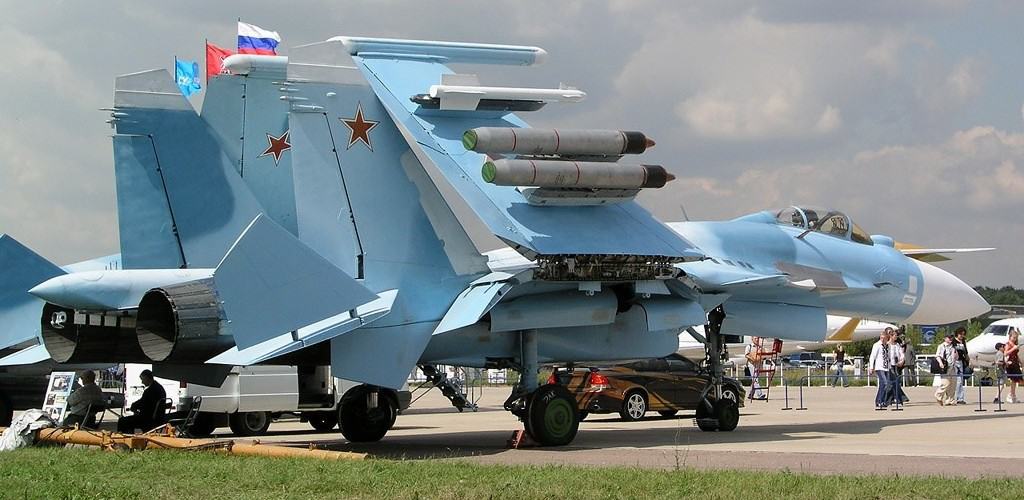


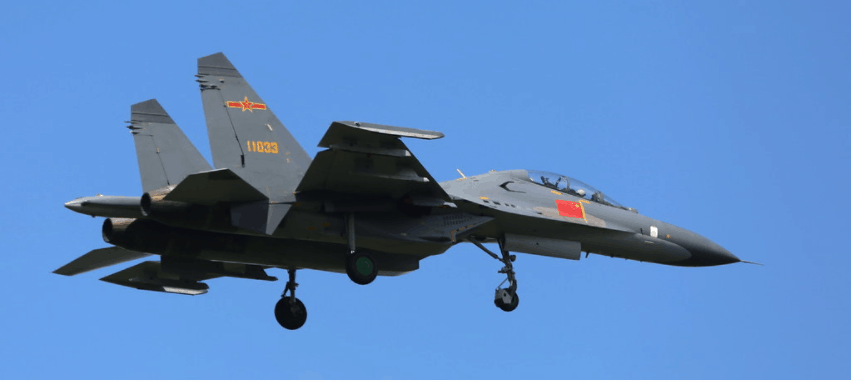


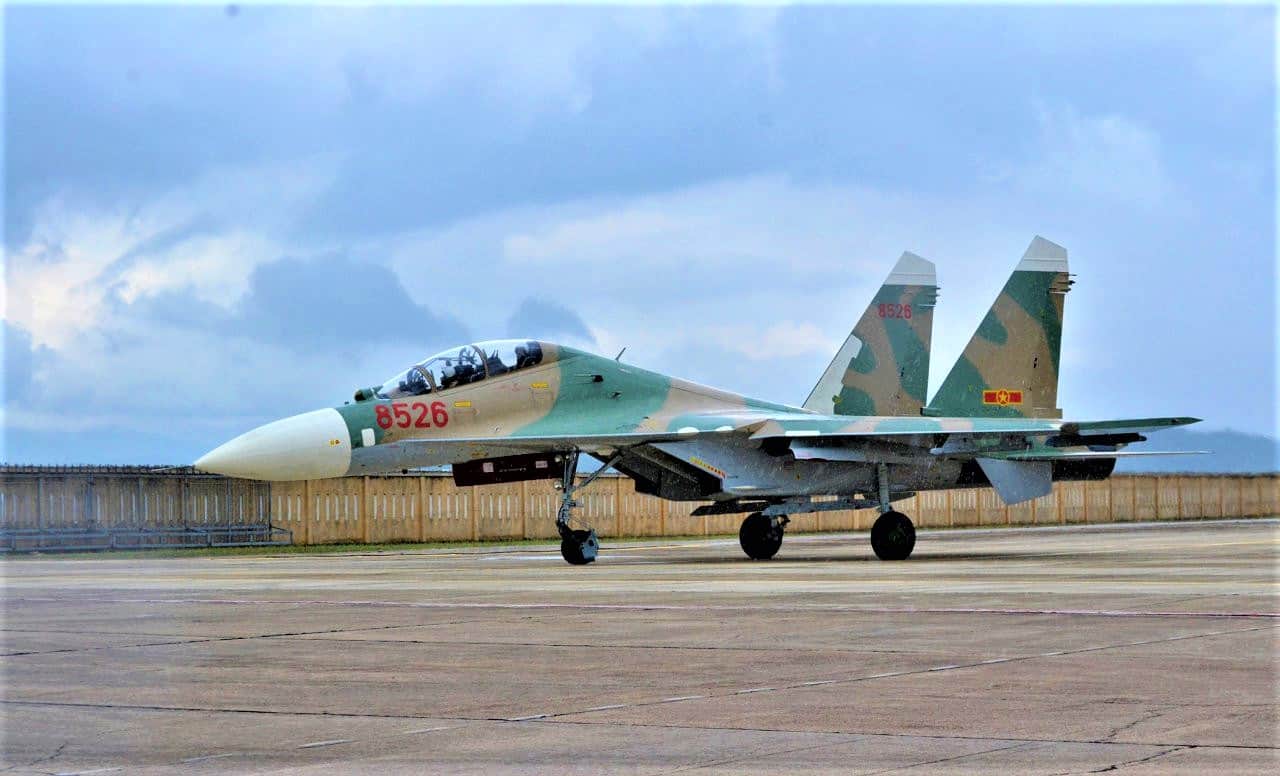


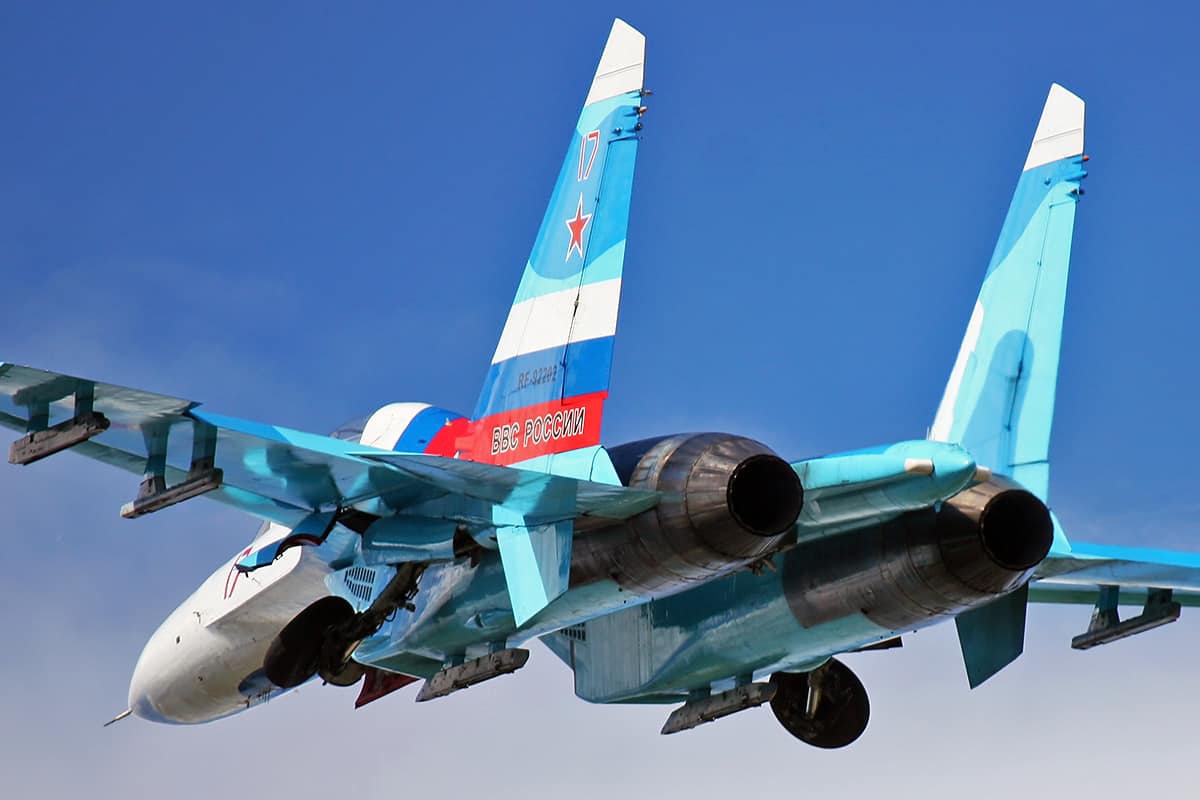
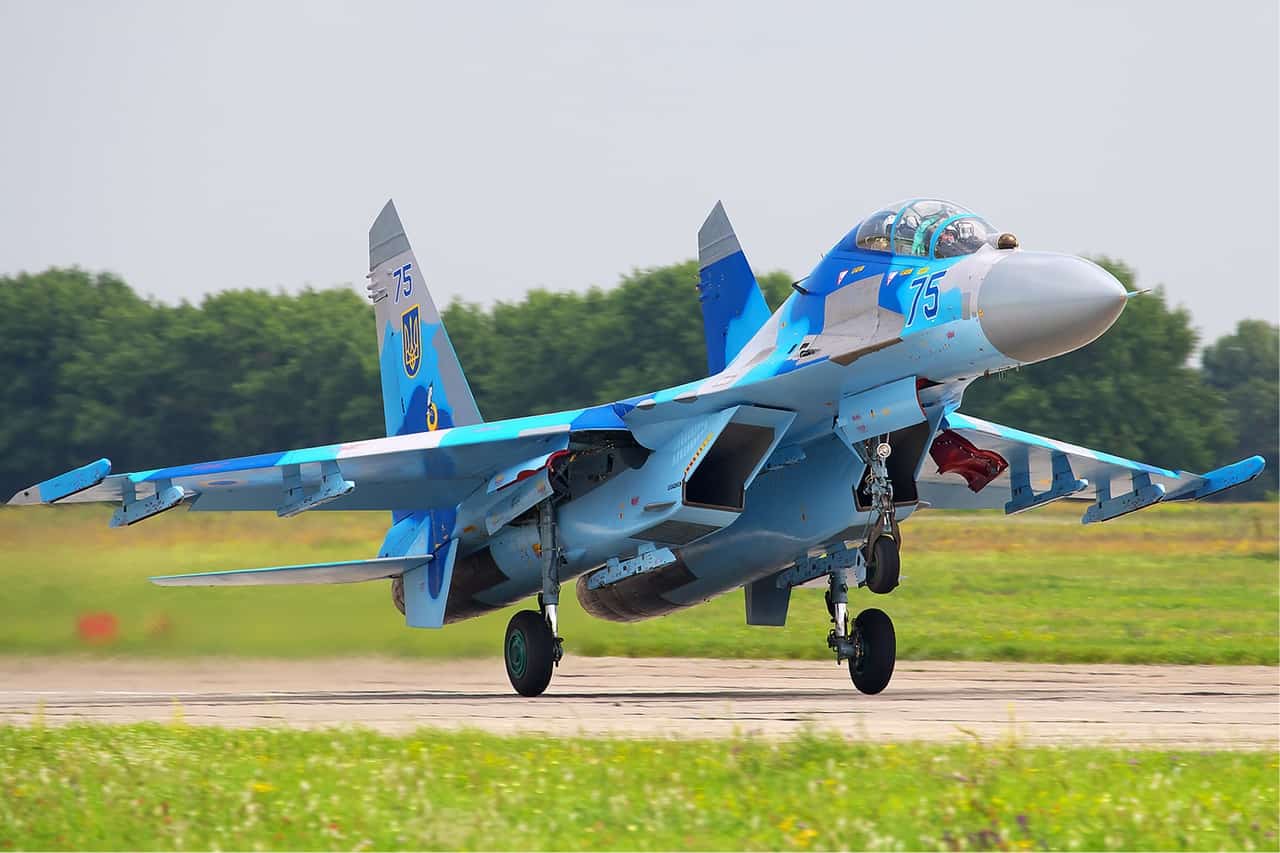


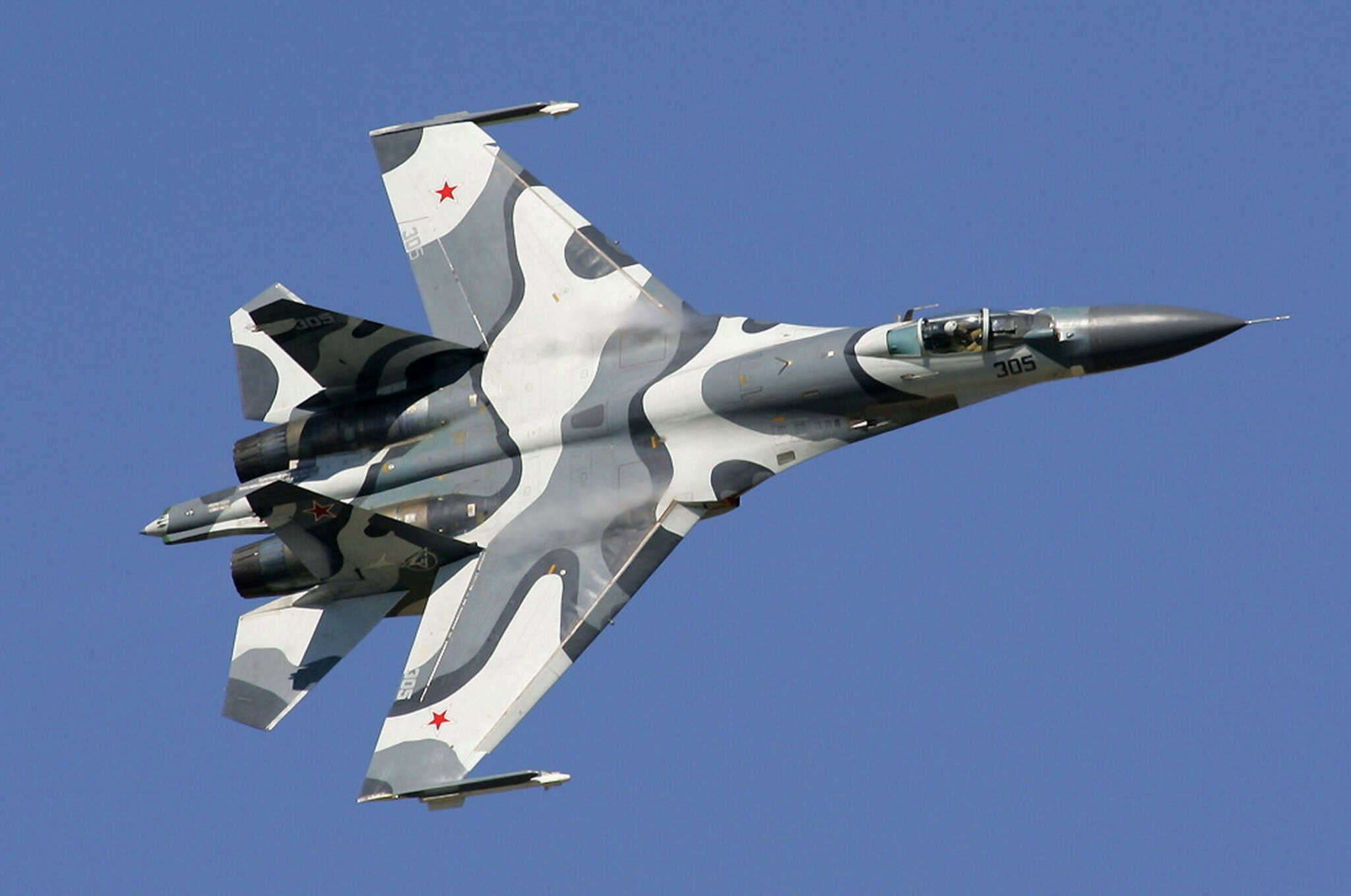

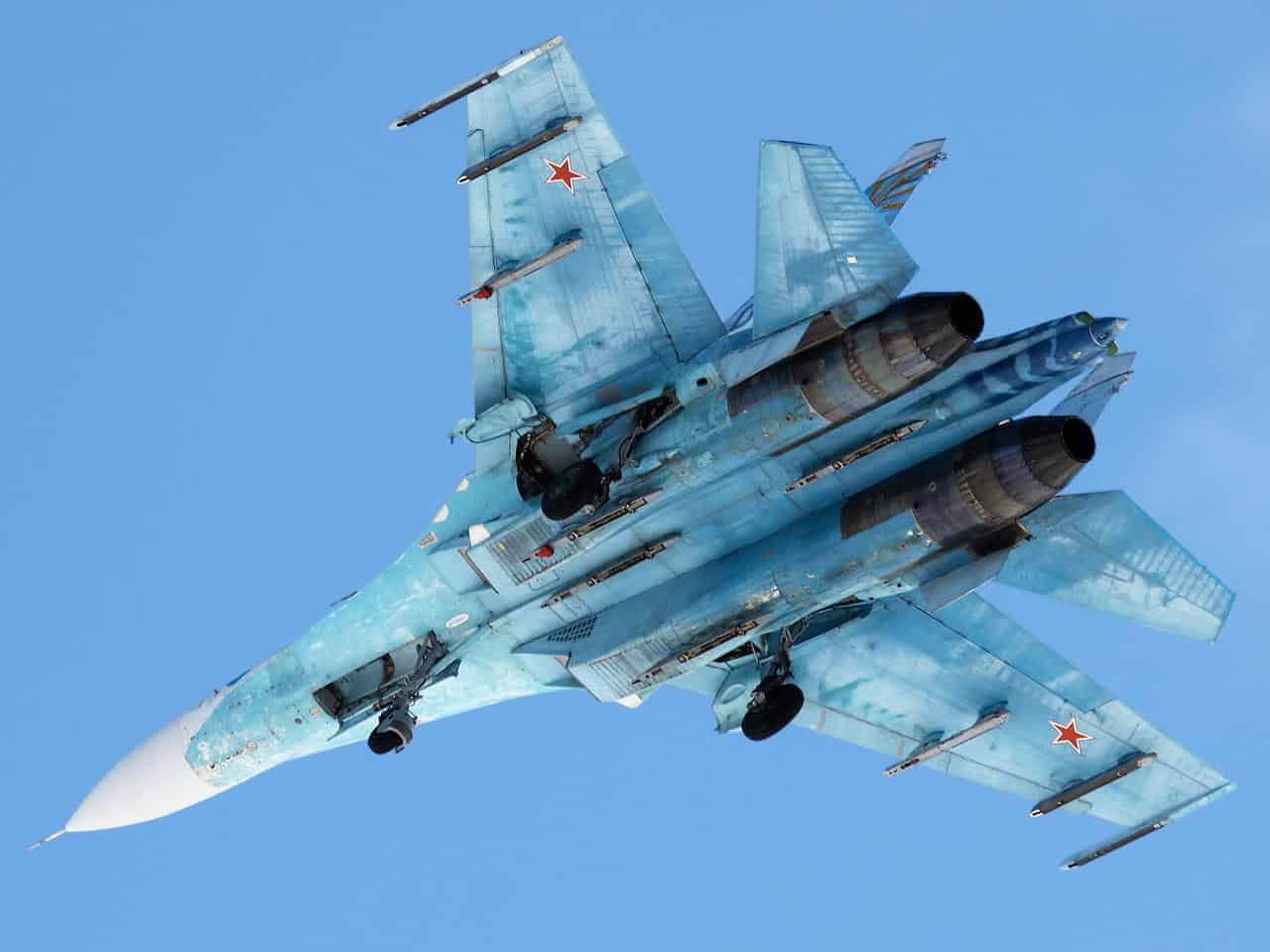

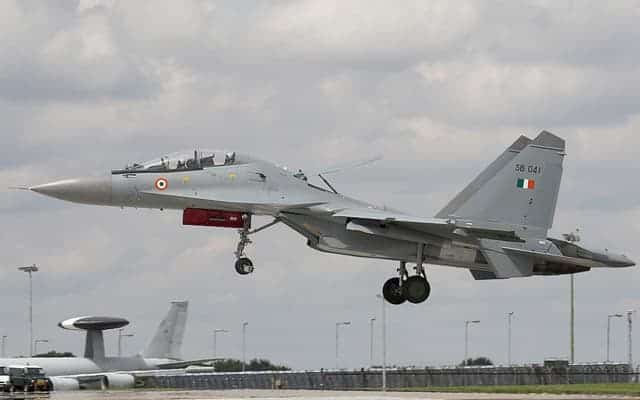

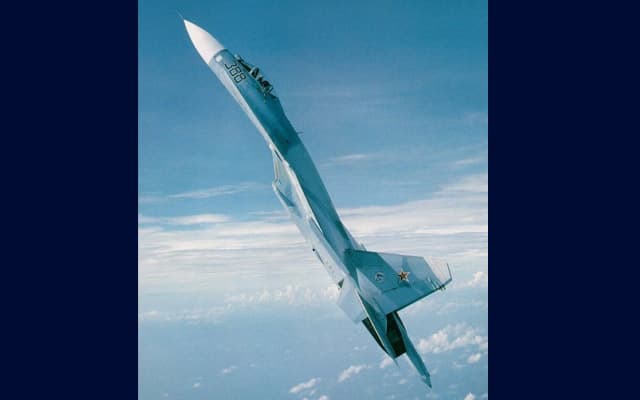
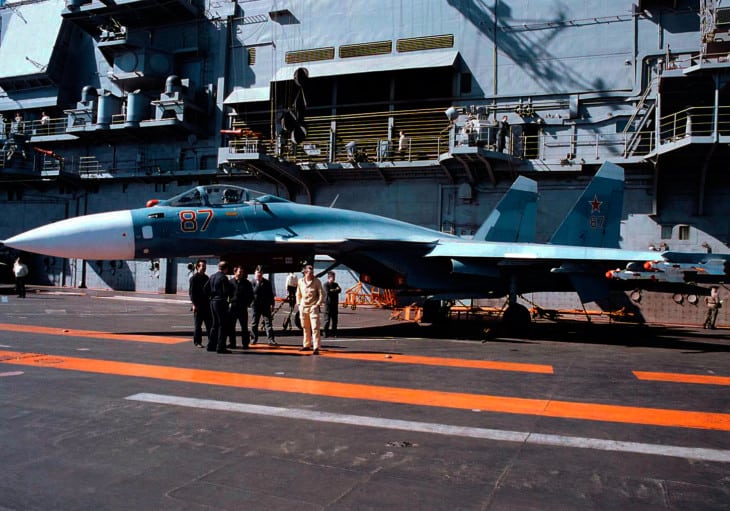
The Su-27 Flanker tops out at Mach 2.35, about 1,550 mph (2,500 km/h), and it is the aircraft the Soviet Union built to answer the F-15. The family it founded, including the Su-30, Su-34 and Su-35, is still in production.
The later Su-35S is marginally slower at Mach 2.25 despite more powerful engines, because thrust vectoring nozzles and a heavier avionics fit cost a little top-end speed. That trade is the whole story of modern fighter design in one aircraft family.
7. Grumman F-14 Tomcat: Mach 2.34
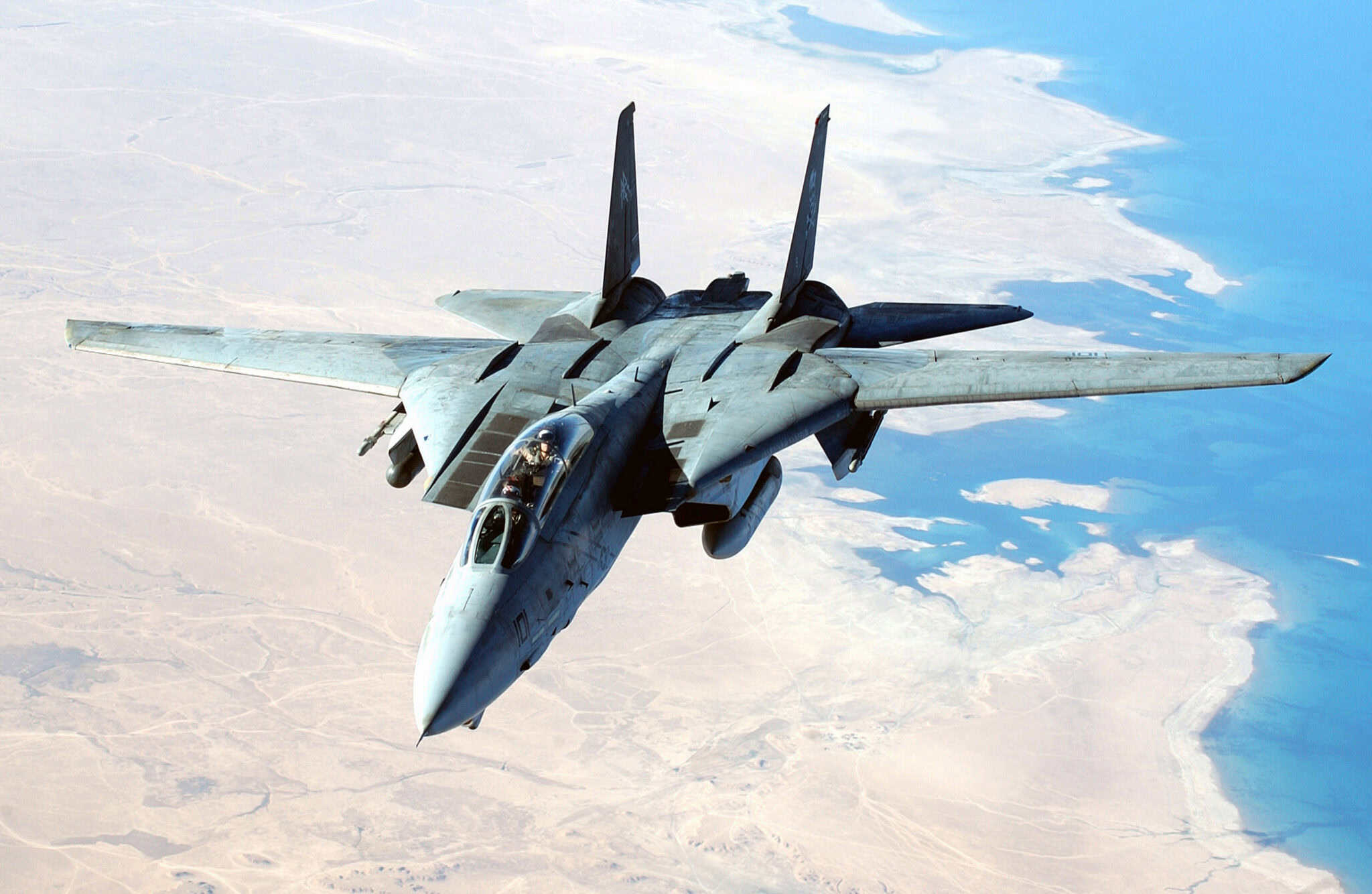


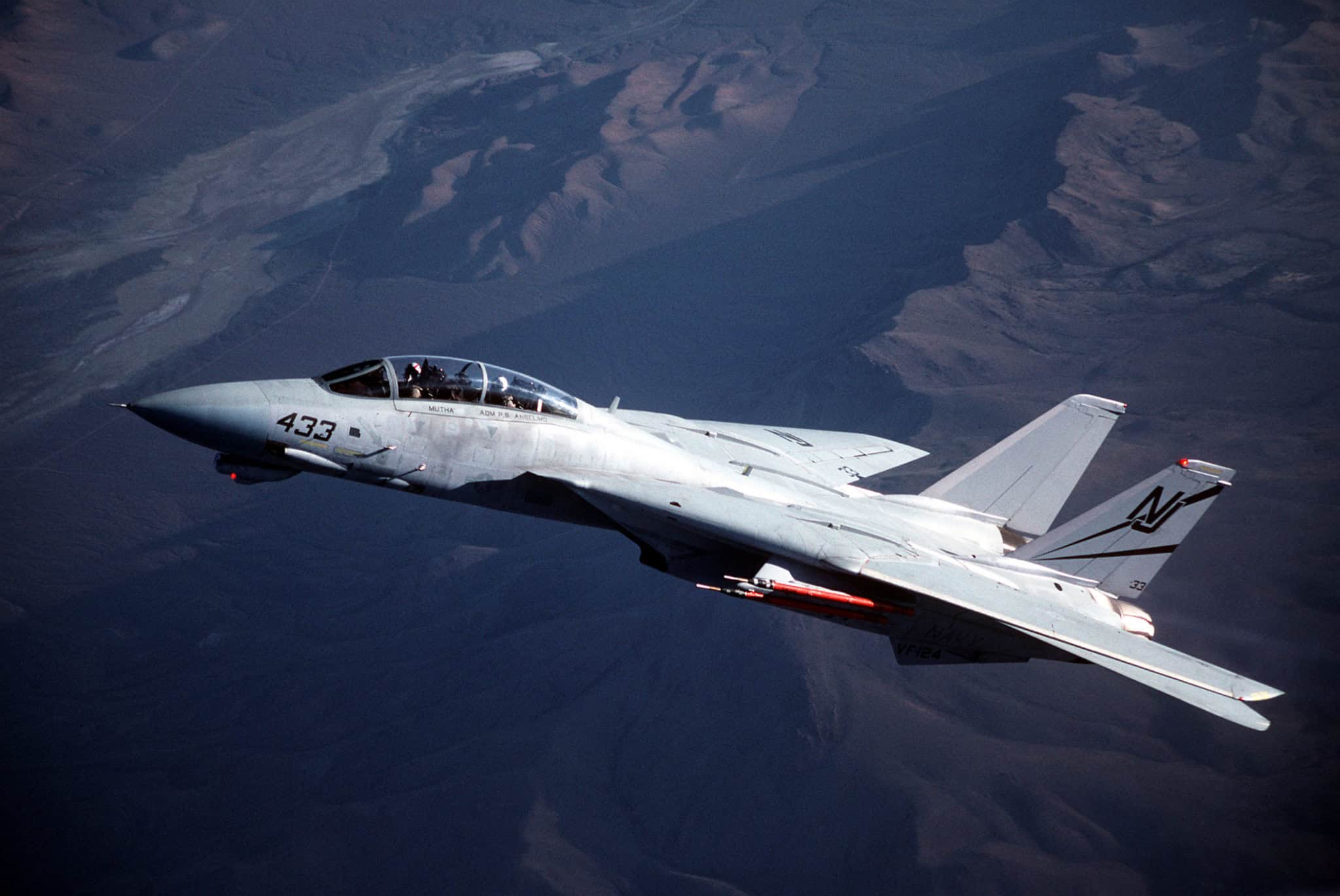


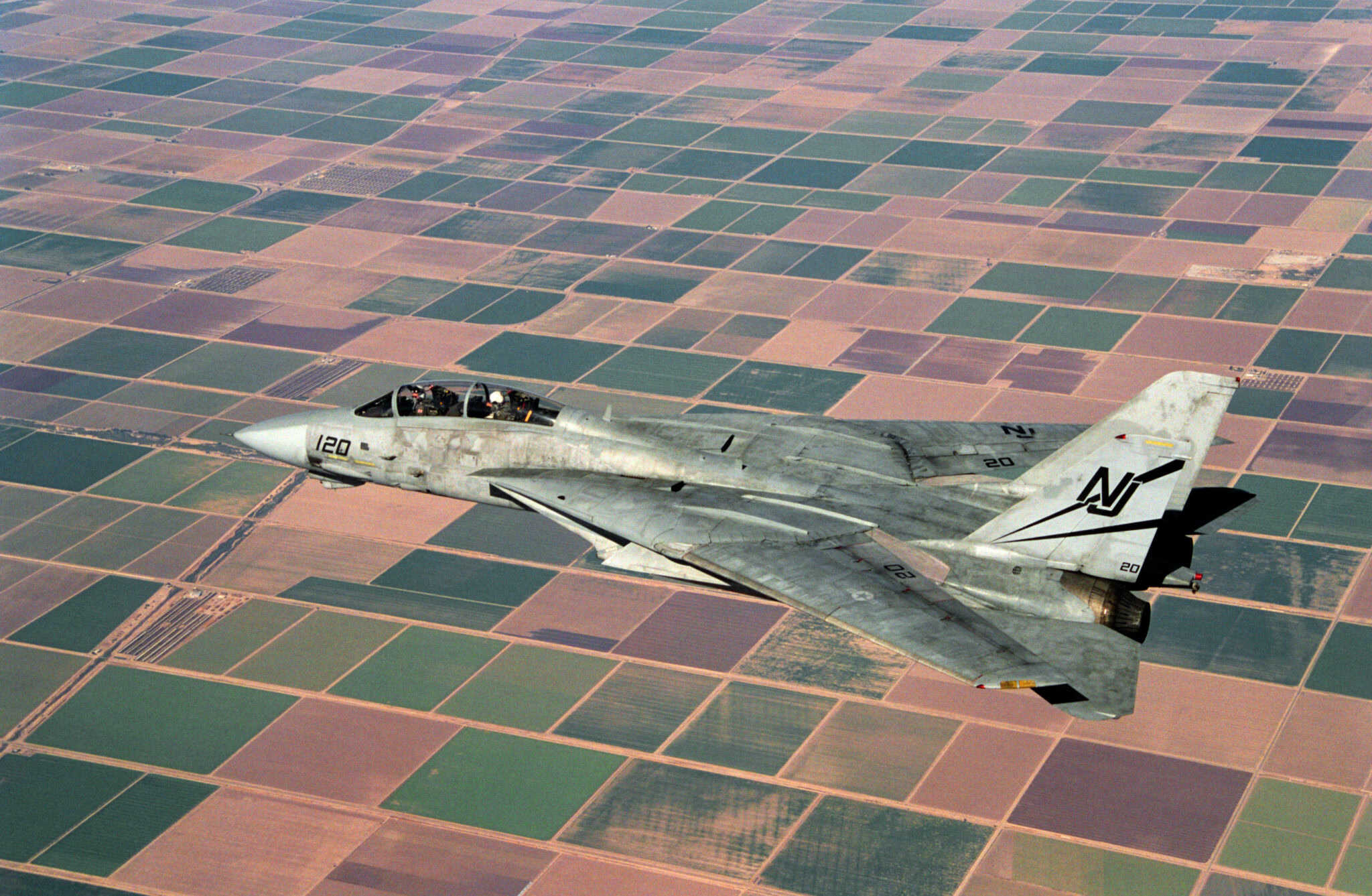


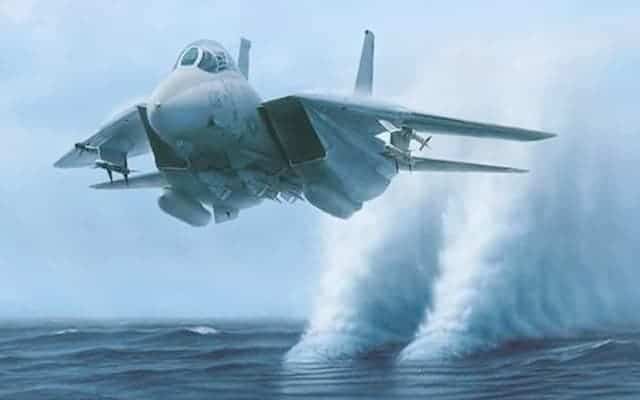
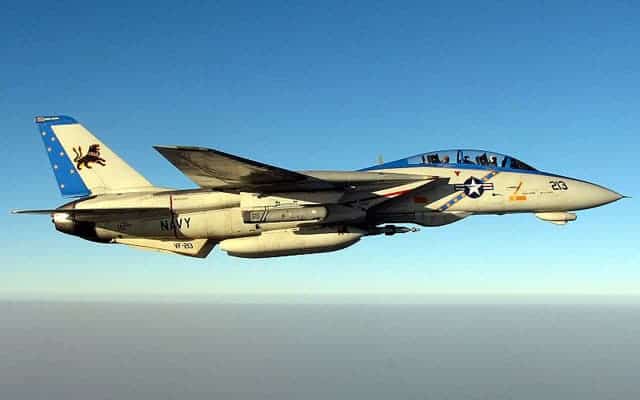
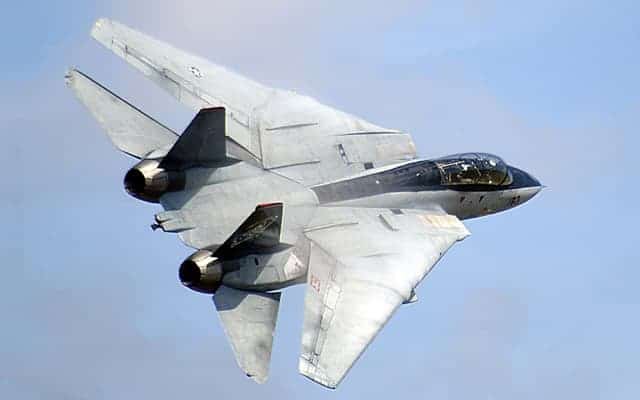
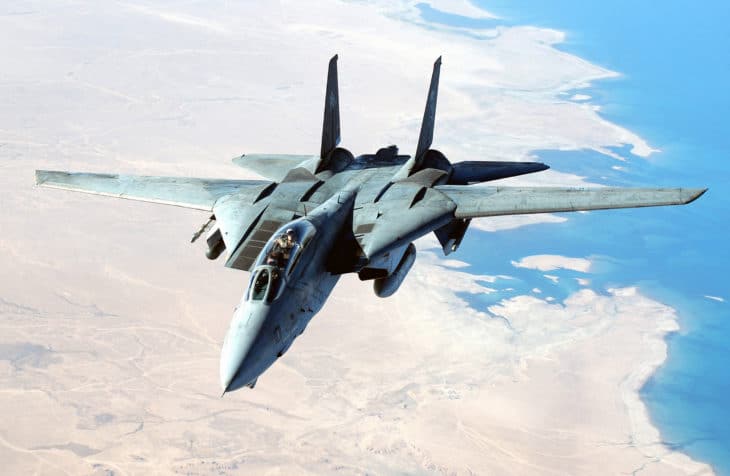
The F-14 Tomcat reached Mach 2.34, about 1,544 mph (2,485 km/h), and remains the fastest carrier-based aircraft ever built. Its swing wings swept back at speed and forward for the approach to a carrier deck.
The Tomcat existed to defend a carrier battle group from Soviet bombers hundreds of miles out, using the AIM-54 Phoenix missile. The US Navy retired it in 2006, and the only F-14s left flying are Iranian.
8. Lockheed Martin F-22 Raptor: Mach 2.25
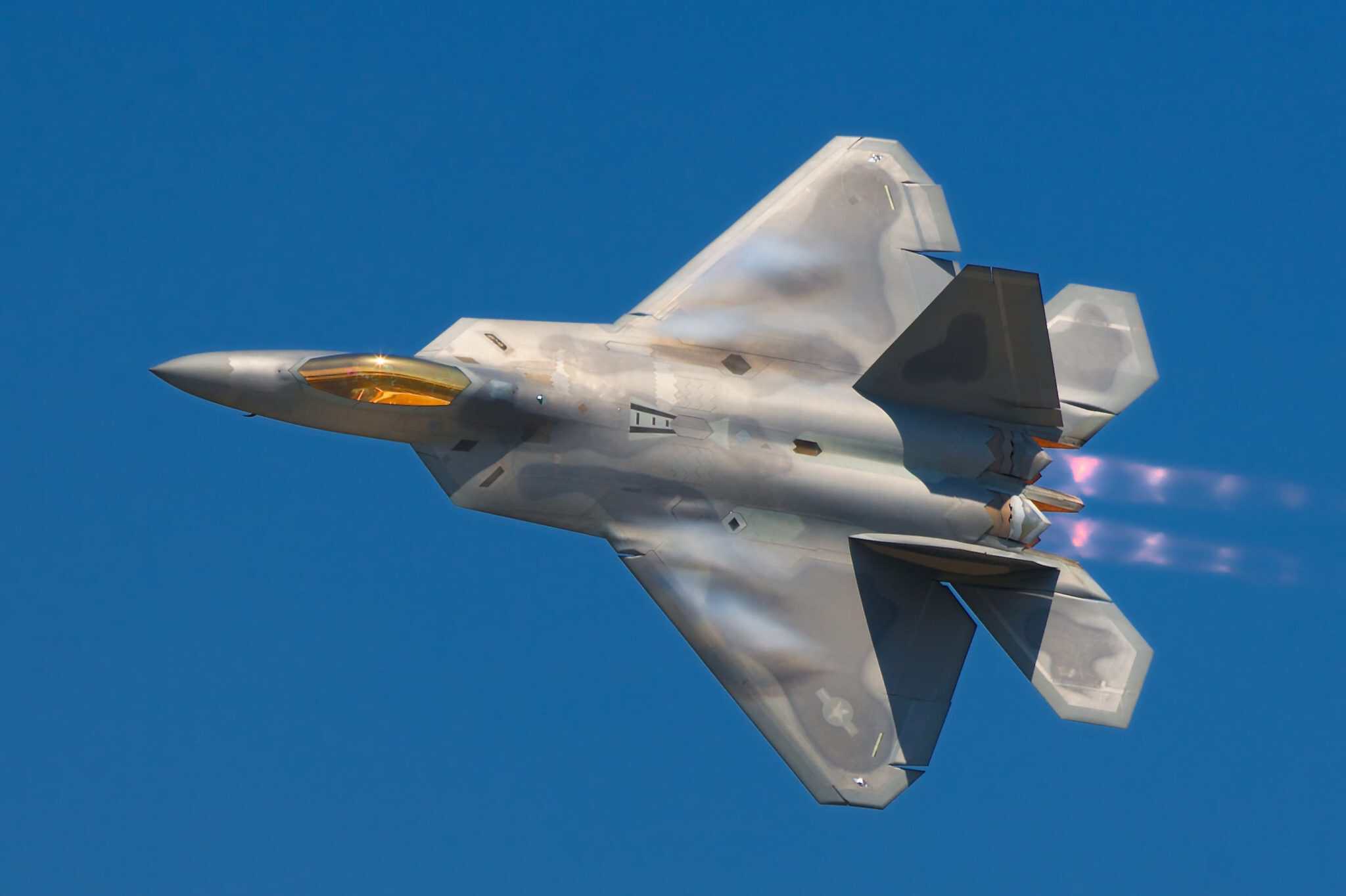

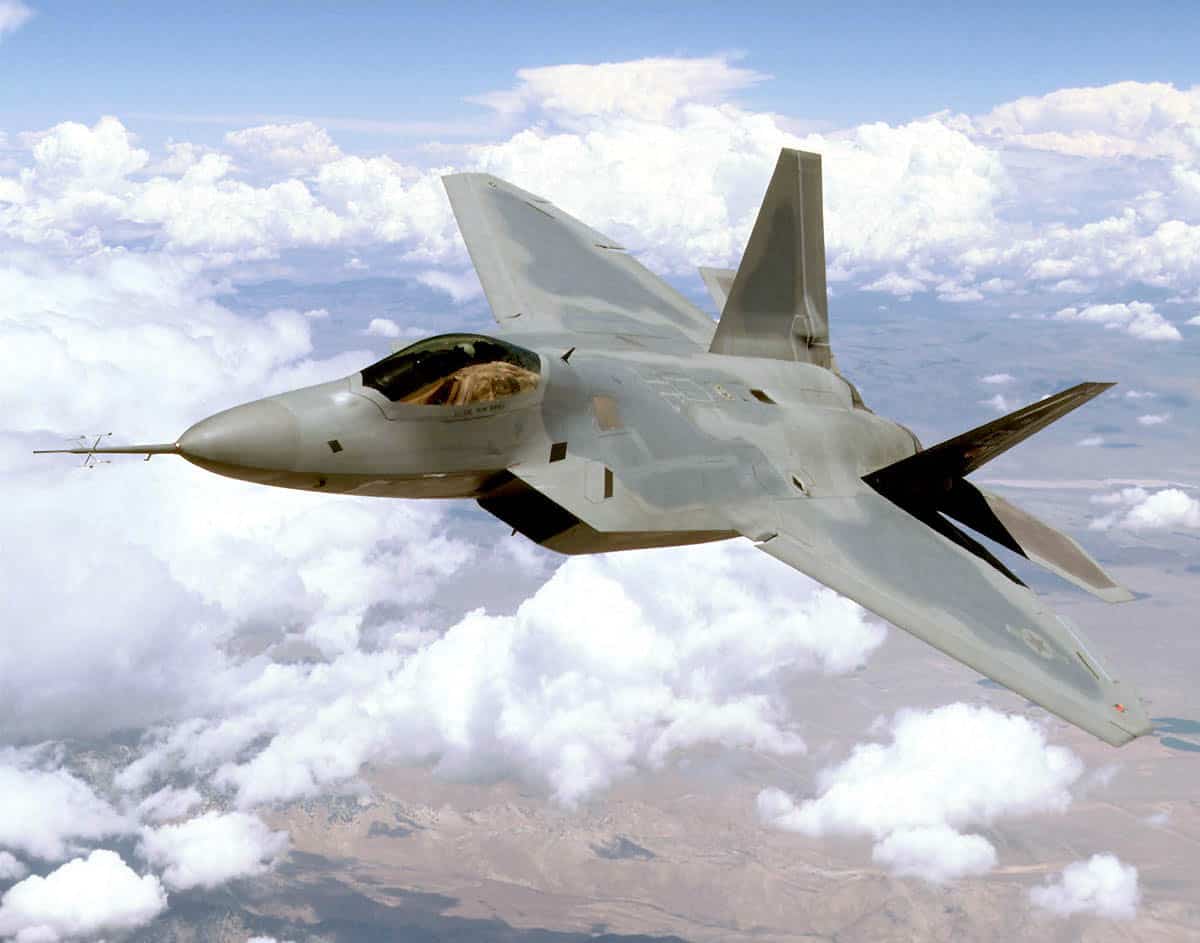
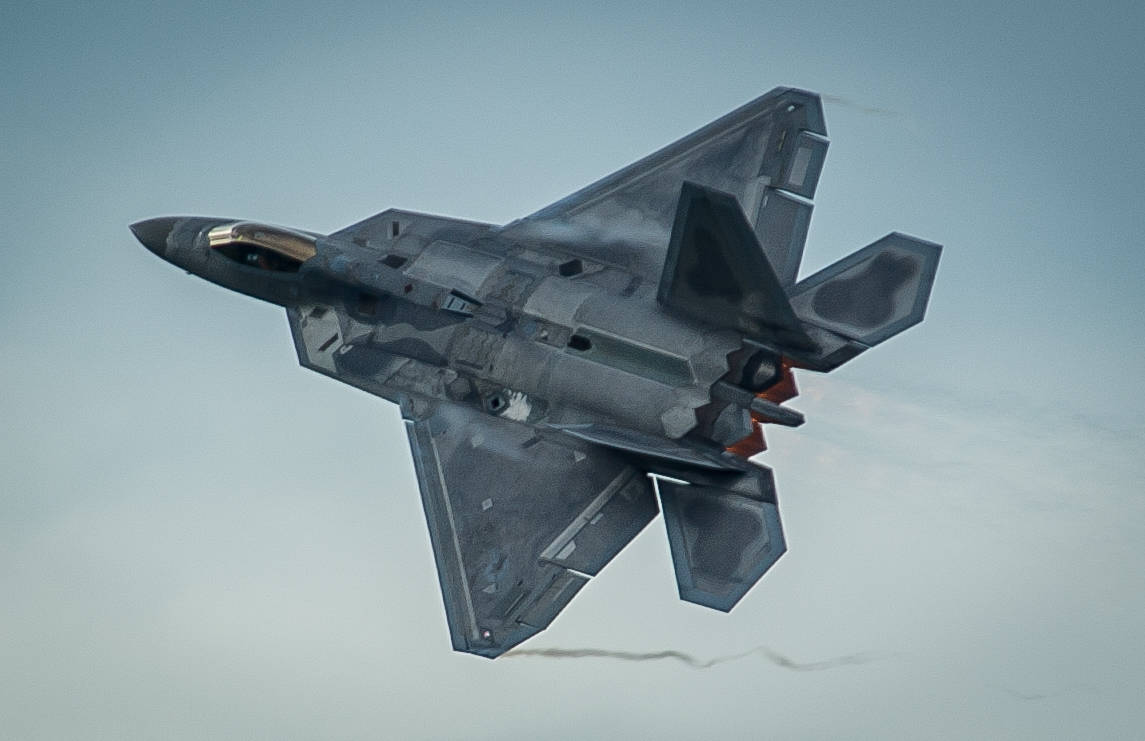


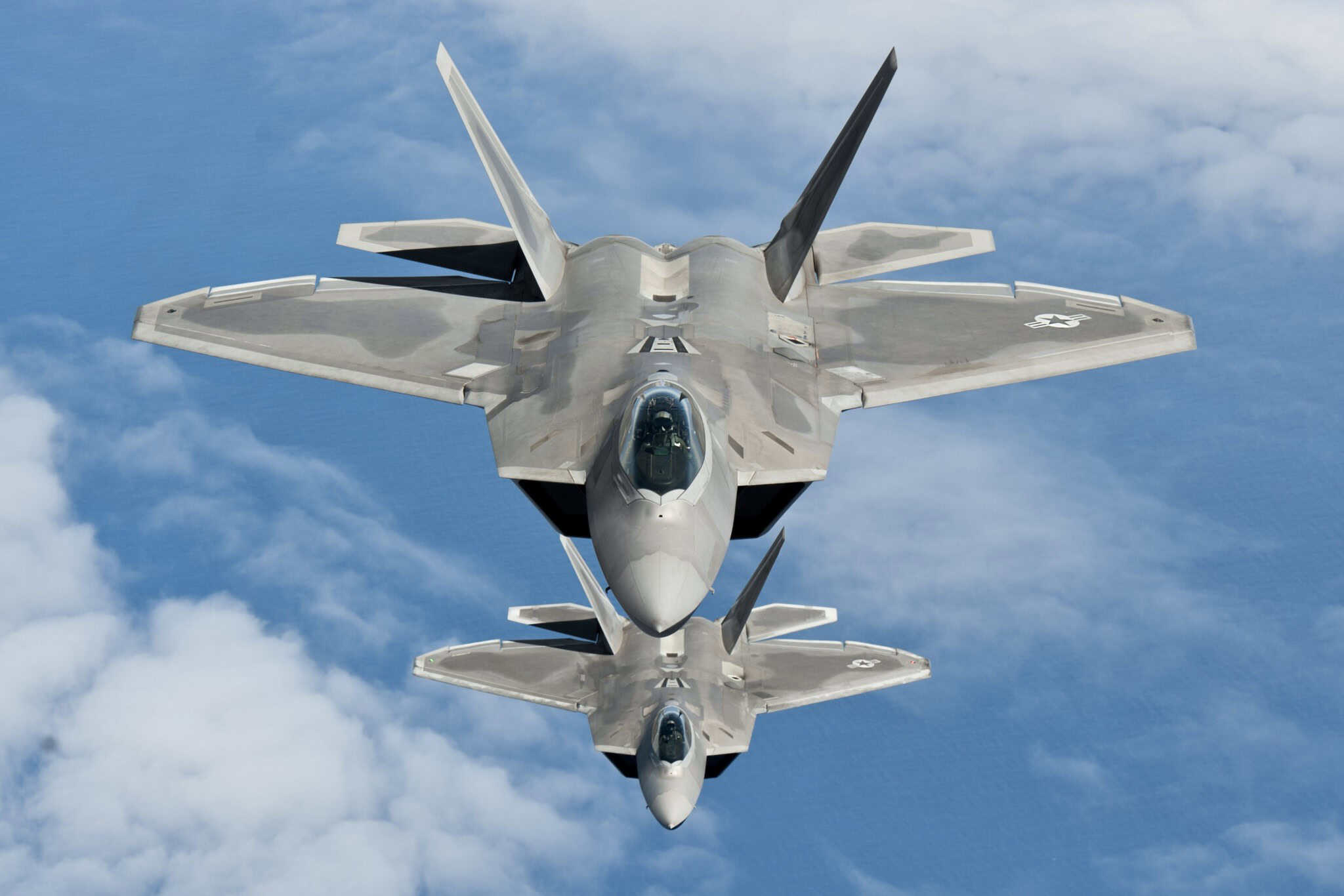

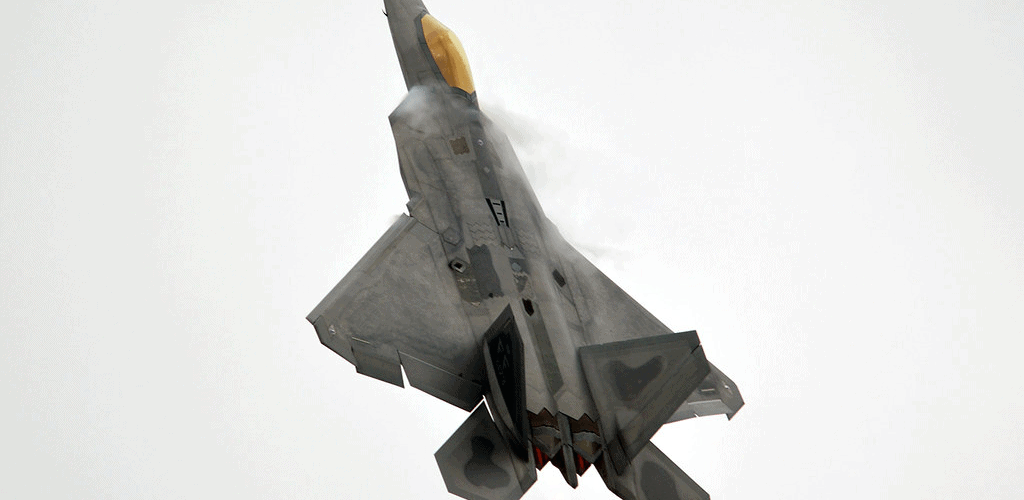


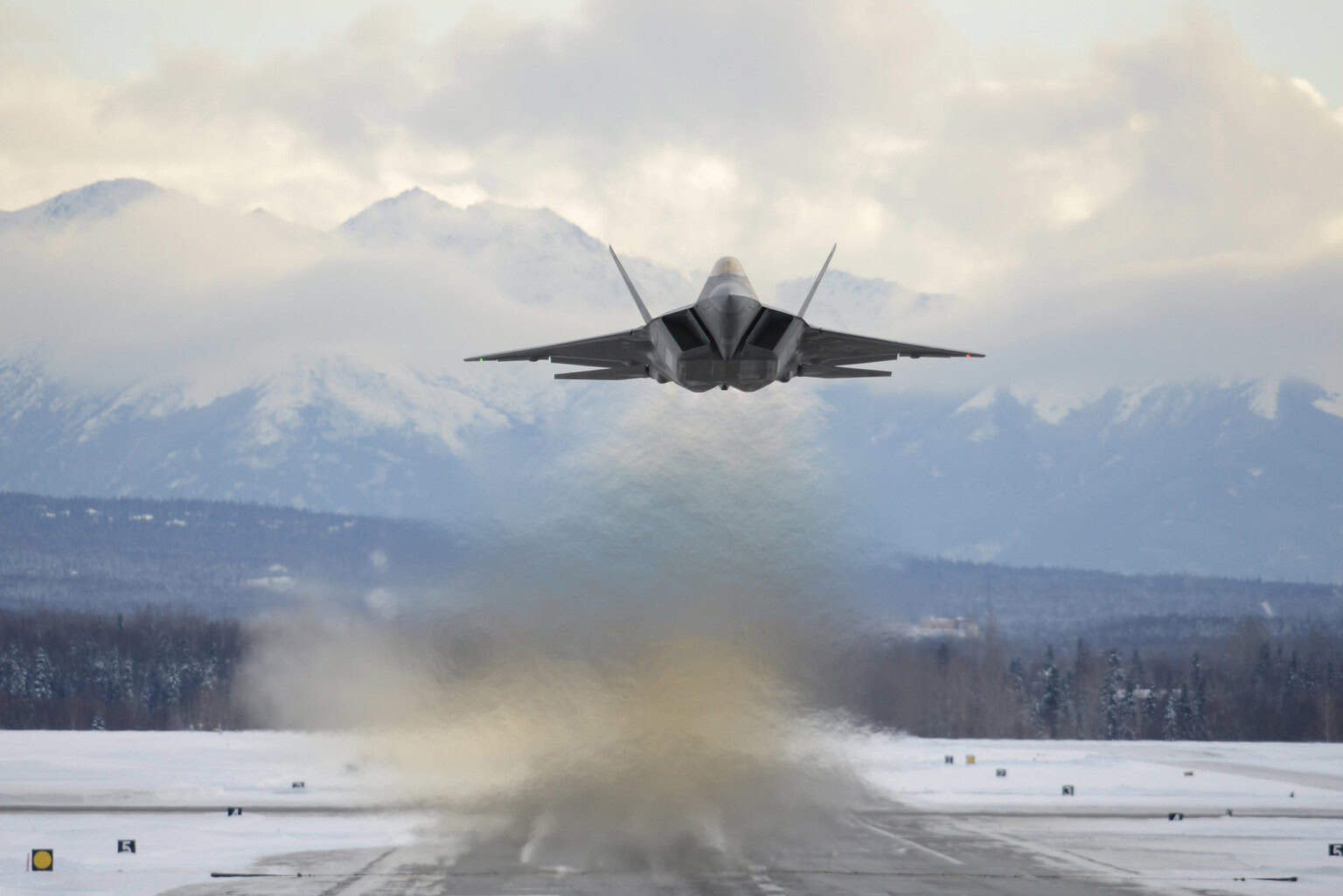


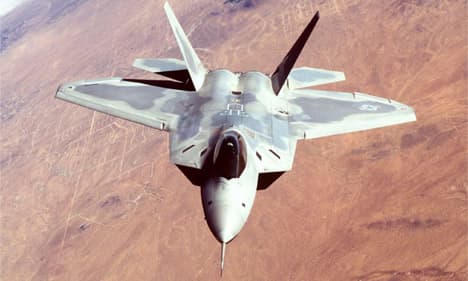

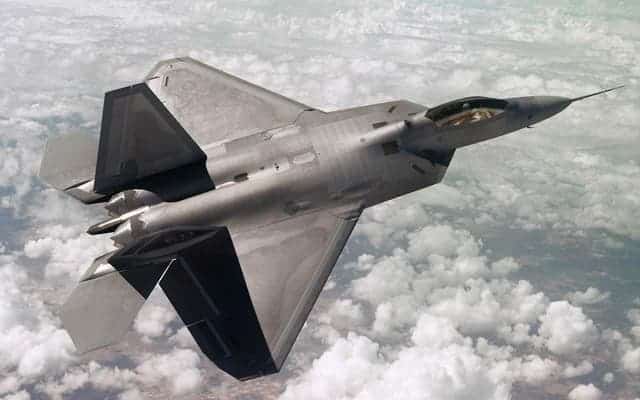

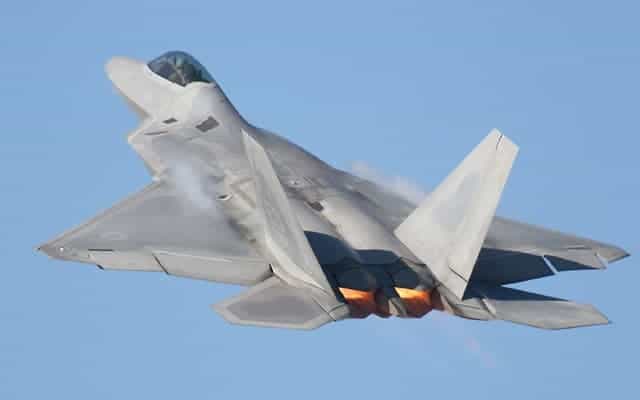
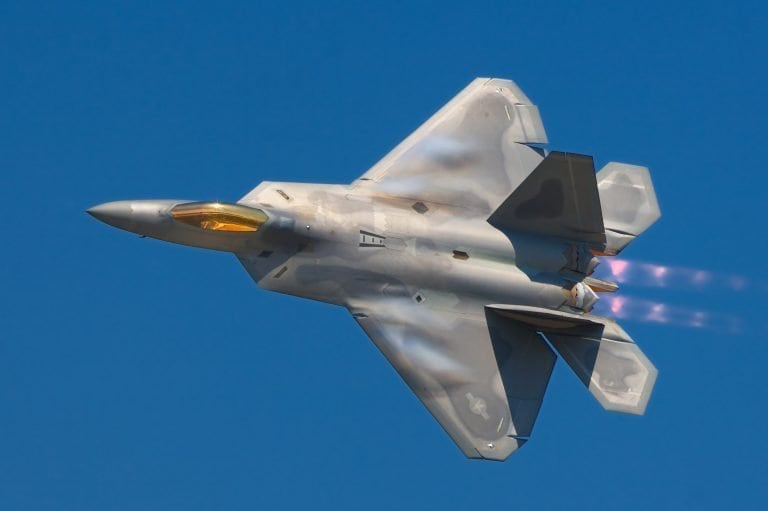
The F-22 Raptor tops out around Mach 2.25, roughly 1,500 mph (2,410 km/h), which makes the most capable fighter in the world slower than a 1972 F-15 and a 1970 MiG-25.
That is deliberate. Stealth requires internal weapons bays, serpentine inlet ducts and shaped surfaces, all of which cost raw speed, and modern air combat is decided by sensors and missiles rather than by a top-speed number.
What the Raptor does have is supercruise: it holds roughly Mach 1.8 without afterburner. Sustained supersonic cruise on dry thrust is far more militarily useful than a two-minute dash that empties the tanks.
Fighters have been getting slower for 50 years
The peak of fighter top speed was the early 1970s. The MiG-25 hit Mach 3.2 in 1970 and the F-15 hit Mach 2.5 in 1972; the F-22 that replaced the F-15 does Mach 2.25, and the F-35 that replaced the F-16 does Mach 1.6. Every generation since has traded speed for stealth, sensors and range, because a missile is always faster than an airplane.
9. Tupolev Tu-160 Blackjack: Mach 2.05


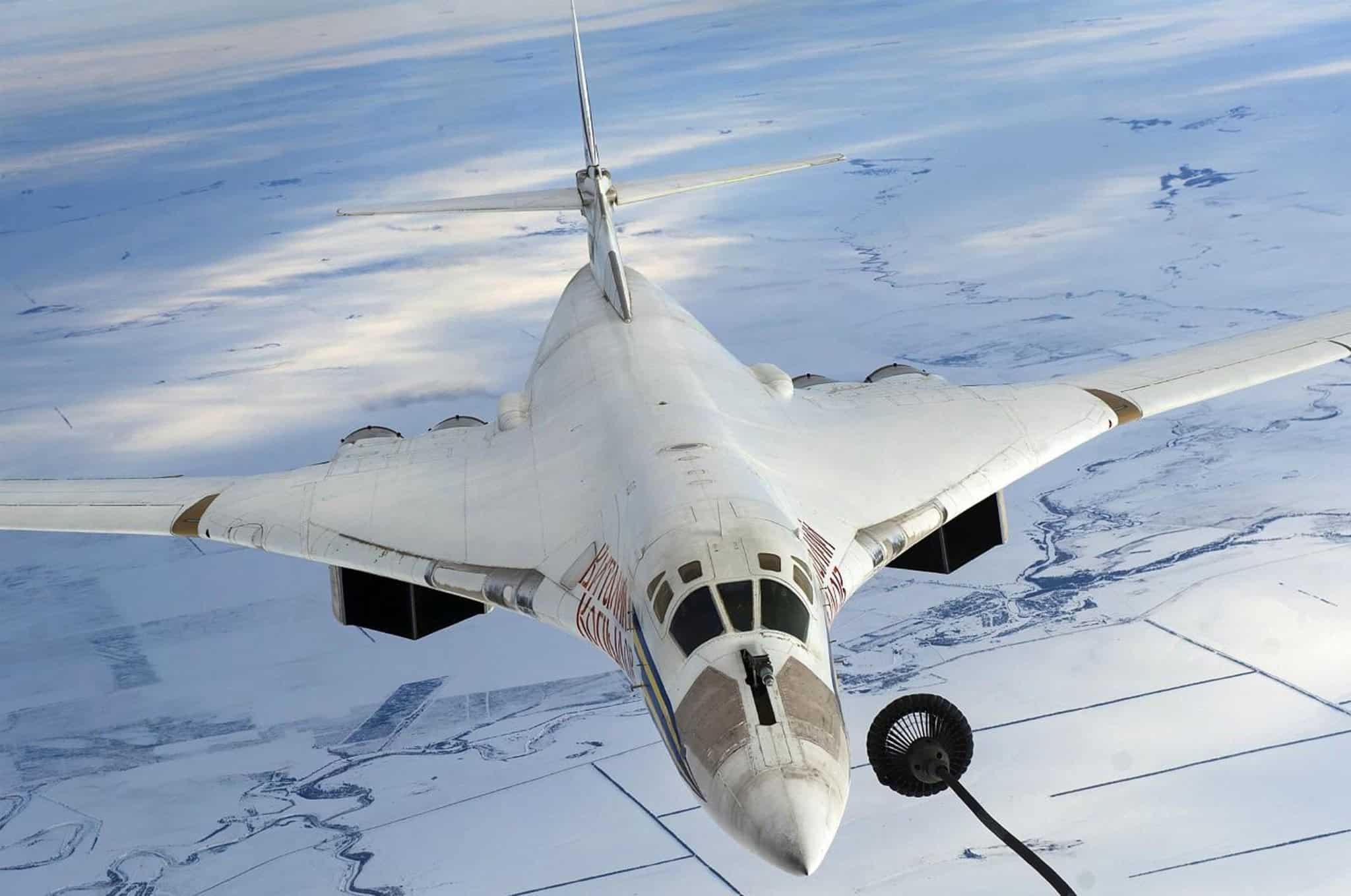
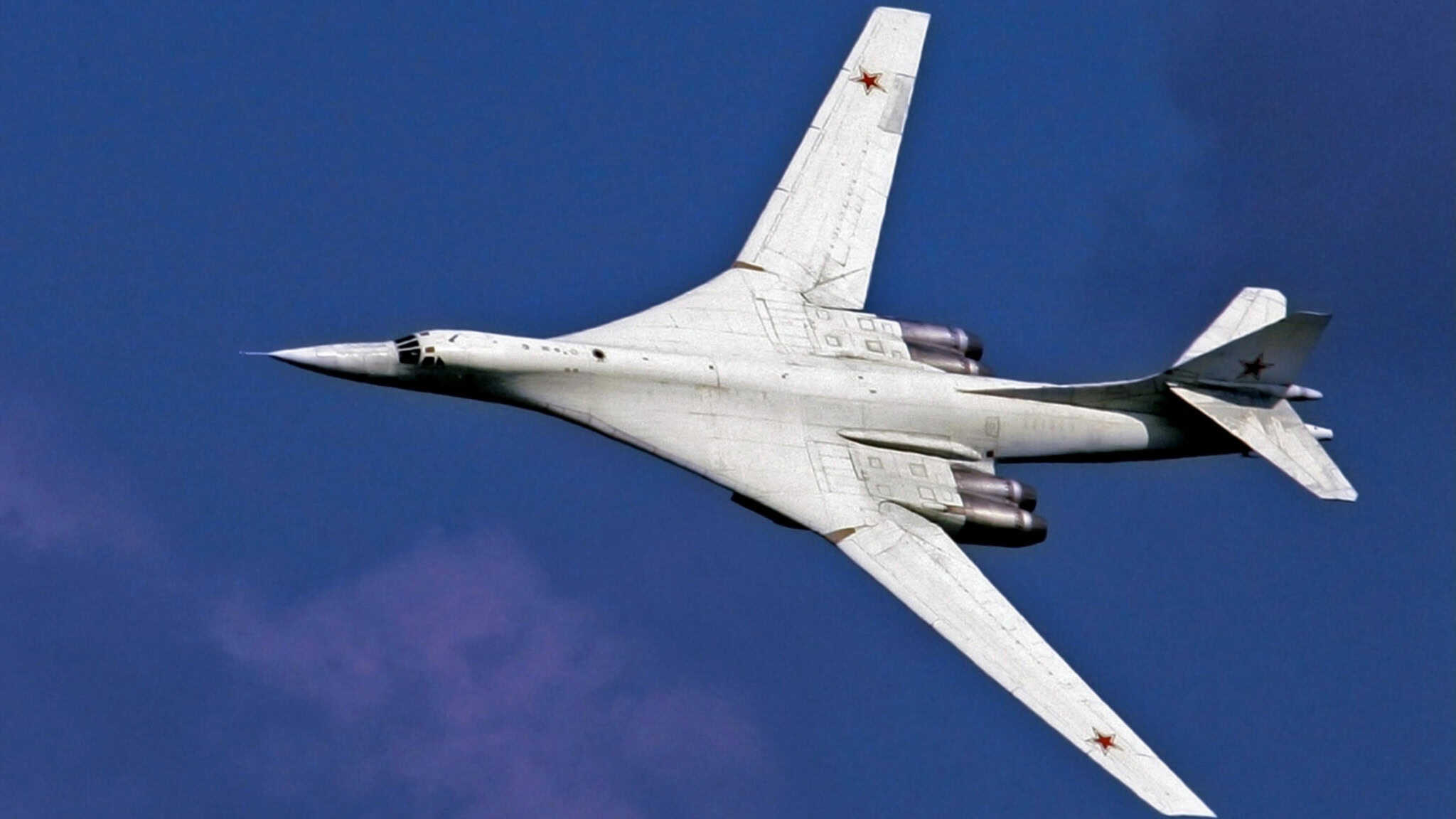
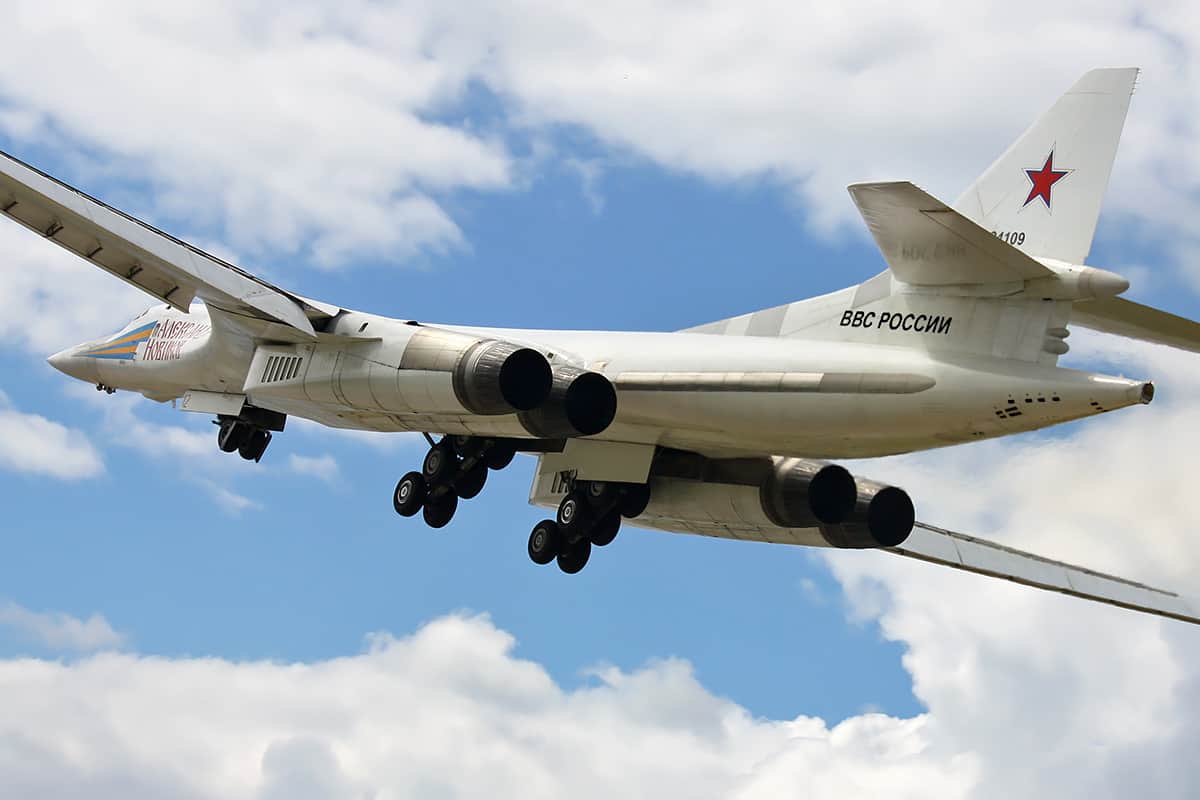


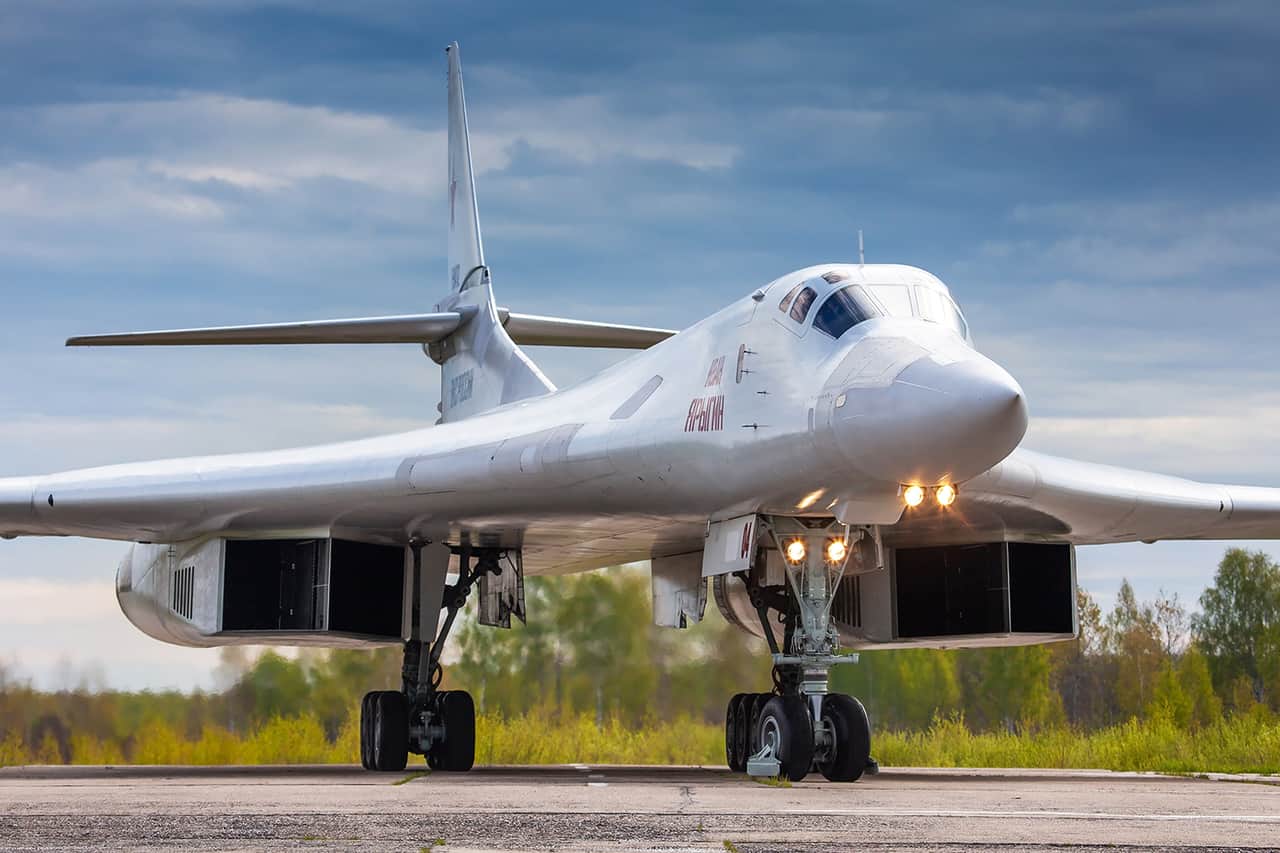

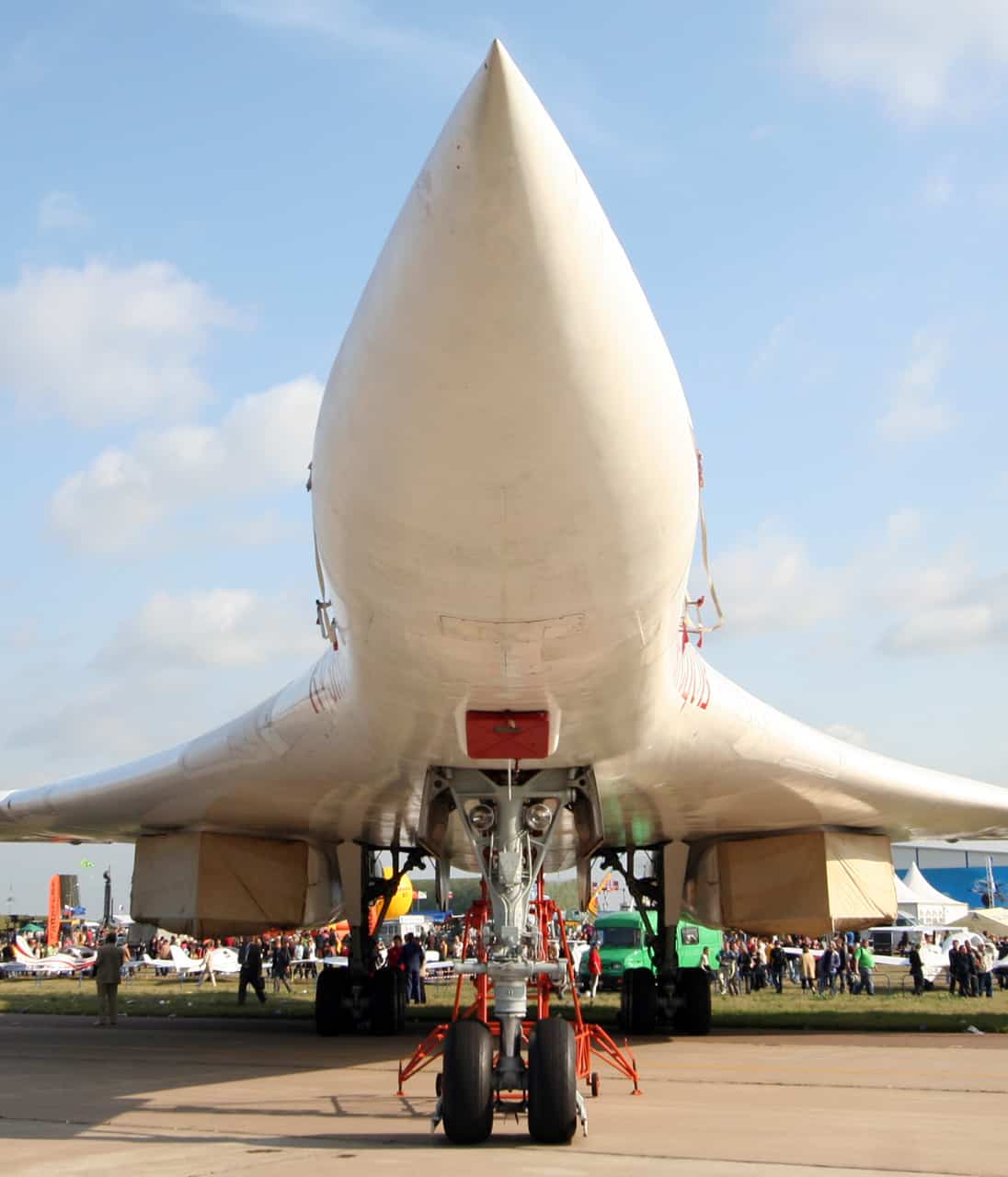
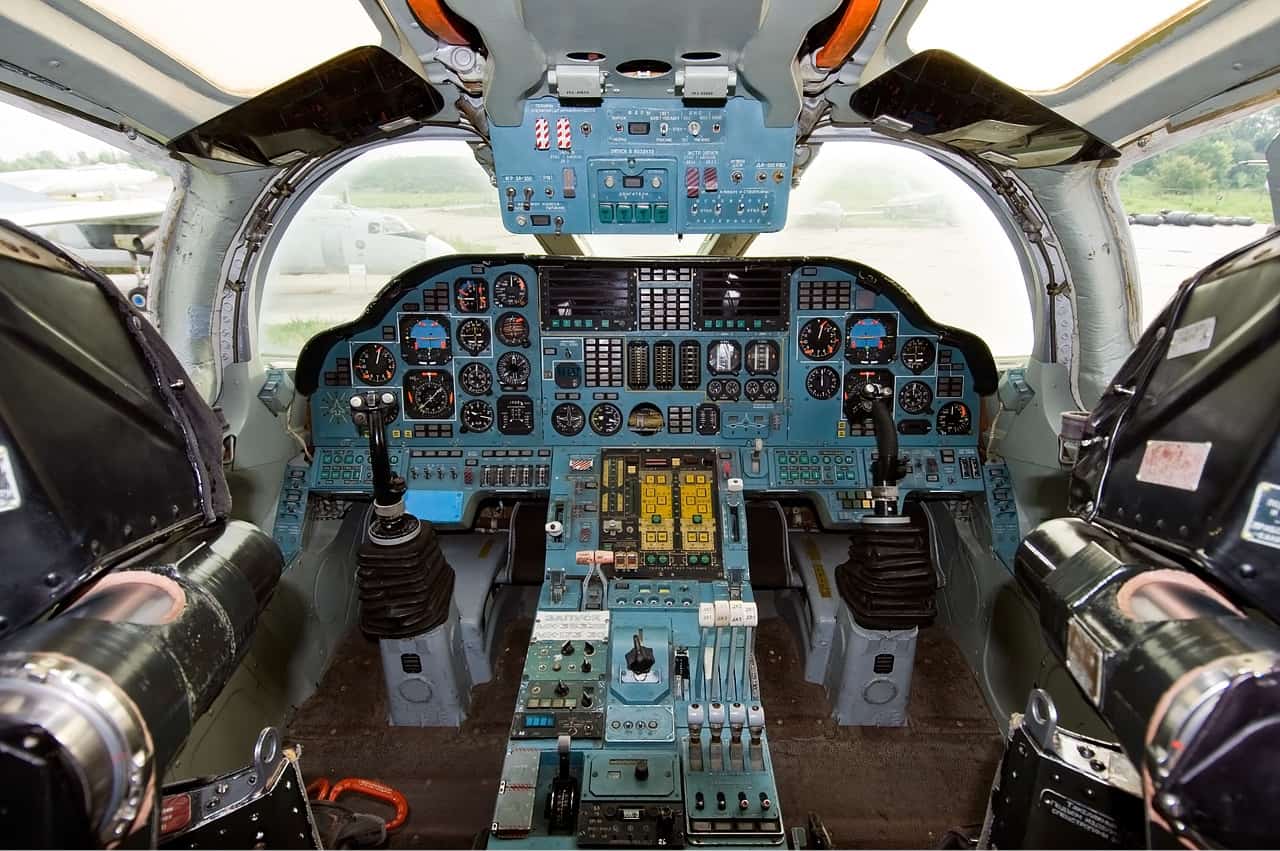
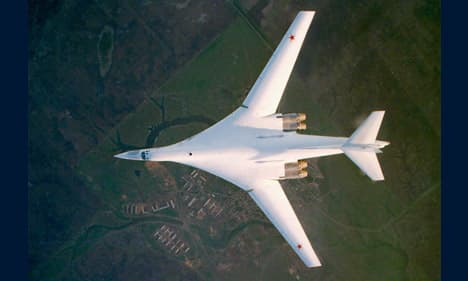
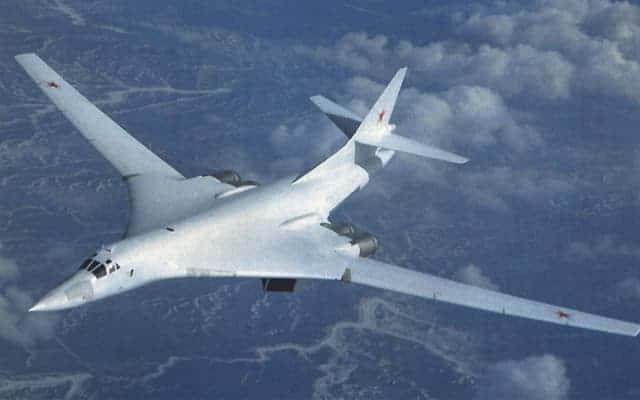

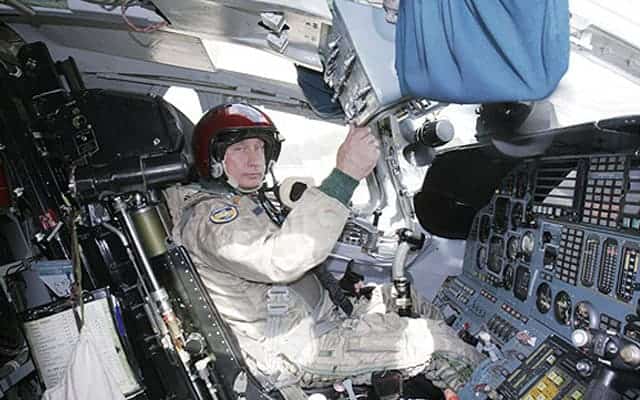
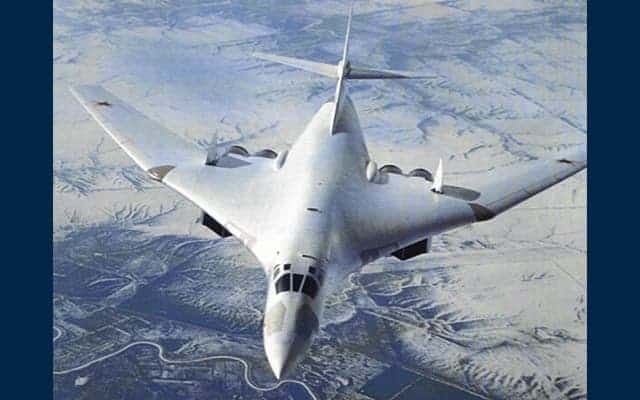

The Tu-160 Blackjack is the fastest bomber in service anywhere in the world, at Mach 2.05 or about 1,380 mph (2,220 km/h). It is also the largest and heaviest combat aircraft ever built.
Like the F-14 it uses variable-geometry wings, swept forward for takeoff and back for the supersonic dash. Russia restarted production of a modernized Tu-160M in 2022 and continues to deliver small numbers.
Be careful with the numbers you find elsewhere on this aircraft. Several sites quote Mach 2.05 alongside 1,573 mph, which is arithmetically impossible; the published 2,220 km/h figure works out to roughly 1,380 mph.
10. Convair B-58 Hustler: Mach 2.0

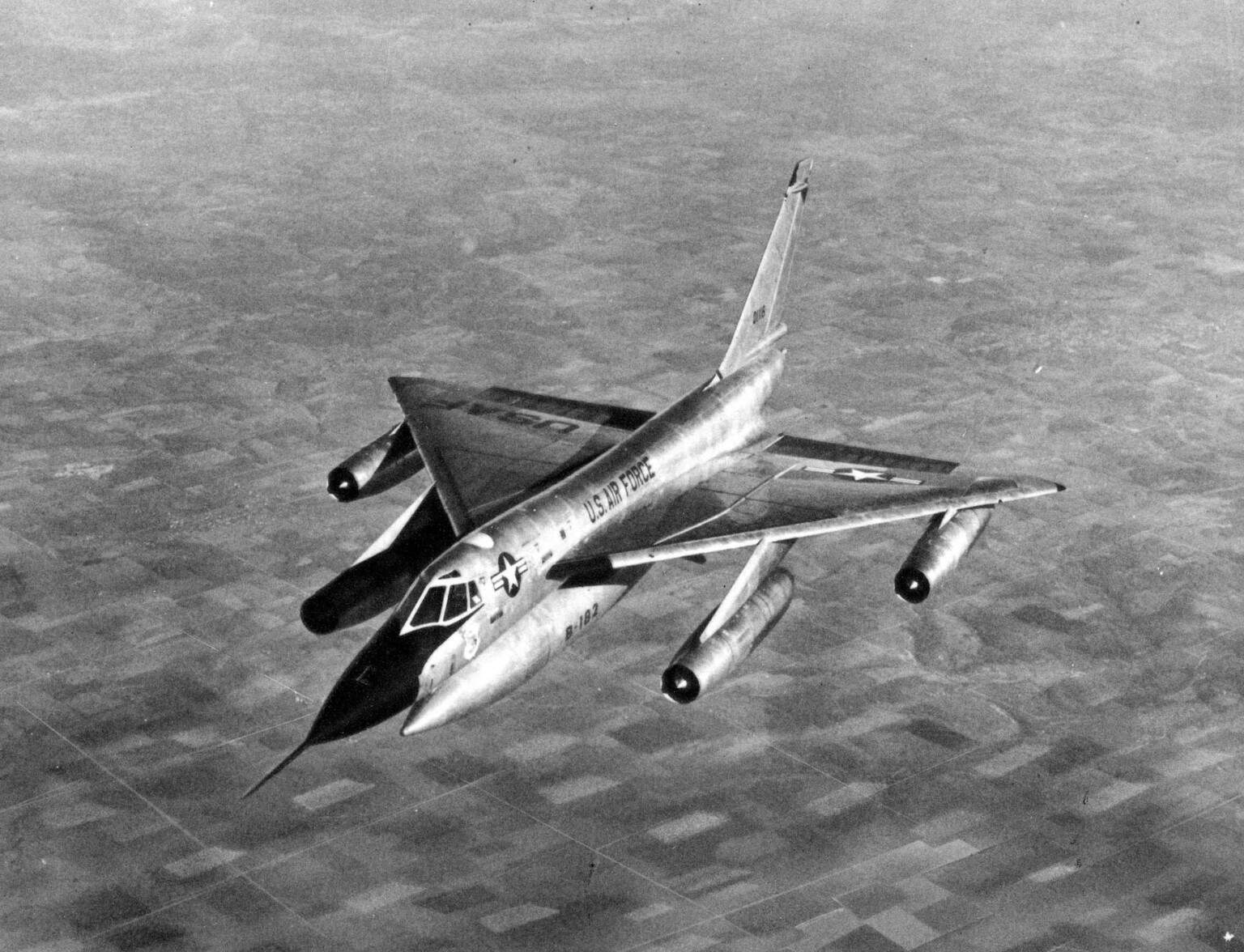
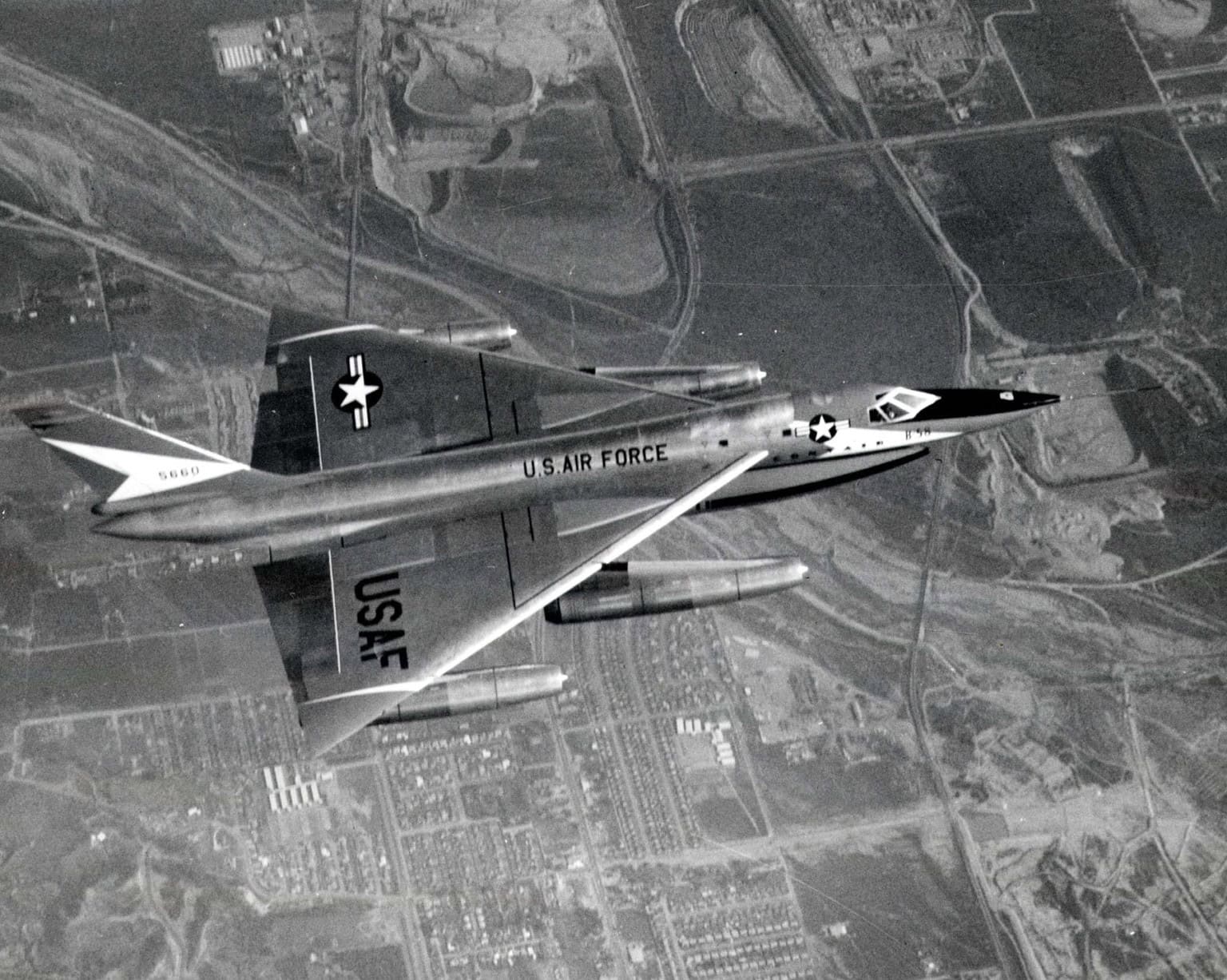


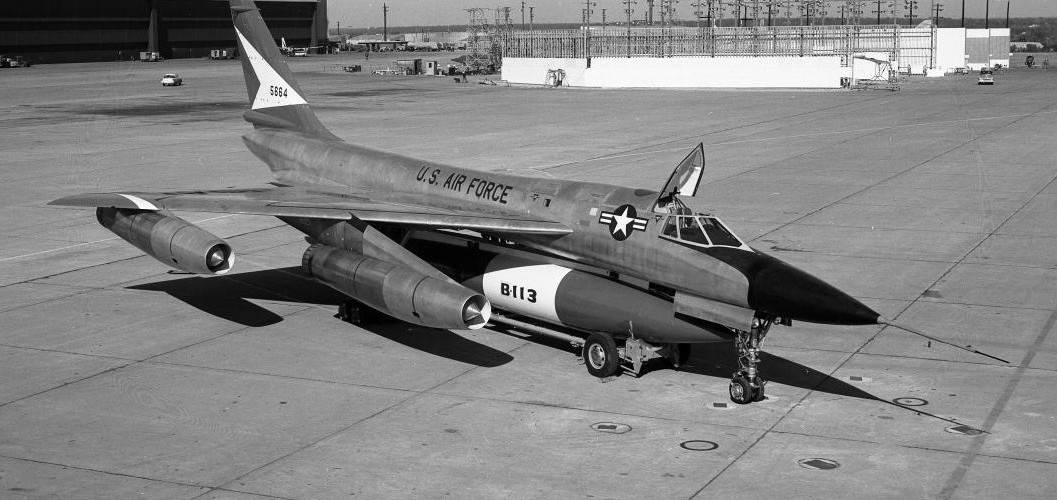
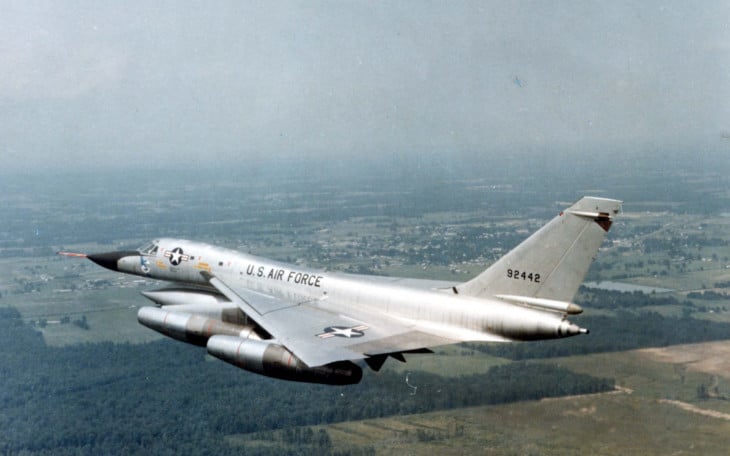
The B-58 Hustler was the first bomber to reach Mach 2 in service, at about 1,320 mph (2,125 km/h), and it entered service in 1960. It was faster than most of the fighters sent to intercept it.
It was also brutally difficult to fly, expensive, and short-legged, carrying its weapon and much of its fuel in a droppable underbelly pod. Air defenses pushed bombers to low altitude, where the delta-winged Hustler was useless, and it was gone by 1970.
The Fastest Military Aircraft in Service Today
Six of the ten aircraft above are retired, out of production, or were never operational. If the question is what a pilot could fly this week, the list is shorter.
| Aircraft | Top speed | Country | Category leader |
|---|---|---|---|
| MiG-31 Foxhound | Mach 2.83 / 1,864 mph | Russia | Fastest of any type in service |
| F-15 Eagle / F-15EX | Mach 2.5 / 1,650 mph | United States | Fastest Western aircraft in service |
| Su-27 Flanker family | Mach 2.35 / 1,550 mph | Russia | Fastest Flanker variant |
| F-22 Raptor | Mach 2.25 / 1,500 mph | United States | Fastest stealth fighter |
| Tu-160M Blackjack | Mach 2.05 / 1,380 mph | Russia | Fastest bomber in service |
This is the honest answer to “which country has the fastest military aircraft”: Russia, on the top-speed measure alone, because it kept two Cold War interceptors flying that were built for exactly that number.
It is also a measure that stopped deciding air combat decades ago. The MiG-31 is the fastest aircraft in the sky and would lose to an F-22 it never detected.
The Research Aircraft That Beat Them All
A handful of aircraft flew far faster than anything in the ranking above, and they are excluded for one reason: none was a military aircraft in any operational sense. They were flight-test vehicles, air-launched from a bomber and landed on a dry lakebed.
The fastest crewed aircraft ever flown is the North American X-15, which Pete Knight took to Mach 6.70, 4,520 mph (7,274 km/h), on 3 October 1967. The ablative coating protecting the airframe burned and cracked on the way home.
Faster still, and uncrewed, was NASA’s X-43A scramjet at Mach 9.6 in 2004. These are records set by research programs, not capabilities any air force could deploy, which is why they sit outside a ranking of military hardware.
Those aircraft are ranked properly, alongside civil types and spaceplanes, in our guide to the fastest aircraft in the world. The scramjet programs have their own page on the fastest hypersonic aircraft.
The fastest military aircraft nobody counts
The Lockheed D-21 reconnaissance drone reached roughly Mach 3.35 at 90,000 feet, faster than the SR-71 that originally launched it. Four operational D-21 missions were flown over China between 1969 and 1971, and not one recovered its film. Because it was uncrewed and expendable, it almost never appears in speed rankings, which is why the SR-71 keeps the top spot here.
How Military Aircraft Got This Fast, and Then Stopped
The entire speed story runs from 1947 to about 1976, and then flattens. Nothing built since has tried to beat it.
1947
Bell X-1 breaks the sound barrier. Chuck Yeager reaches Mach 1.06 on 14 October, and the barrier turns out to be a bookkeeping problem rather than a wall.
1956
Bell X-2 finds the thermal wall. Milburn Apt hits Mach 3.2, loses control seconds later and is killed. Heat, not thrust, becomes the limit.
1960
B-58 Hustler enters service. The first operational Mach 2 bomber, faster than most interceptors sent after it.
1964
SR-71 first flight. A titanium airframe and a turboramjet engine make sustained Mach 3 cruise routine rather than heroic.
1966
XB-70 reaches Mach 3.08. The fastest bomber ever flown, cancelled because surface-to-air missiles made high and fast a losing strategy.
1967
X-15 reaches Mach 6.7. Still the fastest crewed aircraft in history, and the program ends 15 months later.
1976
The record is set and left standing. An SR-71 records 2,193.2 mph in July; Belenko delivers a MiG-25 to the West in September. Nothing since has been designed to go faster.
2005
F-22 enters service at Mach 2.25. The most capable fighter in the world is slower than its predecessor by design, and that becomes the pattern.
The reason is not that engineers forgot how. It is that speed stopped buying survival once radar-guided missiles could outrun any aircraft, and stealth started buying it instead.
What about the F-35, and "Mach 6 hypersonic fighters"?
Two things get repeated constantly and neither is true. The F-35 is not fast: it tops out at Mach 1.6, slower than the F-16 it replaces, because stealth and internal weapons bays matter more than a speed number. And no hypersonic combat aircraft exists in service anywhere as of 2026. The SR-72, Russia’s MiG-41 and China’s various concepts are programs and artwork, not aircraft; hypersonic weapons are real, hypersonic crewed military aircraft are not.
Can a Fighter Jet Really Go 1,000 mph?
Yes, and comfortably. At the 40,000 feet where fighters do their supersonic flying, the speed of sound is about 660 mph, so 1,000 mph is roughly Mach 1.5.
Every fighter in service can exceed that, including the F-35. What almost none of them can do is hold it, because full afterburner drains the fuel load in minutes.
This is why published top speeds are misleading. A Mach 2.5 F-15 spends its entire operational life below Mach 1, and its top speed is a limit rather than a cruise setting.
FAQ
Sources and references used for research and fact-checking.
- The Aviation Geek Club, Fédération Aéronautique Internationale absolute speed record, 28 July 1976
- NASA, XB-70 Valkyrie
- MiGFlug, Mikoyan-Gurevich MiG-25 Foxbat: History, Specs and Stories
- Airforce Technology, Tu-160 Blackjack Strategic Bomber
- Wikipedia, List of flight airspeed records
- AeroCorner, Tupolev Tu-160 Blackjack: history, technical data and photos
Get the Newsletter
The latest aviation news and stories sent to your inbox.
About the Author

Tim is the owner and lead editor of AeroCorner since 2019, overseeing aviation content covering aircraft, airlines, airports, and the broader aviation industry. Through years of researching, writing, editing, and publishing aviation-focused content, he has developed extensive practical knowledge of commercial aviation and air travel. Based in Asia and a frequent traveler himself, Tim also brings firsthand passenger experience to AeroCorner’s coverage. Outside of publishing, he has also explored aviation firsthand through hands-on flight training in New Zealand.