

Table of Contents
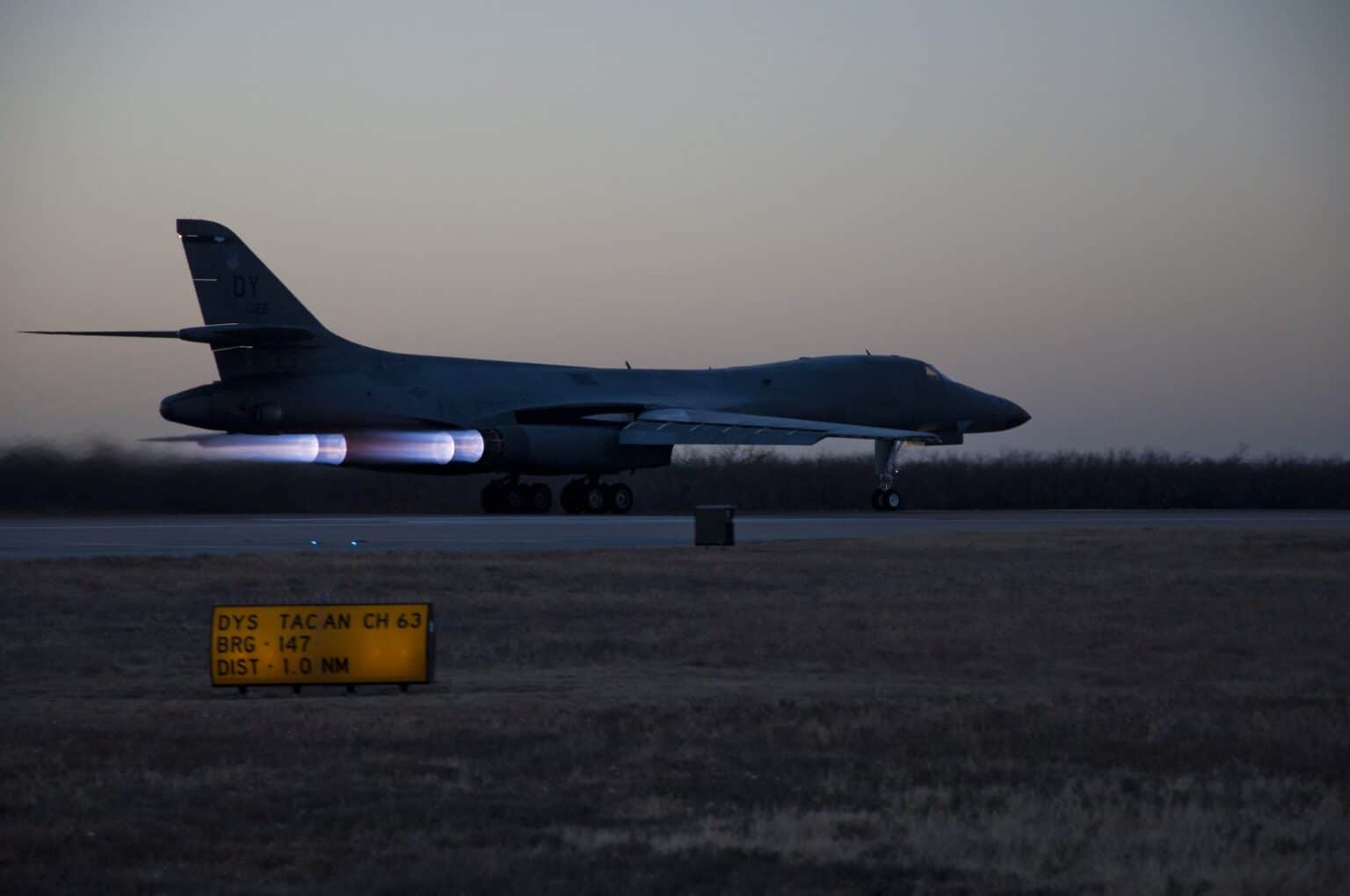
The Air Force has started putting B-1B bomber pilots in a six-seat business jet for extra flying hours, so the bomber’s own hours go to the missions only it can fly.
On Nov. 2, 2026, a B-1B pilot from Dyess Air Force Base flew the first military training flight of BSTAR, the Bomber Supplemental Trainer for Aircrew Readiness, from Abilene Regional Airport in Texas. The jet was not a bomber. It was a contractor-owned HondaJet HA-420, a light business jet.
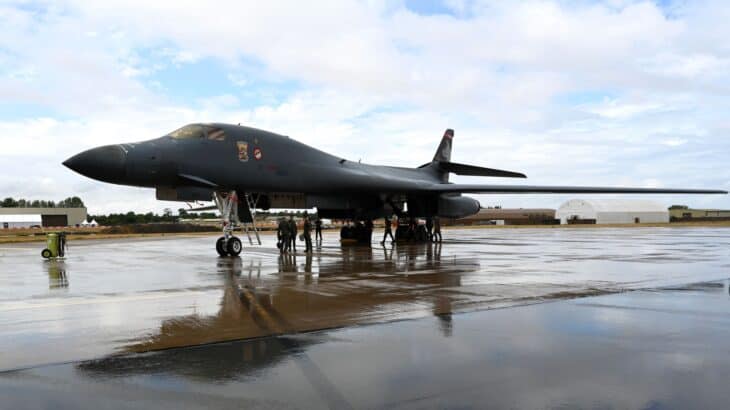
The Rockwell B-1B Lancer is billed at $89,400 per flight hour under the Pentagon’s fiscal 2026 reimbursable rates. Air Force Global Strike Command expects BSTAR to add about 100 flying hours per pilot each year, at what the 7th Bomb Wing calls “a much lower cost.”

Why B-1B Pilots Need Hours the Bomber Cannot Give Them
A pilot’s basic skills decay without time in the air: instrument flying, approaches, radio work, the habit of two pilots running a cockpit together. None of those skills needs a swing-wing supersonic bomber to practice.
Every one of those routine hours comes out of a small, aging fleet. The Congressional Research Service counted 44 B-1Bs in July 2026, out of 100 built, split between the 7th Bomb Wing at Dyess and the 28th Bomb Wing at Ellsworth Air Force Base, South Dakota.
Those jets are often not ready to fly. In fiscal 2024, all three US bomber fleets were mission capable less than half the time, Air & Space Forces Magazine reported from Air Force data. Our breakdown of how many B-1 bombers are left covers where the rest went.
BSTAR moves the foundational flying elsewhere. The Air Force release lists the four skills it targets: instrument procedures, mission planning, aircraft handling and crew resource management.
Maj. Gen. Ty Neuman, who commands Eighth Air Force, framed it as a trade in favor of the bomber’s hours. “BSTAR increases airmanship, which translates to safer, more effective and lethal B-1 operators,” he said in the release.
The Numbers Behind the HondaJet Swap
The Pentagon comptroller’s fiscal 2026 rate table, effective Oct. 1, 2025, sets the B-1B at $89,400 an hour for other Defense Department users. Ten hours of practice instrument approaches in the bomber are billed at $894,000 at that rate.
The same table shows how far down the cost curve a small jet sits. The T-38C supersonic trainer is $6,730 an hour, and the T-1A Jayhawk, a military version of the Beechjet 400A business jet, is $1,807.
| Aircraft | Role | FY2026 rate per flight hour |
|---|---|---|
| B-2A Spirit | Stealth bomber | $96,949 |
| B-1B Lancer | Bomber | $89,400 |
| B-52H Stratofortress | Bomber | $66,003 |
| T-38C Talon | Supersonic trainer | $6,730 |
| T-1A Jayhawk | Business-jet trainer | $1,807 |
What the Air Force pays per HondaJet hour has not been published, and neither has the contract value or the number of jets. The Air Force release does not even name the aircraft. Outlets identified it from the service’s photos of the flights, and one caption names HondaJet HA-420 N420TT.
The idea was on paper almost two years earlier. A Jan. 16, 2025 sources-sought notice from the Air Force Installation Contracting Center asked for supplemental pilot training in contractor-owned light business jets “such as the HondaJet Elite or similar,” at more than 400 pilot training hours a month over a proposed five years.
The contractor, XSTAR Aviation, supplies the aircraft, instructor pilots, maintenance and scheduling. The release says the flights need no additional B-1s and no military maintenance personnel.
Why a Business Jet in a Bomber Wing Matters
The HondaJet is built by Honda Aircraft Company in Greensboro, North Carolina, and stands out for its engines, two GE Honda HF120 turbofans mounted on pylons above the wings. The Aviationist calls BSTAR the first known military or state use of the type.


The concept itself is not new. The B-2 wing at Whiteman Air Force Base and the U-2 wing at Beale use T-38s as companion trainers so pilots can fly without burning hours on scarce airframes, as The Aviationist noted.
What is new is that the Air Force does not own these jets. The HondaJets are civilian-registered, contractor-owned and contractor-operated, so the service is buying flight hours rather than airplanes, maintainers and spare parts.
The limits are written into the release. BSTAR adds to B-1 training rather than replacing it, and aerial refueling, tactical employment and weapons delivery still happen only in the bomber.
“Combat-ready aircrews are built on foundational airmanship, sound decision-making and time in the air,” said Gen. S.L. Davis, commander of Air Force Global Strike Command. One Dyess B-1 pilot put it more simply: “Having another way to develop that foundation helps make the most of our training in the B-1.”
What Happens Next for BSTAR
BSTAR is a prototype. Davis and Neuman flew observer flights in the HondaJets on Nov. 4, two days after the first sortie, and every flight in the prototype phase is tracked and debriefed.
Global Strike Command says those findings will decide whether supplemental flight training should play a broader role in building combat-ready B-1 crews. Col. Robert Sturgill, who commands the 7th Bomb Wing, has already given his answer: “I want our pilots flying as much as possible.”
The pressure behind it is not going away. CRS says the Air Force plans to keep the B-1B through 2037, while the first B-21 Raider is due at Ellsworth in 2027. Our ranking of the best bombers in the world shows how the two compare.
That leaves roughly a decade in which a shrinking, expensive bomber fleet has to keep producing sharp pilots. If BSTAR works, a growing share of a B-1 pilot’s logbook could be written in a business jet that seats six.
Sources and references used for research and fact-checking.
- US Air Force, 7th Bomb Wing (via DVIDS), AFGSC expands B-1 pilot training through new aviation initiative
- Office of the Under Secretary of Defense (Comptroller), FY 2026 Reimbursable Rates, Fixed Wing
- The Aviationist, USAF Adopts Contracted HondaJets for B-1 Aircrew Currency
- AVweb, B-1 Bomber Pilots Begin Training in HondaJets
- Aviation News (aviationnews.eu), Air Force Launches Innovative B-1B Pilot Training Program to Boost Flight Hours
- Department of the Air Force (via SweetSpot federal contract listing), Supplemental Pilot Training, sources-sought notice FA300225PilotTrng
- Congressional Research Service, U.S. Strategic Bombers (IF12945), updated July 31, 2026
- Air & Space Forces Magazine, Air Force mission capable rates, fiscal 2024
- Wikipedia, Beechcraft T-1 Jayhawk
Get the Newsletter
The latest aviation news and stories sent to your inbox.
About the Author

Tim is the owner and lead editor of AeroCorner since 2019, overseeing aviation content covering aircraft, airlines, airports, and the broader aviation industry. Through years of researching, writing, editing, and publishing aviation-focused content, he has developed extensive practical knowledge of commercial aviation and air travel. Based in Asia and a frequent traveler himself, Tim also brings firsthand passenger experience to AeroCorner’s coverage. Outside of publishing, he has also explored aviation firsthand through hands-on flight training in New Zealand.