

Table of Contents
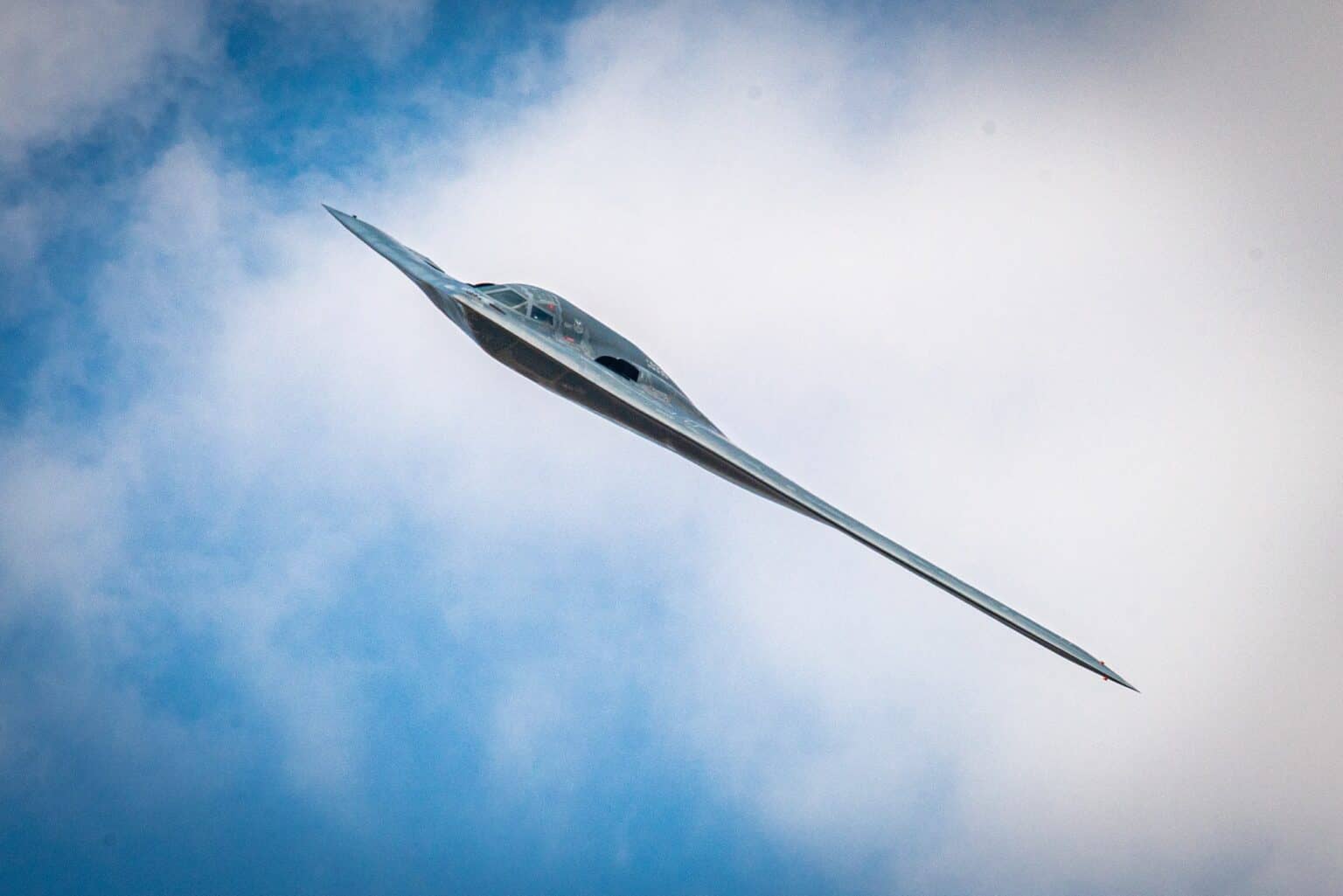
The longest bombing mission ever flown started in Missouri, crossed the Pacific and ended on an island in the Indian Ocean. A quarter of a century and two rounds of B-2 strikes on Iran later, no bomber has flown a longer one.
In October 2001, in the opening nights of Operation Enduring Freedom, a B-2 Spirit stealth bomber named Spirit of America took off from Whiteman Air Force Base, Missouri, bombed targets in Afghanistan and landed at Diego Garcia 44.3 hours later.
The 509th Bomb Wing logged it as the longest bombing mission in aviation history, and the Pentagon confirmed in 2025 that it still is. Operation Midnight Hammer, the raid on Iran’s nuclear sites, took roughly 37 hours round trip, and the B-2 strikes of the 2026 Iran war ran about 36.
Why Whiteman Sent Its Bombers the Long Way Around
Operation Enduring Freedom began on October 7, 2001, less than four weeks after the September 11 attacks. For its first three nights the 509th Bomb Wing launched six B-2s from Whiteman, two each night, against Taliban and al Qaeda targets.
There was no closer place to launch from. According to an Air Force historian’s account in Air & Space Forces Magazine, Diego Garcia had no room for B-2s or their maintenance crews. The bombers would launch from Missouri and touch the island only long enough to swap crews.
They went west. Planners routed the jets across the Pacific to keep them away from Russia and Europe for operational security, and the only country they crossed on the way to Afghanistan was Pakistan.
That route only works with a chain of tankers. KC-135 and KC-10 crews from Travis Air Force Base in California and Grand Forks in North Dakota met the bombers off the California coast, near Hawaii, over Guam, near the Strait of Malacca and again near Diego Garcia.
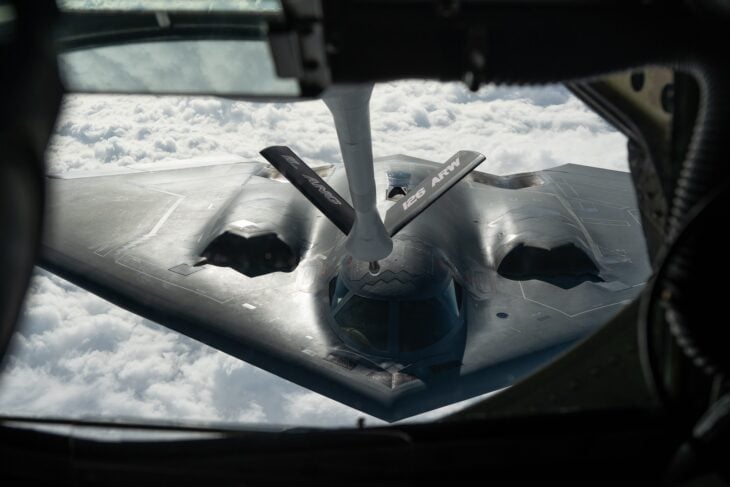
The B-2’s unrefueled range is about 6,000 nautical miles, according to the Air Force fact sheet. The tankers stretched it until the real limit was the two people in the cockpit.
Inside the 44.3 Hours
Spirit of America flew the third of the six missions, with Maj. Melvin Deaile and Capt. Brian Neal at the controls. The Pacific crossing alone took about 24 hours, and the crew had more than 30 hours behind them before they reached the target area.
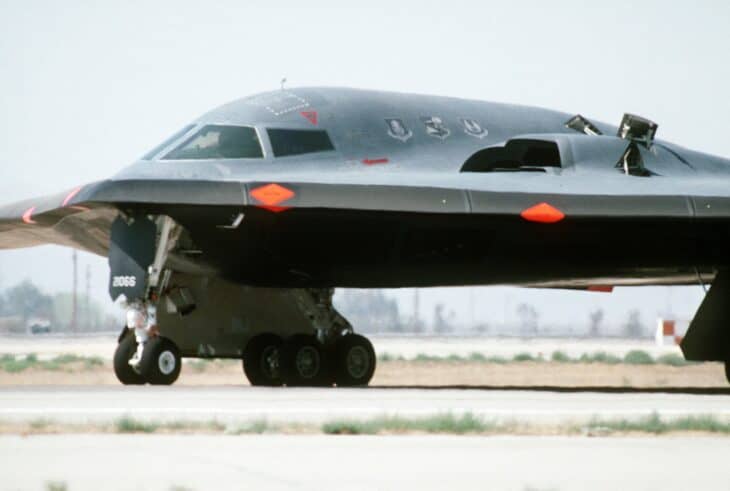

The B-2 carries two pilots and nobody else. They took turns sleeping, and the flight surgeon issued “go pills” to keep them alert for the part that mattered.
Over Afghanistan, the crew dropped 12 of its 16 satellite-guided JDAM bombs in about two hours. They refueled, and then the air operations center asked them to go back.
They spent roughly another 90 minutes over enemy territory and released the last four weapons. Then came the long leg south to Diego Garcia, where they had to orbit and wait behind a B-52 before they could land.
The wing logged the sortie at 44.3 hours. On the ground, the engines never stopped: maintainers refueled the jet, added oil, emptied the toilet and loaded food, and a fresh crew flown out in advance climbed in.
The bomber took off again 45 minutes after landing and flew roughly 30 more hours home to Missouri. The Air & Space Forces account puts its total engine running time at more than 70 hours.
Andrew Gebara, one of the pilots chosen to fly a jet back from Diego Garcia, gave a bigger figure in the wing’s 2011 anniversary feature. “By the time we shut the engines down,” he said, “the jets had been in continuous operation for more than 77 hours.”
The record jet was the first B-2 ever to fly
Spirit of America began life as Air Vehicle 1, which made the B-2’s first flight on July 17, 1989. It was retired as a test aircraft in 1993, brought back when the fleet grew to 21, and named on July 14, 2000, as the last B-2 to get a name. Fifteen months later it flew the longest bombing mission in history.
Why the Record Has Held for 25 Years
Brig. Gen. Anthony Przybyslawski, who commanded the 509th in 2001, saw this coming. “I don’t think we’ll ever beat it, because it’s the furthest place in the world that you can get to from the United States,” he said.
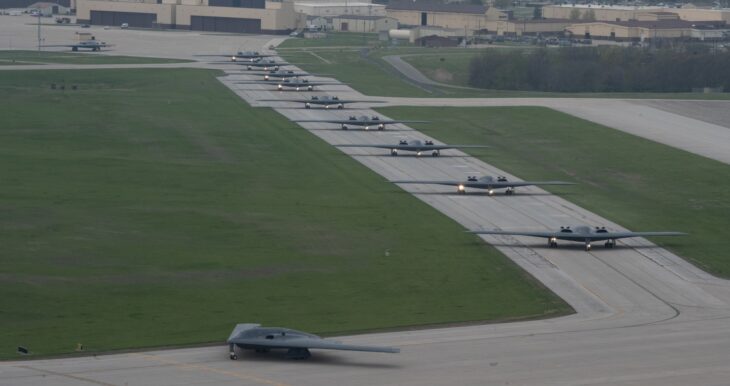
Operation Midnight Hammer came closest. On June 21, 2025, seven B-2s flew 18 hours east from Missouri to drop 14 GBU-57 bunker busters on Fordow and Natanz, in an operation involving more than 125 US aircraft.
.jpg)
Gen. Dan Caine, the Chairman of the Joint Chiefs, called it “the second longest B-2 mission ever flown, exceeded only by those in the days following 9/11.” The round trip is usually given as about 37 hours, though some reports said 36.
The two missions are not quite the same feat. Midnight Hammer flew home nonstop, while the 2001 record sortie ended at Diego Garcia, and the crew swap there is what kept that airframe flying for more than 70 hours.
Both missions make the same point. With tankers, the B-2 can hit almost anything from Missouri, which is why it still ranks among the best stealth aircraft in the world more than 35 years after its first flight.
Where the B-2 Fleet Stands Now
The B-2 went back to Iran in 2026. Military Times reported in April that B-2s from Whiteman flew a 36-hour nonstop mission to drop GBU-57s on an underground compound where Revolutionary Guard commanders had gathered.
Fewer jets fly those missions now. Of the 21 B-2s built, one crashed on Guam in 2008 and another was retired after a 2022 landing accident at Whiteman, leaving 19 B-2 bombers in the fleet.
Its replacement is close. As of July 2026, the Air Force said the first operational B-21 Raider would arrive at Ellsworth Air Force Base, South Dakota, in 2027, and it wants at least 100 of them to replace the B-1B and the B-2.
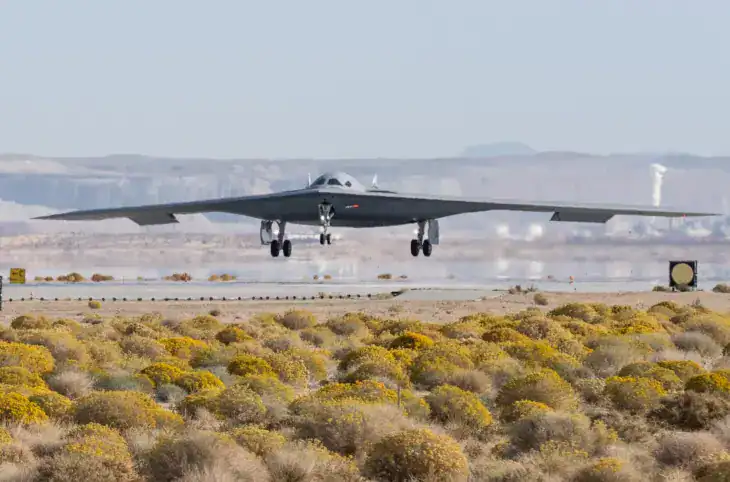
The B-21 inherits the job, and with it the record to beat. Whether any bomber ever tops 44.3 hours depends less on the airplane than on where the next war is.
Sources and references used for research and fact-checking.
- Air & Space Forces Magazine, 44 Hours
- Air Force Global Strike Command, Whiteman marks 10th anniversary of first OEF strikes
- We Are The Mighty, Midnight Hammer was the second-longest bombing mission: The B-2 also flew the longest
- Air Force Print News, via Federation of American Scientists, Air Force names final B-2 bomber Spirit of America
- American Rhetoric, General Dan Caine: Operation Midnight Hammer briefing
- ABC17 News, Former B-2 pilot instructor reflects on experience after planes were used in Iran
- Military Times, B-2s flew 36-hour mission to target Iranian Revolutionary Guard meeting
- U.S. Air Force, B-2 Spirit fact sheet
- Air & Space Forces Magazine, USAF Will Retire, Not Repair, Damaged B-2; Fleet Shrinking to 19 Aircraft
- Military Times, B-21 Raiders set to be on the ramp at Ellsworth Air Force Base in 2027
Get the Newsletter
The latest aviation news and stories sent to your inbox.
About the Author

Tim is the owner and lead editor of AeroCorner since 2019, overseeing aviation content covering aircraft, airlines, airports, and the broader aviation industry. Through years of researching, writing, editing, and publishing aviation-focused content, he has developed extensive practical knowledge of commercial aviation and air travel. Based in Asia and a frequent traveler himself, Tim also brings firsthand passenger experience to AeroCorner’s coverage. Outside of publishing, he has also explored aviation firsthand through hands-on flight training in New Zealand.