

Table of Contents
The best bomber in the world is the Northrop Grumman B-2 Spirit. It is the only aircraft flying today that has proven it can slip through a defended airspace, put a 30,000-pound bunker buster on a buried target, and come home.
That is the measure this list ranks by: penetrating strategic strike, meaning the ability to reach a defended target, survive long enough to release, and deliver a decisive load of weapons. Raw payload alone does not decide it, because a bomber that cannot get close is a truck.
Only three countries build and fly strategic bombers as of 2026: the United States, Russia, and China. Between them they field seven types, and the gap between the top of this list and the bottom is wider than most rankings admit.
| Rank | Bomber | Country | Headline weapons load | Status (2026) |
|---|---|---|---|---|
| 1 | B-2 Spirit | United States | 40,000 lb (18,000 kg) | In service, 20 aircraft |
| 2 | B-21 Raider | United States | Classified | Flight test, delivery 2027 |
| 3 | B-52H Stratofortress | United States | 70,000 lb (32,000 kg) | In service, 76 aircraft |
| 4 | B-1B Lancer | United States | 75,000 lb (34,000 kg) | In service, 45 aircraft |
| 5 | Tu-160M Blackjack | Russia | 99,000 lb (45,000 kg) | In service, about 18 aircraft |
| 6 | Tu-95MS Bear | Russia | 33,000 lb (15,000 kg) | In service, roughly 50 aircraft |
| 7 | H-6N and H-6K | China | 6 to 7 cruise missiles | In service, about 120 aircraft |
How this ranking works
Bombers are ranked on penetrating strategic strike: survivability against a modern integrated air defence first, then payload and unrefueled range, then weapons integration and how many airframes are actually available. Only aircraft in service or in flight test with a fielded operator are included, which is why the ranking is a 2026 snapshot and not an all-time list. Strike fighters, attack aircraft, and armed drones are excluded because they are not built to cross a continent with a nuclear or heavy conventional load.
This is a modern list. If you came looking for the Lancaster or the B-17, the World War II rankings sit in our separate guides to American bombers of WW2 and German bombers of WW2.
1. Northrop Grumman B-2 Spirit


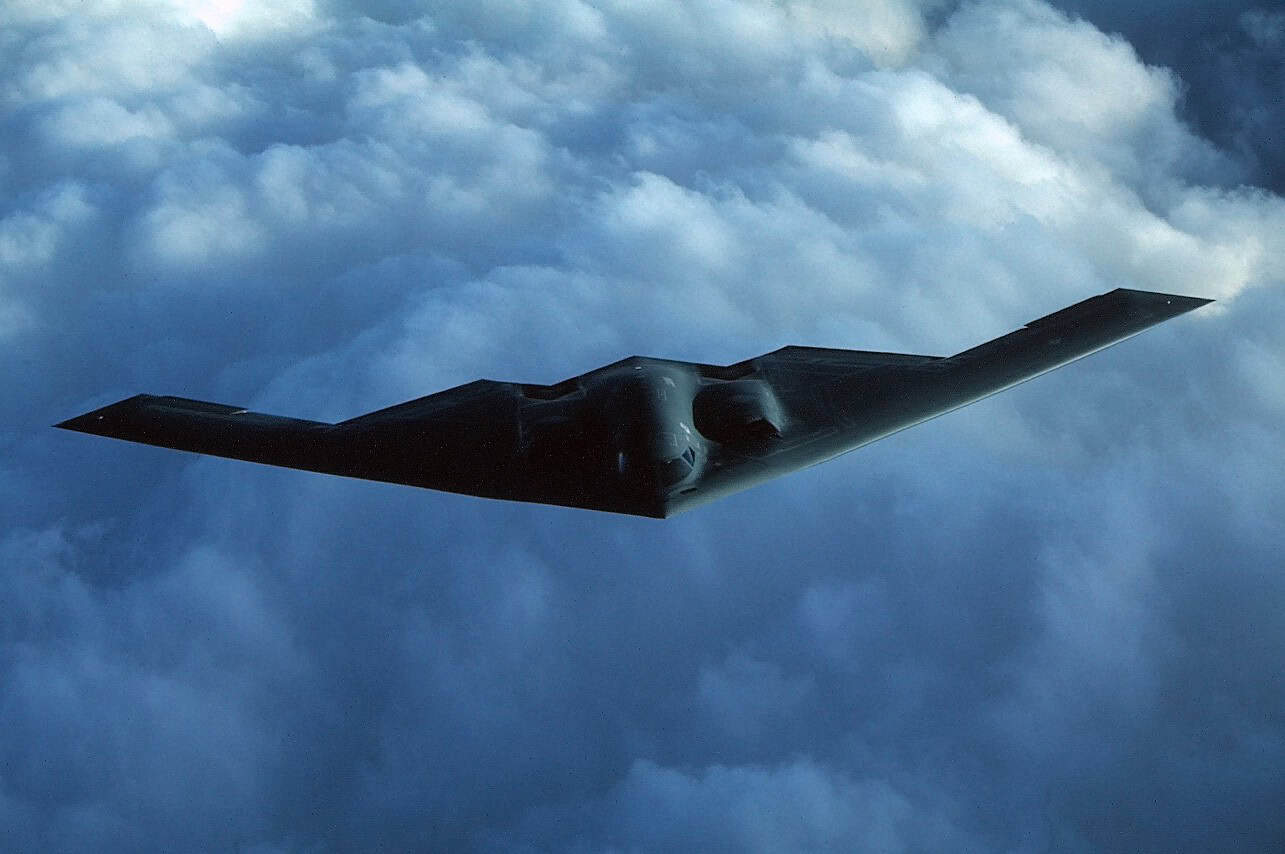

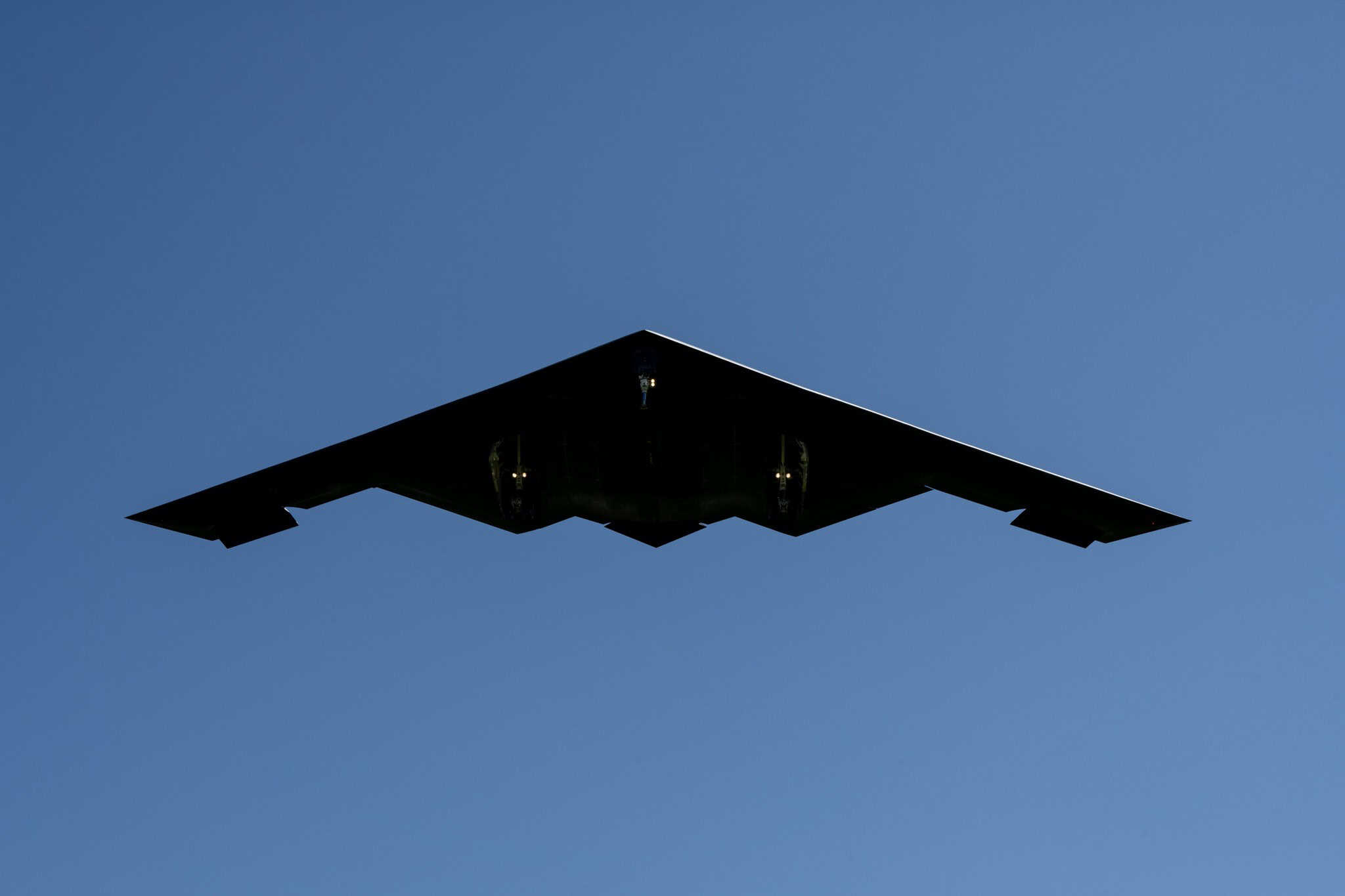
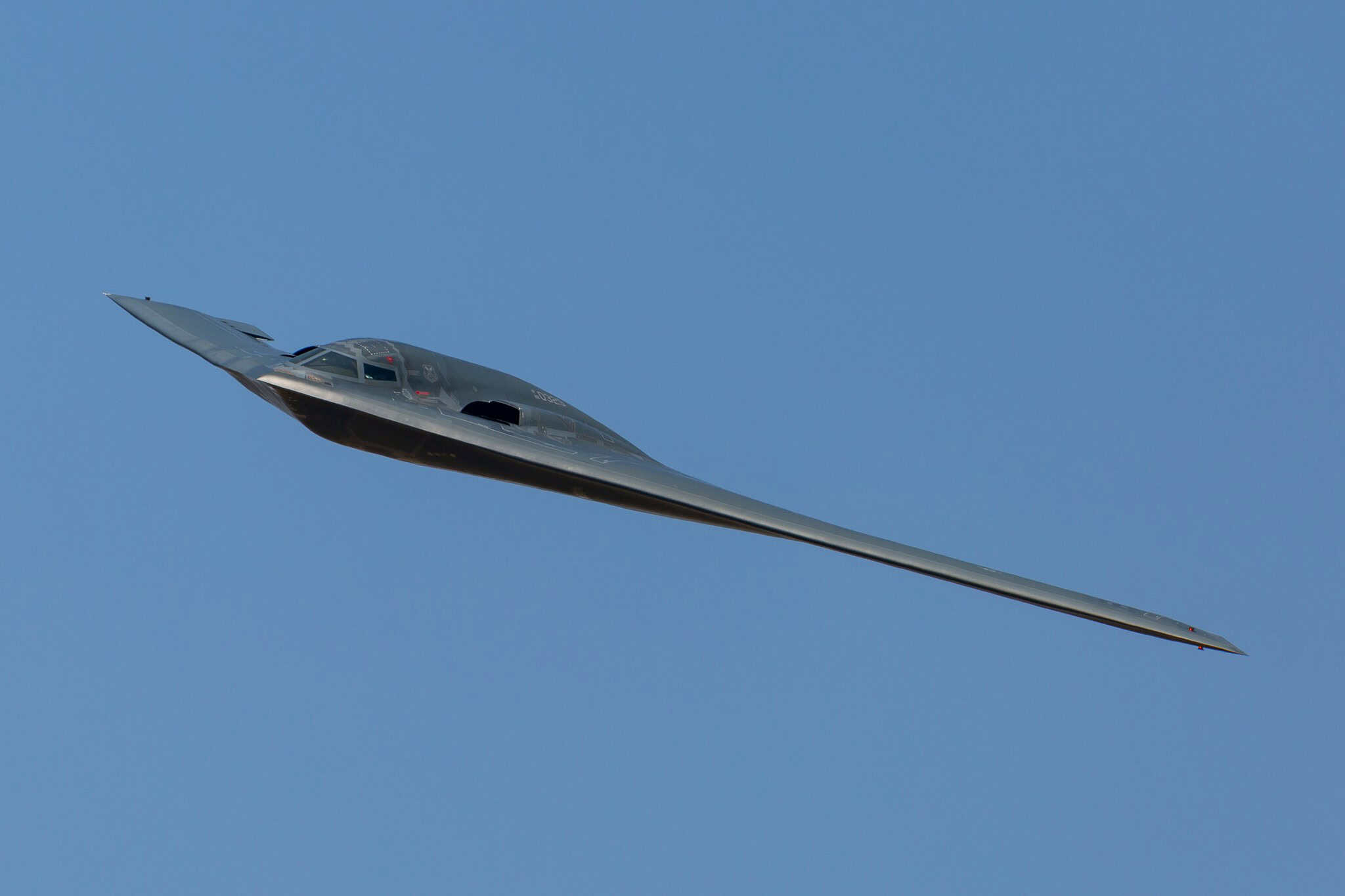


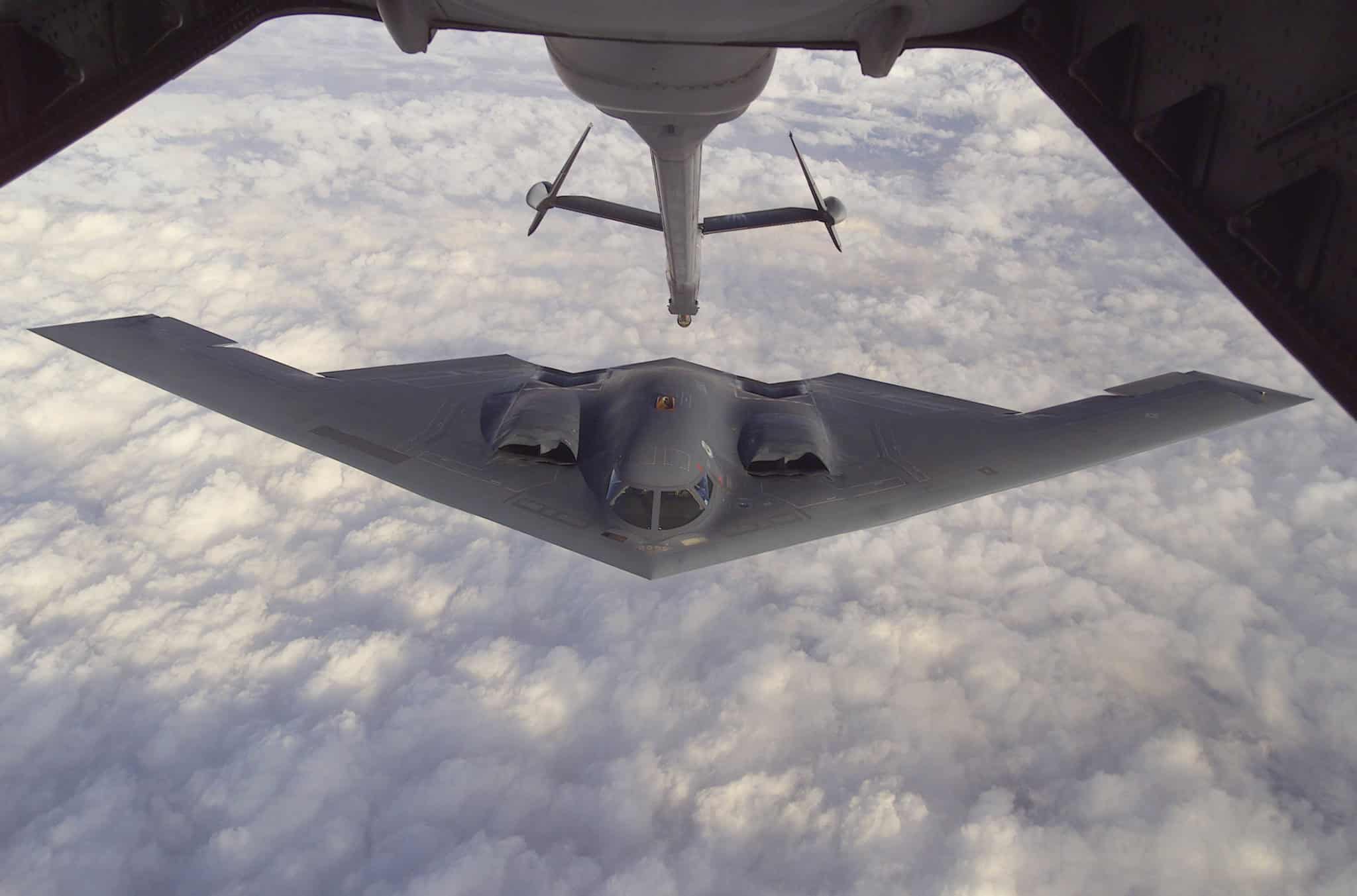

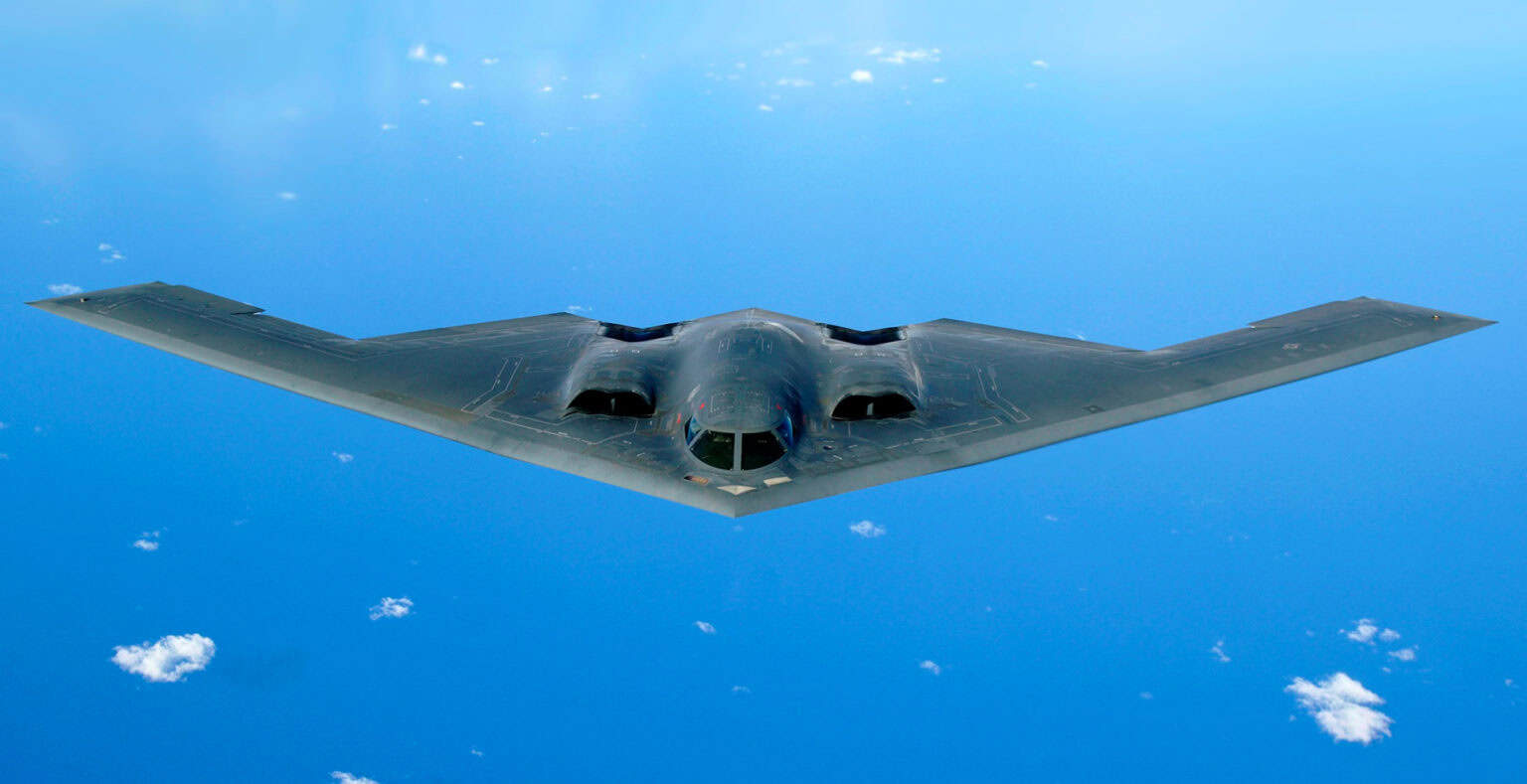
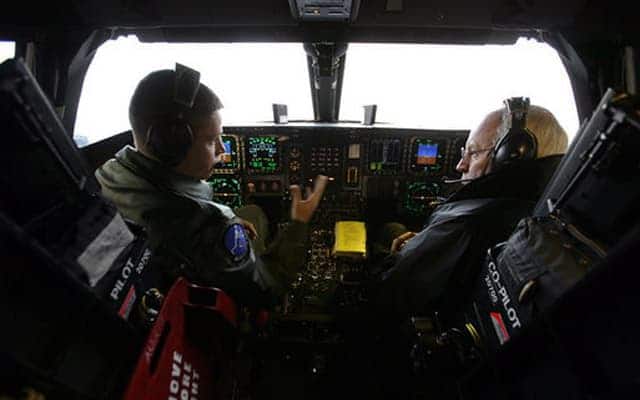
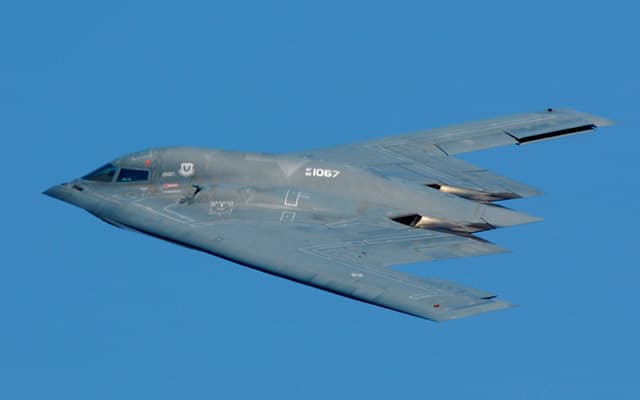


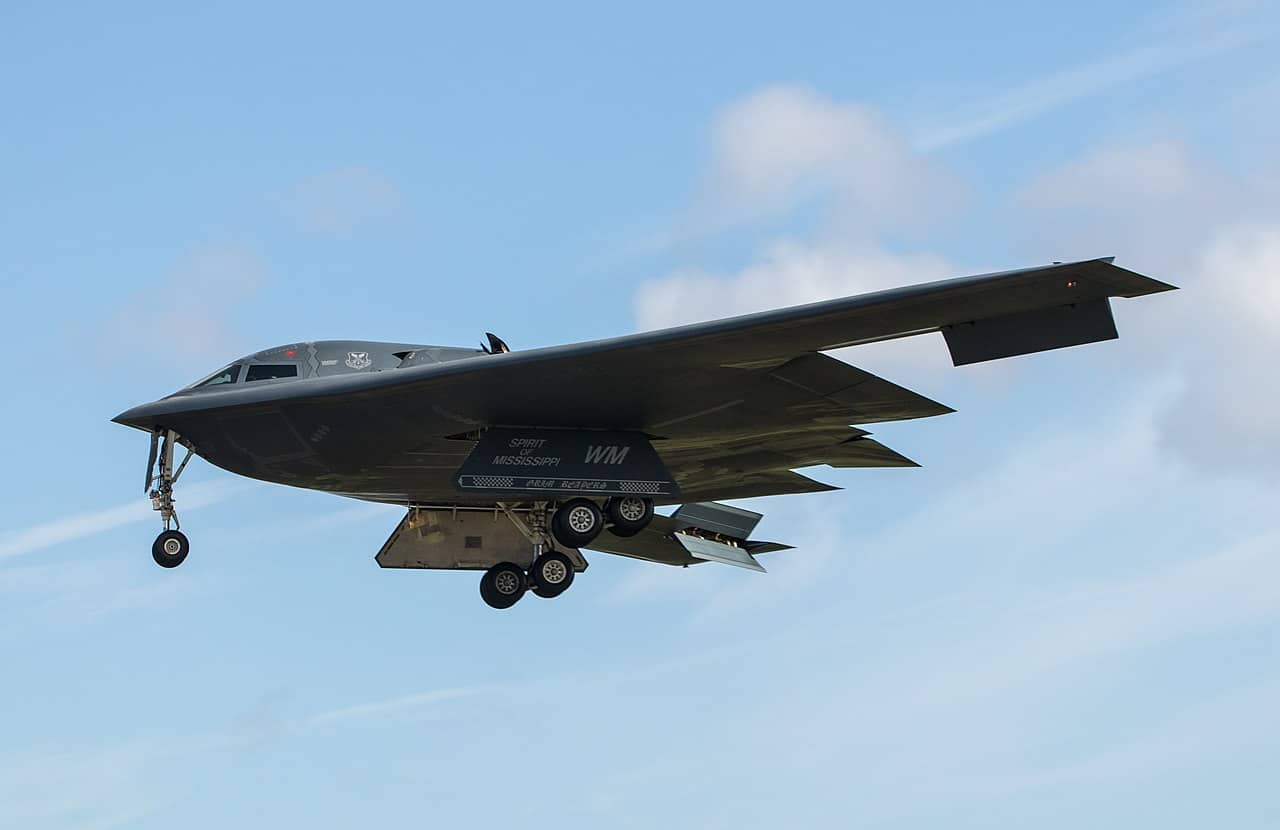

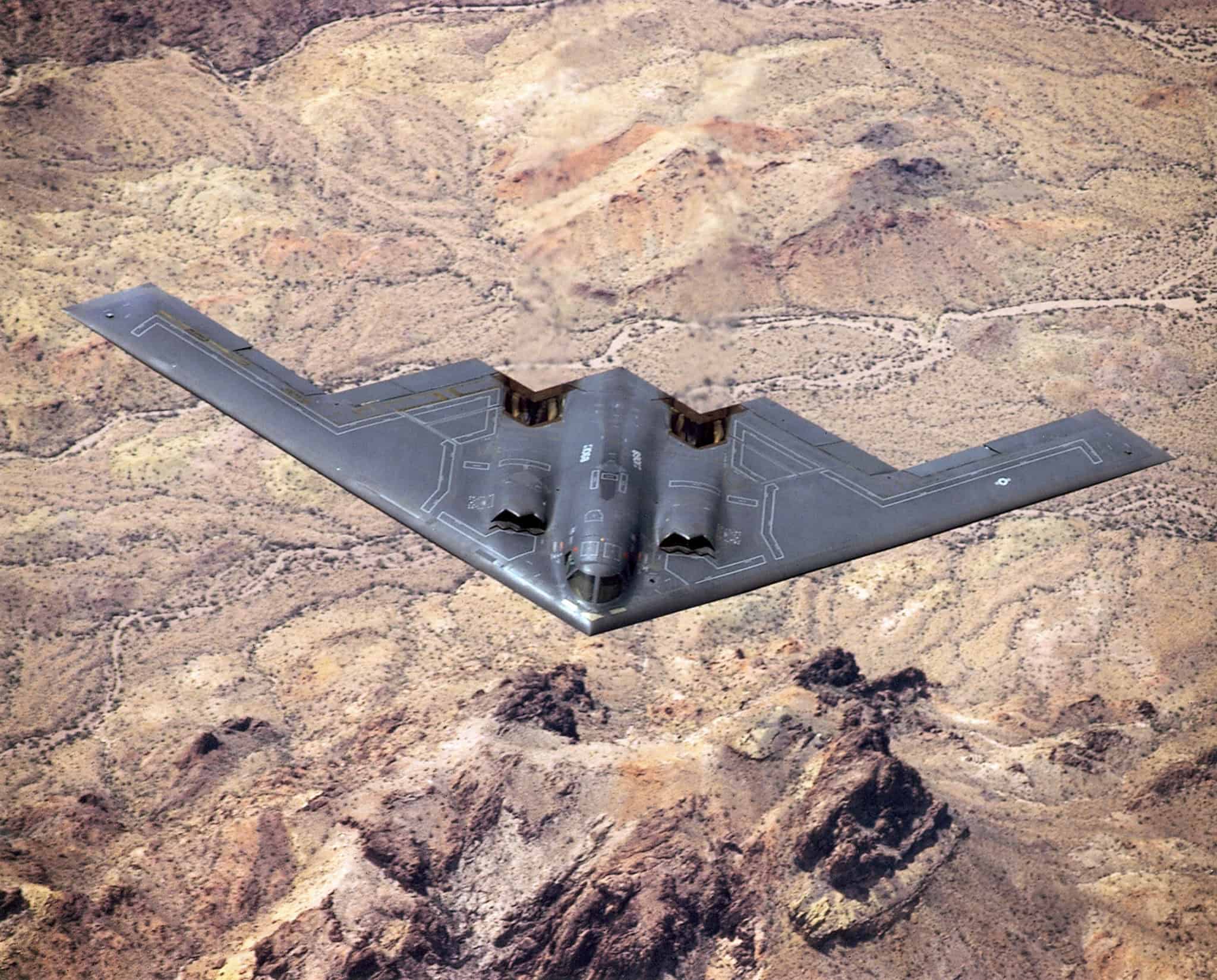


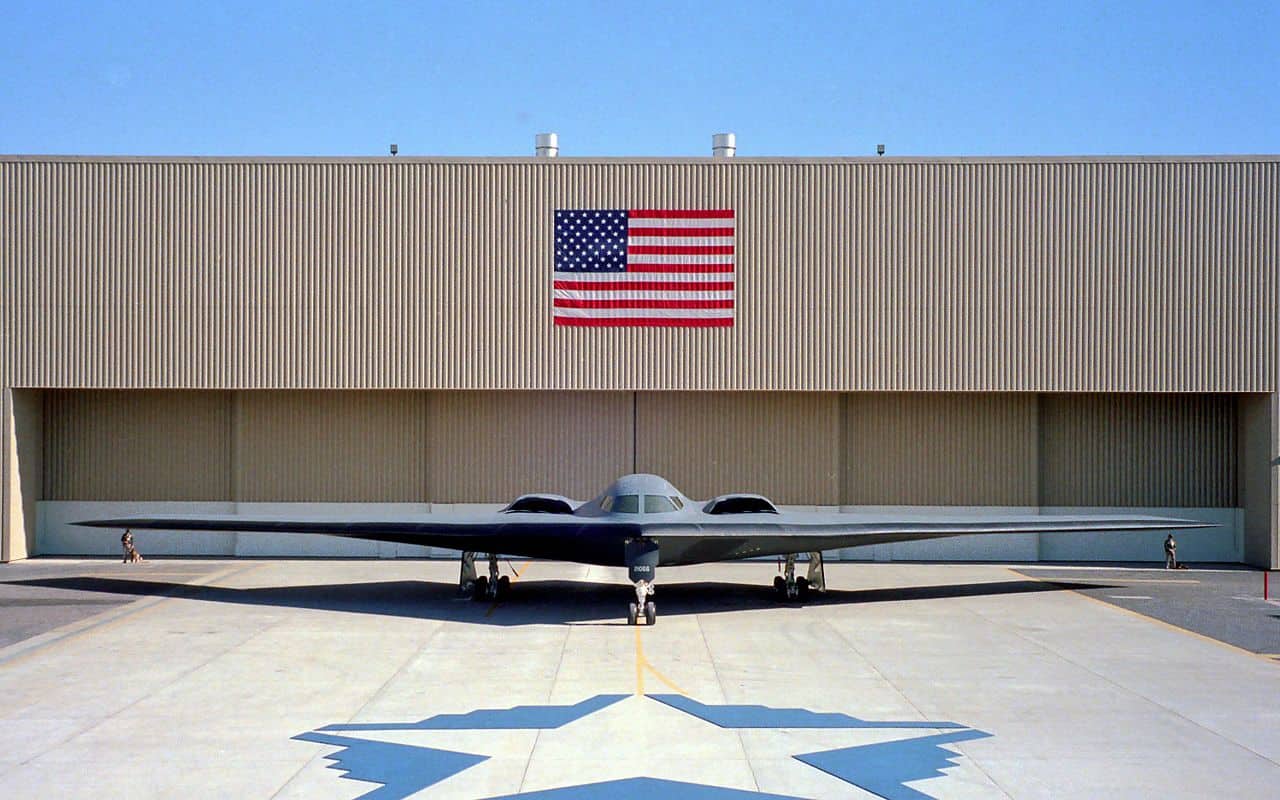
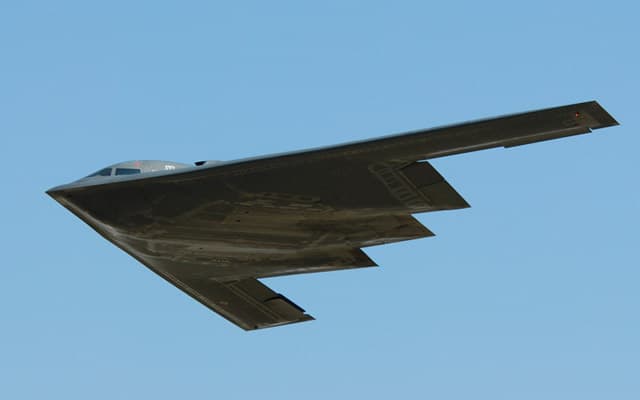
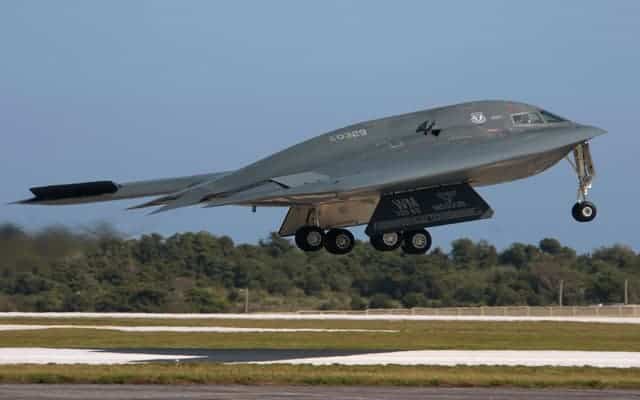
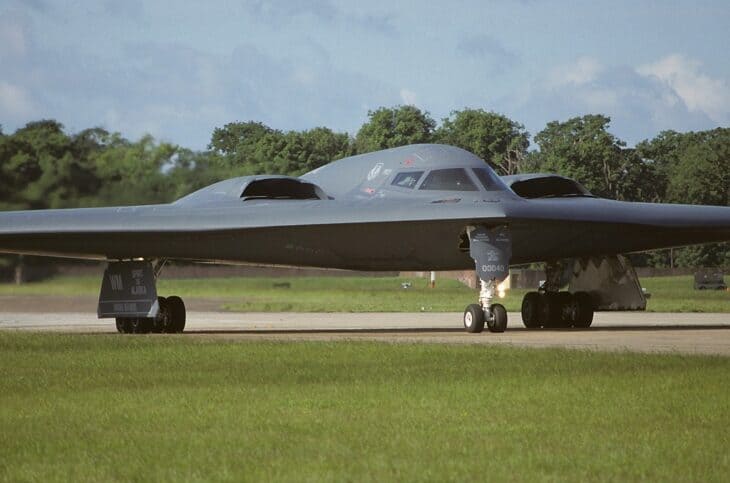
The B-2 Spirit is the only stealth bomber in operational service anywhere in the world. Every other bomber flying today was designed to be shot at; the B-2 was designed not to be seen.
It carries 40,000 pounds (18,000 kg) of weapons over a range of more than 6,900 miles (11,000 km) without refuelling, from a 172-foot flying wing with no vertical tail surfaces at all. Two pilots fly it, and its service ceiling is around 50,000 feet.
What puts it above everything else is not the numbers, it is the mission set. The B-2 is the only aircraft cleared to carry the 30,000-pound GBU-57 Massive Ordnance Penetrator, the weapon that exists specifically to reach targets buried under mountains.
Only 21 were ever built and 20 remain, which makes it the rarest bomber on this list by a wide margin. Its low-observable shaping and coatings are the reason it works, and the same technology defines the wider field of stealth aircraft.
Thirty-seven hours in the air, and nobody saw them coming
On 21 June 2025, seven B-2s flew from Whiteman Air Force Base in Missouri to Iran and back, a continuous 37-hour mission supported by repeated air-to-air refuelling. They dropped 14 Massive Ordnance Penetrators on the Fordow and Natanz nuclear sites, the first operational use of the weapon, while decoy B-2s flew west into the Pacific. It remains the largest B-2 strike in history, and no aircraft was engaged.
The Air Force had planned to retire the B-2 in the early 2030s once its replacement arrived. That plan changed: the fiscal 2027 budget request puts $1.35 billion into B-2 modernisation through 2031, keeping the fleet flying deeper into the next decade.
2. Northrop Grumman B-21 Raider


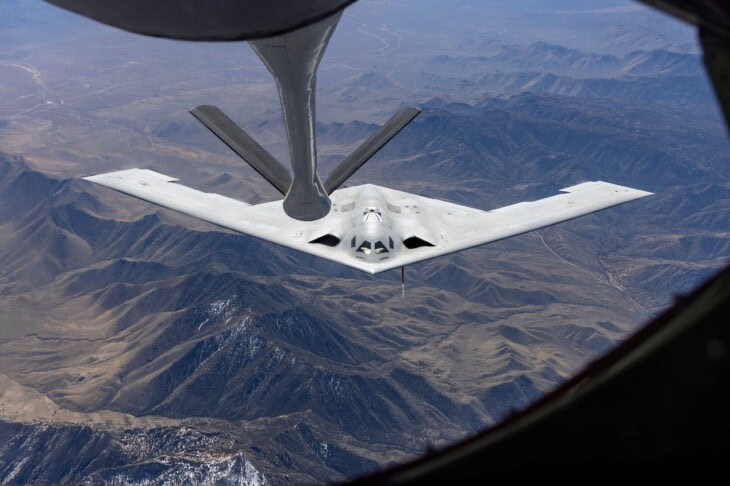
The B-21 Raider is the aircraft that will take the top spot, and the only reason it is not there already is that it has not yet been delivered to an operational unit.
It first flew on 10 November 2023 and is now in combined developmental and operational flight testing at Edwards Air Force Base in California. On 11 June 2026 an operational test pilot flew the aircraft alongside a developmental test pilot, the point at which testing shifts from “does it fly” to “can it fight”.
The programme is running ahead of schedule in a way defence programmes almost never do. One test campaign planned for 180 days was completed in 73.
The Raider is smaller than the B-2 but is reported to have longer range, and it was built around an open, modular architecture so its systems can be replaced without redesigning the aircraft. Its payload and radar cross-section are classified.
The decisive difference is arithmetic. The Air Force has a minimum requirement of 100 Raiders at roughly $700 million each in 2022 dollars, against 20 B-2s that cost about $2.1 billion apiece including development.
In February 2026 the Air Force and Northrop Grumman agreed to apply $4.5 billion in already-appropriated funding to raise annual production capacity by 25 percent. First delivery to Ellsworth Air Force Base in South Dakota is planned for 2027.
3. Boeing B-52H Stratofortress


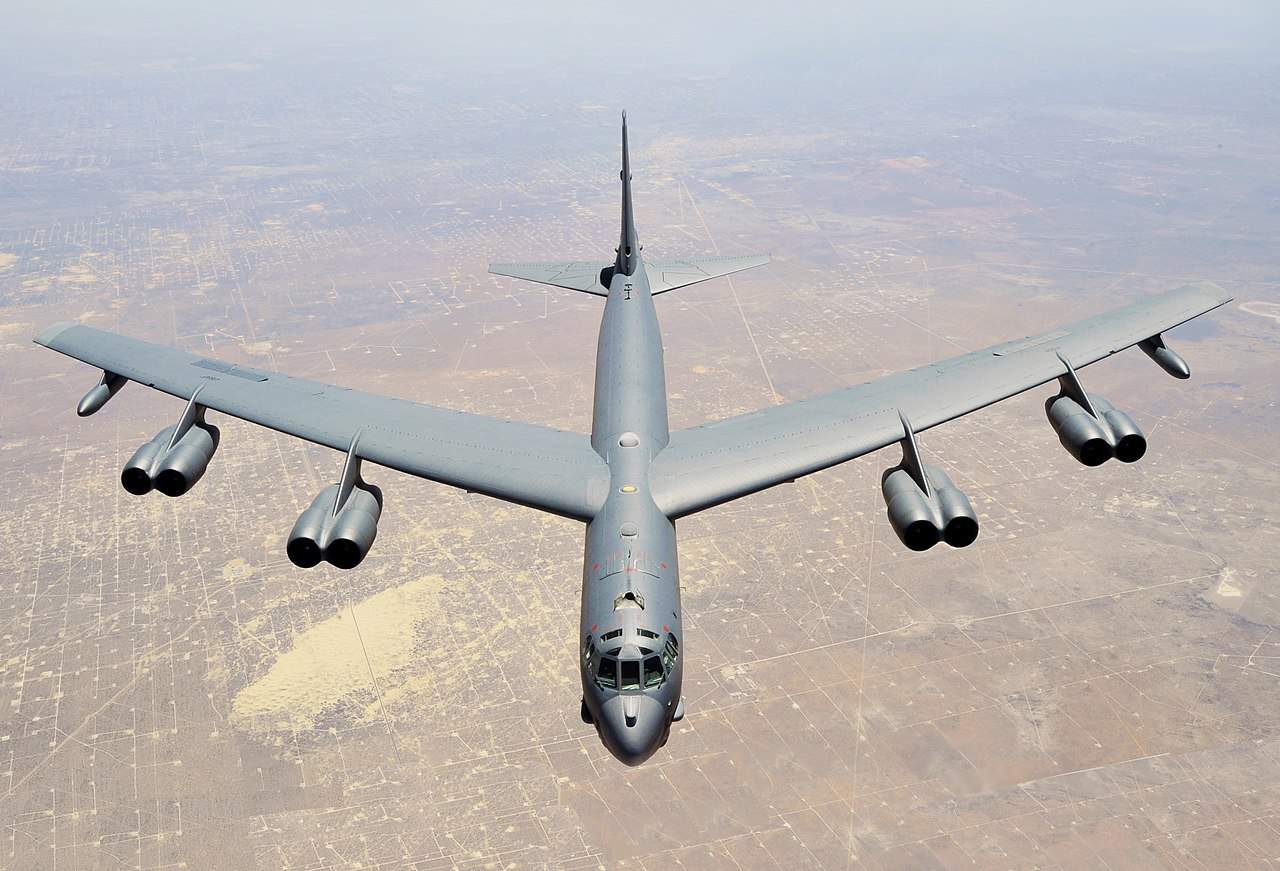
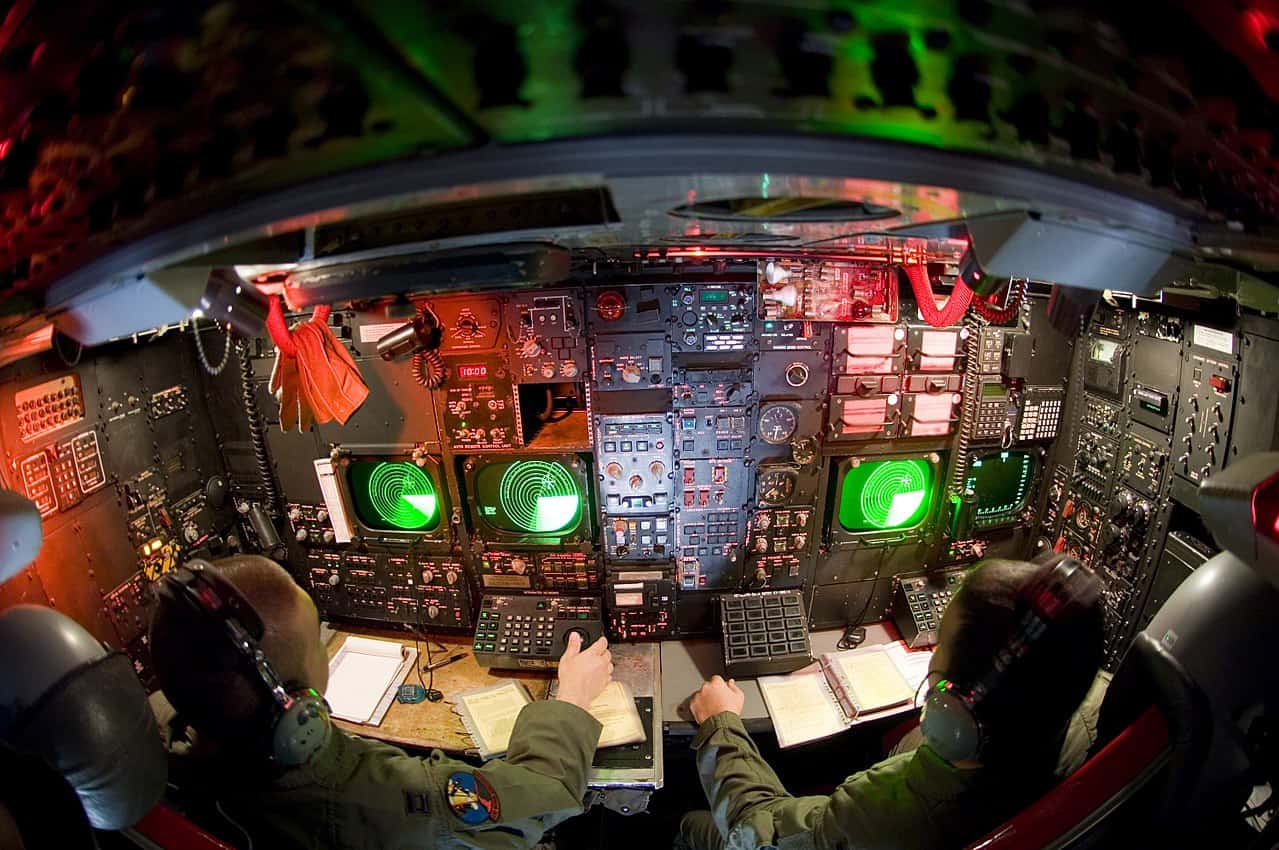

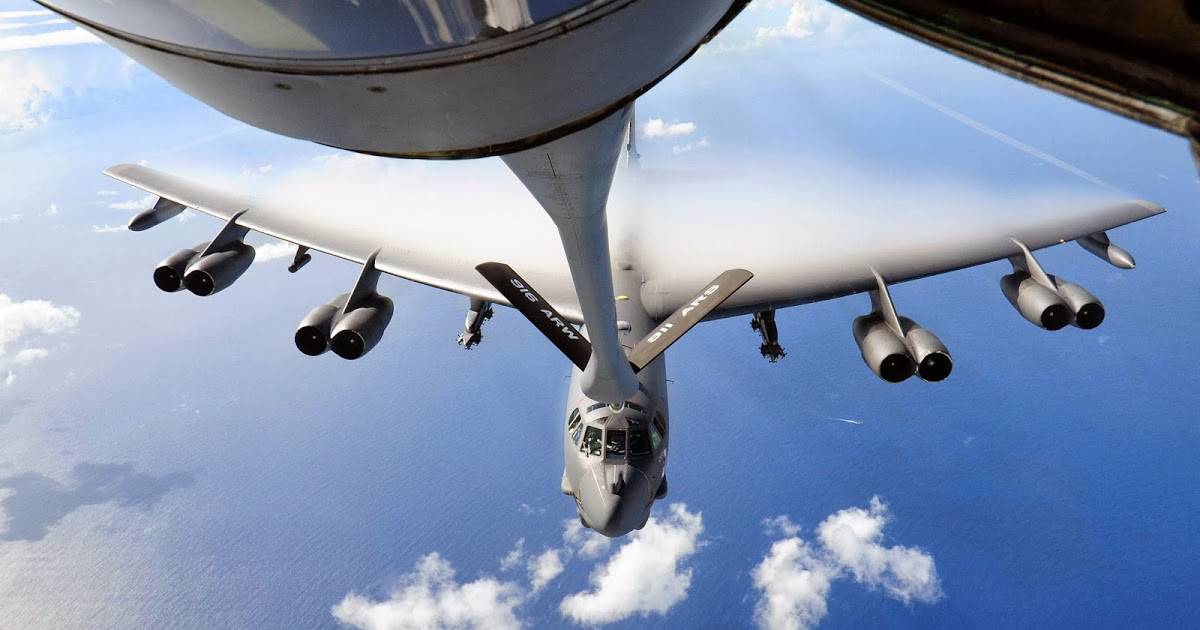
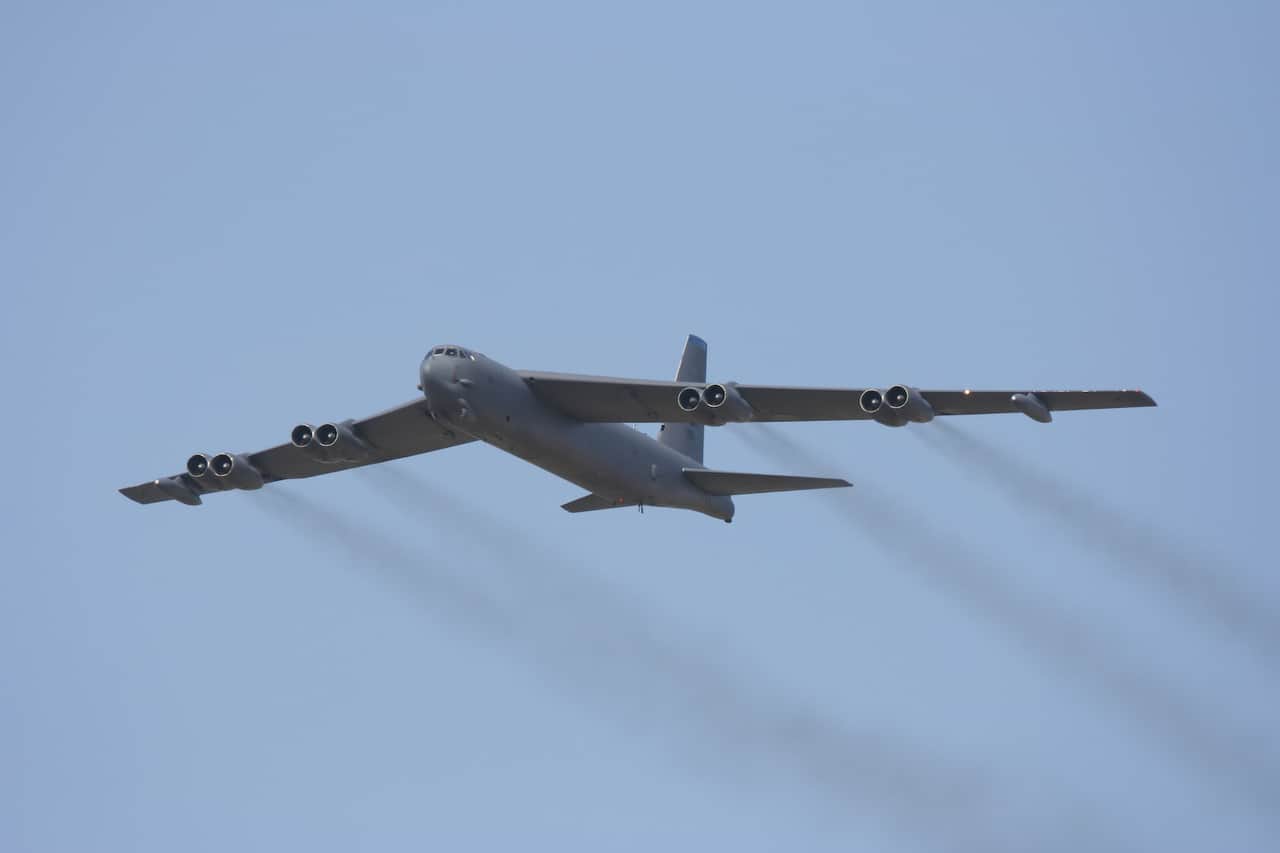


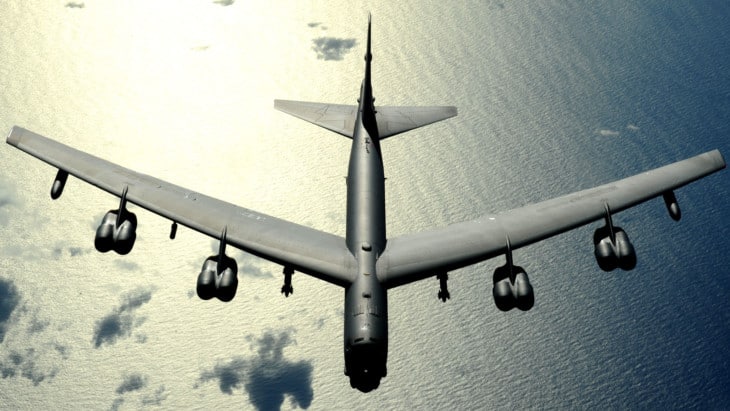
The B-52 Stratofortress first flew on 15 April 1952 and is on track to serve past 2050. No other combat aircraft in history has come close to a century of service.
It ranks third because of what it actually does now. The B-52 is the West’s standoff missile carrier: it launches cruise missiles from outside a defended zone rather than flying into one, which turns its lack of stealth into a non-issue.
It carries up to 70,000 pounds (32,000 kg) of weapons, cruises at 650 mph (1,050 km/h), and reaches 8,800 miles (14,200 km) without refuelling. Seventy-six remain in the inventory, more than every other American bomber combined.
It is also the only American bomber besides the B-2 that still carries nuclear weapons, which is the single biggest reason it outranks the faster, newer B-1B.
The fleet is being rebuilt rather than replaced. Under the B-52J programme each aircraft swaps its eight 1960s-era Pratt & Whitney TF33 engines for eight Rolls-Royce F130s, adding range, reliability, and the electrical power modern systems demand.
That programme cleared its critical design review on 4 May 2026 and the first aircraft are entering the modification line, though initial operating capability has slipped to 2033 and fleet-wide conversion runs to 2038.
4. Rockwell B-1B Lancer


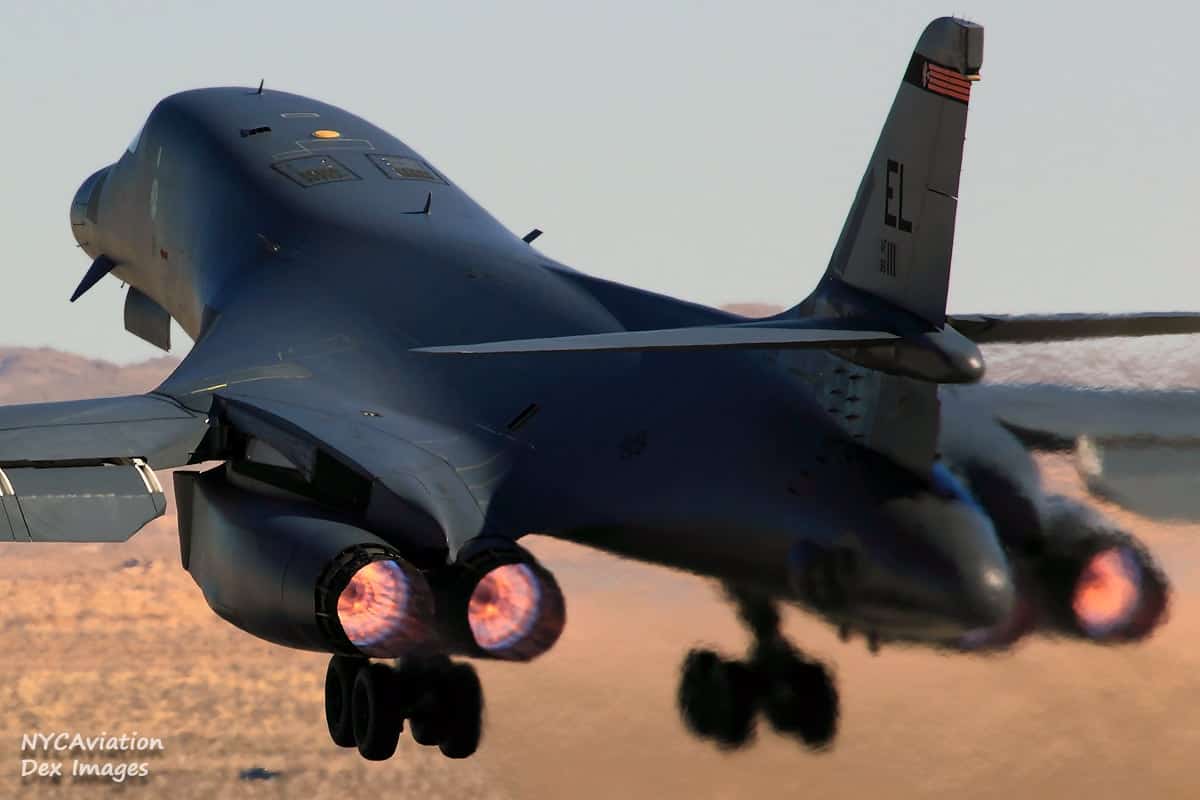
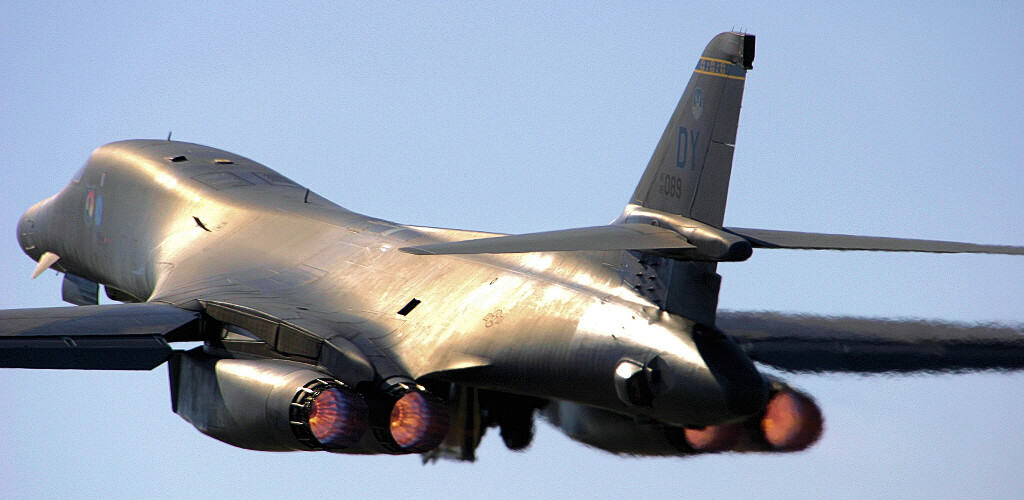


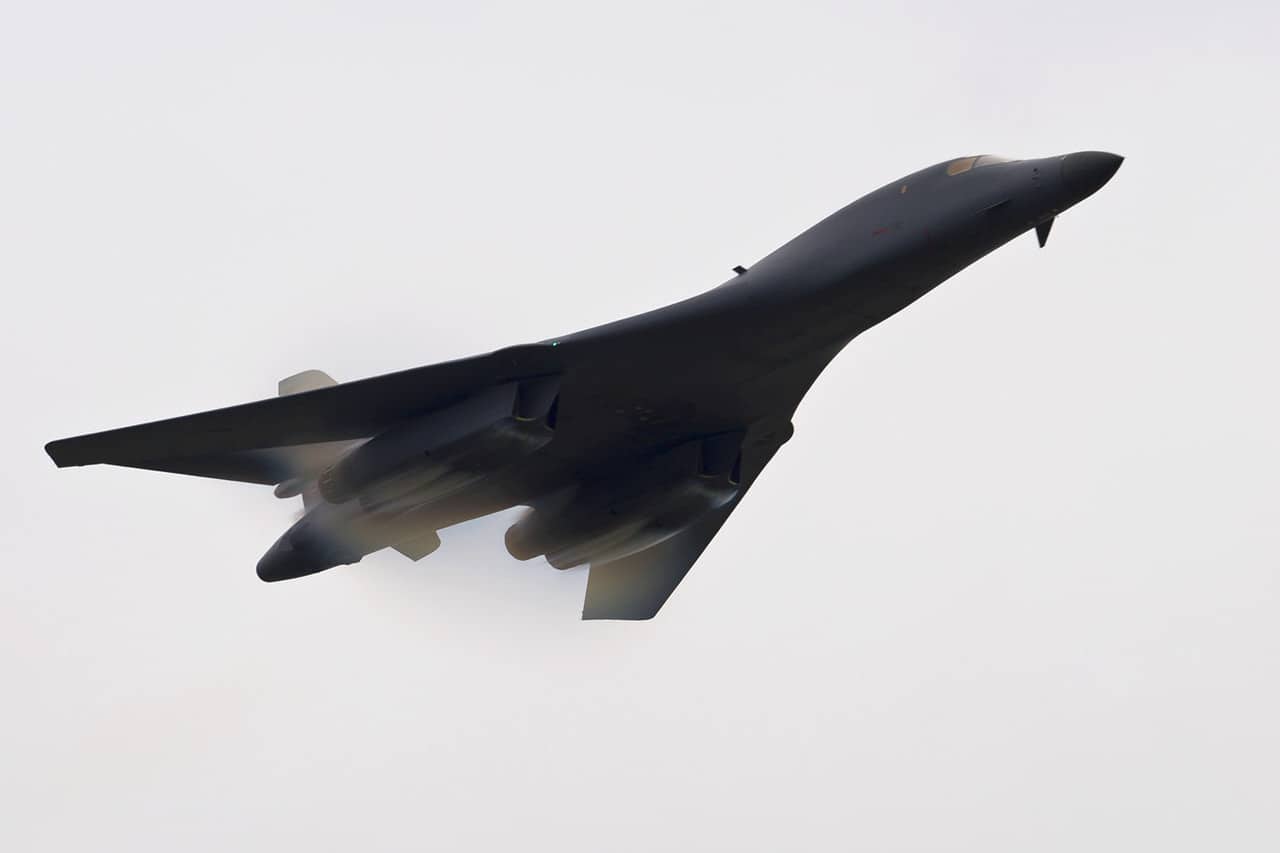

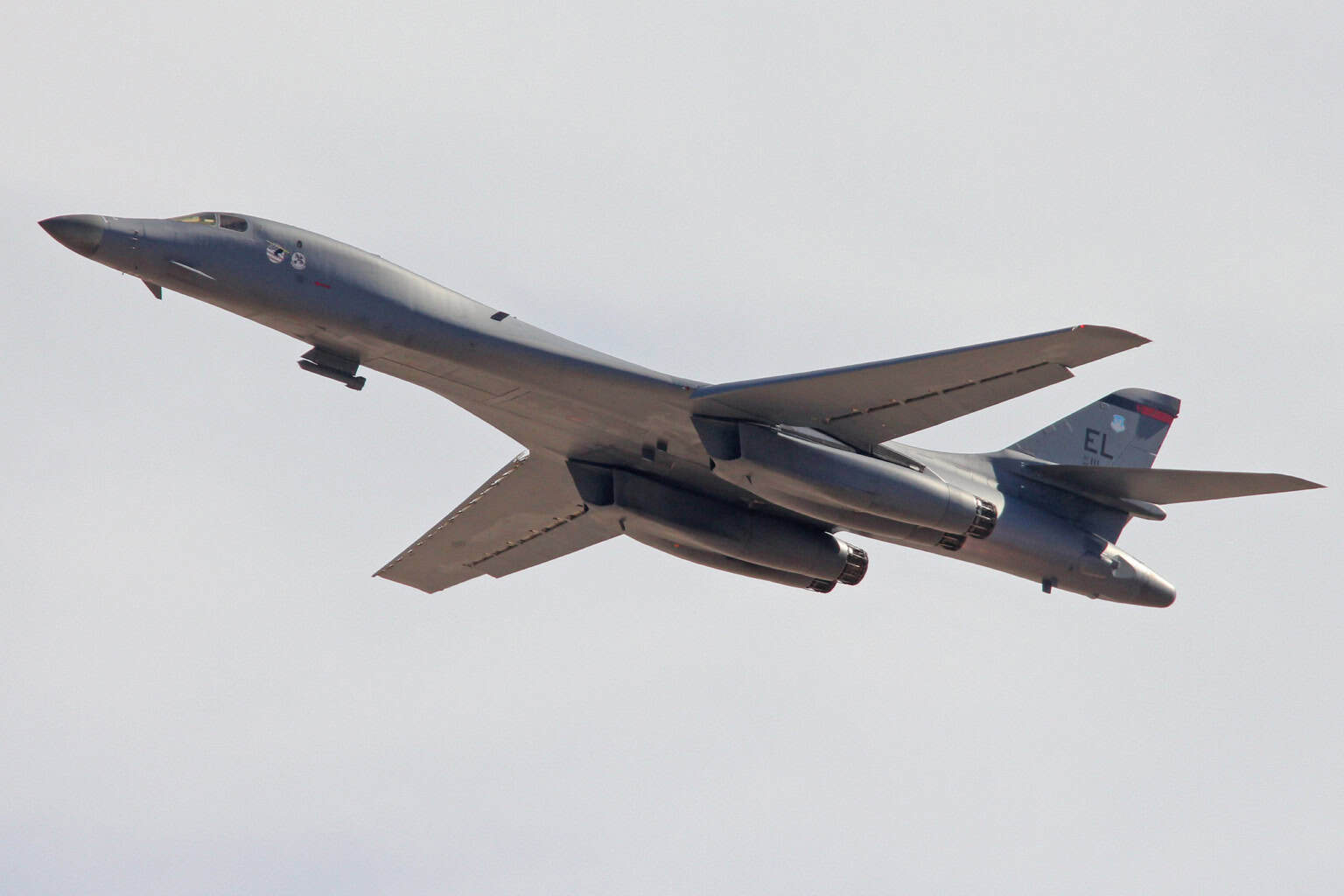
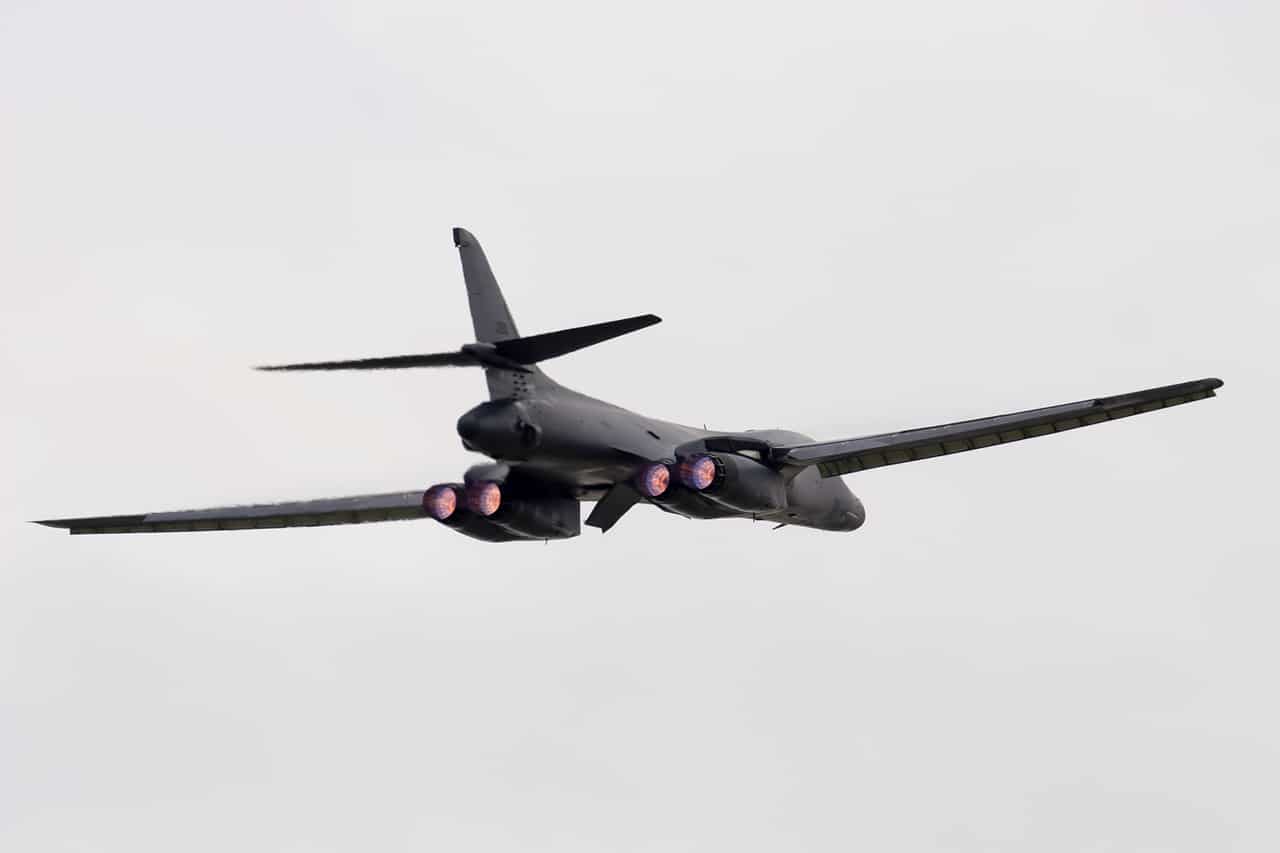


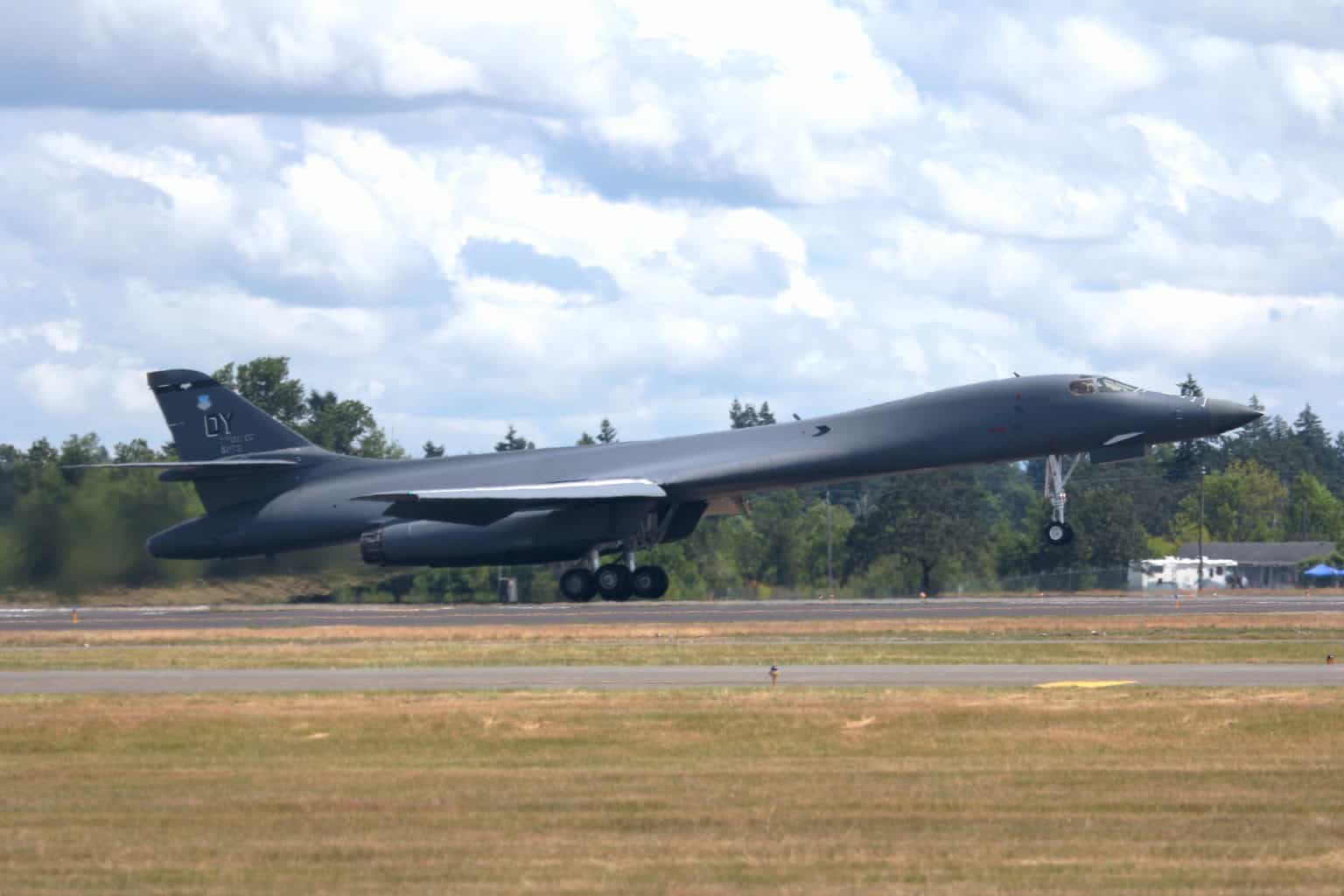
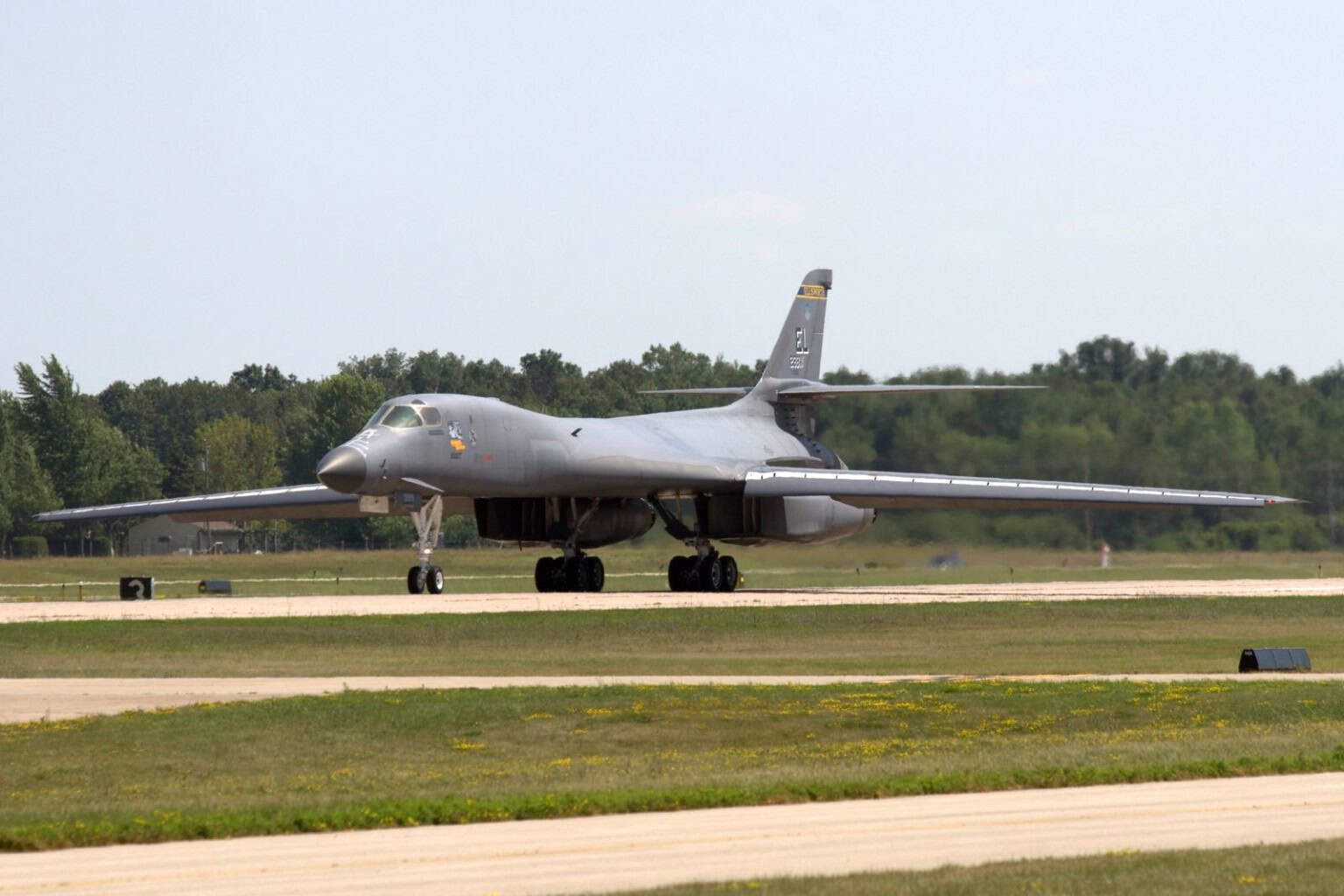
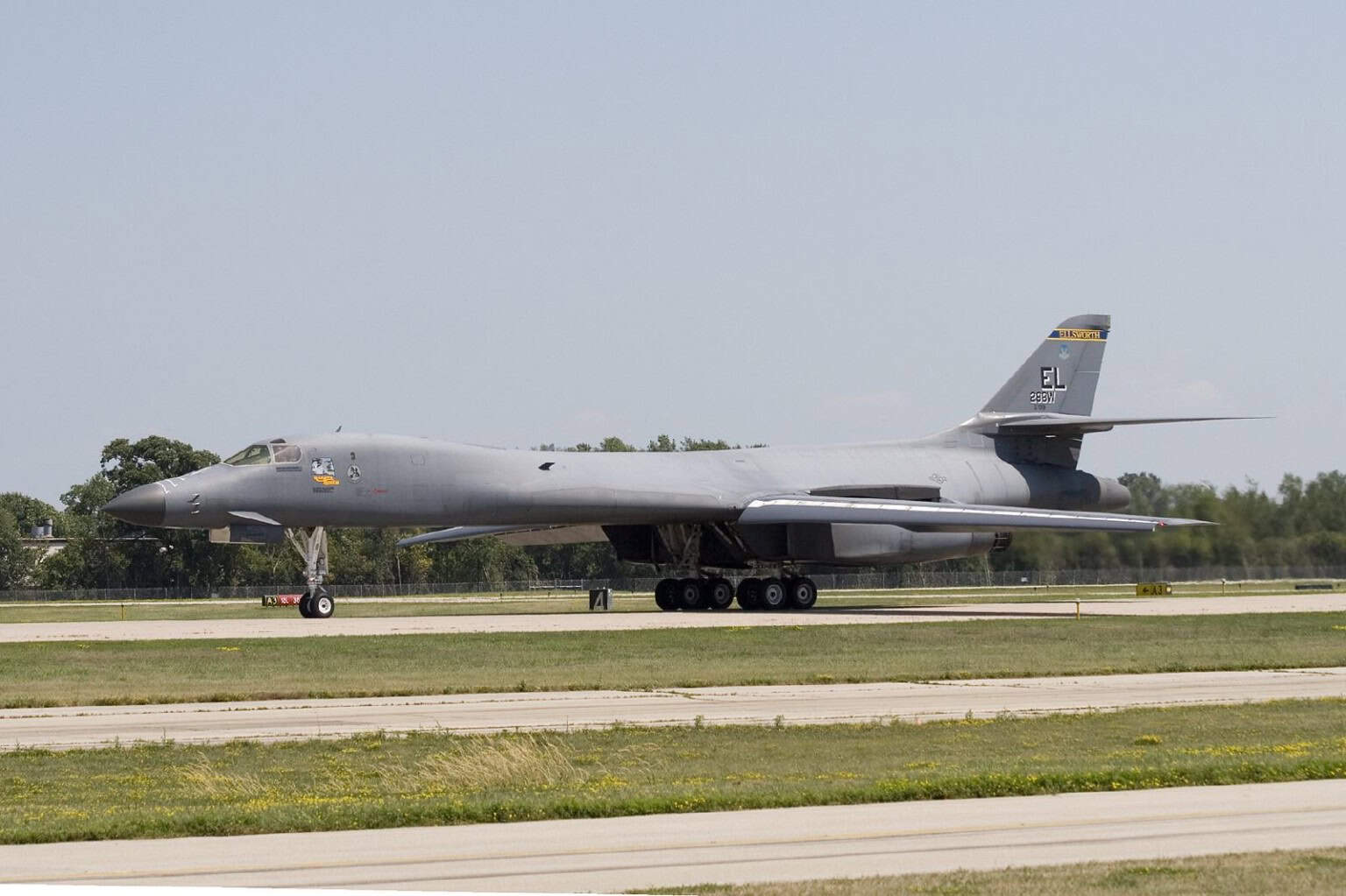


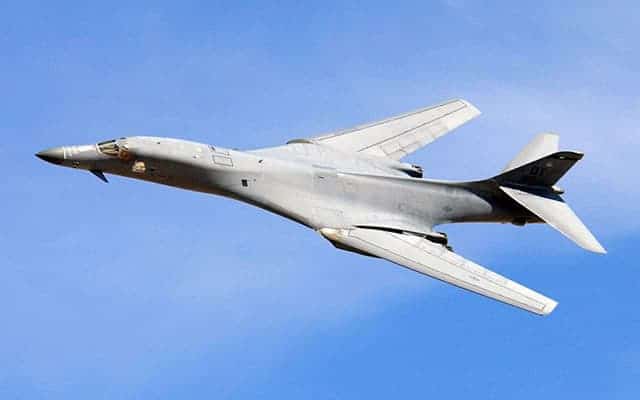
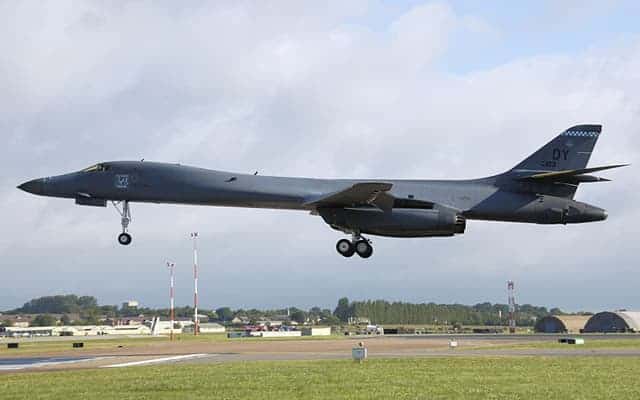
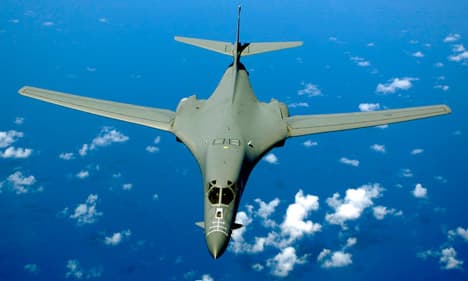
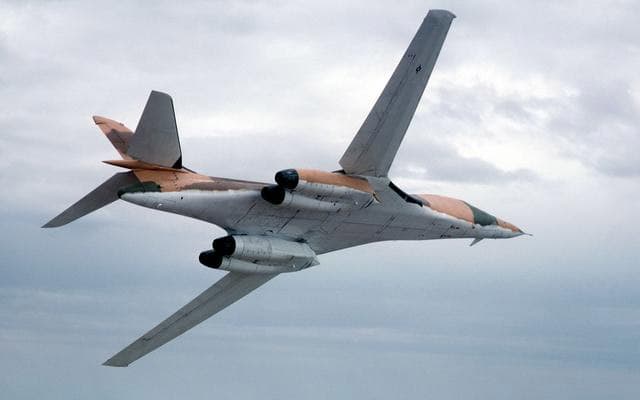
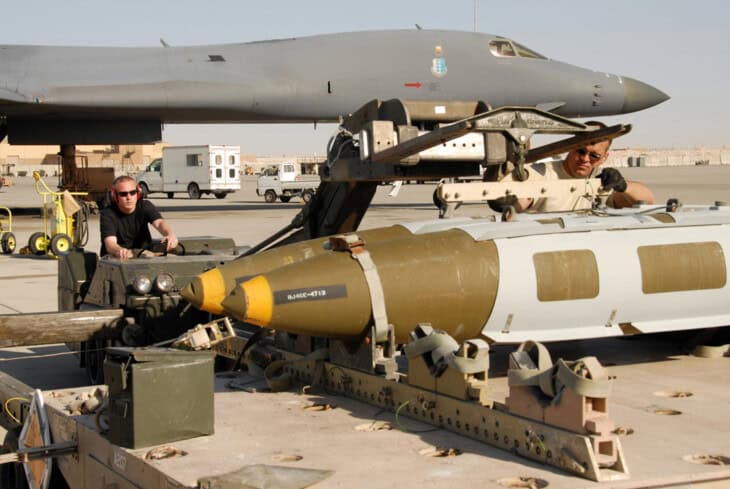
The B-1B Lancer carries the largest weapons load of any aircraft in the US Air Force: up to 75,000 pounds (34,000 kg) across three internal bays.
It is a swing-wing supersonic bomber, capable of roughly Mach 1.2 at altitude, with a maximum takeoff weight of 477,000 pounds (216,000 kg) and a range of about 7,455 miles (12,000 km).
It ranks below the B-52 for one reason: it is conventional only. The B-1B’s nuclear capability was disabled by 1995 under arms-control commitments and has never returned.
What it does own is maritime and long-range conventional strike. A B-1B can carry 24 JASSM or LRASM cruise missiles, and planned external pylons would raise that to 36, including hypersonic weapons.
Only 45 of the 100 B-1Bs built remain, and the fleet has been worked hard through two decades of continuous operations. Current funding keeps it relevant to about 2037, at which point the B-21 replaces it.
5. Tupolev Tu-160M Blackjack


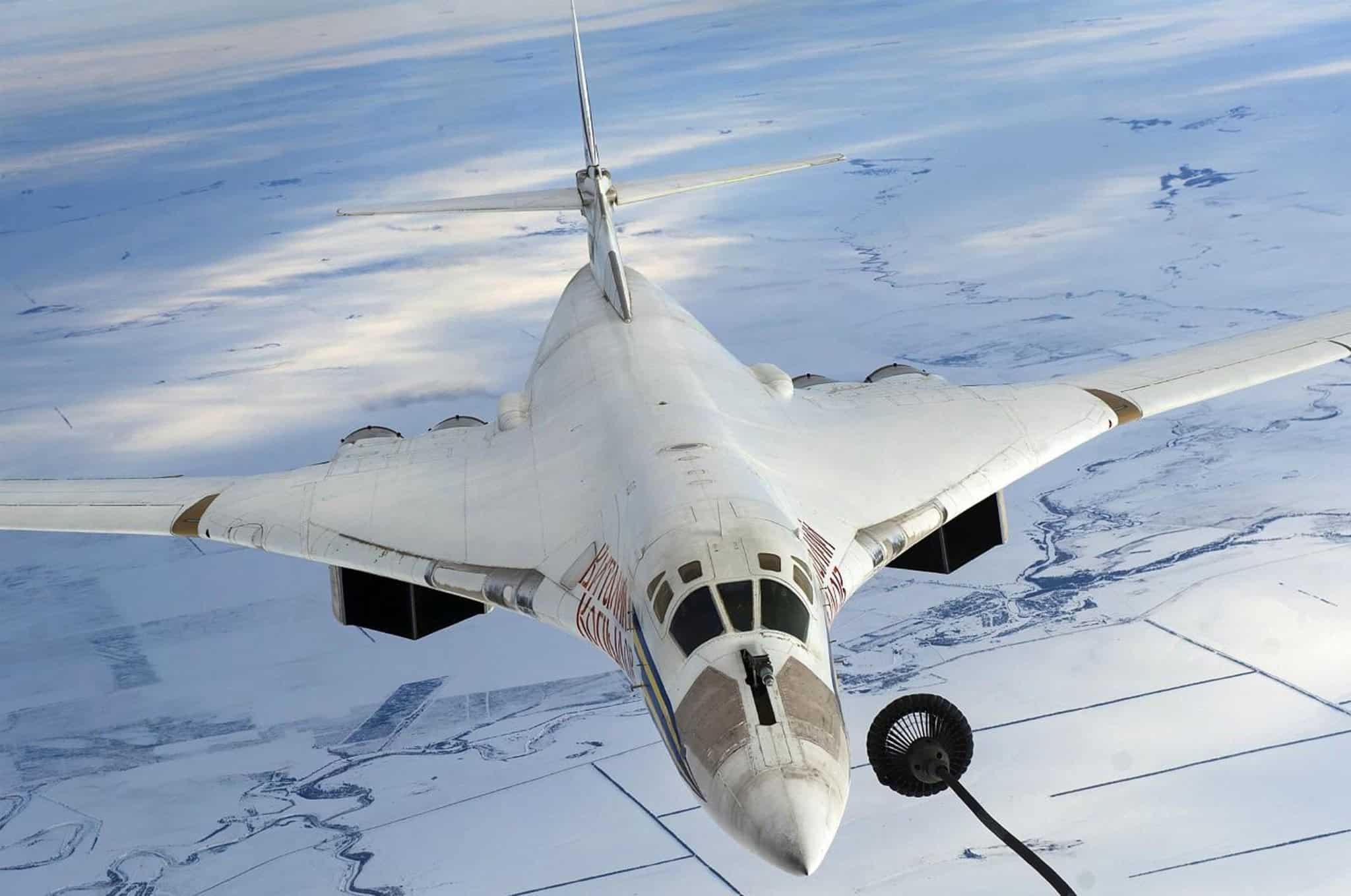
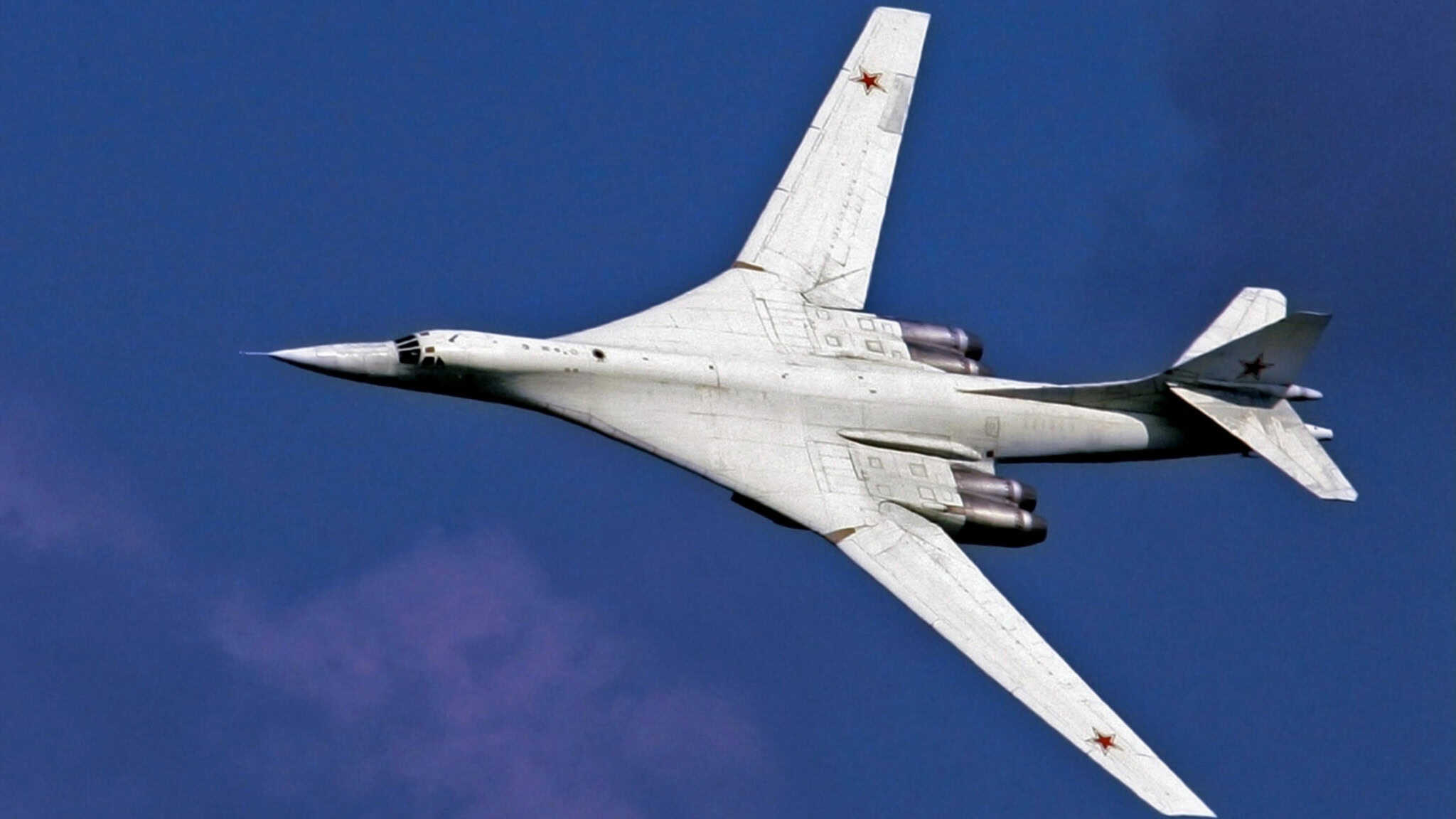
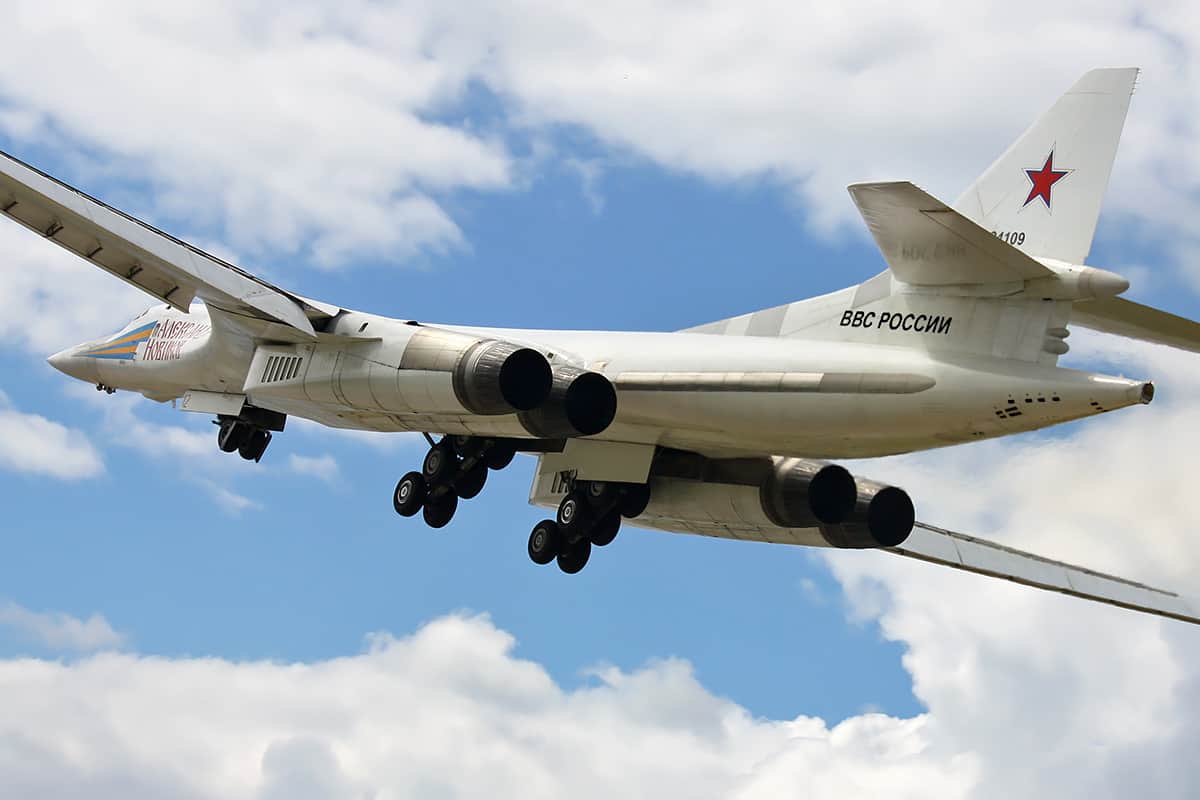


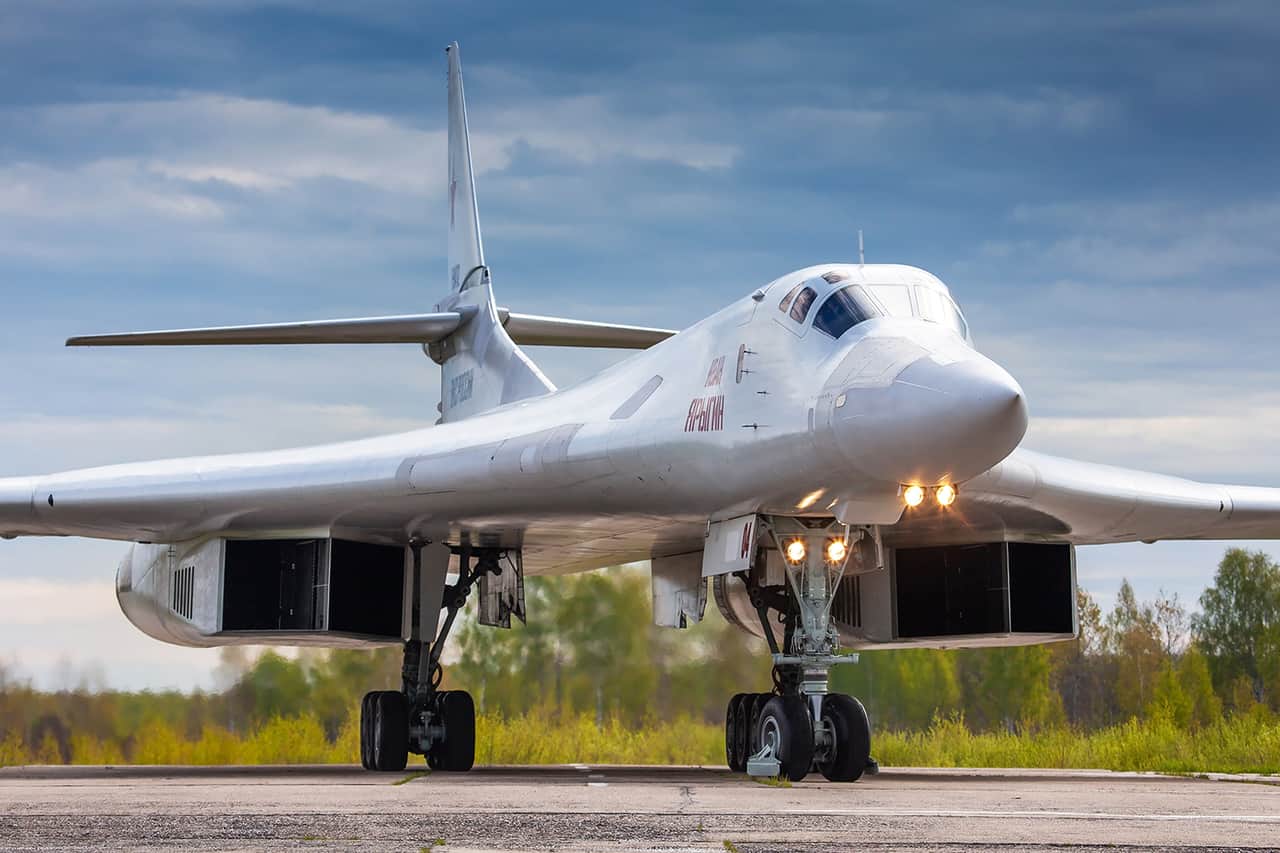

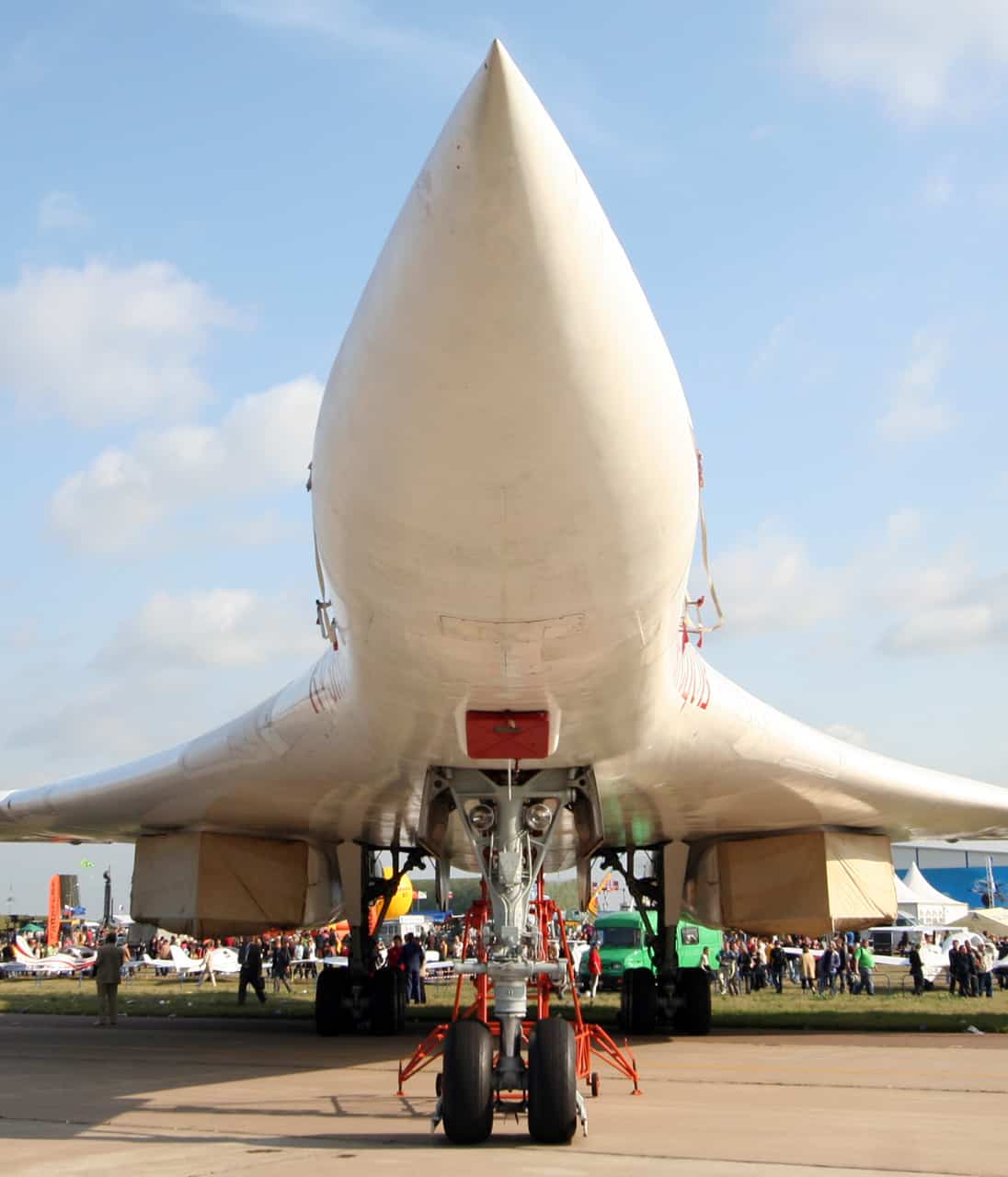
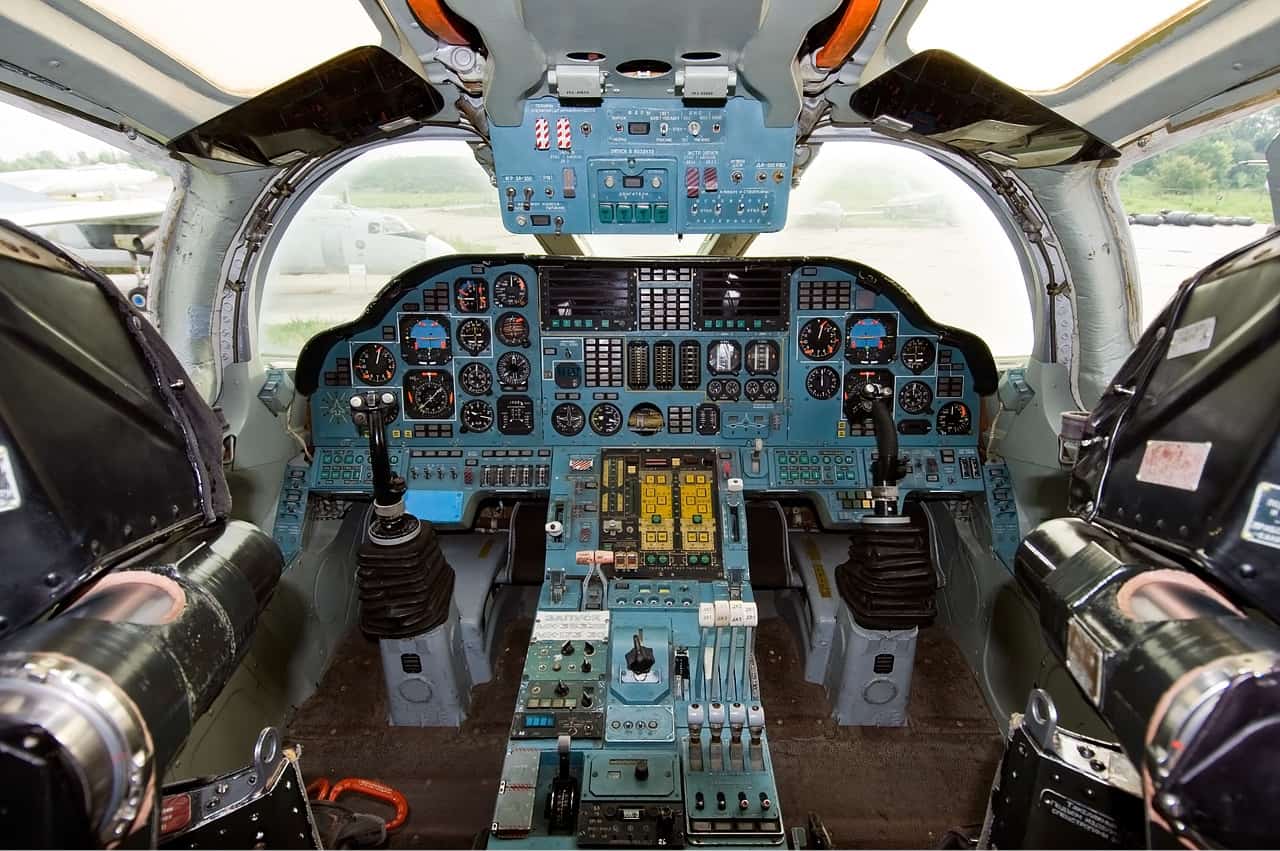
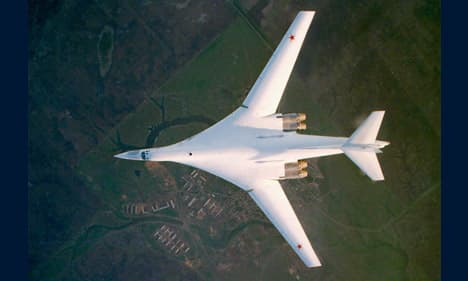
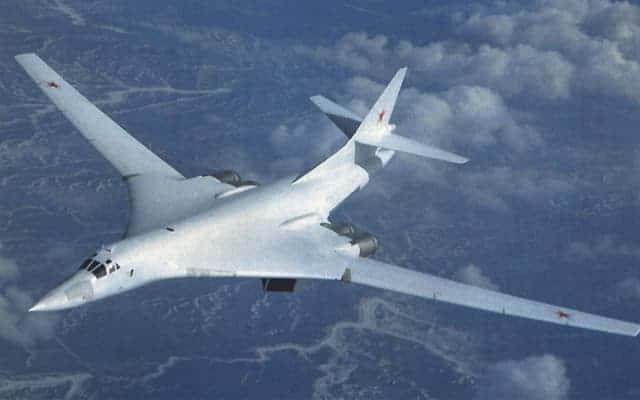

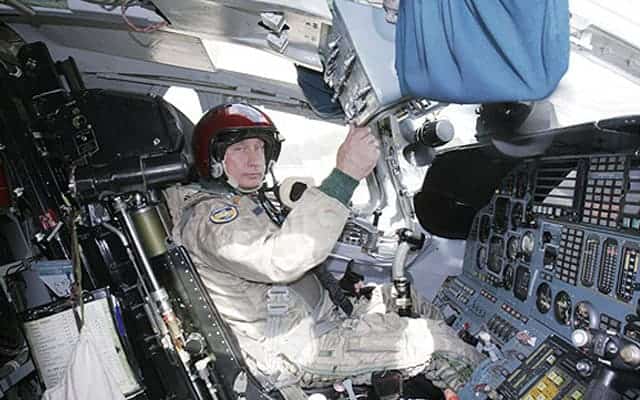
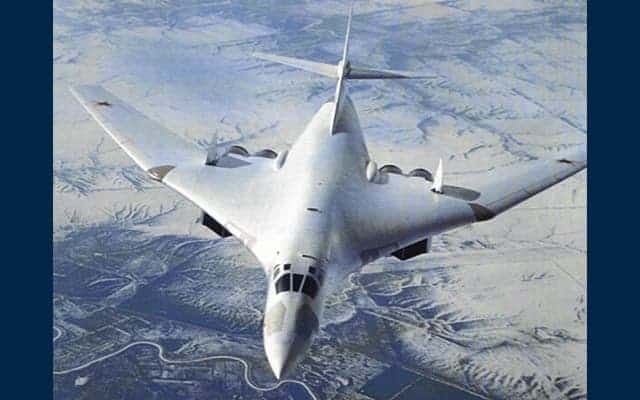

The Tu-160 is the largest and heaviest combat aircraft ever built, and the fastest bomber in service anywhere. Nothing else on this list is close on either count.
Its maximum takeoff weight is 606,271 pounds (275,000 kg), it tops out at Mach 2.05, about 1,380 mph (2,220 km/h), and it carries 99,208 pounds (45,000 kg) of weapons on two internal rotary launchers. Range is roughly 7,600 miles (12,300 km).
Those figures are genuinely extraordinary and they still only earn fifth place, which is the clearest illustration of why the measure matters. The Blackjack has no stealth whatsoever, so against a modern air defence network it can only shoot from range.
Its size also places it among the biggest aircraft in the world, military or civil, which is why Russian crews nicknamed it the White Swan.
Numbers are the other limit. Only 41 were ever built and roughly 18 are operational, with Russia restarting production and modernising survivors to the Tu-160M standard at a rate of about two aircraft a year.
6. Tupolev Tu-95MS Bear

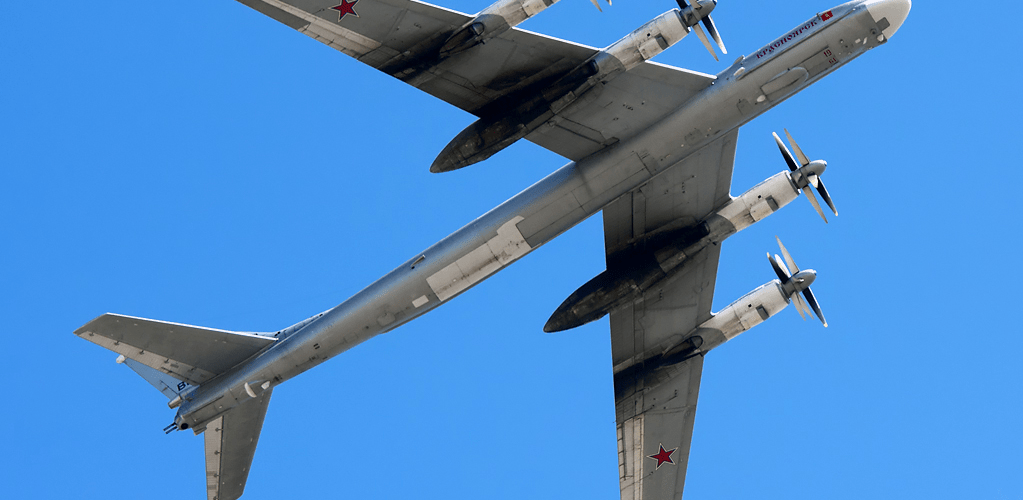

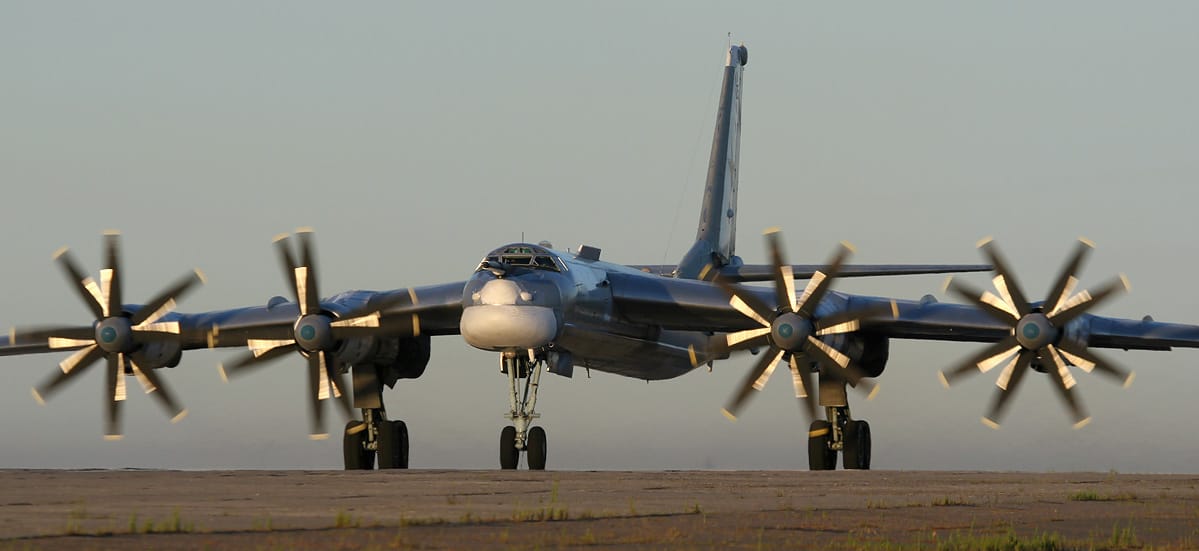
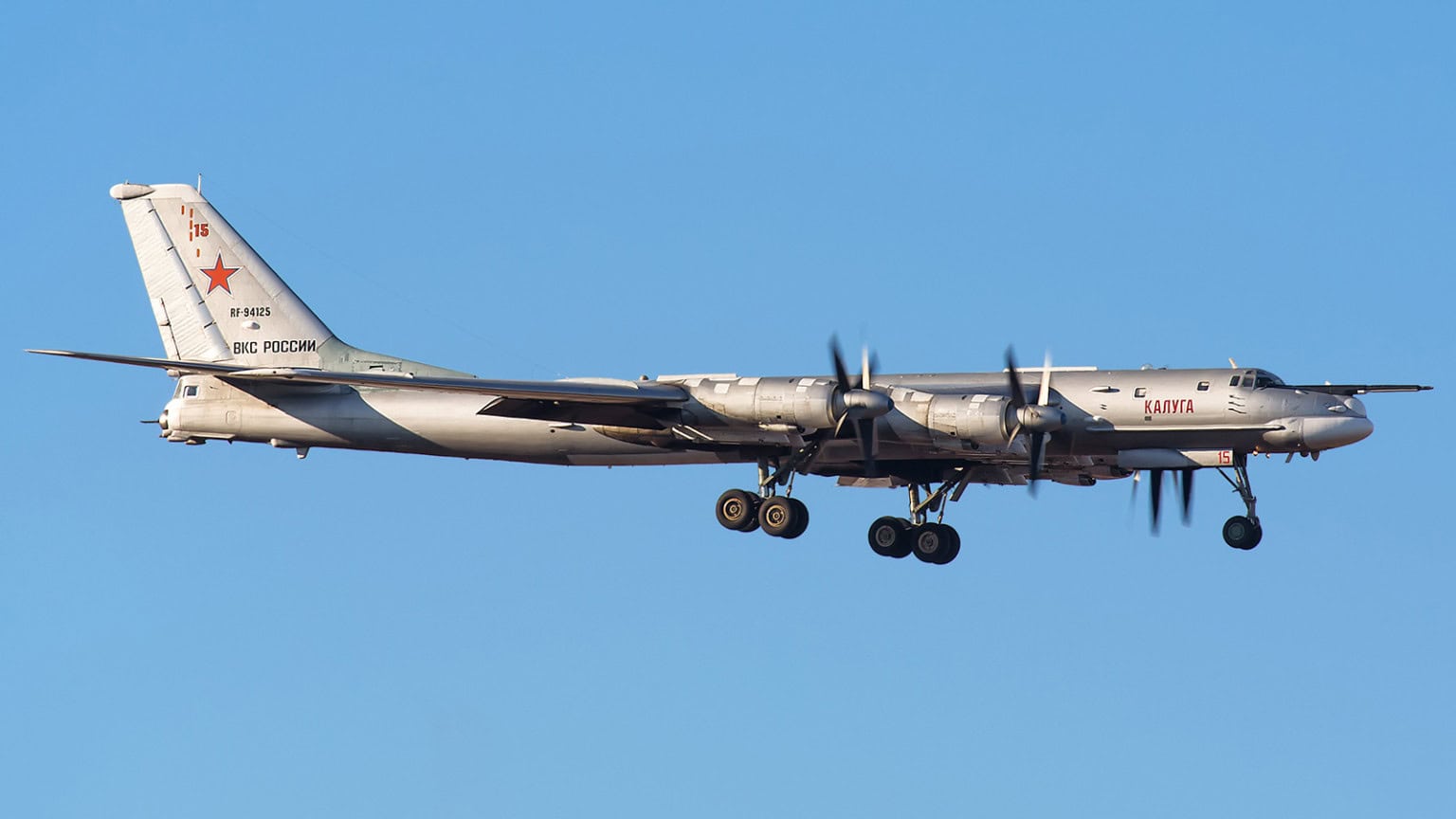
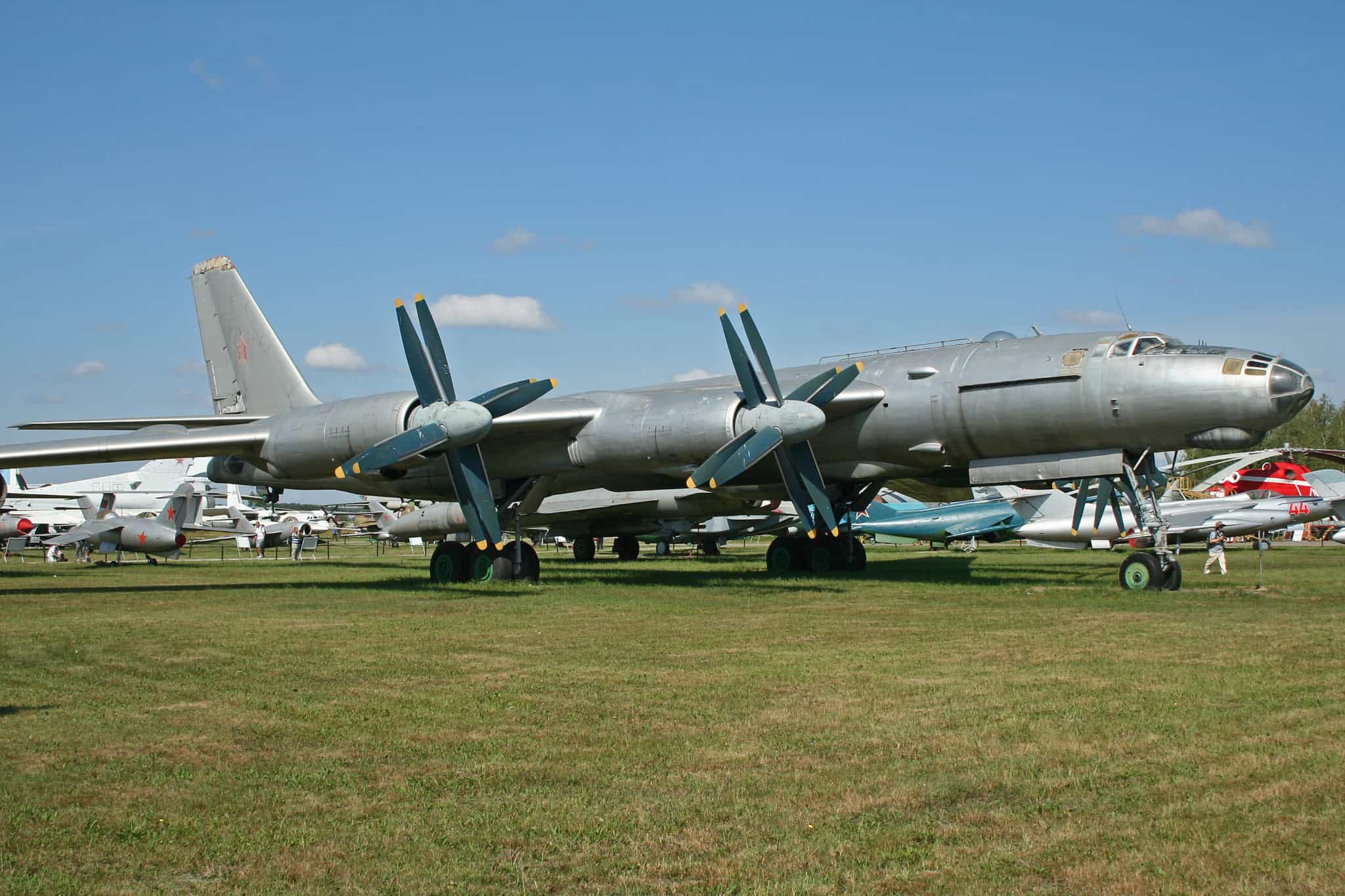
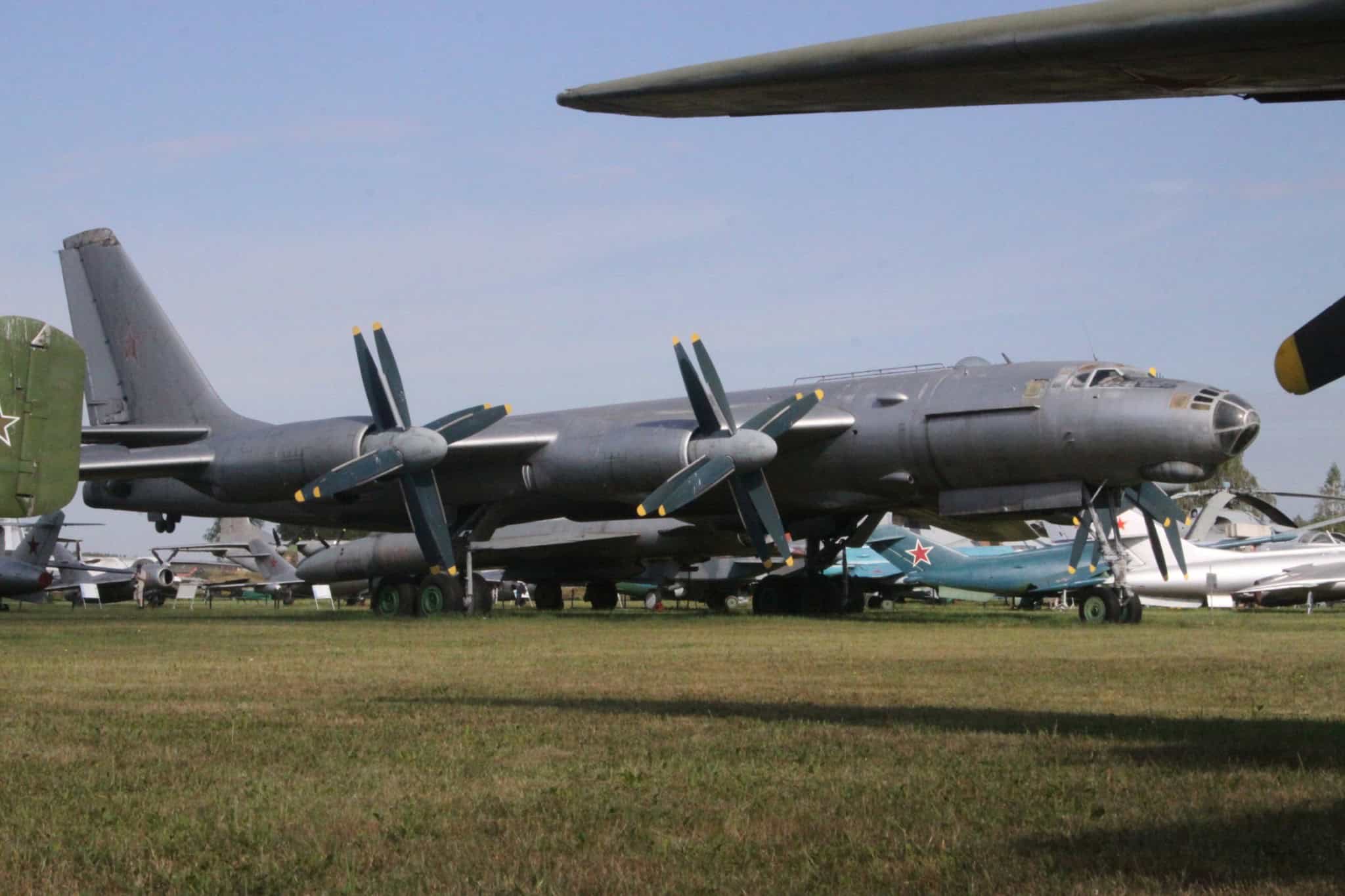
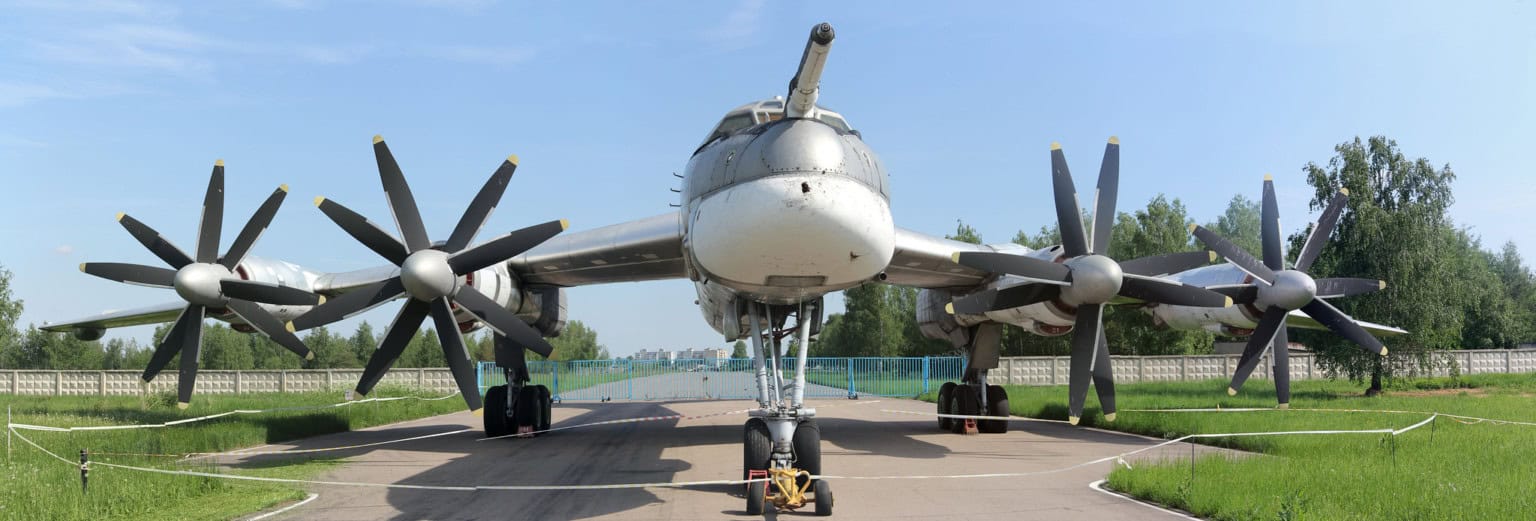
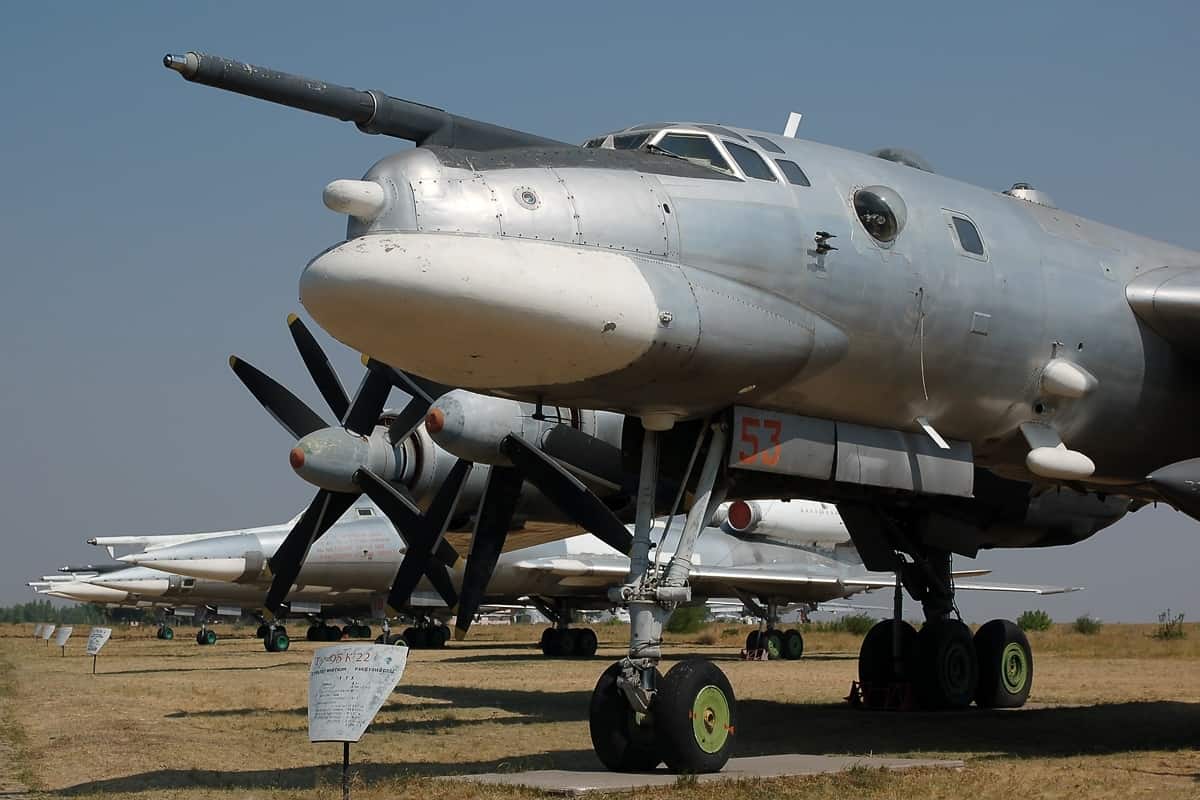

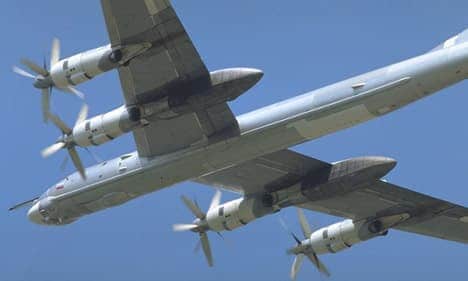
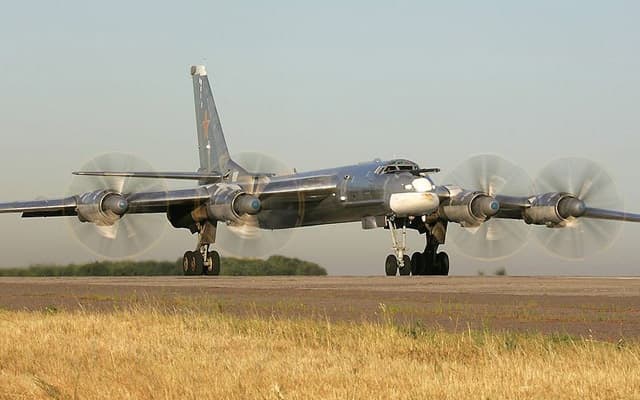
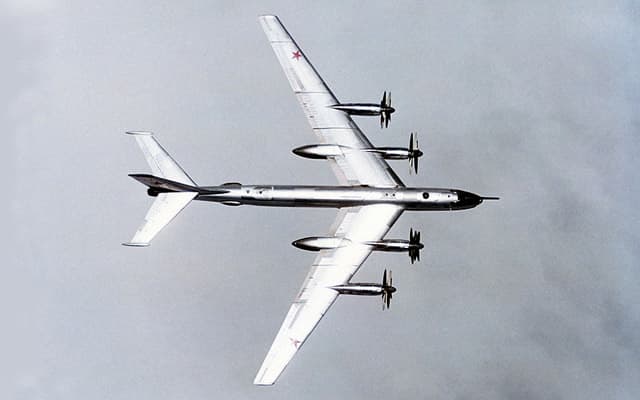
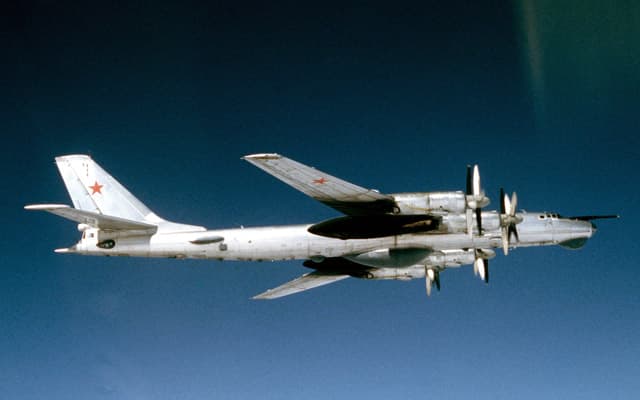
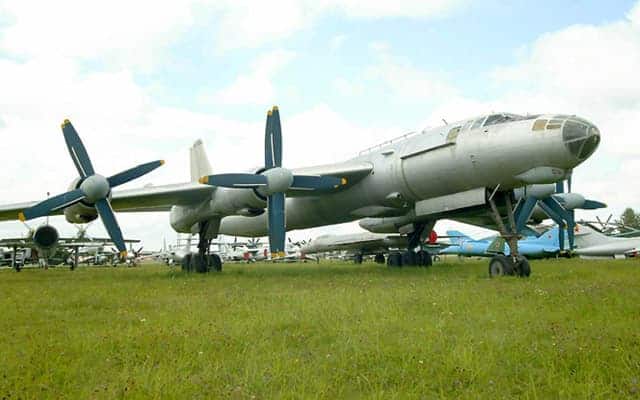

The Tu-95 is the only turboprop bomber left in the world, and the only one whose contra-rotating propellers turn fast enough at the tips to make it one of the loudest aircraft ever flown.
Four Kuznetsov NK-12 engines push it to 575 mph (925 km/h) with a range of 9,300 miles (15,000 km), and the modern Tu-95MS carries eight Kh-101 or Kh-102 cruise missiles on underwing pylons.
It is a first-generation design flying a fourth-generation mission, and for launching cruise missiles from Russian airspace that is enough. It has flown that mission repeatedly against Ukraine.
Its ranking is dragged down by an unusual vulnerability: it is far more at risk on the ground than in the air.
The bomber fleet attacked by trucks
On 1 June 2025 Ukraine launched 117 small drones from inside Russia, smuggled to five airbases in wooden cabins on trucks and released remotely. Independent assessments put the confirmed losses at roughly 10 to 13 aircraft, well below Ukraine’s claim of 41 hit, but open-source analysis suggests up to 15 Tu-95MS may have been lost, close to a quarter of the fleet. Russia cannot replace them: Tu-95 production ended in 1993.
7. Xian H-6N and H-6K
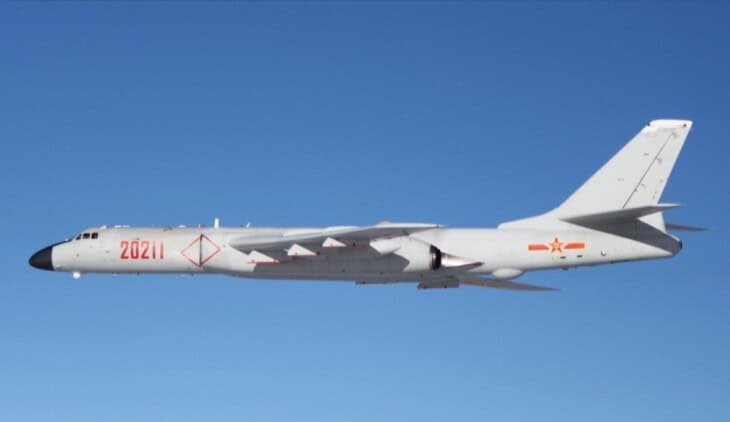
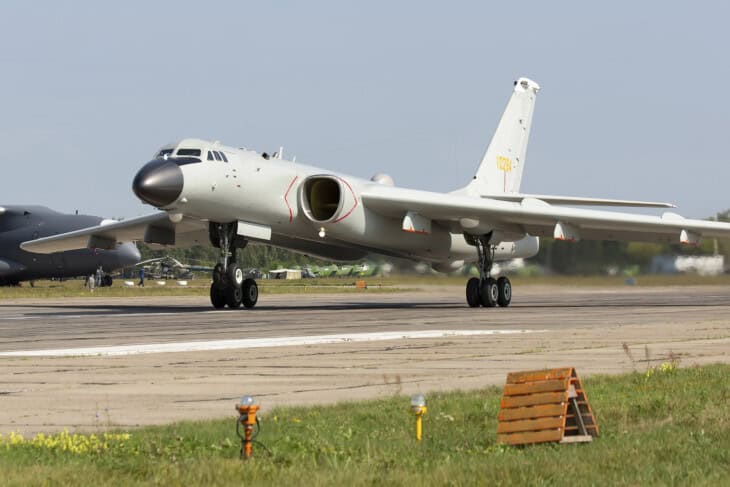
The H-6 is a licence-built descendant of the Soviet Tu-16, a design that first flew in 1952. On paper it is the weakest bomber here, and it is on this list anyway.
The reason is what China has bolted onto it. The H-6K variant, which entered service in 2009, has new turbofan engines, a glass cockpit, composite structures, and a combat radius of about 2,200 miles (3,500 km) carrying six to seven land-attack cruise missiles.
The H-6N goes further. It is air-refuellable and carries a nuclear-capable air-launched ballistic missile under its fuselage, which is the component that completed China’s nuclear triad.
That capability stopped being speculative on 4 August 2026, when Chinese state television broadcast footage of an H-6N carrying the JL-1 ballistic missile in flight, escorted by two J-20 stealth fighters.
China fields roughly 120 H-6s, more airframes than Russia’s entire strategic bomber force. Quantity is its own argument, and the type is now a credible threat to US carrier groups in the western Pacific.
The one to watch: Xian H-20
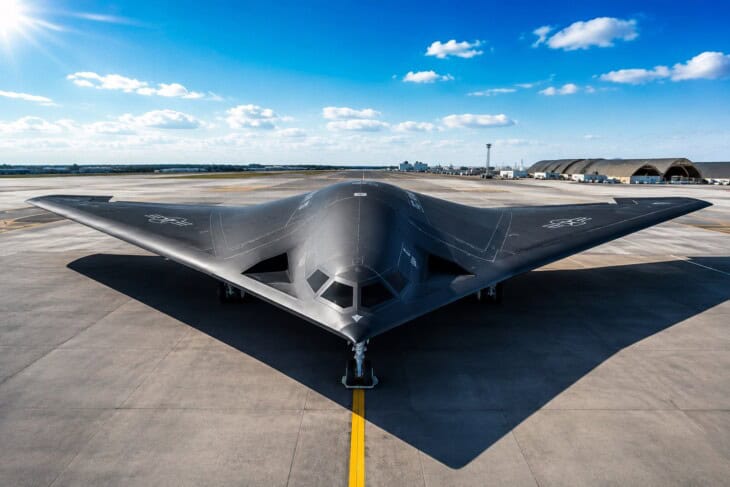
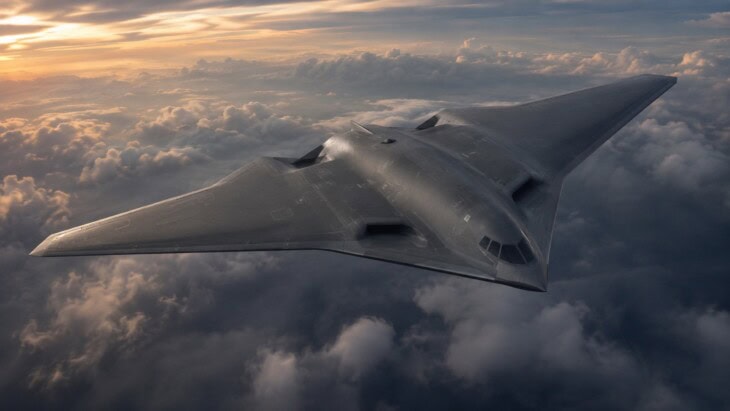
China’s H-20 is the aircraft that would rewrite this ranking, and it is not on it because there is no confirmed evidence it has flown.
It is understood to be a subsonic flying wing in the B-2 and B-21 mould, intended to give China a genuine intercontinental stealth bomber for the first time.
Its public debut has been forecast as imminent for several years running and has not happened. Analysts point to two hard problems: engine performance and broadband stealth, meaning low observability across radar bands rather than just the high frequencies.
Prototypes have most likely been built. Service entry before the 2030s looks unlikely, and any list that ranks the H-20 today is ranking a rumour.
Which country has the best bombers?
The United States, and it is not particularly close. America operates 141 bombers across three types, holds the only stealth bomber in service, and is the only country currently fielding a new one.
Russia has the more spectacular individual aircraft in the Tu-160M but roughly 70 airframes in total, an ageing Tu-95 fleet it cannot replace, and no stealth bomber programme at all.
China has the most airframes and the fastest-improving weapons, but every one of them is a 1950s design. Its answer to that problem, the H-20, has yet to appear.
No other country operates a strategic bomber. Britain retired the Vulcan in 1984, France relies on nuclear-armed Rafale strike fighters, and India and Israel use tactical aircraft rather than bombers, which is a different job entirely. The distinction between the categories is covered in our guide to the types of bomber planes.
What about the B-29, the Lancaster, and the B-17?
They are not on this list because none of them exist as a fighting force, and a ranking that mixes 1945 with 2026 tells you nothing useful. Judged in its own era the B-29 Superfortress is the strongest candidate for the best bomber ever built: it was pressurised, computer-aimed, intercontinental in reach, and it ended a war. Judged against a modern air defence network it would not survive the first ten minutes, which is exactly why the measure has to be stated before the ranking begins.
Why bombers still exist
The obvious objection to this whole category is that missiles do the job. Ballistic and cruise missiles are faster, cheaper per shot, and cannot be shot down on the way home.
Bombers survive because they are the only leg of a nuclear triad that can be launched, held airborne, and recalled. A missile committed is committed; a bomber is a decision that stays reversible for hours.
They also carry weapons nothing else can. No missile in any inventory can deliver a 30,000-pound penetrator to a target under 250 feet of rock, which is why seven B-2s made a 37-hour round trip in 2025 instead of someone pressing a button.
The last argument is cost per target. A B-52 can drop dozens of guided bombs in one pass at a fraction of the price of the equivalent number of cruise missiles, which is why the oldest aircraft on this list is also the busiest.
For the aircraft that escort them into contested airspace, see our ranking of the best fighter jets in the world.
FAQ
Sources and references used for research and fact-checking.
- Air & Space Forces Magazine, B-2 Spirit
- Air & Space Forces Magazine, B-52 Stratofortress
- Air & Space Forces Magazine, B-1B Lancer
- Rolls-Royce, Rolls-Royce completes key F130 altitude and operability testing, advancing US Air Force B-52J program
- The Aviationist, Operation Midnight Hammer
- Wikipedia, Tupolev Tu-160
Get the Newsletter
The latest aviation news and stories sent to your inbox.
About the Author

Tim is the owner and lead editor of AeroCorner since 2019, overseeing aviation content covering aircraft, airlines, airports, and the broader aviation industry. Through years of researching, writing, editing, and publishing aviation-focused content, he has developed extensive practical knowledge of commercial aviation and air travel. Based in Asia and a frequent traveler himself, Tim also brings firsthand passenger experience to AeroCorner’s coverage. Outside of publishing, he has also explored aviation firsthand through hands-on flight training in New Zealand.