Military Aircraft
Tupolev Tu-16
ICAO: TU16
The supersonic missile carrier that is still the heaviest combat aircraft ever built.
Updated: by Tim de Vries
The latest aviation news and stories sent to your inbox.
The Tupolev Tu-160 is the heaviest and fastest strategic bomber ever to enter service, and the only bomber in service that reaches Mach 2. NATO calls it the Blackjack; Russian crews call it the White Swan, after its anti-flash white paint. Built for the Soviet Union in the 1980s, it is a standoff missile carrier, designed to launch long-range cruise missiles from outside an enemy’s air defenses rather than fly over the target.
Live Fleet Activity (T160)
Fetching live data…


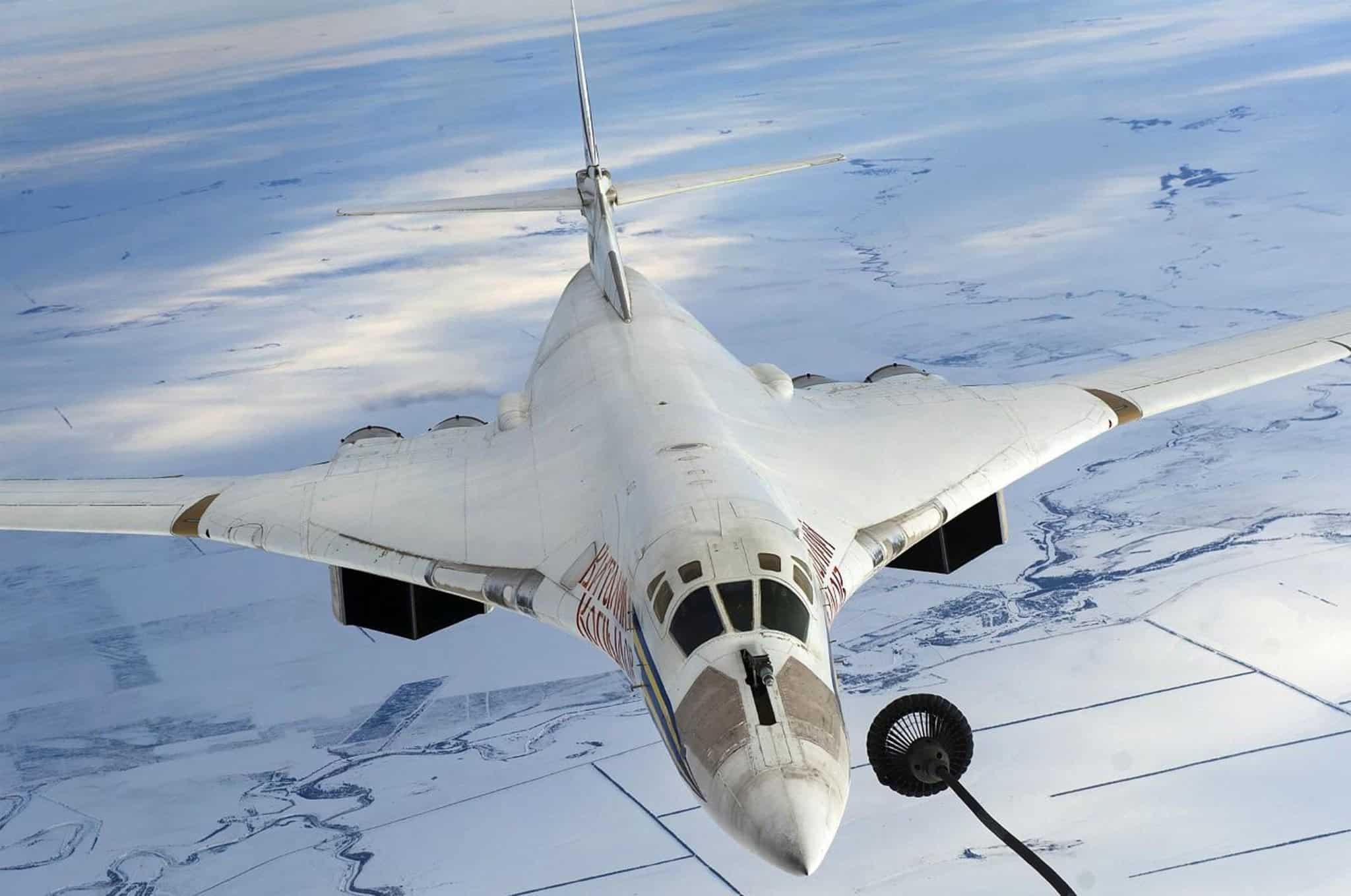
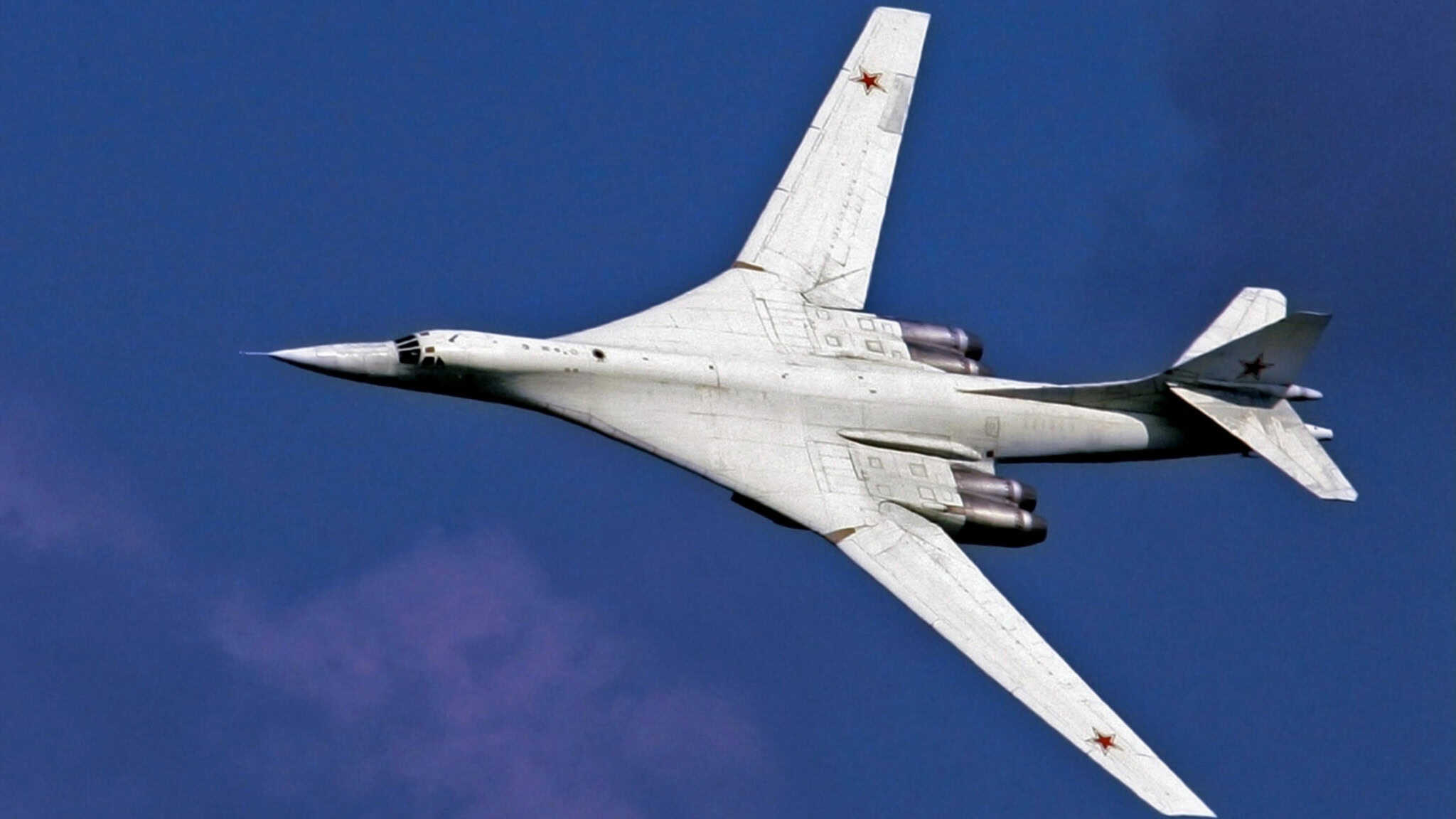
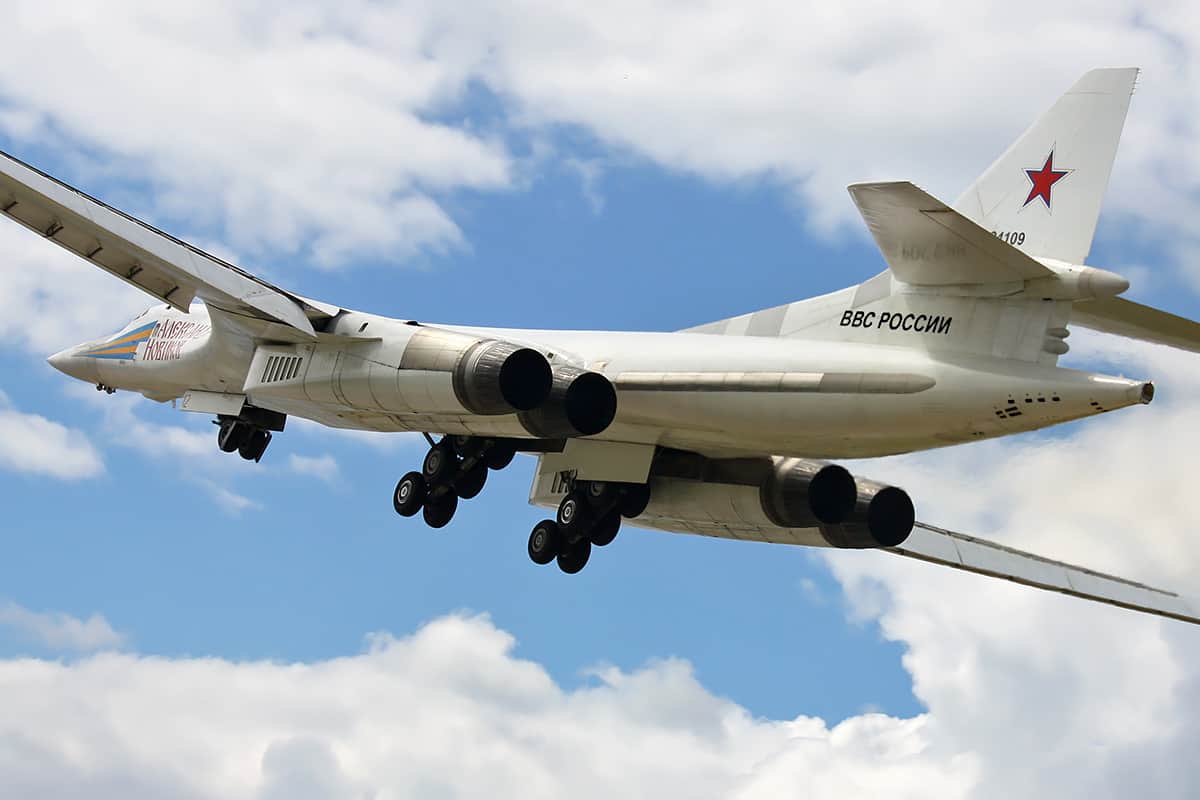


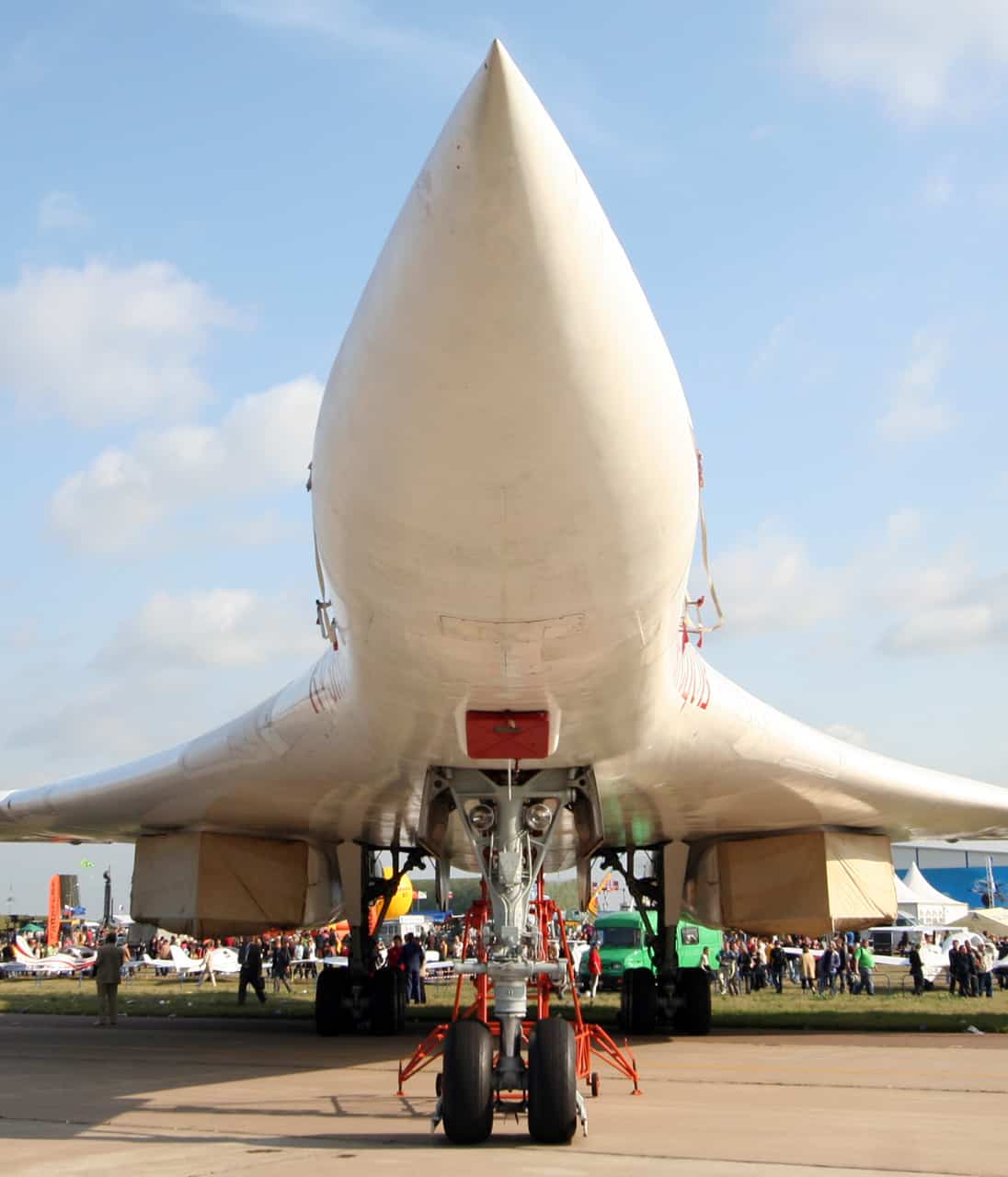
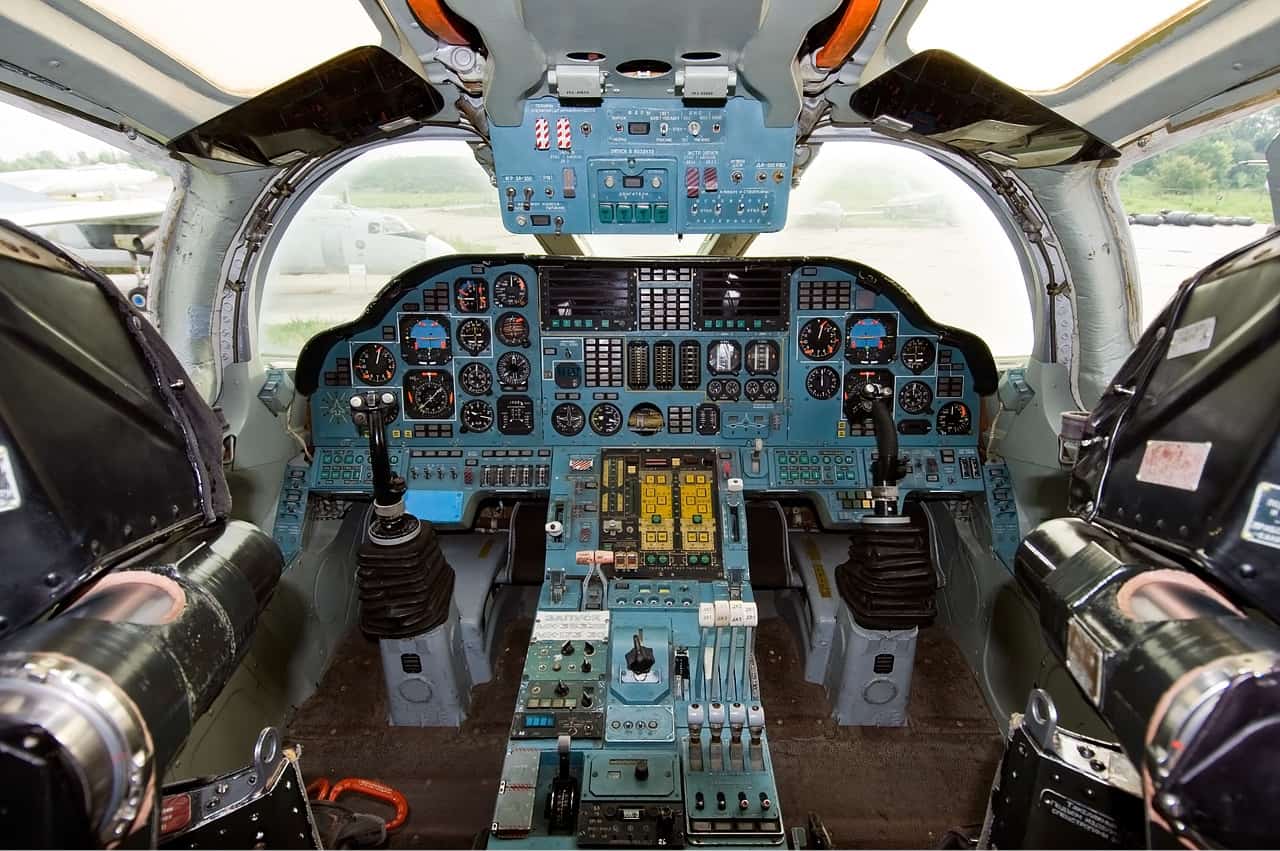
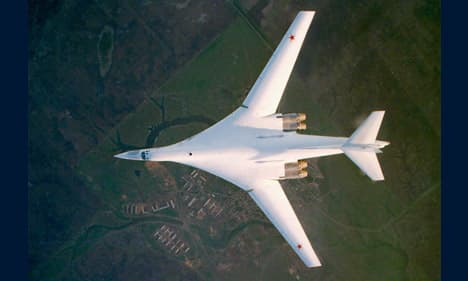
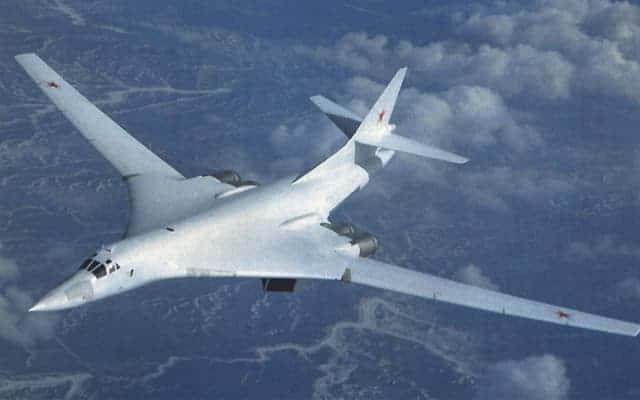

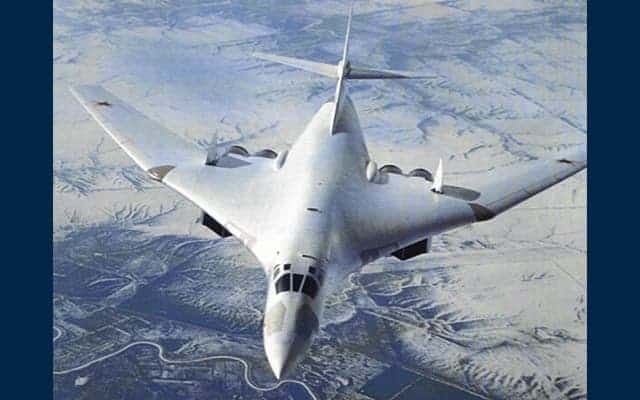

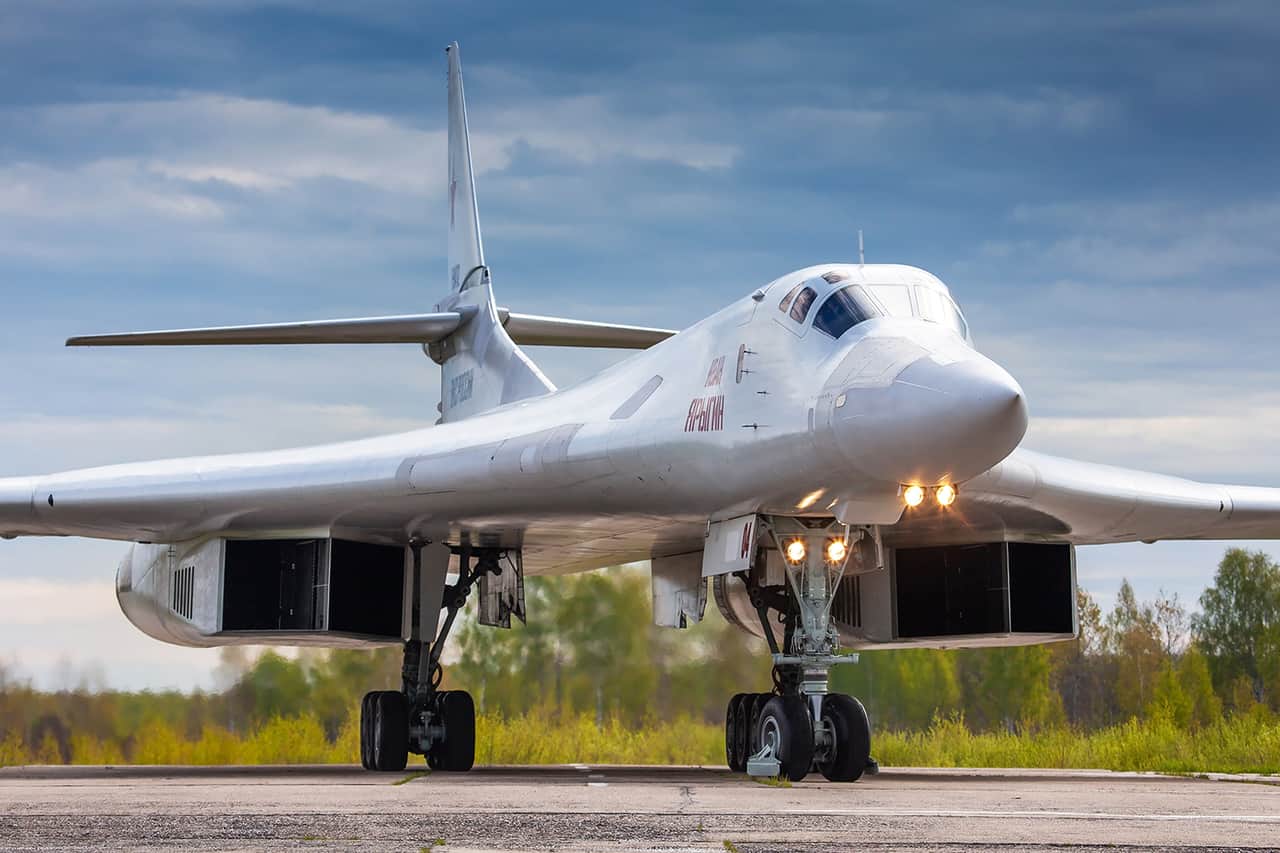
The Tupolev Tu-160 is a supersonic, variable-sweep wing strategic bomber built by the Soviet Union and still flown by Russia. NATO calls it the Blackjack. Russian crews call it the White Swan, after the anti-flash white paint it wears.
Its job is not to fly over a target and drop bombs. The Tu-160 is a standoff missile carrier, designed to launch long-range cruise missiles from outside an enemy’s air defenses and turn for home.
It is the heaviest combat aircraft ever built. Guinness World Records lists it under “largest military aircraft by weight, operational bomber” at 606,000 lb (275,000 kg), and it is longer than a B-52 Stratofortress.
It is also the fastest bomber in service anywhere. No other bomber flying today is supersonic at Mach 2.
The Soviet Union ran its first competition for a supersonic strategic heavy bomber in 1967. A second competition followed in 1972, this time asking for a variable-geometry design capable of Mach 2.3, in response to the American B-1 program.
Tupolev’s entry, known as Aircraft 160M, beat the Myasishchev M-18 and the Sukhoi T-4. It borrowed elements from the Tu-144 supersonic airliner and used a blended wing layout.
The prototype first flew on 18 December 1981, about a month after an airline passenger photographed it at Zhukovsky Airfield. Production was authorized in 1984 at the Kazan Aircraft Production Association.
The type entered service in April 1987 with the 184th Guards Heavy Bomber Regiment at Pryluky, in what was then the Ukrainian SSR. Crews set 44 world speed records in the aircraft’s weight class during 1989 and 1990.
The Tu-160’s wings sweep from 20 degrees fully spread to 65 degrees fully swept. Spread, the aircraft has the lift it needs to get 606,000 lb (275,000 kg) off a runway and to cruise efficiently. Swept, it has the low drag it needs to go supersonic.
That is the same trade the B-1B Lancer makes, but the Tu-160 kept the performance the B-1 gave up. The B-1A’s Mach 2 requirement was abandoned for the B-1B to reduce its radar signature, while the Tu-160 retained its variable intake ramps and its Mach 2.05 capability.
Titanium makes up roughly 30 percent of the aircraft’s empty weight. The swing wing hinge alone weighs about 13,200 lb (6 tonnes).
The Tu-160 is not a stealth aircraft. It was designed for some reduction in radar and infrared signature, but it is a large, bright, conventional airframe, and it belongs to a different design generation than the stealth bombers built to penetrate defended airspace.
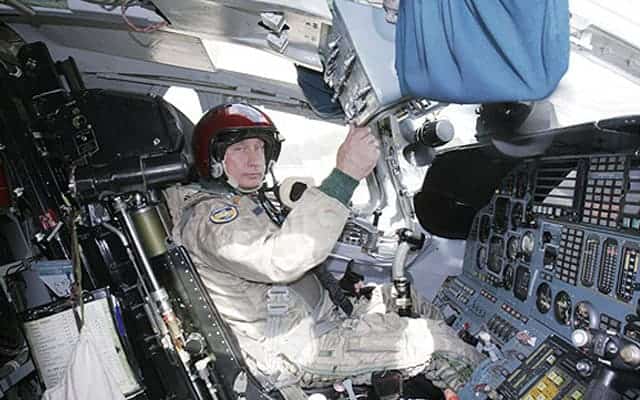
It carries no defensive guns, the first post-war Soviet bomber built that way. The crew of four sits in K-36LM ejection seats: pilot, co-pilot, bombardier and defensive systems operator.
The full specification table for the aircraft is on this page. Four of its figures are worth explaining, because Tu-160 numbers get quoted against each other in ways that do not compare.
The first is range. The roughly 7,640 mile (12,300 km) figure is a practical range with no in-flight refuelling, carrying six Kh-55SM missiles released at the midpoint, with a 5 percent fuel reserve.
Combat range is a different measure and much shorter: about 1,240 miles (2,000 km) at Mach 1.5, or roughly 4,540 miles (7,300 km) flown subsonic. The aircraft has a probe-and-drogue refuelling system, though it is rarely used.
The second is speed. Mach 2.05 works out to about 1,381 mph (2,222 km/h) at 40,000 ft, but that is a dash figure. Normal cruise is Mach 0.9, roughly 596 mph (959 km/h), and the low-altitude limit is far lower again.
The third is weapons load. The 99,000 lb (45,000 kg) figure is the total across both internal bays, each of which holds 22,500 kg. Some references publish a 40,000 kg maximum combat load instead, and a typical operational load is far smaller than either.
The fourth is fuel, where published figures genuinely disagree. The spec panel carries the volumetric figure of 45,150 US gallons (171,000 litres), while other references give the load as a mass, either 130 or 148 tonnes.
Weapons sit in two internal bays, each with a rotary launcher. The standard fit is twelve Kh-55SM, Kh-101, Kh-102 or Kh-555 cruise missiles, six per launcher.
The Kh-101 is the conventional variant and the Kh-102 the nuclear one. Alternatively the bays take twelve Kh-15 short-range missiles, or free-fall bombs and mines.
In September 2023 the commander of Long-Range Aviation, Lieutenant General Sergei Kobylash, said Tu-160s had been fitted with the new Kh-BD cruise missile, quoting a range of 6,500 km. Russian officials have also said the type is planned to carry the Kh-47M2 Kinzhal.
Serial production ended in January 1992, when Boris Yeltsin stopped it. Thirty-five aircraft had been completed.
Nineteen of them were sitting in newly independent Ukraine, at Pryluky. By the mid-1990s they were effectively grounded for lack of spare parts and technical support, and Ukraine treated them as a bargaining chip rather than a weapon.
Ukraine wanted 3 billion dollars. Russia refused, and in April 1998 Ukraine began scrapping the fleet under the Nunn-Lugar Cooperative Threat Reduction agreement.
Talks resumed in 1999 and produced a deal: Russia took eight Tu-160s and three Tu-95MS bombers plus 575 Kh-55SM missiles for 285 million dollars, offset against Ukraine’s natural gas debt. The rest were scrapped under that agreement, though one Ukrainian Tu-160 survives as a museum exhibit at Poltava.
With those eight flown to Engels-2 and one new-build delivered, the Russian fleet stood at 15 by February 2001. It has hovered in the mid-teens ever since.
The Tu-160 went 28 years without firing a shot in anger. Its combat debut came on 17 November 2015, when Tu-160s and Tu-95MS bombers launched Kh-101 cruise missiles from over the Mediterranean at targets in Idlib and Aleppo during Russia’s intervention in Syria.
Since 2022 the type has been used against Ukraine. Ukrainian officials have reported Tu-160 launches of Kh-101 cruise missiles from the Black Sea and Caspian Sea areas, well back from contested airspace.
That pattern is the point of the aircraft. It is a launch platform that stays well back, which is also why it has proved hard for Ukraine to reach in the air.
Ukraine has instead gone after the bombers on the ground. Engels-2, the Tu-160’s home base in Saratov Oblast, has been struck repeatedly by long-range drones, including attacks in July and August 2026.
During Operation Spiderweb on 1 June 2025, Ukraine claimed to have hit four Tu-160s. Open-source analysis of the imagery has not confirmed any Tu-160 losses in that operation, and the aircraft confirmed destroyed or damaged were chiefly Tu-95MS and Tu-22M3 airframes.
Counts differ depending on who is counting and what they count, so the honest answer is a range in the mid-to-high teens.
The Federation of American Scientists estimated 15 Tu-160 and Tu-160M aircraft in the active inventory as of May 2026. An open-source count by AviVector, reported in June 2026, put the total at 18 airframes with only seven used for strike missions, the rest tied up in testing, training, maintenance, modernization or storage.
Ten aircraft were reported to be at the modernized Tu-160M standard as of May 2026. Availability has always been the weak point: in August 2011 Russian media reported only four of 16 aircraft were flightworthy, while Flight International reported eleven combat-ready by mid-2012.
In April 2015 Russia announced it would restart Tu-160 production, and TASS reported the following month that the air force intended to buy at least 50 new aircraft. That target has not come close to being met.
A contract for ten Tu-160Ms was signed in January 2018. Putin said in Kazan that the ten aircraft were worth 160 billion roubles in total, more than 15 billion roubles each.
That is a procurement price rather than a flyaway cost, which is why no unit cost appears in the specification panel on this page. The War Zone put the figure at more than 500 million dollars per aircraft on a purchasing-power basis, which would place it among the most expensive military aircraft ever ordered.
Deliveries have been slow. Two Tu-160Ms were handed over in December 2025, announced by Defence Minister Andrei Belousov, and it was not made clear whether they were newly built airframes or modernized older ones.
The upgrade covers avionics, a digital cockpit, communications and control systems, new weapons and the NK-32-02 engine. Engine supply has been a long-standing constraint on the program: in the early 2010s the manufacturer said it needed orders of at least 20 engines a year, while the government was prepared to fund four to six.
The Tu-160M matters more than it otherwise would because its intended successor is late. The PAK DA stealth bomber has slipped repeatedly, which leaves a design first flown in 1981 carrying Russia’s airborne strategic mission for the foreseeable future.
The two aircraft look alike and are often compared, but they were built to do different jobs.
The Tu-160 is bigger and faster. It is 177 ft 6 in long against the B-1B’s 146 ft, and it tops Mach 2.05 where the B-1B is limited to about Mach 1.25 at altitude. Its 606,000 lb (275,000 kg) maximum takeoff weight beats the B-1B’s 477,000 lb.
The B-1B carries more in total, because it can hang weapons externally as well as internally, adding 50,000 lb of external hardpoint capacity. The Tu-160 carries everything internally.
The deeper difference is doctrine. The B-1B was reworked into a low-level penetrator with a reduced radar signature and now flies conventional missions, while the Tu-160 remained a high-altitude standoff missile carrier and stayed nuclear-capable.
Estimates sit in the mid-to-high teens and depend on the counter. The Federation of American Scientists estimated 15 in the active inventory as of May 2026, while an AviVector open-source count reported in June 2026 put the total at 18 airframes with only seven flying strike missions.
They are built for opposite approaches, so neither is simply better. The B-2 Spirit is a subsonic stealth bomber designed to penetrate defended airspace unseen, while the Tu-160 is a fast, non-stealthy platform designed to launch cruise missiles from outside those defenses.
The Tu-160 is far faster, heavier and longer-ranged. The B-2 can go places the Tu-160 could not survive.
It depends on the measure. The Tu-160 is the heaviest and fastest bomber in service, and at about 99,000 lb (45,000 kg) it carries the largest internal weapons load of any bomber flying.
By survivability against a modern air defense network the B-2 leads, and by sheer weapons variety and endurance of service the B-52 still has a claim. You can see how the categories stack up in our guide to the different types of bomber aircraft.
It is the heaviest, at 606,000 lb (275,000 kg) maximum takeoff weight, which is the Guinness World Record it holds. It is not the largest by every measure.
The Convair B-36 Peacemaker had a 230 ft wingspan against the Tu-160’s 182 ft 9 in spread, and was 162 ft long. The B-36 was physically wider, the Tu-160 is heavier, faster and longer.
Its maximum speed is Mach 2.05, roughly 1,381 mph (2,222 km/h) at altitude. Normal cruise is much slower at about Mach 0.9, or roughly 596 mph (959 km/h).
Russian aircrew gave it the nickname because of its anti-flash white paint scheme, which is intended to reflect the thermal flash of a nuclear detonation. The contrast with the B-1B’s dark grey low-visibility scheme is one of the quickest ways to tell the two apart in a photograph.
Yes, though at a very low rate. Serial production ended in 1992, restarted for the modernized Tu-160M, and two aircraft were delivered in December 2025 against an original target of 50.
Yes. It is a declared leg of Russia’s nuclear triad and carries the nuclear-armed Kh-102 cruise missile, alongside the conventionally armed Kh-101.
Sources and references used for research and fact-checking.