Military Aircraft
Rockwell OV-10 Bronco
ICAO: V10
The supersonic swing-wing bomber with the heaviest conventional payload in the US fleet.
Updated: by Tim de Vries
The latest aviation news and stories sent to your inbox.
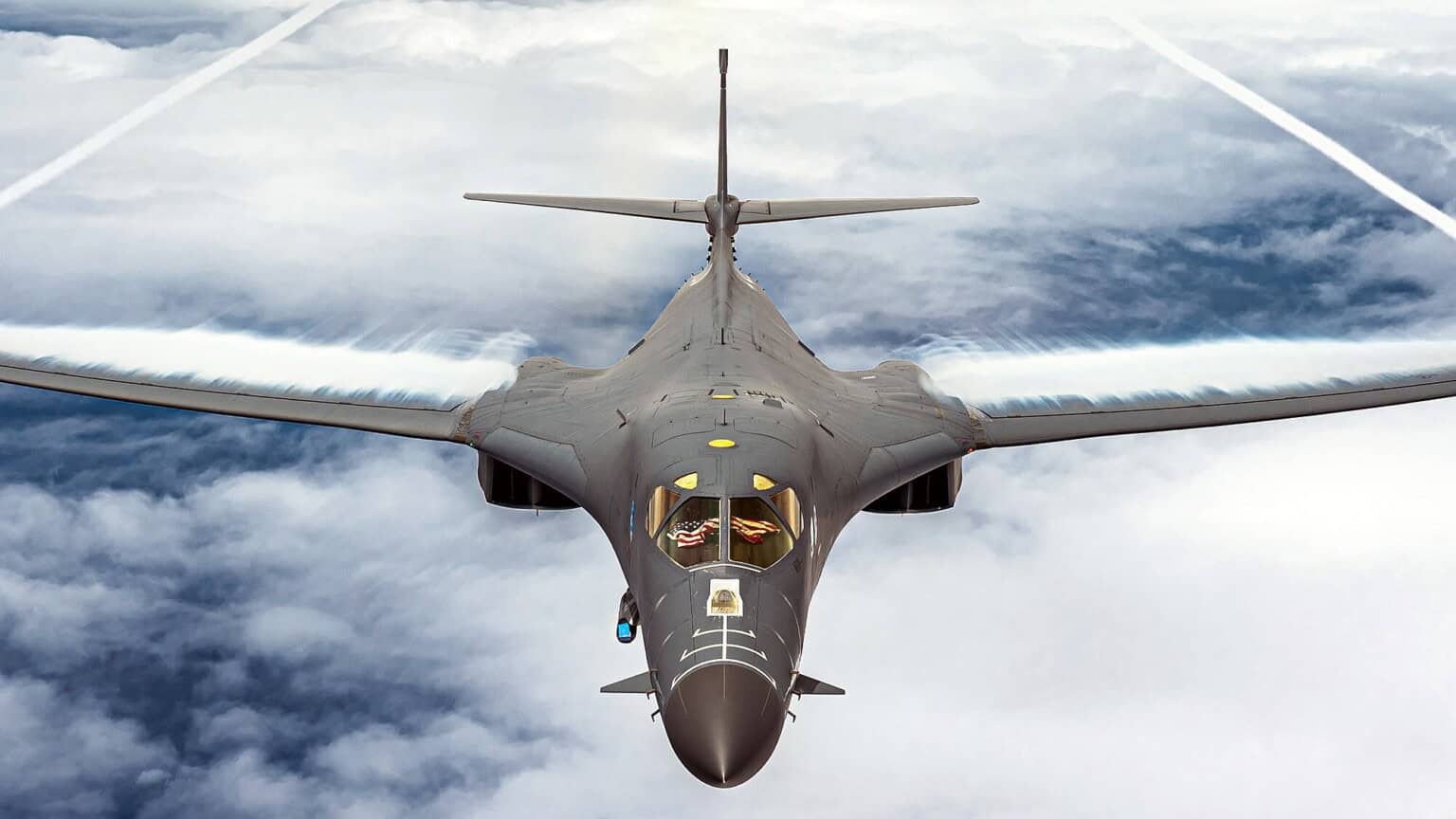
The Rockwell B-1B Lancer is a supersonic, variable-sweep-wing heavy bomber built for the United States Air Force. Restarted in 1981 as an interim aircraft while the B-2 matured, it traded the original B-1A’s Mach 2.2 top speed for a much smaller radar signature and a low, fast penetration profile. It carries the largest conventional payload of any aircraft in the U.S. inventory and, alongside the B-2 and B-52, is one of three bomber types the Air Force still operates.
Live Fleet Activity (B1)
Fetching live data…


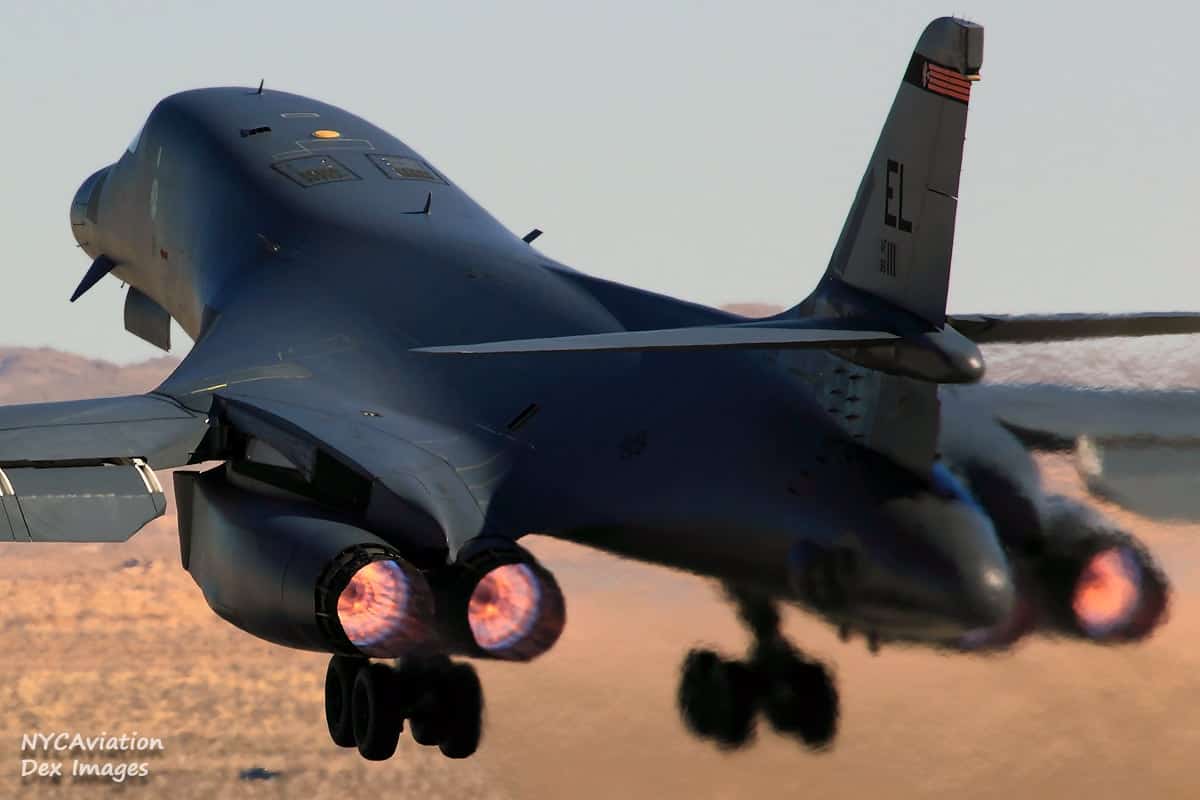
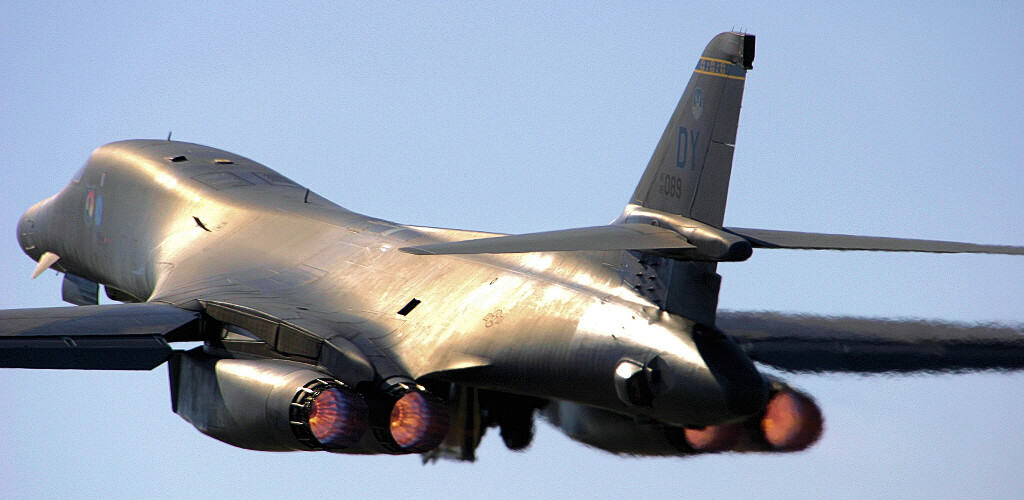


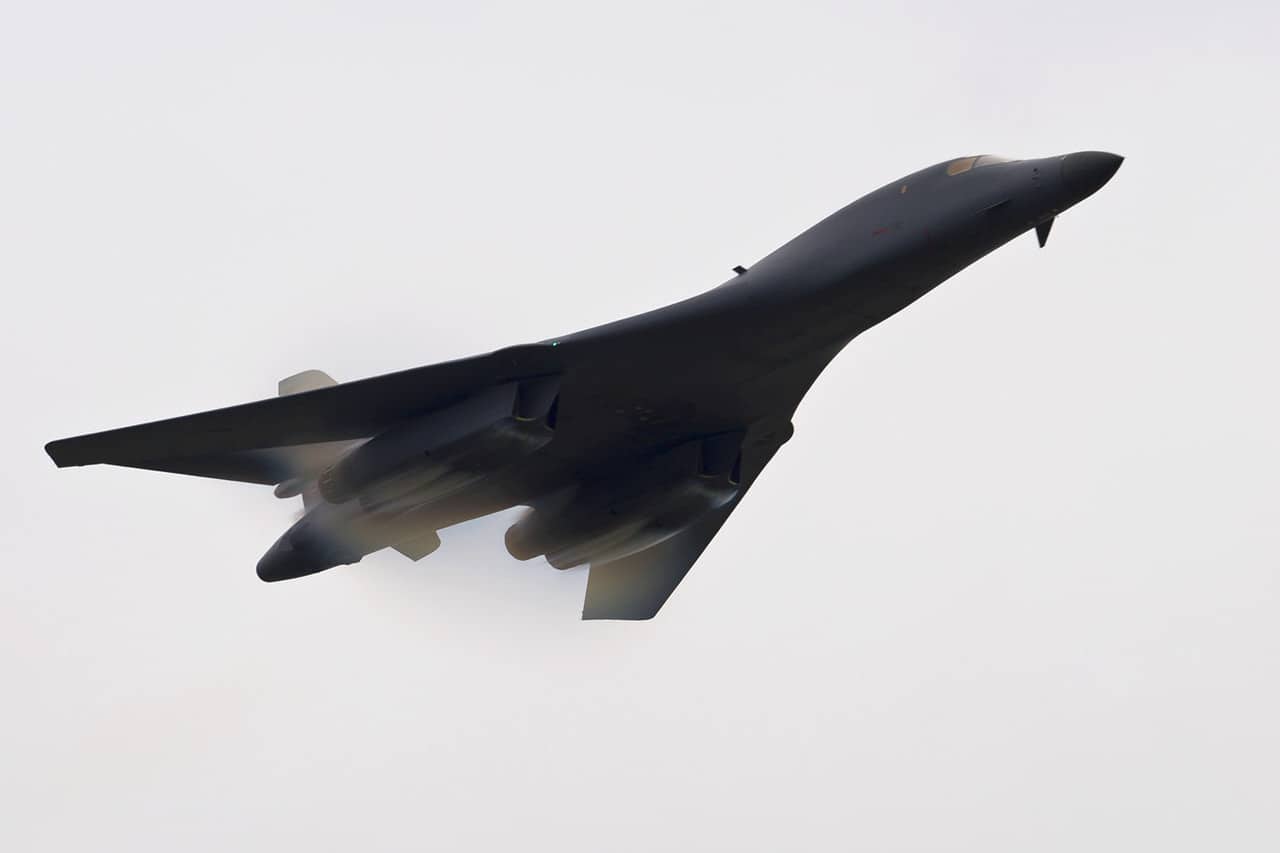

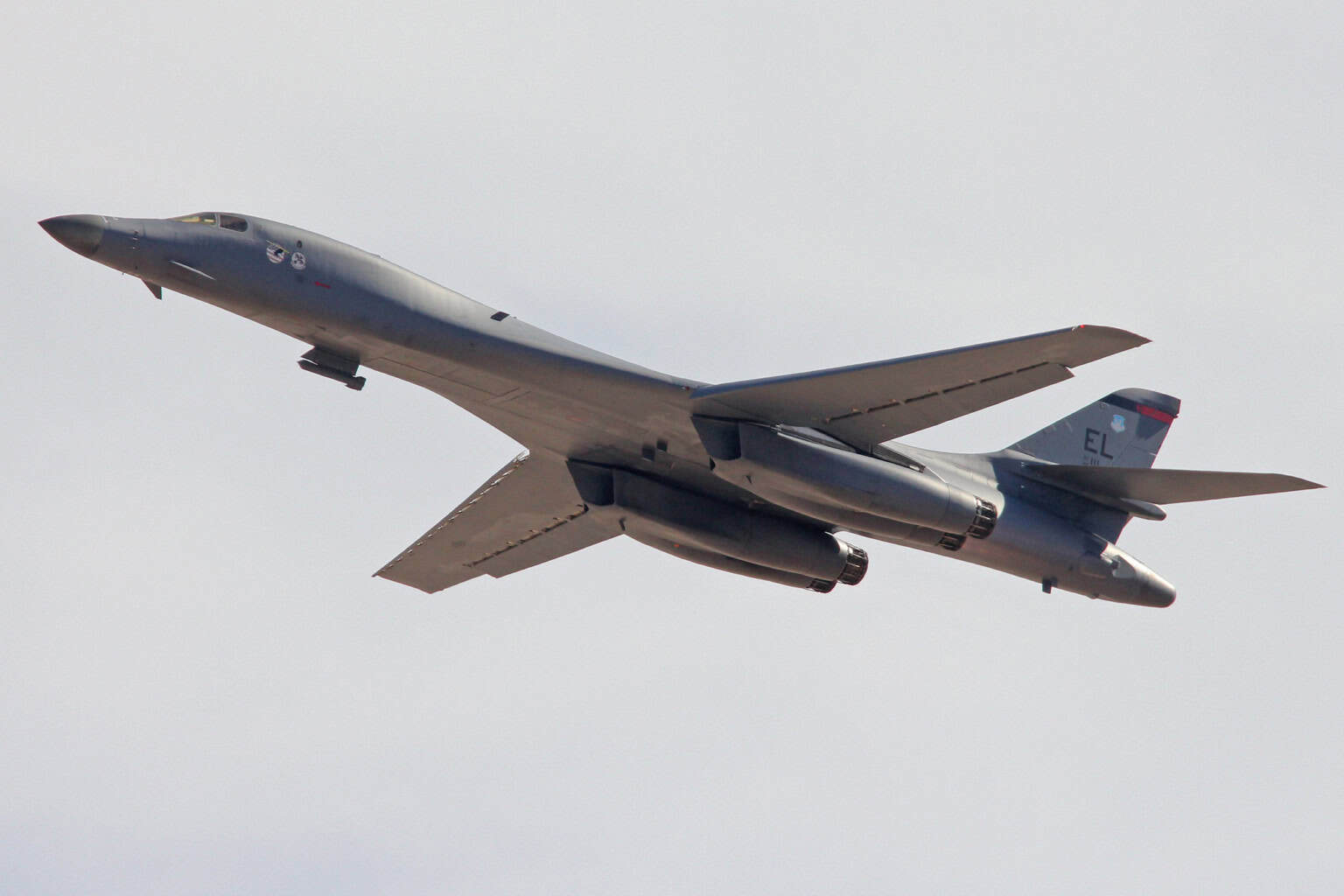
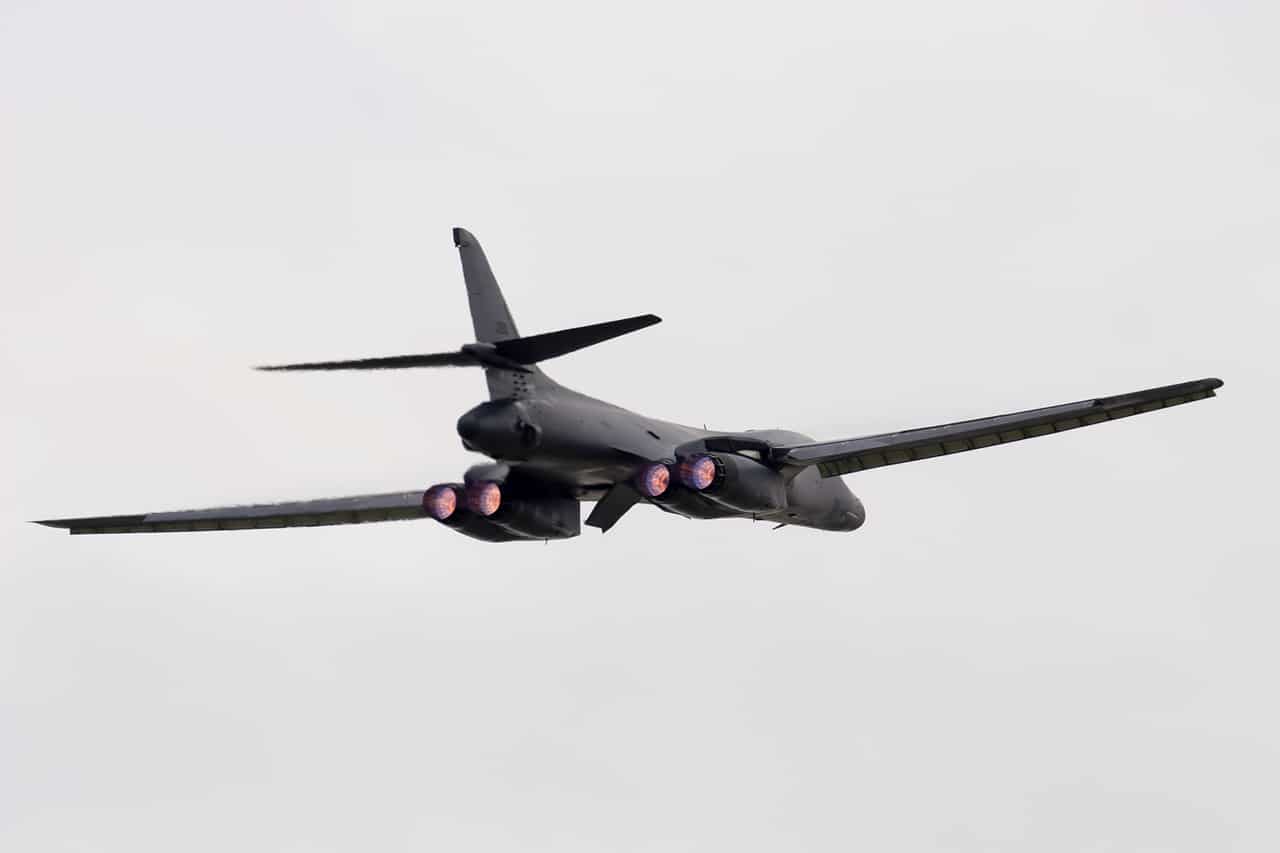


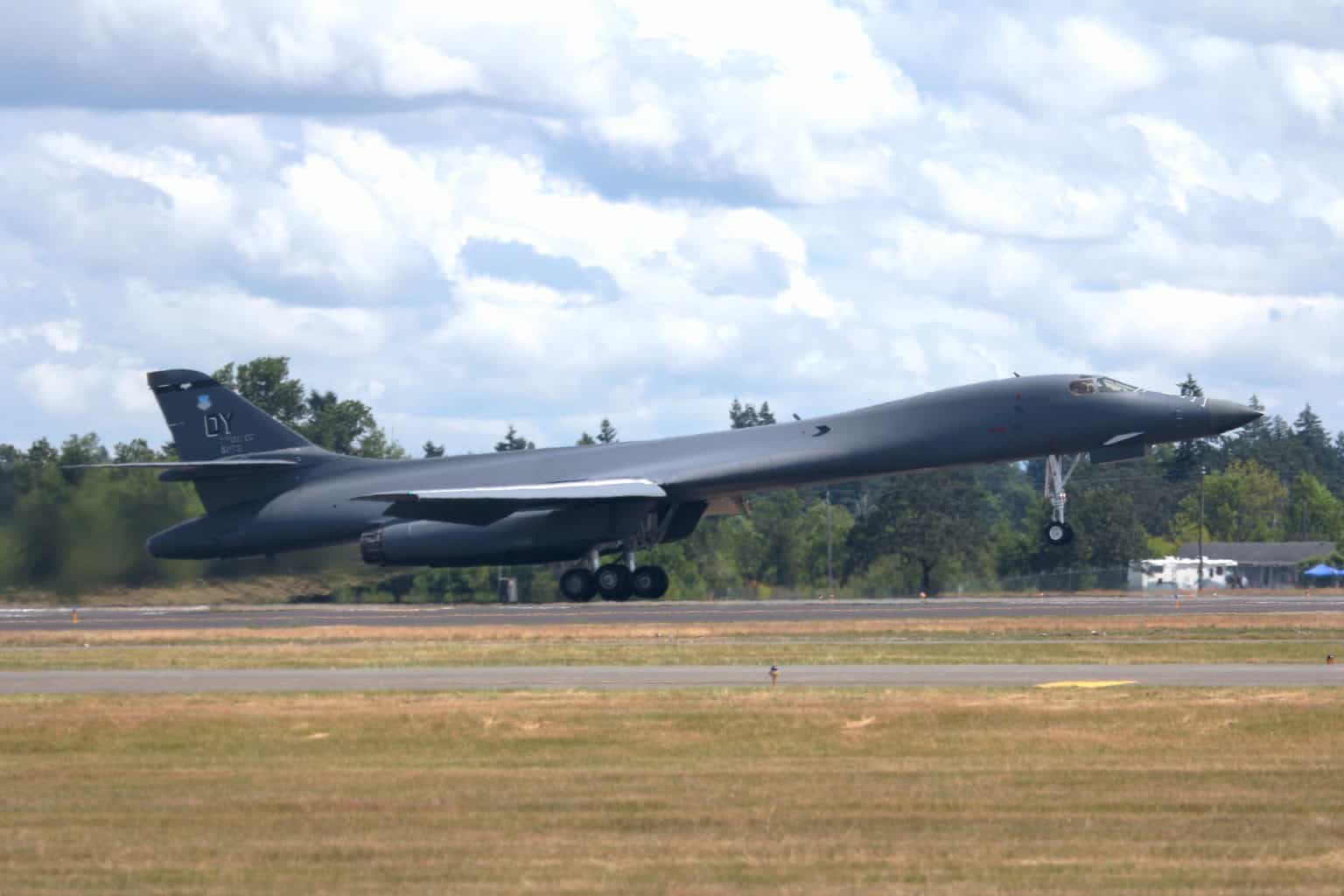
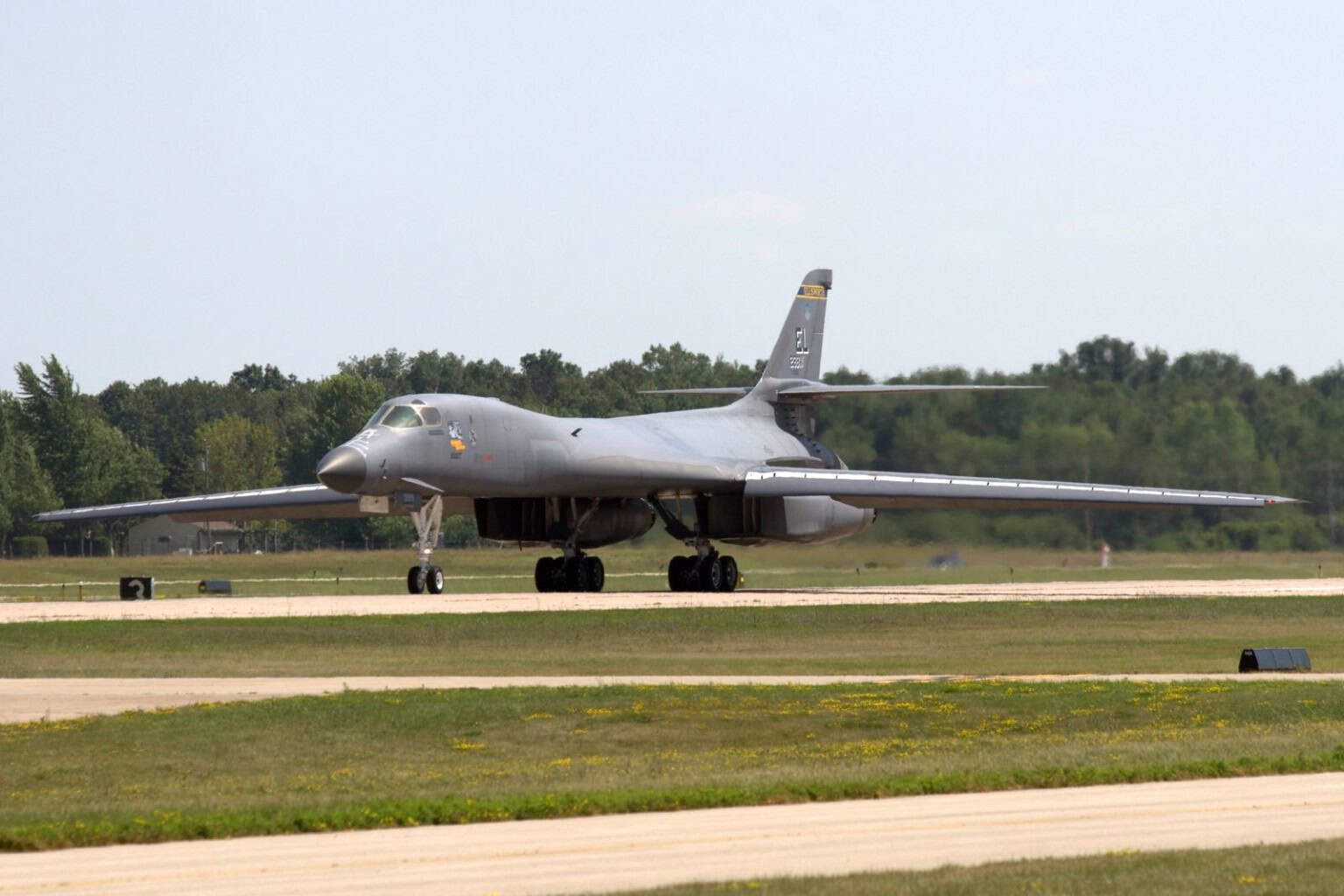
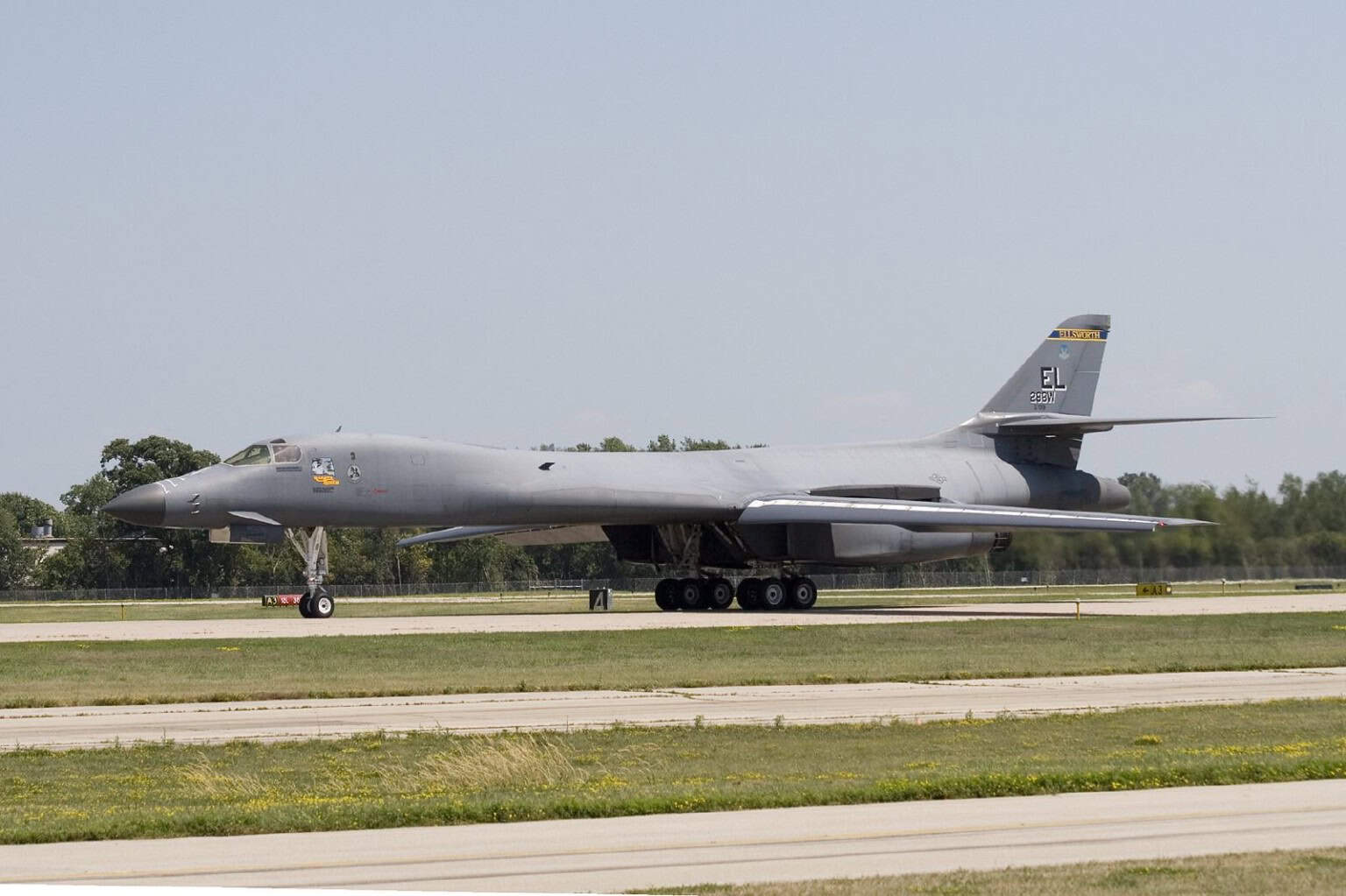


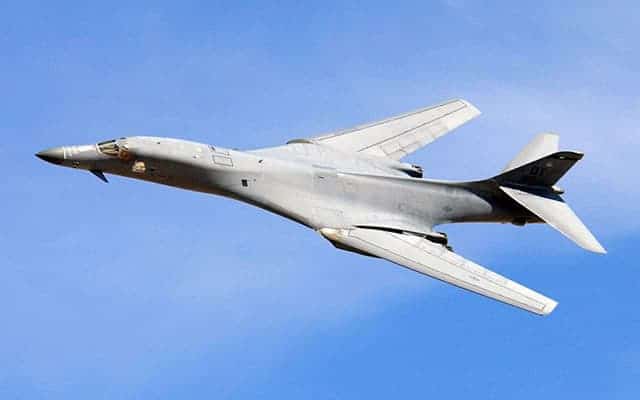
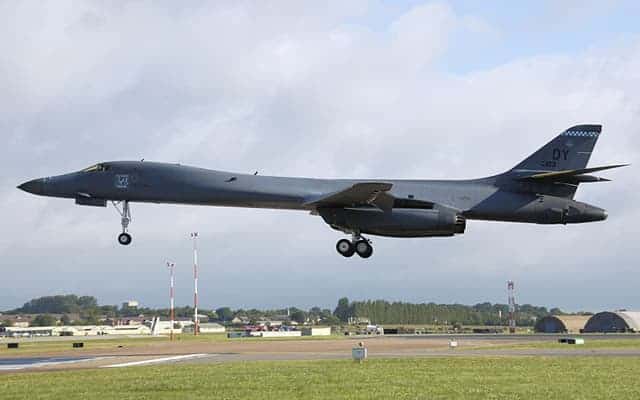
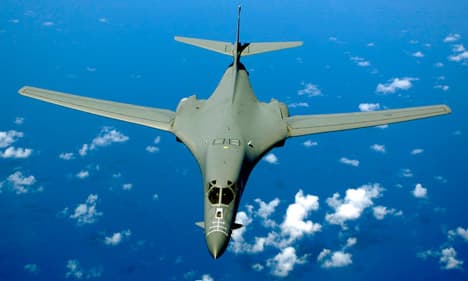
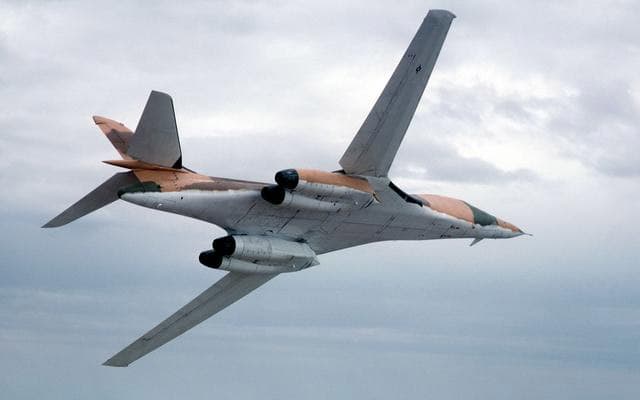
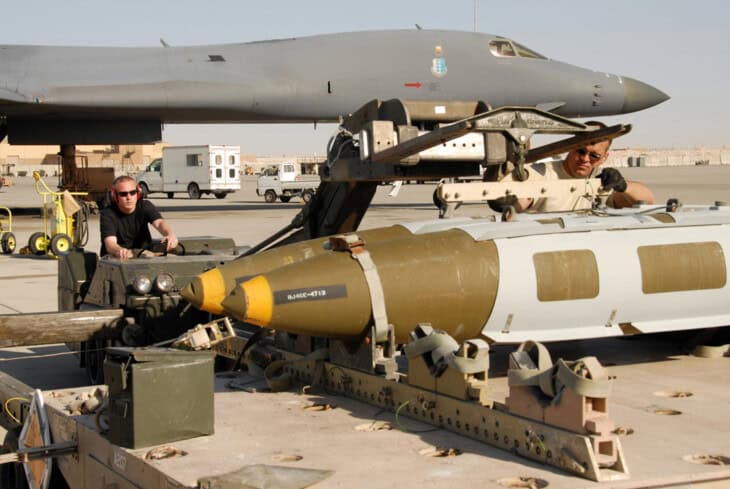
The Rockwell B-1B Lancer is a supersonic, variable-sweep-wing heavy bomber flown by the United States Air Force. Aircrews call it the “Bone,” a phonetic reading of “B-One.”
It carries the largest conventional payload of any aircraft in the U.S. inventory, cruises faster than any other American bomber, and flies its penetration profile low and fast. Alongside the B-2 Spirit and the B-52 Stratofortress, it is one of three bomber types the Air Force still operates.
One hundred B-1Bs were built between 1983 and 1988. As of 2025, about 45 remain in service while the fleet winds down toward replacement by the B-21 Raider.
The B-1 began in the 1960s as a search for one aircraft that could match the Mach 2 speed of the B-58 Hustler and the range and payload of the B-52. North American Rockwell won the contest, and the first B-1A prototype flew on 23 December 1974.
President Carter cancelled the B-1A in 1977. The reasoning was cost, the arrival of the air-launched cruise missile, which could strike from standoff range, and early progress on the B-2 stealth bomber.
The Reagan administration restarted the program in 1981 as an interim bomber while the B-2 matured. Rockwell reworked the design into the B-1B: fixed engine intakes in place of the variable ramps, a radar cross-section cut by roughly an order of magnitude, a strengthened airframe for more fuel and weapons, and new electronics.
The trade for the smaller radar signature was speed. Top speed fell from the B-1A’s Mach 2.2 to Mach 1.25, while low-level dash speed rose from about Mach 0.85 to Mach 0.92. The first production B-1B flew on 18 October 1984, and the 100th and final aircraft was delivered on 2 May 1988.
The Lancer’s wings pivot in flight. Swept forward to about 15 degrees, they give the lift and low-speed handling needed for takeoff, landing, and aerial refueling. Swept back toward 67 degrees, they cut drag for high subsonic and supersonic flight and smooth the ride at low altitude.
The wing blends into the fuselage rather than meeting it at a sharp joint. That blended wing-body shape adds lift, reduces drag, and helps lower the radar return. Four engines sit in paired nacelles under the fixed inboard wing section.
Three bomb bays run down the fuselage, one of them fitted with a movable bulkhead so a longer weapon or an external fuel tank can be carried. Six hardpoints under the fuselage add external capacity.
Four General Electric F101-GE-102 afterburning turbofans power the B-1B, each rated near 30,780 pounds of thrust with afterburner and about 17,390 pounds dry. The same core was later developed into the F110 that powers many F-15s and F-16s.
The full specification table for the aircraft is on this page. A few figures need context that a table row cannot give.
The panel lists a top speed in knots. In the terms crews and reference books use, that is Mach 1.25 at high altitude, near 50,000 feet, and roughly Mach 0.92 down low. The Lancer almost never flies that fast, because supersonic cruise burns fuel quickly; the working profile is high subsonic.
Range is quoted several ways and they are not interchangeable. The often-cited unrefueled figure is on the order of 6,400 to 7,500 statute miles, newer sources put the clean ferry range closer to 5,900 miles, and the combat radius on a realistic mission is roughly 3,000 nautical miles. Air-to-air refueling removes the limit for practical purposes, which is why the Air Force describes the range simply as “intercontinental.”
The payload number is the internal figure. The three bays hold up to 75,000 pounds of ordnance; the external hardpoints add tens of thousands of pounds more, though carrying weapons outside raises drag and radar signature and is rarely done.
No other American aircraft carries as much. A single B-1B can drop 84 500-pound bombs, 24 2,000-pound bombs, or 24 GBU-31 JDAM precision weapons, and it can mix loads across the three bays.
Newer standoff weapons matter more than raw tonnage now. The Lancer carries the JASSM and JASSM-ER cruise missiles, the LRASM anti-ship missile, and has been used as a test platform for hypersonic weapons. An external load configuration cleared in the 2020s lets it haul more of these outside the aircraft.
During Operation Enduring Freedom, eight B-1s flew about 2 percent of the sorties and delivered close to 40 percent of the tonnage in the first six months. In Operation Iraqi Freedom the aircraft flew under 1 percent of the combat missions and dropped 43 percent of the JDAMs used.
The B-1B’s offensive core is the AN/APQ-164 radar, a passive electronically scanned array used for terrain following, targeting, and tracking moving vehicles. Defense comes from the AN/ALQ-161 radar warning and jamming suite, the AN/ASQ-184 defensive management system, chaff and flares, and an ALE-50 towed decoy.
A Sniper targeting pod, added in the 2000s, gave crews their own high-resolution day and night imaging for precision strikes. A fully integrated data link with Link 16 followed, tying the aircraft into the wider strike picture.
The largest upgrade was the Integrated Battle Station, completed across the fleet in 2020. It combined new color cockpit displays, the data link, and a modern diagnostic system that monitors thousands of aircraft parameters. A further program to replace the APQ-164 with an active electronically scanned array radar has been studied against the fleet’s limited remaining service life.
The B-1B entered service in 1986 as a nuclear bomber with Strategic Air Command, built to penetrate Soviet air defenses at low level. The end of the Cold War took that mission away.
Under the START I treaty the aircraft was converted to conventional-only work through the 1990s, a roughly $3 billion effort, and its nuclear wiring and hardware were removed. The last nuclear capability was gone by the mid-1990s, and the conversion was verified complete under later arms-control counting rules.
Today the B-1B carries no nuclear weapons and is not certified to. The nuclear bomber mission sits with the B-2 and the B-52, and will pass to the B-21.
The B-1B missed the 1991 Gulf War, held back by early engine and readiness problems. Its combat debut came in December 1998 during Operation Desert Fox against Iraq.
In 1999, six Lancers in Operation Allied Force over Yugoslavia delivered more than 20 percent of the ordnance while flying under 2 percent of the sorties. The aircraft then flew sustained operations over Afghanistan and Iraq for two decades, valued for its large load, long loiter time, and high transit speed.
More recent use includes the 2018 strikes on Syrian chemical-weapons sites, where B-1s launched JASSM missiles, and continued bomber task force deployments to Europe and the Pacific. The Air Force credits the type with nearly 50 world records for speed, payload, and time-to-climb in its class.
The three bombers do different jobs. The B-2 Spirit is the stealth penetrator, built to reach defended targets on the first night of a war. The B-52 Stratofortress is the standoff missile truck and the long-endurance workhorse, and it will outlast both other types.
The B-1B sits between them: faster than either, with the biggest conventional load, but without the B-2’s stealth or the B-52’s projected longevity. For a fuller picture of where it fits, see our guides to the best bombers in the world and the types of bomber planes.
The B-1B fleet is shrinking. In February 2021 the Air Force retired 17 aircraft, cutting the active fleet to 45, with four kept in a recoverable storage condition. Airframe fatigue from years of low-level flying is the main driver.
The replacement is the Northrop Grumman B-21 Raider, a stealth bomber that will also take over the B-2’s mission. As B-21s reach the force through the late 2020s and 2030s, the remaining Lancers will retire. One B-1B has already been pulled back out of the boneyard to help keep the fleet flying in the meantime.
The commonly cited flyaway cost is about $283 million per aircraft in 1998 dollars, which is roughly $500 million today. Program cost across development and 100 aircraft ran to tens of billions of dollars.
Those figures are historical. Nothing new is being built, and the money now goes to sustainment and upgrades on a fleet the Air Force plans to retire. The Lancer still appears on lists of the most expensive military aircraft ever fielded.
Yes. About 45 B-1B Lancers remain in U.S. Air Force service as of 2025, based mainly at Ellsworth Air Force Base in South Dakota and Dyess Air Force Base in Texas. The fleet is being drawn down as the B-21 Raider enters service, but the Lancer is still deploying and still flying combat-ready missions.
No, not any longer. The B-1B was fielded in 1986 as a nuclear bomber, but it was converted to conventional-only weapons under the START I treaty in the 1990s and its nuclear hardware was removed. It carries no nuclear weapons today and is not certified to. The U.S. nuclear bomber mission belongs to the B-2 Spirit and the B-52 Stratofortress.
Yes. The B-1B can reach about Mach 1.25 at high altitude, a little over 800 miles per hour. That is slower than the original B-1A, which could do Mach 2.2, because the B-1B traded top speed for a smaller radar signature. In everyday operations the aircraft cruises at high subsonic speed and only uses afterburner and supersonic dash when a mission calls for it.
Close to Mach 0.92, roughly 700 miles per hour, just a few hundred feet above the ground. The B-1B was designed for exactly this: a fast, low penetration run under enemy radar coverage, using terrain to mask its approach.
Up to 75,000 pounds of weapons in its three internal bomb bays, the largest internal payload of any U.S. combat aircraft. Six external hardpoints add tens of thousands of pounds more, though external carriage is rarely used because it increases drag and radar signature.
The fleet was still working through engine reliability and readiness problems in 1991, and it was assigned to the nuclear alert mission at the time. Its first combat use came in December 1998 over Iraq during Operation Desert Fox.
One hundred B-1B production aircraft, delivered between 1985 and 1988, plus four earlier B-1A prototypes. Accidents and planned retirements have reduced the fleet steadily since; about 45 remain in service.
The Northrop Grumman B-21 Raider, a stealth bomber in flight testing. It will replace both the B-1B and the B-2 Spirit, and the remaining Lancers are expected to retire as B-21s reach operational squadrons through the late 2020s and 2030s.
Sources and references used for research and fact-checking.