Military Aircraft
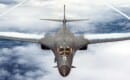
Rockwell B-1B Lancer
ICAO: B1
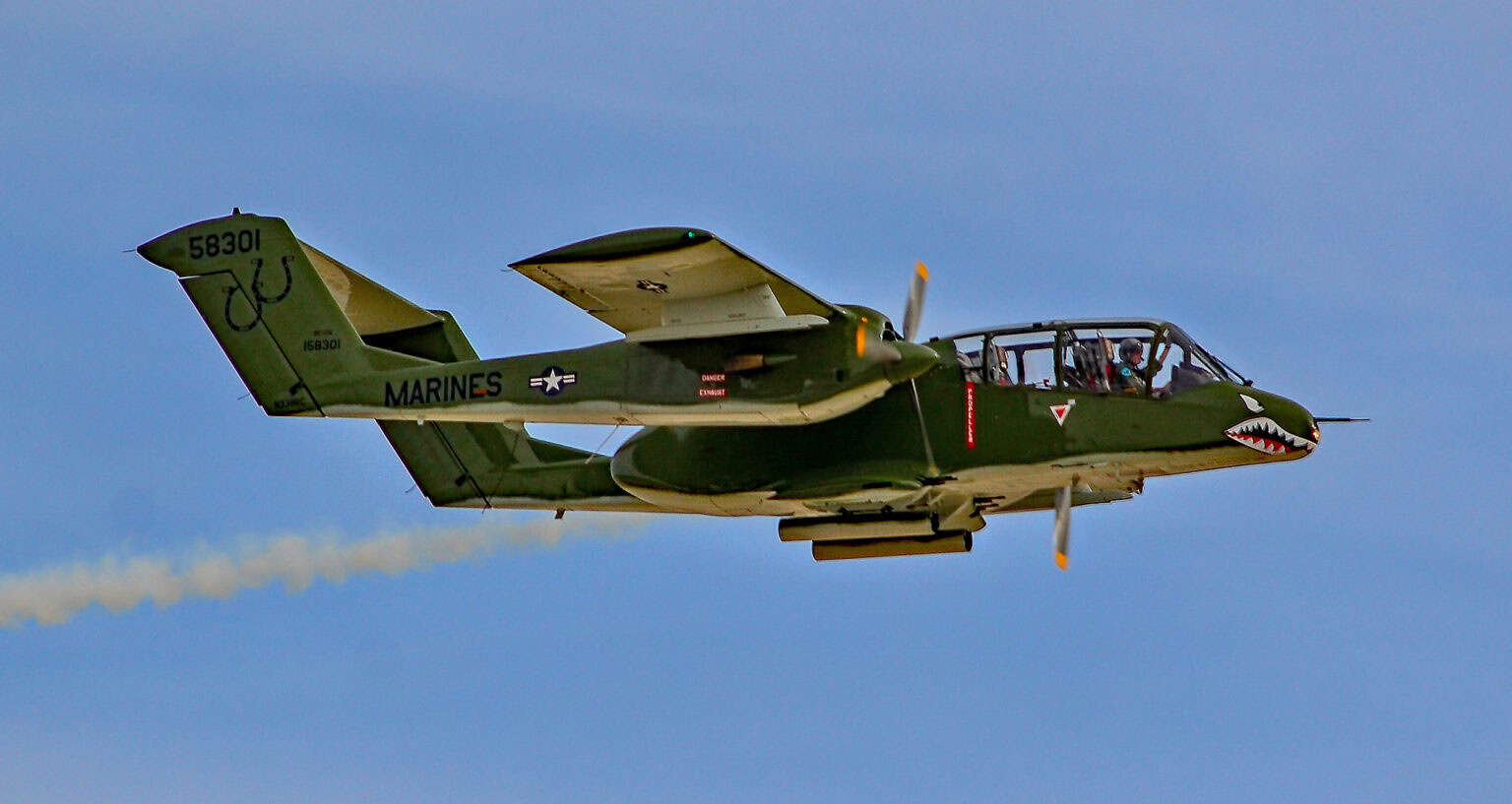
The twin-boom aircraft built for observation and close support.
The latest aviation news and stories sent to your inbox.
The Rockwell OV-10 Bronco is a twin-turboprop light attack and observation aircraft developed for counterinsurgency and forward air control missions. Designed for short-field performance and visibility, it served in multiple conflicts. The aircraft combined reconnaissance with light strike capability.
Live Fleet Activity (V10)
Fetching live data…


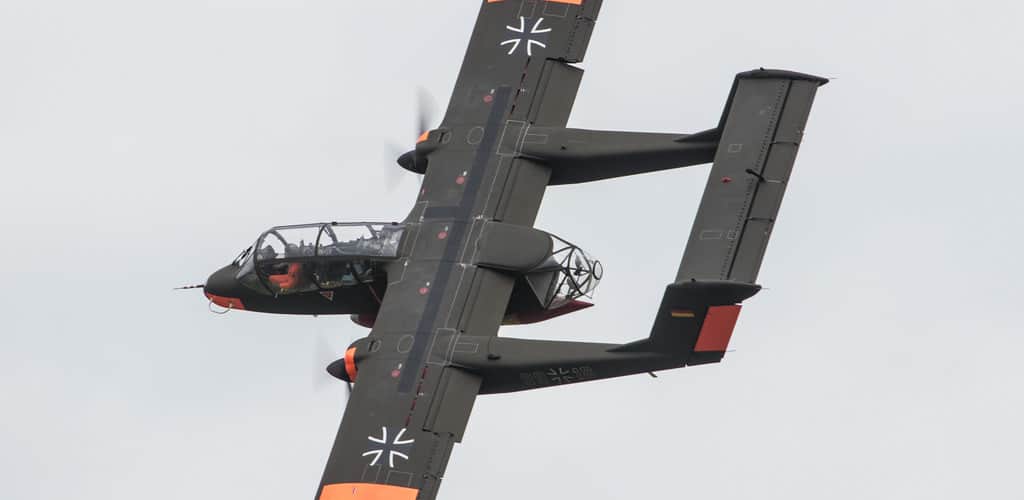


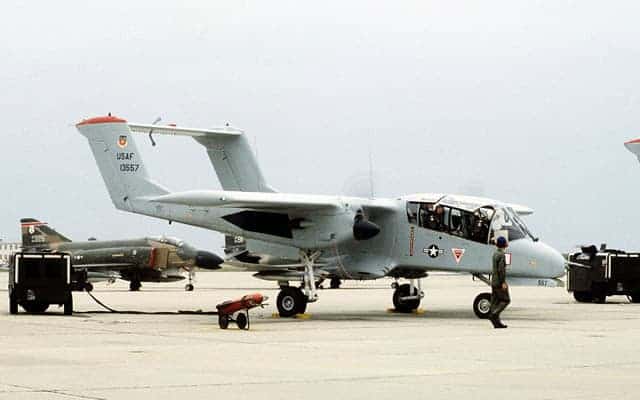
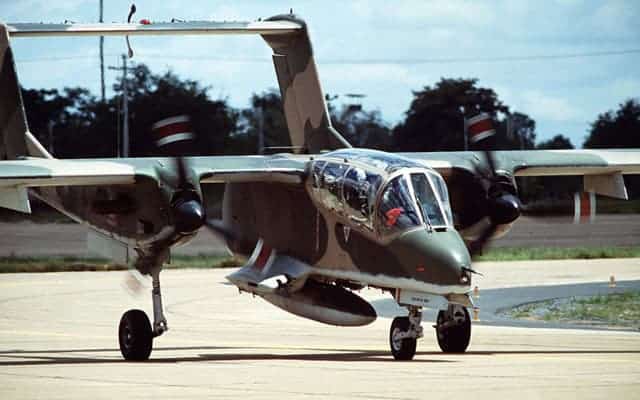
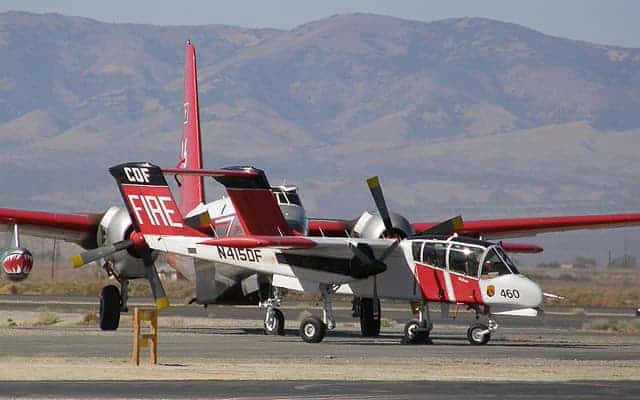
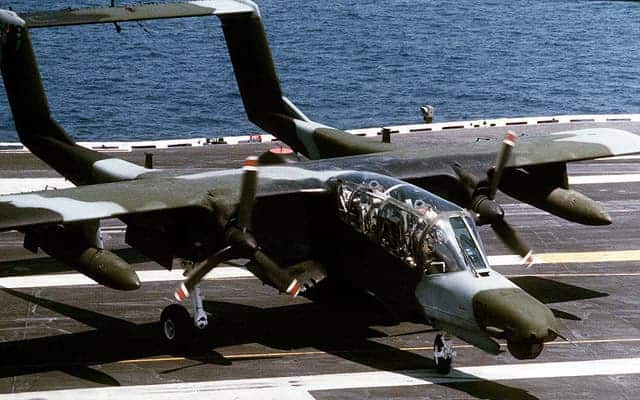
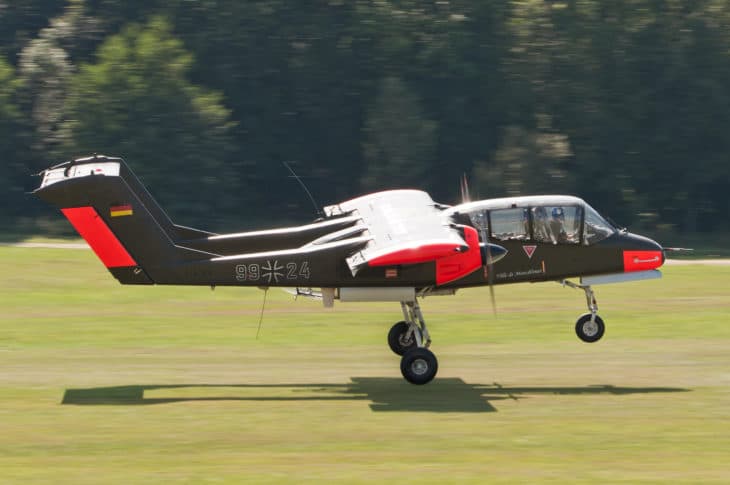
The OV-10 first flew in 1965 as part of a U.S. military requirement for a versatile counterinsurgency aircraft. Its twin-boom configuration and large canopy provided excellent visibility for observation and forward air control roles. The aircraft entered service during the Vietnam War.
Powered by two Garrett T76 turboprop engines producing approximately 715 shaft horsepower each, the Bronco cruises at around 240 knots (445 km/h). Maximum takeoff weight is roughly 14,400 pounds (6,530 kg). The aircraft can carry rockets, bombs, and machine guns for light attack missions.
The OV-10 saw combat in Southeast Asia and later conflicts. Its ability to operate from short and austere airfields enhanced flexibility. Although retired from most frontline roles, it remains a notable example of specialized counterinsurgency aircraft design.
Sources and references used for research and fact-checking.