Military Aircraft
The Air Force's Gulfstream G550 jammer, successor to the EC-130H
The latest aviation news and stories sent to your inbox.
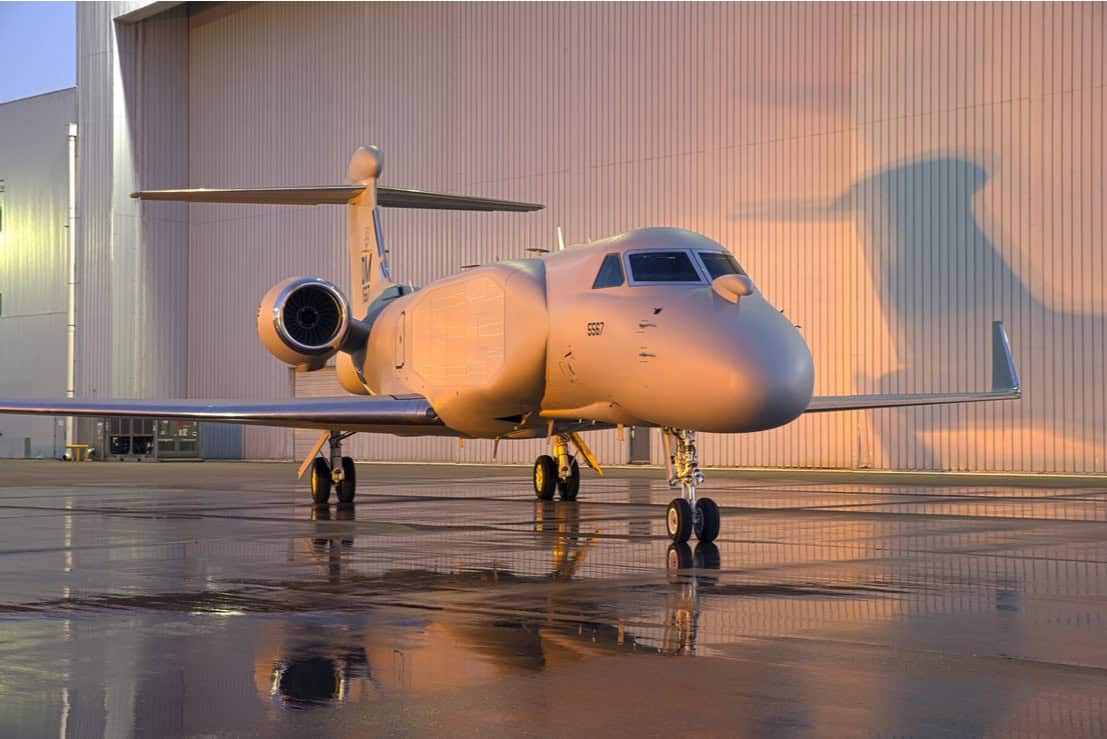
The L3Harris EA-37B Compass Call is the U.S. Air Force’s newest electronic-attack aircraft, a Gulfstream G550 business jet packed with the jamming systems carried over from the retired EC-130H. It disrupts enemy communications, radar and navigation to break apart air-defense networks, flying higher and faster than its turboprop predecessor with a crew of up to nine. First delivered in August 2024, it made its combat debut in early 2026.
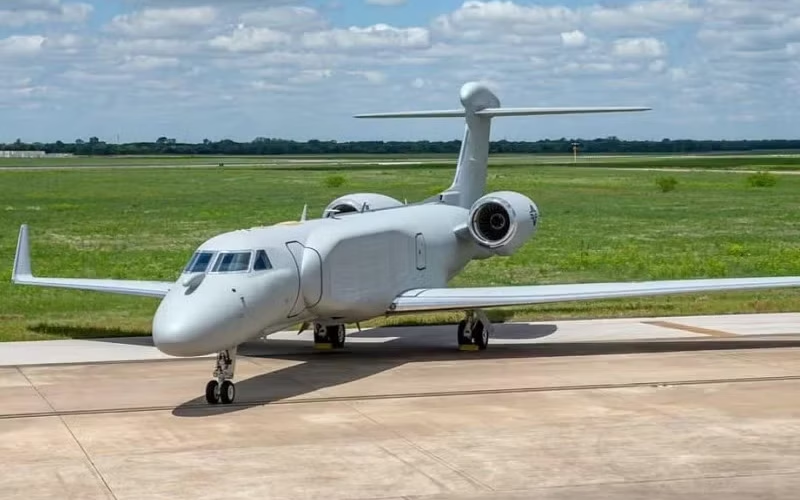


The L3Harris EA-37B Compass Call is the U.S. Air Force’s newest electronic-attack aircraft, built on the Gulfstream G550 business jet. It jams the radio, radar and data links an enemy uses to command forces, cue air defenses and pass early warning.
It replaces the four-decade-old EC-130H Compass Call, carrying most of the same mission systems in an airframe that flies higher, faster and farther with a smaller crew. The first aircraft was delivered in August 2024, and the type made its combat debut in early 2026.
The EA-37B is an offensive electronic-warfare platform. Its job is to deny, degrade and disrupt the electromagnetic spectrum an adversary relies on, breaking the links between sensors, shooters and commanders.
In practice that means jamming enemy communications, radar and navigation signals so an integrated air-defense network cannot function as a whole. The Air Force describes this as breaking the kill chain: if the missile site cannot hear the early-warning radar, it cannot engage.
The aircraft uses a software-defined jamming system that can run several attack techniques at once. It carries no guns, missiles or bombs. Its only weapon is the spectrum, and it works alongside fighters and other jammers rather than penetrating defended airspace itself.
The aircraft was originally designated EC-37B, following the “electronic” prefix used by its predecessor. On November 14, 2023, the Air Force redesignated it EA-37B.
The change from EC to EA reflects the mission more honestly. “EA” marks the aircraft as a dedicated electronic-attack platform rather than a passive electronic-support type, putting it in the same category as the Navy’s EA-18G Growler.
The Compass Call recapitalization program began in the mid-2010s as the EC-130H fleet aged past economical repair. L3Harris was awarded the prime-contractor role in 2017 to move the mission systems onto a modern jet.
Gulfstream supplies the G550 airframe, which is flown to L3Harris for conversion. BAE Systems provides much of the core Compass Call mission equipment, carried over and updated from the EC-130H.
The first aircraft flew in 2021, and the first example was handed to the Air Force in 2023. The early jets are fielded in a Baseline 3 configuration, with a more capable Baseline 4 package planned for later airframes.
The EA-37B is based on the Gulfstream G550, a long-range business jet that Gulfstream has also adapted for airborne early warning and special missions. It is about 96 feet 5 inches (29.4 m) long with a 93-foot-6-inch (28.5 m) wingspan.
Choosing a business jet over another transport was deliberate. The G550 cabin is large enough for the operator consoles and cooling the mission needs, while the airframe cruises near 45,000 feet, far above the turboprop EC-130H.
External antennas and fairings are added along the fuselage and belly for the jamming system, but the aircraft keeps the clean lines and fuel efficiency of the civil jet underneath.
The EA-37B is powered by two Rolls-Royce BR710C4-11 turbofans, each producing about 15,385 pounds of thrust. They are the same engines used on the civil G550.
Top speed is around 629 mph (Mach 0.82), and the service ceiling is 45,000 feet. Range is about 4,410 miles (3,830 nautical miles), though some Air Force briefings cite a higher figure, and the aircraft is air-refuelable for longer missions.
Compared with the EC-130H, which cruised near 300 mph at 20,000 feet, the EA-37B reaches its orbit faster, stands off farther from a threat and looks down on a wider slice of the battlefield.
A full crew is up to nine: two pilots on the flight deck and up to seven mission specialists in the cabin. The EC-130H needed 13.
The mission crew includes electronic-warfare officers, a weapon-systems officer, cryptologic language analysts who monitor what is being jammed, analysis operators and an airborne maintenance technician who can service the mission systems in flight.
The smaller crew is possible because the jamming system is more automated than the equipment it replaces. Airforce Technology reports the platform cuts both weight and operating cost by roughly half against the EC-130H.
| Feature | EA-37B | EC-130H |
|---|---|---|
| Airframe | Gulfstream G550 jet | C-130H Hercules turboprop |
| Engines | 2 turbofans | 4 turboprops |
| Cruise altitude | Around 45,000 ft | Around 20,000 ft |
| Top speed | 629 mph (Mach 0.82) | 300 mph |
| Range | 3,830 nmi, air-refuelable | 2,295 nmi, air-refuelable |
| Crew | Up to 9 | 13 |
| Fleet | 10 ordered (2 more added FY2026) | 14 converted |
The U.S. Air Force is the primary operator, with the fleet assigned to the 55th Electronic Combat Group at Davis-Monthan Air Force Base, Arizona. The 43rd Electronic Combat Squadron was the first unit to convert from the EC-130H. Flight testing runs out of Edwards Air Force Base, California.
The 43rd began mission-training sorties in 2025, and initial operational testing was completed that July. The EA-37B flew its first overseas deployment to RAF Mildenhall in England in March 2026 and has since operated from bases including Kadena Air Base in Japan.
Italy has ordered two EA-37B mission packages for its own G550 conversions, and Australia has shown interest in the type.
The Air Force has a program of record for 10 aircraft, with two more added in the fiscal 2026 budget. Around five had been delivered by 2025, and the remainder are due through the late 2020s. Service officials have said the true requirement is 20 or more.
The Air Force has not published a firm per-aircraft cost. Most of the program’s value sits in the classified mission systems rather than the jet, which is why the same approach of upgrading electronics on a stable airframe carries over from the EC-130H.
It is a U.S. Air Force electronic-attack aircraft based on the Gulfstream G550 business jet. It jams enemy communications, radar and navigation signals to isolate commanders from their forces and break up air-defense networks.
Its mission is offensive electronic warfare. By flooding the frequencies an enemy uses for command and control with interference, it stops sensors, weapons and headquarters from working as a connected system, which the Air Force calls breaking the kill chain.
About 4,410 miles (3,830 nautical miles) unrefueled, with some Air Force figures citing more. It can also take on fuel in flight, which extends a mission on station to many hours.
The Air Force has ordered 10, with two more added in the fiscal 2026 budget. Around five had been delivered by 2025, and the rest are scheduled through the late 2020s. Service leaders have said they need 20 or more.
The EA-37B took over the Compass Call mission from the EC-130H, which retired in September 2026 after 43 years. The new jet carries most of the same jamming equipment but flies higher and faster and needs a smaller crew.
The Air Force changed the designation on November 14, 2023. The “EA” prefix identifies it as a dedicated electronic-attack aircraft rather than a support platform, matching how the mission is actually flown.
No conventional weapons. It has no guns, missiles or bombs, and its only offensive tool is the electromagnetic spectrum. It relies on standoff distance and escorting fighters for protection.
Sources and references used for research and fact-checking.