

Military Aircraft
The rocket plane that flew to the edge of space
Updated: by Tim de Vries
The latest aviation news and stories sent to your inbox.
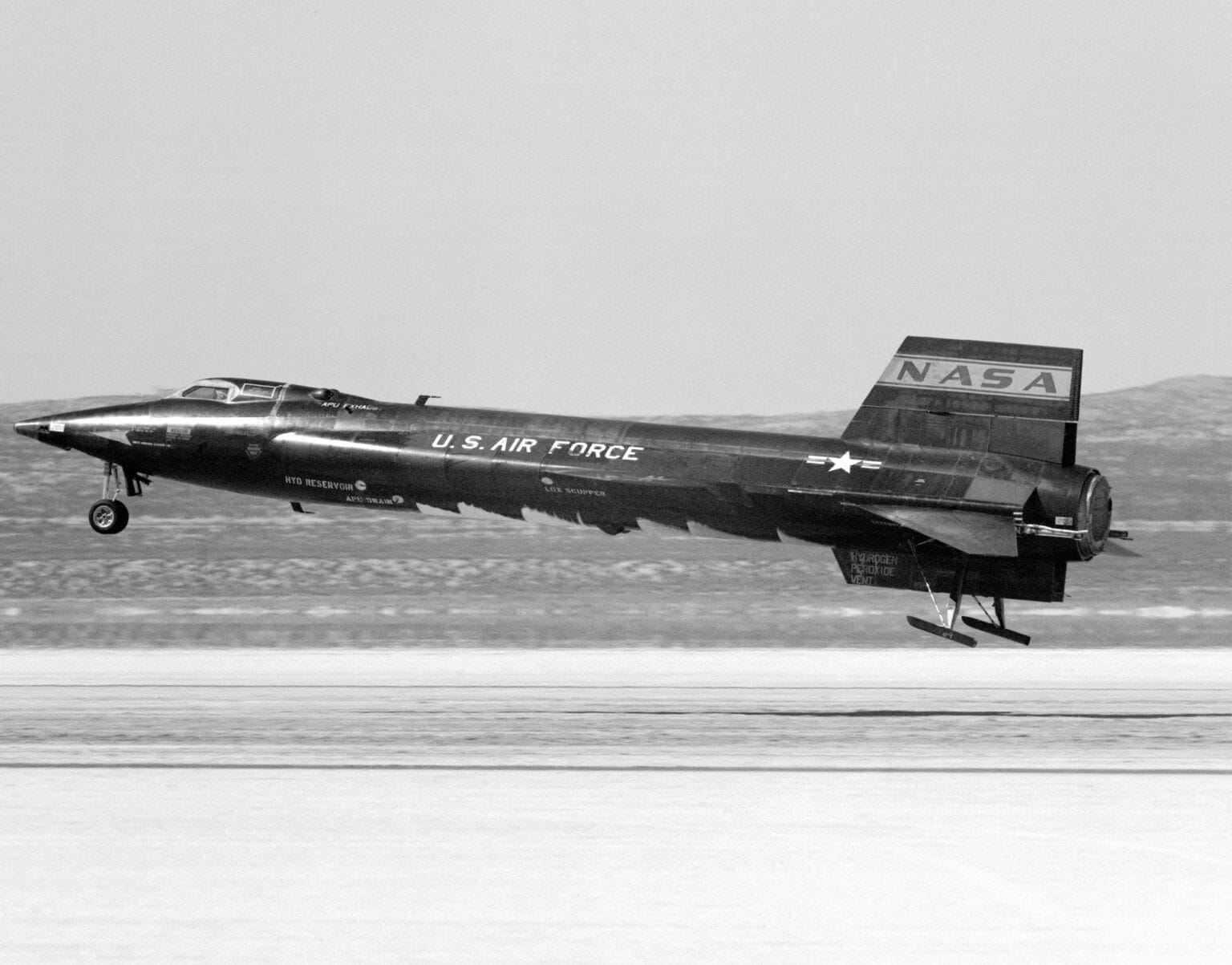
The North American X-15 was a rocket-powered research aircraft that flew from 1959 to 1968. It still holds the speed record for a crewed winged aircraft and flew above 50 miles, which the U.S. counts as space.




The North American X-15 was a rocket-powered research aircraft flown by the U.S. Air Force and NASA. It explored hypersonic flight and the edge of space between 1959 and 1968.
Only three were built. Together they flew 199 missions, and the program ended with the last flight on October 24, 1968.
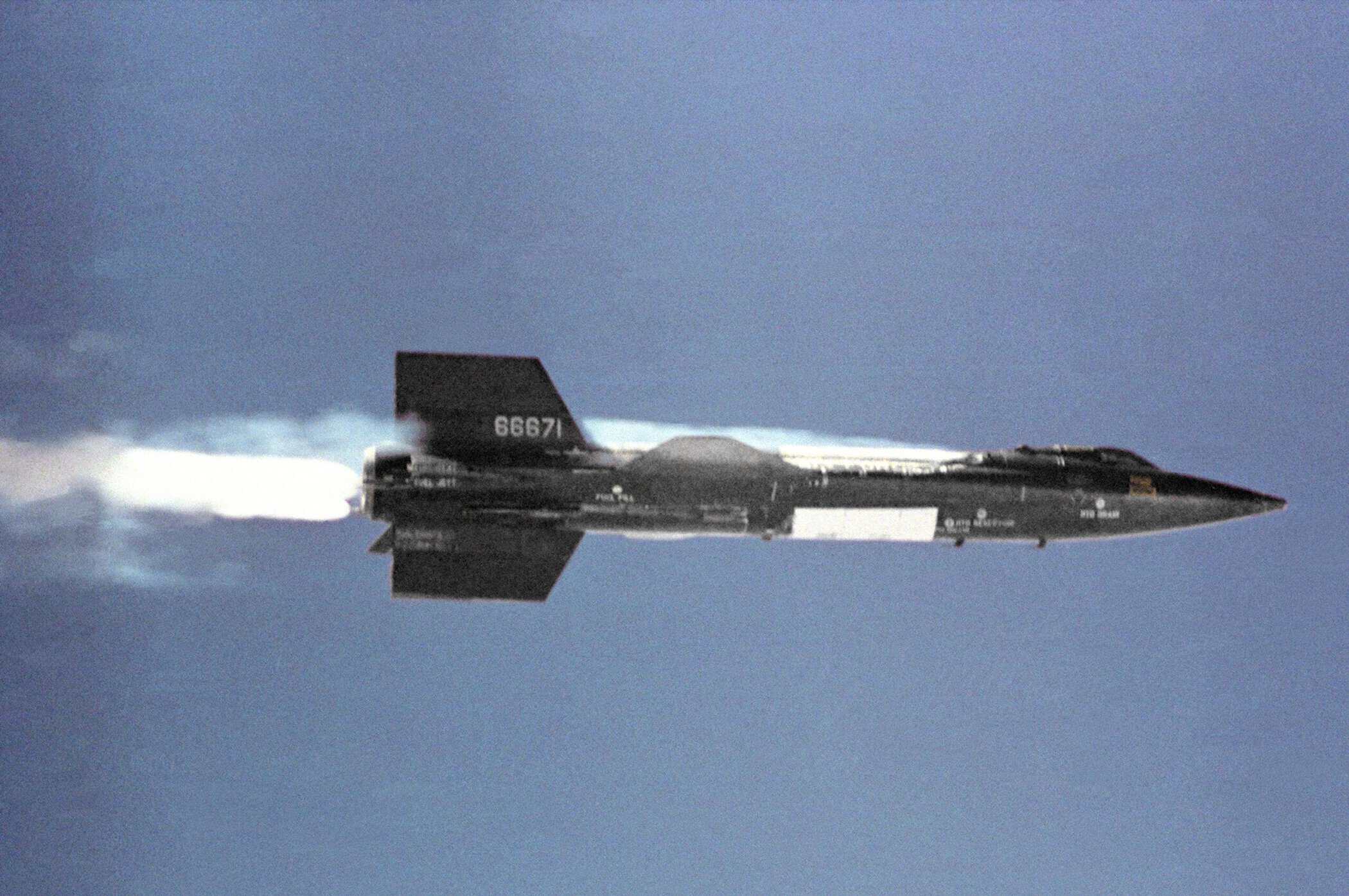
The X-15 flew at Mach 6.7 on October 3, 1967, when William “Pete” Knight reached 4,520 mph. That remains the fastest flight by a crewed, winged aircraft.
So the answer to “what plane goes 7,000 mph” is close but not quite. The X-15 topped out near 4,520 mph, or about 7,270 km/h.
On August 22, 1963, Joseph Walker flew Flight 91 to 354,200 feet, about 67 miles (108 km). NASA lists it as an unofficial world altitude record.
That is above the 50-mile line the U.S. uses to award astronaut wings. The X-15 reached the edge of space without ever going into orbit.
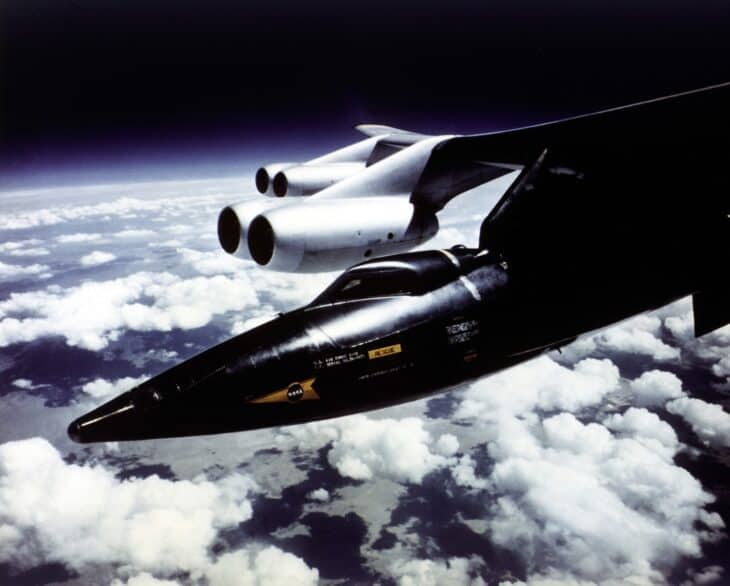
The X-15 could not take off under its own power. A modified B-52 carried it under the wing and dropped it at about 45,000 feet.
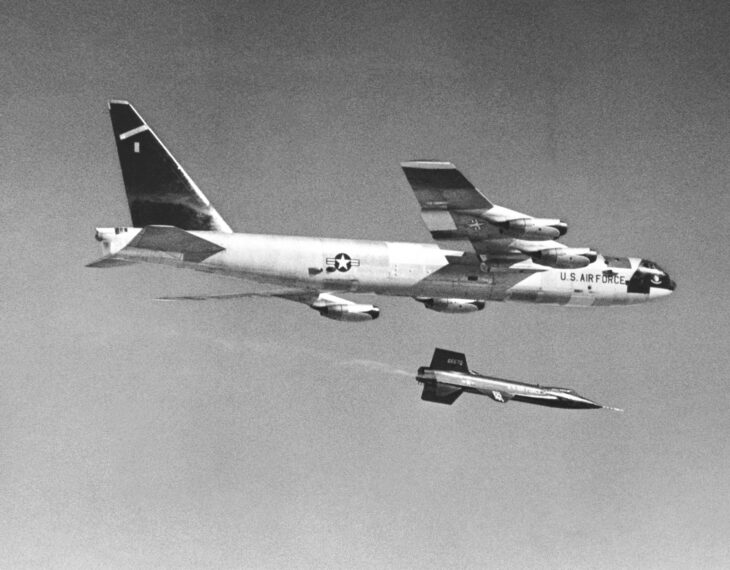
The pilot lit the Reaction Motors XLR99 engine after release. The rocket burned for only a short time, and the rest of the flight was a coast up and a glide down.
Each flight ended with an unpowered landing on a dry lakebed at Edwards Air Force Base.
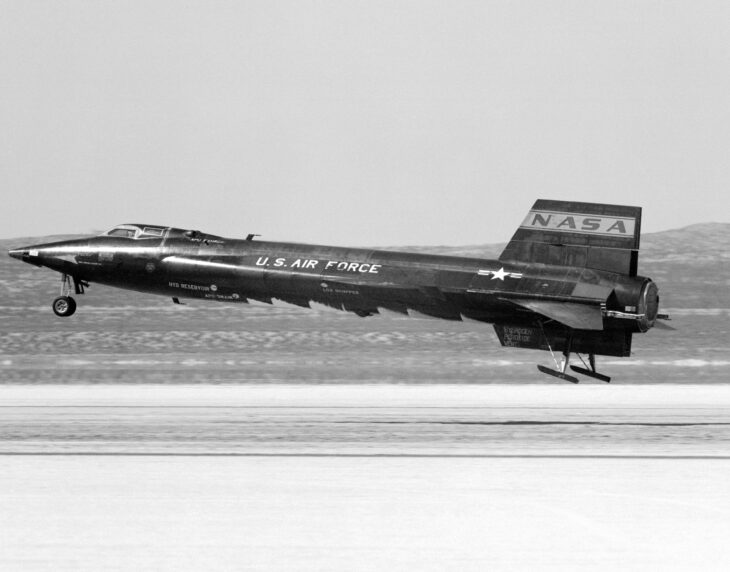
X-15-1 flew 81 free flights. X-15-3 flew 65, and X-15-2 flew 53 across two configurations.
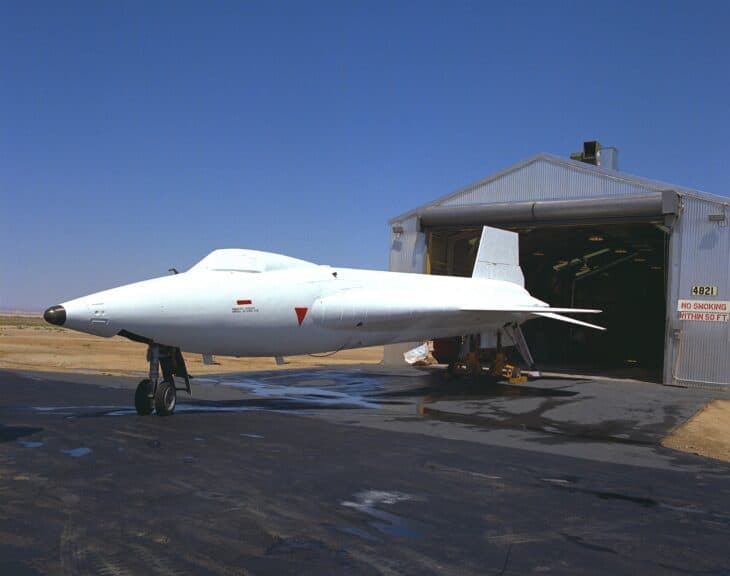
The second aircraft was damaged in a landing accident on November 9, 1962, injuring pilot John McKay. It was rebuilt as the X-15A-2 with a longer fuselage and external fuel tanks, and first flew again on June 25, 1964.
The X-15A-2 also received a heat-resistant ablative coating, which gave it a chalky white finish.
The full specification table for the aircraft is on this page. A few figures need context.
The weight shown is the launch weight when the X-15 left the B-52, with its tanks full. The thrust figure is the one Wikipedia prints for the XLR99, and some sources quote a lower sea-level number.
The range is the published figure for a flight profile, and the rocket burned for only a short part of it. The service ceiling is Wikipedia’s figure, and NASA’s record flight is a little lower.
The X-15 had one fatal accident. On November 15, 1967, X-15-3 broke apart at about 60,000 feet during descent on Flight 191, killing pilot Michael J. Adams.
The flight had reached about 50 miles (81 km). Adams was posthumously awarded Air Force astronaut wings.
The program ran for nearly a decade and gave engineers real data on hypersonic heating, control above the atmosphere and reentry. NASA’s chronology shows steady milestones, from the first Mach 4 flight in 1961 to flights above 300,000 feet in 1962.
Its test pilots included Neil Armstrong, who flew the X-15 before joining the astronaut corps.
Yes. A single pilot flew every mission in a pressure suit.
No crewed winged aircraft has. The X-15 holds the record at 4,520 mph (about 7,270 km/h), set on October 3, 1967.
The X-15’s record flight at Mach 6.7 came to 4,520 mph. The exact conversion depends on altitude and air temperature.
Yes, once fatally. X-15-3 broke apart on Flight 191 on November 15, 1967, killing Michael Adams. The second aircraft was also damaged in a landing accident in 1962, and its pilot survived.
Three were built, and they flew 199 missions between 1959 and 1968.
Sources and references used for research and fact-checking.
.jpg)
.jpg)
