Military Aircraft
The proposed Mach 6 successor to the SR-71
Updated: by Tim de Vries
The latest aviation news and stories sent to your inbox.
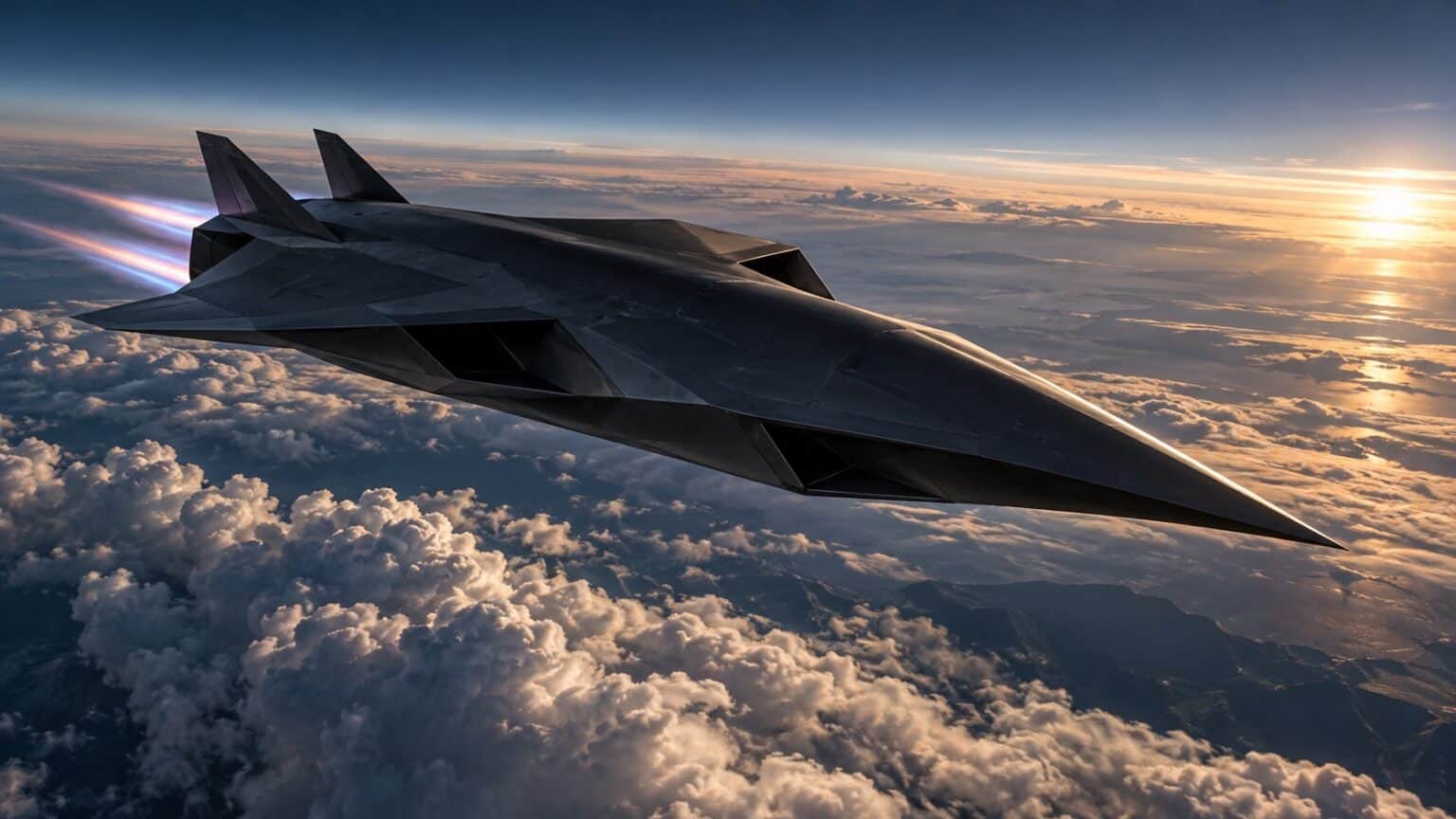
The Lockheed Martin SR-72 is a proposed hypersonic spy plane meant to succeed the SR-71 Blackbird. Lockheed Martin has talked about a Mach 6 aircraft since 2013, but no SR-72 has been publicly shown or flown.


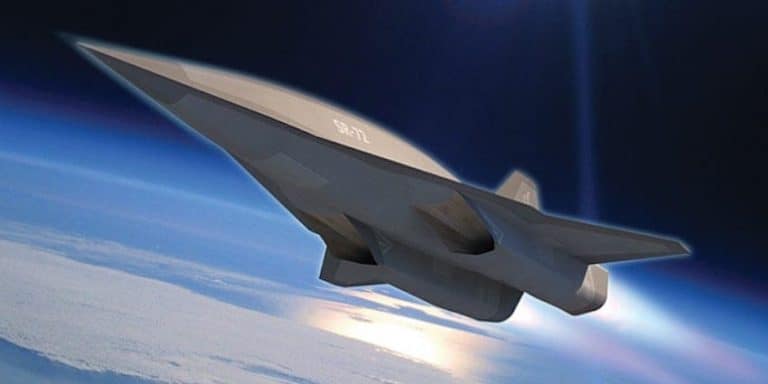
The SR-72 is a proposed hypersonic reconnaissance aircraft from Lockheed Martin’s Skunk Works. It was pitched as the successor to the SR-71 Blackbird, which the Air Force retired in 1998.
The target was Mach 6, roughly twice the SR-71’s speed. As of October 2026, no SR-72 has been publicly shown or flown, so the page’s specification table is mostly empty on purpose.
It is also known as “Son of Blackbird.” Do not confuse it with the Darkstar, the fictional hypersonic jet in Top Gun: Maverick.
Aviation Week broke the story on November 1, 2013. Lockheed described an optionally piloted demonstrator about the size of an F-22, powered by a single full-scale engine and meant to hold Mach 6 for several minutes.
The production aircraft would be a bigger airframe, longer than 100 feet (30 m), with the SR-71’s reach, with service entry by 2030. Lockheed said at the time that neither the prototype nor the engine was funded.
A jet engine cannot reach Mach 6 on its own, and a scramjet cannot start from a standstill. The SR-72 concept solved that with a turbine-based combined cycle engine: a turbine for takeoff and low speeds, a scramjet for the top end, sharing one inlet and nozzle.
Lockheed worked with Aerojet Rocketdyne on this from 2006. The hard part is the handoff between the two modes, which NASA’s Glenn Research Center studied under a roughly $1.1 million contract in December 2014.
Heat is the second problem. Above Mach 5, aerodynamic heating calls for advanced composite materials.
The Air Force declined to fund the SR-72 in December 2013 and backed the Northrop Grumman RQ-180 instead. NASA paid Lockheed about $892,000 for a feasibility study in 2014.
In March 2016, CEO Marillyn Hewson said a demonstrator the size of an F-22 could be built for under $1 billion. In November 2018, Lockheed said a prototype would fly by 2025.
That deadline passed without a public flight. Lockheed’s Rob Weiss had already said in 2017 that hypersonics had been “two years away for the last 20 years.”
Publicly, the SR-72 is a concept. Lockheed’s open talk about it stopped after 2018, and the Air Force has never confirmed a flying aircraft.
Some analysts argue the work went into a classified program. That is speculation, and no source we found confirms it.
In September 2026, NASA Administrator Jared Isaacman showed a dark silhouette resembling the SR-71 on a slide titled “Rebuilding our X-plane portfolio.” When asked about it he replied “You sure that’s a Blackbird?” and said nothing more.
NASA has not identified the aircraft, and no one has linked it to the SR-72. The War Zone’s assessment is that the SR-72’s current status is unclear.
The nearest flying relative is not Lockheed’s. Hermeus flew its Quarterhorse Mk 1 in May 2025 and the larger, remotely piloted Mk 2.1 on March 2, 2026, powered by a Pratt & Whitney F100-229 engine.
Those aircraft test the same idea of pushing a turbine engine to very high speeds. They are small demonstrators, not a reconnaissance aircraft.
Nobody outside the program can say. Lockheed has not shown an SR-72 and the Air Force has not confirmed one, so any service date is a claim, not a fact.
Lockheed’s target was Mach 6, or about 4,000 mph. That figure is a design goal from 2013, not a measured result.
None that have been publicly confirmed. Only a concept exists in the public record.
There is no published unit price. The only figure on record is Lockheed’s 2016 claim that a demonstrator could be built for under $1 billion.
No. Darkstar is the fictional jet from Top Gun: Maverick. The SR-72 is a real, unbuilt proposal.
Sources and references used for research and fact-checking.