Military Aircraft
The CIA's Mach 3 spy plane that came before the SR-71
Updated: by Tim de Vries
The latest aviation news and stories sent to your inbox.
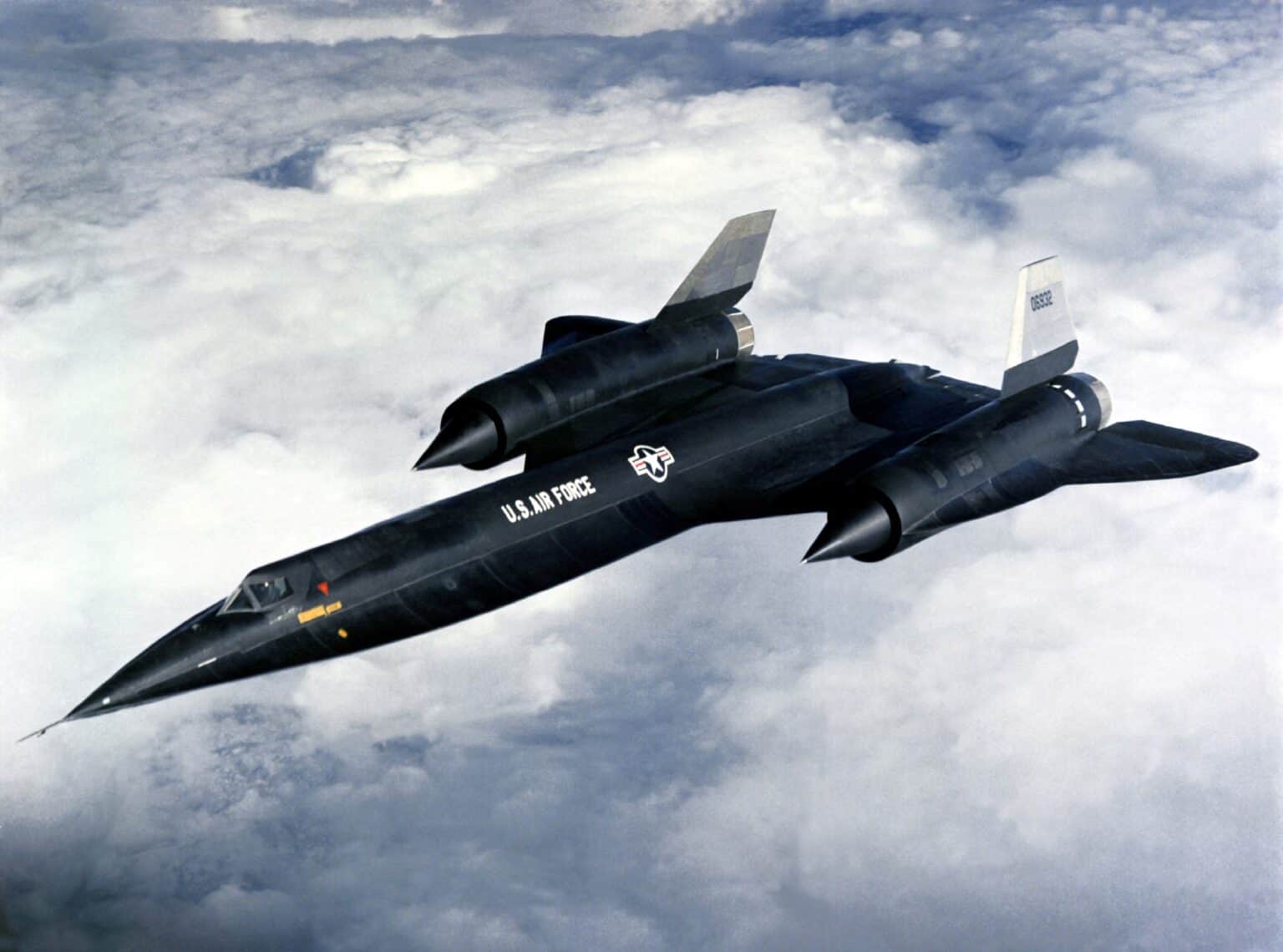
The Lockheed A-12 was the CIA’s single-seat Mach 3 spy plane, built in secret by Lockheed’s Skunk Works under Project Oxcart. It first flew in April 1962, flew its first combat reconnaissance mission over North Vietnam in May 1967, and was retired in June 1968. It was the aircraft the SR-71 Blackbird was developed from.


The Lockheed A-12 was a single-seat, Mach 3 reconnaissance aircraft built for the CIA by Lockheed’s Skunk Works. The CIA ran it as Project Oxcart.
It was the first of the Blackbird family. The SR-71 Blackbird grew out of it, and most of what people remember about the Blackbird, the titanium skin and the J58 engines, started here.
The A-12 made its first flight at Groom Lake, Nevada, in April 1962. It flew combat reconnaissance missions over North Vietnam and North Korea before it was retired in June 1968, only a year after its first operational mission.
Oxcart was designed as a successor to the U-2, a spy plane too fast and too high to be caught by the defenses of its day.
The design that won was Lockheed’s, with a design speed of Mach 3.2. The CIA’s own history of the program describes the first flights as arriving almost a year later than planned.
Titanium was a large part of the delay. The CIA’s account says about 80 percent of early deliveries from its titanium supplier had to be rejected, until the agency told the company how high a priority the program was.
The A-12 was designed to cruise at Mach 3.2. In validation flights before deployment it reached Mach 3.29 and 90,000 feet, and held more than Mach 3.2 for one hour and fourteen minutes.
On a typical Vietnam mission it cruised at Mach 3.1 and 80,000 feet. At that speed it could not turn tightly: the CIA records a turning radius of no less than 86 miles.
That radius shaped every mission. The aircraft spent only about 12.5 minutes over North Vietnam on a single pass, and planners had to route the turn so it did not stray into Chinese airspace.
The full specification table for the aircraft is on this page. A few figures need context, because sources do not agree on them.
Weights and range vary by source. Published maximum takeoff weights run from about 117,000 to 124,600 pounds, and published range runs from 2,200 to 2,500 nautical miles.
Part of the gap is mission profile. The CIA reports a January 1965 test flight that covered more distance than the lowest published range, and range depends heavily on altitude, speed and aerial refueling.
Speed is shown in knots in the table because that is how the panel stores it. The CIA and the pilots talked in Mach number, so the text here does the same.
The A-12 had one seat and the SR-71 had two. The SR-71 was also a longer aircraft, and it flew for the Air Force rather than the CIA.
The A-12 was designed for a narrower job: fast, high-altitude photography for the CIA. Its role on the first Vietnam missions was to photograph surface-to-air missile sites and priority targets.
Secrecy was part of the program. After the January 1967 crash, an Air Force story said an SR-71 on a test flight out of Edwards Air Force Base was missing in Nevada.
For the Air Force version of the story, see Lockheed SR-71 Blackbird, and for the interceptor cousin see Lockheed YF-12.
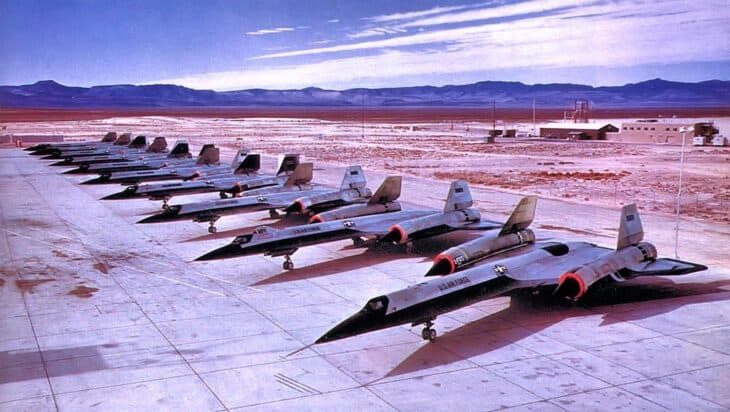
Lockheed built 15 airframes in the A-12 family: 13 A-12s and two M-21s. One A-12, serial 60-6927, was a two-seat trainer with a raised rear seat for an instructor.
The trainer first flew in January 1963. It kept the smaller J75 engines because the J58 was not ready, and it was the only two-seat A-12.
The M-21 was a two-seat carrier for the D-21 reconnaissance drone. A launch control officer rode in the second cockpit, and the program was canceled in 1966 after a launch accident.
The Oxcart detachment reached Kadena Air Base, Okinawa, in May 1967. Operation Black Shield began on May 31, 1967, with a flight over North Vietnam and the demilitarized zone that lasted 3 hours and 39 minutes.
The first mission photographed 70 of the 190 known surface-to-air missile sites in North Vietnam, and neither China nor North Vietnam detected it. In October 1967, North Vietnamese sites did fire missiles at A-12s, but the CIA’s account records no aircraft brought down.
After North Korea seized the USS Pueblo in January 1968, A-12s flew three missions over North Korea. The final operational A-12 sortie was flown over North Korea on May 8, 1968.
Five A-12s were lost in accidents, along with one M-21. The CIA notes that none of the A-12 accidents happened in the high-Mach, high-temperature part of the flight envelope. All involved ordinary problems that any aircraft can have.
The M-21 loss came in July 1966, during a D-21 launch test. The pilot survived, but launch crewman Ray Torrick died.
Cost and overlap ended it. The Air Force’s SR-71 could do the same job, and in December 1966 the Bureau of the Budget meeting chose to terminate the Oxcart fleet.
SR-71s began arriving at Kadena in March 1968. After the last Oxcart sortie on May 8, 1968, the A-12s flew home and went into storage.
The fleet’s last flight, to Palmdale, California, came on June 21, 1968. The type had served for about a year after its first combat mission.
Nine A-12 family airframes survive on display in the United States. The list includes:
To see how the Blackbird family compares with other record-setters, read the fastest aircraft in the world.
It was a reconnaissance aircraft flown by the CIA. Its combat missions photographed surface-to-air missile sites and other targets over North Vietnam and, after the Pueblo seizure, North Korea.
No. The SR-71 was developed from the A-12 and shares its engines and titanium construction. The A-12 had one seat and flew for the CIA, while the SR-71 had two crew and flew for the Air Force.
No. The SR-71 was a reconnaissance aircraft and carried cameras and sensors, not weapons. The same goes for the A-12. Lockheed did build an armed interceptor version, the YF-12, but it never entered service.
Yes. Five A-12s and one M-21 were lost. Two A-12 pilots, Walter Ray in 1967 and Jack Weeks in 1968, were killed.
Yes, as Lockheed Martin, which was formed by the 1995 merger of Lockheed and Martin Marietta. Its aircraft include the F-35 Lightning II.
Sources and references used for research and fact-checking.