Military Aircraft
The Skunk Works spy plane built to fly above 70,000 feet.
Updated: by Tim de Vries

The latest aviation news and stories sent to your inbox.
The Lockheed U-2 Dragon Lady is a single-engine reconnaissance jet built to work above 70,000 feet, so high its pilot wears a full pressure suit. It first flew in 1955, photographed the missiles that set off the Cuban Missile Crisis, and remains in Air Force service in 2026 while the service and Congress fight over retiring it.
Live Fleet Activity (U2)
Fetching live data…

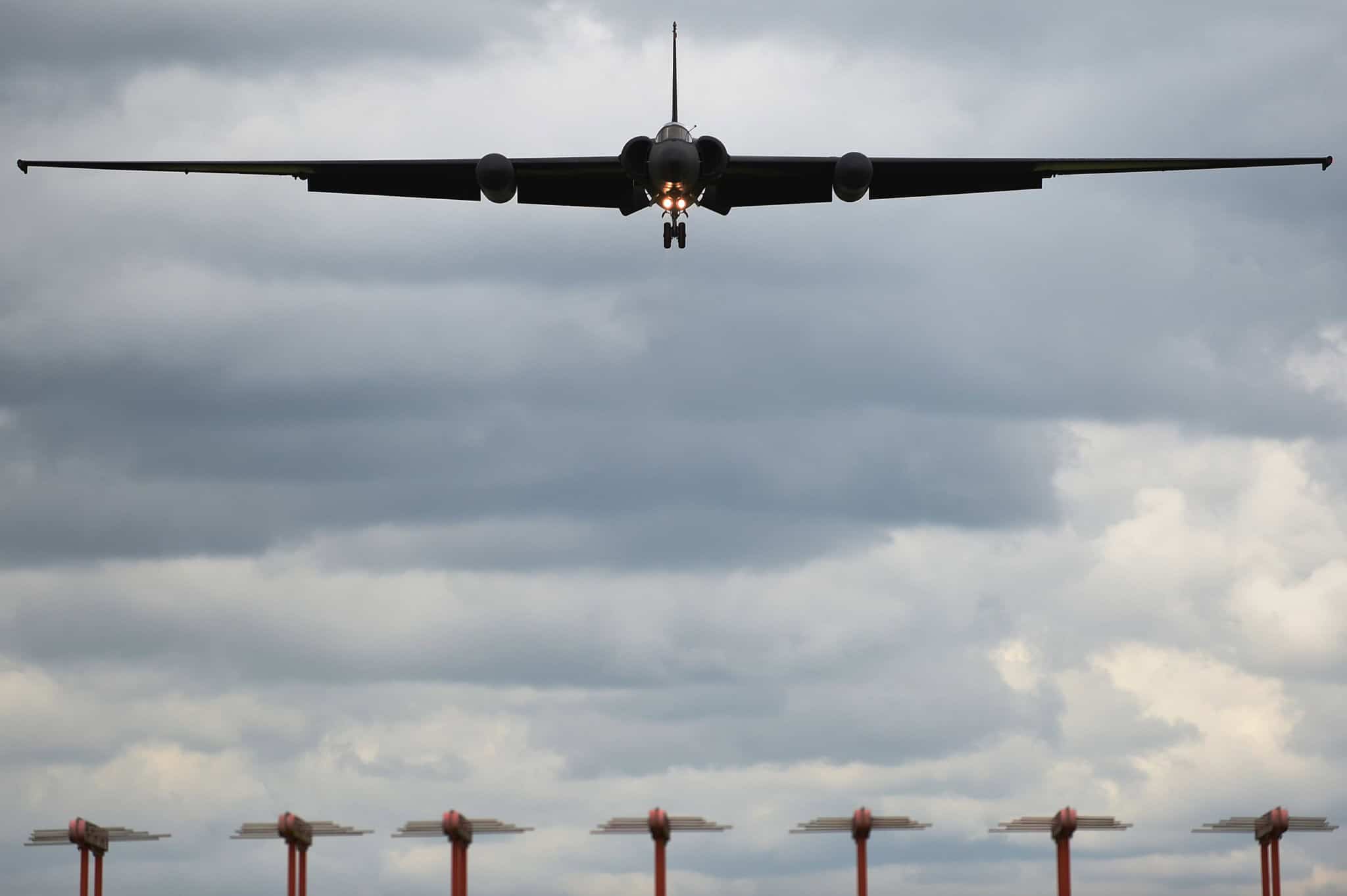
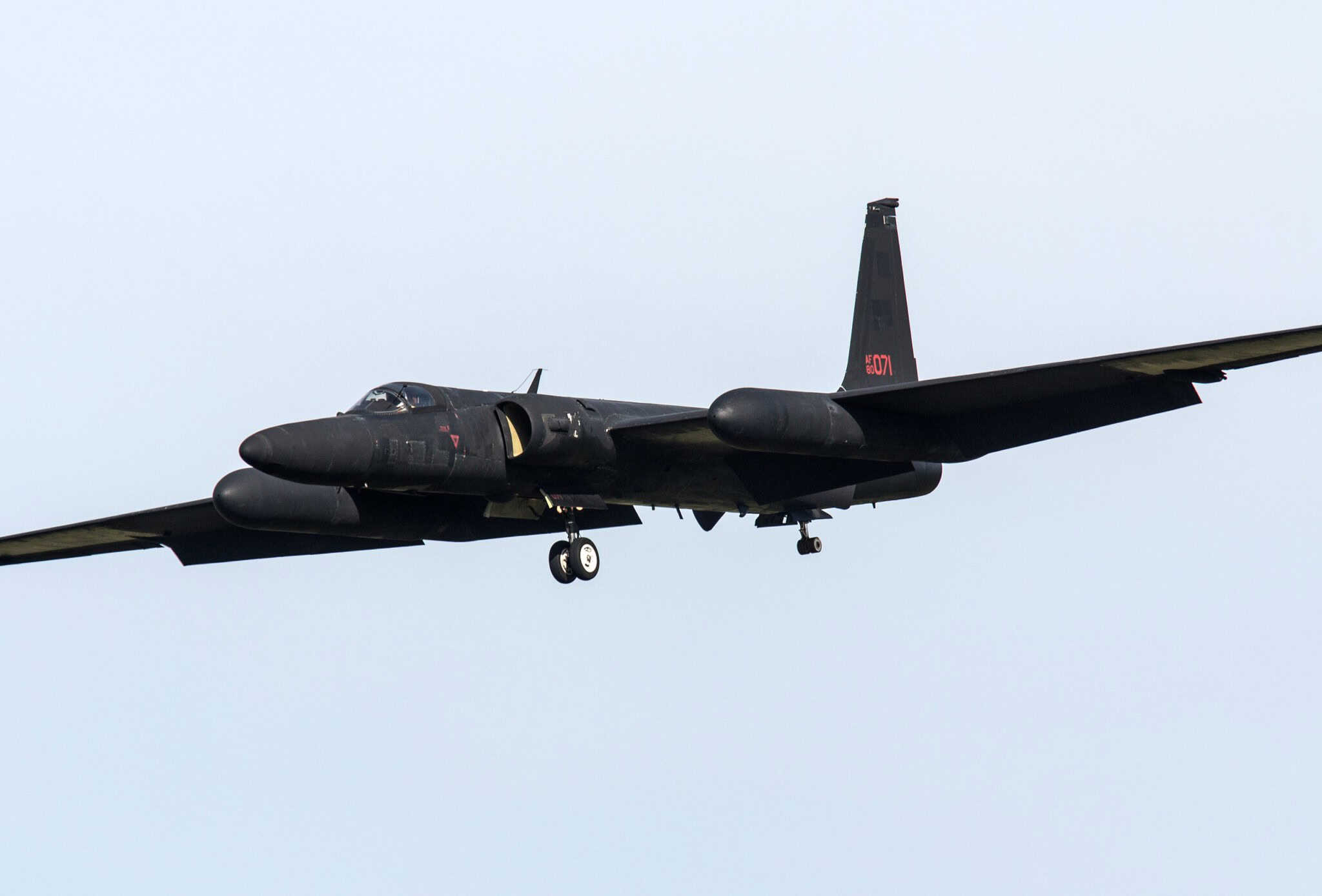


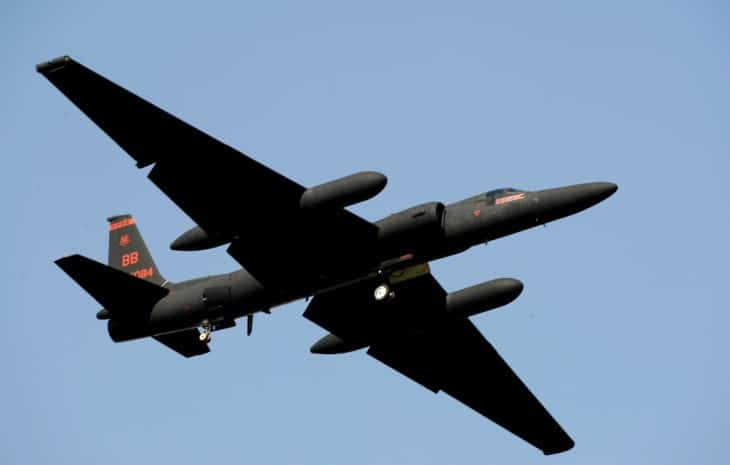
The Lockheed U-2 is a single-seat, single-engine reconnaissance aircraft built to work at extreme altitude, routinely above 70,000 feet. From there it collects imagery, radar maps and signals intelligence, and it can transmit nearly all of it to the ground in near real time.
The Air Force describes the mission as high-altitude, all-weather surveillance and reconnaissance, day or night, in direct support of U.S. and allied forces. It has been doing that job since 1956.
The U-2 first flew in August 1955, and in 2026 the Air Force still flies it from Beale Air Force Base in California, even as the service tries to retire the fleet.
The answer is the wing. Long, narrow, straight wings give the U-2 what the Air Force calls glider-like characteristics, letting it lift heavy sensor payloads to extreme altitude and keep them there for hours.
The engine is a single General Electric F118-101 turbofan, which the Air Force describes as lightweight and fuel efficient enough to remove the need for air refueling on long missions. Fitting the F118 in the mid-1990s is what turned the U-2R into today’s U-2S.
The full specification table for the U-2 is on this page. Several of its figures get quoted against each other in ways that do not line up, so four of them are worth explaining.
The first is altitude. The Air Force publishes the ceiling only as “above 70,000 feet,” and the true operational figure is not public. Other references go higher: Wikipedia’s specification block cites Aviation Week for 80,000 feet, and NASA says the earlier U-2R could exceed 74,000 feet.
The second is speed. NASA’s program history gives a cruising speed of 413 knots (475 mph) at 65,000 feet, the figure the panel carries, and no separate maximum speed is published. The Air Force fact sheet prints “410 mph” instead, a number that matches NASA’s 410 knots for the U-2R but not its unit.
The third is range. The panel’s 6,090 nautical miles (about 7,000 statute miles) is the Air Force’s figure. NASA’s history is more conservative, giving a maximum unrefueled range of 4,270 nautical miles and a cruise duration of 10.4 hours for the U-2R, TR-1, U-2S and ER-2 family.
Endurance is the more useful measure of what the aircraft does. Published endurance is about 12 hours, and in July 2025 a two-seat TU-2S stayed up for more than 14 hours on a record flight over all 48 contiguous states.
The fourth is wingspan. The panel uses 103 feet (31.4 m), the figure in NASA’s history and in Wikipedia’s specification block. The Air Force fact sheet lists 105 feet (32 m).
The Air Force says the U-2 has earned a widely accepted title as the most difficult aircraft in the world to fly. The reasons run from cruise all the way to the landing roll.
At altitude, the thin air squeezes the usable speed range into a narrow band. In the early U-2A and U-2C, flying near 70,000 feet, the margin between maximum speed and stall was only about 10 knots, a window known as the “coffin corner,” because straying out of it either way could cause the airflow to break down over the wings or tail.
Early U-2 pilot Martin Knutson called it “the highest workload air plane I believe ever designed and built,” with the pilot wrestling the aircraft and running the camera systems at the same time.
The pilot also wears a full pressure suit similar to an astronaut’s. Decompression sickness remains a hazard: since 2001, more than a dozen U-2 pilots have reportedly suffered its effects, including permanent brain damage in nine cases.
Landing is the hardest part. The U-2 uses bicycle-type landing gear, with its wheels in line under the fuselage, and the long nose and taildragger stance leave the pilot with limited forward visibility.
To keep the wings level on the ground, two auxiliary wheels called pogos sit under the wings and fall away on takeoff. Each wingtip carries a titanium skid to protect it during landing, and after the aircraft stops the ground crew refit the pogos so it can taxi in.
A second U-2 pilot normally chases each landing in a high-performance car, calling out altitude and runway alignment over the radio at speeds that can top 120 mph (190 km/h).
Few people have ever done it. A little more than 1,000 pilots have qualified to fly the U-2, according to Air & Space Forces Magazine, and NASA’s 2015 history put the training rate at about 18 new pilots a year.
The risks are real even in training. In September 2016 a two-seat TU-2S crashed on takeoff from Beale, killing one pilot and injuring the other.
The U-2 grew out of a 1953 Air Force request for an aircraft that could reach 70,000 feet over a target with an operational radius of 1,500 nautical miles. Lockheed’s answer came from Clarence “Kelly” Johnson at the Skunk Works.
Johnson’s design, the CL-282, was based on the Lockheed XF-104, the prototype of the F-104 Starfighter, with long, slender wings and a shortened fuselage. The project was approved in 1954 and run by the CIA under the cryptonym AQUATONE, with the Air Force supporting it as OILSTONE.
The first aircraft, Article 341, was delivered to the Groom Lake test site in July 1955, the same month the design was renamed U-2. It first flew there on August 1, 1955, during what was meant to be only a high-speed taxi test.
Operational overflights of the Soviet Union began on July 4, 1956. According to the Air Force, those late-1950s flights gave the president and other U.S. decision makers key intelligence on Soviet military capability.
Soviet fighters repeatedly tried to intercept the flights. By 1960, pilots knew Soviet surface-to-air missiles had improved and that overflights had become much riskier.
On May 1, 1960, CIA pilot Francis Gary Powers, an experienced pilot with 27 missions behind him, was shot down over the Soviet Union in a U-2C by a surface-to-air missile. He survived and was captured, and the wreckage was intact enough for the Soviets to identify much of the equipment.
Soviet leader Nikita Khrushchev stayed silent while Washington reinforced its cover story. On May 7 he revealed that Powers was alive and had confessed to spying on the Soviet Union.
Powers was tried and sentenced by the Soviets. On February 10, 1962, he and American student Frederic Pryor were exchanged for Rudolf Abel on the Glienicke Bridge between West Berlin and Potsdam, and he later went to work for Lockheed as a U-2 pilot.
In October 1962, the U-2 photographed the buildup of Soviet offensive nuclear missiles in Cuba, touching off the Cuban Missile Crisis.
The crisis also cost a pilot. On October 27, 1962, Major Rudolf Anderson Jr. was shot down and killed near Banes, Cuba, by an SA-2 surface-to-air missile, and he posthumously received the first Air Force Cross.
The U-2 was never a purely American aircraft. In 1958 Taiwan and the United States agreed to create the Republic of China Air Force’s 35th Squadron, nicknamed the Black Cat Squadron, flying U-2s from Taoyuan Air Base.
The squadron flew some 220 missions, about half of them over mainland China. Five aircraft were shot down, with three pilots killed and two captured, one more was lost on a mission off the Chinese coast, and seven were lost in training, killing six pilots.
Its last mission was flown on May 24, 1974. By then the squadron had operated 19 U-2s since 1959.
Britain took part too. Four RAF officers trained on the U-2 in 1958 and flew as part of the CIA’s operation until the Powers shootdown ended direct British involvement in overflights.
Lockheed built 104 U-2s between 1955 and 1989. The first run of 20 airframes was built for the CIA at Burbank, California, followed by 29 more at Oildale, California, and further batches for the Air Force.
The original U-2A used a Pratt & Whitney J57 engine, and the U-2C moved to the J75. Those early aircraft were much smaller than today’s, with an 80-foot (24.4 m) wingspan.
In 1967 and 1968 the CIA and Air Force received 12 U-2Rs, a redesigned and considerably larger aircraft with underwing pods and more fuel. The tactical TR-1A followed, first flying in August 1981, and was structurally identical to the U-2R.
Between 1981 and 1989, 37 new airframes were built as TR-1As, TR-1B trainers, U-2Rs and ER-2s, and the last were delivered in October 1989. In 1992 the Air Force redesignated all its TR-1s and U-2s as U-2Rs, and once re-engined with the F118 they became U-2Ss.
Today’s fleet is made up of single-seat U-2S aircraft and two-seat TU-2S trainers, the latter converted from the TR-1B. NASA flies its own civilian derivative, the ER-2.
The U-2S collects signals intelligence, imagery, and measurement and signature intelligence, known as MASINT. Its imagery comes from multispectral electro-optical and infrared sensors and from synthetic aperture radar.
Everything except wet film can be transmitted in near real time over air-to-ground or air-to-satellite data links. The film comes from the optical bar camera, a broad-area system whose results are developed and analyzed after landing.
The radar is the Raytheon ASARS-2, and Collins Aerospace SYERS-2C cameras equip the entire U-2S fleet.
The aircraft has been modernized repeatedly. The Air Force has put at least $1.7 billion into the U-2’s airframe and sensors since 1994, including the F118 engine and a Block 10 electrical upgrade that replaced legacy wiring with fiber optics.
A separate reliability program rebuilt the cockpit around digital color multifunction displays in place of 1960s-era round dials. The latest round, the Avionics Tech Refresh, was awarded to Lockheed Martin in 2020, and a U-2 first flew with the upgraded avionics on September 26, 2023.
Yes. As of September 2026 the U-2 remains in Air Force service with the 9th Reconnaissance Wing at Beale Air Force Base, California, though its future is the subject of an open fight between the Air Force and Congress.
The Air Force’s fiscal 2027 budget request, reported in April 2026, proposed retiring all 23 remaining U-2s by the end of that fiscal year. The fiscal 2027 force structure report said the platform “is no longer viable for future high-end conflicts.”
Congress has repeatedly pushed back. The fiscal 2026 defense appropriations act, enacted in February 2026, caps U-2 divestment at eight aircraft and provides $55 million for depot maintenance.
The first U-2 to reach the boneyard was tail number 80-1085. It flew its last mission from Beale on April 5, 2024, and was dismantled and transported to the Davis-Monthan storage center in Arizona in December 2025.
For fiscal 2027, the House Appropriations Committee’s draft bill, released in June 2026, would allow only two retirements and add $81 million to fully restore four aircraft through depot maintenance. That is a committee draft, not law, and the final fiscal 2027 bill will decide how quickly the fleet shrinks.
The aircraft is still being used hard while that plays out. Air & Space Forces Magazine reported that U-2s contributed to Operation Epic Fury against Iran, even as the fleet averages more than 43 years of age.
In 2023, U-2s monitored the Chinese balloon that crossed the United States and Canada, and their flights confirmed its payload carried multiple antennas capable of collecting signals intelligence.
Even the last U-2 ever built is back. Tail number 80-1099 was badly damaged by a fire at Al Dhafra Air Base in the United Arab Emirates in 2008, and after restoration by Lockheed Martin at Palmdale it flew again in August 2025.
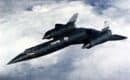
The SR-71 Blackbird was also a Kelly Johnson design from the Skunk Works, and it was meant to follow the U-2. The two aircraft took opposite approaches to surviving over hostile territory.
The SR-71 relied on speed and height, with a speed limit of Mach 3.2 and a ceiling of 85,000 feet. The U-2 cruises at subsonic speed and lower, but it can stay over an area for around 12 hours without air refueling.
The U-2 outlasted it. The Air Force retired the SR-71 in 1998 and NASA in 1999, while the U-2 is still flying in 2026.
For much of the past two decades the expected replacement was the unmanned RQ-4 Global Hawk. Retirement plans announced in 2006 and revised in 2009, 2011 and 2012 all slipped, and the Air Force’s 2018 budget postponed retirement indefinitely.
Cost was part of the argument. As of early 2014 the Air Force put the U-2’s operating cost at $2,380 per flight hour against $6,710 for the RQ-4, and critics said the drone’s sensors were less capable and lacked all-weather ability.
The Air Force has not named a direct successor. In 2024 the Pentagon cited the U-2’s limited capability against peer threats, and coverage has linked the mission’s future to satellites, a classified stealthy high-altitude drone often referred to as the RQ-180, and the sensors on the B-21 Raider.
The Air Force lists the U-2’s unit cost as classified, which is why no price appears on this page.
The closest public numbers are program-level. The Air Force has spent at least $1.7 billion modernizing the fleet since 1994, and it put the operating cost at $2,380 per flight hour in 2014.
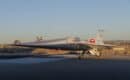
NASA flies a civilian version called the ER-2, for Earth Resources 2, from its Armstrong Flight Research Center in California. It is used for high-altitude research into Earth resources, celestial observation, atmospheric chemistry and dynamics, and ocean processes.
On November 19, 1998, an ER-2 set a world altitude record for its weight class, reaching 67,190 feet (20,479 m) in horizontal flight.
Yes. As of September 2026 the Air Force still operates the U-2 from Beale Air Force Base in California, with 23 aircraft in the inventory when its fiscal 2027 budget was drawn up. The Air Force wants to retire all of them, but Congress has capped how many can go, and the final fiscal 2027 appropriations will set the pace.
At cruising altitude the gap between the U-2’s maximum speed and stall speed is very narrow, and the pilot flies in a full pressure suit. Landing is harder still: the bicycle gear and long nose limit the view, so a second U-2 pilot normally chases each landing in a car, calling out altitude and alignment.
They solved the same problem in different ways. The SR-71 was far faster and higher, with a Mach 3.2 speed limit and an 85,000-foot ceiling, but the Air Force retired it in 1998. The U-2 is subsonic and flies lower, yet it can loiter for about 12 hours without air refueling and is still flying.
The U-2 is a high-altitude intelligence, surveillance and reconnaissance aircraft. Flying above 70,000 feet, it collects electro-optical, infrared and radar imagery along with signals intelligence, and can transmit nearly all of it to the ground in near real time. When requested, it also supports disaster relief and search and rescue, and NASA flies a research version called the ER-2.
The Air Force says the U-2 is routinely flown above 70,000 feet and publishes its ceiling only as “above 70,000 feet.” The exact figure is not public, and other references cite as much as 80,000 feet.
NASA gives the U-2S a cruising speed of 413 knots (475 mph) at 65,000 feet. No separate maximum speed is published, and the Air Force fact sheet lists its speed as 410 mph.
Lockheed built 104 U-2s between 1955 and 1989. The Air Force counted 23 in its inventory for the fiscal 2027 budget, including three two-seat TU-2S trainers, and NASA flies its own ER-2s separately.
The unit cost is classified, according to the Air Force. Public figures are program-level instead: at least $1.7 billion spent modernizing the airframe and sensors since 1994, and an operating cost the Air Force put at $2,380 per flight hour in 2014.
Yes, several. The Soviet Union shot down CIA pilot Francis Gary Powers on May 1, 1960, and a surface-to-air missile killed Major Rudolf Anderson Jr. over Cuba on October 27, 1962. Taiwan’s Black Cat Squadron also had five U-2s shot down during its missions.
Air Force U-2s are home-based with the 9th Reconnaissance Wing at Beale Air Force Base, California, and rotate to operational detachments worldwide. Pilots train at Beale on two-seat TU-2S aircraft before deploying.
Sources and references used for research and fact-checking.