

Military Aircraft
The C-130 turned into a side-firing gunship
Updated: by Tim de Vries
The latest aviation news and stories sent to your inbox.
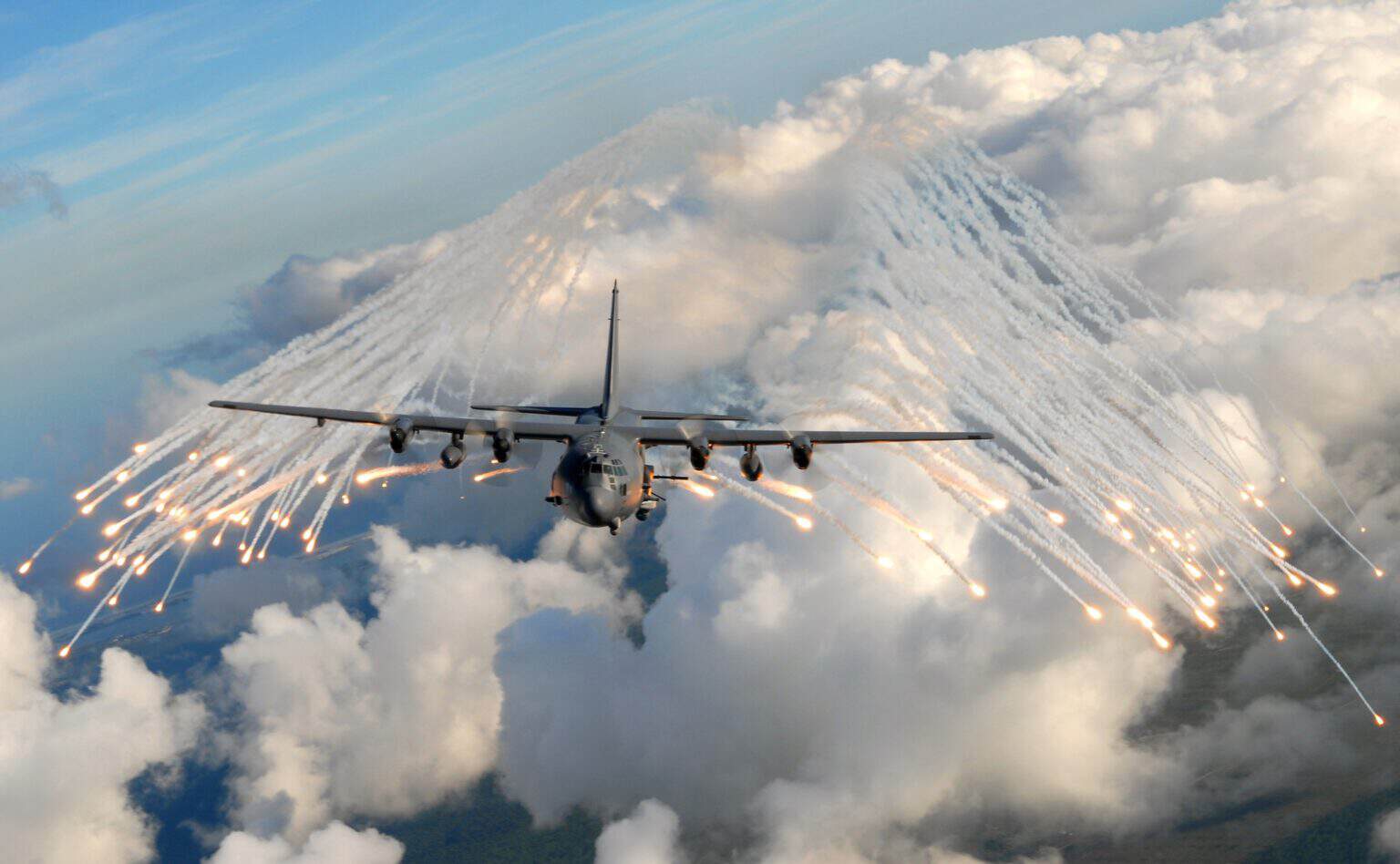
The Lockheed AC-130 is a C-130 Hercules rebuilt as a flying gun platform. The U.S. Air Force has flown gunship versions since Vietnam, and today only the AC-130J Ghostrider remains, carrying a 30 mm cannon, a 105 mm howitzer and precision missiles.


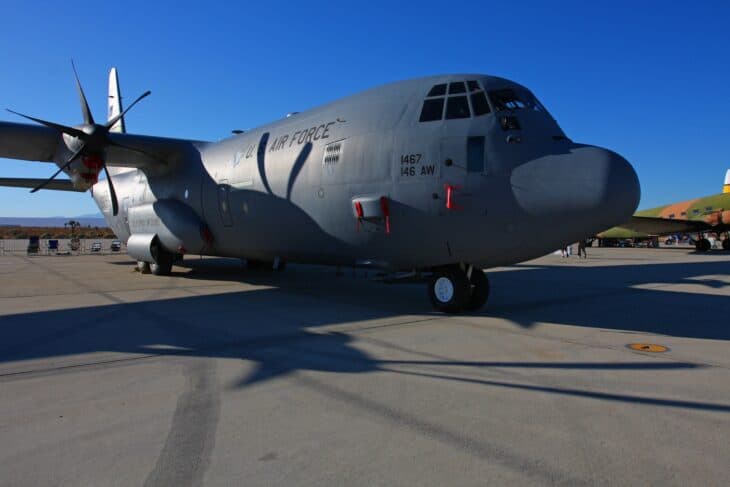
The AC-130 is a gunship built on the Lockheed C-130 Hercules cargo plane. Engineers replaced the cargo role with side-mounted guns, a sensor suite and a crew that spends its day looking at one patch of ground.
The United States Air Force Special Operations Command is the only operator. The type has flown in Vietnam, Grenada, Panama, the Gulf War, Afghanistan and Iraq.
Only one version still flies: the AC-130J Ghostrider. The full specification table for the aircraft is on this page.
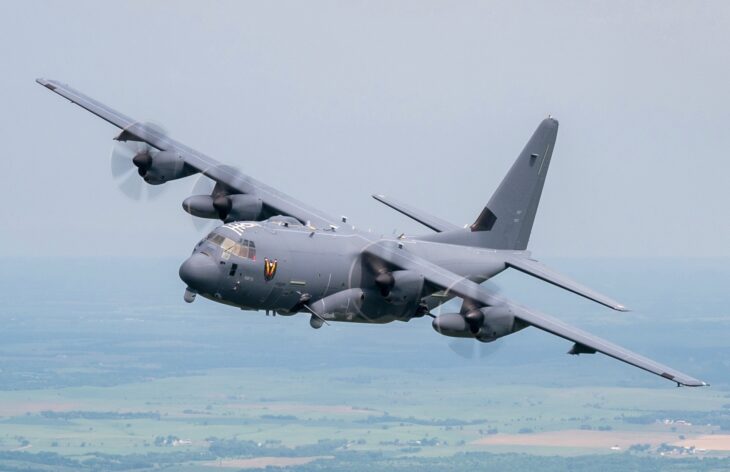
The weapons point out of the left side of the fuselage. The pilots cannot aim them by pointing the nose, so the aircraft flies a pylon turn instead.
A pylon turn is a banked circle around the target. It keeps the guns on the same spot for far longer than a single strafing pass would.
The gunship also stays overhead for hours. That persistence is the point: ground troops get a direct-fire weapon that can watch a target, wait, and then hit it with a small munition.
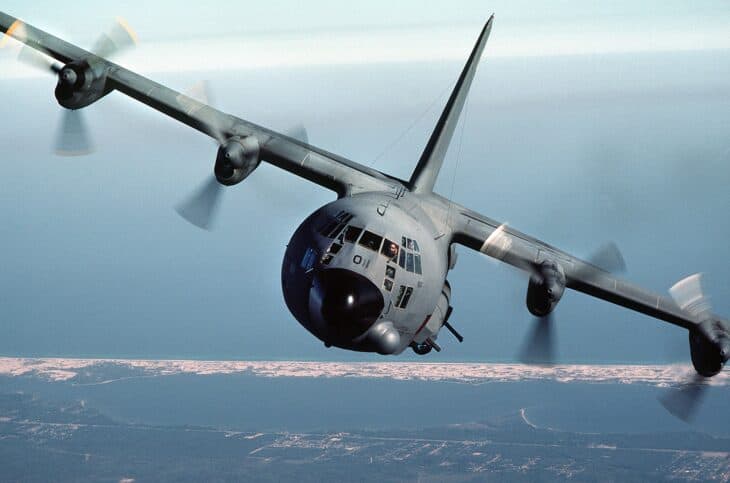
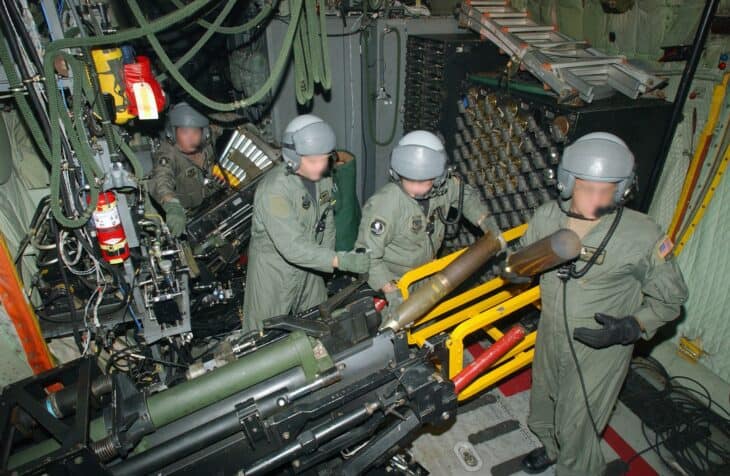
Each generation carried a different mix, which is why the question gets different answers depending on the year. The AC-130H Spectre flew with a 40 mm Bofors cannon and a 105 mm howitzer, and before about 2000 it also carried two 20 mm Vulcan cannons.
The AC-130U Spooky II used a 25 mm GAU-12 Equalizer, a 40 mm Bofors and the same 105 mm howitzer.
The AC-130J Ghostrider uses a 30 mm GAU-23/A cannon and a 105 mm M102 howitzer. AFSOC groups them in the Precision Strike Package, together with two electro-optical and infrared sensors, a mission management console and precision-guided munitions.
The J also fires missiles and glide bombs. Reported loads include AGM-176 Griffin and Hellfire missiles, Viper Strike and small diameter bombs.
A newer weapon is the AGM-190A Havoc Spear, first known as Black Arrow. AFSOC fired two of the 200-pound-class cruise missiles from an AC-130J at ground targets in Africa in spring 2026, and the missile can launch from tubes on the rear ramp. Its range is above 400 nautical miles.
The Air Force chose the C-130 in the 1960s to replace the AC-47 Spooky because the Hercules could stay aloft longer and carry more ammunition. The first prototype was a converted JC-130A, flown in 1967 under Project Gunship II.
The AC-130A entered service in 1968 and retired in 1995. The AC-130E followed, and ten of its eleven airframes were later upgraded to the AC-130H.
The AC-130U joined in 1995 as a third-generation gunship, and AFSOC retired it in 2020. The AC-130W Stinger II was a converted MC-130W, in service from 2012 to 2022.
The AC-130H lasted the longest of the early types. The final one retired on May 26, 2015, at Cannon Air Force Base.
The AC-130J is built from the MC-130J Commando II. AFSOC named it Ghostrider in May 2012, and the first reached initial operational capability in 2017.
AFSOC received its 31st and final AC-130J in November 2022 at Cannon Air Force Base, New Mexico. That delivery completed the switch away from the older AC-130W, AC-130U and AC-130H fleets.
The Air Force release counts 30 combat-capable aircraft at that point. The 31st carries a name honoring Stan “Sluggo” Siefke, who helped develop the precision strike package.
The AC-130J flies from Hurlburt Field in Florida and Cannon Air Force Base in New Mexico. Fleet numbers in public sources shift by one or two aircraft, so treat any single count as approximate.
In Vietnam, AFSOC says gunships destroyed more than 10,000 trucks, a figure Wikipedia attributes to AC-130s specifically. Six AC-130s and 52 crew were lost in that war.
On January 31, 1991, AC-130H Spirit 03 was shot down by a shoulder-fired missile during the Battle of Khafji. All 14 crew died.
In August 2021, AC-130J crews supported the evacuation at Kabul airport. One weapons systems officer said her crew and two others flew over the field for two weeks during Operation Allies Refuge, which evacuated about 123,000 people. The crews were later due to receive the MacKay Trophy.
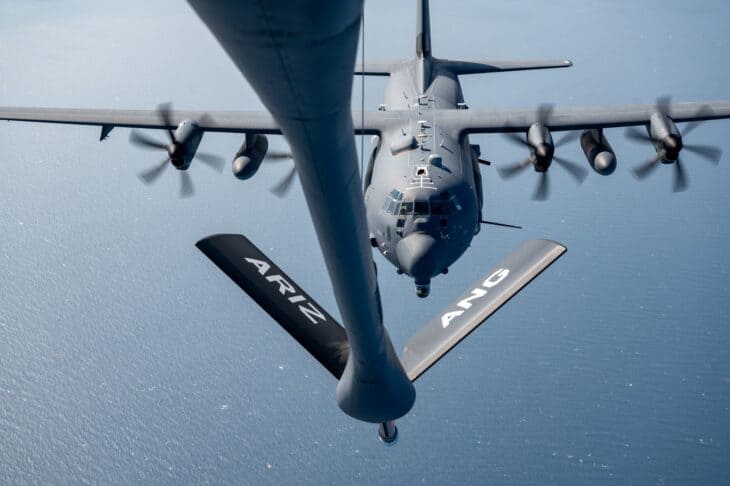
AFSOC lists the AC-130J’s range at about 3,000 miles, and it adds that the figure is limited by the crew duty day with air refueling. A gunship is not built to fly the longest possible leg. It is built to arrive and stay.
That is why the record flight belongs to an older type. In 1979, an AC-130H flew nonstop from Hurlburt Field to Guam, about 7,200 nautical miles in 29 hours and 43 minutes, with four in-flight refuelings.
It depends on the version. The AC-130H used a 40 mm Bofors and a 105 mm howitzer, and the AC-130U added a 25 mm GAU-12. The AC-130J carries a 30 mm GAU-23/A cannon and a 105 mm howitzer, plus Griffin and Hellfire missiles, small diameter bombs and, since 2026, the Havoc Spear cruise missile.
No. The AC-130 is an armed military aircraft, and the Air Force is the only operator listed in the sources used for this page. Civilians do own unarmed C-130 Hercules airframes, but the gunship conversion is a military system.
Yes, with air refueling. AFSOC states the AC-130J range as about 3,000 miles, and AC-130s have been photographed on the ramp at RAF Mildenhall in England. In 1979 an AC-130H flew from Florida to Guam with four refuelings.
There is no official kill count for the type. The only headline figure in the sources is that gunships reportedly destroyed more than 10,000 trucks in Vietnam. Individual crews and variants have separate records.
Yes, as the AC-130J Ghostrider. The AC-130H, AC-130U and AC-130W have all retired, the last in 2022.
The C-130 is a cargo and utility aircraft. The AC-130 is a C-130 converted to carry guns on the left side, with sensors and a Precision Strike Package inside the cabin. Compare it with the unarmed C-130J Super Hercules or the electronic warfare EC-130H Compass Call.
Sources and references used for research and fact-checking.

.jpg)


.jpg)