

Table of Contents
If Kyiv’s count holds, one night at Borisoglebsk cost Russia about as many Su-34s as analysts think its factory has delivered all year.
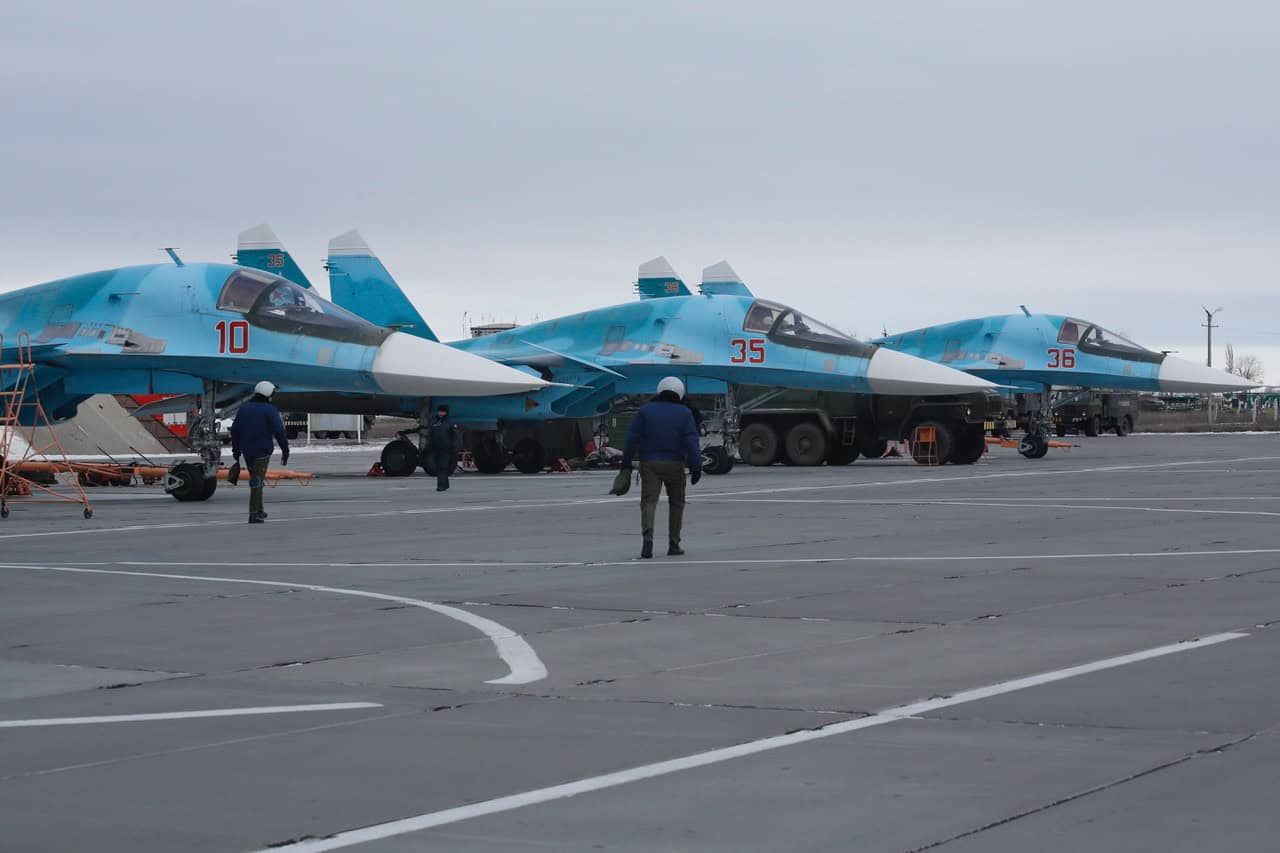
Ukraine says a Neptune missile strike on Russia’s Borisoglebsk air base destroyed four Su-34 strike jets and damaged two more on the night of Oct. 14 to 15, 2026. President Volodymyr Zelensky gave those numbers on Oct. 15, and satellite images from the Ukrainian monitoring channel AviVector show at least four of the jets burned out on their parking spots.


Russia has not acknowledged any damage, and The Moscow Times said the losses could not be independently verified. Before this strike, the open-source tracker Oryx had already confirmed at least 39 Su-34s destroyed since February 2022.
Four more would take that to 43, from a fleet Russia can only replace slowly.
Why Six Su-34s Were Parked Within Reach of a Ukrainian Missile
Borisoglebsk sits about 3.7 miles (6 km) east of the town of the same name in Russia’s Voronezh region. The Kyiv Independent puts it about 230 miles (370 km) from the front line.
It is a training base at heart, home to the 783rd Training Aviation Center. Since the full-scale invasion it has also hosted Su-34s, Su-35S fighters and Su-30SM jets, and in July the Ukrainian outlet Militarnyi described it as a temporary staging point where aircraft refuel and rearm.
That is what the jets appear to have been doing. Six Su-34s had been seen on the parking area the day before the strike, and Zelensky said the aircraft were loaded with aerial bombs and ready for new attacks on Ukraine.
Ukraine’s Navy said it fired the Neptune coastal missile system, and Zelensky called the weapon the “Long Neptune.” The Neptune was designed in Kyiv as an anti-ship missile based on the Soviet Kh-35, and Ukraine used it to sink the Russian cruiser Moskva in April 2022.
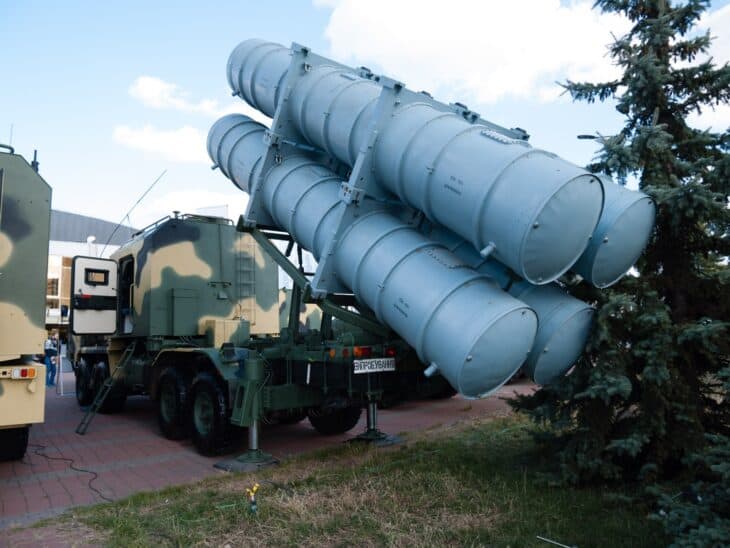

The original version reaches about 175 miles (280 km). Ukraine says the stretched Long Neptune has flown 620 miles (1,000 km), which puts an airfield 230 miles behind the front comfortably in range.
Borisoglebsk had been hit before, by drones in June and July 2025 and again on July 8, 2026, when a strike set its fuel depot on fire. This time, Ukraine says, the missiles found a row of loaded bombers.
The Su-34 Fleet Math: Built, Lost and Replaced
Russia’s aircraft builder stopped disclosing Su-34 delivery numbers in 2022, so every fleet figure is an estimate. The Moscow think tank CAST counted 178 Su-34s built by the start of 2024, including seven prototype and pre-production aircraft.
CAST later claimed 16 deliveries in 2024 and 18 in 2025, for a total of 212. The Ukrainian analysis outlet Defense Express called those numbers questionable and pointed to a RUSI estimate of 58 to 60 Su-34s delivered from 2020 to 2025, no more than 10 to 12 a year.
FlightGlobal’s World Air Forces 2025 directory counted 142 Su-34s in Russian service. Our guide to what the Russian Air Force still flies after four years of war puts the jet third in fighting value, behind only the Su-57 and Su-35S.
Losses are the harder number. As of Oct. 17, 2026, Oryx lists 43 Su-34s and one upgraded Su-34M: 39 destroyed, four of them in non-combat incidents, and five damaged.
That is more entries than any other Russian fixed-wing type on the list. The Su-25 attack jet is next, at 41.
Oryx counts only losses it can see in photos or video, so its numbers are a floor. Its newest Su-34 entry appears to date from early October, and the Borisoglebsk jets had not been added when this story was written.
Add four, and confirmed destroyed Su-34s reach 43. That is about one in five of the 212 CAST says were built, or close to one in four of the 178 it counted at the start of 2024.
Ukrainian officials have estimated each Su-34 at up to $50 million, Newsweek reported, which puts four of them at about $200 million.
Why Losing Su-34s on the Ground Hurts Russia’s Glide-Bomb War
The Su-34 is not Russia’s most glamorous jet. On our ranking of the best fighter jets in the world, the Su-35 makes the list at No. 10 and the Su-57 places higher, while the Su-34 does not appear at all.
It matters for a different reason. Russia uses the Su-34 to launch guided glide bombs at Ukrainian positions and towns, and the Kyiv Post calls it a principal platform for those weapons near the front line.
The jet was built for that kind of work. It is a Su-27 derivative with a wide, armored cockpit that seats two crew side by side, developed to replace the swing-wing Su-24.


Replacing four of them is slow. Even at CAST’s claimed 18 deliveries in 2025, four jets are almost three months of factory output, and at RUSI’s 10 to 12 a year they are four to five months.
The 2026 picture looks thinner still. Military analysts cited by the Ukrainian news agency UNN estimate Russia had received no more than four or five new Su-34s this year, fewer than the six Ukraine says it hit in one night.
Shooting a Su-34 down means catching it in the air near the front. Hitting one parked 230 miles back only needs a missile with that reach and a jet left in the open.
What Russia Is Doing About Its Su-34 Losses
Moscow has said nothing about Borisoglebsk. Voronezh Governor Alexander Gusev said air defenses intercepted 33 drones and “several jet-powered aerial targets” that night, and mentioned debris damage to homes and a car in Voronezh city, not the air base.
The factory keeps working. The Novosibirsk plant delivered its first 2026 batch of Su-34s on July 9 and another in October, now built as the modernized Su-34M, which the Navy says was the version hit at Borisoglebsk.
Russia is also exporting the jet while it loses it at home. Algeria has reportedly received the first four of 14 Su-34ME aircraft it ordered in 2019, according to Defense Express.
For a closer look at where the Su-34 sits in its design family, our guide to Sukhoi fighter jets traces the line from the Su-27 to the Su-57.
The next number to watch is Oryx’s. If the tracker adds four Borisoglebsk airframes, Russia will have lost as many Su-34s on one ramp in one night as its factory appears to have delivered all year.
Sources and references used for research and fact-checking.
- The Kyiv Independent, Ukraine destroys 4 Russian Su-34 bomber jets, damages 2 with Neptune missile, Zelensky says
- Ukrainska Pravda, Zelenskyy: Ukraine has destroyed four Su-34 bombers in Voronezh Oblast with Neptune
- The Moscow Times, Ukraine Says Missile Strike Destroyed 6 Russian Warplanes at Voronezh Airfield
- Kyiv Post, Ukraine Says Neptune Missile Strike Hit 6 Russian Su-34M Bombers at Airfield
- Militarnyi, At Least Four Su-34s Destroyed by Missile Strike at Borisoglebsk Air Base
- Militarnyi, Ukrainian Drones Strike Military Airfield in Borisoglebsk, Voronezh Region
- MiGFlug, Borisoglebsk Strike: Neptune Missiles Hit Six Russian Su-34s
- Newsweek, Satellite Images Show Su-34 Destruction Costing Russia $200 Million
- Oryx, Attack On Europe: Documenting Russian Equipment Losses During The Russian Invasion Of Ukraine
- Centre for Analysis of Strategies and Technologies (bmpd), VKS Rossii poluchili pervuyu v 2025 godu partiyu frontovykh bombardirovshchikov Su-34
- Defense Express, Russia Claimed Delivery of 34 Su-34 Bombers in 2024-2025, But Is That Figure Real?
- UNN, A single Neptune strike inflicted greater losses on Russian aviation than it managed to replenish during 2026
- Wikipedia, Sukhoi Su-34
- Wikipedia, List of active Russian military aircraft
- Wikipedia, R-360 Neptune
Get the Newsletter
The latest aviation news and stories sent to your inbox.
About the Author

Tim is the owner and lead editor of AeroCorner since 2019, overseeing aviation content covering aircraft, airlines, airports, and the broader aviation industry. Through years of researching, writing, editing, and publishing aviation-focused content, he has developed extensive practical knowledge of commercial aviation and air travel. Based in Asia and a frequent traveler himself, Tim also brings firsthand passenger experience to AeroCorner’s coverage. Outside of publishing, he has also explored aviation firsthand through hands-on flight training in New Zealand.