

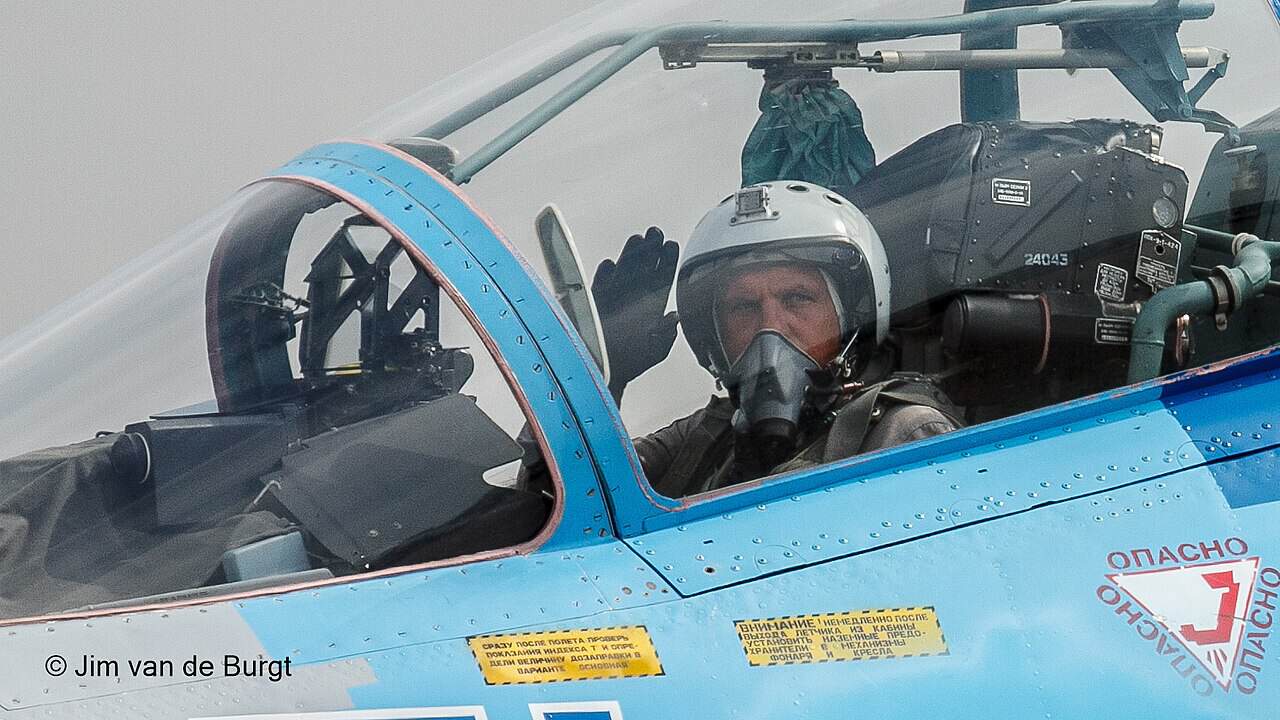
Table of Contents
The most important aircraft in the Ukrainian Air Force is the F-16AM Fighting Falcon, and it is not close. Ukraine is thought to hold around 39 of them, yet by late 2025 that small fleet was flying roughly 80 percent of all Ukrainian Air Force sorties.
That is the strange shape of this air force in September 2026. It still operates more Soviet MiG-29s than American F-16s on paper, but the Falcons carry the war.
This list ranks every aircraft type Ukraine still flies by how much of the current air war it actually carries, not by how many airframes sit on the ramp. Fleet counts are published estimates: Ukraine does not release official numbers, for obvious reasons.
| Rank | Aircraft | Estimated in service | Role in the war today |
|---|---|---|---|
| 1 | General Dynamics F-16AM/BM | ~39 | Primary fighter: air defense and strike |
| 2 | Mikoyan MiG-29 | ~45 | Guided bomb truck and HARM shooter |
| 3 | Sukhoi Su-24M/MR | ~13 | Storm Shadow and SCALP carrier |
| 4 | Sukhoi Su-27 | ~23 | Long-range air-to-air |
| 5 | Dassault Mirage 2000-5F | ~6 | Night air defense, drone and missile hunting |
| 6 | Sukhoi Su-25 | ~17 | Low-level close air support |
| 7 | Saab 340 (ASC 890) | 2 | Airborne early warning and control |
| 8 | Aero L-39 Albatros | ~42 | Jet training and conversion |
| 9 | Antonov An-26 / An-24 / An-30 | ~25 | Transport and aerial survey |
| 10 | Mil Mi-8 / Mi-17 | ~22 | Transport and utility helicopters |
How this ranking works
Ukraine publishes no official inventory, so every number here is an open-source estimate drawn from reference databases, the Royal Aeronautical Society and Defense Express, as of September 2026. The order is by combat weight: how much of the daily air war a type carries. That is why the F-16 outranks the MiG-29 despite there being fewer of them. Ground-based air defense systems are covered separately at the end, because the Air Force operates those too.
1. General Dynamics F-16AM/BM Fighting Falcon
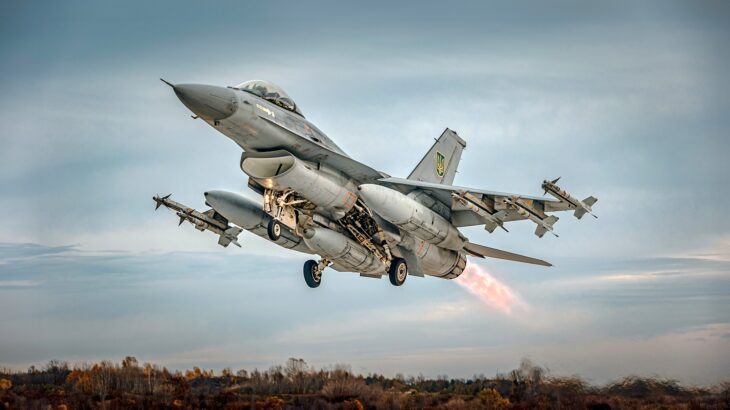

The F-16 is the aircraft Ukraine spent two years asking for, and it has become the backbone of the force. Estimates put the operational fleet at around 39 jets as of April 2026, out of roughly 79 pledged by four European donors.
These are not new aircraft. They are Mid-Life Update F-16AM and two-seat F-16BM airframes from the Netherlands, Denmark, Norway and Belgium, most of them built in the 1980s and upgraded since.
What makes them decisive is not airframe age but the radar and the missiles. The F-16 gave Ukraine a modern pulse-Doppler radar and the AIM-120 AMRAAM, which is the first genuinely competitive beyond-visual-range weapon the air force has ever had.
Most F-16 sorties are defensive counter-air: intercepting Russian cruise missiles and Shahed-type attack drones before they reach cities. The jets also fly surface attack with GBU-39 Small Diameter Bombs, and they brought Link 16 datalink into Ukrainian service for the first time.
A handful of jets, four out of five sorties
Retired US Air Force Lt. Gen. David Deptula wrote in October 2025 that Ukraine’s small F-16 fleet, flown by a comparably small number of pilots, was flying roughly 80 percent of all Ukrainian Air Force sorties. Ukrainian crews taught themselves to maintain, arm and employ the aircraft from dispersed airfields, an improvised version of the agile combat employment doctrine the US Air Force spent years developing on purpose.
2. Mikoyan MiG-29 Fulcrum
_40thTAB.jpg)
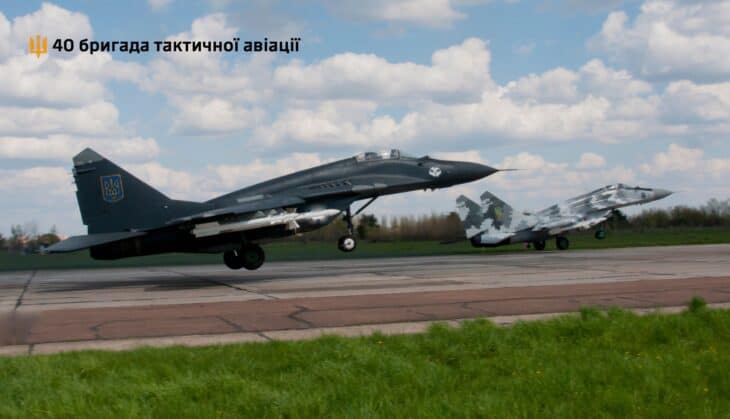
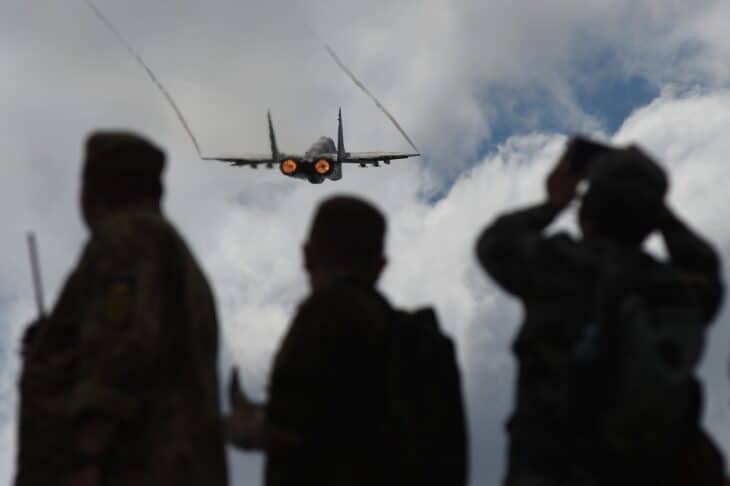
The MiG-29 is still the most numerous fighter in Ukrainian service, with roughly 45 airframes including about nine used for conversion training. It is also the type that has absorbed the heaviest losses of the war.
Ukraine entered 2022 with about 50 Fulcrums across three brigades, then topped the fleet back up with 24 secondhand jets from Slovakia and Poland in 2023.
Its value now is as a weapons truck. Ukrainian engineers integrated the AGM-88 HARM anti-radiation missile onto the MiG-29 and Su-27, then added the American JDAM-ER and GBU-62 glide bombs and the French AASM Hammer.
None of that was supported by the manufacturer, because there was never an approved path for bolting NATO munitions onto Soviet fire control systems. It was solved by improvisation, and it works.
3. Sukhoi Su-24M Fencer
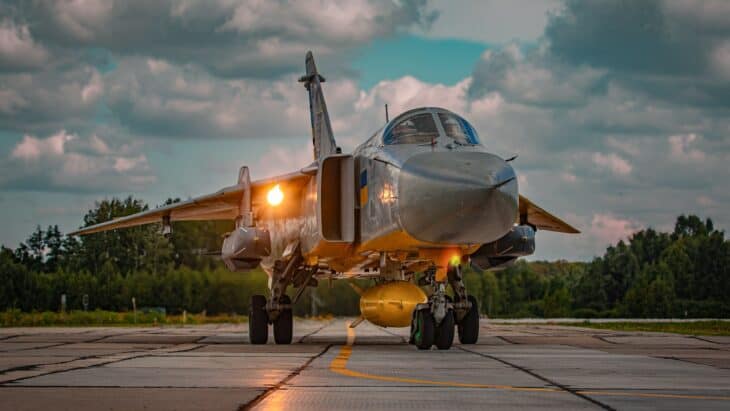

Only about 13 Su-24s remain, and they matter far more than that number suggests. The swing-wing Fencer is Ukraine’s cruise missile carrier, the only aircraft cleared to launch British Storm Shadow and French SCALP-EG missiles.
The United Kingdom supplied not just the missiles but the pylons, adapted from the ones originally fitted to the Tornado GR4. Targets are programmed into the missile before takeoff rather than by the aircraft’s own systems.
Every Ukrainian deep strike on a Russian headquarters, airfield or bridge that was not done by a drone very likely started under the wing of one of these 1970s bombers.
4. Sukhoi Su-27 Flanker
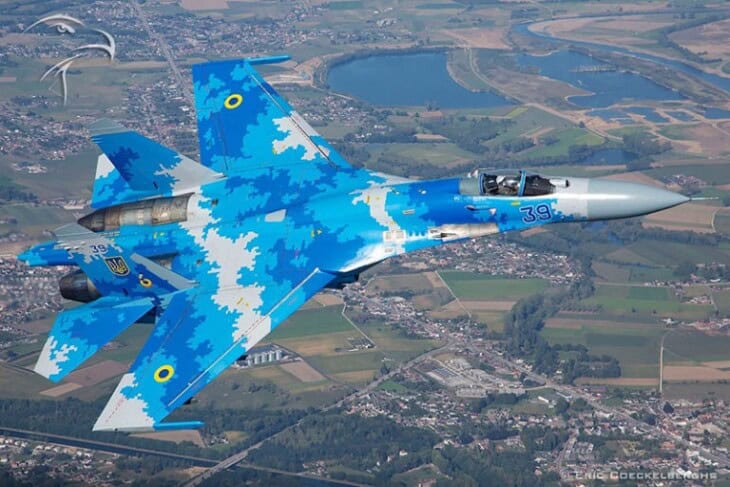
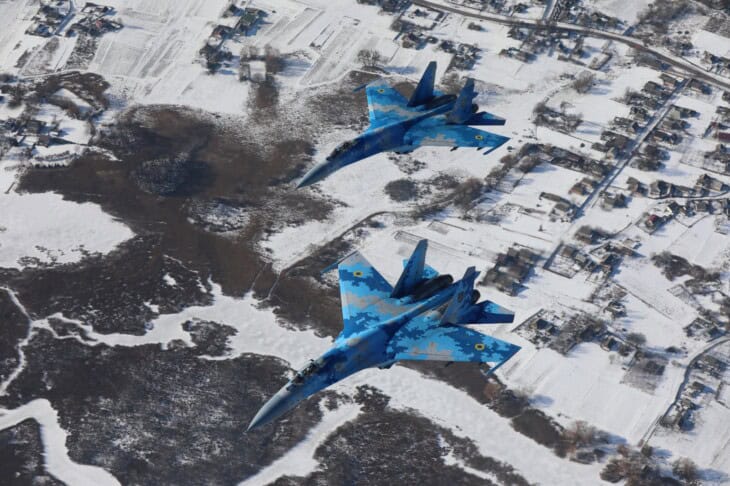
Around 23 Sukhoi Su-27 Flankers remain, roughly six of them on training duties. Before the F-16 arrived, this was the most capable fighter Ukraine had.
The Su-27 is big, fast and long-legged, which still makes it useful for standing air patrols over a country the size of Ukraine. Its weakness is its radar and its missiles, both a generation behind what Russian Su-35s carry.
Ukraine has fitted the Flanker with HARM and Western glide bombs in the same way as the MiG-29, which extends its usefulness well past what its original designers intended. For how it stacks up against the rest of the family, see our guide to the best Russian fighter jets.
5. Dassault Mirage 2000-5F
.jpg)
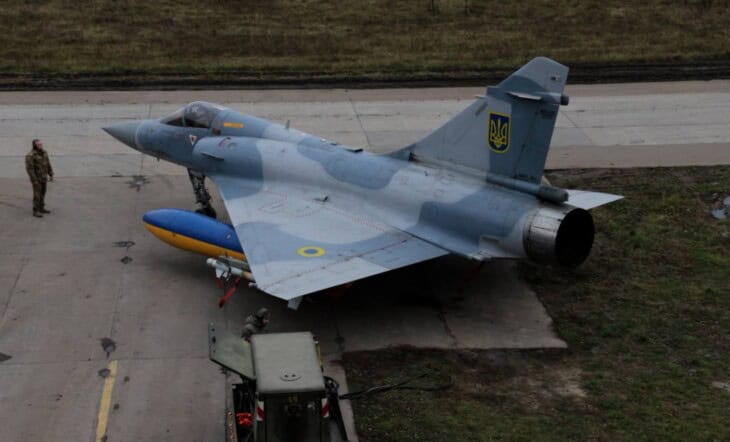
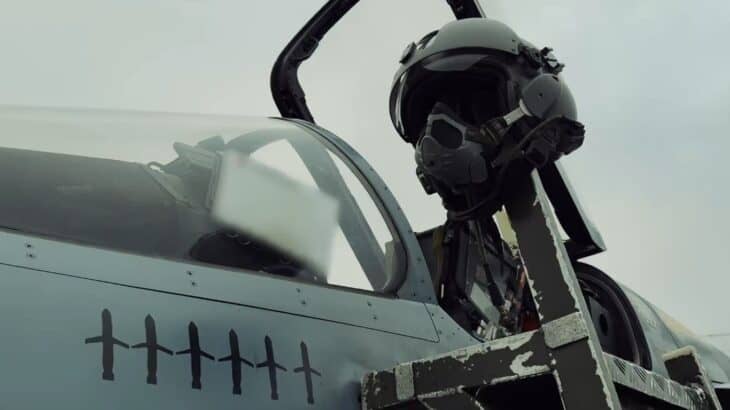
France announced the Mirage transfer in June 2024, and the first jets reached Ukraine in February 2025. Reporting in mid-2026 put the operational fleet at only four to six aircraft, and six now looks like the ceiling rather than the 20 once discussed.
They work the night air defense beat. The Mirage carries the MICA missile out to about 50 miles (80 km) and the short-range Magic 2, and it hunts cruise missiles and Shahed drones that are deliberately hard to find against ground clutter.
The jets also brought modern electronic-warfare equipment with them, which is a capability Ukraine had almost none of in the air before 2025.
Sixteen months, zero losses to Russian fire
As of June 2026 Ukraine had not lost a single Mirage 2000-5F to Russian action in roughly sixteen months of operations. The one aircraft it did lose, on 22 July 2025, went down to an equipment failure, and the pilot ejected safely. On a fleet of four to six jets, that record is the difference between having a night air defense capability and not having one.
6. Sukhoi Su-25 Frogfoot
.jpg)
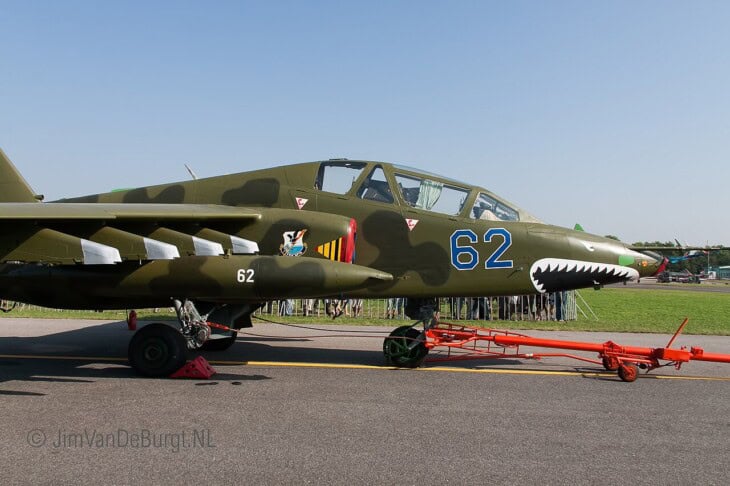
About 17 Su-25 attack aircraft survive from a pre-war force of roughly 30, with four of those used for conversion training. North Macedonia donated four more in 2022.
The Frogfoot is an armored, slow, low-altitude close air support aircraft, and the modern battlefield is close to the worst possible place for it. Crews fly at treetop height and loft unguided rockets upward from a distance rather than ever overflying a target.
Ukraine has since adapted the type to carry the French AASM Hammer using the same pylon it developed for the MiG-29, which lets the Su-25 release a guided weapon without entering the defended zone at all.
The guided bomb controlled by an iPad
Ukraine had no way to connect a French guided bomb to a Soviet attack jet’s fire control computer, so it did not try. On earlier integrations the weapon’s electronics were wired to an iPad running custom software, resting on the pilot’s lap. A 1980s Frogfoot now drops a precision munition aimed through a consumer tablet.
7. Saab 340 ASC 890 Airborne Early Warning
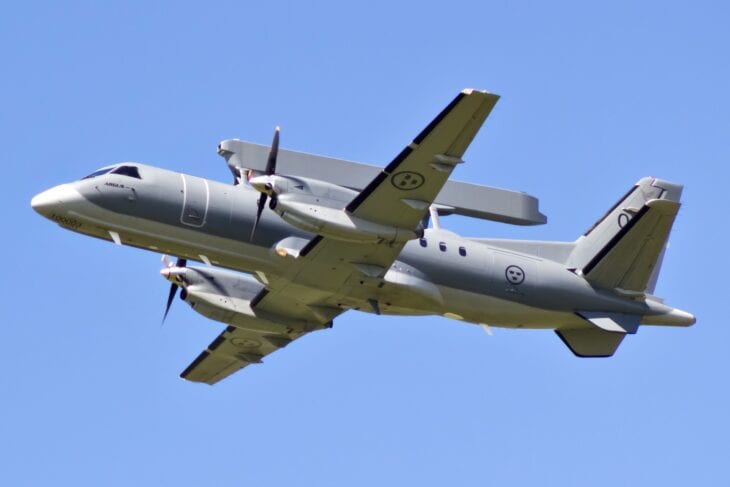

Sweden handed over its ASC 890 radar aircraft, confirmed by Ukraine’s defense minister in August 2025. The Swedish Air Force operated two, and both are understood to have gone to Kyiv.
The aircraft is a Saab 340 turboprop airliner carrying an Erieye active electronically scanned array radar in a beam on top of the fuselage. It can detect air and sea targets out to roughly 280 miles (450 km) while orbiting at about 20,000 feet.
Ukraine confirmed the type began flying combat sorties in March 2026. It is the first time in the war that Ukrainian fighters have had an airborne radar picture rather than relying entirely on ground stations that Russia actively hunts.
8. Aero L-39 Albatros
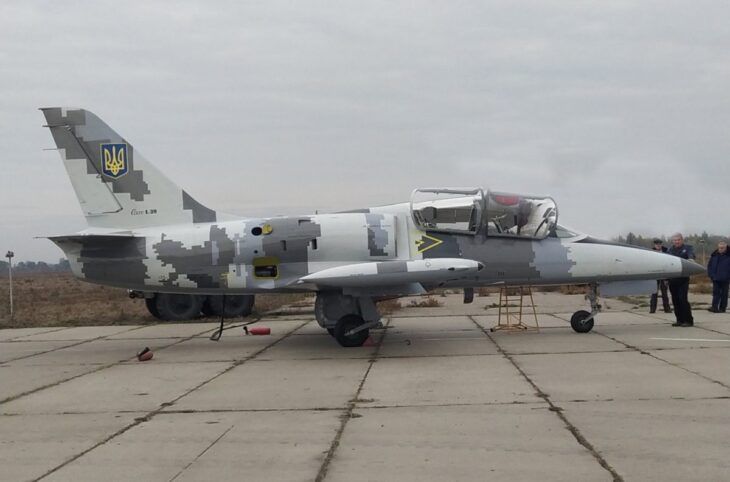

Around 42 L-39 trainers remain in service, which makes the Czechoslovak jet one of the largest fleets in the air force by raw count.
They matter because the constraint on Ukrainian air power has never really been airframes. It is trained aircrew, and every fighter pilot starts here.
9. Antonov Transports: An-26, An-24 and An-30
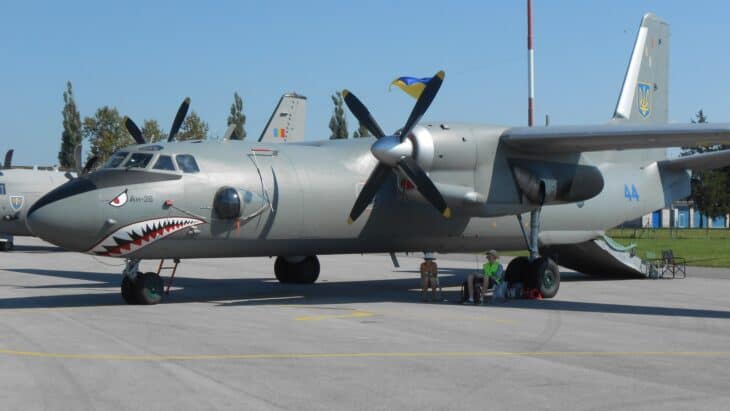

The transport fleet is the least glamorous part of this list and the most quietly essential: roughly 22 An-24s and a handful of An-26s moving people and cargo, plus about three An-30B aerial survey aircraft.
Ukraine also still holds a single An-70, the homegrown turboprop transport that never reached series production.
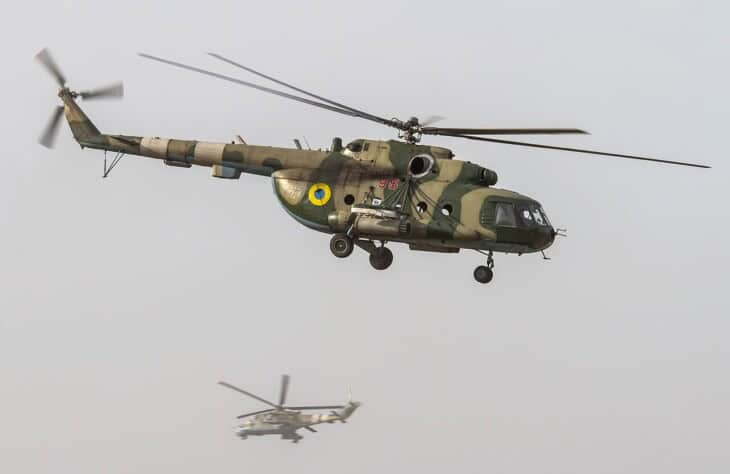
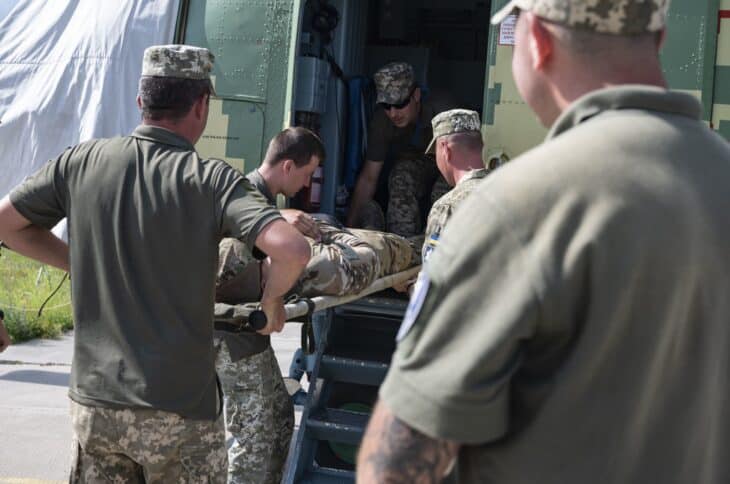
10. Mil Mi-8 and Mi-17 Helicopters
.jpg)
The Air Force operates roughly 15 Mi-8 variants and about seven Mi-17s donated since 2022, alongside a small number of Mi-9 airborne command posts.
Ukraine’s attack helicopters and the bulk of its rotary fleet belong to Army Aviation rather than the Air Force, which is why the Mi-24 does not appear on this list.
What Ukraine Is Getting Next: Gripen and Rafale
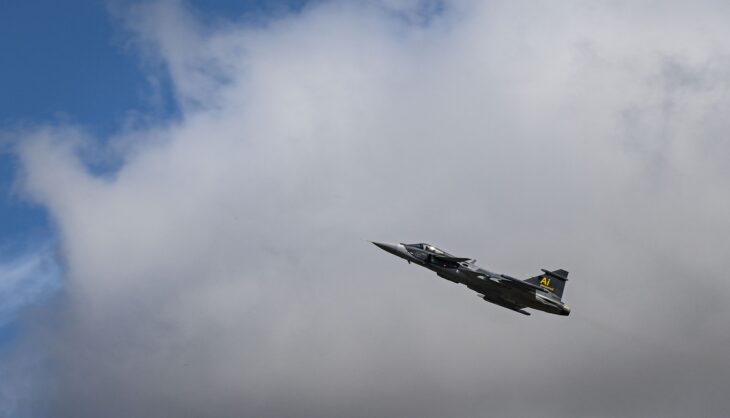

On 30 June 2026 Ukraine and Sweden signed a contract worth 24.6 billion kronor, about $2.53 billion, for 16 newly built Saab JAS 39 Gripen E fighters, with deliveries scheduled for 2029 and 2030.
Sweden separately pledged to donate up to 16 used Gripen C/D jets from its own air force, expected in early 2027. Those are the ones that will fly first.
Both figures are a first tranche against a stated Ukrainian ambition of up to 150 Gripens. Ukrainian pilots were already training toward the type in Canada when President Zelensky visited them on 12 September 2026.
France is the other track. Ukraine and France signed a letter of intent on 17 November 2025 covering up to 100 Dassault Rafale fighters plus air defense systems, spread over roughly ten years.
Treat both carefully. A letter of intent is not a contract, and the Gripen E order that is a contract does not deliver an aircraft until 2029.
What the Fleet Has Cost
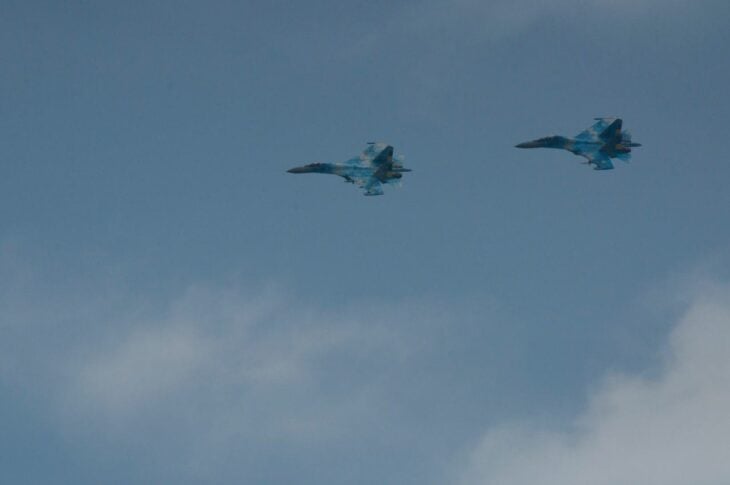

Visually confirmed losses compiled by the Oryx database and cited by the Royal Aeronautical Society in May 2026 run to 34 MiG-29s, 22 Su-25s, 20 Su-24s, 19 Su-27s and 11 Mi-24 helicopters.
For the Western types, four F-16s and one Mirage 2000 had been lost as of May 2026, and a further F-16 went down on a combat mission on 29 July 2026 with the pilot ejecting. The first F-16 loss, on 29 August 2024, killed pilot Oleksii Mes.
Visually confirmed counts are a floor, not a total. The real figures are higher, and nobody outside Kyiv knows by how much.
But the Air Force's biggest weapon is not an aircraft at all
Most coverage of the Ukrainian Air Force is about fighter jets. Most of its actual work is done by the ground-based air defense brigades it also owns, spread across four regional air commands. Those units operate Patriot, NASAMS, IRIS-T SLM and the Soviet S-300 and Buk M1, and they shoot down far more Russian missiles and drones than every Ukrainian fighter combined. Judging this air force by its fighter inventory alone gets the answer badly wrong.
How Strong Is It, Really?
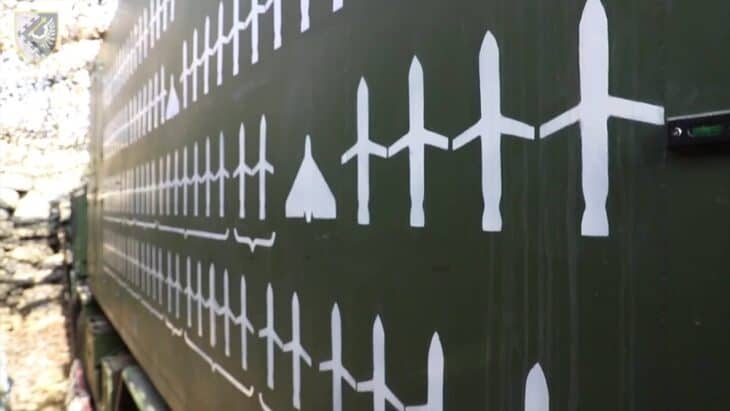

Measured conventionally, the Ukrainian Air Force is a mid-sized force flying a mixed fleet of aging aircraft, and it would not place anywhere near the top of a list of the best air forces in the world.
Measured by what it has actually prevented, it is the most combat-experienced air arm in Europe and the only one that has fought a peer air force continuously since 2022.
It also never won air superiority, and it never tried to. Its job has been to deny Russia the same thing, and by that measure it has succeeded, with a great deal of help from the surface-to-air brigades and from the military drones that now do much of the work manned aircraft used to.
The force that emerges from this war will be built around Gripens and possibly Rafales, and it will look nothing like the Soviet inheritance it started with.
FAQ
Sources and references used for research and fact-checking.
- Wikipedia, Ukrainian Air Force
- Royal Aeronautical Society, Ghosts, Vipers and Gripens: the future of the Ukrainian Air Force
- Defense Express, Belgium, Norway Delay 36 F-16s for Ukraine, Almost Half of Fleet Yet to Arrive
- Air & Space Forces Magazine, Ukraine's F-16 Force: Innovation, Impact, and Resolve in the Face of Aggression
- 19FortyFive, Ukraine's Mirage 2000-5 Fighters: Four Jets, Sixteen Months, And Zero Losses To Russian Fire
- The War Zone, Su-24 Fencer Is Ukraine's Storm Shadow Missile Carrier
- Defense Express, How Ukraine's Su-25s Were Adapted to Carry AASM Hammer Bombs: New Details
- The War Zone, Ukraine's Saab 340 Airborne Early Warning Radar Plane Spotted Operating Over The Country
- Air Data News, Ukraine confirms Saab ASC 890 is flying combat missions
- The Defense Post, Sweden, Ukraine Finalize $2.53B Deal for 16 Gripen E Fighters
- The Aviationist, Ukraine To Acquire 20 Gripen E/Fs As Sweden Pledges Donation of 16 Gripen C/Ds
- France 24, Macron and Zelensky sign letter of intent for Ukraine to buy up to 100 Rafale fighter jets
- Defence Blog, Ukrainian pilots in Canada prep for F-16 and Gripen jets
- Zona Militar, The MiG-29s of the Ukrainian Air Force are already using the GBU-62 JDAM-ER glide bombs
- Wikipedia, 138th Anti-aircraft Missile Brigade (Ukraine)
- Wikipedia, 11th Anti-aircraft Missile Brigade (Ukraine)
- Kyiv Post, Ukrainian Air Superiority 2026 Status Update: Western Weapons Systems to Watch
Get the Newsletter
The latest aviation news and stories sent to your inbox.
About the Author

Tim is the owner and lead editor of AeroCorner since 2019, overseeing aviation content covering aircraft, airlines, airports, and the broader aviation industry. Through years of researching, writing, editing, and publishing aviation-focused content, he has developed extensive practical knowledge of commercial aviation and air travel. Based in Asia and a frequent traveler himself, Tim also brings firsthand passenger experience to AeroCorner’s coverage. Outside of publishing, he has also explored aviation firsthand through hands-on flight training in New Zealand.