Military Aircraft
Rockwell B-1B Lancer
ICAO: B1
The two-seat fighter variant built for training and operational flexibility

The latest aviation news and stories sent to your inbox.
The Saab Gripen JAS 39B is the two-seat version of Sweden’s multirole Gripen fighter. Developed to support advanced training and conversion, it retains full combat capability while adding a second cockpit position. The aircraft reflects Sweden’s emphasis on adaptable, network-enabled air power.

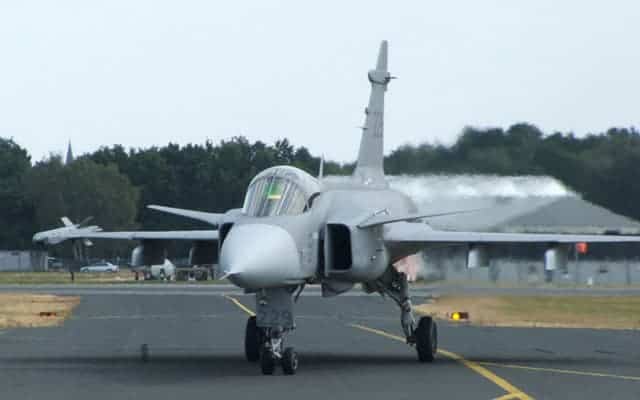
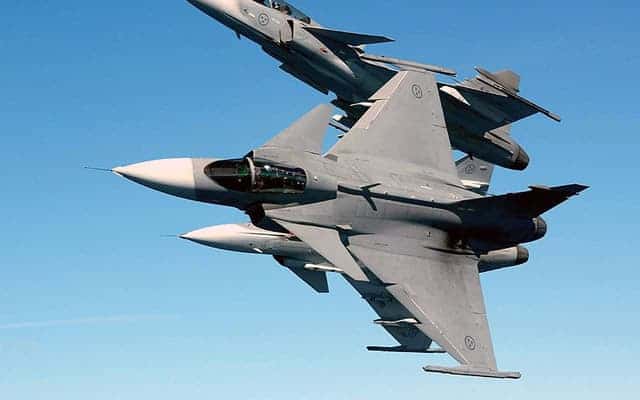
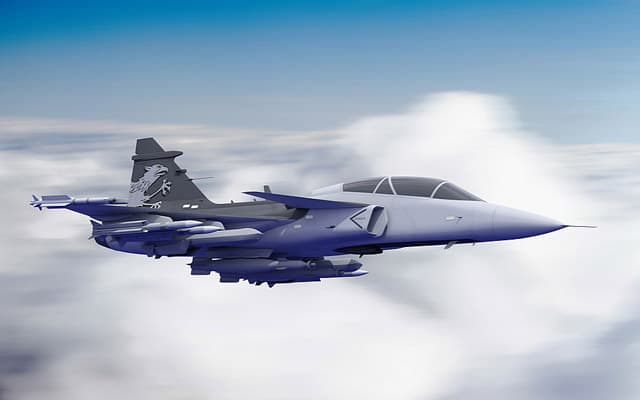
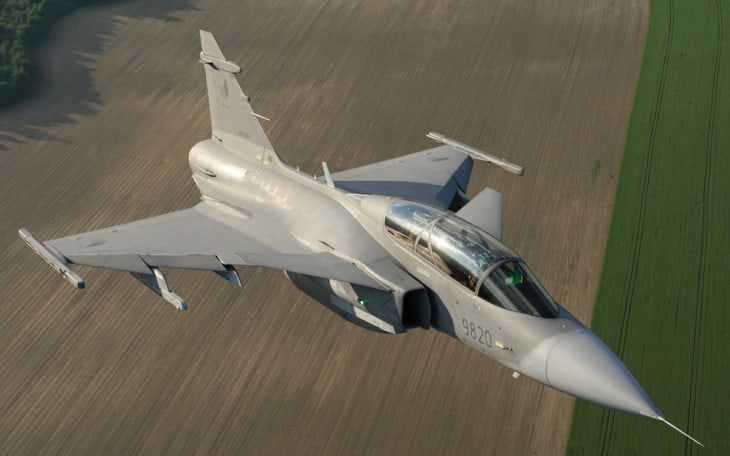
The Saab Gripen program began in the early 1980s to replace Sweden’s aging Draken and Viggen fleets with a single multirole platform capable of fighter, attack, and reconnaissance missions. The baseline JAS 39A first flew in 1988 and entered service in the mid-1990s. The two-seat JAS 39B followed as a conversion and operational training variant, retaining combat systems while adding a second cockpit in a stretched fuselage.
Powered by a Volvo RM12 turbofan producing approximately 18,000 pounds of thrust (80 kN) with afterburner, the aircraft is capable of speeds up to Mach 2. It has a combat radius of roughly 430 nautical miles (800 km), depending on mission profile. The airframe incorporates relaxed stability and fly-by-wire controls, enabling high agility and short-field performance from dispersed road bases, a key element of Swedish defense doctrine.
The JAS 39B entered Swedish Air Force service in the late 1990s and has also supported export customers transitioning to the Gripen platform. While later Gripen C and D models introduced NATO compatibility and expanded avionics, the 39B played a crucial role in maturing the system. It demonstrated that a compact, cost-conscious fighter could maintain modern multirole capability without the logistical footprint of larger aircraft.