

Table of Contents
The United States has the best air force in the world, and it is not close. The US Air Force, Navy and Marine Corps together operate 13,032 aircraft, roughly a quarter of every military aircraft flying anywhere on Earth.
But raw fleet size is a bad way to rank air forces, and it is the mistake almost every list makes. North Korea has more combat aircraft than the United Kingdom, and almost none of them can fight.
This ranking measures something harder and more useful: the ability to take control of contested airspace far from home, hold it, and turn it into results. That is the test that separates the top 10 below, current as of 2026.
| Rank | Air force | Aircraft in service | What puts it here |
|---|---|---|---|
| 1 | United States | 13,032 | Stealth fleet, 500+ tankers, global reach |
| 2 | China | 3,529 | ~500 J-20s and two sixth-gen prototypes flying |
| 3 | Israel | ~600 | Proved it in combat over Iran in 2025 |
| 4 | Russia | 4,237 | Huge fleet, four years without air superiority |
| 5 | India | ~2,250 | Big and capable, badly short of squadrons |
| 6 | Japan | ~750 | 147 F-35s on order, the largest fleet outside the US |
| 7 | France | 1,008 | Independent nuclear strike and a carrier air wing |
| 8 | United Kingdom | 676 | World-class ISR and tankers, only 158 fighters |
| 9 | South Korea | ~900 | Dense, modern, and now building its own fighter |
| 10 | Australia | ~250 | The most complete small air force in the world |
How this ranking works
Four things decide the order: the size and quality of the fifth-generation fleet, the enablers that let an air force fight far from home (tankers, airborne early warning, ISR and airlift), munitions and sustainment depth, and demonstrated combat performance. Fleet size is a tiebreaker, not the measure. Air arms are ranked by country, so naval and marine aviation count toward the national total.
1. United States

.jpg)
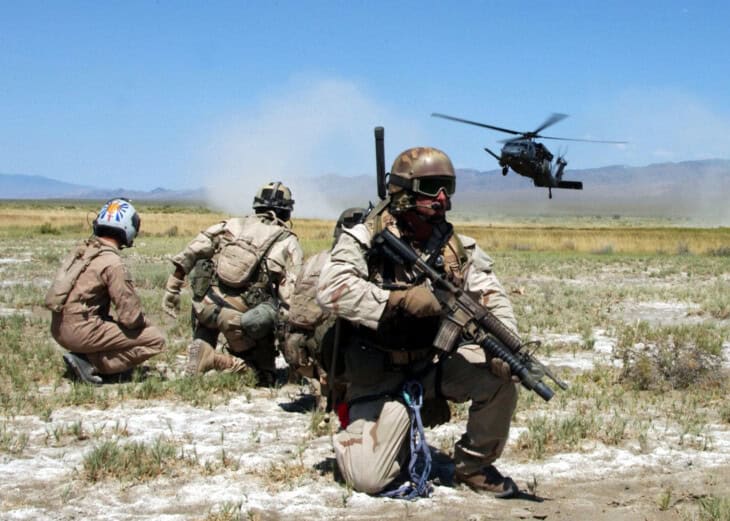
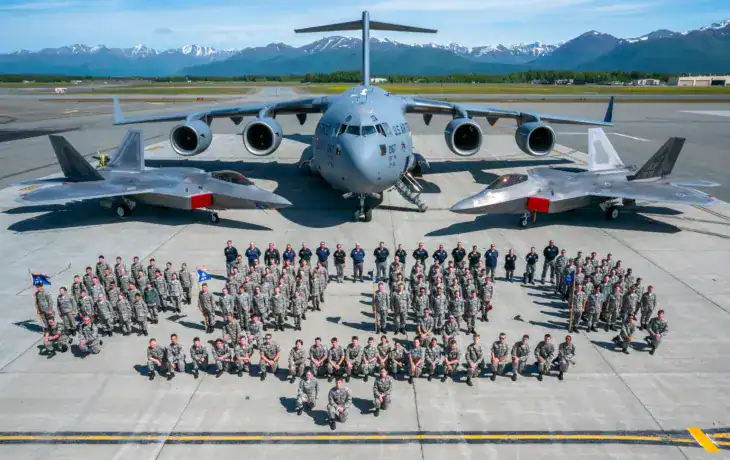
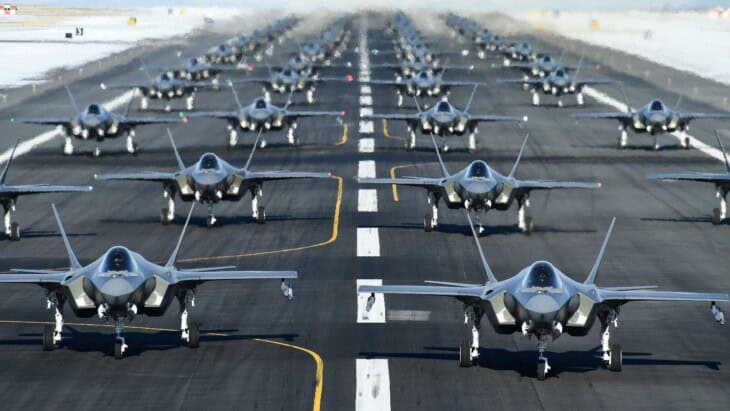
The US Air Force alone holds 4,865 aircraft, including 500 F-35As, 184 F-22 Raptors and 826 F-16s. Add the Navy and Marine Corps and the American total reaches 13,032, more than the next three air forces combined.
The decisive number is not the fighters, though. It is 510 tankers, including 375 KC-135s and 96 KC-46As, which is what allows American frontline fighter jets to operate anywhere on the planet within hours.
No other country comes close on that measure. China has only just fielded its first purpose-built Y-20U tanker, and Israel’s 2025 campaign against Iran was limited mainly by how few tankers it could put in the air.
The US also owns the only combat-proven stealth bomber force, with 20 B-2 Spirits flying and the B-21 Raider in low-rate production toward a fleet of at least 100. The sixth-generation F-47 is on track for a first flight in 2028.
The oldest modern air force on Earth
The average US Air Force aircraft is 31.75 years old. Its KC-135 tankers first flew in the 1950s, its B-52s are being flown by the grandchildren of their original crews, and the fleet is expected to keep going until the 2050s.
2. China
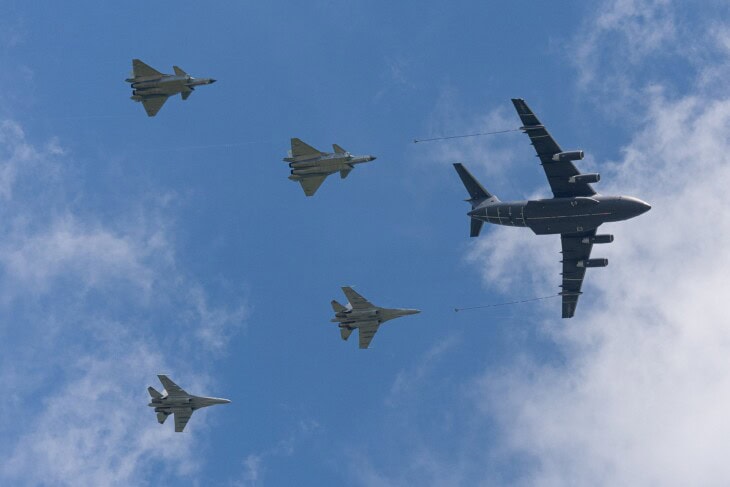


China fields 3,529 military aircraft, of which 1,814 are combat types. What moved it decisively past Russia is not the total, it is the stealth fleet.
Analysts tracking serial numbers and unit assignments estimate around 500 J-20 stealth fighters delivered by mid-2026, with production running near 120 aircraft a year. The US Air Force has 184 F-22s and 500 F-35As, so China now flies more fifth-generation fighters than any air force except America’s.
The J-35 entered service in 2025 and reached serial production within a year. Two tailless sixth-generation demonstrators, the Chengdu J-36 and Shenyang J-50, have been flying since December 2024, and Chinese state media released official J-36 footage in June 2026.
Where China still lags is the unglamorous half of air power: tankers, long-range ISR, and the accumulated experience of flying real operations. The Pentagon’s assessment is that the PLAAF is rapidly approaching US technical standards but has not yet matched US air combat capability, a gap we break down in detail in US vs China: Fighter Jets Compared.
3. Israel
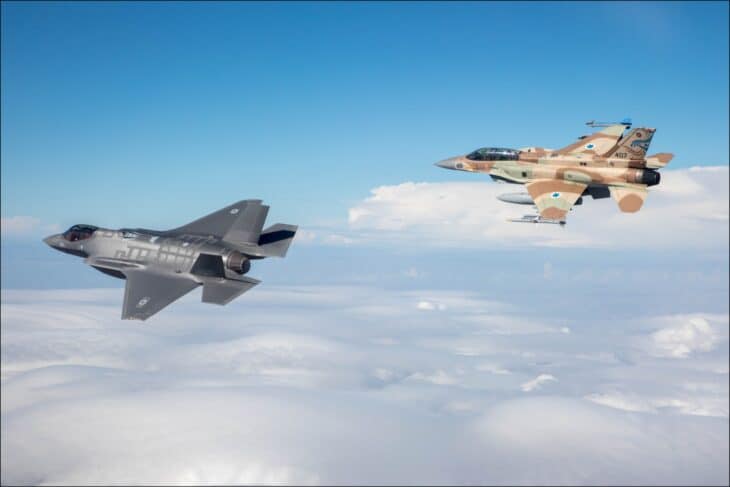

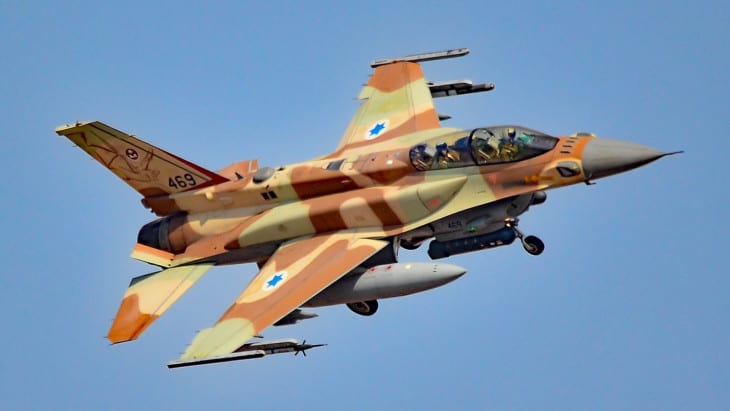
Israel has around 600 aircraft, fewer than Greece. It ranks third because it is the only air force outside the United States that has taken down a modern integrated air defense network and then flown wherever it liked.
On 13 June 2025, Israel launched roughly 200 aircraft against Iranian nuclear and missile targets around 1,000 miles (1,600 km) away. Over the following 12 days it flew more than 1,400 sorties and lost no manned aircraft.
That was the first large-scale use of the F-35 in full stealth configuration against a defended state, and the F-35I Adir is a uniquely Israeli variant with its own electronic warfare systems and locally integrated weapons.
Israel’s ceiling is set by its size. It has almost no strategic depth, a small and aging tanker fleet, and no ability to sustain a campaign of that intensity for months rather than days.
Why this ranks above a fleet seven times larger
Air superiority is the whole point of an air force, and it is a thing you either achieve or do not. Israel achieved it over a defended nuclear state 1,000 miles away in a single night. Russia has not achieved it over its neighbor in four years.
4. Russia
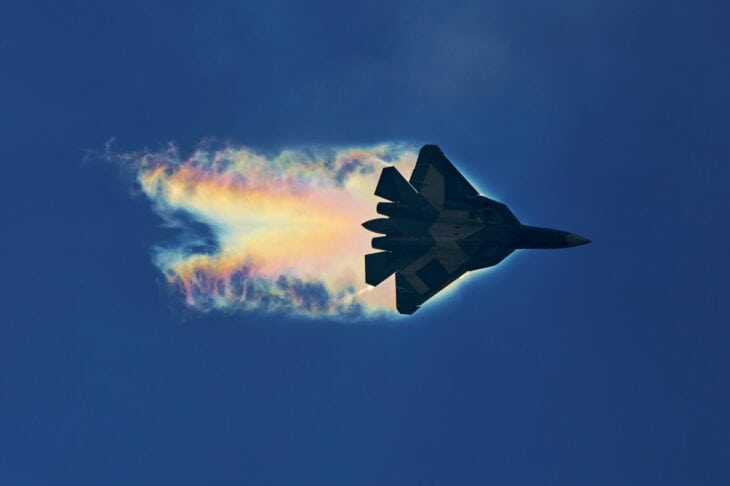

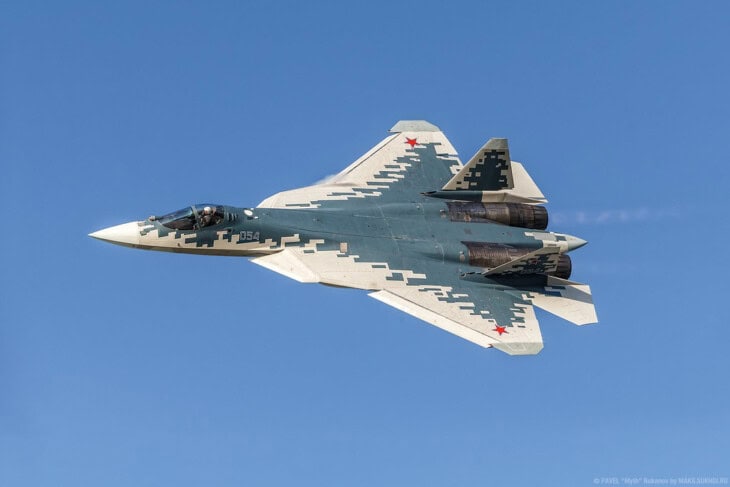
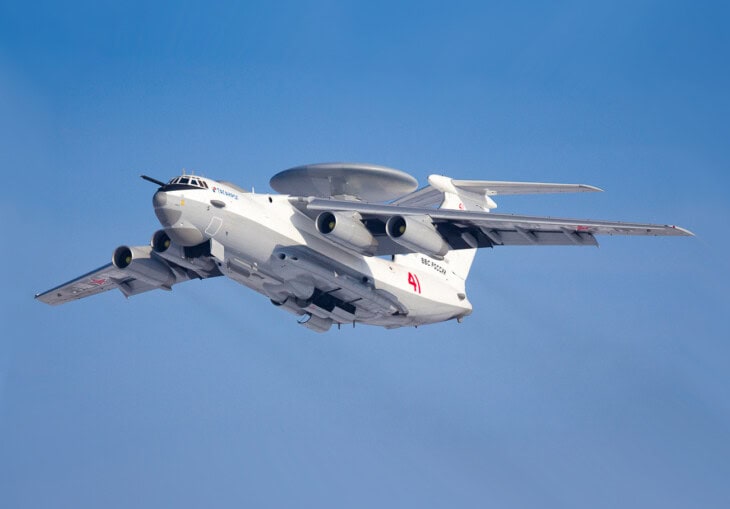
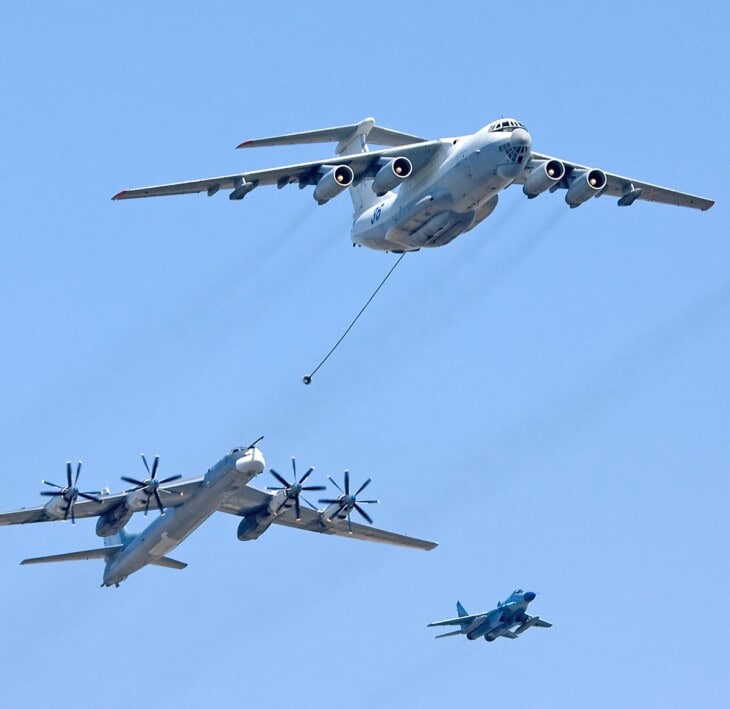
Russia has the second-largest air force on paper, with 4,237 aircraft including 1,559 combat types. It also has the most complete record of what happens when a large air force cannot suppress enemy air defenses.
The open-source tracker Oryx has visually confirmed 181 Russian fixed-wing aircraft and 168 helicopters destroyed or damaged in Ukraine, and because only photographed losses are counted, the real figure is higher. Seventy-six of those losses came from the modern fleet, including 42 Su-34s and eight Su-35s.
The strategic bomber force has been hit hardest in reputational terms: at least 11 Tu-22M3s and 10 Tu-95MSs are gone, roughly a fifth of the operational fleet, several of them destroyed on the ground.
The Su-57 program tells the same story. Around 32 airframes exist including prototypes, of which perhaps 20 are combat-ready, against a stated target of 76 by 2027. For the wider balance, see NATO vs Russia: Air Power Compared.
Russia stays in the top five on mass, on a genuine long-range cruise missile capability, and on the nuclear-armed bomber leg that only two other countries operate. But its air force in 2026 is smaller, older and more cautious than the one that started the war.
5. India
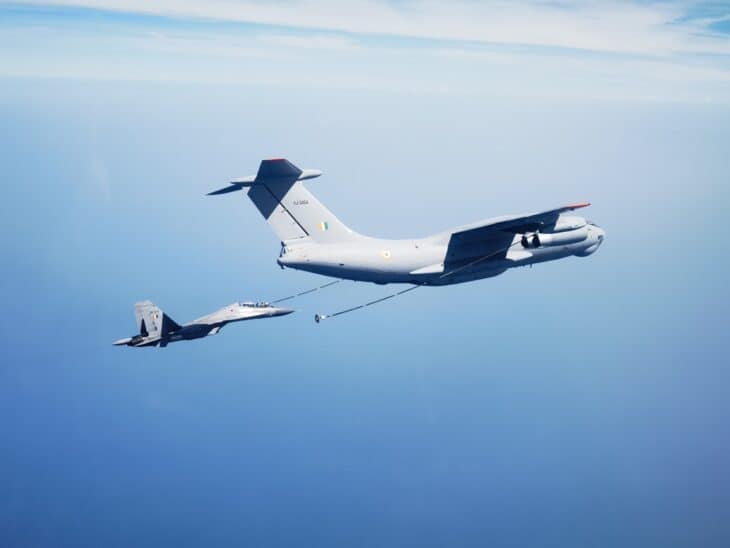


The Indian Air Force flies roughly 2,250 aircraft with about 600 combat types, the fourth-largest combat fleet in the world. Its problem is not equipment quality, it is arithmetic.
India is down to about 29 fighter squadrons against a sanctioned strength of 42, the lowest in decades. The last MiG-21 squadrons retired in 2025 and replacements have not arrived fast enough to fill the gap.
What it does have is potent: 12 squadrons of Su-30MKI, two of Rafale, and a growing Tejas force with 180 Mk1A aircraft planned. A separate competition for 114 more foreign fighters has been running for years without a decision.
The May 2025 clash with Pakistan during Operation Sindoor is a genuine caution. Pakistan claimed multiple Indian jets shot down including Rafales, India acknowledged losses without confirming numbers, and independent verification remains thin.
6. Japan
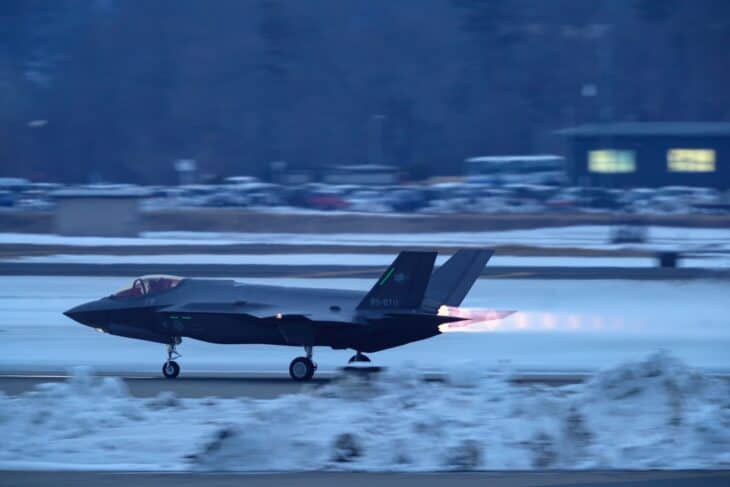


Japan’s Air Self-Defense Force is small by area but exceptionally modern, and it is building the largest F-35 fleet of any country outside the United States: 105 F-35As and 42 F-35Bs on order, 147 in total.
The F-35Bs matter more than the number suggests, because they are intended to fly from converted Izumo-class carriers and from short island runways in the southwest, exactly where a Taiwan contingency would be fought.
Japan also runs one of the highest intercept tempos on Earth, scrambling against Chinese and Russian aircraft hundreds of times a year, which keeps readiness genuinely high rather than theoretical.
It ranks sixth rather than higher because it has spent 70 years building a defensive force. Long-range strike, suppression of enemy air defenses and expeditionary logistics are capabilities Japan is buying now, not ones it already has.
7. France
.jpg)
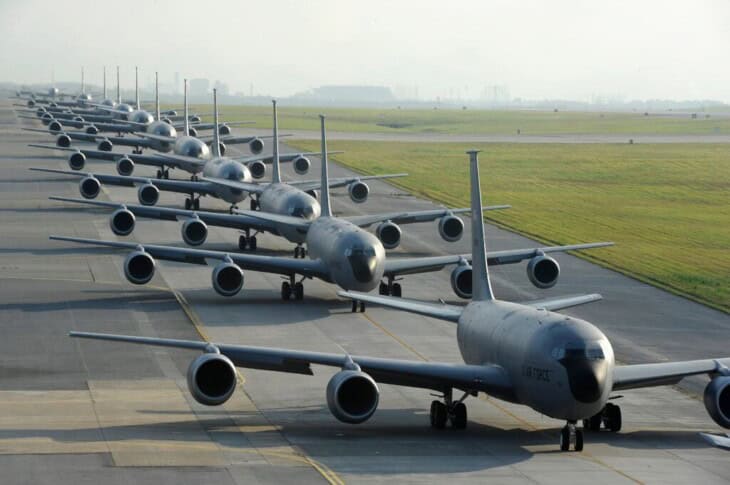
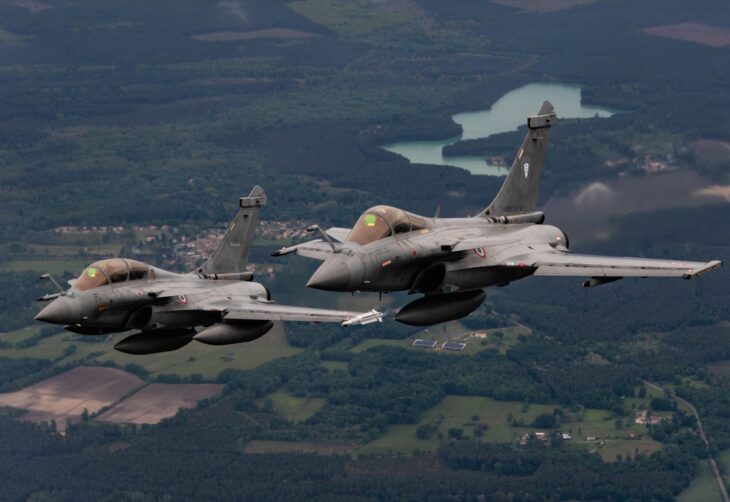
France operates 1,008 military aircraft with 264 combat types, and it is the only country in Europe that can conduct a nuclear strike from an aircraft without asking anyone’s permission.
The Rafale is the backbone: 146 are active with the Air and Space Force today, against a national target of 225 including 40 for the Navy. Unlike most European fighter jets, it flies from a catapult-equipped carrier, which gives France reach no other European power has.
France has also actually used it. The Sahel campaigns involved sustained strike operations thousands of miles from home with French tankers, French transports and French ISR.
The weakness is stealth. France has no fifth-generation aircraft and no near-term prospect of one, with the sixth-generation FCAS program still years from a flying demonstrator.
8. United Kingdom
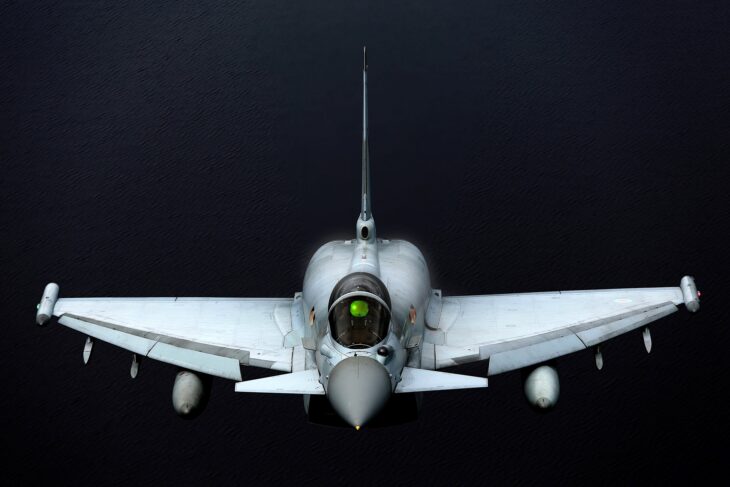

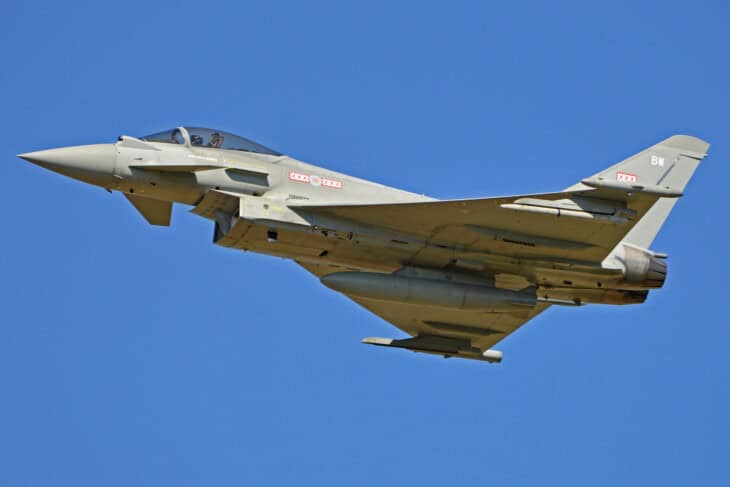
The Royal Air Force operates 676 aircraft but only 158 frontline fighters: 111 Eurofighter Typhoons and around 47 F-35Bs, with the initial Lightning order completed in April 2026.
That is a small combat force for a country with global commitments, and it is the single reason the UK sits below France here.
What the RAF has instead is quality in the parts most air forces skimp on: Voyager tankers, P-8 Poseidon maritime patrol, Rivet Joint signals intelligence, and a tradition of operating inside American networks as a genuine peer rather than a guest.
Britain is also a partner in GCAP, the sixth-generation program with Japan and Italy, which is currently the most credible non-American next-generation fighter effort anywhere.
9. South Korea
.jpg)

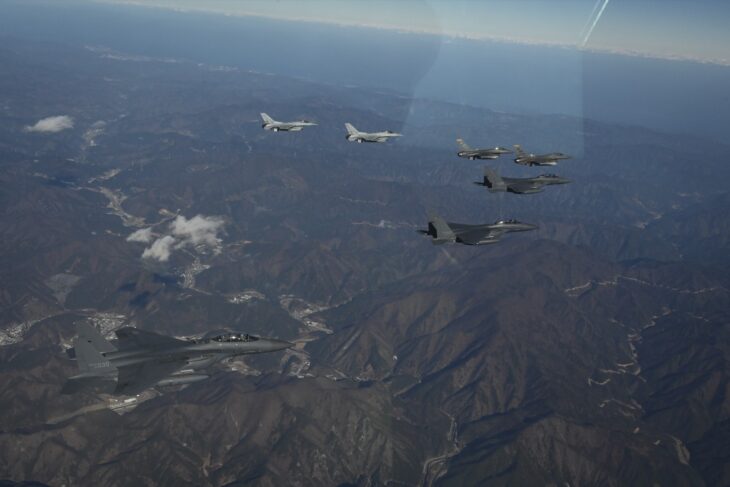
The Republic of Korea Air Force flies around 900 aircraft in a country smaller than Iceland, packed with F-15Ks, upgraded F-16s and a growing F-35A fleet.
It is the most concentrated modern air power on Earth per square mile, built around one specific and very close threat, which makes readiness a daily fact rather than an exercise.
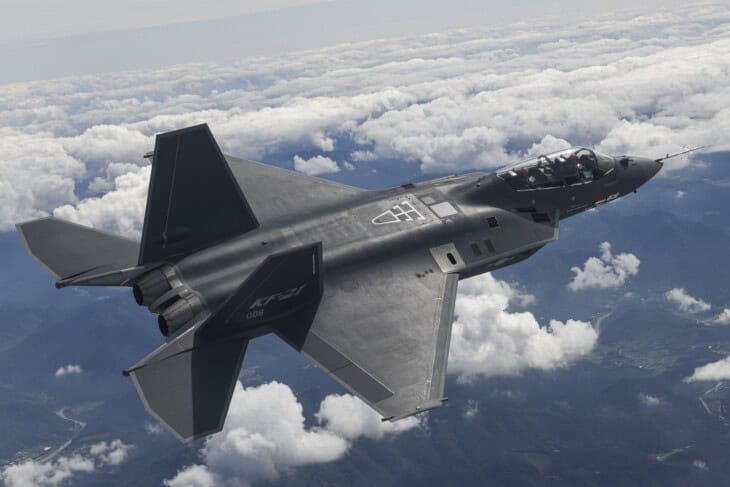
South Korea is also the newest member of a very small club. The first production KF-21 Boramae rolled out in March 2026, with up to 120 aircraft planned by 2032, making it one of the few countries designing and building its own modern fighter.
It ranks ninth because that power is regional by design. South Korea has limited tanker and airlift capacity and no ambition to project force beyond its neighborhood.
10. Australia
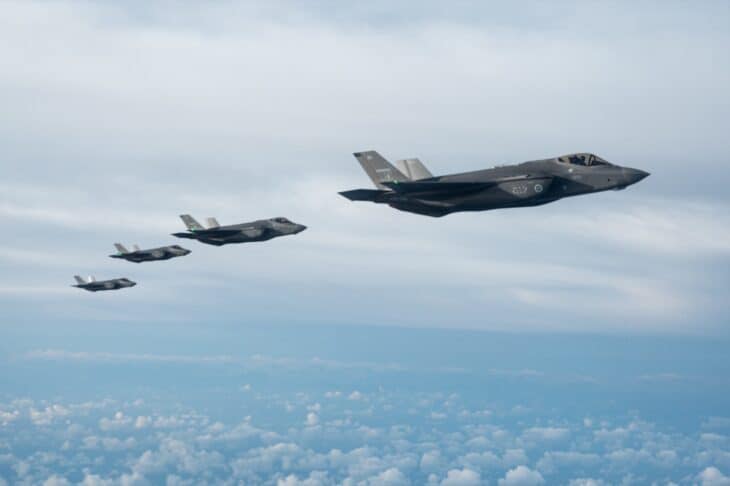

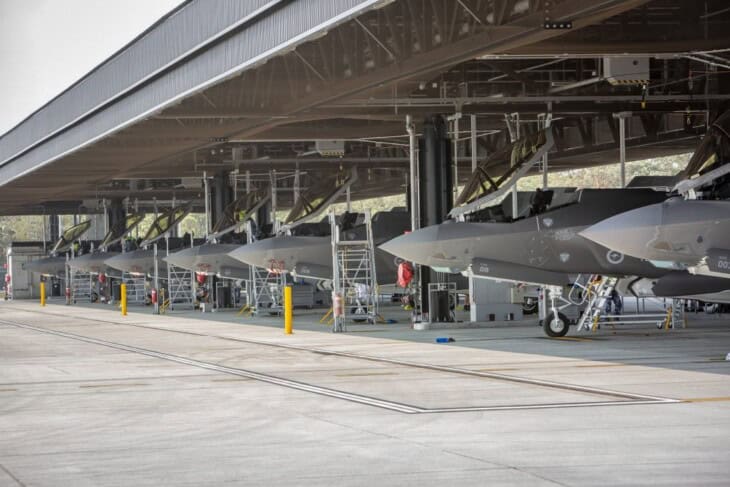
The Royal Australian Air Force has only about 250 aircraft, but it may be the most complete small air force in the world, with no obvious capability holes.
It completed its full order of 72 F-35As in December 2024. It also flies the E-7A Wedgetail, an airborne early warning aircraft so good that the US Air Force is buying it to replace the E-3.
Australia is the only country other than the United States permitted to operate the EA-18G Growler, the dedicated electronic attack aircraft that makes suppressing air defenses possible.
Stealth, electronic attack, airborne early warning, tankers and strategic airlift in one force of 250 aircraft is a level of balance that much larger air forces do not achieve.
The near misses
Turkey has the strongest case for eleventh. It flies a large F-16 fleet, leads the world in the operational use of armed military drones, and is developing the KAAN fighter, but it was ejected from the F-35 program and has no stealth aircraft.

Saudi Arabia has money and modern hardware, including F-15SAs and Typhoons, but its air campaign in Yemen exposed real weaknesses in targeting and sustainment.
Italy and Germany both operate serious modern fleets inside NATO, and Italy is a full GCAP partner. Pakistan punches above its weight with J-10Cs and JF-17s but depends almost entirely on Chinese supply.
North Korea appears high on any list that counts airframes, with 455 combat aircraft. Most are 40 to 80 years old and analysts estimate only a small fraction are flightworthy, which is exactly why counting is not ranking.
What about the US Navy?
Some rankings list the US Navy as the world’s second-best air force, ahead of Russia and China. On carrier aviation alone that is defensible: the Navy and Marine Corps operate thousands of aircraft including F-35Bs and F-35Cs. This list ranks countries rather than services, so American naval aviation is counted inside the United States entry at number one. Split out on its own, it would indeed rank second.
What could change this ranking by 2030
China is the obvious variable. If J-20 production holds near 120 aircraft a year and a sixth-generation type enters service before the F-47, the gap at the top narrows faster than any Western planning assumption currently allows.
India could climb quickly or slide further. Deciding the 114-aircraft competition and delivering Tejas Mk1A on schedule would rebuild its squadron count, and continued delay would not.
Russia’s position depends on whether it can rebuild a modern combat fleet under sanctions while replacing four years of losses. On current evidence, that is the least likely outcome on this page.
And the whole measure may shift. Uncrewed collaborative aircraft, the ones designed to fly alongside stealth aircraft as expendable wingmen, could make the size of a manned fighter fleet a much less useful number by 2030 than it is today.
FAQ
Sources and references used for research and fact-checking.
- FlightGlobal, 2026 World Air Forces directory
- Air & Space Forces Magazine, 2026 USAF & USSF Almanac: Total Aircraft Inventory
- The War Zone, How Many J-20 Stealth Fighters Does China Actually Have?
- Aerospace Global News, Four years of war: Counting Russian and Ukrainian aircraft losses
- Aerospace Global News, Air forces with the biggest combat fighter fleets in 2026
- Air & Space Forces Magazine, Pentagon Says Chinese Air Force Nipping at USAF's Heels, but Not Yet a Match
Get the Newsletter
The latest aviation news and stories sent to your inbox.
About the Author

Tim is the owner and lead editor of AeroCorner since 2019, overseeing aviation content covering aircraft, airlines, airports, and the broader aviation industry. Through years of researching, writing, editing, and publishing aviation-focused content, he has developed extensive practical knowledge of commercial aviation and air travel. Based in Asia and a frequent traveler himself, Tim also brings firsthand passenger experience to AeroCorner’s coverage. Outside of publishing, he has also explored aviation firsthand through hands-on flight training in New Zealand.