

Table of Contents
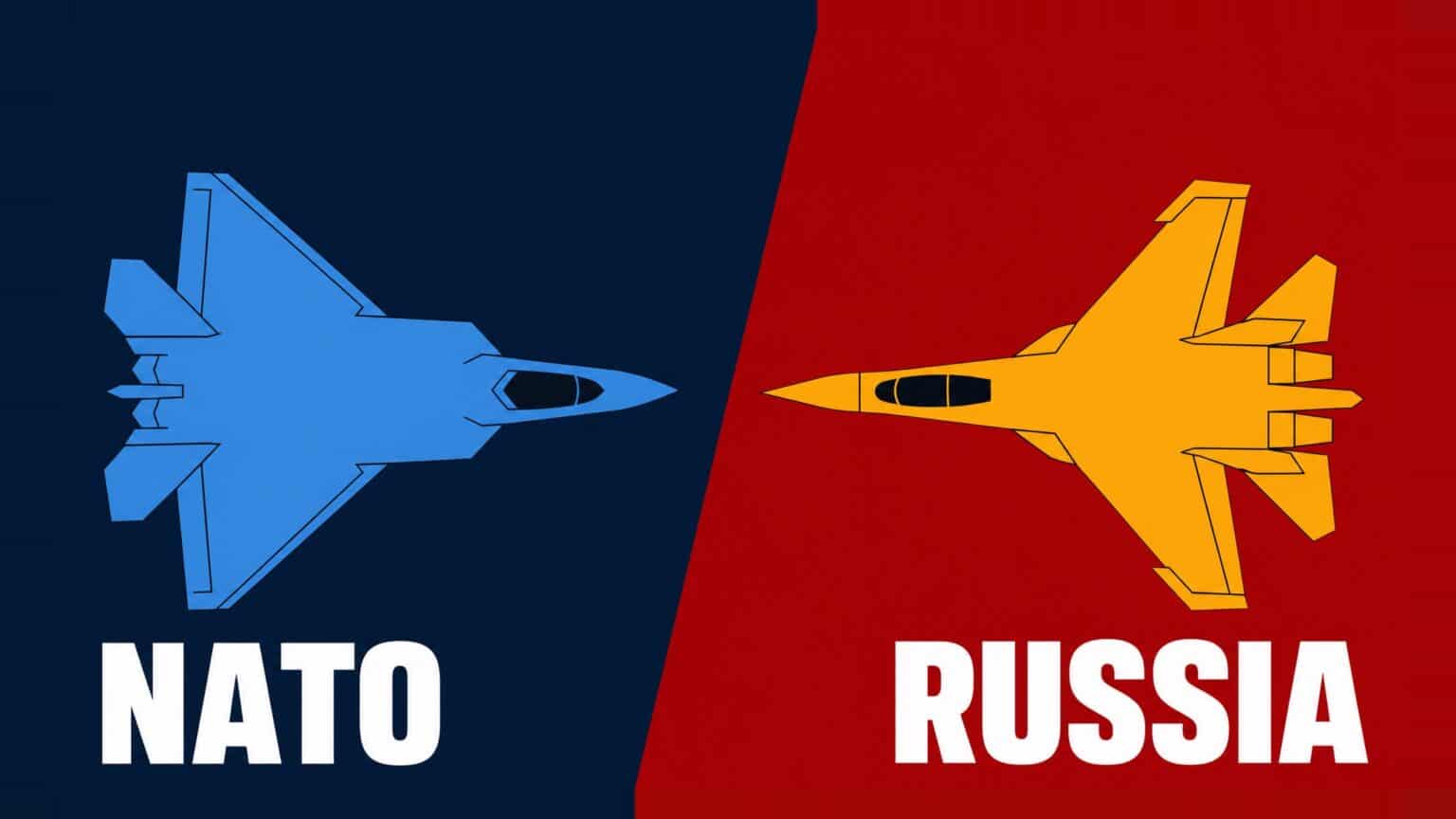
NATO holds a decisive advantage over Russia in the air, and the reason has almost nothing to do with the aircraft-count charts that dominate this question. It is stealth, aerial refuelling, and airborne radar: the three capabilities that let an air force find, reach, and survive a modern battlespace.
Russia leads NATO in exactly two areas, and both are real. It fields denser layered long-range surface-to-air missile coverage, and it manufactures cheap one-way attack drones and guided glide bombs at a volume no NATO member currently matches.
This article ranks the ten capabilities that actually decide an air war, ordered by how much each one shapes the outcome, and names the winner in each. All figures are as of August 2026.
| Rank | Capability | Edge | The decisive gap |
|---|---|---|---|
| 1 | Fifth-generation stealth fighters | NATO | Almost 1,300 F-35s delivered worldwide vs roughly 30 to 40 Su-57 airframes |
| 2 | Aerial refuelling tankers | NATO | Around 550 NATO tankers vs 15 to 19 Russian Il-78s |
| 3 | Airborne early warning and control | NATO | 14 NATO E-3As plus national fleets vs roughly four flyable A-50Us |
| 4 | Suppression of enemy air defences | NATO (US-dependent) | Only the USAF holds a full-scale SEAD force; Russia has none that works |
| 5 | Fourth-generation multirole mass | NATO | US alone fields 2,718 combat aircraft vs Russia’s 1,559 |
| 6 | Ground-based air defence | Russia | Deep S-300 and S-400 belts vs a European Patriot backlog running to 2032 |
| 7 | Long-range strike and bombers | NATO | 140 US bombers including 19 stealth B-2s vs 115 non-stealth Russian bombers |
| 8 | Cheap mass: drones and glide bombs | Russia | Roughly 5,800 attack drones a month vs no comparable NATO production |
| 9 | Strategic airlift and basing | NATO | Airfields across 32 countries vs a narrow set of western Russian bases |
| 10 | Training, flight hours and readiness | NATO | Western pilots typically fly two to three times the annual hours |
How this comparison works
This ranks capabilities, not airframes. Raw fleet totals are the standard way to answer this question and they are close to useless: the widely quoted “NATO 20,375 aircraft vs Russia 4,237” figure counts trainers, helicopters and transports, and around 13,000 of NATO’s total belong to the United States alone. We rank by fielded combat capability and by the enablers that make combat aircraft usable, then note where the alliance depends on a single member to deliver it.
1. Fifth-generation stealth fighters
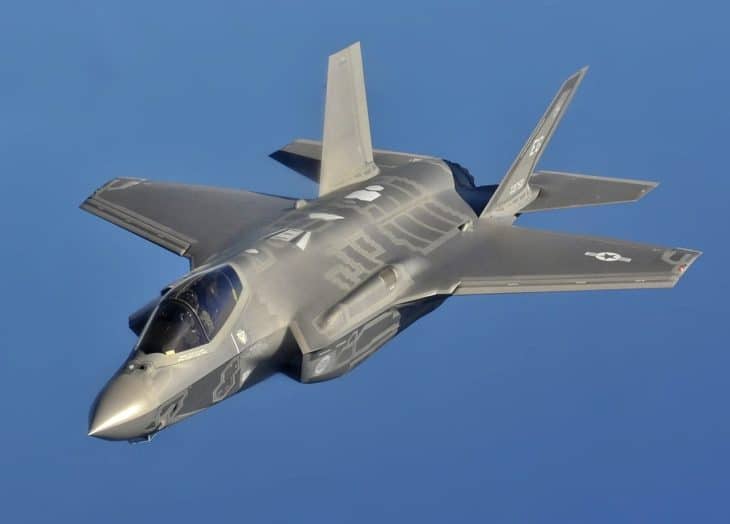
This is the single largest gap and the one that would decide the opening days of any air campaign. Almost 1,300 F-35s have been delivered worldwide, the majority to US services, and roughly 200 now fly with European air forces.
Thirteen European countries have ordered the type, with programmes of record totalling well over 600 aircraft. Poland and Germany began receiving their first jets in 2026, and another 250 to 300 are scheduled to arrive across Europe by 2036.
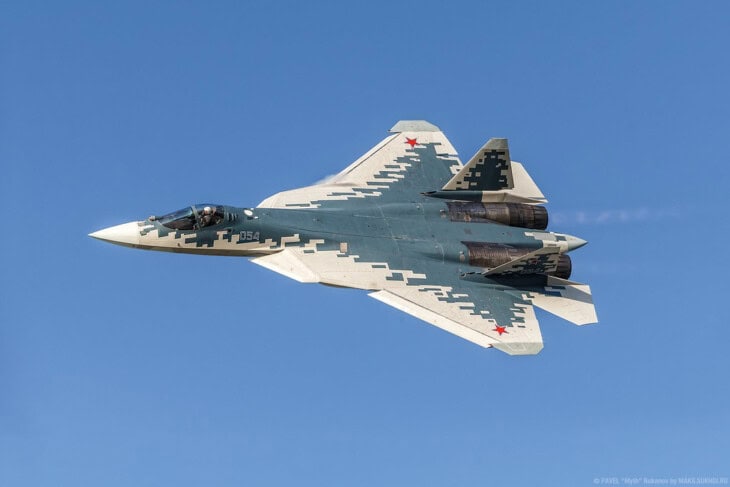
Russia’s answer is the Sukhoi Su-57 Felon, and it has not scaled. Open-source counts put the total built at roughly 30 to 40 airframes including prototypes, no deliveries were confirmed during 2025, and the first small 2026 batch arrived in February.
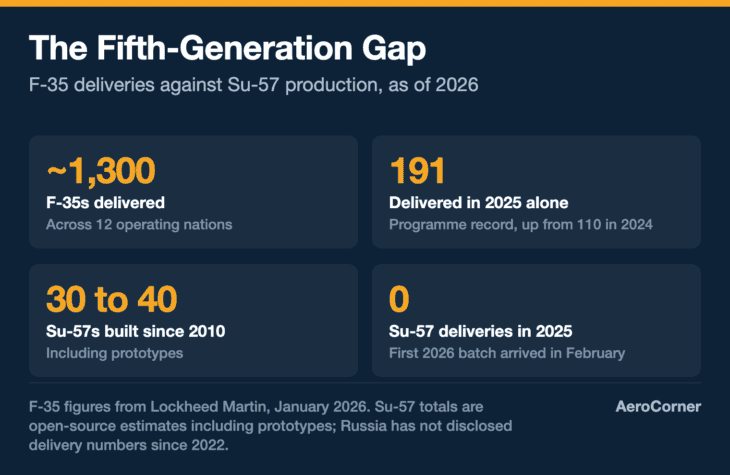
The stated target of 76 aircraft by 2027 or 2028 now looks optimistic. For where the Felon sits against Moscow’s other frontline types, see our ranking of the best Russian fighter jets.
The ratio nobody quotes
Norway alone has taken delivery of more F-35s than Russia has built Su-57s in the entire programme, prototypes included. A single mid-sized NATO air force out-numbers Russia’s whole fifth-generation fleet.
2. Aerial refuelling tankers
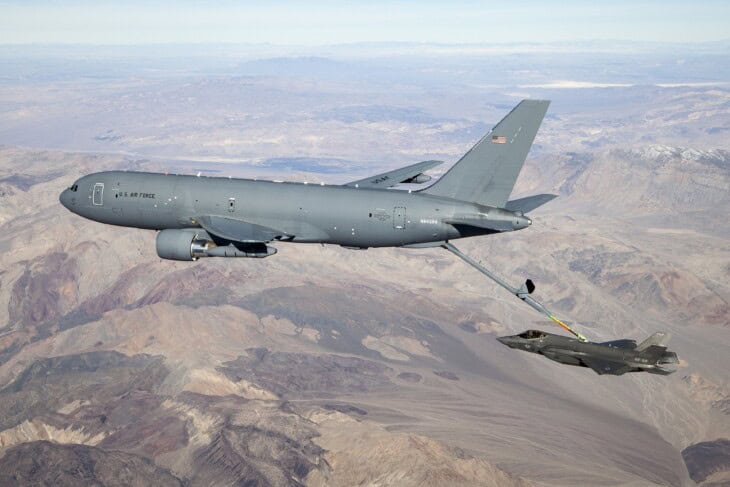
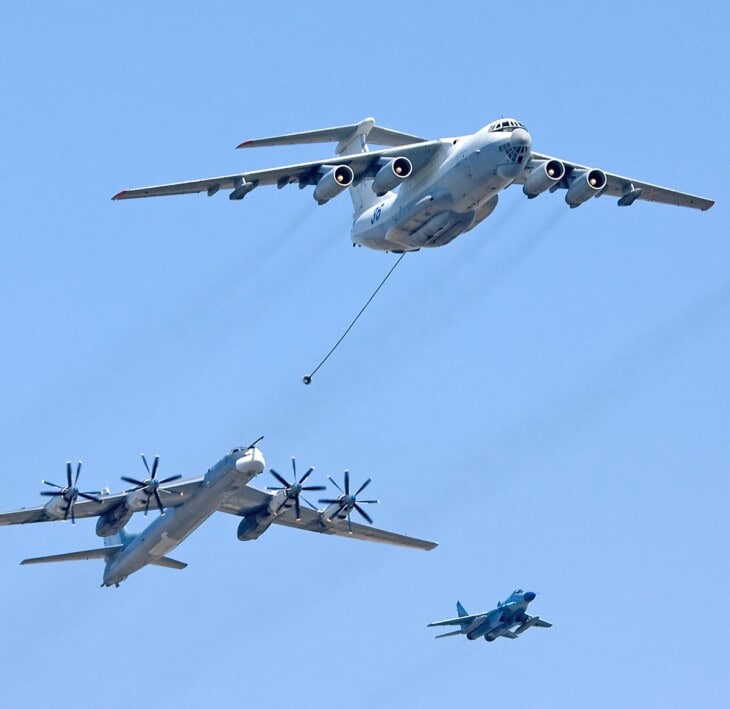
Tankers are the least glamorous entry on this list and arguably the most important. Without them, fighters fly short sorties close to home, and an air force cannot mass over a distant target or sustain pressure for more than a few hours.
The US Air Force operates roughly 400 KC-135 Stratotankers and more than 100 newer KC-46 Pegasus tankers, against a required minimum inventory of 466. European NATO members add around 50 to 55 more, mostly Airbus A330 MRTTs flown by the UK, France, and the multinational pool based in the Netherlands.
Russia fields an estimated 15 to 19 Il-78 and Il-78M tankers. That is not merely fewer aircraft: RUSI analysts note Russia has repeatedly failed to organise massed refuelling operations at all, because doing so demands tanker availability, trained crews, and coordination it has never built.
3. Airborne early warning and control
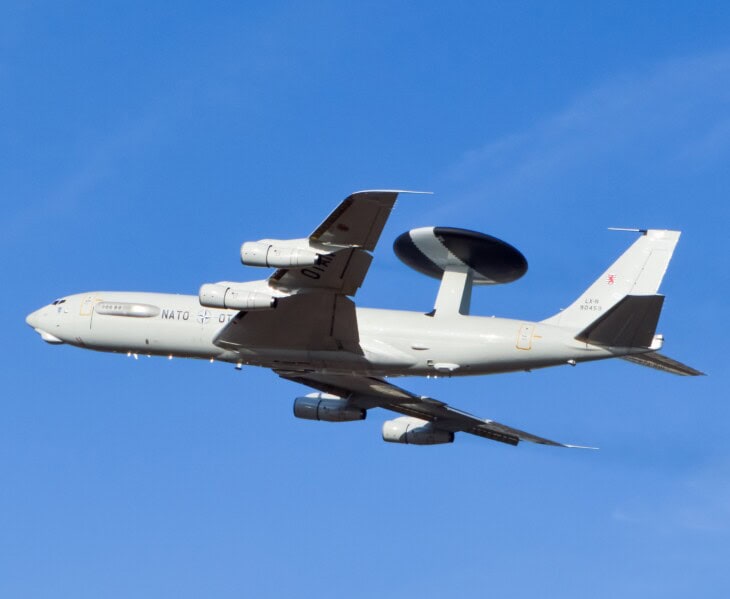
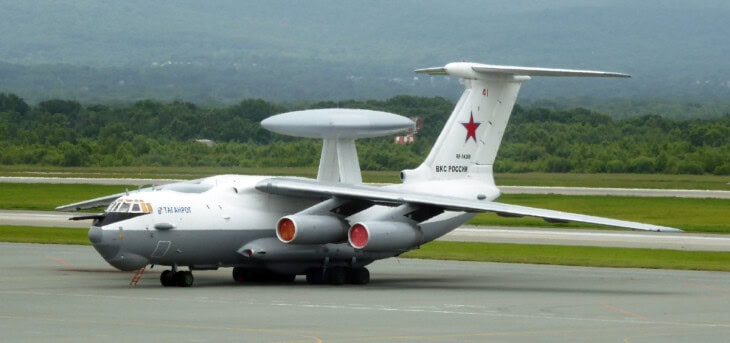
An airborne radar aircraft is what turns a collection of fighters into an air force. It sees further than any ground radar, directs interceptors onto targets, and holds the picture when ground sites are jammed or destroyed.
NATO operates 14 Boeing E-3A Sentry aircraft from Geilenkirchen in Germany as a jointly owned fleet, on top of national assets flown by the United States, the UK and France. In July 2026 the alliance opened negotiations with Saab for up to ten GlobalEye aircraft to replace them, backed by eleven member states.
Russia received eight upgraded Beriev A-50U aircraft in total and has acknowledged losing at least three, two of them shot down over the Sea of Azov and Krasnodar within six weeks in early 2024. Open-source assessments in 2026 suggest no more than four remain flyable, and Russia can no longer build replacements.
4. Suppression of enemy air defences
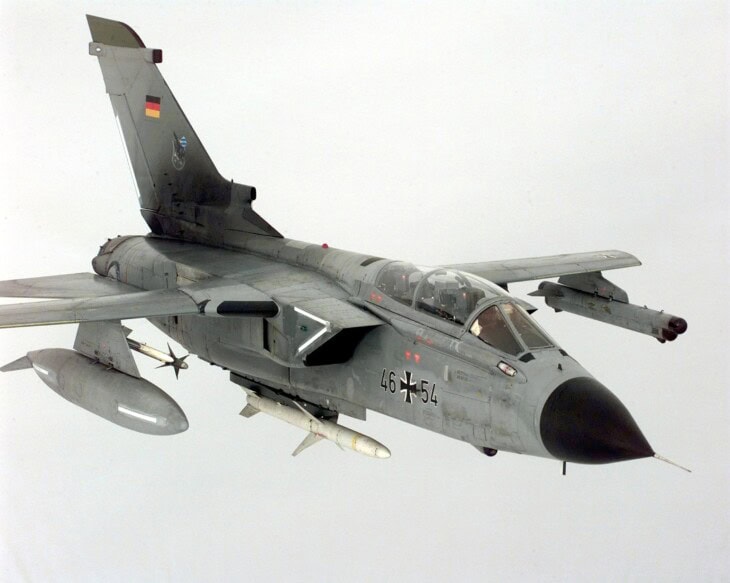
Suppression and destruction of enemy air defences, known as SEAD and DEAD, is the job of hunting and killing mobile surface-to-air missile systems. It is the price of entry for operating over defended territory.
The war in Ukraine is the clearest evidence in decades of what happens without it. Russia has never suppressed Ukrainian air defences, and as a result its air force has spent four years unable to gain air superiority over a far smaller opponent.
NATO wins this category, but with an honest asterisk. RUSI’s assessment is blunt: no Western air force other than the US Air Force holds a serious SEAD and DEAD capability, which makes it a bottleneck even with full American participation.
5. Fourth-generation multirole mass
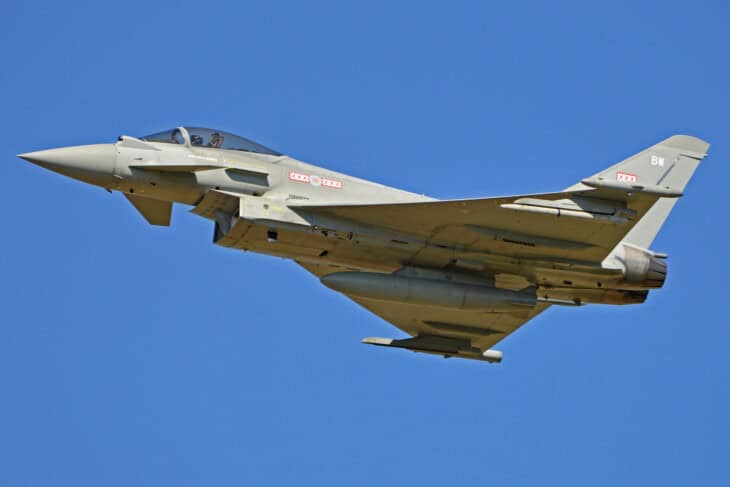
Stealth wins the first night. The bulk of any campaign is flown by fourth and 4.5-generation multirole fighters, and here NATO wins on both quantity and quality.
FlightGlobal’s 2026 directory credits the United States with 2,718 combat aircraft against Russia’s 1,559. Add the Eurofighter Typhoon fleets of nine European air forces, French Rafales, Swedish-built Gripens, and hundreds of upgraded F-16s, and the alliance total runs past 4,000 airframes.
Russia’s headline number is also softer than it looks. Strip out the ageing MiG-29s, Su-24s and Su-25s and RUSI puts the genuinely modern Russian fighter force at roughly 545 to 560 aircraft, before accounting for combat losses.
Those losses are not theoretical. As of February 2026 the open-source tracker Oryx had visually confirmed 181 Russian fixed-wing aircraft destroyed or damaged in Ukraine, including 42 Su-34s, 20 Su-30SMs, eight Su-35Ss and one Su-57.
Our ranking of the best fighter jets in the world covers how the individual types compare, and the same generational logic drives our US vs China fighter jet comparison.
6. Ground-based air defence
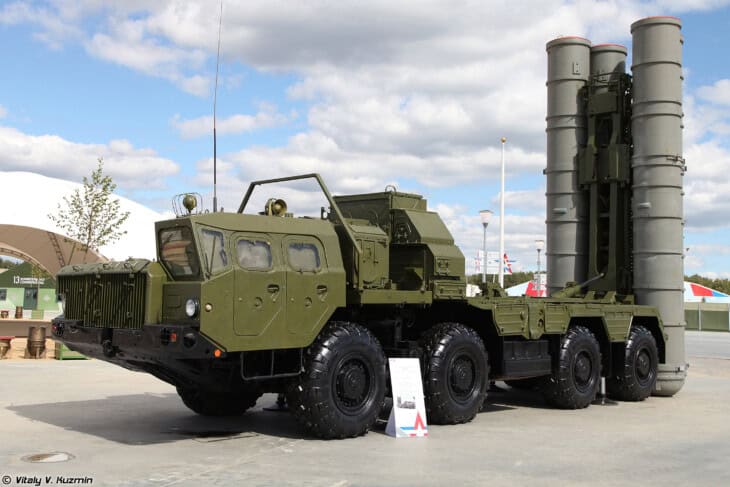
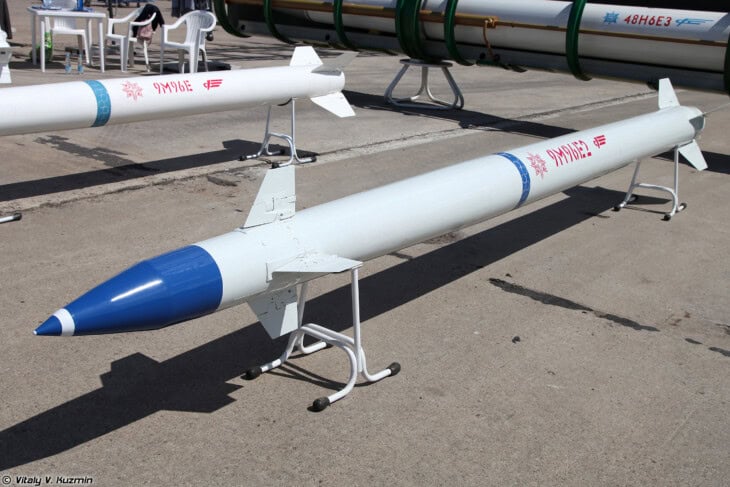
This is Russia’s strongest card and the first genuine reversal on the list. Russia has invested for decades in overlapping S-300 and S-400 belts, backed by shorter-range Pantsir and Buk systems, producing dense coverage over its western approaches and Kaliningrad.
NATO’s equivalent is thinner than most readers expect. European members have transferred Patriot batteries to Ukraine, and NATO’s Admiral Pierre Vandier warned in 2025 that new Patriot deliveries could take around seven years, meaning orders placed now arrive around 2032.
Europe is responding with the Franco-Italian SAMP/T NG and expanded national programmes. The gap is a supply problem rather than a technology problem, and supply problems take years to fix.
7. Long-range strike and bombers
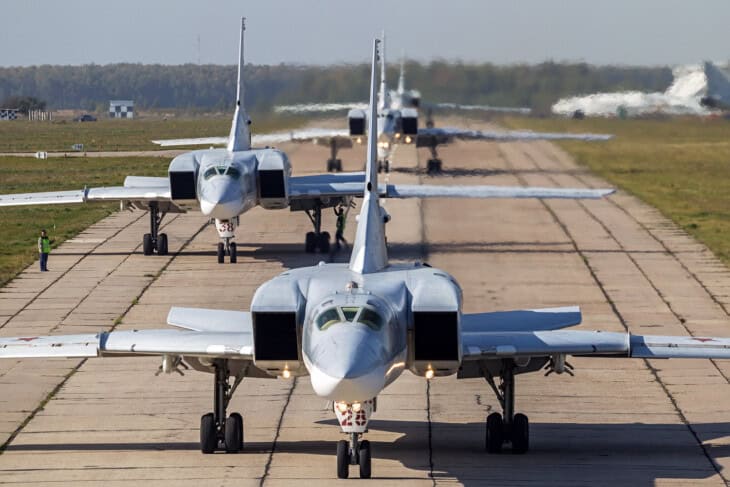
Russia’s Long-Range Aviation fields around 115 strategic bombers: roughly 56 Tu-22M3s, 44 Tu-95s and 15 Tu-160s. None are stealthy, and all are Soviet-era designs that launch stand-off cruise missiles from outside defended airspace.
The US bomber force is similar in size at roughly 76 B-52Hs, 45 B-1Bs and 19 B-2 Spirits, but it includes the only operational stealth bombers in the world. The first B-21 Raiders are due to reach frontline units from 2027.
The distinction that matters is penetration. Russia can shoot into defended airspace from a distance; a B-2 or B-21 can fly into it.
8. Cheap mass: attack drones and glide bombs
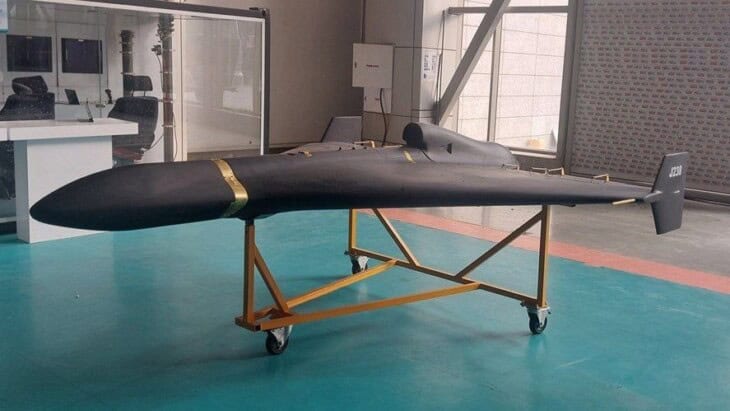
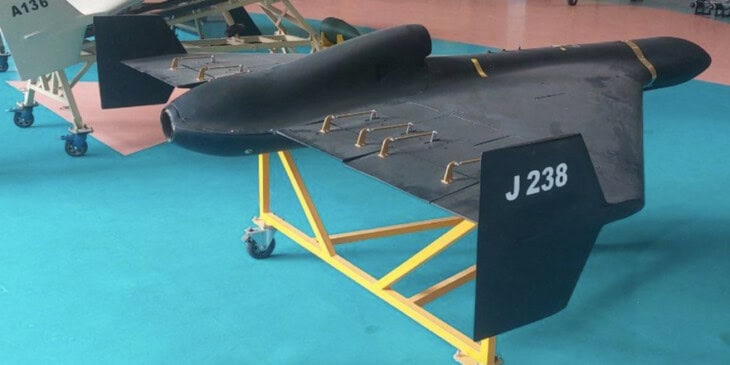
Russia’s second clear win, and the one that has changed most since 2022. Ukrainian military intelligence assesses Russian output at roughly 2,800 Geran-2 drones and 3,000 jet-powered Geran-4 and Geran-5 drones per month during 2026, against a plan for 110,000 long-range drones across the year.
The same logic applies to guided glide bombs. By early 2025 Russia was fitting roughly 3,500 UMPK kits to conventional bombs each month, turning a huge stock of dumb ordnance into stand-off weapons for a few thousand dollars apiece.
No NATO member manufactures expendable strike systems at that rate. Western inventories skew toward small numbers of expensive, precise munitions, and our guide to the best military drones in the world shows how differently the two philosophies have developed.
9. Strategic airlift and basing
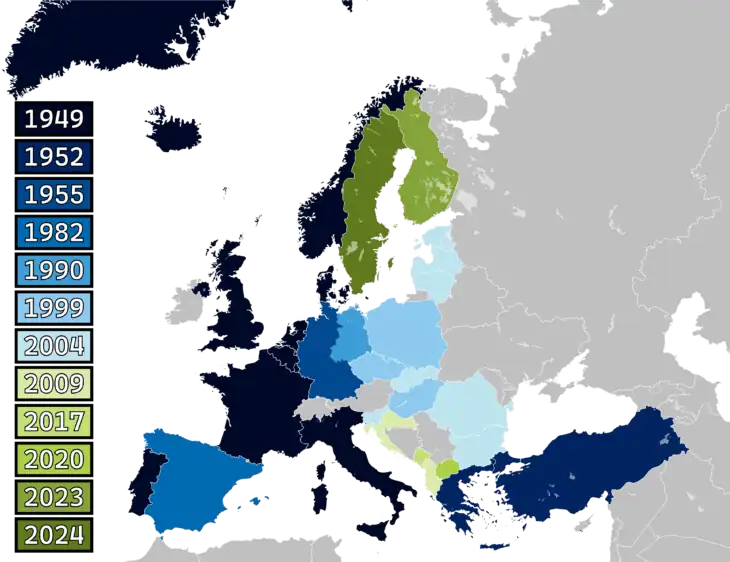
Air power is geography as much as hardware. NATO can operate from airfields across 32 member states, from Alaska to Turkey, with pre-positioned fuel, munitions and maintenance at each.
Russia projects air power over Europe from a comparatively narrow set of bases in its western military districts and in Kaliningrad, all within range of NATO stand-off weapons.
Ukraine has already demonstrated how vulnerable concentrated basing is, striking parked strategic bombers deep inside Russian territory. Dispersal is a defence Russia does not have much room to use.
10. Training, flight hours and readiness
The least quantifiable category and one of the most decisive. Western fast-jet pilots typically log two to three times the annual flying hours of their Russian counterparts, and train routinely in large multinational exercises.
Fleet totals published for Russia count aircraft as active in an accounting sense, not as mission-ready with a current pilot and a serviceable airframe. That distinction is why RUSI’s readiness-adjusted figure sits so far below the headline number.
Where the gap is actually closing
The uncomfortable finding of 2026 is that Russia has been probing NATO’s air defences and largely getting away with it. An International Institute for Strategic Studies report published in June 2026 concluded it was highly likely Russia was behind some 144 surveillance drones flown over a dozen NATO countries between August 2024 and February 2026.
Some flew near Ramstein Air Base and facilities tied to NATO’s nuclear mission. The IISS assessment was that the campaign mapped air defences and measured response times, amounting to a series of tactical successes for Moscow and a strategic failure of allied air defence in Europe.
On 12 August 2026, Germany’s defence chief General Carsten Breuer put it directly: Russia is testing NATO and watching how it responds.
NATO has moved. After around 23 Russian drones crossed into Polish airspace in September 2025, Poland invoked Article 4 and the alliance launched Operation Eastern Sentry, folding national air-policing efforts into a single integrated command with German Eurofighters, French Rafales, Italian F-35As and a SAMP/T battery in Estonia.
That is the honest state of the comparison. NATO would win a war in the air, and Russia has spent two years proving it can operate below the threshold where that advantage ever gets used.
What about NATO without the United States?
This is the question that changes the answer, and it deserves a straight one. European NATO still comfortably out-classes Russia in fighters, with roughly 200 F-35s already delivered and Typhoon, Rafale and Gripen fleets on top. What it does not have is the American enabler layer: around 50 to 55 European tankers against roughly 500 US ones, a jointly owned AWACS fleet of 14 ageing aircraft, and almost no independent capability to hunt mobile surface-to-air missile systems. Europe would win a fighter-versus-fighter contest and would struggle to run a sustained offensive air campaign on its own.
FAQ
Sources and references used for research and fact-checking.
- FlightGlobal, 2026 World Air Forces directory
- Royal United Services Institute, Getting Serious About SEAD: European Air Forces Must Learn from the Failure of the Russian Air Force over Ukraine
- Stars and Stripes, NATO defenses facing Russian drone test, German military chief warns
- The War Zone, NATO Picks Saab GlobalEye To Replace Aging E-3 AWACS Fleet
- Aerospace Global News, Four years of war: Counting Russian and Ukrainian aircraft losses
- NATO, NATO launches Eastern Sentry to bolster posture along eastern flank
Get the Newsletter
The latest aviation news and stories sent to your inbox.
About the Author

Tim is the owner and lead editor of AeroCorner since 2019, overseeing aviation content covering aircraft, airlines, airports, and the broader aviation industry. Through years of researching, writing, editing, and publishing aviation-focused content, he has developed extensive practical knowledge of commercial aviation and air travel. Based in Asia and a frequent traveler himself, Tim also brings firsthand passenger experience to AeroCorner’s coverage. Outside of publishing, he has also explored aviation firsthand through hands-on flight training in New Zealand.