

Table of Contents
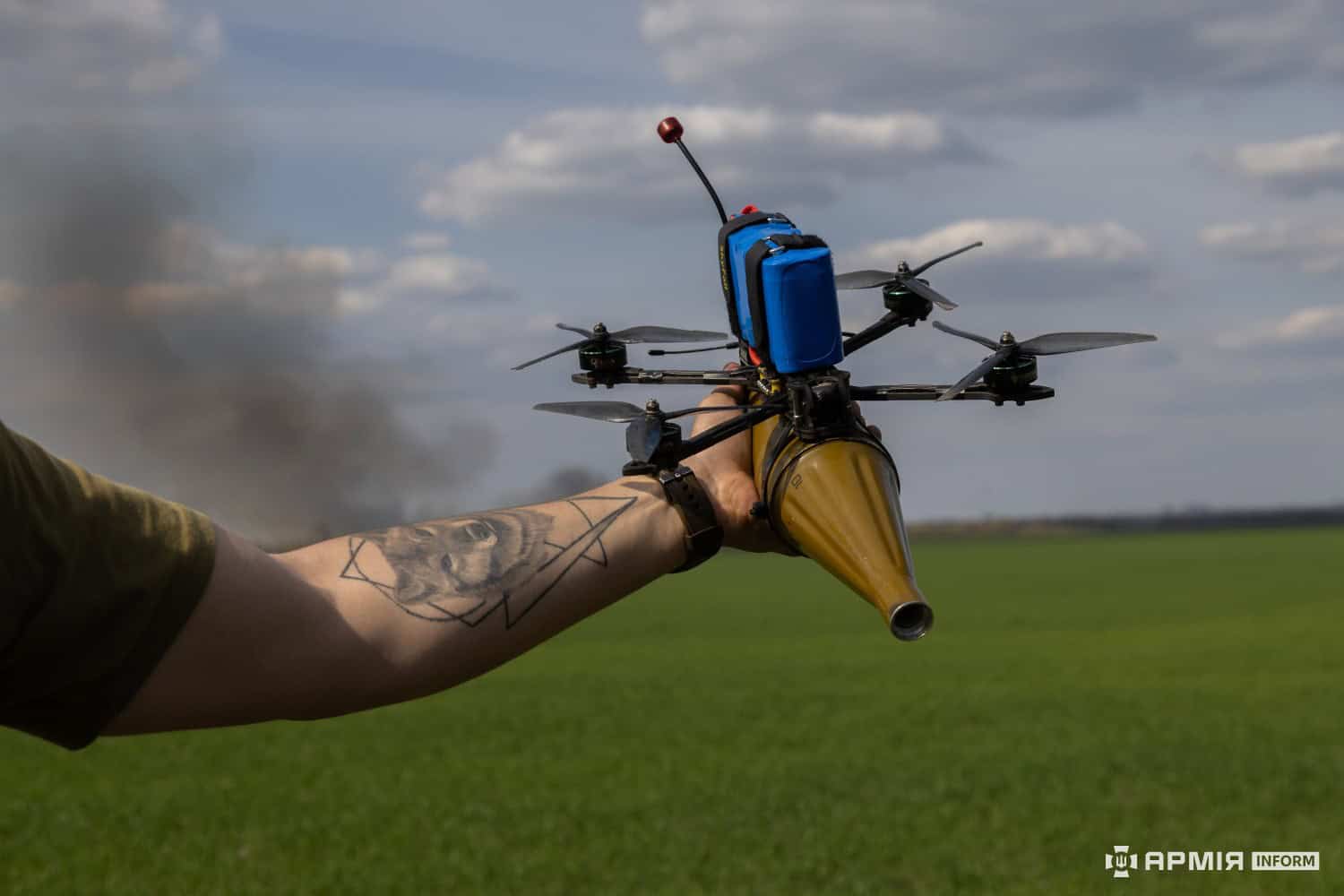
Ukraine’s most important drone is not one aircraft but a class: the first-person-view (FPV) attack drone, a racing quadcopter with a bomb strapped to it that costs a few hundred dollars and is flown into its target through video goggles. Ukraine built at least 4 million drones in 2025, and its Defense Ministry set a target of 7 million for 2026.
This list ranks the 10 Ukrainian drone types that matter most by one measure: battlefield impact, meaning what each has actually done in combat, weighted by how many are flying. Cheap drones fielded by the million outrank expensive ones that fly a handful of missions.
Figures are dated November 2026. The war is still being fought, so most ranges and kill counts are claims by Ukraine or the maker, and the table marks them that way.
| Rank | Drone | Role | Reported reach | What it changed |
|---|---|---|---|---|
| 1 | FPV attack drones | Front-line strike | About 9 miles (15 km), 2024 average | The most common weapon on the front |
| 2 | Fiber-optic FPV drones | Jam-proof strike | About 25 miles (40 km) | Beat electronic jamming |
| 3 | Vampire (Baba Yaga) | Heavy night bomber | 12 miles (20 km) spec | Night strikes with 33 lb (15 kg) loads |
| 4 | Sting | Shahed interceptor | Not published | Cheap kills of Russian attack drones |
| 5 | FP-1 | Long-range strike | 1,860 miles (3,000 km) claimed | Refinery strikes deep in Russia |
| 6 | An-196 Liutyi | Long-range strike | About 500 miles (800 km) | Ukraine’s first mass deep-strike drone |
| 7 | Magura V5 / V7 | Naval drone | 500 miles (800 km), V5 | Sank warships, downed two Su-30s |
| 8 | Sea Baby | Naval drone | At least 620 miles (1,000 km) | Hit the Crimean Bridge |
| 9 | Shark | Reconnaissance | 186 miles (300 km) flight range | Spots targets for HIMARS and artillery |
| 10 | Bayraktar TB2 | Armed reconnaissance | Line-of-sight datalink | The 2022 icon, now a Black Sea niche drone |
How this ranking works
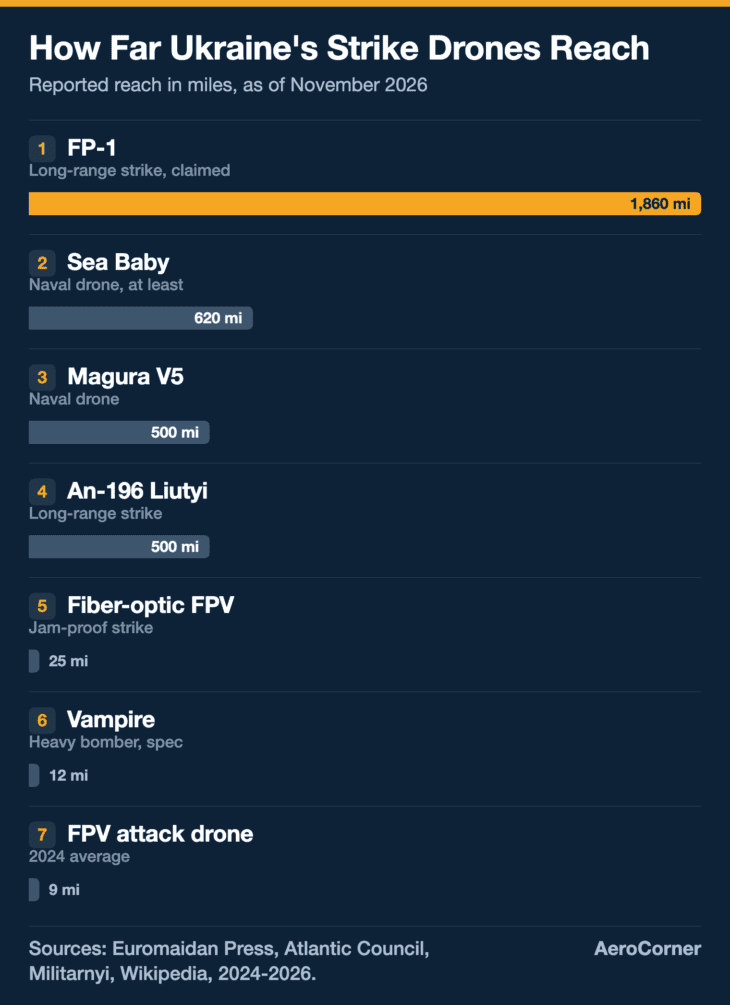
The measure is battlefield impact: what each drone type has done in combat, weighted by how many Ukraine fields. A class of drone made by the million outranks a single model flown a few times. Reach is shown but not ranked, because almost every figure comes from Ukraine or the maker during a live war. Drones Ukraine received but did not build or adapt are left out, except the Bayraktar TB2, which is too much a part of the story to skip.
1. FPV attack drones
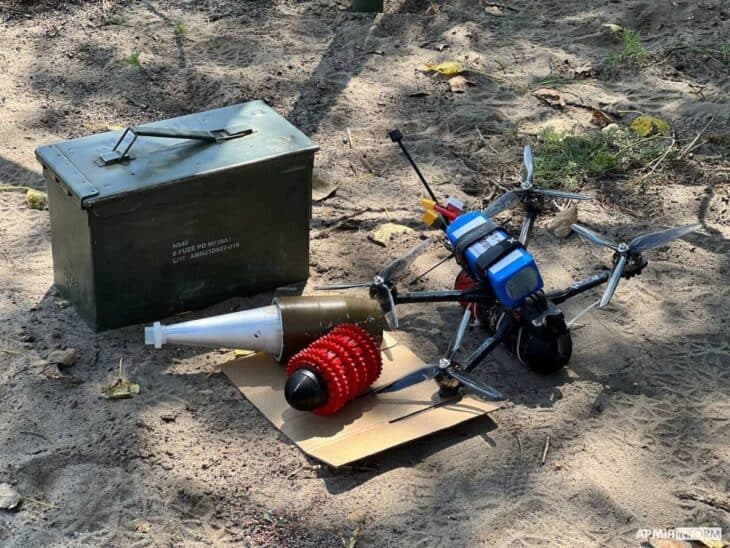

The FPV attack drone started as a hobby product. In July 2022, Ukrainians fixed a munition to a racing drone bought online and flew it into a target, and a new weapon was born.
A typical one carries 3.3 to 4.4 pounds (1.5 to 2 kg) of explosive, such as two small thermobaric bombs or a round from an SPG-9 recoilless gun. By early 2024, the average range had grown to about 9 miles (15 km), and one maker had cut the cost of its 7-inch model from about $500 to $284.
Numbers are what put it first. Ukraine built at least 4 million drones of all types in 2025, and its Defense Ministry said in October 2026 that FPV contracts that year already ran 54% above all of 2025. Our list of the best kamikaze drones in the world shows how the FPV compares with purpose-built loitering munitions.
117 small drones, 41 aircraft claimed
On June 1, 2025, Ukraine’s SBU security service launched 117 drones from trucks hidden inside Russia at four air bases, including Olenya and Belaya. Ukraine’s General Staff said 41 aircraft were hit, among them Tu-95 and Tu-22M3 bombers and A-50 radar planes. Ukraine has not published how many were destroyed rather than damaged.
That raid, Operation Spiderweb, reached bases as far away as Siberia, where Russia’s Tupolev Tu-95 bombers sat in the open, out of range of anything Ukraine was thought to have.
2. Fiber-optic FPV drones
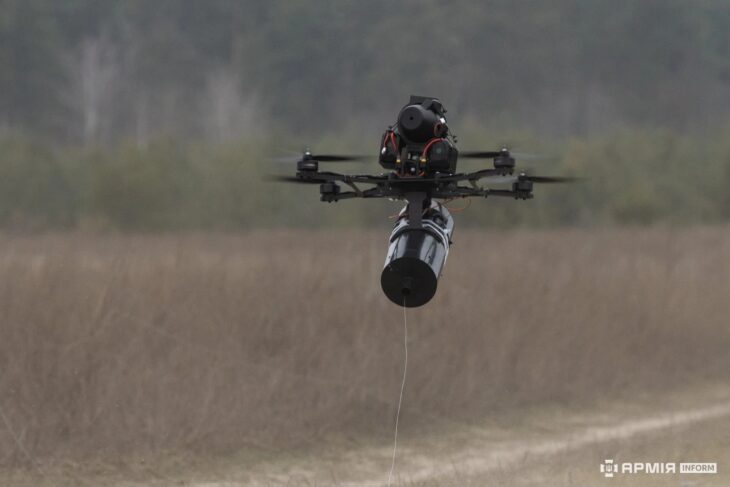

The fiber-optic drone is the answer to the radio jammer. Instead of a radio link, it unspools a cable thinner than fishing line behind it, so there is no signal for electronic warfare to jam.
Both sides now use them. By February 2026, the Atlantic Council reported Russian fiber-optic drones striking at more than 19 miles (30 km), while Ukraine’s Birds of Magyar unit had a model that reached about 25 miles (40 km).
It ranks below the radio FPV because it is a specialist tool for heavily jammed sectors rather than the default. Where jamming is heavy, though, a drone with no radio link is the one that still arrives.
3. Vampire (Baba Yaga)
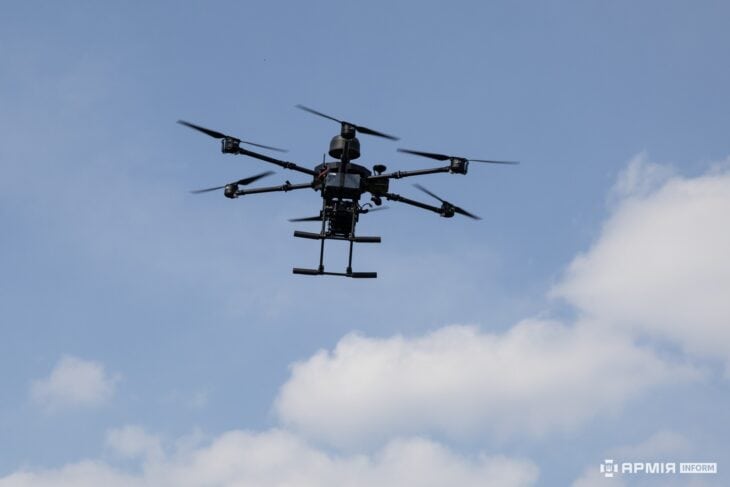

Ukraine’s heavy night bombers are nicknamed “Baba Yaga,” after the witch of Slavic folklore, and the best known is SkyFall’s Vampire. It is a large six-rotor drone that hovers over a trench or vehicle at night and drops bombs straight down.
Its specification is a 33-pound (15 kg) maximum payload and a range of 12 miles (20 km). SkyFall told the Ukrainian outlet Militarnyi in January 2026 that the current operational range is 22 to 25 miles (35 to 40 km).
SkyFall also says the Vampire was the most effective strike system on the battlefield in 2025, ranked first in enemy casualties and in strikes among bomber drones. Those figures come from the maker and the Army of Drones points scheme, not independent counts, but no other bomber drone has made a stronger public claim.
4. Sting
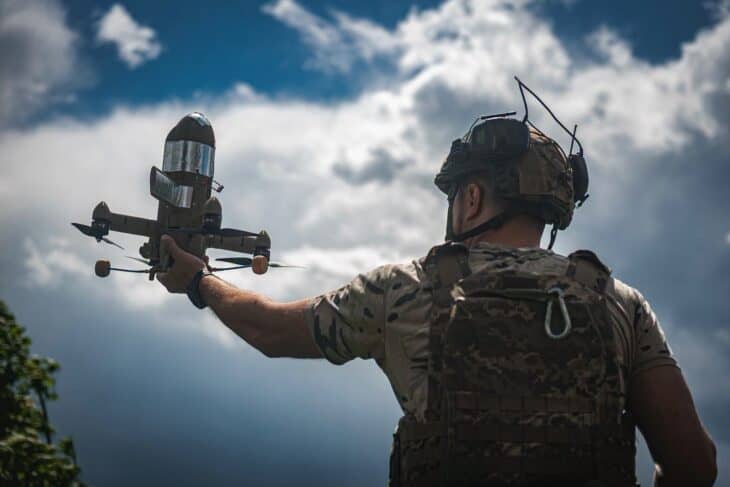

The Sting, from the Ukrainian maker Wild Hornets, is a drone built to kill other drones. It is a fast quadcopter that is flown into Russian Shahed-type attack drones to destroy them in the air.
Wild Hornets published video of the Sting reaching about 195 mph (315 km/h), fast enough to catch a piston-engined Shahed. It costs around $2,000, against $20,000 to $50,000 for the drone it hunts, so each kill costs a fraction of the target.
By Wild Hornets’ count, Stings had downed more than 3,900 Shahed and Geran-type drones by early 2026, and accounted for 70% of confirmed kills of the newer jet-powered Shaheds as of April 2026. Our explainer on the Shahed drone covers the target itself.
5. FP-1
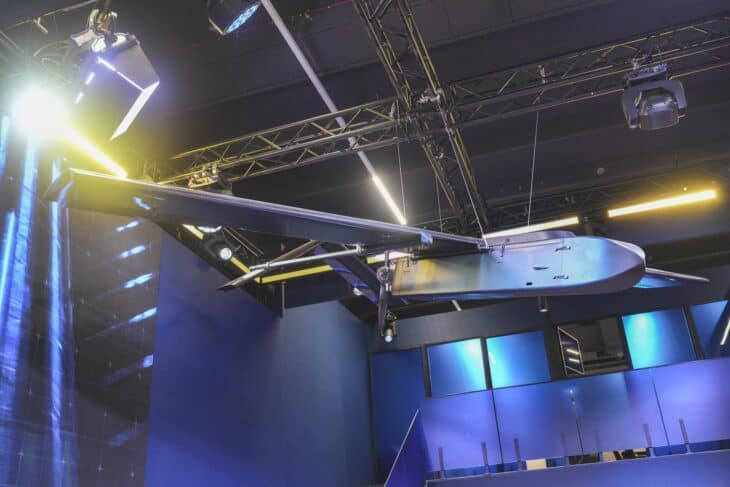

The FP-1, from the Ukrainian company Fire Point, is a propeller-driven long-range strike drone, Ukraine’s answer to the Shahed. It is priced at as little as $50,000, against as much as $500,000 for the cruise missiles and converted light aircraft Ukraine also uses.
The first version flew about 620 miles (1,000 km) with a 130-pound (60 kg) warhead, and a second generation carried 230 pounds (105 kg). In June 2026, President Zelenskyy said the upgraded FP drones can reach 1,860 miles (3,000 km), after one hit a refinery at Tyumen in western Siberia.
Fire Point has not said how it extended the range, and the warhead on the longest-range version is not published. It ranks above the Liutyi because it is a quarter of the price and is designed for production in the hundreds per day, which is what a campaign against refineries needs.
6. An-196 Liutyi
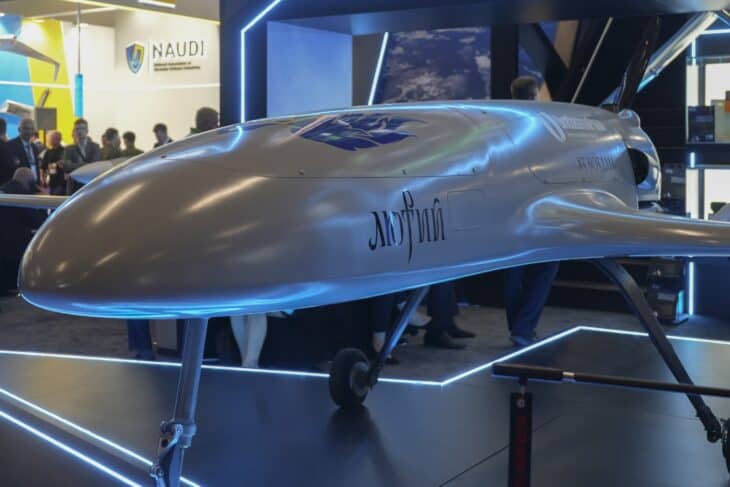

The Liutyi (“Fierce”) was Ukraine’s first long-range strike drone built in large numbers, made by the state group Ukroboronprom. It costs about $200,000, and Germany has funded around 500 of them with roughly $100 million.
It carries a warhead of about 110 pounds (50 kg) more than 500 miles (800 km). Some Liutyis reportedly carry a 165-pound (75 kg) warhead, at the cost of range. The official specification remains classified.
The Liutyi proved Ukraine could build a long-range strike drone in quantity. The FP-1 has since taken that job further, faster and cheaper.
7. Magura V5 and V7
The Magura V5 is an 18-foot (5.5 m) explosive drone boat run by Ukraine’s military intelligence agency, HUR. It reaches 42 knots, carries up to 660 pounds (300 kg) of explosive, and has a published range of 500 miles (800 km).
In five weeks of 2024, Magura V5s sank the corvette Ivanovets (February 1), the landing ship Tsezar Kunikov (February 14) and the patrol ship Sergey Kotov (March 5). A V5 armed with air-to-air missiles then reportedly shot down a Russian Mi-8 helicopter off Crimea on December 31, 2024.
A boat that shot down fighter jets
On May 2, 2025, HUR said Magura V7 drone boats armed with American AIM-9 Sidewinder missiles shot down two Russian Su-30SM fighters about 31 miles (50 km) west of Novorossiysk. They were claimed as the first jets ever downed by an uncrewed surface drone.
The V7 is a larger, roughly 26-foot (8 m) version that appears to carry missiles rather than a bow charge. Our guide to the Ukrainian Navy explains why drone boats now do the work a fleet of frigates would once have done.
8. Sea Baby
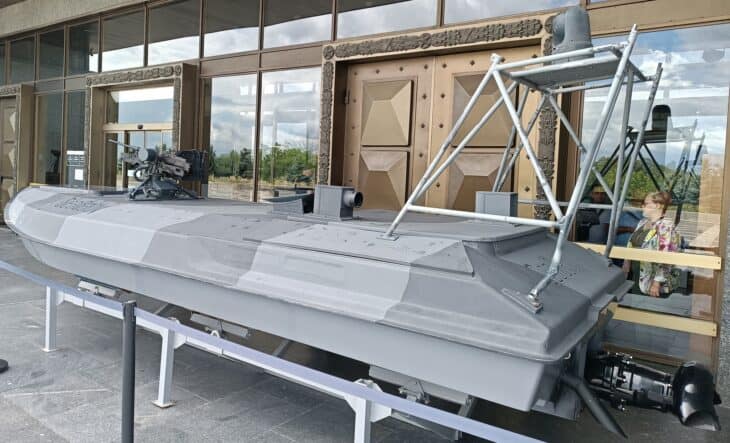

The Sea Baby is the SBU’s drone boat, developed from just after the full-scale invasion in February 2022. Later models carry up to 1,870 pounds (850 kg) of explosive, travel at about 56 mph (90 km/h) and have a range of at least 620 miles (1,000 km).
Two Sea Babies hit the Crimean Bridge on July 17, 2023, damaging a span and an abutment. In November 2025 they struck two Russian shadow-fleet oil tankers off Turkey.
It ranks just below the Magura because the Magura’s record against warships and aircraft is broader. A 2026 Hague Centre for Strategic Studies report credits drone boats, the Sea Baby among them, with a campaign that destroyed about a third of Russia’s Black Sea Fleet.
9. Shark
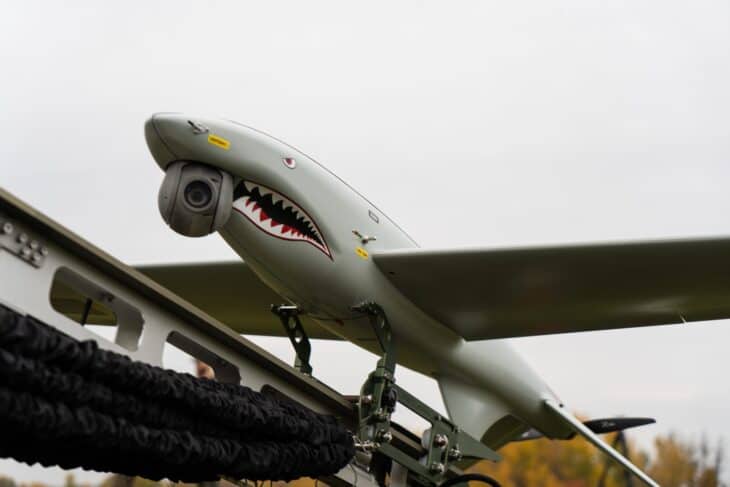

Strike drones need someone to find the target, and Ukraine’s best-known spotter is the Shark from Ukrspecsystems. It is a fixed-wing drone with a maximum takeoff weight of 28 pounds (12.5 kg).
Army Technology lists a cruise speed of about 47 mph (75 km/h), up to four hours in the air, a datalink of 50 miles (80 km) and a maximum flight range of 186 miles (300 km). Ukrspecsystems built it to resist electronic warfare and to direct Western long-range weapons, the American HIMARS rocket system in particular.
No reconnaissance drone makes headlines the way a strike drone does. But a long-range rocket is only as good as the drone that finds its target.
10. Bayraktar TB2
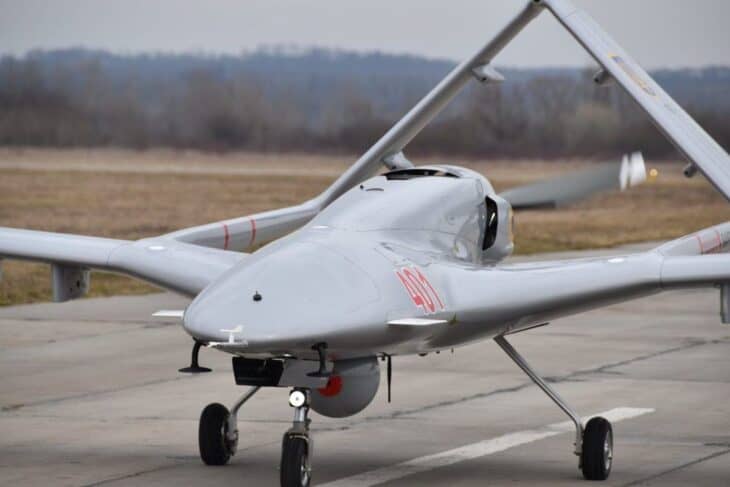

The Turkish-built Bayraktar TB2 was the face of Ukraine’s war in 2022. Baykar lists 18-plus hours of endurance, a 20,000-foot ceiling and 330 pounds (150 kg) of laser-guided bombs on a 39-foot (12 m) wing.
Russian air defenses and jamming caught up fast. The open-source tracker Oryx counted at least 26 TB2s lost in the opening months, and the type all but disappeared from the front for years.
It came back in a narrow role from June 2025, striking small boats along the Kherson coast and the Black Sea, where it can still survive. That arc, from icon to niche, is the clearest sign of how fast cheap drones overtook expensive ones. The best military drones in the world shows where the TB2 still ranks globally.
How big Ukraine’s drone war has become
On the night of November 15 to 16, 2026, Russia’s Defense Ministry said it downed 1,336 Ukrainian drones over 16 regions, the largest Ukrainian drone attack of the war. The Crimean Bridge was hit again, and the Kremlin called the damage minor.
Zelenskyy says the long-range campaign has knocked out more than half of Russia’s oil refining capacity. Two industry sources told Reuters the cut was about 30%, so the honest figure sits somewhere between the two.
The 7-million-drone target for 2026 compares with about 100,000 combat drones a year built in the US, according to Bloomberg. Our profile of the Ukrainian Air Force covers the crewed jets that fly alongside them.
What about the Shahed?
The Shahed is not a Ukrainian drone. It is an Iranian design that Russia builds as the Geran-2 and fires at Ukraine by the thousand. Ukraine’s answers to it are on this list: the Sting to shoot it down, and the Liutyi and FP-1 to do the same job in the other direction.
Iran’s own family of attack and reconnaissance drones, including the original Shahed-136, is ranked in our guide to Iranian drones.
FAQ
Sources and references used for research and fact-checking.
- Euromaidan Press, Ukraine will build 7 million drones in 2026
- Euromaidan Press, Ukraine ordered 54% more FPV attack drones this year than in all of 2025
- Euromaidan Press, How FPV drones became Ukraine's top weapon
- Kyiv Independent, Ukraine's General Staff confirms striking 41 Russian bombers, other aircraft in June 1 mass drone attack
- Atlantic Council, Fiber optics drones have emerged as critical kit for both Russia and Ukraine
- Militarnyi, VAMPIRE bomber drone becomes the most effective weapon on the front line in 2025
- Unmanned Airspace, Wild Hornets' Sting interceptor reaches 315 km/h
- DroneXL, Ukraine's 5th Assault Brigade trades $2,000 Sting drones for $50,000 Russian Shaheds
- Euromaidan Press, Ukraine's $50,000 drone just did what only $500,000 munitions could
- Euromaidan Press, Ukraine's Liutyi drone warhead grew by 50%
- Wikipedia, MAGURA V5
- Naval News, First image of Ukraine's Sidewinder-armed Magura V7 surface drone
- Wikipedia, Sea Baby
- The War Zone, New drone boat named Sea Baby used in Kerch Bridge attack
- Army Technology, Shark Unmanned Aerial System, Ukraine
- Baykar, Bayraktar TB2
- The Aviationist, Ukraine's Bayraktar TB-2 breaks hiatus
- NBC News, Ukraine launches biggest drone attack on Russia since war began
Get the Newsletter
The latest aviation news and stories sent to your inbox.
About the Author

Tim is the owner and lead editor of AeroCorner since 2019, overseeing aviation content covering aircraft, airlines, airports, and the broader aviation industry. Through years of researching, writing, editing, and publishing aviation-focused content, he has developed extensive practical knowledge of commercial aviation and air travel. Based in Asia and a frequent traveler himself, Tim also brings firsthand passenger experience to AeroCorner’s coverage. Outside of publishing, he has also explored aviation firsthand through hands-on flight training in New Zealand.