

Table of Contents
You usually hear a Shahed before you see it. Ukrainian soldiers say the buzz of its small piston engine carries for miles, as a triangle-shaped drone crawls across the night sky at about 115 mph (185 km/h).
On paper it is a crude weapon. It flies on an engine copied from a German aircraft motor, navigates partly with commercial chips, has no way home, and Ukraine’s air defenses now stop the large majority of them.
Yet Russia builds thousands a month, Iran used it to rattle the Gulf in 2026, and the US military went to war with its own copy. Here is what the Shahed drone actually is, how it works, and why a cheap drone changed the way air wars are fought.
What Is the Shahed Drone?
.jpg)
.jpg)
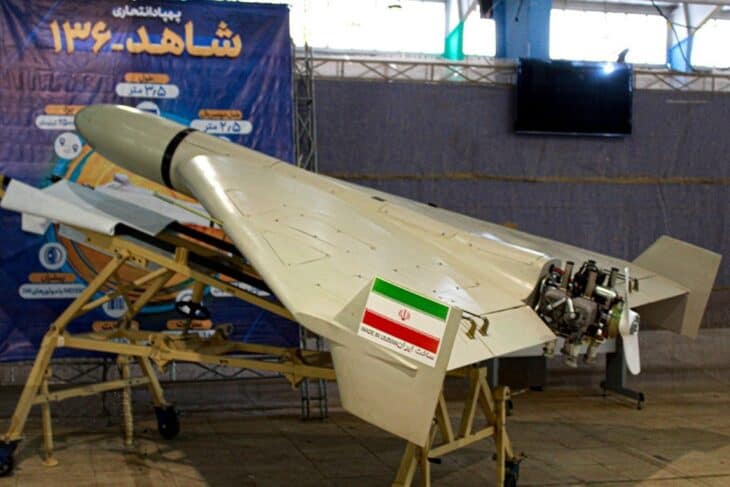
The Shahed drone is an Iranian one-way attack drone: an uncrewed aircraft that flies a preprogrammed route to a target and dives into it, destroying itself along with whatever it hits. When people say “Shahed,” they almost always mean the Shahed-136, which Russia builds under the name Geran-2.
Its importance has little to do with performance. A Shahed carries a modest warhead at propeller speed, but it costs a small fraction of the missile fired to stop it, and it can be launched by the hundred in a single night. That trade, not the drone itself, is what changed air war.
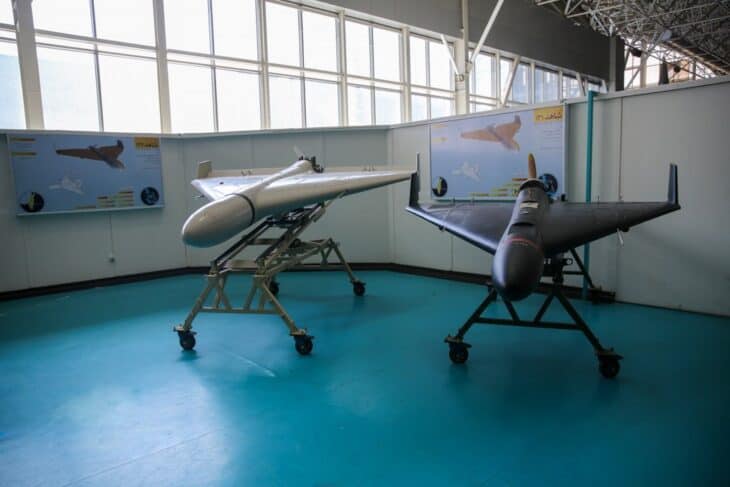
The name covers a whole family. Shahed, meaning “witness” in Persian, is the brand of Shahed Aviation Industries, which works under Iran’s Revolutionary Guard and also builds reusable drones such as the Predator-class Shahed-129, one of the classes in our guide to the different types of drones.
The Shahed-136 at a glance
Designed in Iran, first shown publicly in December 2021, and built in Russia as the Geran-2 since 2023. It is 11.5 feet (3.5 m) long, weighs about 440 lb (200 kg), cruises near 115 mph (185 km/h), and carries a warhead of roughly 110 to 200 lb (50 to 90 kg). Cost estimates run from about $20,000 to $80,000, depending on who builds it and which version.
How the Shahed-136 Works
.jpg)
.jpg)
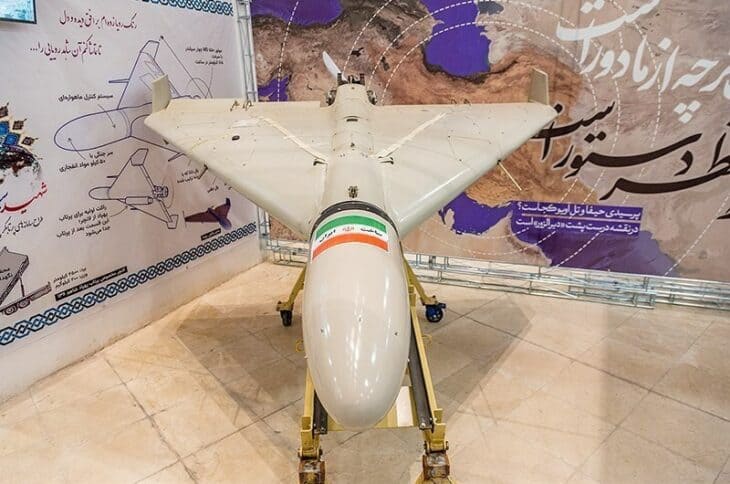
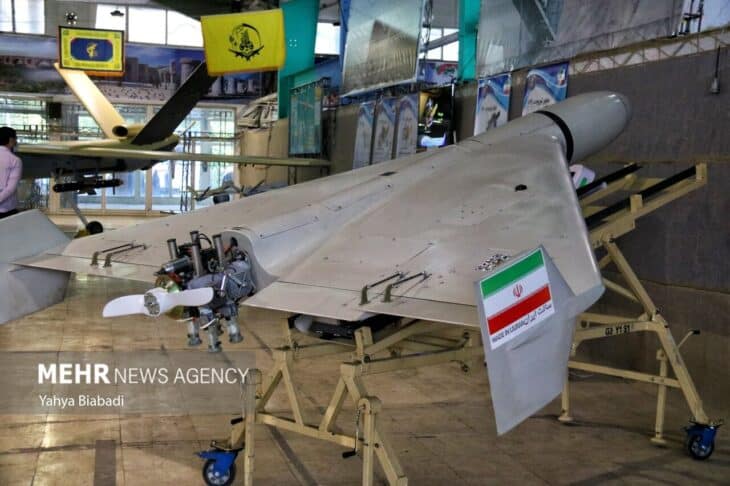
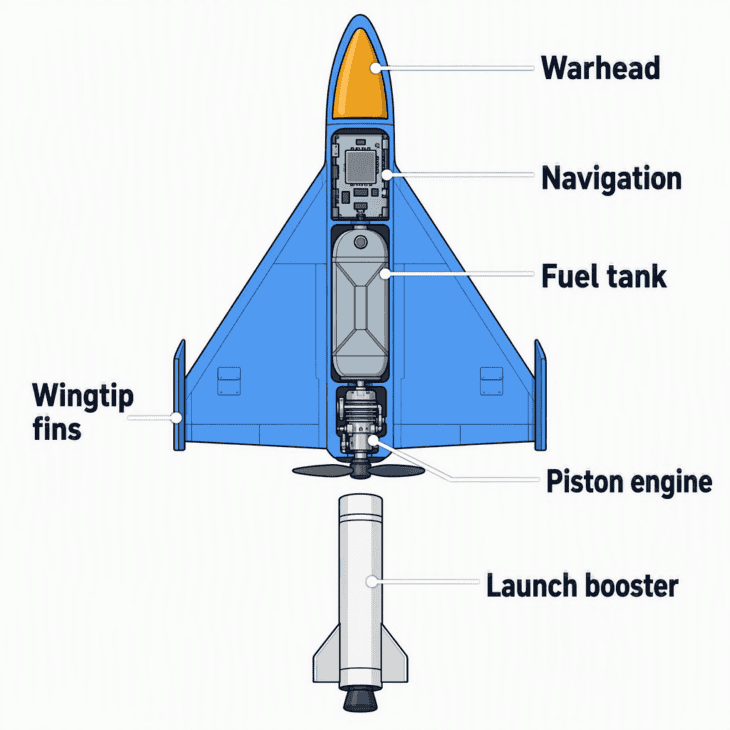
The Shahed-136 is a cropped delta wing with the fuselage blended into it and small fins at each wingtip. The warhead sits in the nose, and the engine sits at the back, driving a two-bladed pusher propeller.
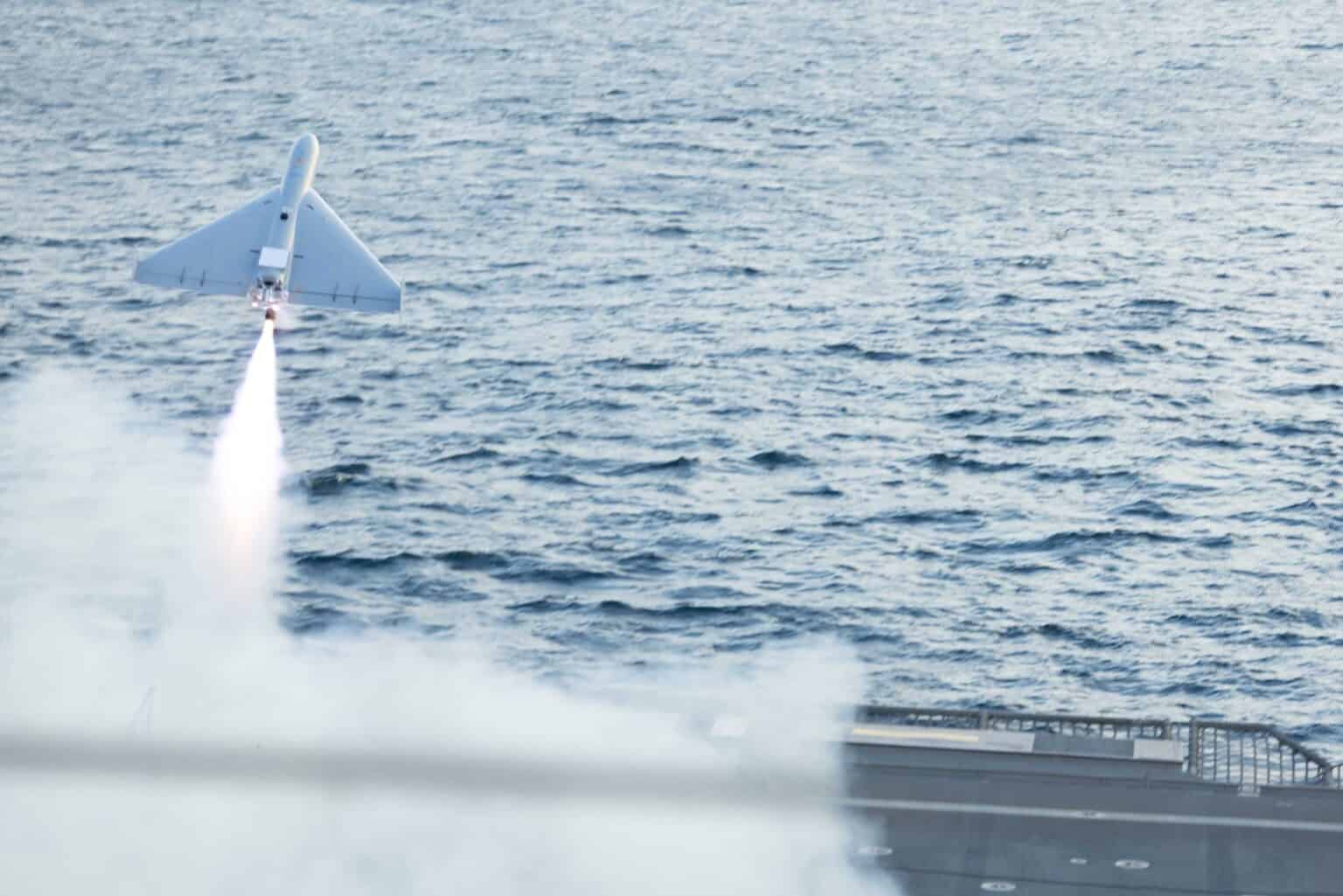
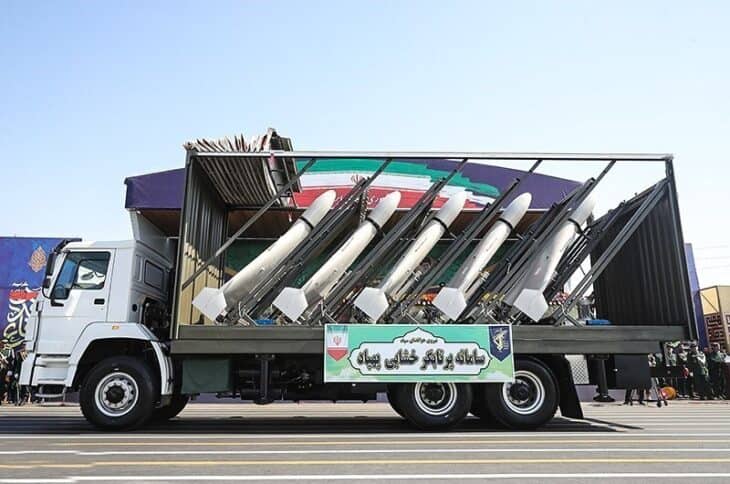
It does not need a runway. Crews fire it from a rail angled slightly upward, a rocket booster kicks it into the air and falls away, and the piston engine takes over. The launch racks fit on the back of an ordinary truck and fire several drones in succession.
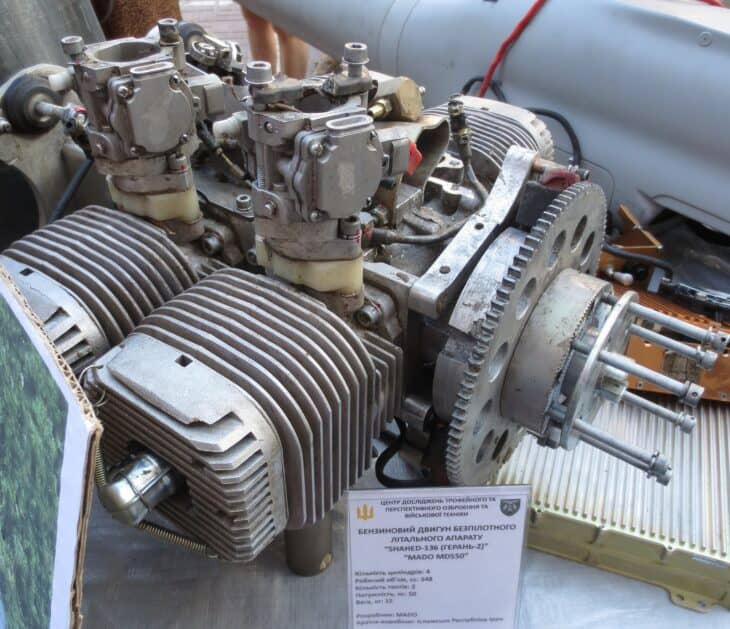
The engine is the detail most people never hear about. The Iranian MD-550 is a reverse-engineered copy of the Limbach L550E, a 550cc four-cylinder two-stroke aircraft engine made in Germany.
Even the shape has a German echo. The Shahed closely resembles the Dornier DAR, a West German anti-radar drone of the 1980s, although whether Iran actually copied it remains an open question.
Guidance is equally unglamorous. An inertial navigation unit, corrected by civilian GPS or Russia’s GLONASS satellite signals, steers the drone to a set of coordinates, which is why it mostly hits fixed targets such as power stations, fuel depots and buildings.
Western parts are part of the story. In December 2023, Ukraine’s anti-corruption agency counted 55 US-made components in the Russian Geran-2, along with parts from China, Switzerland and Japan.
| Spec | Shahed-136 (Iran) | Geran-2 (Russia, later builds) |
|---|---|---|
| Length | 11.5 ft (3.5 m) | 11.5 ft (3.5 m) |
| Wingspan | 8.2 ft (2.5 m) | 8.2 ft (2.5 m) |
| Weight | About 440 lb (200 kg) | Up to 530 lb (240 kg) |
| Warhead | About 110 lb (50 kg) | Up to 200 lb (90 kg) |
| Engine | MD-550 piston, pusher propeller | MD-550 piston, pusher propeller |
| Cruise speed | About 115 mph (185 km/h) | About 115 mph (185 km/h) |
| Range | Up to 1,550 miles (2,500 km), Iranian figure | About 400 to 620 miles (650 to 1,000 km) with the heavy warhead |
| Guidance | Inertial navigation plus GPS | Inertial plus GLONASS, anti-jam antenna, cellular modems |
| Launch | Rocket-boosted from a truck-mounted rail | Rocket-boosted from a truck-mounted rail |
| Unit cost | $20,000 to $50,000 (estimates) | About $70,000 (2025, Ukrainian intelligence) |
Russia has since hardened the design well beyond the Iranian original. Later Geran-2s carry a heavier 200 lb (90 kg) warhead or tungsten shrapnel, anti-jamming satellite antennas and cellular modems, and some carry cameras and onboard computers built to find targets.
By early 2026, some were being steered remotely over Starlink satellite internet, until SpaceX said in February that it had cut off the unauthorized terminals.
That evolution is also why the “loitering munition” label is disputed. Britain’s RUSI think tank noted in 2023 that the original Shahed mostly flies point to point, like a slow cruise missile, rather than circling over a target area.
Who Makes Shahed Drones?
.jpg)

Iran designed the Shahed-136, and Iran’s state aircraft maker HESA builds it with Shahed Aviation Industries. But most Shaheds flying today are Russian.
Russia began importing them in 2022, and by early 2023 it had signed a deal worth about $1.75 billion to build them at home. The factory is Alabuga, in the Tatarstan region, 600 miles (970 km) east of Moscow.
The first contract, for 6,000 drones, was finished about a year ahead of schedule. By 2025, analysts and intelligence officials told CNN that 90% of the production stages had moved to Russia.
Mass production crushed the price. According to Ukrainian defense intelligence, Russia paid an average of about $200,000 per drone in 2022 and roughly $70,000 in 2025.
Iran, meanwhile, lost control of its own design. A Western intelligence official described Russia’s upgrades as “a gradual loss of control for Iran over the final product” and said Moscow’s end goal was to master the whole production cycle itself.
The scale is hard to picture. Ukraine’s air force counted 54,538 Shahed-type drones launched at the country in 2025, decoys included. In August 2026, Ukrainian intelligence estimated that Russia was building about 2,800 piston Geran-2s and 3,000 jet-powered Gerans every month.
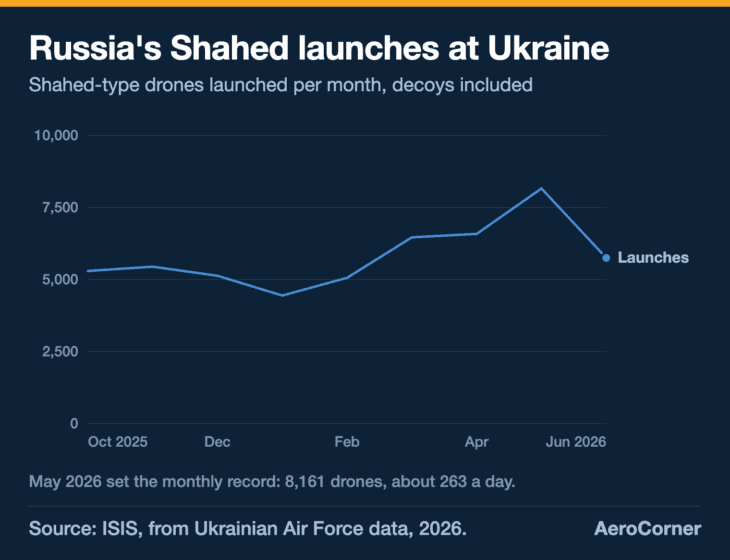
The single-day record came on 23 and 24 March 2026, when Russia launched 948 Shahed-type drones and 35 missiles at Ukraine in 24 hours, the largest daily drone attack of the war.
Why Is the Shahed Drone So Effective?
Because it turns air defense into a spending contest the defender cannot win. A 2025 CSIS analysis put a conservative midpoint cost for a Shahed at $35,000, while the US Army budgets $3.871 million for each Patriot PAC-3 MSE interceptor in 2026, more than 100 times as much.
Cheaper missiles do not close the gap. CSIS put a NASAMS interceptor at slightly over $1 million, still nearly 30 times the price of the drone it is fired at.
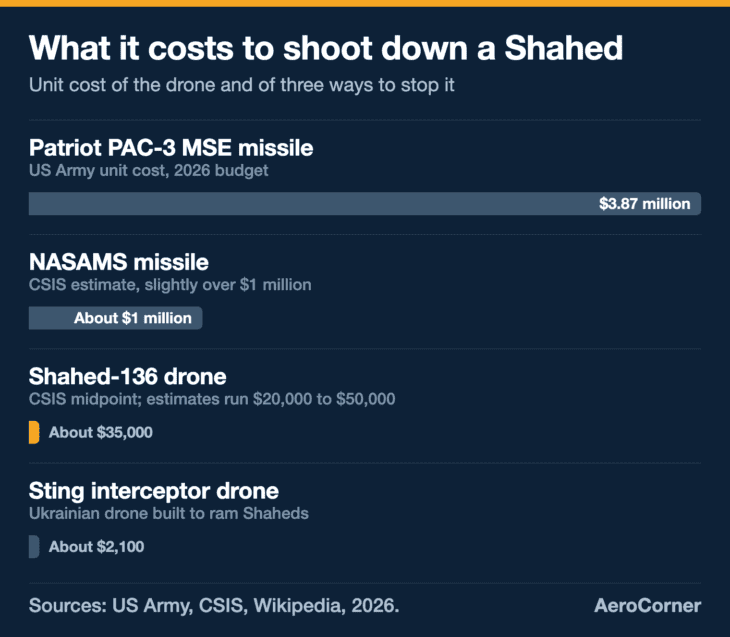
The drone also does several jobs at once. It hits what it can, it drains the defender’s missile stockpile, and it probes for gaps, which clears a path for the far more expensive missiles Russia sends in the same combined attacks.
That is why the Shahed sits at the top of our ranking of the best kamikaze drones in the world, despite being nowhere near the most sophisticated weapon on it.
Iran brought the same logic to the Gulf. After US and Israeli strikes on Iran began on 28 February 2026, Iran answered with thousands of Shaheds aimed at US bases and allies across the region.
By 3 March, the United Arab Emirates reported that 65 of the 941 Iranian drones it had detected had come down on its territory, damaging ports, airports, hotels and data centers.
“They force adversaries to waste expensive interceptors on low-cost drones,” said Patrycja Bazylczyk of the CSIS Missile Defense Project. Her reading of Iran’s plan was simple: spend drones early and save the ballistic missiles for the long haul.
How Defenders Learned to Fight Back
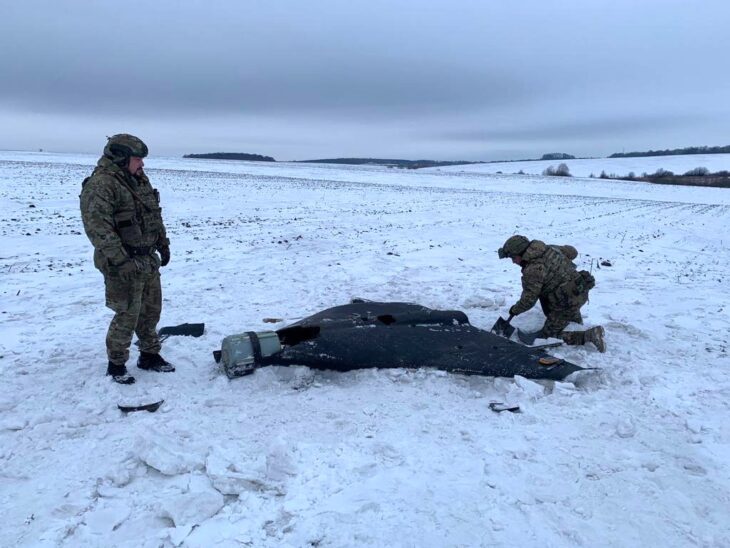

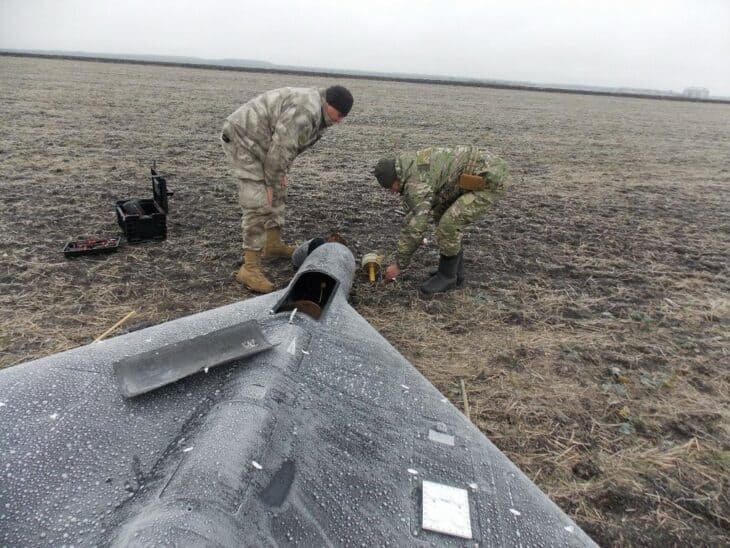

Ukraine’s first answers were improvised. MiG-29 pilots chased Shaheds with cannon fire, and in October 2022 one MiG-29 was lost when a drone exploded close enough to send shrapnel into the cockpit, forcing the pilot to eject.
Guns turned out to be a better match than missiles. Mobile fire groups with heavy machine guns, searchlights and German-supplied Gepard anti-aircraft tanks hunt Shaheds at low altitude, cued by a network of around 10,000 microphones that listen for the engine.
Ukraine tracks Shaheds by ear
The acoustic network, called Sky Fortress, began as a project by two engineers in a garage. Each microphone costs about $400 to $500, according to US Air Force Gen. James Hecker, and the whole system is estimated to cost less than a pair of Patriot missiles.
The biggest shift is drone against drone. Ukraine’s Sting interceptor, a small drone that costs about $2,100 and reaches 213 mph (343 km/h), had destroyed more than 9,000 Shaheds and Gerans by June 2026.
In some of the largest attacks of May 2026, interceptor drones accounted for more than 40% of all Shahed-type drones destroyed.
Russia’s reply was to go faster. Jet-powered Gerans flying at roughly 310 mph (500 km/h) are far harder for gun teams and propeller interceptors to catch, and Ukrainian officials say they made up as much as two-thirds of the drones in some July 2026 attacks.
The drones have strayed west, too. On 8 September 2024, Russian drones entered both Romanian and Latvian airspace, putting the Shahed problem on NATO’s doorstep and into any honest comparison of NATO and Russian air power.
Why Everyone Is Copying the Shahed
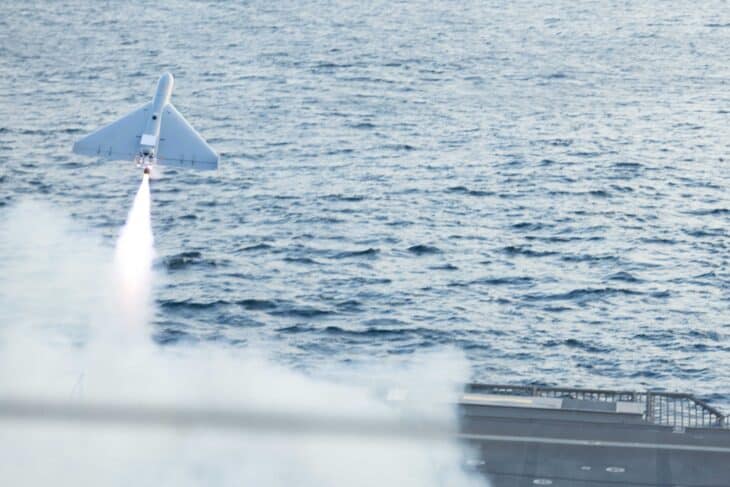

The clearest sign of the Shahed’s success is who copied it. Arizona-based SpektreWorks showed an American version, LUCAS (Low-cost Uncrewed Combat Attack System), at a Pentagon event in July 2025, and CENTCOM deployed a squadron of them to the Middle East in December 2025.
Each LUCAS costs about $35,000 to build, according to CENTCOM, roughly the price of the drone it imitates. In early March 2026, CENTCOM commander Adm. Brad Cooper called the drones “indispensable.”
The Shahed met its clone
On 28 February 2026, CENTCOM’s Task Force Scorpion Strike fired LUCAS drones at Iran in the opening strikes of Operation Epic Fury, the American copy’s combat debut. Iran answered with the original, sending Shaheds at the US Fifth Fleet headquarters in Bahrain. A few got through, causing minimal damage and no casualties.
The US is not alone. Ukraine has built its own Shahed-style long-range drones, a Saudi-American venture is reportedly developing one near Riyadh, and Taiwan was reported in May 2026 to have an analog called Papa Delta.
The lesson runs against three decades of Western practice. The US built fewer, more capable and far more expensive drones such as the MQ-9 Reaper, the kind of aircraft in our ranking of the best military drones in the world. The Shahed proved that in a long war, affordable numbers can matter as much as capability.
The Myth: Shaheds Work Because They Get Through
.jpg)
.jpg)
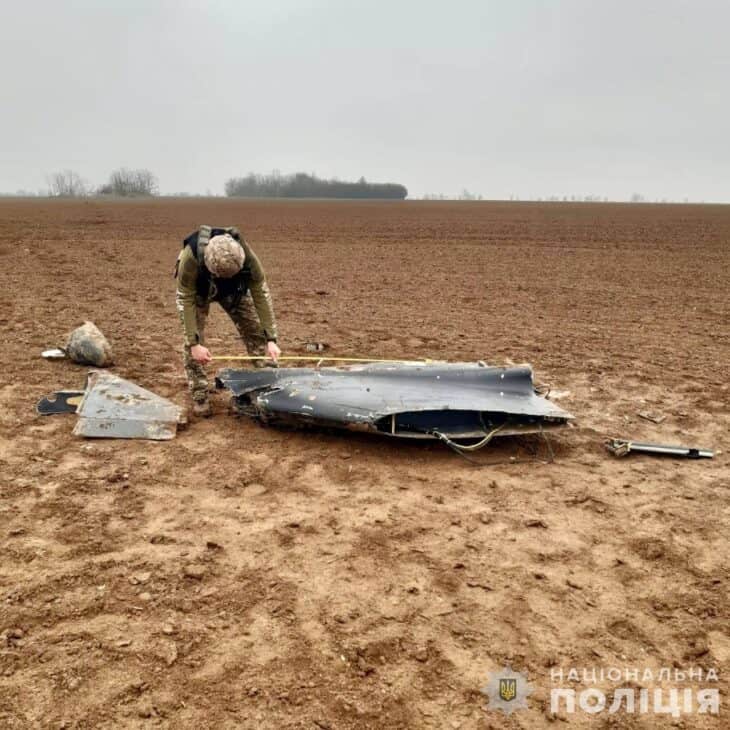
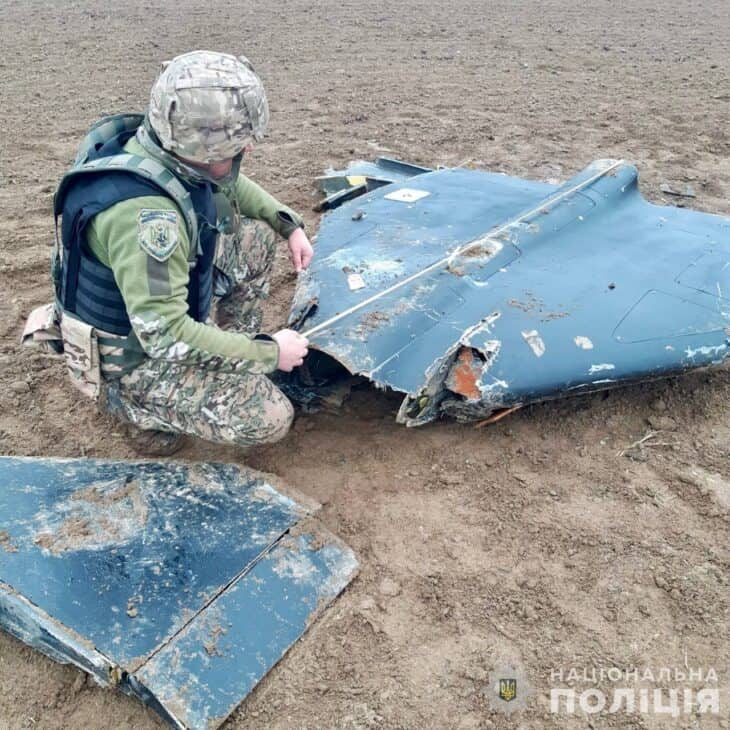
Myth: most Shaheds hit their targets
They do not. In May 2026, only 6.65% of the 8,161 Shahed-type drones Russia launched at Ukraine, decoys included, hit anything, and about 10.5% of the strike drones alone. A Ukrainian electronic warfare adviser to the defense minister estimates Ukraine now stops 92 to 96% of the piston Shaheds sent deep into the country.
So why keep launching them? Because the Shahed is not graded on accuracy. Every one of them costs the defender a shot, an alert or a sleepless night, and the few that land can still knock out a power station or a fuel depot.
Analysts at the Institute for Science and International Security read the same pattern in the data. As launch volumes rose and hit rates fell, Russia kept choosing scale over per-drone efficiency, treating mass attacks as a way to exhaust air defenses rather than to perfect each strike.
The other common assumption, that the Shahed is an Iranian weapon, is also out of date. Most now come off Russian production lines, in versions Iran did not design.
From Tehran to Kyiv to the Gulf: A Shahed Timeline
In less than five years, the Shahed went from a propaganda video to the center of two wars.
December 2021
First public footage. The first public video of the Shahed-136 is released.
September 2022
Russia takes it to Ukraine. Wreckage marked Geran-2 appears on 13 September, the first sign of Russian use.
October 2022
The power-grid waves. Shaheds join the strikes that knock out large parts of Ukraine’s electricity network, including a 17 October attack on Kyiv.
Early 2023
Made in Russia. Moscow and Tehran sign a deal worth about $1.75 billion to build the drone at Alabuga in Tatarstan.
April 2024
Iran fires at Israel. Iran launches about 170 drones, 30 cruise missiles and 120 ballistic missiles on 13 to 14 April, according to the Israeli military. Most are intercepted.
September 2025
Past 800 in one attack. Russia launches 810 Shahed-type drones at Ukraine on 7 September.
February 2026
Clone meets original. US and Israeli strikes on Iran begin on 28 February. The American LUCAS copy flies in combat, and Iran retaliates with Shaheds across the Gulf.
March 2026
The record day. Russia launches 948 Shahed-type drones and 35 missiles at Ukraine in 24 hours on 23 to 24 March.
May 2026
The record month. Russia launches 8,161 Shahed-type drones at Ukraine, about 263 a day.
August 2026
The jets take over. Ukrainian intelligence says Russian output of jet-powered Gerans has overtaken the piston Geran-2.
As of September 2026, the Shahed is still flying in both wars. The US-Iran ceasefire agreed on 8 April collapsed on 8 July.
On 2 September, Iran launched at least 59 missiles and drones at Jordan, Bahrain, Kuwait and Iraq, its largest attacks since the ceasefire, including drones aimed at Bahrain’s Sheikh Isa Air Base.
So the next time footage shows a small triangle buzzing across a night sky, remember that its slowness is not a flaw anyone forgot to fix. It is the design.
The Shahed was never meant to beat air defenses one on one. It was built to be cheap enough that shooting it down becomes the expensive part, and since 2022 that has been enough to change how militaries from Kyiv to Washington think about air war.
Sources and references used for research and fact-checking.
- Wikipedia, HESA Shahed 136
- Wikipedia, Shahed drones
- Institute for Science and International Security, Monthly Analysis of Russian Shahed 136 Deployment Against Ukraine (August 2025 - June 2026)
- Institute for Science and International Security, A Comprehensive Analytical Review of Russian Shahed-type UAVs Deployment against Ukraine in 2025
- Center for Strategic and International Studies, Calculating the Cost-Effectiveness of Russia's Drone Strikes
- US Army, Department of the Army Fiscal Year 2026 Budget Estimates: Missile Procurement, Army
- CNN, Russia built a massive drone factory to pump out Iranian-designed drones. Now it's leaving Tehran out in the cold
- CNBC, Iran's Shahed drone: How 'the poor man's cruise missile' is shaping Tehran's retaliation
- Defense One, Shahed drone meets clone in US war on Iran
- The War Zone, LUCAS Kamikaze Drones Lauded As Indispensable By U.S. Admiral In Charge Of Iran War
- Militarnyi, Production of the Geran-4/5 Jet Drones Has Surpassed That of the Geran-2
- Wikipedia, Sting (drone)
- Wikipedia, April 2024 Iranian strikes in Israel
- Wikipedia, 2026 Iran war ceasefire
- JINSA, Iran War Update: September 1-2, 2026
Get the Newsletter
The latest aviation news and stories sent to your inbox.
About the Author

Tim is the owner and lead editor of AeroCorner since 2019, overseeing aviation content covering aircraft, airlines, airports, and the broader aviation industry. Through years of researching, writing, editing, and publishing aviation-focused content, he has developed extensive practical knowledge of commercial aviation and air travel. Based in Asia and a frequent traveler himself, Tim also brings firsthand passenger experience to AeroCorner’s coverage. Outside of publishing, he has also explored aviation firsthand through hands-on flight training in New Zealand.