

Table of Contents
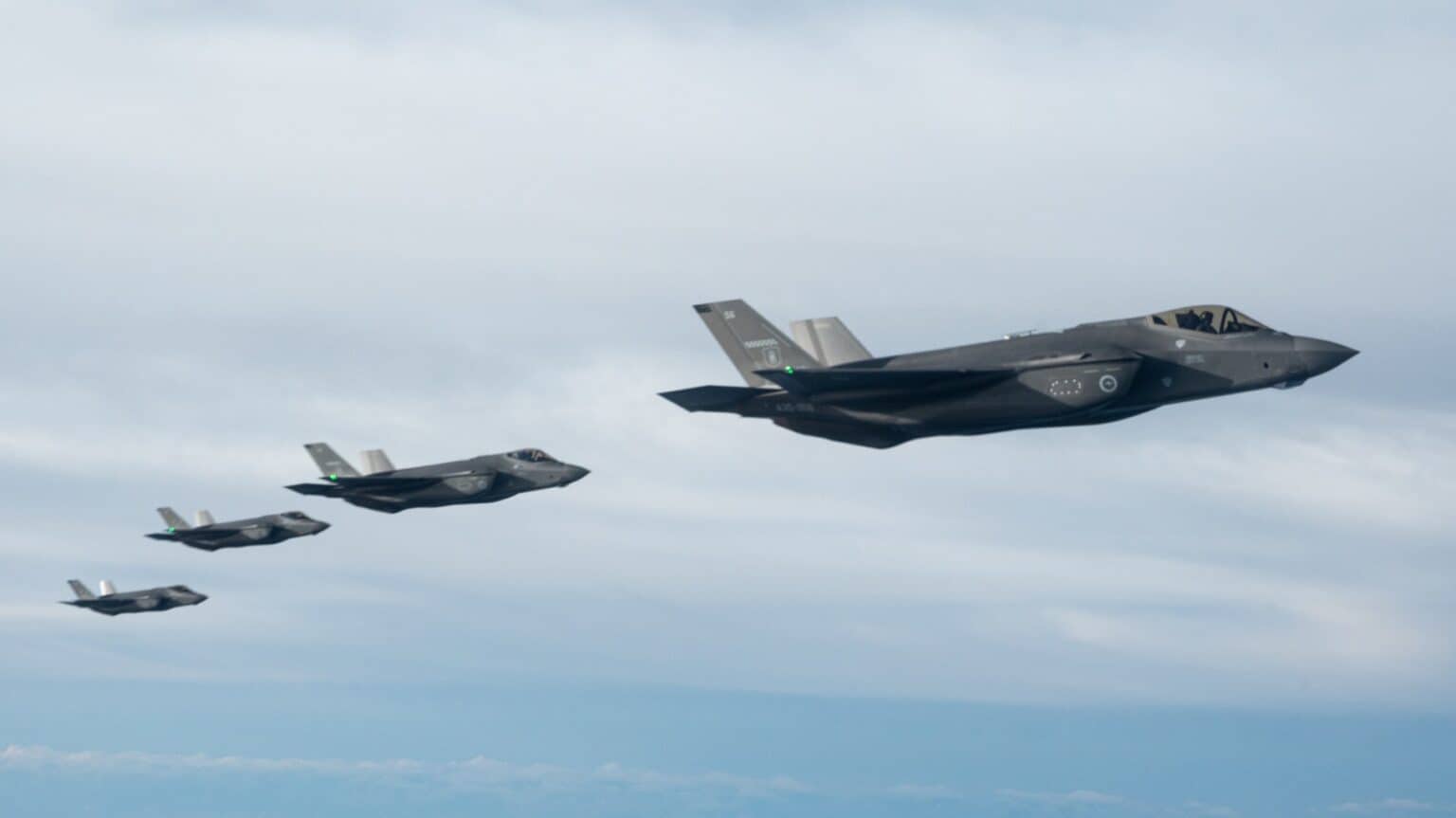
The Royal Australian Air Force (RAAF) flies 72 F-35A stealth fighters, the whole fleet it committed to, and they are the most valuable aircraft it owns. Right behind them is a radar plane originally designed for Australia, the E-7A Wedgetail, since chosen by Turkey, South Korea and the UK.
The RAAF has no bombers and no helicopters. It is a compact, mostly American-built force of fighters, radar planes, sub hunters, tankers and transports, built to watch and defend the sea and air gaps to Australia’s north.
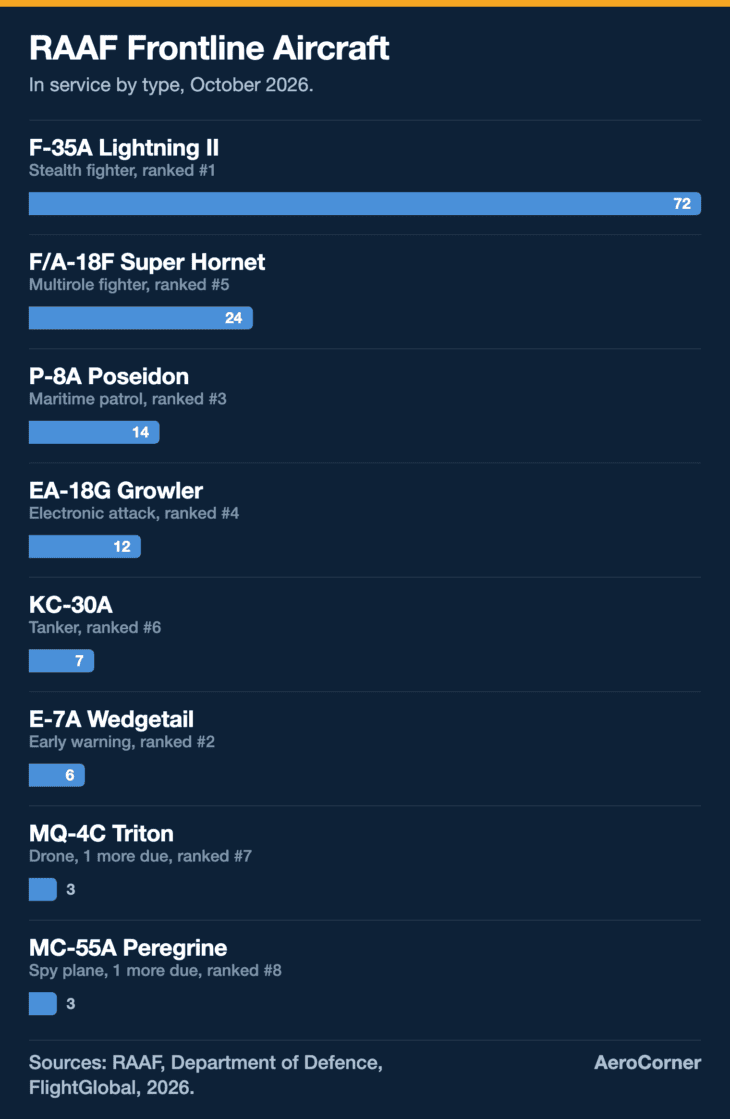
This list ranks every type the RAAF flies by one measure: the fighting value it adds as of October 2026, weighing what the aircraft does against how many Australia has. The MQ-28 Ghost Bat, the April 2026 defense plan, the bases and a short history follow the ranking.
| Rank | Aircraft | Role | In service |
|---|---|---|---|
| 1 | F-35A Lightning II | Stealth multirole fighter | 72 |
| 2 | E-7A Wedgetail | Airborne early warning and control | 6 |
| 3 | P-8A Poseidon | Maritime patrol and sub hunting | 14 |
| 4 | EA-18G Growler | Electronic attack | 12 |
| 5 | F/A-18F Super Hornet | Multirole fighter | 24 |
| 6 | KC-30A | Aerial refueling tanker and transport | 7 |
| 7 | MQ-4C Triton | High-altitude maritime surveillance drone | 3 of 4 |
| 8 | MC-55A Peregrine | Signals intelligence and electronic warfare | 3 of 4 |
| 9 | C-17A Globemaster III | Strategic airlifter | 8 |
| 10 | C-130J-30 Hercules | Tactical airlifter | 12, with 20 new ones ordered |
| 11 | C-27J Spartan | Light tactical transport | 10, to be replaced |
| 12 | Hawk 127 and PC-21 | Lead-in fighter and pilot trainer | 33 and 45 |
| 13 | 737-8 BBJ, Falcon 7X and King Air 350 | VIP transport and utility | 2, 3 and 12 |
How this ranking works
Each type is ranked by the fighting value it adds in October 2026: what it can do in a war, how hard it would be to replace, and how many the RAAF flies. Counts come from the RAAF’s own aircraft pages where they state one, and otherwise from FlightGlobal’s World Air Forces 2026 directory, which counts only aircraft in day-to-day use. The MQ-28 Ghost Bat is covered separately because it is not yet in operational service.
1. F-35A Lightning II: All 72 Delivered
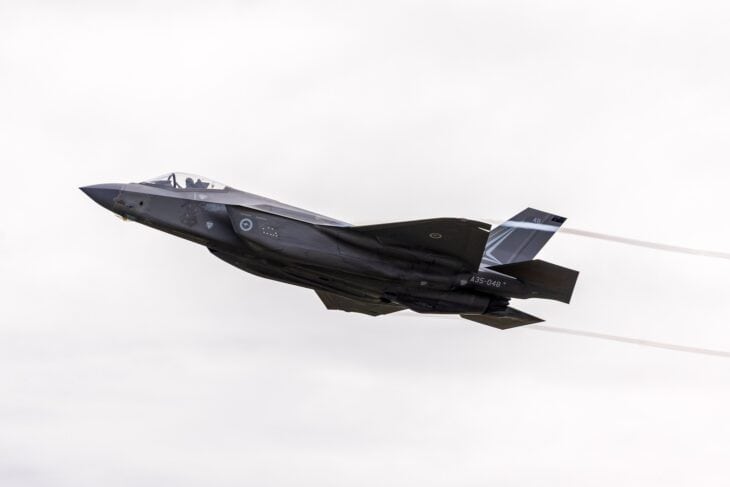

The F-35A Lightning II is a single-seat stealth fighter that carries its weapons and fuel inside the airframe. The RAAF accepted its first in 2018, and No. 3 Squadron became the first operational F-35A squadron in 2021.
Australia committed to 72, and the last of them arrived in December 2024, FlightGlobal reports. Australia still holds options that could take the fleet to 100.
The jets fly with No. 3 and No. 77 Squadrons and the No. 2 Operational Conversion Unit at RAAF Base Williamtown, and No. 75 Squadron at RAAF Base Tindal. The RAAF gives a top speed of Mach 1.6, about 1,220 mph (1,960 km/h), and a combat radius of about 680 miles (1,093 km) on internal fuel.
It ranks first because it is the only stealth fighter Australia has, and it is getting a long-range arsenal. The April 2026 investment plan adds the LRASM anti-ship missile, the AARGM-ER anti-radar missile, the JASSM-ER cruise missile and the Joint Strike Missile to the F-35A.
2. E-7A Wedgetail: The Radar Plane Australia Started
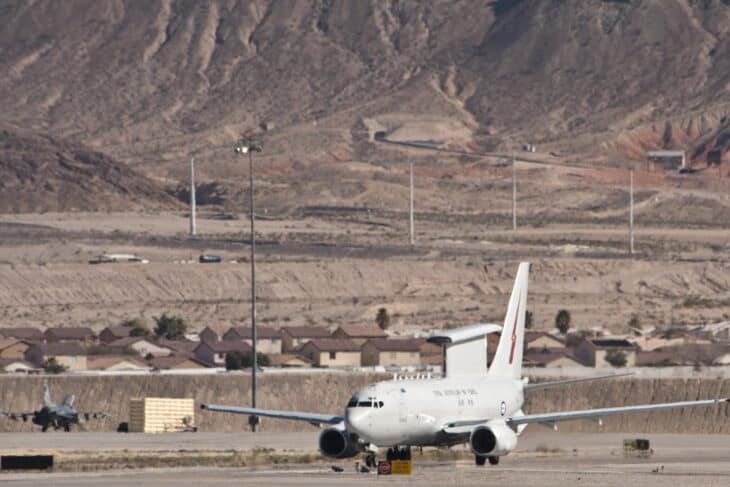

The E-7A Wedgetail is a Boeing 737-700 with a fixed Northrop Grumman radar mounted on its spine and ten mission consoles in the cabin. Australia launched the project, Boeing delivered the first two in November 2009, and the sixth and last was accepted in June 2012.
All six fly with No. 2 Squadron at Williamtown, near Newcastle. On a standard mission, the RAAF says, one Wedgetail can watch more than 1.5 million square miles (4 million sq km), an area the size of Western Australia.
It ranks second because it multiplies everything else on this list. It flew the RAAF’s first sortie over Iraq against Islamic State in October 2014, went to Germany in 2023 to protect the supply flow to Ukraine, and on March 10, 2026, Australia sent one to the Gulf at the request of the UAE amid Iranian attacks on Gulf states.
A drone pilot in the back of a radar plane
In 2025 an operator aboard an E-7A controlled two MQ-28 Ghost Bat drones at once during a mock combat mission, the Chief of Air Force said in December 2025. The radar plane Australia ordered in 1999 has become the command post for the drone it designed in the 2020s.
3. P-8A Poseidon: The Fleet Completed in 2026
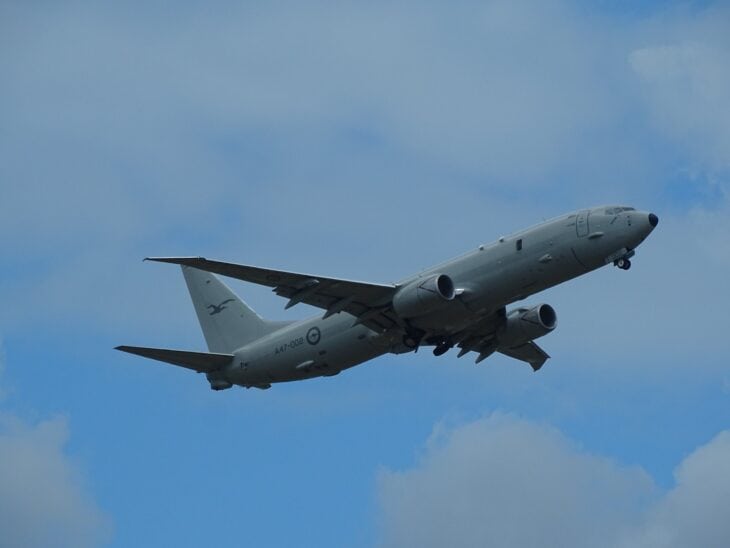
The P-8A Poseidon is a Boeing 737-800 rebuilt as a submarine hunter, with a weapons bay, 129 sonobuoys, torpedoes and Harpoon anti-ship missiles. The first RAAF P-8A arrived in 2016.
The 14th and final aircraft arrived at RAAF Base Edinburgh in South Australia in May 2026, completing the fleet. It is flown by No. 11, No. 12 and No. 292 Squadrons.
It ranks third because Australia is an island whose trade moves by sea, and the P-8A is how it finds submarines and ships. The RAAF says it can hunt submarines at low level more than 1,240 miles (2,000 km) from base.
4. EA-18G Growler: The Only Growlers Outside the US Navy
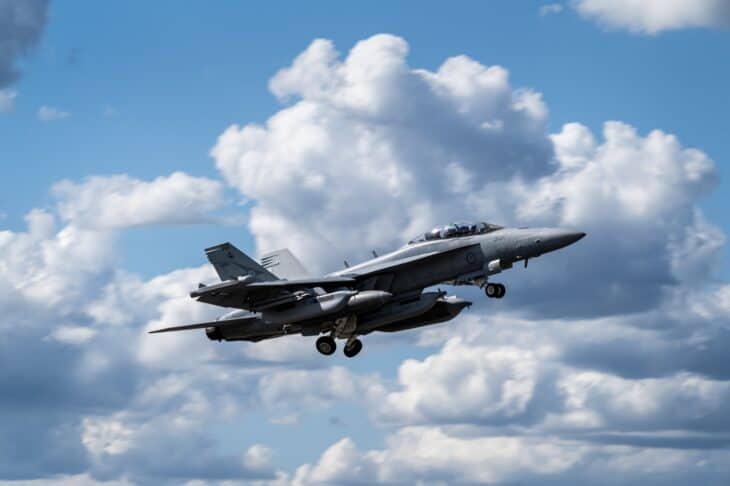

The EA-18G Growler is a two-seat Super Hornet rebuilt to jam, deceive and destroy enemy radars and communications. Australia is the only military besides the US to fly it.
The first was delivered on July 29, 2015, and No. 6 Squadron at RAAF Base Amberley flies 12. One was written off after an engine fire at Nellis Air Force Base, Nevada, during Exercise Red Flag in January 2018, and a replacement from US Navy stock arrived in February 2023.
It ranks fourth because modern air defenses kill fighters that cannot blind them, and no other Australian aircraft can. The 2026 plan adds the AARGM-ER anti-radar missile. For the wider field, see our ranking of the best electronic warfare aircraft.
5. F/A-18F Super Hornet: The Missile Truck
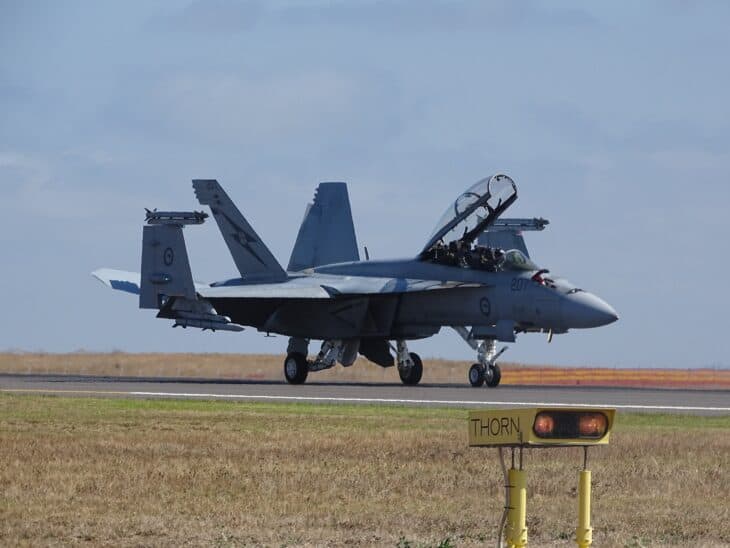
The RAAF flies 24 two-seat F/A-18F Super Hornets with No. 1 Squadron at Amberley. They reached final operational capability in December 2012.
Up to eight Super Hornets deployed to the UAE in late September 2014 for the campaign against Islamic State. In December 2025, one teamed with an E-7A and a Ghost Bat in the drone’s first live missile shot.
It ranks fifth, behind the stealthier F-35A, but the 2026 plan shows it is not going anywhere soon. It is getting the LRASM and JASSM-ER, and it is the jet Australia chose to carry its future hypersonic missiles.
6. KC-30A: The Tanker That Gives the Fleet Its Reach
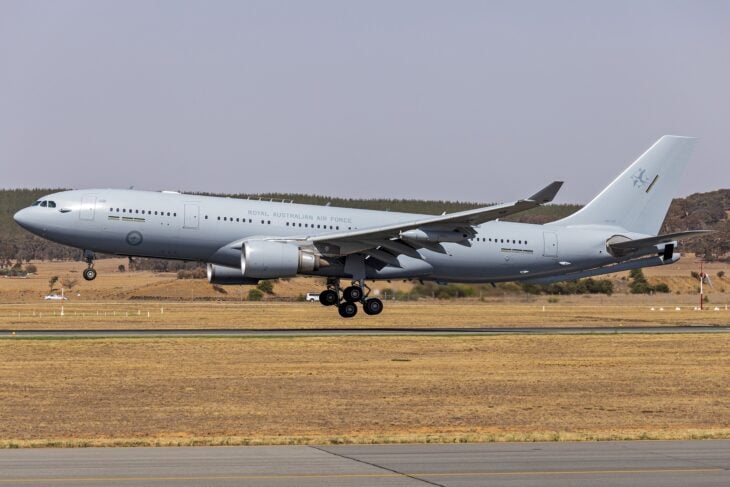

The KC-30A is a heavily modified Airbus A330 MRTT with a refueling boom on the tail and hose-and-drogue pods under the wings. The RAAF flies seven with No. 33 Squadron at Amberley; FlightGlobal’s directory counts six.
It carries more than 220,000 pounds (100,000 kg) of fuel. The RAAF says it can wait 1,120 miles (1,800 km) from base for up to four hours with 110,000 pounds (50,000 kg) of fuel to give away.
It ranks sixth because Australia’s distances are vast, and without it the fighters, the Wedgetail and the P-8A could not stay on station. It doubles as a transport for up to 270 passengers. See how it compares in our ranking of tanker aircraft.
7. MQ-4C Triton: A Drone Watching the Northern Approaches
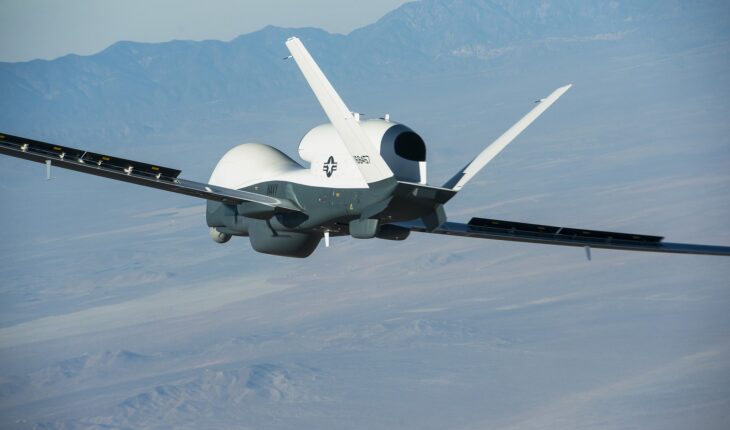

The MQ-4C Triton is a high-altitude, long-endurance surveillance drone that builds on the Global Hawk. Australia is buying four through a cooperative program with the US Navy.
The first was delivered in July 2024, and the second and third flew themselves across the Pacific from Maryland to RAAF Base Tindal in May 2025. They are launched and maintained at Tindal but flown remotely by No. 9 Squadron crews at Edinburgh, in South Australia.
It ranks seventh because it can stay airborne longer than a crewed patrol plane, but the fleet is still small and was still in testing in early 2026. The RAAF lists a range of 9,320 miles (15,000 km) and a ceiling of 50,000 feet.
8. MC-55A Peregrine: Australia’s New Spy Plane
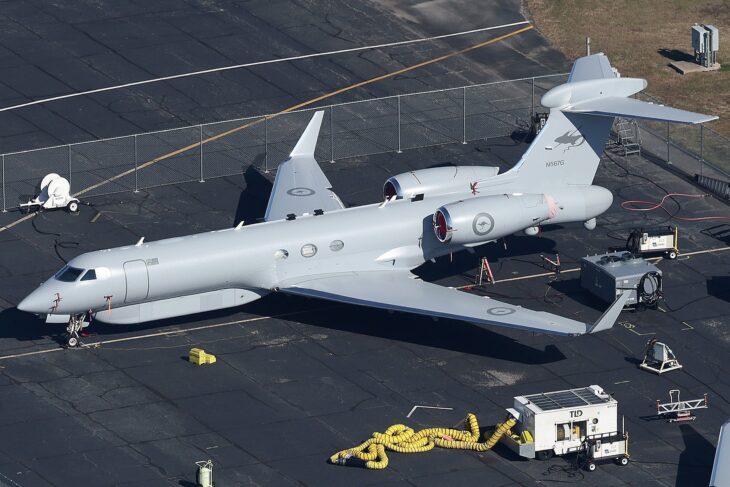

The MC-55A Peregrine is a Gulfstream G550 business jet that L3Harris converted into an intelligence, surveillance and electronic warfare aircraft. It collects signals for No. 10 Squadron at Edinburgh, with forward locations in Darwin and the Cocos (Keeling) Islands.
Australia is buying four. The first arrived in January 2026, and the second and third followed in March and June 2026.
It ranks eighth only because it is so new. The RAAF says it will work alongside the P-8A and Triton and share what it gathers with the US and UK. For its predecessors, see our list of the most important spy planes.
9. C-17A Globemaster III: The Heavy Lifter
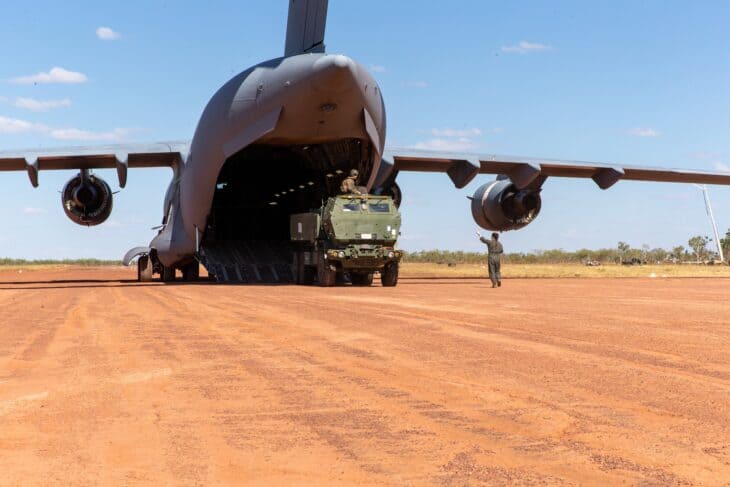

The RAAF bought four C-17A Globemaster IIIs between 2006 and 2008 and added more in 2011, 2012 and 2015. All eight fly with No. 36 Squadron at Amberley.
Each can carry up to 170,000 pounds (77,000 kg): an Abrams tank, four Bushmaster armored vehicles or three Black Hawk helicopters. It can land on unpaved runways as short as 3,500 feet.
It ranks first among the transports because it is the only Australian aircraft that can carry a main battle tank, and it is central to the RAAF’s disaster relief and humanitarian missions.
10. C-130J-30 Hercules: 20 New Ones on the Way
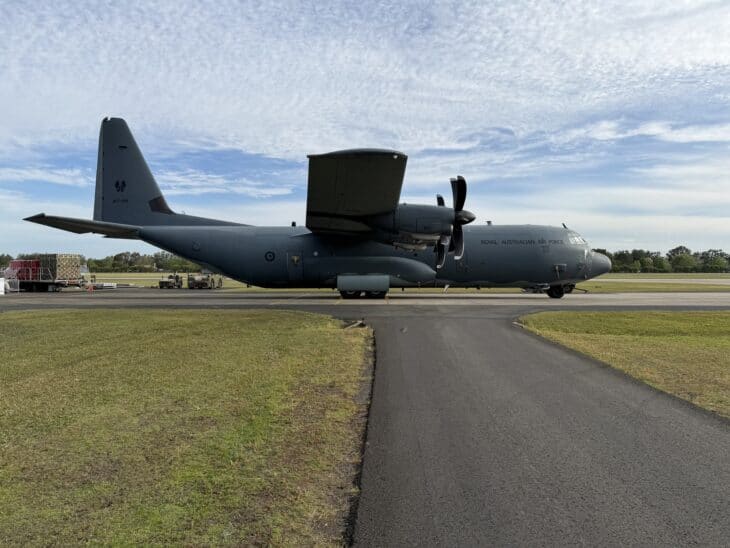

No. 37 Squadron at RAAF Base Richmond flies 12 C-130J-30 Hercules, delivered between 1999 and 2001. Each can carry up to 124 passengers or eight pallets of cargo onto short, unpaved strips.
The government calls them first-generation C-130Js, and Australia is replacing them. The 2026 plan funds a new, larger fleet of 20 C-130Js at A$11 to 13 billion over the decade.
11. C-27J Spartan: Ten Years In, and Being Replaced
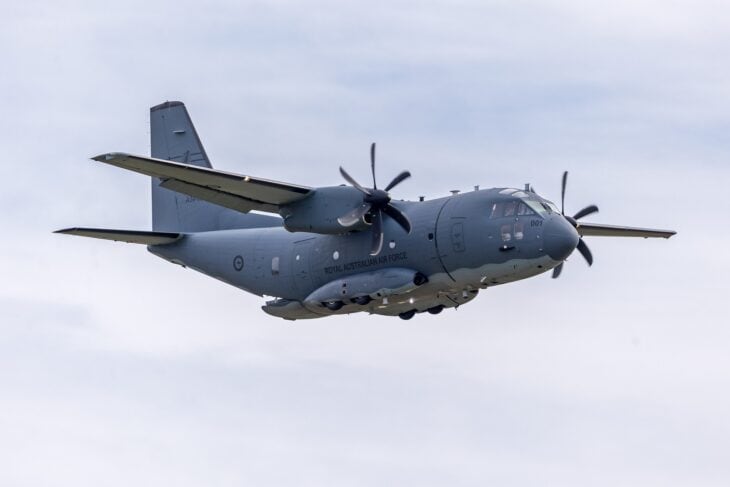

The first C-27J Spartan arrived in 2015, and No. 35 Squadron at Amberley flies 10. The RAAF bought it to bridge the gap between Army helicopters and its bigger airlifters.
The April 2026 National Defence Strategy will replace it with a commercial aircraft fleet for moving people and cargo around the Pacific. No retirement date or replacement type had been announced as of October 2026.
12. Hawk 127 and PC-21: How RAAF Pilots Learn to Fly
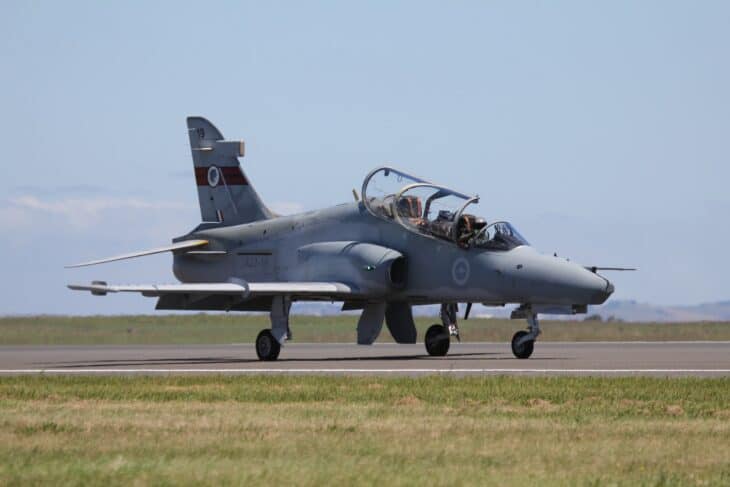

RAAF pilots start on the Pilatus PC-21, a turboprop trainer with a pressurized cockpit and a top speed of 370 knots. FlightGlobal counts 45 in training use at East Sale, Pearce and Williamtown, and the Roulettes aerobatic team flies the type too.
Future fighter pilots then move to the BAE Hawk 127 lead-in fighter, which has a top speed of Mach 1.2. The RAAF flies 33 with No. 79 Squadron at Pearce, which runs a 14-week introductory fighter course, and No. 76 Squadron at Williamtown, which runs a 20-week weapons course.
Graduates go on to the F-35A, the Super Hornet or the Growler. Weapon systems officers and electronic warfare officers for the two-seat jets train on the Hawk too.
13. 737-8 BBJ, Falcon 7X and King Air 350: The VIP and Utility Fleet
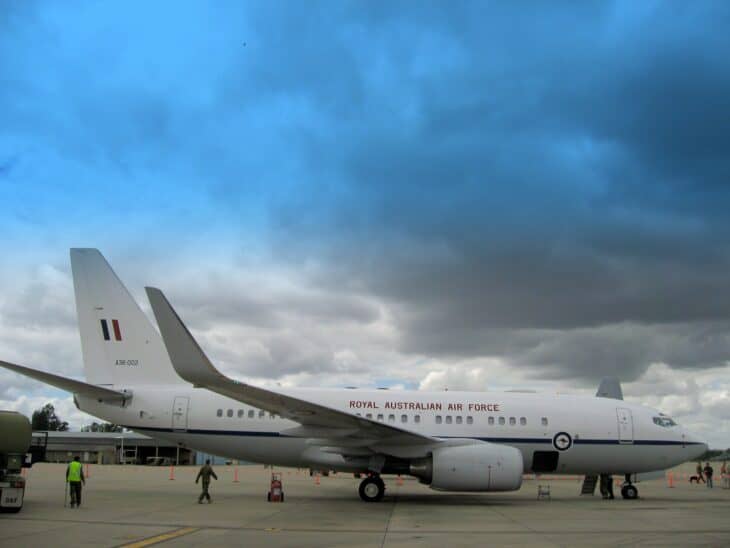

The Governor-General, members of parliament and visiting dignitaries fly with No. 34 Squadron at Defence Establishment Fairbairn in Canberra. Its two Boeing 737-8 Business Jets entered service in 2024, seat 32 passengers and can fly nonstop from Canberra to Tokyo or Hawaii.
The squadron also flies three Dassault Falcon 7X business jets, which joined in April 2019 and carry up to 14 passengers. No. 32 Squadron at East Sale flies 12 King Air 350 turboprops, mainly to train mission aircrew and for light transport.
Where are the RAAF's helicopters?
It has none. FlightGlobal’s 2026 directory lists Australia’s 29 AH-64E Apaches, 14 CH-47F Chinooks and its Black Hawks under the Army, and its 23 MH-60R Seahawks under the Navy. The RAAF flies only fixed-wing aircraft and drones.
What Comes Next: The MQ-28 Ghost Bat
The MQ-28A Ghost Bat is a 38-foot (11.7 m) jet-powered drone that Boeing Defence Australia designed in Australia to fly alongside crewed fighters. It first flew on February 27, 2021, at the Woomera range in South Australia.
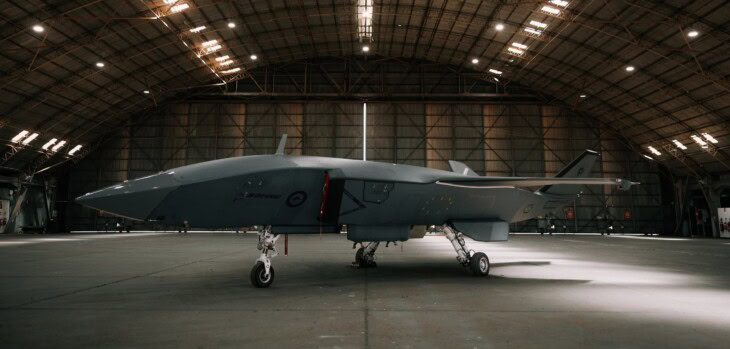
On December 8, 2025, a Ghost Bat fired an AIM-120 AMRAAM air-to-air missile and destroyed a Phoenix jet target drone, teamed with an E-7A and an F/A-18F. Defence Industry Minister Pat Conroy called it a landmark test for the world.
The next day the government announced A$1.4 billion to move it into production and into RAAF service, including six more Block 2 aircraft and one larger Block 3. Boeing says eight were built during development and three more Block 2s are in final production or testing, with operational capability targeted for 2028.
Three drones for every fighter
The government’s stated goal is at least three uncrewed aircraft for every crewed combat jet, and for each Ghost Bat to cost 10 percent of a crewed fighter. Conroy called it the first military combat aircraft designed and built in Australia in 50 years.
Ghost Bat sits in a fast-moving field of loyal wingman drones; see where it stands in our ranking of the best military drones in the world.
The 2026 Plan: More Missiles, a New Radar Plane and Fewer Transports
Australia’s 2026 National Defence Strategy and its Integrated Investment Program, released in April 2026, commit A$425 billion to defense over the next decade. Spending is set to reach 3 percent of GDP by 2033.
The Air Force share is A$34 to 41 billion over the decade. The headline decisions are the new missiles for the F-35A, Super Hornet, Growler and P-8A, the 20 new C-130Js, the C-27J replacement and continued investment in the Ghost Bat.
The plan also says the E-7A will eventually be replaced by a next-generation aircraft. No type or date has been named, and Boeing is contracted to support and upgrade the current fleet for another decade.
RAAF Bases: Where the Fleet Lives
RAAF Base Amberley, southwest of Brisbane in Queensland, is the largest military air base in Australia, with more than 5,000 uniformed and civilian staff. It hosts the Super Hornets, Growlers, KC-30As, C-17s and C-27Js.
| Base | State or territory | Main aircraft |
|---|---|---|
| Amberley | Queensland | F/A-18F, EA-18G, KC-30A, C-17A, C-27J |
| Williamtown | New South Wales | F-35A, E-7A, Hawk 127 |
| Tindal | Northern Territory | F-35A, MQ-4C Triton |
| Edinburgh | South Australia | P-8A, MC-55A, Triton crews |
| Richmond | New South Wales | C-130J-30 |
| East Sale | Victoria | PC-21, King Air 350, Roulettes |
| Pearce | Western Australia | Hawk 127, PC-21 |
| Fairbairn | Australian Capital Territory | 737-8 BBJ, Falcon 7X |
Amberley and Edinburgh are Australia’s two defense super bases. Tindal and Darwin, in the Northern Territory, are the RAAF bases nearest to Asia.
A Short History of the RAAF
The Australian Air Force was formed on March 31, 1921, and the “Royal” prefix took effect on August 13, 1921. That made it the second royal air arm in the British Commonwealth, after Britain’s Royal Air Force.
Air Marshal Sir Richard Williams, the first military pilot trained in Australia, is regarded as its father. He campaigned for an air force separate from the Army and Navy and became its first Chief of the Air Staff in 1922.
October 22, 1912
Central Flying School. Australia’s first military flying school opens at Point Cook, Victoria.
March 31, 1921
Founded. The Australian Air Force is formed, with 21 officers, 128 other ranks and 153 aircraft.
August 13, 1921
Royal. The Royal prefix approved by King George V takes effect.
1945
Fourth-largest air force. More than 152,000 personnel fly nearly 6,000 aircraft.
July 2, 1956
The kangaroo roundel. A red kangaroo on a white disc becomes the national marking.
2003
Iraq. 14 F/A-18 Hornets fly 350 sorties in the Iraq War.
November 29, 2021
Hornet retired. The classic F/A-18 leaves service in the RAAF’s centenary year.
December 2024
F-35A fleet complete. The last of 72 F-35As is delivered.
May 2026
P-8A fleet complete. The 14th Poseidon arrives at Edinburgh.
The RAAF fought in Europe and the Pacific in World War II, flew in the Berlin Airlift, Korea and Vietnam, and has since served in East Timor, Iraq and Afghanistan. Its roundel lost its red center in World War II, after a US fighter mistook an RAAF Catalina for a Japanese aircraft in 1942, and gained the red kangaroo in 1956.
Who Leads the RAAF, and How Big It Is
The RAAF is commanded by the Chief of Air Force, Air Marshal Stephen Chappell, who answers to the Chief of the Defence Force. As of June 2024, it had 15,261 full-time personnel and 6,341 part-time reservists.
FlightGlobal’s 2026 directory ranks Australia ninth in the world for special mission aircraft, with 30, and the RAAF’s fleet in its table adds up to 253 aircraft in day-to-day use. Australia does not make the top 10 for combat aircraft, where tenth-placed Israel has 284.
That is the RAAF’s design: a small force of very high-end aircraft rather than a big one. See how it stacks up in our rankings of the largest air forces in the world and the best air forces in the world.
FAQ
Sources and references used for research and fact-checking.
- FlightGlobal, World Air Forces 2026 directory (PDF)
- Royal Australian Air Force, F-35A Lightning II
- Royal Australian Air Force, E-7A Wedgetail
- Royal Australian Air Force, P-8A Poseidon
- Department of Defence, Poseidon fleet now complete
- Royal Australian Air Force, EA-18G Growler
- Wikipedia, Boeing EA-18G Growler
- Royal Australian Air Force, F/A-18F Super Hornet
- Royal Australian Air Force, KC-30A Multi-Role Tanker Transport
- Royal Australian Air Force, MQ-4C Triton
- Department of Defence, Australia's second and third Tritons touch down
- Department of Defence, Strengthening northern air power
- Minister for Defence, Press conference, RAAF Base Tindal
- Royal Australian Air Force, MC-55A Peregrine
- Royal Australian Air Force, C-17A Globemaster III
- Royal Australian Air Force, C-130J-30 Hercules
- Royal Australian Air Force, C-27J Spartan
- Australian Aviation, RAAF to replace C-27J Spartan fleet with commercial aircraft mix
- Asian Military Review, Looking at Australia's capability upgrades under its new investment push
- Royal Australian Air Force, Hawk 127
- Royal Australian Air Force, Pilatus PC-21
- Royal Australian Air Force, 737 Boeing Business Jet
- Royal Australian Air Force, Dassault Falcon 7X
- Royal Australian Air Force, KA350 King Air
- Minister for Defence Industry, Press conference, Sydney: MQ-28 Ghost Bat announcement
- Boeing Australia, Boeing awarded $754 million Ghost Bat program of record
- Wikipedia, Boeing MQ-28 Ghost Bat
- Wikipedia, Boeing E-7 Wedgetail
- Military Times, Australia deploys early-warning aircraft to the Middle East amid Iran attacks
- Wikipedia, Royal Australian Air Force
- Wikipedia, Richard Williams (RAAF officer)
- Wikipedia, RAAF Base Amberley
Get the Newsletter
The latest aviation news and stories sent to your inbox.
About the Author

Tim is the owner and lead editor of AeroCorner since 2019, overseeing aviation content covering aircraft, airlines, airports, and the broader aviation industry. Through years of researching, writing, editing, and publishing aviation-focused content, he has developed extensive practical knowledge of commercial aviation and air travel. Based in Asia and a frequent traveler himself, Tim also brings firsthand passenger experience to AeroCorner’s coverage. Outside of publishing, he has also explored aviation firsthand through hands-on flight training in New Zealand.