

Table of Contents
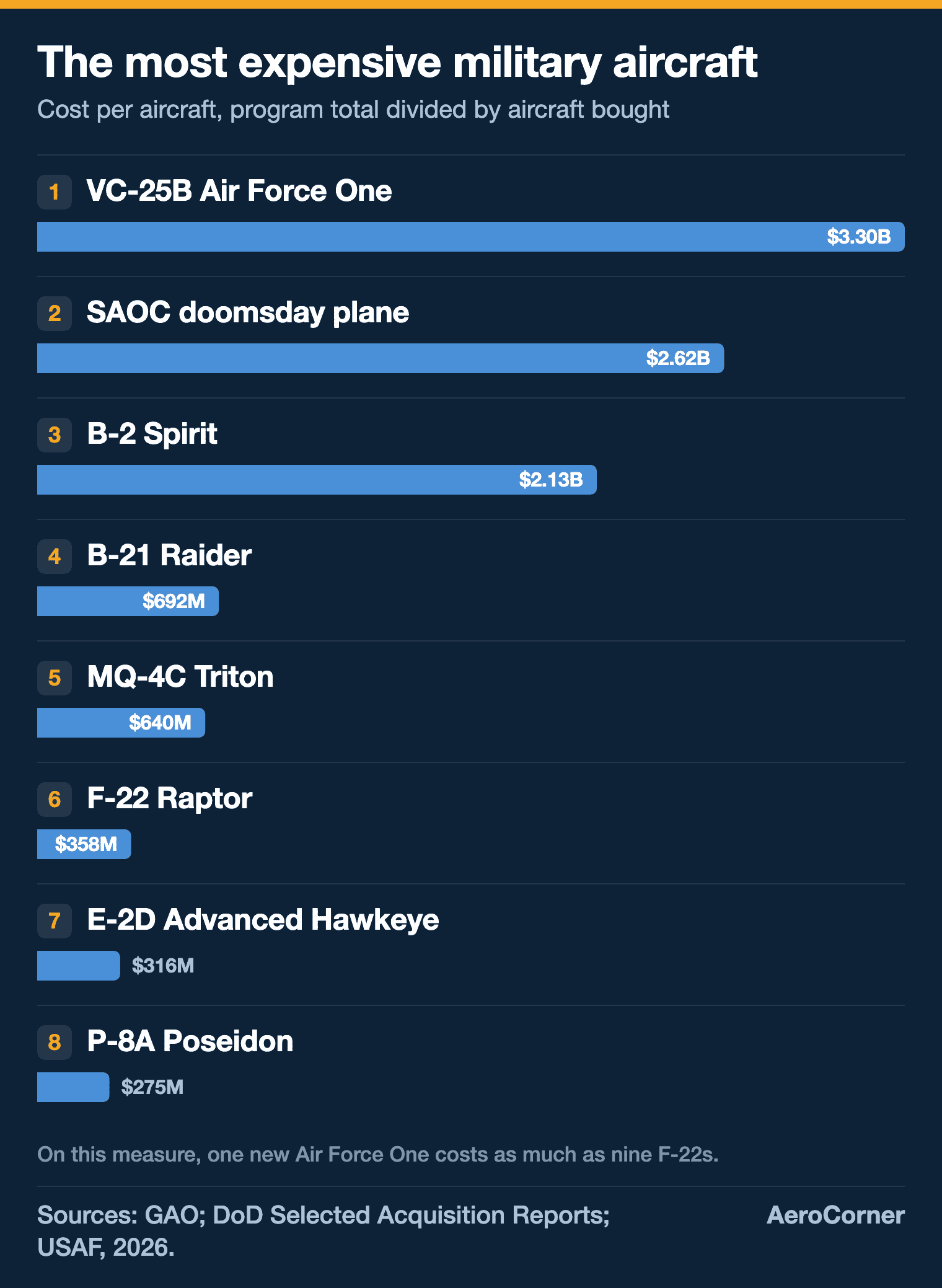
The most expensive military aircraft on the Pentagon’s books today is the new Air Force One. The Government Accountability Office’s July 2026 assessment puts the two Boeing VC-25B jets at $3.3 billion each, in fiscal 2025 dollars, once development is counted.
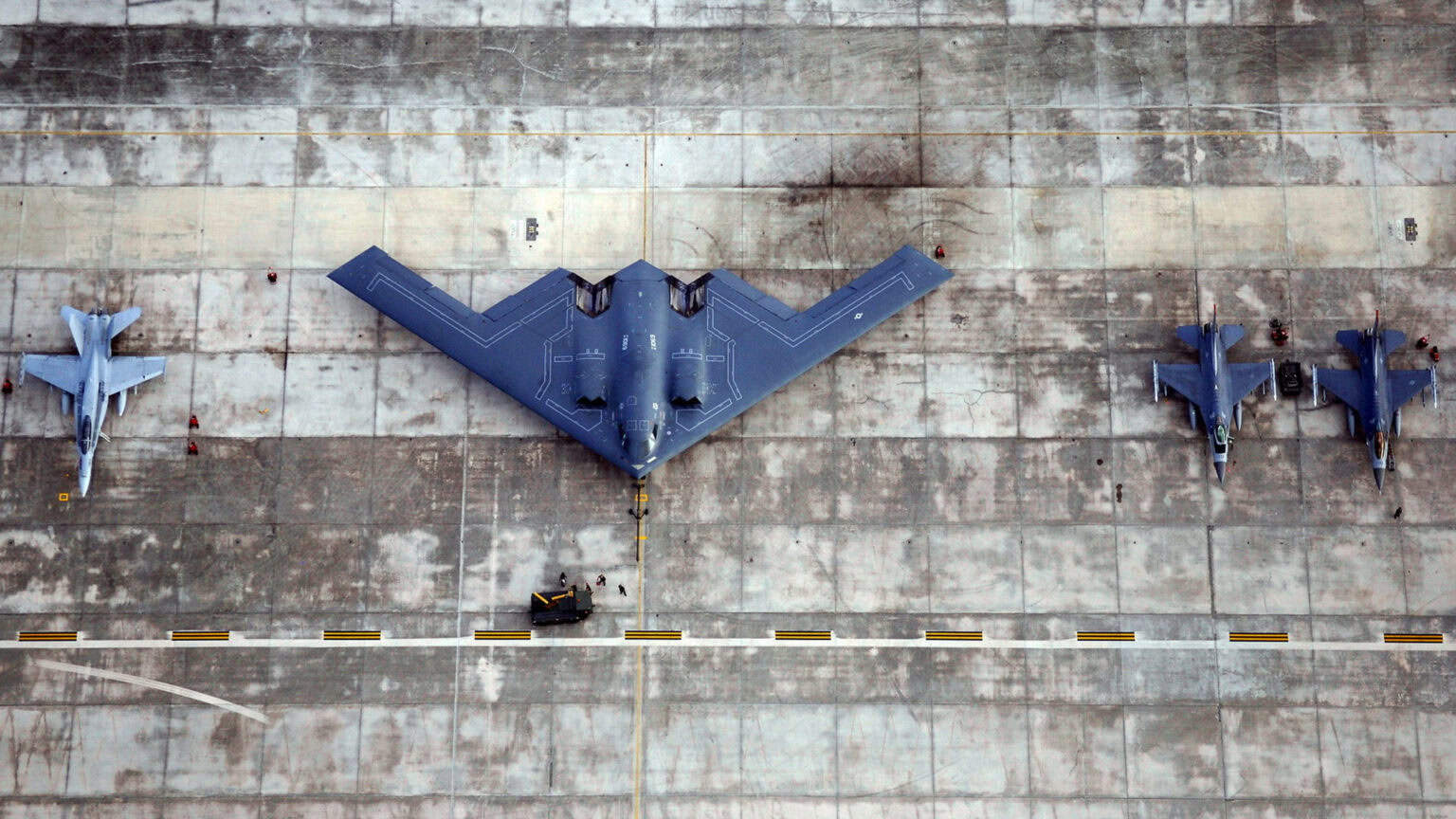
The most expensive warplane ever built is still the B-2 Spirit. GAO’s 1997 estimate put the B-2 program at $44.75 billion for 21 bombers, or about $2.1 billion each, and those were 1980s and 1990s dollars. Adjusted for inflation, the B-2 would likely still be the most expensive aircraft of any kind.
We rank every aircraft below by one measure: the newest official program cost divided by the number of aircraft bought. Two entries have no published program cost, so the SAOC uses its contract value and the B-21 its procurement cap. The measure counts development, which a sticker price leaves out, and it is why a 21-plane bomber fleet costs more per copy than a 2,470-jet fighter fleet.
| Rank | Aircraft | Role | Cost per aircraft | Basis |
|---|---|---|---|---|
| 1 | Boeing VC-25B Air Force One | Presidential transport | $3.30 billion | GAO 2026, 2 aircraft, FY2025 $ |
| 2 | SNC Survivable Airborne Operations Center (SAOC) | Nuclear command post | $2.62 billion | $13.08B contract, 5 aircraft |
| 3 | Northrop Grumman B-2 Spirit | Stealth bomber | $2.13 billion | GAO 1997 estimate, 21 aircraft, then-year $ |
| 4 | Northrop Grumman B-21 Raider | Stealth bomber | Under $692 million | USAF procurement cap, 2022 $, development extra |
| 5 | Northrop Grumman MQ-4C Triton | Maritime surveillance drone | $640 million | GAO 2026, 27 aircraft, FY2025 $ |
| 6 | Lockheed Martin F-22 Raptor | Stealth fighter | $358 million | Pentagon SAR 2010, 188 aircraft, then-year $ |
| 7 | Northrop Grumman E-2D Advanced Hawkeye | Carrier airborne early warning | $316 million | Pentagon SAR 2023, 86 aircraft, then-year $ |
| 8 | Boeing P-8A Poseidon | Maritime patrol | $275 million | Pentagon SAR 2021, 133 aircraft, then-year $ |
| 9 | Boeing KC-46A Pegasus | Aerial tanker | $247 million | GAO 2026, 188 aircraft, FY2025 $ |
| 10 | Sikorsky VH-92A | Presidential helicopter | $214 million | Pentagon SAR 2022, 23 aircraft, then-year $ |
| 11 | Lockheed Martin F-35 Lightning II | Stealth fighter | $196 million | Pentagon SAR 2023, 2,470 aircraft, then-year $ |
| 12 | Sikorsky CH-53K King Stallion | Heavy-lift helicopter | $180 million | Pentagon SAR 2023, 200 aircraft, then-year $ |
Why we rank by program cost, not price tag
A military aircraft has two prices. The flyaway cost is what one more airframe costs to build. The program cost adds the research, testing and tooling, spread over every aircraft bought. Price tags flatter small fleets: the F-22’s fact-sheet unit cost was $143 million, but its program cost was $358 million a jet. Program cost is what taxpayers paid for each one, and it is the figure the Pentagon reports to Congress.
One caution before the list. The figures come in different dollar years, because the Pentagon and GAO report each program in its own. The B-2’s 1990s dollars would be worth far more today, so its lead over most of this list is wider than it looks.
1. Boeing VC-25B Air Force One: $3.3 billion each
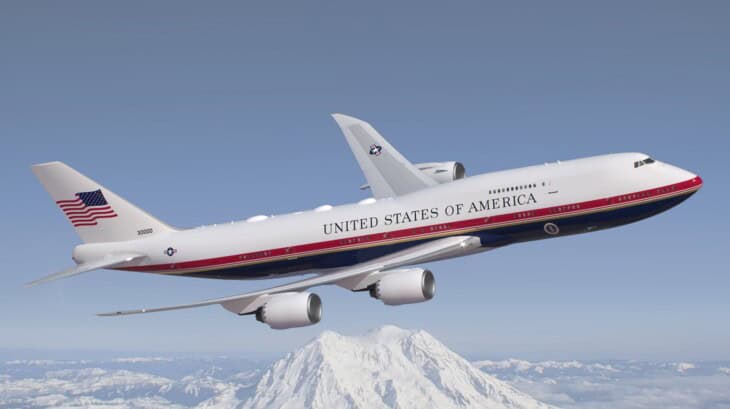
The two VC-25Bs will replace the VC-25A Air Force One jets. GAO’s 2026 weapon systems assessment estimates the program at $6.608 billion in fiscal 2025 dollars, or $3.304 billion per aircraft.
The aircraft are Boeing 747-8 airliners originally built for the Russian airline Transaero, which never took delivery. Boeing signed a fixed-price contract for $3.9 billion in 2018, so most of the overrun lands on Boeing. The contract ceiling has since been raised to about $4.5 billion to cover spare parts and other needs.
Boeing took another $280 million charge in the second quarter of 2026. First delivery, once planned for 2024, is now expected in 2028.

2. SNC Survivable Airborne Operations Center: about $2.6 billion each
The Survivable Airborne Operations Center, or SAOC, is the successor to the E-4B Nightwatch, the doomsday plane built to withstand a nuclear attack and keep the government running from the air in a crisis. The Air Force awarded Sierra Nevada Corp. a $13.08 billion contract in April 2024 to build five of them.
That works out to about $2.6 billion per aircraft. Like the VC-25B, each one starts as a heavily modified Boeing 747-8, hardened against radiation and electromagnetic pulse. The SAOC made its first flight on August 7, 2025, and the contract runs to 2036.
This figure is the contract value, not a full program estimate, so it leaves out any government costs outside the contract.
3. Northrop Grumman B-2 Spirit: $2.1 billion each

The B-2 is the most expensive warplane ever bought. In 1997, GAO reported the Air Force’s estimate of total B-2 acquisition cost, covering development, procurement and military construction, at $44.754 billion for 21 aircraft.
That is about $2.13 billion per bomber. The Air Force’s own fact sheet gives a lower unit cost, about $1.157 billion in fiscal 1998 constant dollars, so be wary of any list that quotes a single B-2 price without saying what it covers.
The price is so high because the development bill was spread over just 21 aircraft. The B-2 first flew on July 17, 1989, reached initial operating capability in April 1997, and can carry 60,000 pounds (27,216 kg) of conventional or nuclear weapons.
Its unrefueled range is about 6,000 nautical miles, and the Air Force lists 20 in its inventory. For how it compares with the other flying wings, see our guide to stealth bombers.
But isn't the B-2 the most expensive aircraft ever?
Probably, yes. On paper the two new Air Force One jets cost more, at $3.3 billion each in 2025 dollars against the B-2’s $2.1 billion in the dollars of the 1980s and 1990s. But the B-2’s money was spent decades earlier, and adjusted for inflation it would likely move back ahead. So the VC-25B leads in today’s reporting, and the B-2 is the most expensive warplane ever bought.
4. Northrop Grumman B-21 Raider: a $692 million cap, development extra
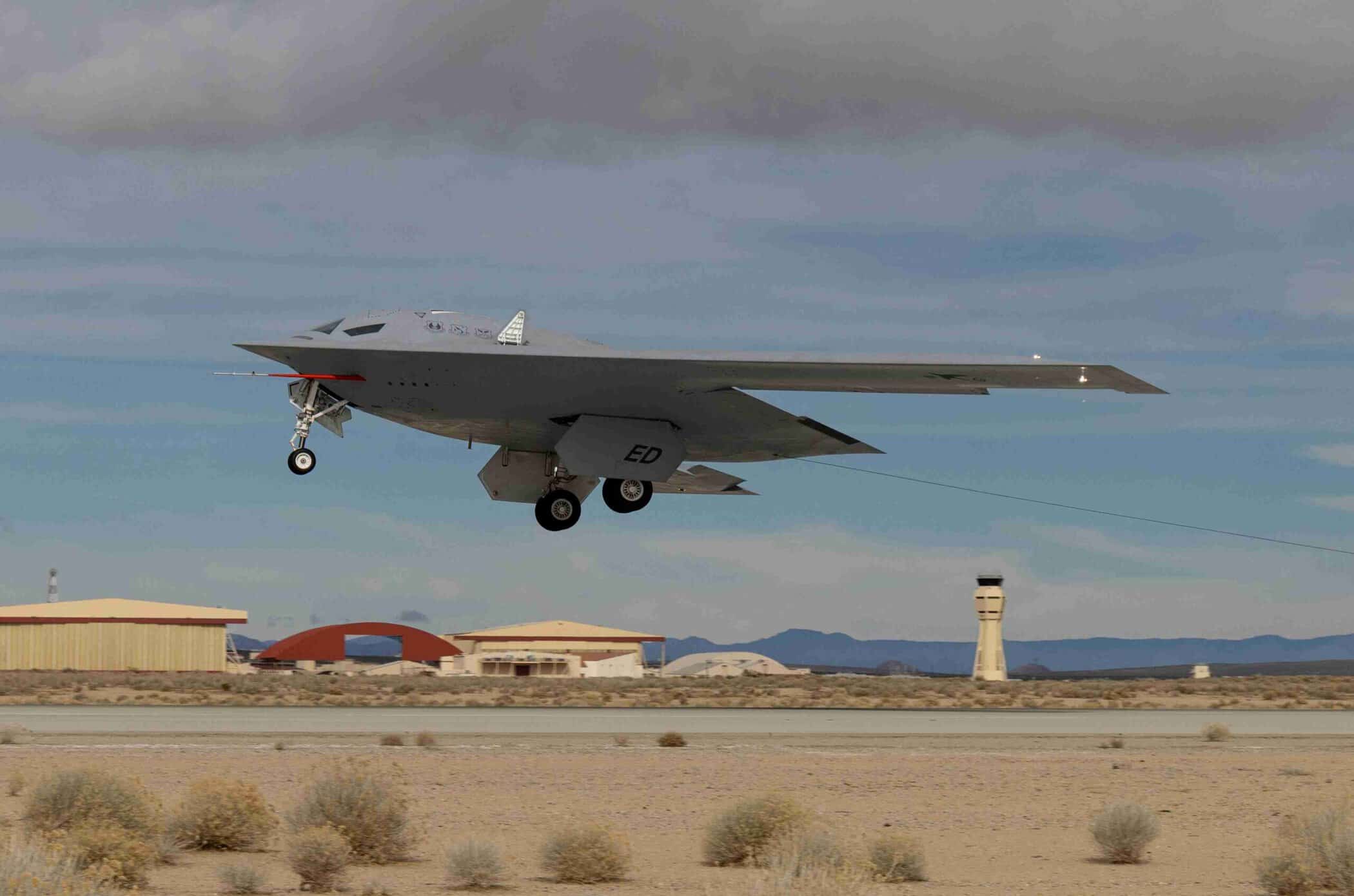
The B-21 Raider is the B-2’s successor, and the Air Force will not say what one costs. Its fact sheet gives only a cap, set as a key performance parameter: an average procurement unit cost of $550 million in 2010 dollars, or $692 million in 2022 dollars, across at least 100 aircraft.
That target covers procurement only: the aircraft, support equipment, training, spares and engineering changes. Development is not included, so the true program cost per bomber is higher. When the first B-21 was unveiled in 2022, the Air Force said it was staying under that cap, and in 2024 a spokesperson declined to give current unit costs, citing the program’s classification.
5. Northrop Grumman MQ-4C Triton: $640 million each
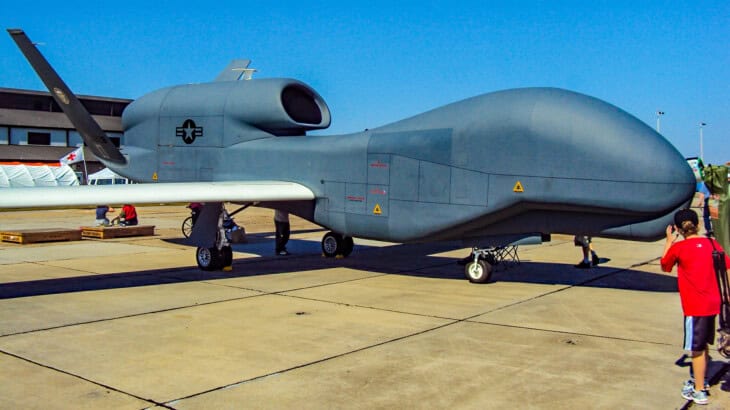
The surprise on this list is a drone. The Navy’s MQ-4C Triton flies long, persistent surveillance patrols over the ocean, and GAO’s 2026 assessment puts its program at $17.288 billion for 27 aircraft, or $640.30 million each in fiscal 2025 dollars.
The reason is quantity. In 2015 the Navy planned to buy 70 Tritons, according to a Defense Department Inspector General audit. The buy has since shrunk to 27, so roughly $8.5 billion of development is now spread over a fraction of the planned fleet.
An unmanned aircraft that costs more than an F-22
On the Pentagon’s books, the Navy’s Triton drone costs $640 million per aircraft against the F-22 Raptor’s $358 million, though the F-22 figure is in older dollars. No pilot sits aboard, but development costs do not shrink with the cockpit. Cut the order from 70 to 27 and each drone carries more than twice the development share.
6. Lockheed Martin F-22 Raptor: $358 million each

The F-22 Raptor is the most expensive fighter jet ever built. The final Pentagon Selected Acquisition Report, dated December 2010, put the total program at $67.337 billion for 188 aircraft, or $358 million per jet.
The Air Force’s fact sheet lists a unit cost of $143 million, a figure that leaves the development bill out. Most of the gap is development: about $32.4 billion, shared by only 188 jets.
7. Northrop Grumman E-2D Advanced Hawkeye: $316 million each
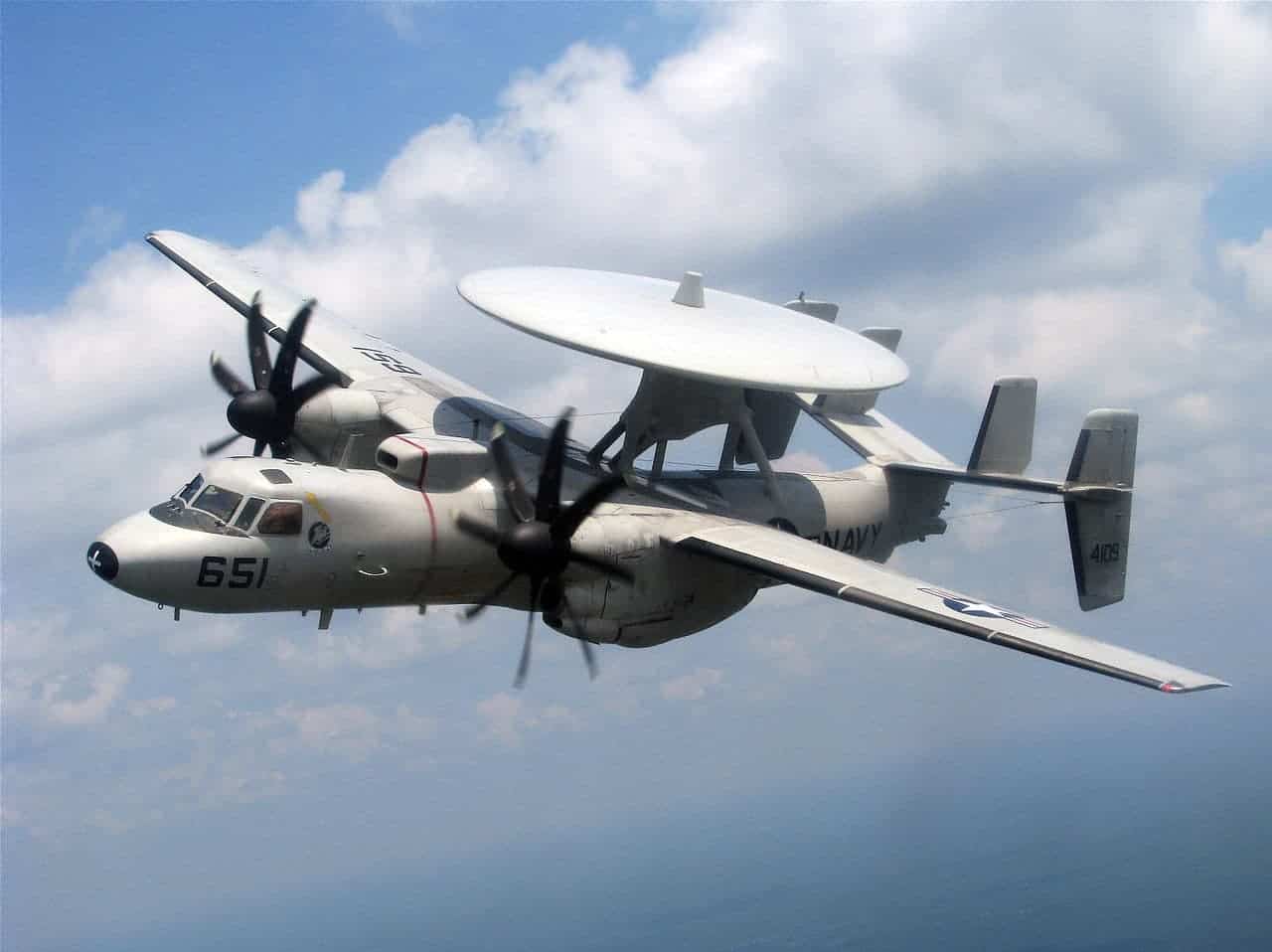
The E-2D is the Navy’s carrier-based airborne early warning and battle management aircraft, the latest in the Hawkeye family. Its centerpiece is the APY-9 radar, built to track advanced aircraft and cruise missiles over land and sea.
The December 2023 Selected Acquisition Report puts the program at $27.15 billion for 86 aircraft, the number validated to equip nine fleet squadrons. That is about $316 million per aircraft, in then-year dollars.
8. Boeing P-8A Poseidon: $275 million each
The P-8A Poseidon replaced the P-3C Orion as the Navy’s submarine hunter. It is based on the Boeing 737-800 Extended Range airliner.

The December 2021 Selected Acquisition Report put the program at $36.6 billion for 133 aircraft, or about $275 million each in then-year dollars. What an airliner does not have is the mission equipment for anti-submarine and anti-surface warfare.
9. Boeing KC-46A Pegasus: $247 million each
The KC-46A Pegasus is replacing the Air Force tankers that, in the Pentagon’s words, have been its primary refueling aircraft for more than 50 years. GAO’s 2026 assessment puts the program at $46.35 billion for 188 tankers, or $246.54 million each in fiscal 2025 dollars.
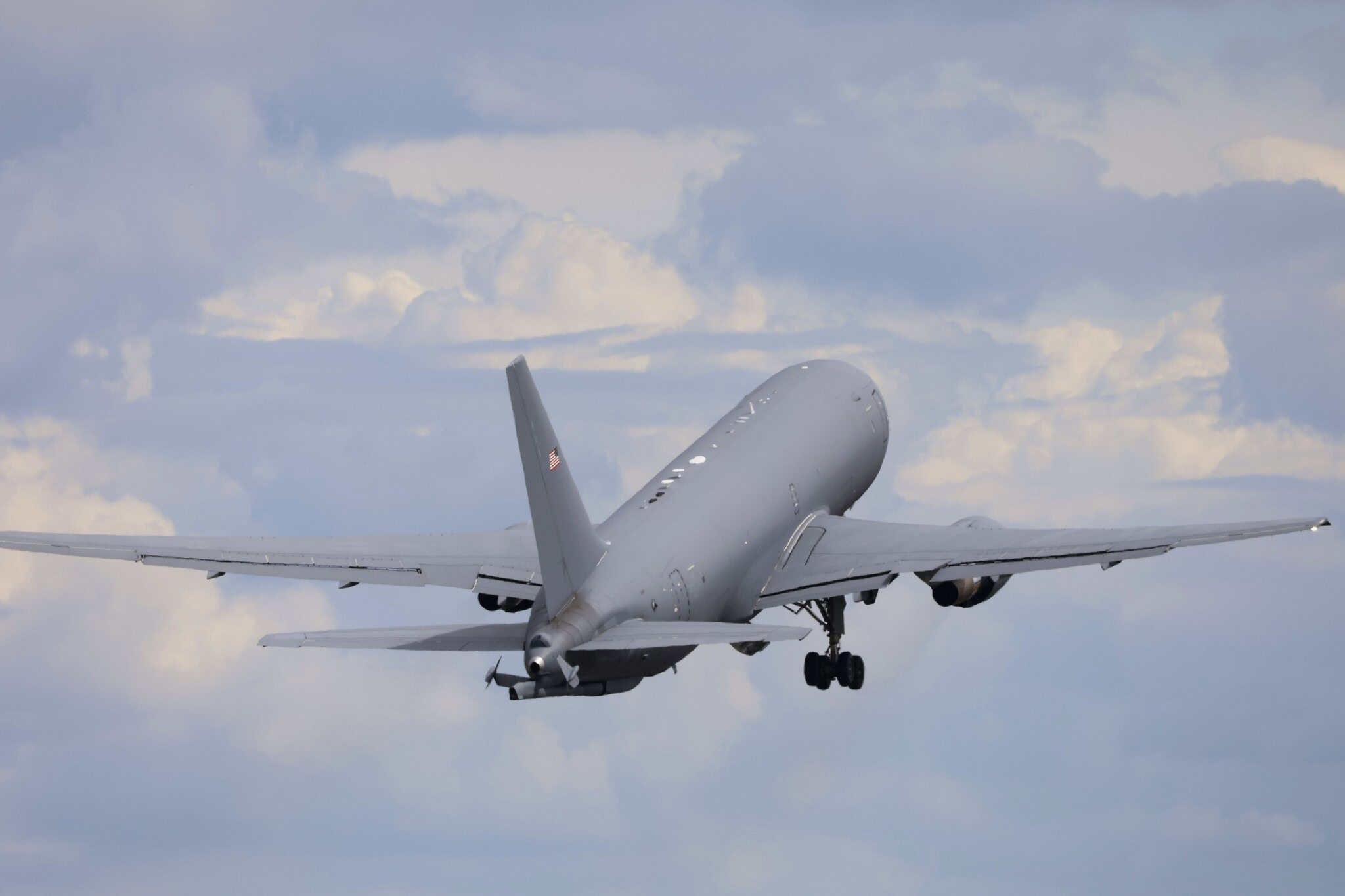
The first KC-46A was delivered to McConnell Air Force Base, Kansas, on January 25, 2019.
10. Sikorsky VH-92A presidential helicopter: $214 million each
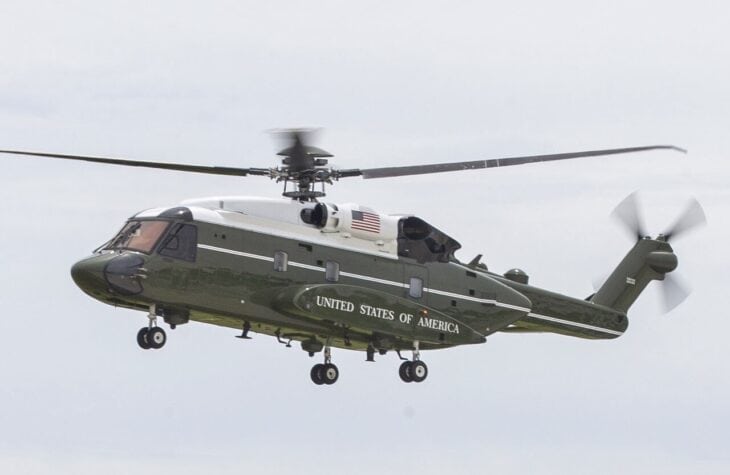
The VH-92A is the new Marine One, flown by Marine Helicopter Squadron One for the President and Vice President. It is based on Sikorsky’s commercial S-92A and replaces both the VH-3D and the VH-60N.
The December 2022 Selected Acquisition Report puts the program at $4.93 billion for 23 helicopters, about $214 million each in then-year dollars. That makes it the most expensive helicopter in service on this list.
11. Lockheed Martin F-35 Lightning II: $196 million each
The F-35 is by far the biggest program on this list, but not the most expensive aircraft. The December 2023 report estimates $401.1 billion for the aircraft and $84.1 billion for their engines. Spread over 2,470 jets, that comes to about $196 million per jet, in then-year dollars.
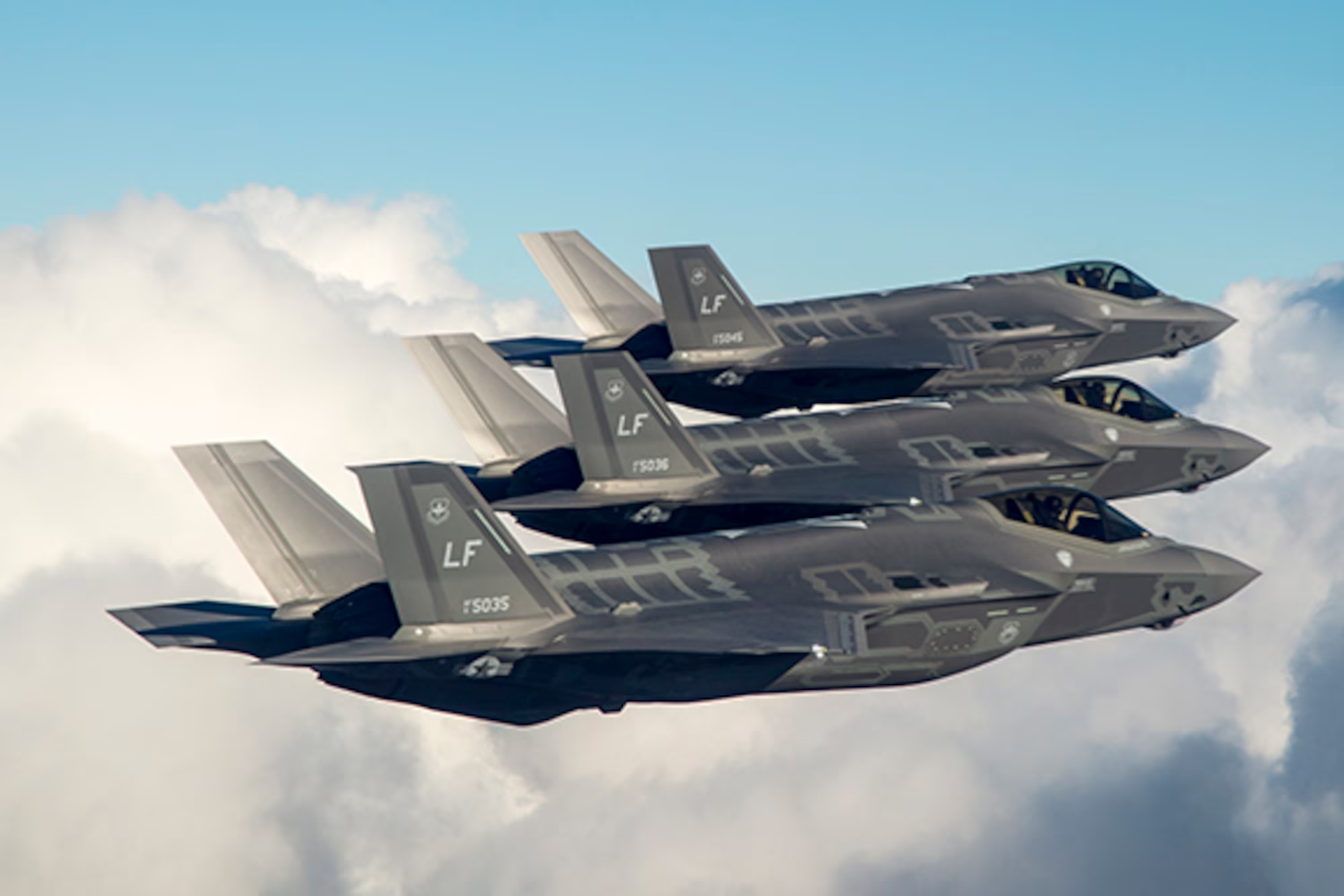
That is the scale effect working the other way: bought in such numbers, the F-35’s development cost is spread thin. A 2026 update raised projected F-35 buying costs by more than $50 billion, so this figure will rise.
12. Sikorsky CH-53K King Stallion: $180 million each


The CH-53K King Stallion replaces the CH-53E as the Marine Corps’ heavy-lift helicopter. The December 2023 report puts the program at $36.06 billion for 200 aircraft, or about $180 million each in then-year dollars.
What is the most expensive fighter jet?
By program cost, the F-22 Raptor, at $358 million a jet. By the price of building one more today, the costliest F-35 is the F-35B: the F-35 Joint Program Office says the average flyaway cost in production lots 18 and 19 is $121.4 million for the F-35B, $110.8 million for the F-35C and $92 million for the F-35A.
The Boeing F-47, the sixth-generation fighter announced in March 2025, has no public price. Gen. David Allvin, then the Air Force Chief of Staff, said only that “compared to the F-22, the F-47 will cost less.”
For how these jets compare on capability rather than cost, see our ranking of the best fighter jets in the world.
The presidential helicopter that was never finished: VH-71 Kestrel


The VH-71 Kestrel was meant to be the last word in presidential helicopters. GAO’s 2008 assessment, citing the 2006 baseline, counted 23 of them at $278.9 million each, in fiscal 2008 dollars.
By 2009 the estimated program cost had doubled, from about $6.5 billion when development began in 2005 to $13 billion. The Defense Department terminated the program in June 2009 for cost growth, schedule delays and a projected shortfall in performance. The VH-92A above is the VH-71‘s replacement.
Big-ticket aircraft that did not make the list
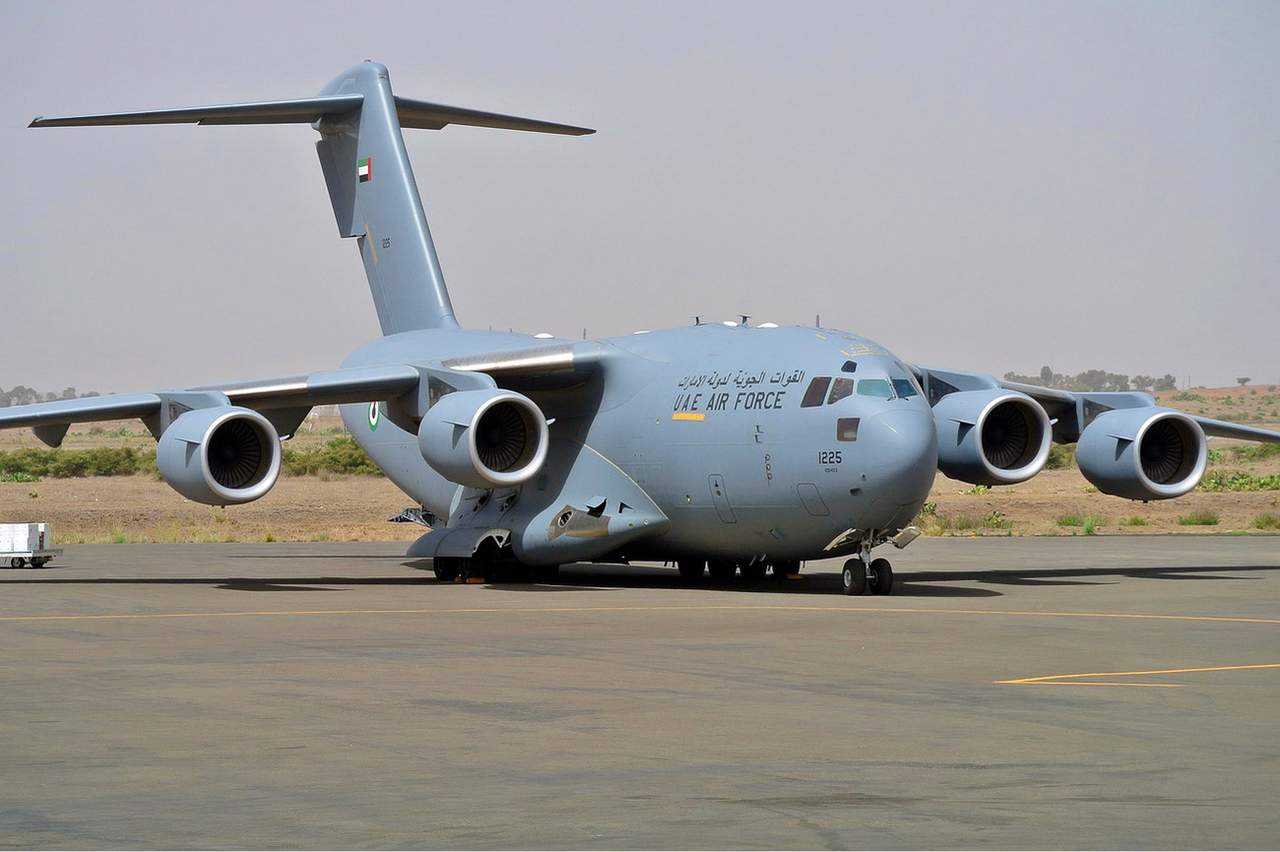
Several aircraft often named in “most expensive” lists are not ranked here because we only have fact-sheet unit costs for them, not a program cost. The Air Force fact sheets give a unit cost of $202.3 million for the C-17 Globemaster III and $270 million for the E-3 Sentry AWACS, both in fiscal 1998 constant dollars.

The Air Force’s CV-22 Osprey is listed at $90 million. It carries 24 seated troops or 10,000 pounds of cargo, with a combat radius of 500 nautical miles on one internal auxiliary tank.

Other countries rarely publish figures like the Pentagon’s. Europe’s Airbus A400M Atlas and China’s Xi’an Y-20 are both large, costly airlifters, but neither has a public program cost per aircraft we could verify, so neither is ranked.


For the full range of roles these aircraft fill, see our guide to the types of military planes. And for the civilian side, including private jets and airliners, see the most expensive aircraft in the world.
FAQ
Sources and references used for research and fact-checking.
- U.S. Government Accountability Office, Weapon Systems Annual Assessment (GAO-26-108457), 2026
- U.S. Government Accountability Office, B-2 Bomber: Cost and Operational Issues (GAO/NSIAD-97-181)
- U.S. Government Accountability Office, Presidential Helicopter Acquisition (GAO-14-358R)
- U.S. Government Accountability Office, Defense Acquisitions: Assessments of Selected Weapon Programs (GAO-08-467SP)
- U.S. Department of Defense, F-22 Selected Acquisition Report, December 2010
- U.S. Department of Defense, E-2D Advanced Hawkeye Selected Acquisition Report, December 2023
- U.S. Department of Defense, P-8A Poseidon Selected Acquisition Report, December 2021
- U.S. Department of Defense, KC-46A Selected Acquisition Report, December 2023
- U.S. Department of Defense, MQ-4C Triton Selected Acquisition Report, December 2023
- U.S. Department of Defense, VH-92A Presidential Helicopter Selected Acquisition Report, December 2022
- U.S. Department of Defense, CH-53K King Stallion Selected Acquisition Report, December 2023
- U.S. Department of Defense, F-35 Selected Acquisition Report, December 2023
- DoD Office of Inspector General, Navy Officials Justified the MQ-4C Triton Procurement Quantity
- U.S. Air Force, B-2 Spirit fact sheet
- U.S. Air Force, B-21 Raider fact sheet
- U.S. Air Force, F-22 Raptor fact sheet
- U.S. Air Force, KC-46A Pegasus fact sheet
- U.S. Air Force, C-17 Globemaster III fact sheet
- U.S. Air Force, E-3 Sentry (AWACS) fact sheet
- U.S. Air Force, CV-22 Osprey fact sheet
- Breaking Defense, F-35 costs jump in latest production lots
- Air & Space Forces Magazine, Trump Announces F-47, the Air Force's New Sixth-Gen Fighter Built by Boeing
- Air & Space Forces Magazine, Air Force Awards $13 Billion Contract for New Doomsday Planes
- Defense News, Flight tests begin on US Air Force's new doomsday plane
- Defense News, US Air Force reports lower B-21 costs after negotiations with Northrop
- Military Times, Boeing attributes $280 million loss in second quarter to Air Force One program
- Air Cargo Week, Delayed Air Force One programme hits Boeing's Q2 results
Get the Newsletter
The latest aviation news and stories sent to your inbox.
About the Author

Tim is the owner and lead editor of AeroCorner since 2019, overseeing aviation content covering aircraft, airlines, airports, and the broader aviation industry. Through years of researching, writing, editing, and publishing aviation-focused content, he has developed extensive practical knowledge of commercial aviation and air travel. Based in Asia and a frequent traveler himself, Tim also brings firsthand passenger experience to AeroCorner’s coverage. Outside of publishing, he has also explored aviation firsthand through hands-on flight training in New Zealand.