

Table of Contents
The Boeing EA-18G Growler is the most capable electronic warfare aircraft in the world. It is the only dedicated radar jammer that flies from an aircraft carrier, it has been in combat almost continuously since 2011, and it is the only one that has ever shot something down.
This list ranks aircraft built to perform electronic attack: actively jamming enemy radar and radio so that other aircraft can survive. It does not rank aircraft that merely listen, and it does not rank fighters with good self-defense jammers.
That distinction matters more than any spec, and it is the reason most lists on this subject are wrong. The field is also unusually small: as of 2026, only four countries fly a purpose-built jamming aircraft at all.
| Rank | Aircraft | Operator | Jamming role | Status in 2026 |
|---|---|---|---|---|
| 1 | Boeing EA-18G Growler | US Navy, Australia | Escort and stand-off | In service |
| 2 | L3Harris EA-37B Compass Call | US Air Force | Stand-off, communications | Entering service |
| 3 | Shenyang J-16D | China | Escort | In service |
| 4 | Kawasaki EC-2 | Japan | Stand-off | In flight test |
| 5 | Ilyushin Il-22PP Porubshchik | Russia | Stand-off | In service |
| 6 | Shenyang J-15D | China | Carrier escort | In development |
How this ranking works
Aircraft are ranked on electronic attack: the ability to deliberately degrade an enemy’s radar and communications so a strike package can get through. The measure combines jamming power and reach, how many are actually flying, and whether the aircraft has done the job in combat. Aircraft that only collect intelligence, such as the RC-135 Rivet Joint, are electronic support rather than electronic attack and are excluded. Fighters with self-protection jammers, including the F-35 and F-22, are also excluded and explained further down.
1. Boeing EA-18G Growler
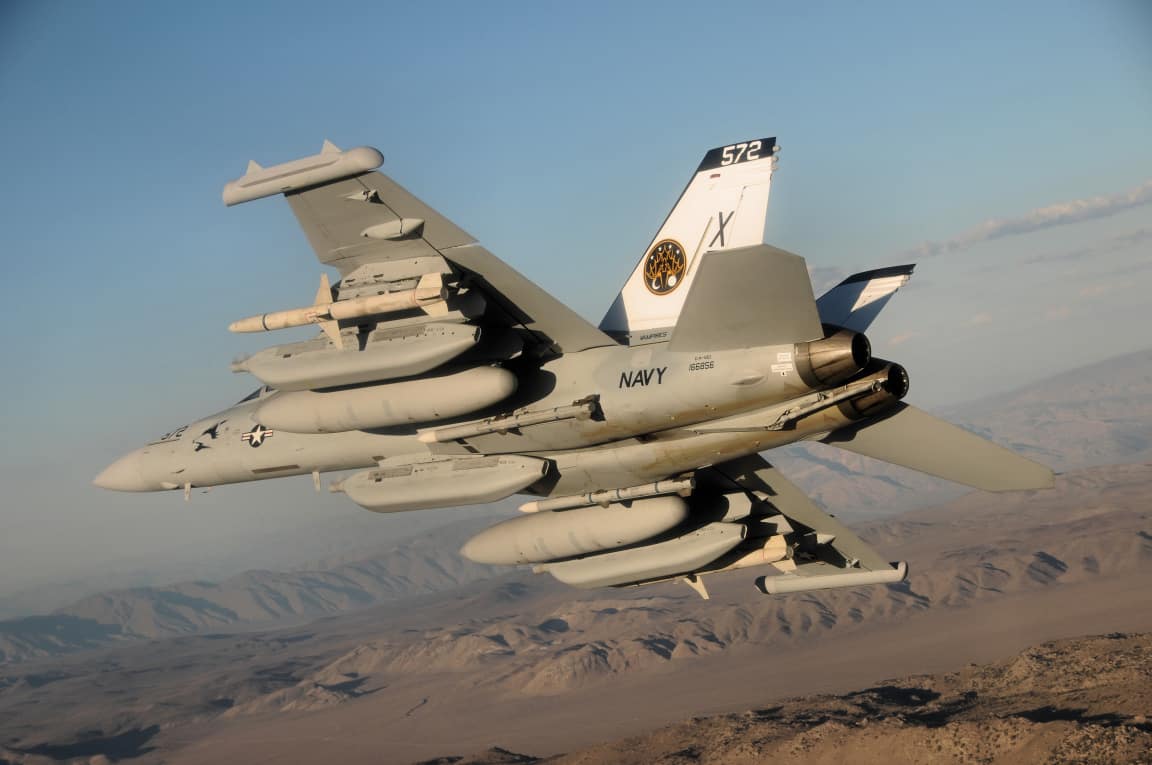
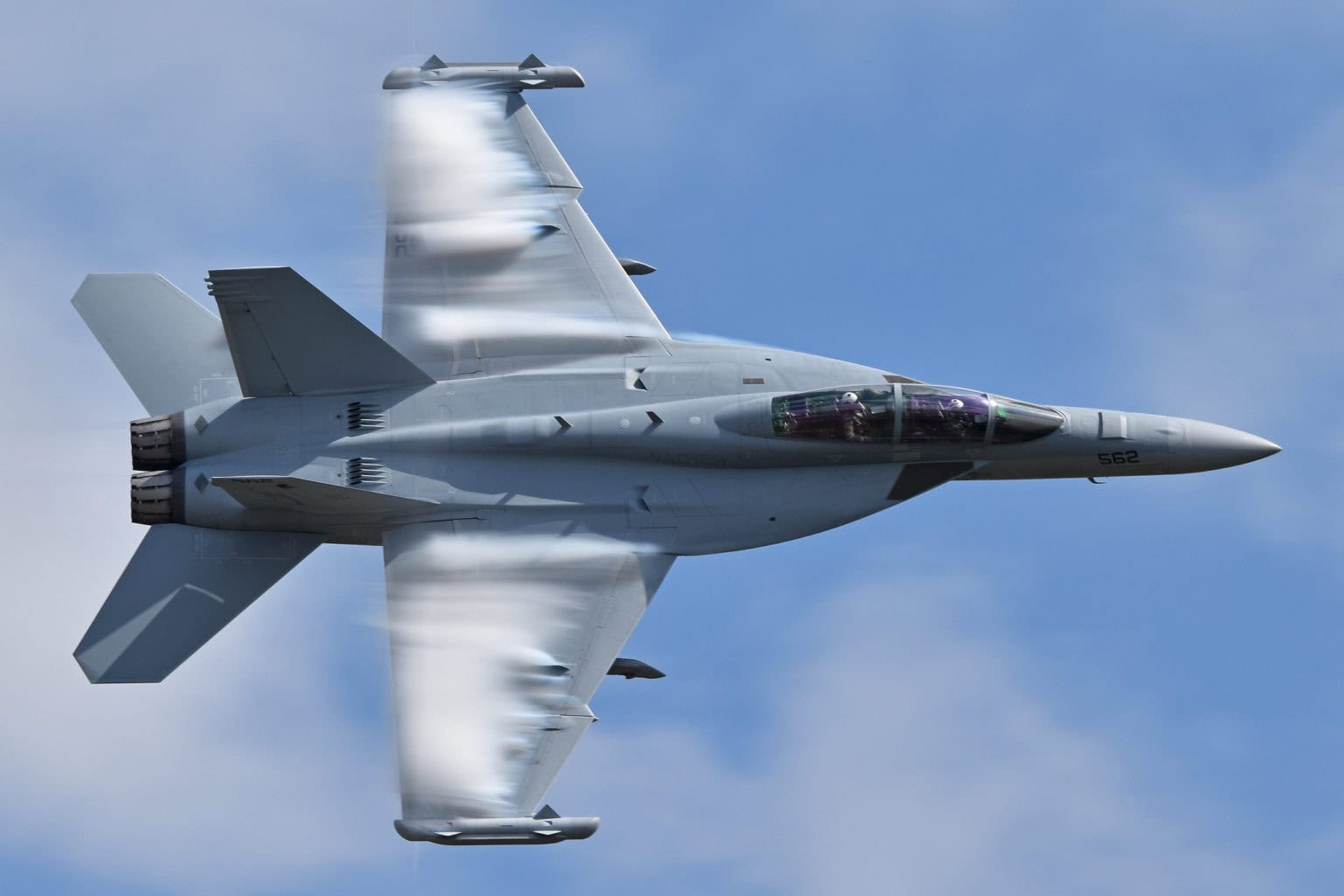


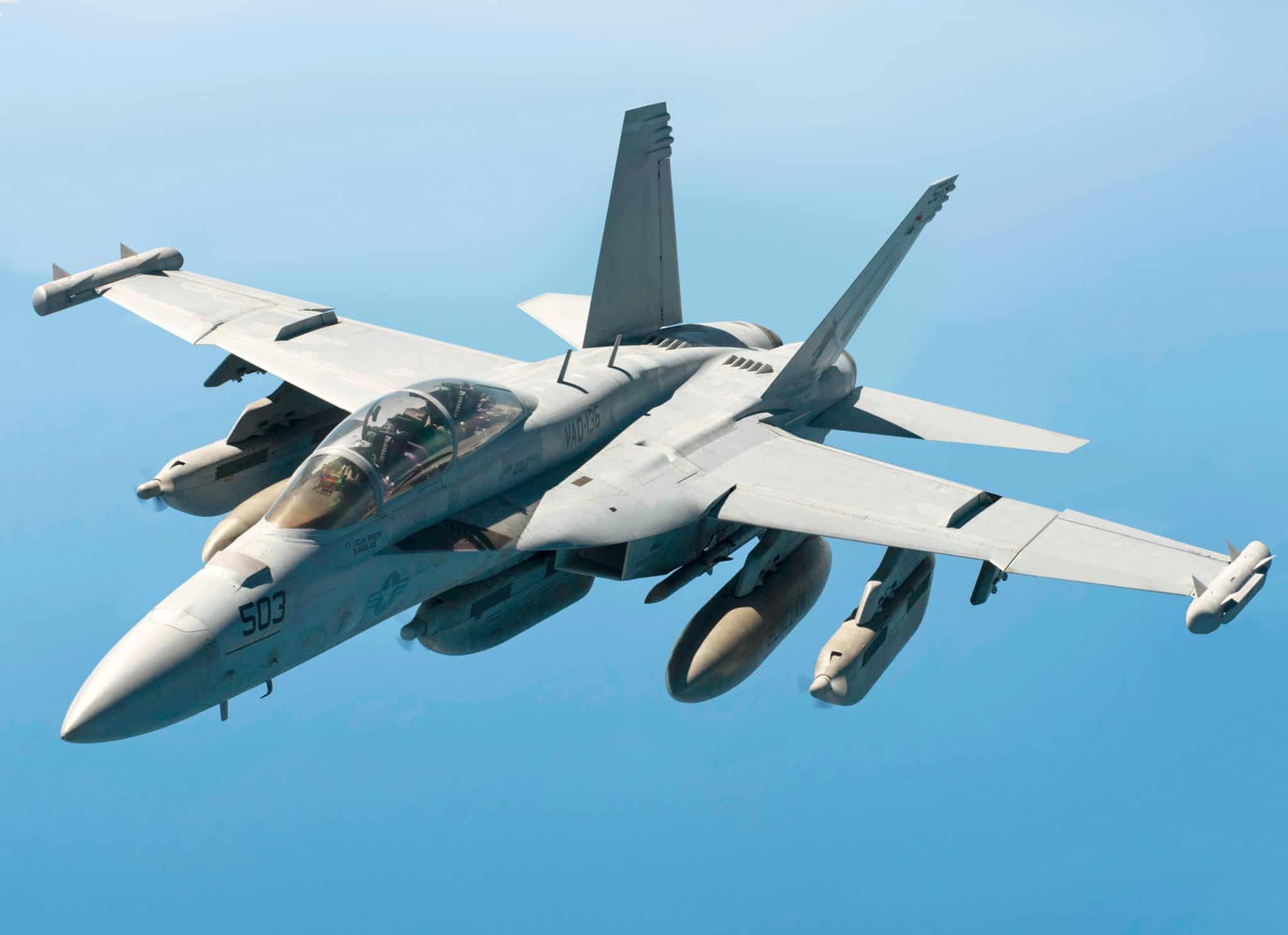


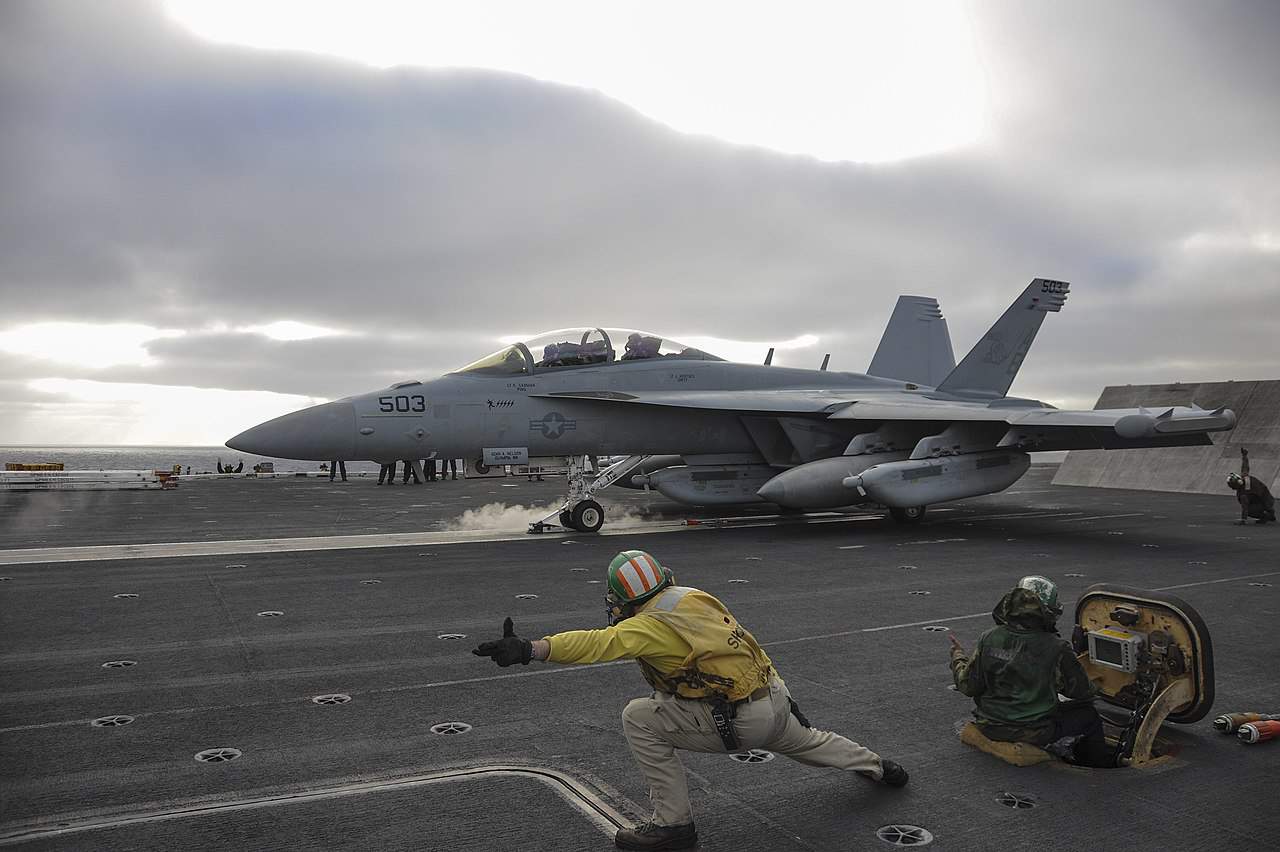
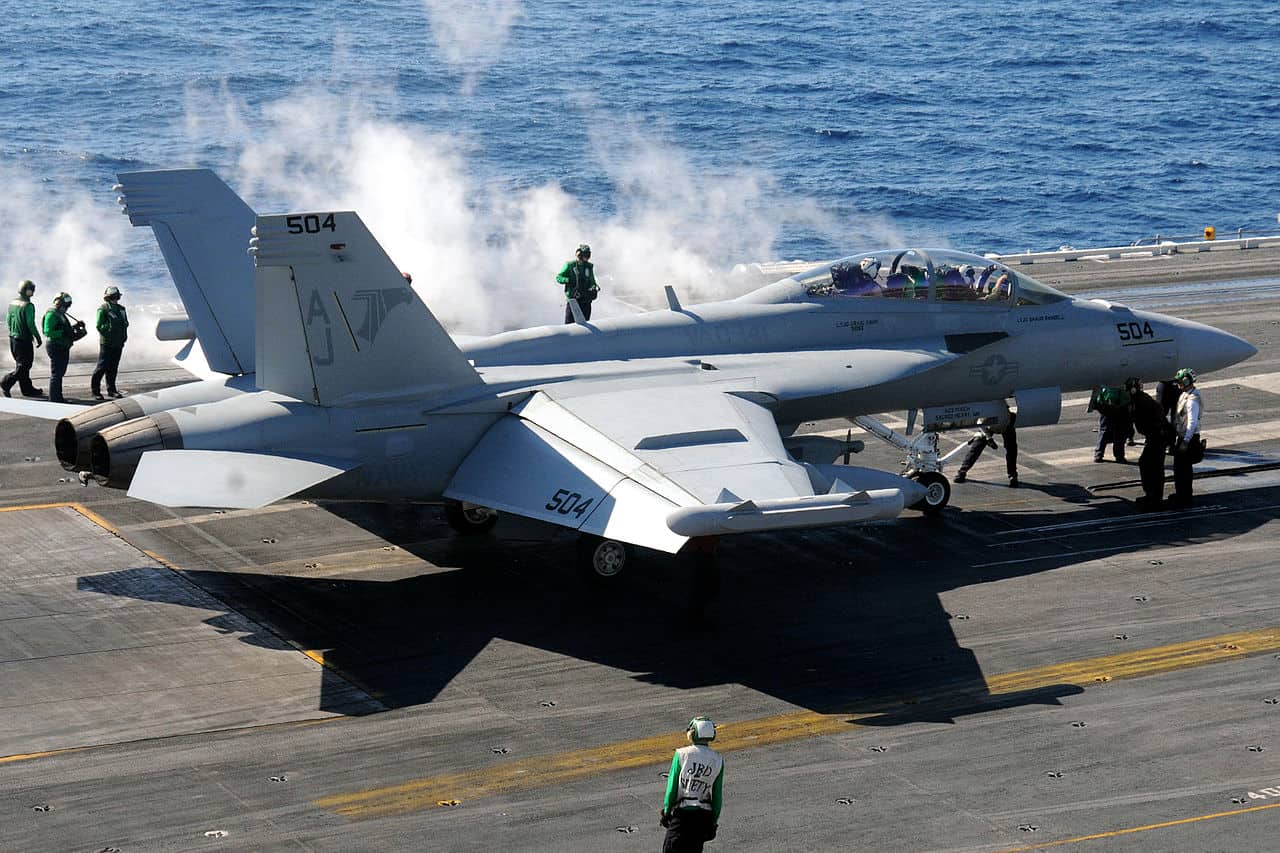
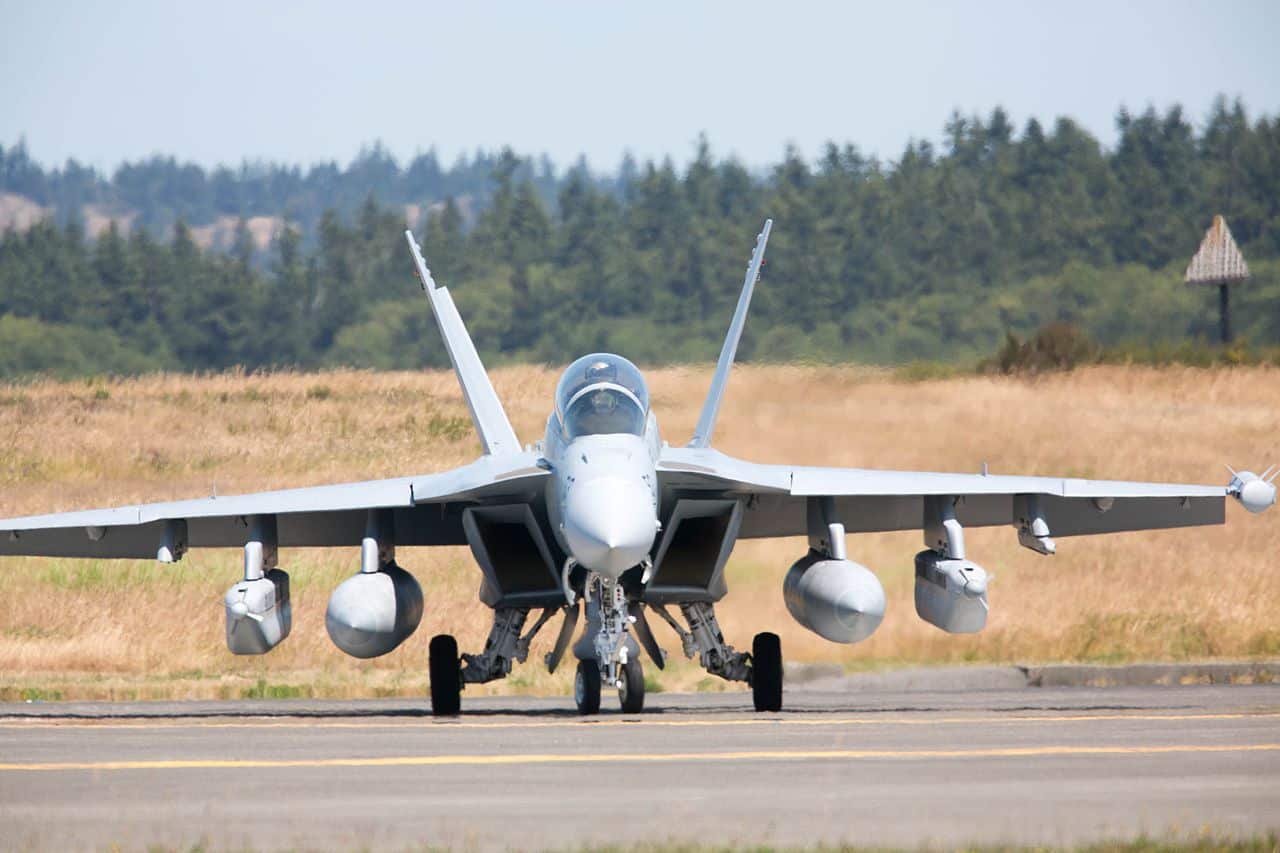


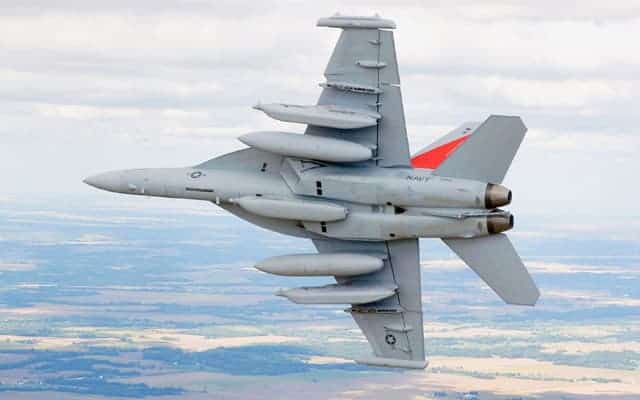
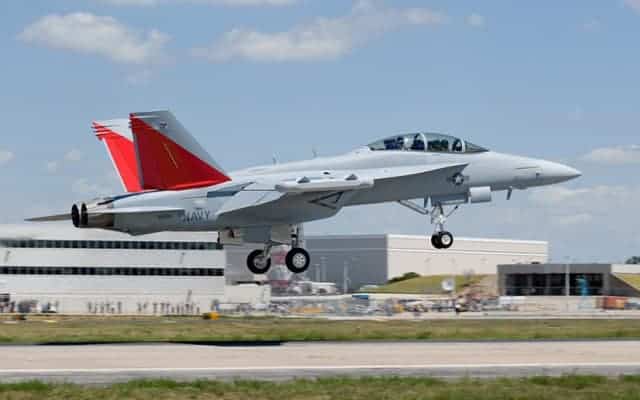
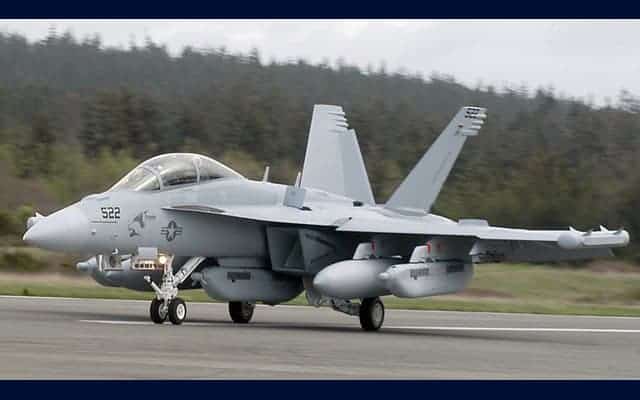
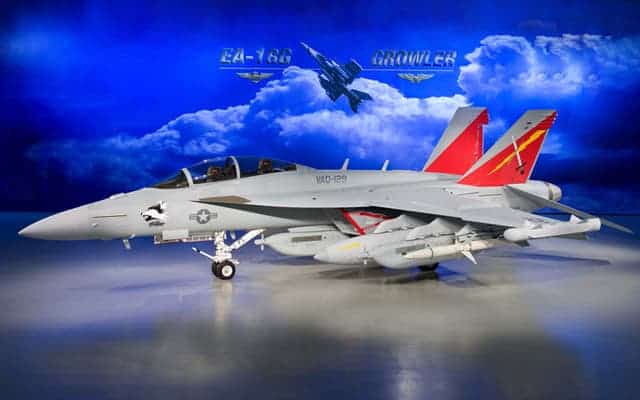

The EA-18G Growler takes the top spot because it is the only aircraft on this list that can do the whole job from a carrier deck. It is a two-seat F/A-18F Super Hornet rebuilt around a jamming suite, which means it can escort a strike package into defended airspace at Mach 1.8 rather than jamming from a safe distance.
Boeing built 172 airframes, and the US Navy procured 160 of them between 2006 and 2016. Australia bought 12 more and remains the only export customer, taking its last aircraft in July 2017.
The Growler entered service in September 2009 and first fought over Libya in 2011. It has a service ceiling above 50,000 feet and a combat range of about 390 nautical miles on an interdiction profile.
Its jamming is being rebuilt in place. The 1970s-era AN/ALQ-99 pods are giving way to the AN/ALQ-249 Next Generation Jammer, first used operationally by squadron VAQ-133 in late 2024, though the new pod was still working through reliability problems as of early 2026.
The jamming aircraft that scored a kill with a missile
In July 2024 a Growler from squadron VAQ-130, flying off the USS Dwight D. Eisenhower, shot down a Houthi drone over the Red Sea. It was the first air-to-air kill in the type’s history, and it was not made with a jammer: the Navy had rushed AMRAAM missile capability onto the fleet three months earlier in response to the Red Sea crisis.
2. L3Harris EA-37B Compass Call
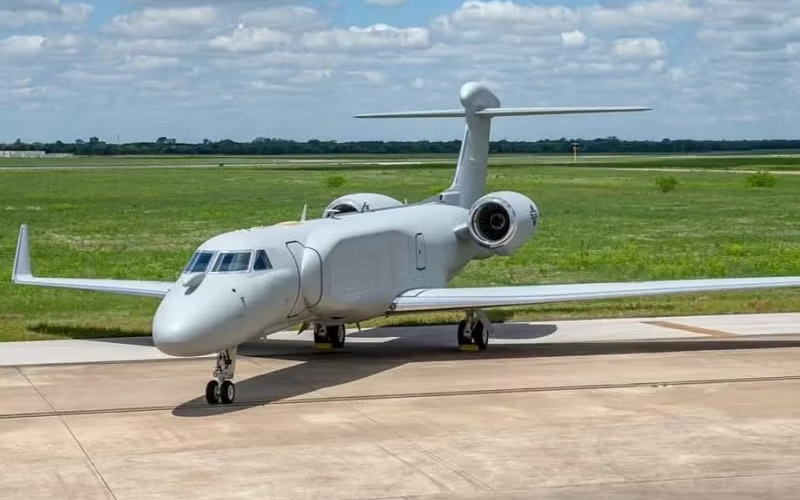


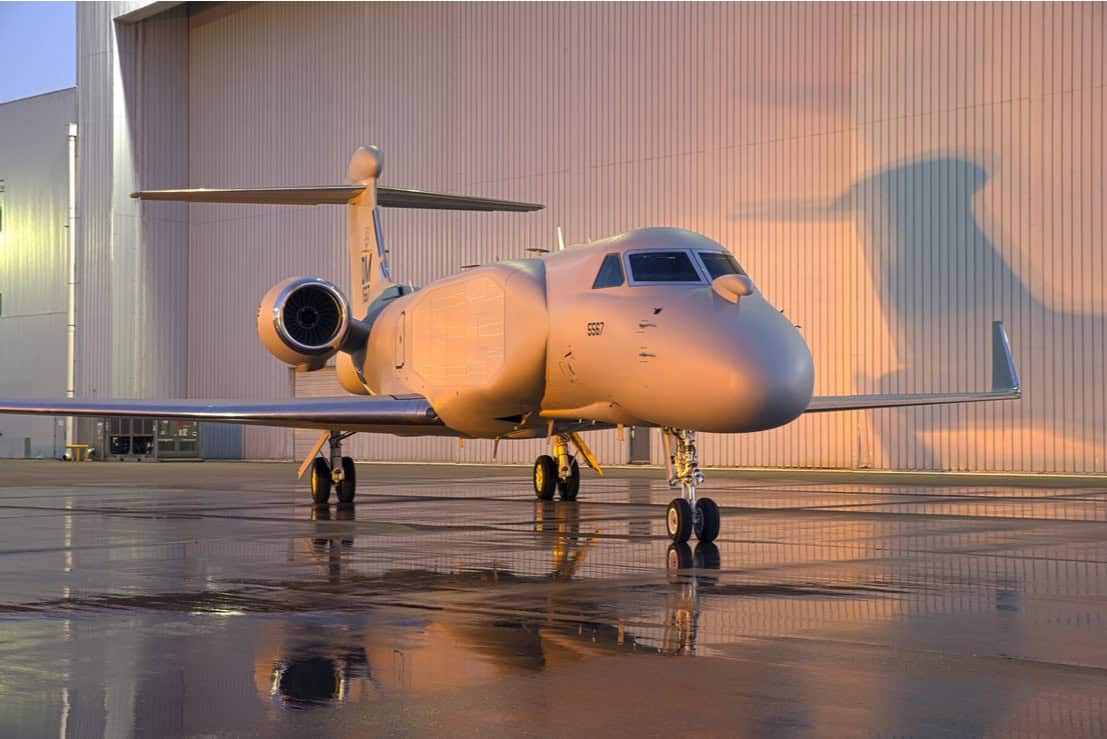
The EA-37B Compass Call attacks a different target. Where the Growler blinds radar, the EA-37B goes after the enemy’s ability to talk: command networks, radios, data links, and the coordination that makes an air defense system more than a collection of parts.
It is built on a Gulfstream G550 business jet, which sounds unserious and is in fact the entire point. It cruises at 629 mph (1,012 km/h), reaches 45,000 feet, and flies 4,410 miles (7,097 km), so it can loiter above and beyond the threat rather than plodding along beneath it.
The aircraft measures 96.4 feet (29.4 m) long with a 93.5-foot (28.5 m) span and a maximum takeoff weight of 91,000 pounds (41,300 kg). Two Rolls-Royce BR710C4-11 turbofans produce 15,385 pounds of thrust each.
It ranks second rather than first on numbers alone. Five had been delivered by 2026 against a planned fleet of 10, which Congress raised to 12 by adding two aircraft in the 2026 budget, and initial operational capability was still a 2026 target.
The name change that gave the game away
The aircraft was designated EC-37B until November 2023, when the Air Force renamed it EA-37B. The C stands for transport and the A for attack, and the swap was an explicit statement that jamming is now treated as a weapon rather than a support function.
3. Shenyang J-16D
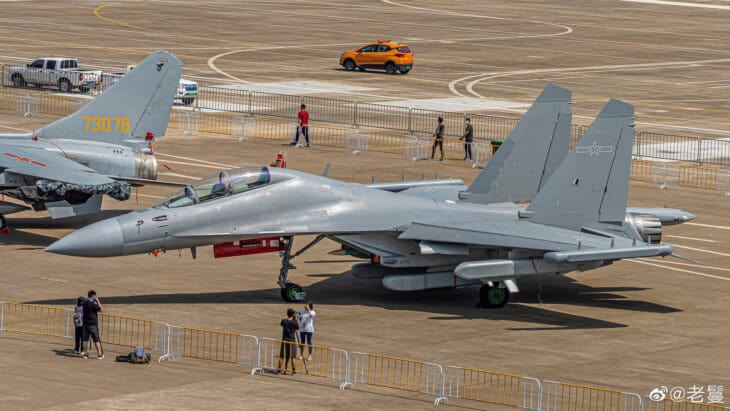
The J-16D is China’s answer to the Growler, and it is a close copy of the concept. It first flew in December 2015 and is the country’s first purpose-built electronic warfare fighter.
The conversion is easy to spot. The cannon and the infrared search-and-track sensor are gone to make room for electronics, and the wingtip missile rails have been replaced by large jamming pods, with more carried under the wings and fuselage.
Underneath it is still a heavy Flanker derivative: two WS-10 turbofans, close to Mach 2, an AESA radar, and a two-seat cockpit so one crew member can work the electronic attack. In 2026 J-16Ds were photographed carrying PL-15 long-range air-to-air missiles, the same escort-and-defend pattern the Growler follows.
It ranks third because almost nothing about its actual jamming performance is public and it has never been used in combat. On paper the capability is real; unlike the two aircraft above it, nobody outside China knows how well it works.
4. Kawasaki EC-2
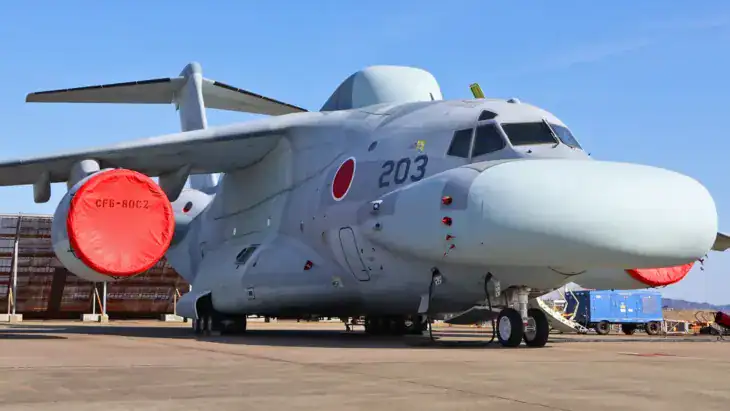
Japan’s EC-2, nicknamed the Platypus for the bulbous radome grafted onto its nose, made its maiden flight on March 17, 2026 from Gifu Air Base and stayed airborne about three hours.
It is a conversion of the Kawasaki C-2 transport, which entered Japanese service in 2016, fitted out as a stand-off jammer against enemy radar and communications. Only four are planned.
What makes it interesting is that it is half of a pair. A separate C-2 was converted into the RC-2 intelligence aircraft in 2020, and Japan’s Ministry of Defense intends the two to work together, with the RC-2 locating hostile emitters and the EC-2 jamming them.
It sits fourth for the simple reason that it is not operational yet. A first flight in March 2026 means squadron service is still years away.
5. Ilyushin Il-22PP Porubshchik

Russia’s dedicated jamming aircraft is a converted Il-18 turboprop airliner, a design that first flew in the 1950s. Three entered service in 2016 after a development program that began in 2011.
Its stated targets are air defense radars, airborne early warning aircraft, air command posts, and ground communications centers, which is the same stand-off mission the EA-37B flies. Russian claims about its power are expansive and largely unverifiable.
Three airframes is a token force, and a propeller-driven 1950s airframe limits where it can usefully go. A successor, provisionally called Porubshchik-2, has been in development for years.
6. Shenyang J-15D
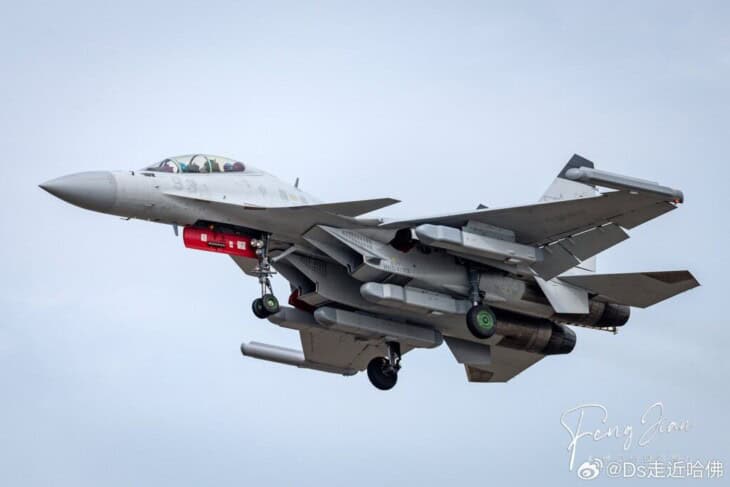
The J-15D applies the J-16D formula to China’s carrier fighter, giving the navy a jamming escort to operate alongside its air wing. Wingtip pods replace the standard missile rails in the same recognizable pattern.
It is last on this list because it is the least mature entry and the least documented. If it reaches full service it would make China the second country able to fly dedicated electronic attack from a carrier, which is the single most significant thing on this list that has not happened yet.
The retired aircraft that built the mission
Three aircraft defined airborne electronic attack and are no longer flying. The most recent left service days before this article was written.
1983 to 1998
Grumman EF-111A Raven. Forty-two F-111s converted into unarmed jammers, nicknamed the Spark Vark. Retired at Cannon Air Force Base on May 2, 1998.
1971 to 2019
Grumman EA-6B Prowler. A total of 170 built between 1966 and 1991, and for two decades the only tactical jammer the United States had. The last squadron stood down on March 8, 2019.
1982 to 2026
Lockheed EC-130H Compass Call. The Hercules-based communications jammer. Its final flight was on September 2, 2026, with the mission passing to the EA-37B.
The EF-111A Raven was the strangest of the three: a supersonic bomber stripped of every weapon and sent into defended airspace carrying nothing but jammers. It was retired in 1998 in the post-Cold War drawdown, and the Air Force spent the next 25 years without a fast tactical jammer.
The EA-6B Prowler carried the whole American electronic attack mission after the Raven left, flying for the Navy, the Marines, and by arrangement the Air Force too. Its four-seat crew and long service record made it the template the Growler replaced.
The EC-130H Compass Call is the freshest departure. Its last airframe flew for the final time on September 2, 2026 from Davis-Monthan Air Force Base, ending a mission the Air Force had run on Hercules airframes since the 1980s.
The EC-130H carried a crew of 13 and cost roughly twice as much per flight hour as the jet replacing it. That, more than age alone, is why the Air Force moved the job onto a business jet.
What about the F-35 and F-22?
This is the most common objection to any electronic warfare ranking, and the answer is that both aircraft carry serious electronic warfare equipment while doing a different job with it.
The F-35 carries the AN/ASQ-239 Barracuda suite from BAE Systems, developed from the F-22’s AN/ALR-94. It provides radar warning, geolocation of hostile emitters, and jamming, and it is far more sensitive than earlier systems while using a third of the sensors the F-22 needed.
Self-protection is not electronic attack
An F-35 jams to keep itself alive. A Growler jams to keep everyone else alive, carrying pods with orders of magnitude more radiated power than any fighter can fit internally, and accepting that switching them on advertises its position to the whole battlefield. A stealth fighter’s entire design logic is to stay quiet, which is the opposite of what an electronic attack aircraft is for. The two are complements, not substitutes, and no air force treats them as interchangeable.
The same boundary excludes the listening aircraft. The RC-135 Rivet Joint, Japan’s RC-2, and airborne early warning aircraft such as the E-3 and E-7 are electronic support platforms: they find and identify emitters but never attack them.
It also excludes the aircraft readers ask about most. The E-4B Nightwatch, the so-called Doomsday plane, is hardened against the electromagnetic pulse of a nuclear detonation, but surviving an electromagnetic attack is not the same as making one.
That distinction is why lists that mix the two are unhelpful. Half the aircraft on them have never jammed anything.
Where the ranking goes next
The top of this list is more fragile than it looks. The Growler’s lead rests on a jamming pod that is still being debugged, and the US Navy intends to keep the airframe flying to 2046.
The EA-37B is the entry most likely to move. If the fleet reaches 12 aircraft and initial operational capability holds, a stand-off jammer that flies at 45,000 feet for the cost of a business jet becomes very hard to argue against.
The genuine wildcard is the J-15D. Carrier-based electronic attack has been a US monopoly since 1971, and it is the one entry here that could end it.
FAQ
Sources and references used for research and fact-checking.
- Air & Space Forces Magazine, EA-37B Compass Call
- US Air Force, Air Combat Command, EA-37B Compass Call fact sheet
- Wikipedia, Boeing EA-18G Growler
- The War Zone, EA-18G Growler Scored Its First Air-To-Air Kill
- Defense News, Japan's new 'ugly duckling' electronic-warfare aircraft takes to the sky
- GlobalSecurity.org, J-16D Roaring Wolf Electronic Attack
- National Museum of the United States Air Force, General Dynamics-Grumman EF-111A Raven
- USNI News, Marines Sundown Last EA-6B Prowler Squadron
Get the Newsletter
The latest aviation news and stories sent to your inbox.
About the Author

Tim is the owner and lead editor of AeroCorner since 2019, overseeing aviation content covering aircraft, airlines, airports, and the broader aviation industry. Through years of researching, writing, editing, and publishing aviation-focused content, he has developed extensive practical knowledge of commercial aviation and air travel. Based in Asia and a frequent traveler himself, Tim also brings firsthand passenger experience to AeroCorner’s coverage. Outside of publishing, he has also explored aviation firsthand through hands-on flight training in New Zealand.