

On September 2, 2026, the last EC-130H Compass Call in United States Air Force service flew its final mission. The aircraft, tail number 73-1590, took off from Davis-Monthan Air Force Base in Arizona under the callsign VOLT01 at about 7 a.m. local time and landed roughly six hours later. It closes out more than four decades of a mission most people never hear about: attacking the enemy’s ability to communicate.
The aircraft belongs to the 55th Electronic Combat Group. A 55th Wing spokesperson confirmed the flight to Air & Space Forces Magazine, which reported that a formal retirement ceremony is set for September 18 at the same base. The airframe is expected to move into long-term storage in the desert boneyard at Davis-Monthan.
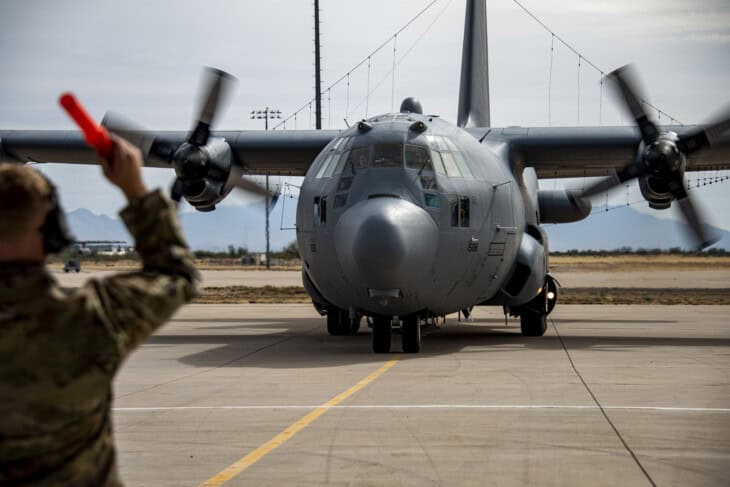
What Compass Call actually did
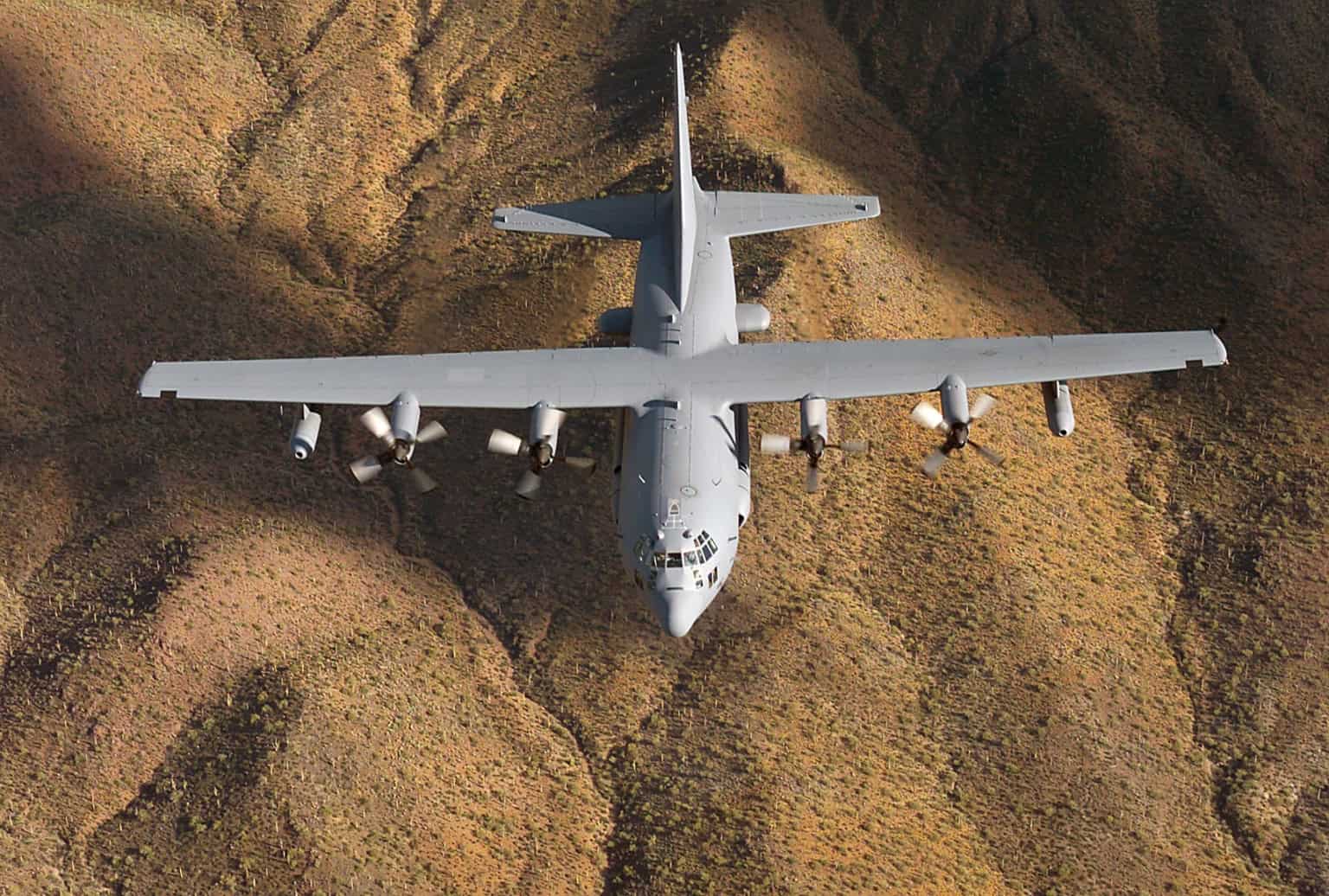
The EC-130H is an electronic-attack aircraft built on the C-130 Hercules. Instead of cargo or troops, it carries antennas, receivers and jamming equipment, along with a crew of linguists and electronic-warfare specialists. Its job is to find enemy radio, radar and navigation signals and drown them out.
In practice that means opposing commanders cannot pass orders to their units, air-defense sites cannot share tracking data, and drones can lose the control links they depend on. That kind of work has become more central as recent conflicts lean heavily on uncrewed aircraft and networked air defenses.
The type first flew in the early 1980s and reached operational service in 1983. It saw combat in Panama in 1989, in the 1991 Gulf War, over Kosovo in 1999, and across the campaigns in Iraq, Afghanistan and Syria after 2001. Reporting by The Aviationist notes that EC-130H crews logged more than 76,000 combat hours in the last 20 years alone.




Why the jam mission is moving to a business jet
The Air Force announced its intent to retire Compass Call in 2014 and, in 2017, awarded a contract to move the electronic-warfare systems onto a new airframe. That aircraft is the EA-37B, also called Compass Call and nicknamed Banshee. It is built on the Gulfstream G550, the same business jet Gulfstream adapts for several military special-mission types.
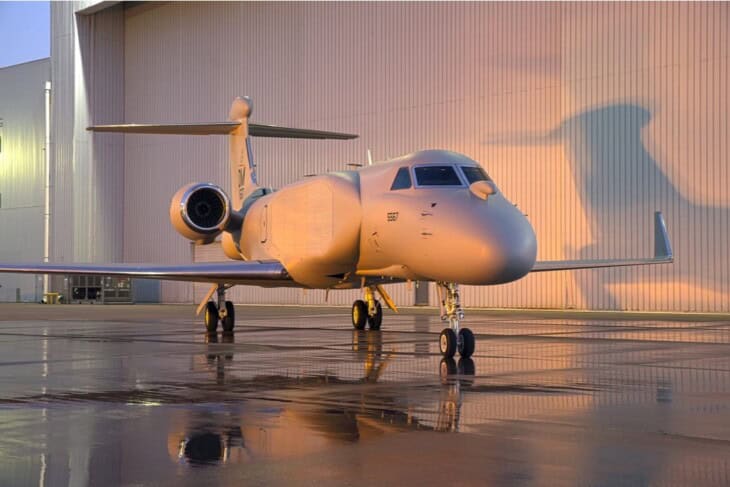
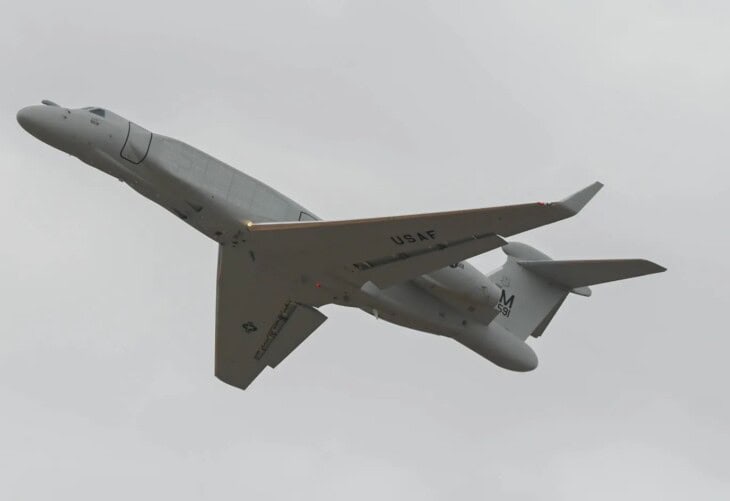
The switch is about performance and cost. A jet cruises faster and higher than a turboprop Hercules, so it can stand off further from a threat and still cover a wide area. The Air Force says the EA-37B costs roughly half as much per hour to operate and flies with a crew of nine rather than thirteen.
Five EA-37Bs have been delivered so far against an initial order of ten, with plans to expand the fleet into the early 2030s. The first arrived at Davis-Monthan in 2024, and the type flew its first combat missions in the spring of 2026.
1981
u0026lt;strongu0026gt;First flight.u0026lt;/strongu0026gt; The modified Hercules that becomes Compass Call takes to the air; operational service follows in 1983.
1989
u0026lt;strongu0026gt;Combat debut.u0026lt;/strongu0026gt; The EC-130H flies its first combat missions during Operation Just Cause in Panama.
2014
u0026lt;strongu0026gt;Retirement announced.u0026lt;/strongu0026gt; The Air Force says it will move the Compass Call mission off the aging airframe.
2017
u0026lt;strongu0026gt;Systems transfer.u0026lt;/strongu0026gt; A contract is awarded to fit the electronic-warfare suite to a Gulfstream G550 business jet.
2024
u0026lt;strongu0026gt;First EA-37B arrives.u0026lt;/strongu0026gt; The jet-powered replacement, nicknamed Banshee, reaches Davis-Monthan.
September 2, 2026
u0026lt;strongu0026gt;Last flight.u0026lt;/strongu0026gt; EC-130H 73-1590 flies its final mission; a retirement ceremony is scheduled for September 18.
Reality check: a thinner fleet during the handover
The Air Force is retiring 14 EC-130H airframes and replacing them, for now, with a smaller number of EA-37Bs, so the count of available Compass Call aircraft drops during the transition. The last Hercules had been flying on maintenance waivers due to expire on September 30, 2026, and keeping each one airworthy longer was estimated at roughly 14 million dollars per aircraft.
Some retired Hercules find second careers, as when Canada sold ten of them to fight wildfires. The heavily modified EC-130H is a harder sell, and this one is likely to spend its retirement parked in the Arizona desert.
Sources and references used for research and fact-checking.
Get the Newsletter
The latest aviation news and stories sent to your inbox.
About the Author

Tim is the owner and lead editor of AeroCorner since 2019, overseeing aviation content covering aircraft, airlines, airports, and the broader aviation industry. Through years of researching, writing, editing, and publishing aviation-focused content, he has developed extensive practical knowledge of commercial aviation and air travel. Based in Asia and a frequent traveler himself, Tim also brings firsthand passenger experience to AeroCorner’s coverage. Outside of publishing, he has also explored aviation firsthand through hands-on flight training in New Zealand.