

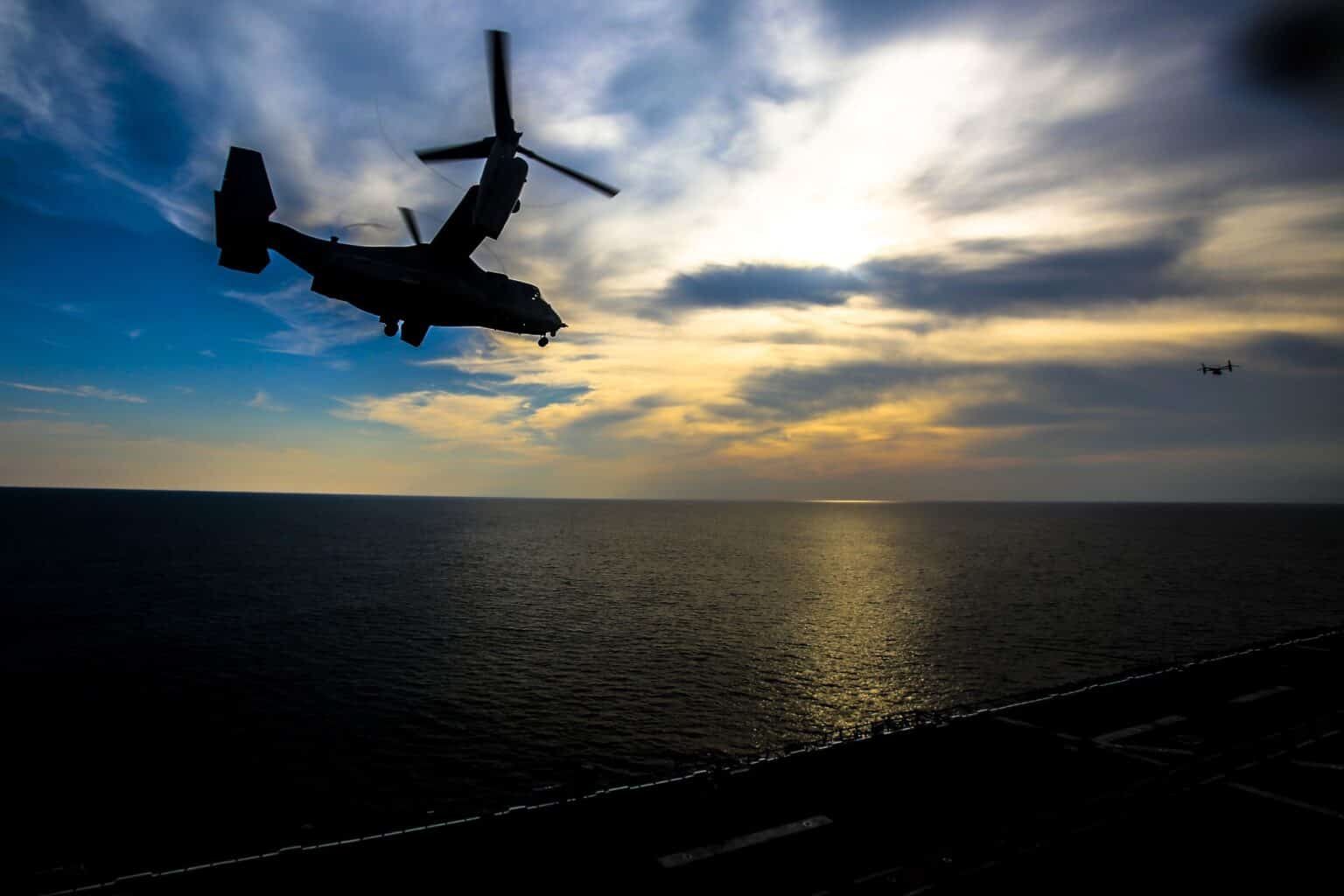
A Marine Corps MV-22B Osprey caught fire after a hard landing in Bladen Lakes State Forest, North Carolina, at about 10:20 a.m. on Thursday, October 8, 2026. The Marine Corps said four personnel were aboard the tiltrotor, all of them are receiving medical care, and the cause of the mishap is under investigation.
The aircraft belongs to Marine Medium Tiltrotor Squadron 162 (VMM-162) at Marine Corps Air Station New River, part of Marine Aircraft Group 26 and the 2nd Marine Aircraft Wing.
What happened in Bladen Lakes State Forest
The Osprey came down near Sweet Home Church Road, in a part of the state forest where Marine pilots practice takeoffs and landings. Local reports cited by Stars and Stripes placed it at the Pappy Tatum Landing Area near Elizabethtown, about 50 miles (80 km) west of Camp Lejeune.
White Lake Fire Chief Dale Brennan described a hard landing and told WWAY that the aircraft was carrying about 6,000 pounds (2,700 kg) of jet fuel. He said the Marines use two landing zones in the forest for pilot training.
Six to seven fire departments responded, and the fire was still burning when Brennan spoke to the station that afternoon. Crews held the area while they waited for personnel from Camp Lejeune to decide how to fight it, including whether to use foam.
What is known about the four Marines
Brennan said one Marine suffered burns and was flown by helicopter to the UNC Jaycee Burn Center in Chapel Hill. He told WWAY the other three were not injured.
The Marine Corps has been more careful. “Four personnel were aboard the aircraft and are receiving medical care,” 2nd Marine Aircraft Wing spokesperson 1st Lt. Cailin Altonen said, adding that civilian and military emergency services responded to the site.
At the time of writing, the service had not confirmed the extent of any injuries and said the medical status of all four was not yet available, WWAY reported in a follow-up.
Still unconfirmed
The Marine Corps has not released a cause, the condition of the Marine taken to the burn center, or how badly the aircraft was damaged. “Hard landing” is how local fire officials described the event; the Marine Corps has called it a mishap.
Why every Osprey mishap draws scrutiny
The V-22 Osprey takes off like a helicopter and tilts its rotors forward to cruise like an airplane, a design that depends on complex gearboxes and clutches. Those parts have been at the center of recent crashes.
The Government Accountability Office found that Osprey rates of serious accidents generally exceeded those of the Navy and Air Force fixed-wing and rotary-wing fleets from fiscal 2015 through 2024. In fiscal 2023 and 2024 alone, the Osprey fleet had 18 serious non-combat accidents, and the Marine Corps and Air Force rates ran 36% to 88% above each service’s average for the prior eight years.
GAO said most reported causes involved materiel failure of airframe or engine parts and human error in operations or maintenance. It also found that the median age of 28 unresolved serious and medium system risks was about 9 years.
Four V-22 crashes since 2022 have killed 20 service members, Defense One reported in February. Past investigations blamed proprotor gearbox failures and “hard clutch engagement,” a clutch slip followed by a sudden surge of power.
The fixes are slow. According to the same report, the Marine Corps began replacing gearboxes in February 2026, its aviation plan expects an unrestricted operational fleet by December 2027, and redesigned clutch parts are not due on Marine aircraft until 2028.
New River’s Ospreys have been in the news before this year. In July, a VMM-266 aircraft from the same air station caught fire in its right engine nacelle on the ground at Mesa Gateway Airport in Arizona, and its crew evacuated without injury, Marine Corps Times reported.
Nothing published so far links Thursday’s mishap to the gearbox or clutch problems, and it is too early to say what went wrong. The Marines took delivery of their 359th and last MV-22B on July 28, and the service plans to keep the type flying through 2055.
Sources and references used for research and fact-checking.
Get the Newsletter
The latest aviation news and stories sent to your inbox.
About the Author

Tim is the owner and lead editor of AeroCorner since 2019, overseeing aviation content covering aircraft, airlines, airports, and the broader aviation industry. Through years of researching, writing, editing, and publishing aviation-focused content, he has developed extensive practical knowledge of commercial aviation and air travel. Based in Asia and a frequent traveler himself, Tim also brings firsthand passenger experience to AeroCorner’s coverage. Outside of publishing, he has also explored aviation firsthand through hands-on flight training in New Zealand.